
Dan tsuba
-
Posts
860 -
Joined
Content Type
Profiles
Forums
Events
Store
Downloads
Gallery
Everything posted by Dan tsuba
-
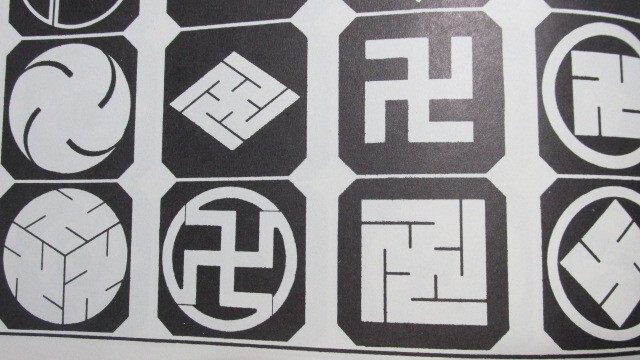
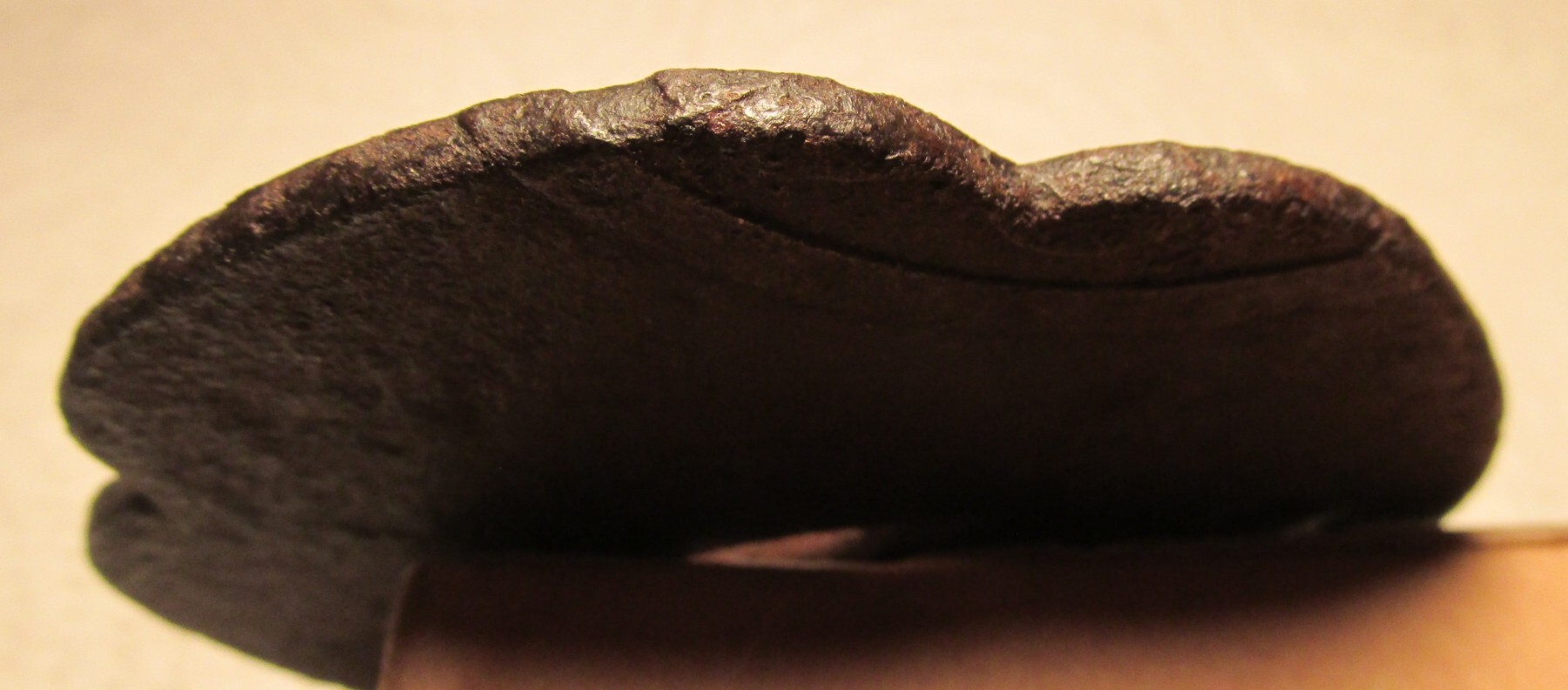
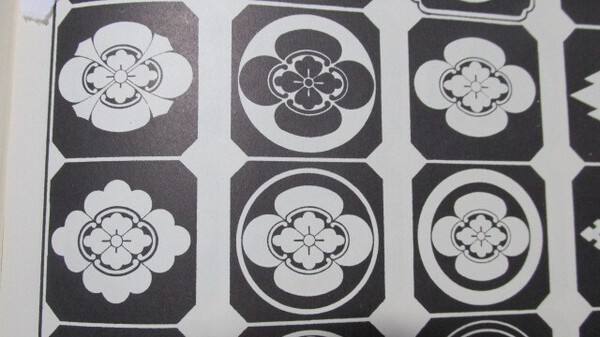
So, I just wanted to add a few more of my tsuba that seem to have family kamon on them to this old thread. I have also (once again) added the pictures from my book containing about 7000 family kamon pictures that are a close match to the tsuba shown. Although some of the pictures in the kamon book are not a perfect exact match to the kamon on the tsuba, I think they are close enough to discern that the motif on the tsuba must have been some sort of family kamon. One of the tsuba shows the entire tsuba was styled in the family kamon (as several of my tsuba in the above posts show). The other tsuba show that the family kamon made up only a small part of the tsuba (that tsuba with hawk feathers motif continues up over the mimi and onto the ura - picture included). Now I know (and this has been stated on this thread) that maybe the samurai that had these tsuba on their blades just liked the design and motif, so they put them on their blades. However, I wonder. Could there have been some sort of fine or punishment in place if it was found that the samurai that had a tsuba with a family kamon on his blade was not part of that family or clan?



-
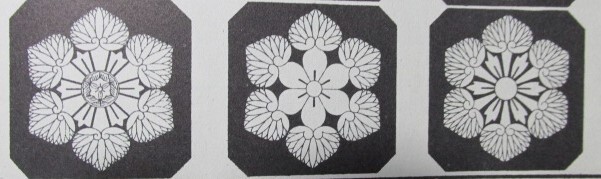
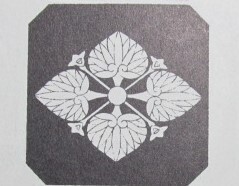
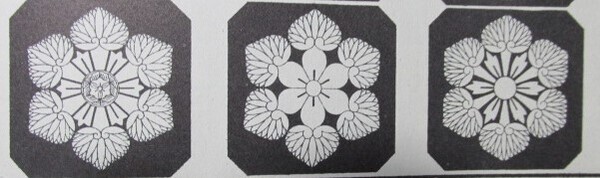
Thanks, Spartancrest for that picture of the 6 inome tsuba! So, what does 6 inome on a tsuba mean (instead of the usual 4 inome)? Well, the craftsman needed glasses? Or he had a lot of love to give and added 2 extra hearts? Ha, ha, ha, ha, etc! Just having some fun here! Well, I searched through my 7000 kamon book and found the kamons pictured below. Maybe some of the motifs on tsuba that I thought were inome, may actually be some sort of leaves that symbolize a family kamon? The leaves look heart shaped and are 4 and 6 leaves kamon. Or perhaps the heart shapes that face inward, towards the nakago-ana are inome symbols. And the heart shapes that face toward the mimi are leaves and are a family kamon. I don't know! Just giving it my best guess!
-
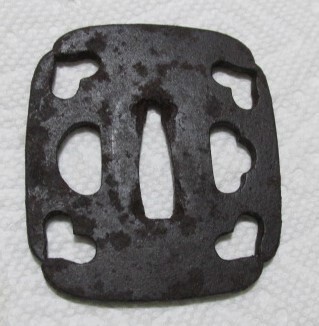
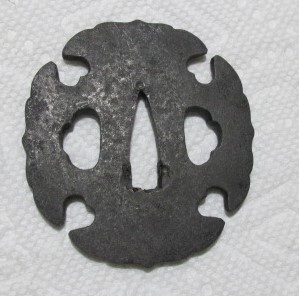
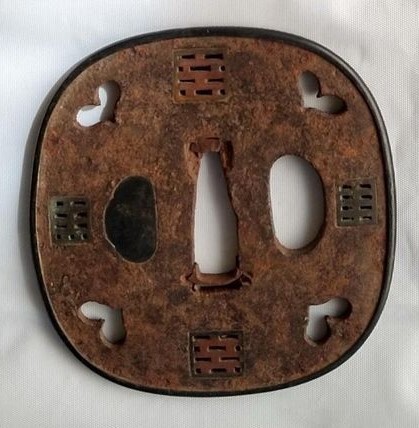
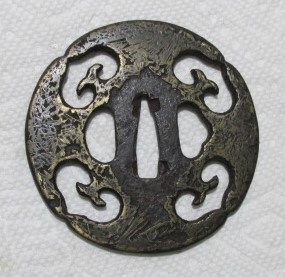
Showing inome shapes. How about sharing the tsuba you have that show some sort of inome motif? I have a few tsuba with the heart shaped inome (or boar’s eye) motif carved into them. I know that the inome motif translates into bravery and determination for the samurai. I also know that they most often appear four inome on a tsuba (I don’t know why they appear as four?). But maybe the inome are shown 4 on a tsuba because the number 4 in Japan is an unlucky number due to the way it is pronounced in Japan is the word for death? Perhaps the samurai wanted to show the inome (meaning bravery and determination) along with 4 inome to signify their bravery and determination even until death? Some information about the number 4 in Japan can be found here- https://heyjapan.net...panese-culture?hl=en The first 3 tsuba shown have definite inome shapes on them. The other 2 tsuba shown I am pretty sure are supposed to represent inome shapes (but I am not certain about that) or they could perhaps represent something else? Onward!

-
So, I was just thinking again (I know many of you may be saying “oh no, he wasn’t thinking again!” Ha, ha, ha, ha, ha, etc!). In my post to this thread on page 12 dated June 27, 2023, I inquired from an antique dealer in Japan about their opinion on cast iron tsuba made in the Edo period. And the dealer’s reply was- “Yes, I agree with your opinion. All the cast iron tsuba look from Edo period for my eye. cast iron” So, I decided to ask another seller in Japan, who is also an antique dealer, a question about cast iron tsuba. My question is stated below- “I have a question I would like to ask you. What is your opinion that cast iron kettle makers in Japan also made cast iron tsuba in the Edo period? I think I have a couple of Edo period tsuba that are cast from cast iron.” Now, there is really no reason to state who this antique dealer is. I will say that they have been on eBay and doing business since 2003 and they have sold about 73 thousand items with a 99.4% positive feedback rating. This is the antique dealer over the years that I purchased my daisho from, 3 other antique blades, some tsuba, a jingasa, and two yari. So, my opinion is that they are a reputable dealer. There reply was- “About Tsuba. I think they were made by fitting them into shapes when they needed to be produced in large quantities But I don’t know about iron kettle maker made cast iron Tsuba. Very difficult judge…” Anyway, just some interesting stuff. It seems that this Japanese antique dealer seems to think that cast iron (“fitting them into shapes”) tsuba were made when they were needed in large quantities (remembering that I asked specifically about the Edo period). Although whether they were made by kettle makers or other craftsmen is “very difficult judge”. Well, at least I am still interested in this cast iron tsuba made in the Edo period subject and am trying different ways to find out about it! Onward!
-
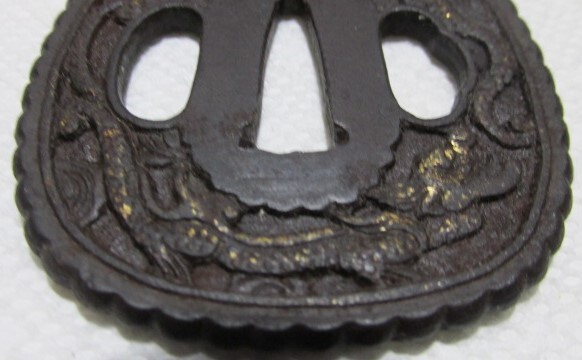
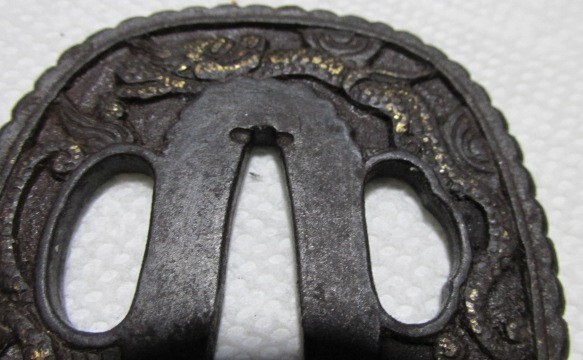
Let’s not forget about those mischievous monkeys. Or those mythological wild dragons! (from my tsuba collection).


-
Hey Dee! I am not an expert on anything! But I like the tsuba. Not sure about the school, but I think the design is that of a temple bell. I have about 150 tsuba, and not one temple bell! Darn it, now I have to look around for one! Ha, ha, ha, ha, etc!
-
Hello Okan, Your question of age. See, that’s what I get for trying to be nice! Don’t advise an old man on what questions he should ask about tsuba (or anything else!). Who do you think you are? Do you really want to go there? Or let’s just forget about this and move on! Onward!
-
A little off topic here- Thank you Okan for your post and great information! And I appreciate you stating- “That being said, these types of questions won’t help you move "onward" in your tsuba studies. Instead, focus on the tsuba itself—time is precious”. I see from your bio that you are 44. I am 74, pushing 75 (and hope to go on for another 30 years-ha, ha, ha, ha, ha, etc!). So, I feel that I will focus on those questions that interest me. The study of tsuba has many varying areas. In my opinion, each area is relevant and interesting to the study of tsuba. Onward!
-
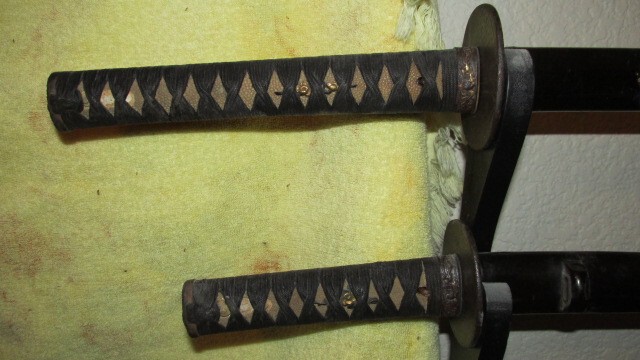
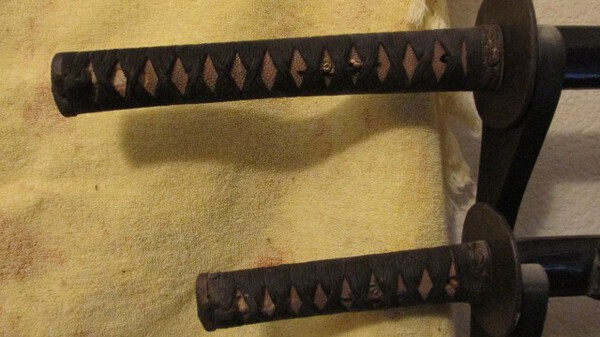
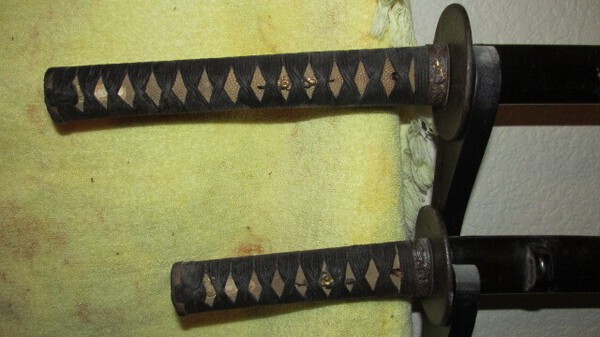
Hello Dereks, And GRC (how have you been? Nice to see your logo appearing often again on the forum!). “How do you even know these were owned and wore as a set by the same person?” That is a good question! I figure that to have two tsuka of different sizes (one for the katana and the other for the wakizashi) that have the exact same furnishings, with the exact same false emperor nodes on the rayskin , with the exact same ito wrapping, that show the exact same age (my opinion) and that were not worn as a pair would fall into the extremely (extremely!) small odds of happening! But, once again, that is just my opinion! Picture of my daisho tsuka is attached. Onward!
-
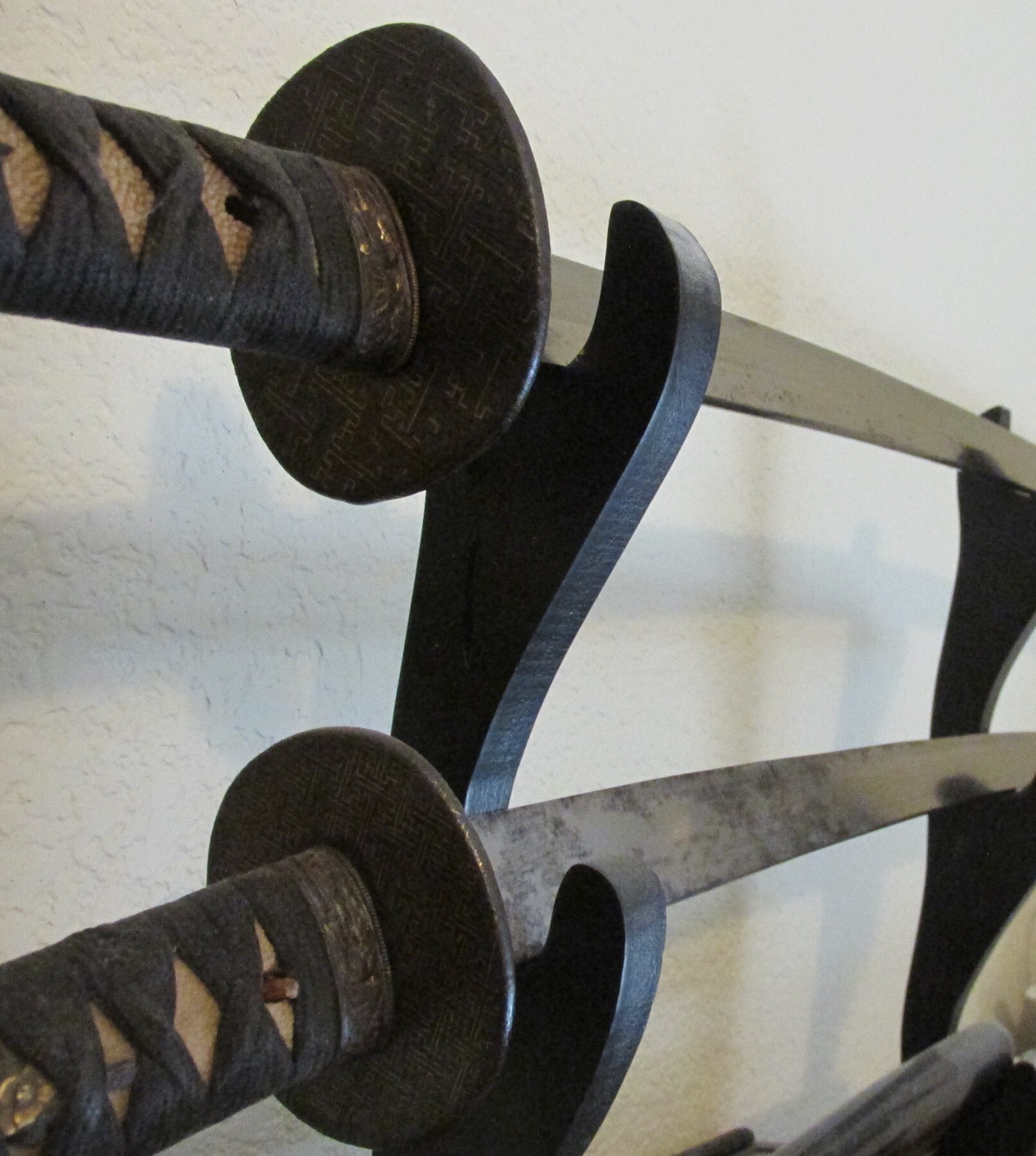
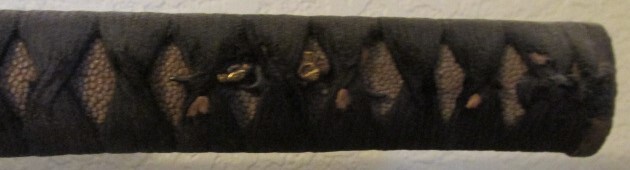
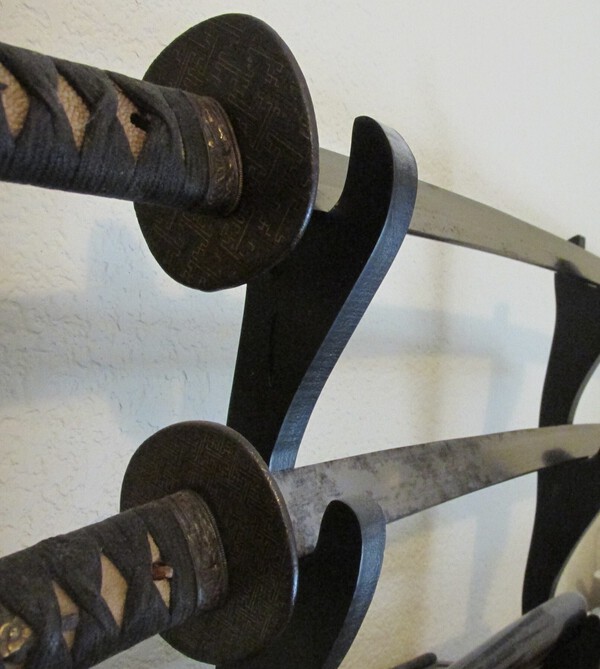
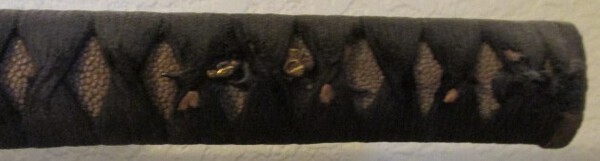
How many tsuba did the average (not high status or wealthy) samurai own? I have read it somewhere (of course again I can’t remember where I read it – age bites!) that some (wealthier) samurai had 3 or more tsuba for each blade of their daisho. They had a tsuba to place on their blade to wear in royal court appearances (or when appearing in front of a noble or nobles). They had a tsuba to place on their blade for daily wear. And they had another tsuba to place on their blade for battle or duels. So, to assist in explaining the above thoughts, I will need to refer to some parts of my daisho. I am not going to discuss the blades here. This is not the proper area of the forum to do that, and they have already been brought up in the Nihonto section and the Translation section probably a couple of years ago (but once again, I can’t remember those threads-darn it!). Now, I am fortunate in owning a daisho set (a low-quality set, but I am glad I got it - and hey that was all I could afford-ha, ha, ha, ha, etc!). I believe that my daisho is at least 300 years old and was owned by a poor samurai (the dealer in Japan that sold it stated it was from the very late Muromachi period making this daisho at least 430 years old now-but hey they could have been wrong and probably were incorrect-but whatever!). Anyway, I make that estimate of at least 300 years old based on the blade of the katana (since I believe the wakizashi blade is a newer replacement-as explained below) and tsuba (and what is of interest is that even though both tsuba are of the same style, the inlay on the katana tsuba is not as close together as the inlay on the wakizashi tsuba – several of the pictures below show what I have described-although you may need to zoom in on that first picture!), the ito wrapping on the tsuka (the ito on the katana has small wood chips placed in places on the frayed and separating ito – again refer to the picture below- I think the samurai who owned it perhaps couldn’t afford to have the tsuka re-wrapped?), and the fact that both saya are not exactly made the same (but are of the same color-I figure the wakizashi blade had been broken at one time and replaced with another more current blade and saya). Actually, this daisho (seems to me) to be a hodgepodge of different things. Same style of tsuba (probably made by two different craftsmen), different style of blades (also probably made by two different craftsmen), and slightly different saya (again also probably made by two different craftsmen). But the (probably) poor samurai that owned this daisho kept it all together and looking good (the tsuba match up well, the furnishings and ito on both daisho tsuka are the same and appear to show the same age, and the saya are both the same color). I have included picture a of the daisho, pictures of the tsuba and how they are very similar (but not exactly the same), and a picture of the wood chips in the katana tsuka. What I find of interest is that I think the poor samurai that owned this daisho may have had only one tsuba (since he probably couldn’t afford more tsuba?) for his daisho blades and could have used the same tsuba for all 3 functions mentioned above (court, daily wear, and battle or duels). The tsuba on the daisho (if they still had all the inlay in them!) would have looked good enough (in my opinion) for court. It would also be fine to wear for daily wear. And it is not a fine artistically carved tsuba (it is only inlaid) so it could also be used for battles or duels (without the samurai being concerned about possibly ruining a tsuba that was overly artistic, and probably would be very expensive!). So, perhaps, maybe some samurai only owned one tsuba for each of their daisho blades? Anyway, just some interesting stuff. And who knows, maybe the owner of my daisho had more than one tsuba to place on his blades? And of course, it is just my opinion on the age of my daisho. Still, I find this an interesting subject and just wanted to share my thoughts (at least it makes my day go by faster, and gives this old retired person something to do!). Onward!


-
So, does anybody know how much an average hand forged tsuba (no super great work of art and no mei) cost in the Edo period (let’s say about from 1750 to 1800 – to keep things simpler!). Not all samurai made the same amount of money. I could talk about being paid in units of koku (rice) or currency or scrip money of the period (but I won’t!). The links to koku and scrip money can be found below- https://en.wikipedia.org/wiki/Koku https://en.wikipedia..._of_Edo_period_Japan The samurai class varied from the very wealthy samurai to the much less wealthy (poor) samurai. I found that Markus Sesko wrote a brilliant article (I think in 2021) on the cost of a sword in Edo period Japan. His article can be found at the below link- https://nihonto.com/samurai-income/ But I wonder (and I can’t figure out how to convert all the different units to the dollar bill!) how much an average type of tsuba would have cost the Edo period samurai in today’s currency? Has that ever been discussed before (if so I could not find it in the archives of this forum). I think this is an interesting question to consider. Onward!
-
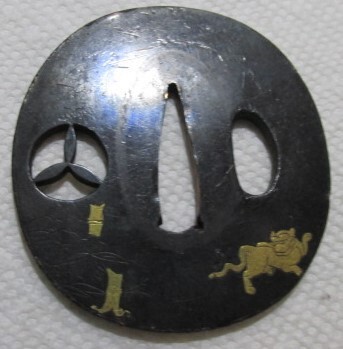
How about some ferocious tigers! Or maybe some playful kittens? From my collection.



-
So, I was just wondering (and I thought this may be interesting) what was your motivation to start collecting tsuba? For me, it was that I practiced and trained in the martial art of Iaido for a while (along with another martial art). I also read several books on Zen. I wanted a fairly inexpensive way (at least when I started collecting!) for me to (how can I say it?) feel closer to the bushido spirit and the samurai of old Japan. That is why I only try to collect pieces that show that they have been mounted on a blade and appear that they are at least from the Edo period (or before). What started as a small collection has (over the past 6 years) expanded into a rather large collection! I am now (quite literally) surrounded (by all the tsuba hanging on my walls) by the bushido spirit and by pieces that samurai probably (hopefully!) had mounted on their blades. Each tsuba is unique. Each tells a story in the designs and motifs (sometimes referring to legends and tales in old Japan and sometimes showing family kamons) that are carved on the piece. Just wanted to share my reasons why I started collecting tsuba!. Onward!
-
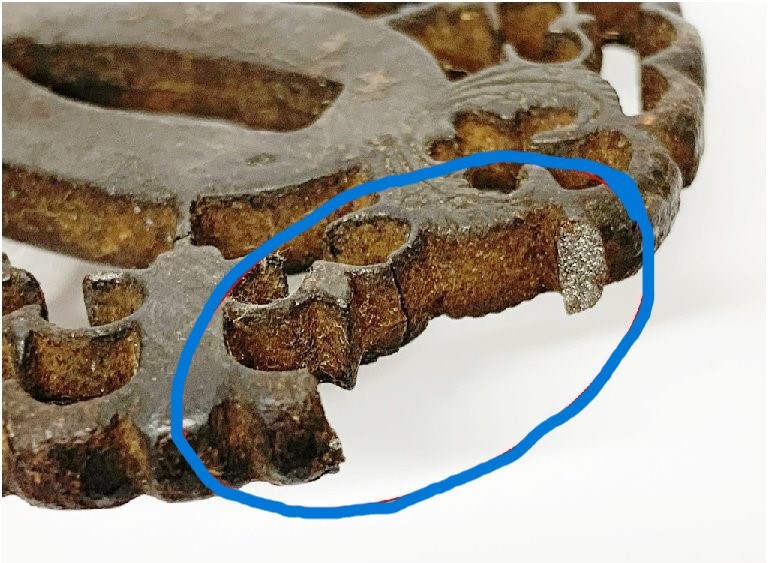
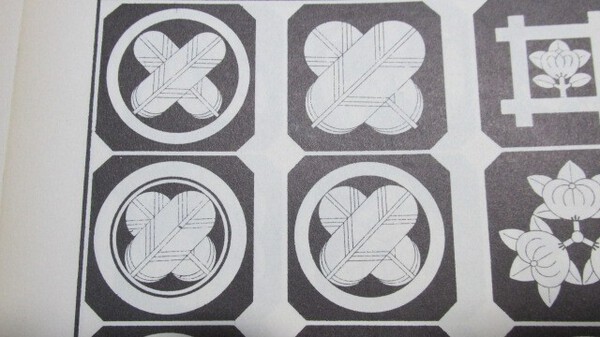
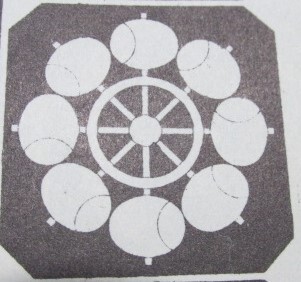
Hello all! So, let’s talk about eBay and what can be found there. Today I purchased a tsuba from eBay. It was from a seller in the United States, so the listing would have not appeared on Jauce or anywhere else. The piece was a buy it now or make offer. The seller wanted $150 for the piece. I made an offer of $125, and the seller accepted my offer. Everyone was pleased, and I am pretty sure I made a decent purchase. With shipping and taxes, the total cost of the piece came to $141.50 (still below my $150 maximum that I will spend for a tsuba). It is my opinion that this tsuba is at least Edo period and has been mounted on at least one blade (maybe more than one blade). The bronze and silver-colored inlays are probably the kamon of a family. Does the tsuba have worn inlay, yes. Does it have missing inlay, yes. Do I care, no! I do not have a tsuba like it in my collection, and I think it will make a great addition to my collection! And just for some more added information- I have a book published in 1950 that shows over 7000 Japanese family kamon - family crests (unfortunately it doesn’t list the name of the family). I have found 2 kamon in that book that are close to the kamon shown on the tsuba. Pictures of the tsuba (from the seller) and family kamon (that are close in form to the kamon shown on my tsuba) from my book are shown below. I think deals can still be had on eBay! But that is just my opinion! Onward!



-
A beautiful and unique piece! As you stated- “fell in love with this and had to get it.” That is the best reason to buy a tsuba, in my opinion! I have also found that sometimes the piece just calls out to you! I am sure much more knowledgeable members than I am will tell you more about your tsuba. Onward!
-
This forum is a great resource for new collectors of tsuba! So, let’s say a new collector sees a tsuba that they would like to purchase on one of the sites. Jauce, ebay, or whatever. If they are not in a rush to purchase the tsuba they can always place a picture of the tsuba on this forum (taken from the seller’s description) and ask for opinions about the piece (as has been done by several new collectors in the past). A papered tsuba only means that an authority in Japan has recognized the tsuba as worthy as being preserved. But there are many experts on this forum that can readily recognize the same thing and if a tsuba is worthy of being collected or not! Unless the new tsuba collector is convinced (or has been convinced) that they must have a papered tsuba! And perhaps by asking opinions about a non-papered tsuba on this forum, it will save the new collector some cash from buying a papered tsuba. Hey, as always, just my opinion. And only (once again) trying to help the new collectors of tsuba!.
-
Hey John, Are you really advising new collectors to, as you stated, “Just buy good quality tsuba (fittings etc) from trusted sources, ideally papered so you know as well as you can that you’re getting what you pay for.” Now, I am sure you are aware that a papered tsuba can cost anywhere from (perhaps) 4 to maybe 10 times as much as a non-papered tsuba! And then there are those tsuba that are papered, but with the dreaded green papers! I know there must be a forum thread or something that discusses all the different certification papers that are out there, but I can’t find it. I think that a reference source to the different types and colors of certification papers (over the years) may be helpful to new collectors (maybe if someone were to start another more recent thread on the subject).
-
Hi again lonely panet! Your post has some great information for new collectors! Heck, I may even try purchasing again from Jauce (I even think I still have some money left in their account!). Of course, I still won’t spend over $150 for a tsuba! Ha, ha, ha, ha, etc! Onward!
-
Dr. Lissenden’s master’s thesis on Namban tsuba (which has been brought up several times on this thread) is like a university course in itself! Here is the title of that work- “THE NAMBAN GROUP OF Japanese SWORD GUARDS: A REAPPRAISAL by Dr John Philip Lissenden. Submitted, in January 2002, for the Master of Arts degree of the University of Durham.” I think it is a must read for collectors! Not only does it examine, explore and explain Namban type tsuba, but it also delves into tsuba casting methods. For those that don’t want to read the entire thesis (199 pages) I recommend only reading pages 131 through 139 since those pages deal with tsuba casting. His thesis can be found at this link- https://etheses.dur....4129/1/4129_1648.pdf A few quotes from those pages are shown below- The following is from p. 133- “Can this supposed action by one of the Yagyu craftsmen be viewed rather as a method of eliminating from a selection of tsuba those that had been moulded instead of forged and, perhaps, taken as confirmation that the casting of tsuba was acknowledged to exist?” (When ‘lost form’ is used it refers to the ‘lost wax’ method of casting) From p.134- “9.3. TH E CASTING OF NAMBAN TSUBA Theoretically, Namban tsuba are ideally suited to manufacture by the 'lost form' method of casting. They were largely mass-produced shiiremono, and the convoluted undercutting and scrollwork that characterise this group are easily reproducible by such casting techniques. Indeed, to produce such work by a hand-carving process could be considered technically difficult and economically impractical.” Also, on that same page (p,134)- “• The surface of a cast guard will give the impression of granularity and porosity, and 'sand bubbles' may be present. Conversely, the heating and hammering processes involved during the working of the metal leave a surface that is relatively smooth and featureless on magnification. Such granularity is most easily seen on plain, undecorated surfaces, but facets of the chisel-work, where cast, will demonstrate a similar porous surface.” And from page 137- “The examination — with a light and with powerful magnification — of a corpus of Namban tsuba leads one to the surprising conclusion that a very high proportion of them are the result of a casting process. In order to confirm this conclusion, a group of 29 arbitrarily selected Namban tuba was examined and each tsuba was graded according to the presence of four indicators of casting, as follows: 1. The presence of surface granularity and porosity, with or without 'sand bubbles'. 2. The presence of investment material — a residue of a red, granular nature was discounted. 3. The presence of 'feathering' in the openwork. 4. A lack of crispness in the incised areas.” (for a possible comparison picture of item #1 explained above I refer the reader to this forum thread- https://www.militaria.co.za/nmb/topic/50495-sand-cast/ and my post of Friday -11/15/24-at 7:17AM) So, again, some interesting stuff on cast iron tsuba! This has been my thing (and a few others) for about 2 years and 10 months. I am not going to let it go until a cheap non-invasive metallurgical test to discern between cast iron and hand forged iron is discovered! Only in that way will the nonbelivers ever acknowledge that cast iron tsuba were made in the Edo period! Otherwise, it is just a best guess by those that still say that cast iron tsuba were not made in the Edo period (even though it has been shown that the NBTHK has papered cast iron tsuba - please refer to my previous post above). Onward!
-
Hello Jason (and also Sam since I saw his recent post on this thread). I started this thread to try and help new collectors negotiate the labyrinth of tsuba that are on eBay and maybe give them some useful tips. And I do love my pieces, so I will keep doing what I have done for the past about 6 years. My philosophy is “never change a winning game, always change a losing game”. I feel that I have been winning in the way I acquire my pieces from eBay. I have tried Jauce (and have acquired one piece from them). But it was not a bid (like I stated before, bidding is not for me!), it was a buy it now. I found out that with putting a required amount of money in Jauce before you can purchase, and with all the added fees attached and then the shipping; it just about equals what I could have bought the same tsuba for on eBay (especially if I communicated with the seller and was successful in negotiating a lower price with him for the piece). Not only that, but the eBay pieces arrived in a timelier manner than the Jauce piece. As I stated somewhere else on this forum (darn it, can’t remember the thread!) I am not interested in selling my tsuba. I don’t purchase them to turn them around and make a profit (as I am sure many other collectors do). I buy them, learn from them, give the lower quality tsuba a good home (until I pass and move on, as my collection will also move on!), and enjoy them by hanging them on several walls of the house and viewing them every day! Also, I know that I have been fortunate enough to purchase quite a few quality pieces on eBay for under $150. I know that because I have a very knowledgeable friend that studies tsuba and I have shown some of my tsuba to him and he has stated that I got a great deal for the price that I paid! So, deals can still be had on eBay. You just have to learn to discern and know what you are looking at (and you can always contact the seller and ask questions about the piece). And yes, (and I also know I stated this on another thread-but again old age has made me forget where; I have to blame something!) I have been bit once or twice on my eBay purchases because of misleading seller pictures or other information. But when I get bit, I don’t lose much money compared to someone else that has deep pockets and spends a lot more for a tsuba. And when I have gotten bit, I have spent less than what many known and stated as such reproduction tsuba cost. So, not a big loss and they still end up on my walls! We all collect in different ways and for different reasons. I personally enjoy the challenge of finding a nice old, showing signs of possibly being mounted on a blade, possibly rusted (more than likely!) tsuba on eBay for about $150 (sometimes a little more, sometimes less). Hey, that is just me! Onward!
-
Thanks Okan. I understand and appreciate what you are saying. And it is good advice to those that can save up their money! Onward!
-
First to address the post from Winchester (Brian). You stated- “I think your heart is in the right place Dan and if it makes you happy, keep on keeping on.” Well Winchester I know my heart is in the right place, and I don't need you to think about it! Then to address the post from Okan- What you stated in that quote is only one person’s opinion. Not everybody has deep pockets, and some (like me) can only purchase stuff for their hobby on a month to month basis. Please refer to this thread and my post of 11/22 at 12:44PM- https://www.militaria.co.za/nmb/topic/50577-water-wheel-and-cherry-blossom/ Why does a simple post of mine trying to help people (which started this thread) have to become so overly complicated by some members?
-
Hi George! Nice to meet you! As far as ruling out the fakes, I would like to refer you again to this thread (which you probably already read!)- https://www.militaria.co.za/nmb/topic/47395-tsuba-purchasing-for-new-collectors/ Over my 6 years of tsuba collecting there have been several members that have been of great and valuable help and assistance to me. One of those members has a forum name of Spartancrest. Perhaps if you PM (Personal Message) him he can further assist you on how to rule out the fakes and how to properly value a tsuba. Although, because of his expertise, I am sure the guy probably is inundated with PM’s and emails! But you can always give it a try! Onward!
-
Hello, lonely panet. I try to help new collectors, and then you stated- “149 ebay tsuba omg This dosnt sound good” What is up with that? You haven’t seen my collection or know the values that I achieved through my purchases through eBay. What are you, a tsuba dealer who doesn’t want people to buy tsuba from eBay? Either state something positive for new collectors, or don’t say anything at all (especially about my tsuba collection that I purchased over the years from eBay!). Just my opinion.
-
Hello all! So, I just wanted to share how I purchase tsuba on eBay. I have been doing this for almost 6 years and have about 150 tsuba. Out of those 150 tsuba I have purchased 149 of them from eBay (and only about 5 of those through the bidding process!). I don’t like to bid on a tsuba. For me, that takes too much effort and time. Sometimes you must wake up in the early hours of the morning as the bid is ending to place your final bid and you may end up paying more than you wanted as you tend to increase your bid to outbid someone else. So, you see a tsuba you like on eBay. You have discerned that it is an actual (not a fake or reproduction) antique tsuba and most likely made in the Edo period. Your research is based on several good beginner’s books that are out there, or you can refer to this thread for a quick reference- https://www.militaria.co.za/nmb/topic/47395-tsuba-purchasing-for-new-collectors/ Now you are on eBay and see a nice tsuba that you want to purchase. Of course, if it is within your price range you may just decide to purchase it! Or there is something else you can do! If you look on the upper right-hand side of the page (below the description of the tsuba) you will notice an area on the far right that states “Contact seller”. If you click on that it will take you to another screen where you can find out about details of the piece, shipping, or returns. However, at the bottom of that screen is an area labeled “Still have questions” and on the right of that is an area labeled “Contact seller”. Now, if you are not in a hurry to purchase the piece (and by using this method you may lose the piece to someone else who has bought it by paying the full price) you can click on the “Contact seller” box and send a message to the seller. I have sent messages to several sellers when I see I piece I would like, but it is maybe just a little too expensive for me to afford. I tell the seller how much I am willing to pay for the tsuba and if he would please consider my offer. On several occasions, the seller has accepted my offer or we discuss a price that both of us think is a fair price for the piece. That is the technique I use when the seller has not listed a “Make offer” box with the listing. Sometimes, you don’t have to end up paying the full price shown for the item on the eBay listing! One other thing to be aware of when purchasing tsuba on eBay is the shipping charge. Some sellers offer free shipping from Japan. While other sellers usually charge anywhere from $20 to $40! The shipping charge can be seen under the price of the displayed item. Just trying to help some of the newer members that may be trying to purchase tsuba on eBay by relating the method that I have used successfully. Onward!