
Dan tsuba
-
Posts
859 -
Joined
Content Type
Profiles
Forums
Events
Store
Downloads
Gallery
Everything posted by Dan tsuba
-
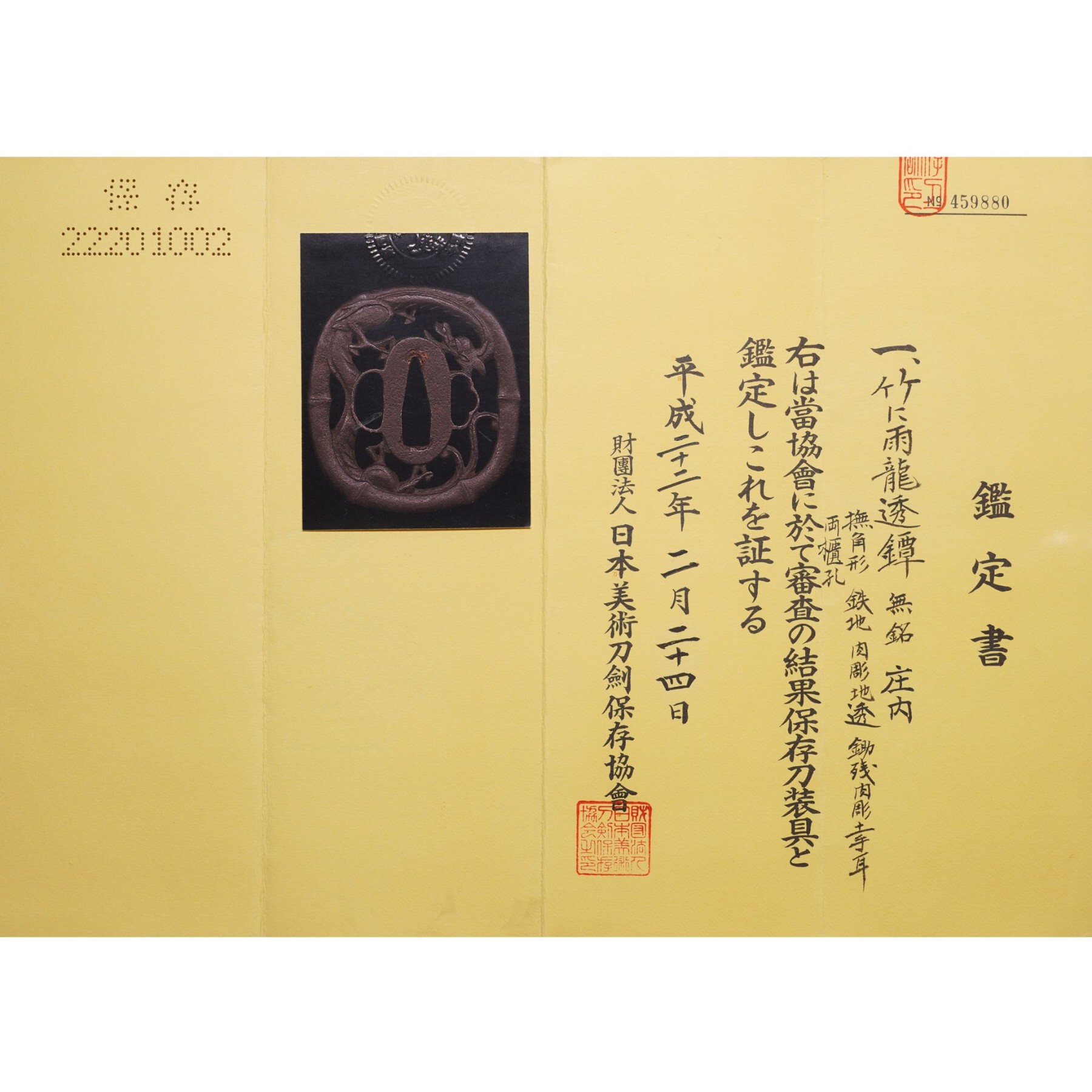
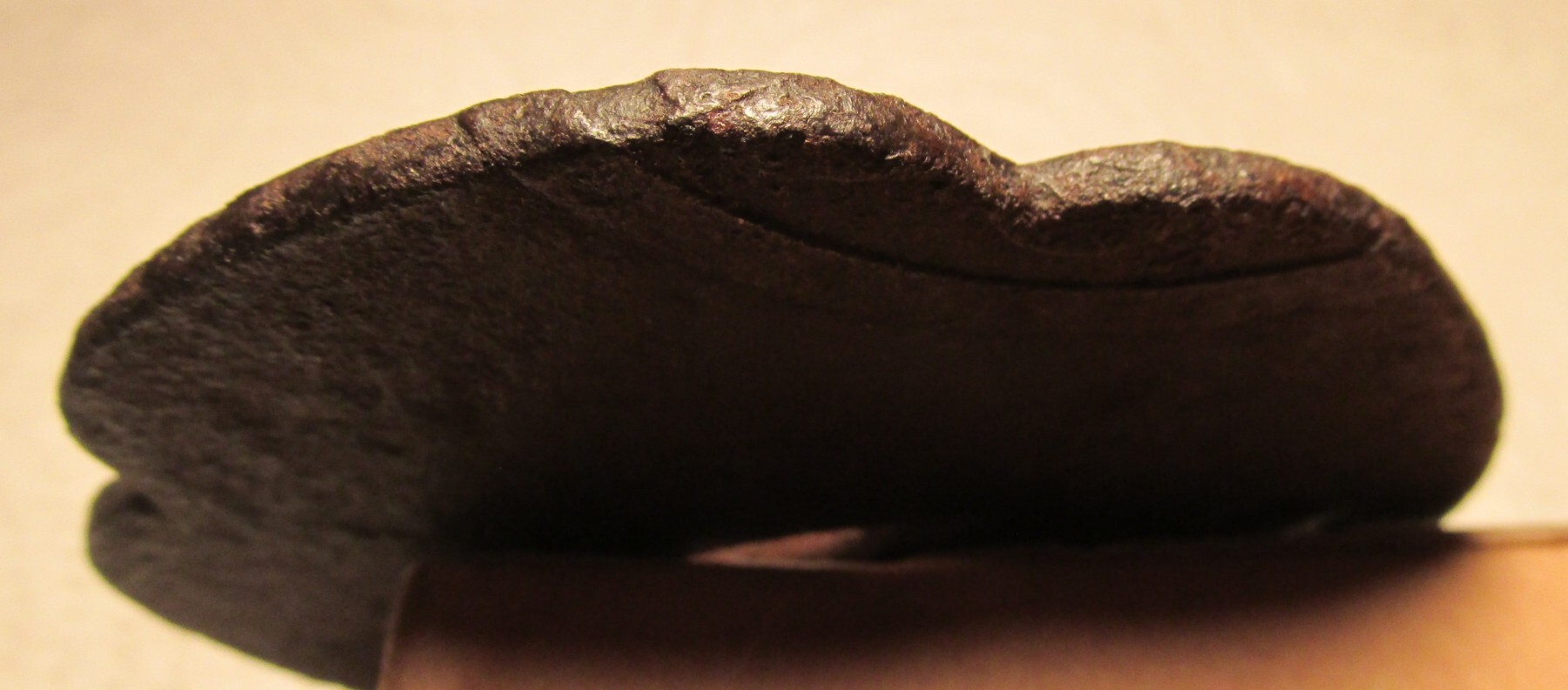
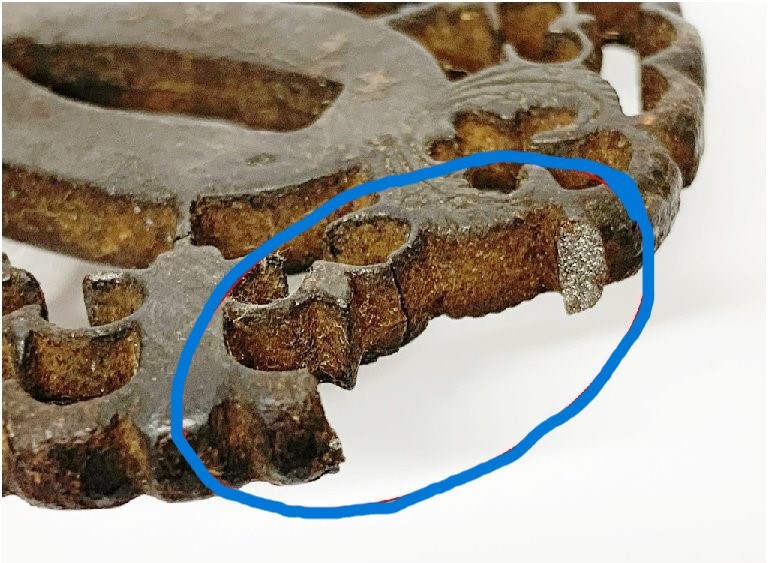
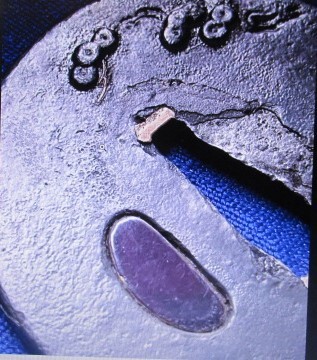
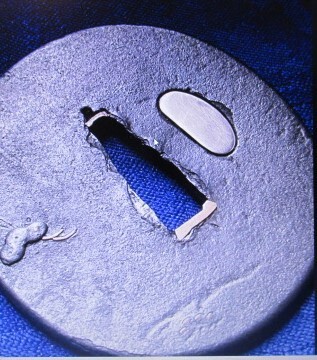
I found a tsuba listed on eBay that I think may be of interest. I have included pictures of that tsuba below (and those pictures may be misleading because they may have been taken in bad lighting conditions or something else). Also, I don’t know if what I am about to describe is even possible with metal. I am not a metallurgist. But I do know that the tsuba craftsman were quite ingenious in what they could do with metal. Now, the tsuba pictured below appears to me that it has at least 2 layers as shown by the pictures of the area around nakago-ana. So, this is what I am thinking (and I could be totally wrong, but it is interesting to try and figure this tsuba out!). It appears that there is an inner layer of metal and then an outer layer of metal. Maybe the inner layer of metal (the lighter looking metal) is hand forged iron? Then the tsuba craftsman dipped the hand forged iron piece (that was already cut with the nakago-ana and hitsu-ana) into molten metal. Of course, that molten metal would probably be cast iron. But because the tsuba was not cast in a sand mold, the outer appearance would not have that total sand mold grainy type texture. With the molten metal on the outside of the tsuba still hot, the craftsman could have then taken some type of small motif molds (maybe themselves filled with hot metal) and added those motifs to the hot metal on the outside of the tsuba? The tsuba inner layer being of hand forged iron would still make for a very strong tsuba. Cast iron being more brittle than hand forged iron, on this tsuba the outer layer of metal (which may be cast iron) seemed to have broken away from the inner layer of metal (which may be hand forged iron) around the nakago-ana. I know I am probably 100% wrong, but it is an interesting guess! And why is this the only tsuba that I have seen that shows this type(?) of construction? Why is this the only picture of a possible 2 layer tsuba (something has got to be wrong!)? This tsuba is shown (in the other pictures on eBay not included here) to be about 62mm across the shorter part (measured going across the hitsu-ana), about 4mm in thickness, and about 93grams in weight. This is just my best guess and opinion. Does anyone else have a possible explanation for the appearance of this tsuba?



-
The Truth Is Out There- But those old Japanese texts that may contain insights into the question of cast iron tsuba being made in the Edo period probably won’t be translated from Japanese to English, figured out and collated in my lifetime! Nothing can be proven until an inexpensive non-invasive metallurgical test to discern between cast iron and hand forged iron comes along! Which also probably won't happen in my lifetime! Otherwise, it will always be said that it is just everybody’s best guess and opinions about whether cast iron tsuba were not made or were made in the Edo period. And let us not forget that if a tsuba collector spends a lot of money for a Edo period piece that they think is hand forged (or maybe was even described as hand forged) and then perhaps finds out later that it is actually cast iron; I think that would be a negative experience for the collector! But this has all been stated before, somewhere on this thread! Onward!
-
Hello Derek! Thanks for your opinions, again much appreciated! In part of your post, you stated- “However, from what I’ve read, if I were to make a guess, the Edo period was a time of peace, and they didn’t need to make tsuba in bulk as they did in earlier periods. During the Edo period, tsuba became more like jewelry—something to make one stand out. Additionally, tsuba makers had much more time to practice their craft and come up with new ideas. So, I believe tsuba makers invested their time in quality rather than rushing their work. That was probably the best way to attract new customers. If they had made cast iron tsuba, I’m sure clients would have noticed the difference, and none of them would have wanted to lose customers. So, maybe they did, or maybe they didn’t. And quite honestly, it doesn’t matter much” Well, I don’t know. I figure not everyone could afford a tsuba that was a work of art, so maybe some craftsmen made cast iron tsuba to appeal to the less wealthy? Also, I think this subject of if cast iron tsuba were made in the Edo period does matter (and is of interest) to many people as witnessed by the number of views on this thread. I have found out over the years that there are many people that look at and read a thread or posts without participating in that thread. They are interested in the subject, but (for whatever reason) just don’t wish to participate or get involved. Anyway, just my opinion. Onward!
-
Hello again Derek! I don’t know. So, what is your opinion? Could cast iron tsuba have been made in the Edo period? I hope you have read the 16 pages of this thread. Many members contributed to it. Although to read the whole theard may take you a couple of weeks to get through it all (it is long and involved)! Throughout this thread I, and a few others, have tried to back up our opinions with research (and stated our references) or at least have shown pictures of what our opinions are based on. Maybe I am just wasting my time after about 3 years on this thread! I am also a licensed radio amateur. Maybe I should just concentrate on my radio stuff! Ha, ha, ha, ha, ha, ha, etc! Onward!
-
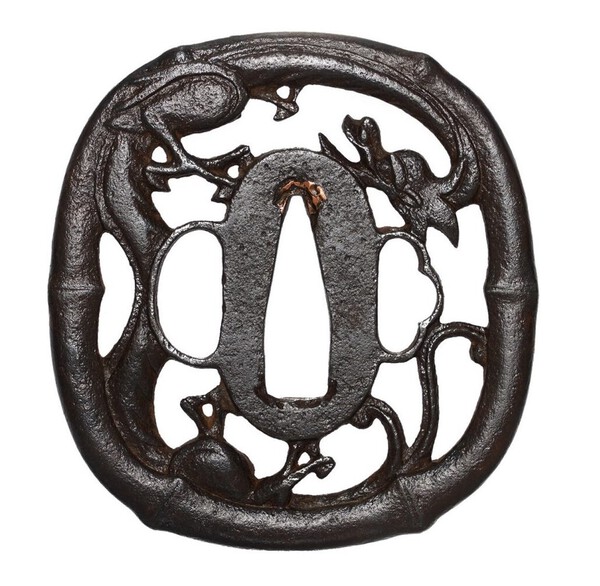
Hi Derek! Thanks for your opinions. Always appreciated! But, included below are pictures of 2 of my tsuba that I believe are very old. The seppa-dai on the first old tsuba does not have pitting. The seppa-dia on the second old tsuba has rust pitting, which looks entirlely different then sand cast pitting on the seppai-dia of the tsuba shown above, which it is my opinion is cast iron (shown in one of my above posts and also shown below). Onward!
.JPG.8a0b68156996b1f407f3c07caae3af03.JPG)

-
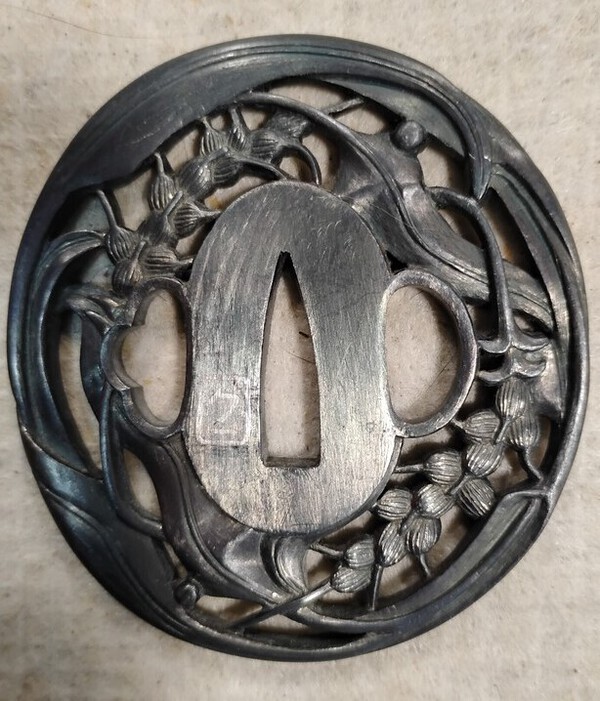
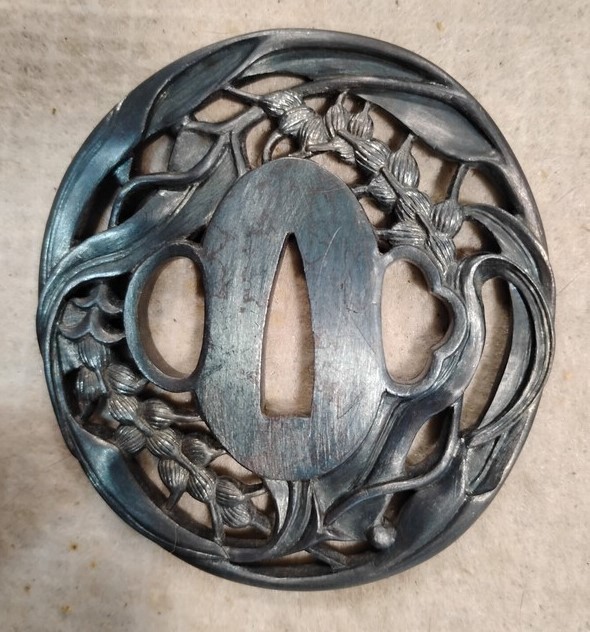
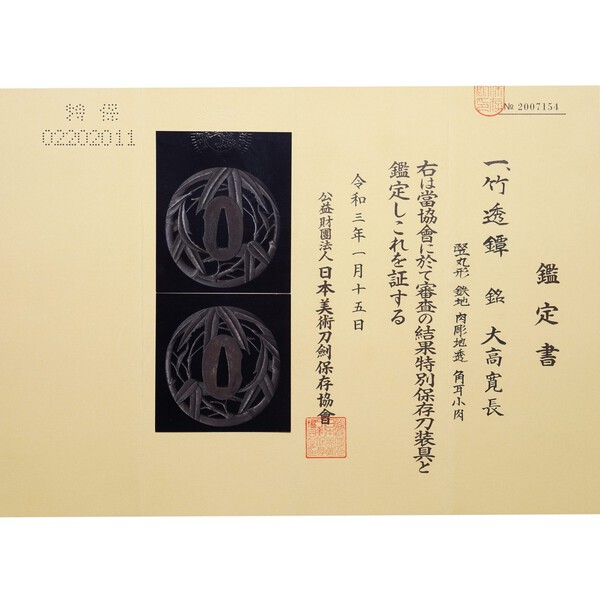
Hi all! Yes, I am still at it (well at least it keeps this old guy busy and off the streets!). So, let me talk about hand forged tsuba (one is papered) and compare them to a papered tsuba that I believe is cast iron. The first tsuba shown is a hand forged tsuba that was completed in 2024. It is beautiful and shows how the seppa-dai looks on a newly hand forged piece. More information about this gorgeous tsuba can be found on this forum here-(and pictures are shown below)- https://www.militaria.co.za/nmb/topic/50233-4th-attempt-at-tsuba-making/#comment-522926 Then I found a tsuba that was papered. Now compare that much older hand forged papered tsuba to the new tsuba that I explained above, and you can again see how the seppa-dai on both hand forged tsuba appear similar. Again, pictures are shown below. Finally, I show pictures of a papered tsuba that I believe is cast iron. The seppa-dai area on that (what I believe to be cast iron) cast iron tsuba appears nothing like the seppa-dai area on the hand forged tsuba. I know that this may be a point of contention for many because probably it will be stated by some that the tsuba craftsman made hand forged tsuba appear differently because of how they treated the surface of the metal with chemicals. That may be so. But I am of the opinion that those small pitted areas on the seppa-dai (and that actually are all over that tsuba) of the tsuba that I think is cast iron were made by sand casting the tsuba. Hey, just my opinion! Onward!




-
Hi Maurice! Don't know about the theme of the menuki. But maybe the tsuba theme is some sort of Shachi or dragon fish? I refer you to the below thread- https://www.militaria.co.za/nmb/topic/27098-shachi-dragon-fish/
-
So, here is something interesting. I found another tsuba in my collection that is convex in shape (Goishi-gata -convex both sides). I was taking some of my tsuba down from my walls to take pictures for another of my threads here, the Kamon (motifs and shapes) of tsuba thread. It was then that I noticed that the tsuba was convex, since I probably have not held that tsuba in my hands since I purchased it a couple of years ago! I still feel that to make a tsuba in that shape took some extra effort from the craftsman! Pictures attached.


-
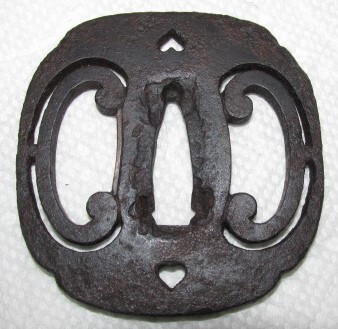
So, looking through my collection I found another tsuba with the inome symbol. What is interesting is that this is one of the first tsuba that I purchased. At that time, I thought it was interesting that the craftsman included hearts in his motif! I had no idea (like I do now) of what that symbol represented! Ha, ha, ha, ha, etc!
-
Hi Derek! You may be correct about the kamon on my tsuba and the kamon picture I found in my book are not the same. My book only shows about 7000 kamon, but I figure there are a lot more kamon out there! Although, I think my tsuba shows some sort of kamon. Just giving it my best guess! But who knows, it may just be a snow flake or something else and I could be wrong about it being a kamon. Thanks and onward!
-
Hi Thomas! Your tsuba appears to me to be an authentic hand forged tsuba, not a fake. Age is difficult to ascertain. Your tsuba is not rusted so it was taken well care of or is a more recent tsuba (made in the later Eco period?). I don't know! I also don’t know about the school; I am sure other members will tell you about it. Oh, and when photographing and displaying tsuba, you should photograph the tsuba so the more pointed side of the nakago-ana (center triangular tang slot) is facing upwards. Onward!
-
Well, just came across another one of my tsuba with a kamon.


-
Hi Dee, can't help with the mei or the museum stuff. But this may be an interesting thread for your consideration on another subject- https://www.militaria.co.za/nmb/topic/47395-tsuba-purchasing-for-new-collectors/ Onward, to more tsuba collecting! Hurrah!
-
I belive! You have proven it! Ha, ha, ha, ha, ha, etc!
-
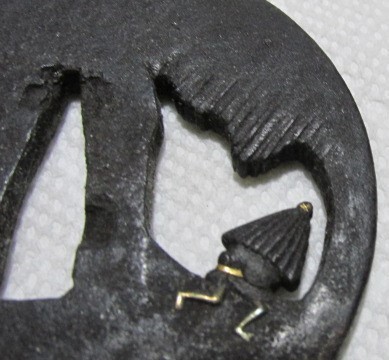
Does anybody else have a tsuba with a humorous motif? I have many tsuba (about 150 of them!). But I only have one tsuba that every time I see it, it makes me smile. The tsuba motif depicts someone under an umbrella running to get out of a storm (or a rain shower). I can imagine the legs of the figure just spinning around (like in a cartoon) trying to run as fast as they can to get to some sort of shelter! You can see the rain shower above the strangely shaped hitsu-ana (above the umbrella). The figure just comes to life in its movements (at least for me!). The craftsman that made this tsuba must have had a great sense of humor!

-
Thanks Sam! Very cool kiri (the Paulownia tree and the wood of the Paulownia tree) leaves kamon! I found those kamon in my kamon book (picture attached). Thanks for sharing!

-
Hi Florian! Thanks for sharing. Some really nice examples of kamon motifs on tsuba that you posted!
-
Hi Mick! Thanks for sharing. That looks like a nice tsuba with heart shaped symbols.
-
Hi Zachary, A nice tsuba. Thanks for sharing! It may be a good example of how perhaps the heart shapes that face towards the mimi are leaves, and the heart shapes that face towards the nakago-ana are inome symbols? The heart shapes on your tsuba (that are facing towards the mimi) seem to have stems attached to them and are surrounded with stems, small leaves, and a flower. Or maybe I am just overthinking this!
-
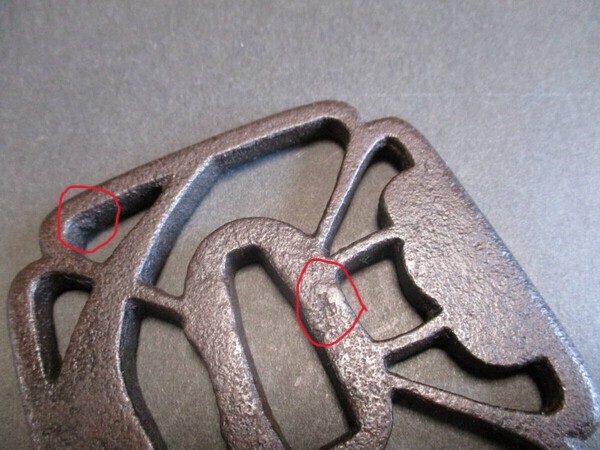
Hi Dee! I think I have found a few more areas that may indicate that your tsuba is cast.

-
Spartancrest, Nice tsuba! Your inome are facing inwards towards the nakago-ana. So, I don't know. What do you think about the heart shaped symbols facing inwards towards the nakago-ana as being inome symbols. And the heart shaped figures facing outwards towards the mimi being more or less a kind of leaf or a kamon symbol? Who knows!
-
Hey GRC, Talk about papers and how different organizations (and their so-called experts) have differing opinions. I refer you to this thread and the last couple of posts on that thread- https://www.militaria.co.za/nmb/topic/33767-found-a-tsuba/page/2/#comments
-
Hi Richard! NBTHK or NTHK, who cares! You stated "what a thrill"! I bet it was! Well done! It is a beautiful piece to be treasured (my opinion!).
-
Hey Richard! That is great that the NTHK papered your tsuba! It is a beautiful piece! This is the 21st century, why doesn’t the NTHK give an English translation included with their papers? As I understand it (please correct me if I am wrong) when you first sent it in for shinsa, it came back gimei! Then you sent it in again, and they papered it! This is a good example of what GRC is saying in his “Established ideas that need to change - 3: Pre-Edo period schools & Reliance on NBTHK papers” thread. You would figure that if the so called experts labeled it as gimei at first, then it would always be gimei! What changed?
-
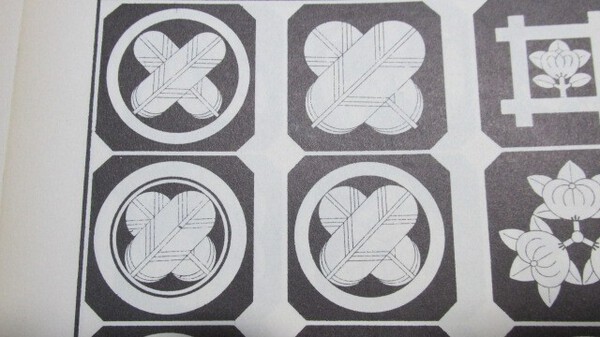
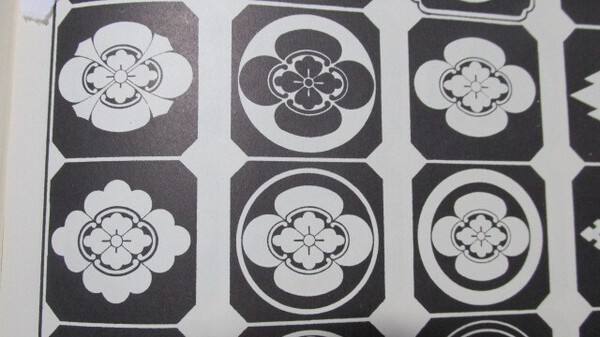
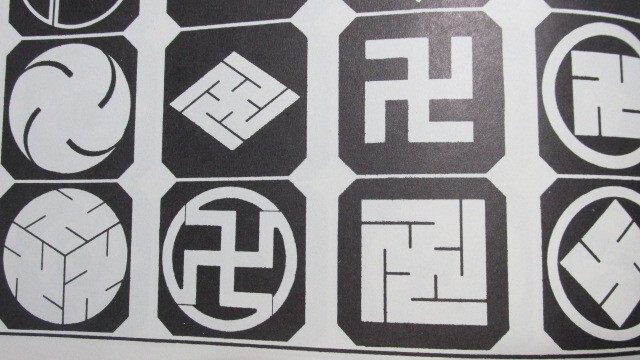
So, I just wanted to add a few more of my tsuba that seem to have family kamon on them to this old thread. I have also (once again) added the pictures from my book containing about 7000 family kamon pictures that are a close match to the tsuba shown. Although some of the pictures in the kamon book are not a perfect exact match to the kamon on the tsuba, I think they are close enough to discern that the motif on the tsuba must have been some sort of family kamon. One of the tsuba shows the entire tsuba was styled in the family kamon (as several of my tsuba in the above posts show). The other tsuba show that the family kamon made up only a small part of the tsuba (that tsuba with hawk feathers motif continues up over the mimi and onto the ura - picture included). Now I know (and this has been stated on this thread) that maybe the samurai that had these tsuba on their blades just liked the design and motif, so they put them on their blades. However, I wonder. Could there have been some sort of fine or punishment in place if it was found that the samurai that had a tsuba with a family kamon on his blade was not part of that family or clan?