David Flynn
-
Posts
2,885 -
Joined
-
Last visited
-
Days Won
6
Content Type
Profiles
Forums
Events
Store
Downloads
Gallery
Everything posted by David Flynn
-
Because of the vast amount of differnent types of swords produced in Japan, during their Military period, late Meiji through to early Showa, I believe it would be totally impractical to paper non- tradional swords.
-
Interesting point Bruce. The actual dates of manufacture elude me. However they would have to be post 1937. Which date did oild tempered Showato first appear?
-
All the ones I have seen, were oil tempered. The best one I have seen is, one that had quasi hatarake like Tobiaki. This one, looked good, untill the Habuchi was examined. Also, the cleaner the blade, the easier it is to tell. As for Kanefusa, I know someone in Oz who had one with the stamp removed, papered by the NBTHK.
-
Done at time of manufacture and usually withouth stamps. Whether or not these swords were sold outside the norm, I don't know.
-
Discussing the possible needs of some, to have their Showato "Papered", what has not been mentioned is, Gimei Showato. I have seen Showato whith big name smiths, from Gendai to Koto. Whether or not, they were done purposely to deceive is another topic altogether. However, the fact remains, they are out there. So how do they fit into the Showato Collectors need for having a sub-section of papers?
-
My only thought on this is, the lack of a stamp.
-
Because some of the Modern Smiths are already being counterfeited, particularly, Ono Yoshimitsu, the Japanese, will soon be issuing certificates for Newly Made Swords. As for Austus' question on whether newly made swords are Nihonto, the answer is yes. We are still in the Gendai period, so technically all newly made swords are Gendaito. Where Shinsakuto come in is, the delination between swords made before they were banned and swords produced post ban.
-
With the end of WW11, there came an influx of Japanese Military Swords. As we all know, many different types of swords may be found in Gunto koshirae. Also, with the ocupation troops, many swords in civilian koshirae were brought home to the respective ocupation troops home countries. We all know about Americas role in this, and to some extent, the British. However, there were also, Australian , New Zealand and Indian troops. This is why, the various forms of Japanese sword collecting became popular. Now comes the split. Whilst some concentrated on tradionally made swords, others concentrated on the militaria side of collecting. Where the problem arises is with Showato. Whilst technically," Nihonto", The Japanese in their Wisdom, decided that only traditionally made swords, would be classed/called, "Nihonto". So in conclusion, Showato are not Nihonto and never will be. The end.
-
Gendaito, are essentially similar to Shinshinto, as most of the Teachers of the Gendai smiths were, Shinshinto. To understand why most Gendaito are forged in style of the Gokuden, one must do a bit of study, and research Suishinshi Mashide and his revivalist movement. If we take the Gassan family an example, They made/make swords in all the traditions. Basically their prices reflect the tradition to which they are forged. It's my belief. That Gassan swords, forged in the Soshu tradition, are more expensive than the rest.
-
The Japanese call Shinsakuto, Gendaito.
-
As I have said in a previous post. The Japanese already class some swords differently to rest. In Japan, Gunto = Showato, Showato= Gendaito made in the early Showa period. Gendaito = Shinsakuto.
-
How many here, actually study, tradionally made swords?
-
Paul, by lumping all "Showa Period" swords together, you're not taking into consideration that, Gendaito, are apart from all other Showa Period swords. Plus, Gendaito, do paper. Also, until the Tatara re-opened in the 30s, Most surviving swordsmiths made their own steel e.g. Yoshichika, Sadakatsu and I'm lead to believe, Shigetsugu. Yet they are true Nihonto.
-
Bruce, I totally disagree with you. I will however go along with Niels hypothosis. Where the lines really blur is, Showa and Seki stamped swords, that display the features Neil has described. I have seen some swords that, untill the Tsuka is removed, for all intents and purposes, I would class as tradionally made, but have the stamps. This is an anomolly that really need clarification from the respective Sword Societies . As most collectors know, the NTHK has papered swords with Seki stamps. Did they display Niels 4 Hs? Bruce, I don't understand what you mean by, Modernist V traditionist?
-
Bizen Hidekage katana in shirasaya with beautiful workmanship
David Flynn replied to Ray Singer's topic in For Sale or Trade
Ray, I'll go along with your Shizu call. Too much Masame mixed with Itame, also the Boshi. -
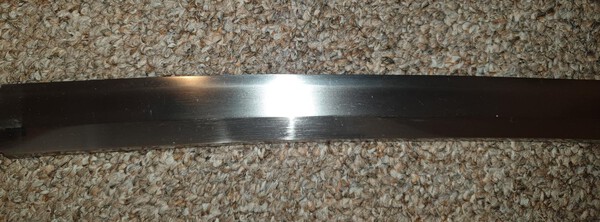
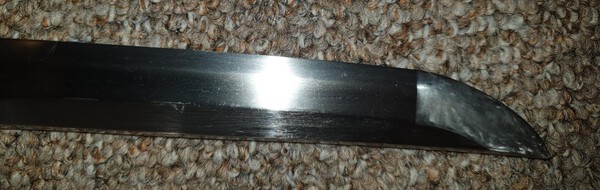
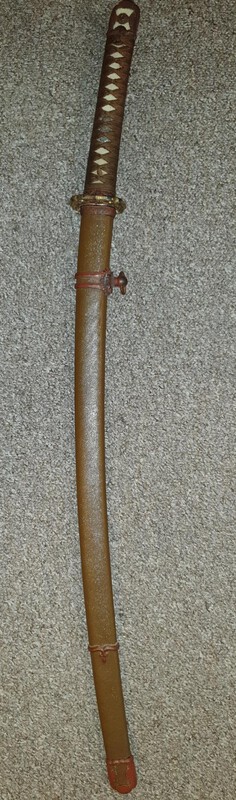
Hi I have an Akihisa in good cond. US$2100



-
Mistake, proper post to folllow.
-
This is a very well made sword. But it's driving me to distraction.
-
Thank you for you help. Now I don't feel so bad about not being able to translate it.
-
Bad news, it's a Chinese Knock off.
-
Hi, this one has me stumped. I appreciate any help

-
Hi Mark, yes it's Hozon,2012. Thank you for your assistance. I was hoping for a period, but I'm pretty sure it's early to mid Muromachi. I only acquired this sword recently.
-
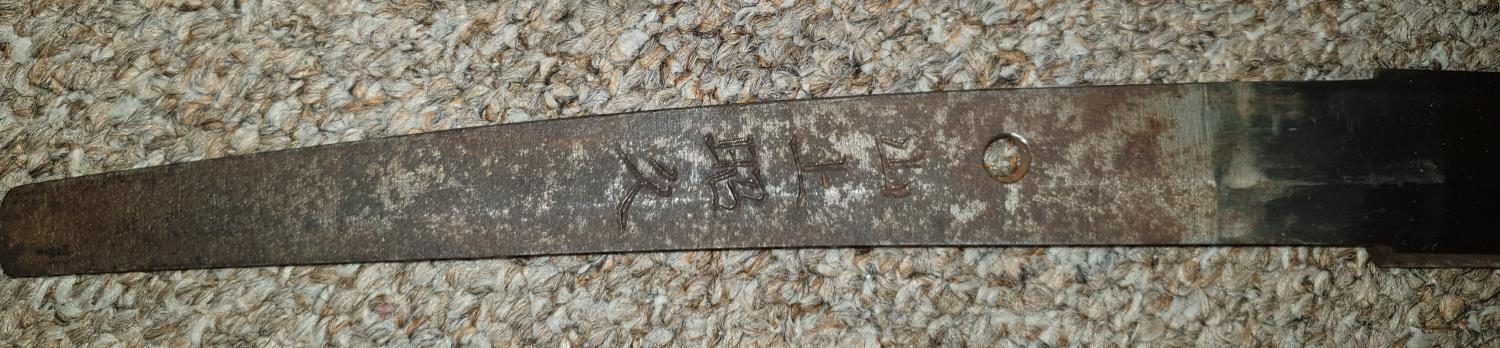
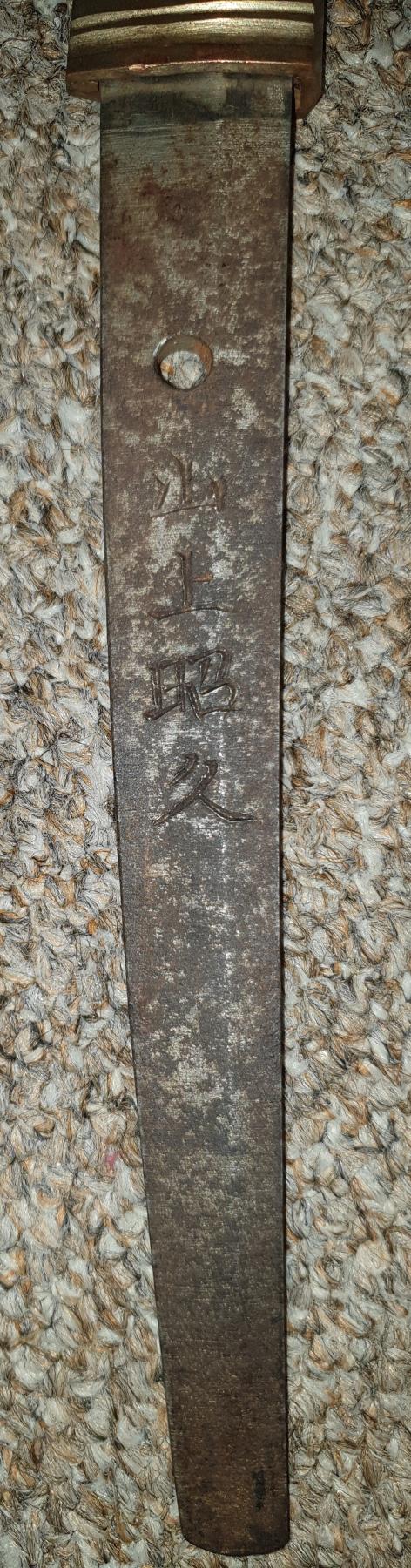
Noshu ju Kanehisa.
-
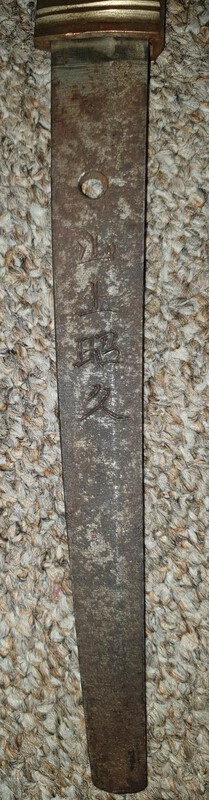
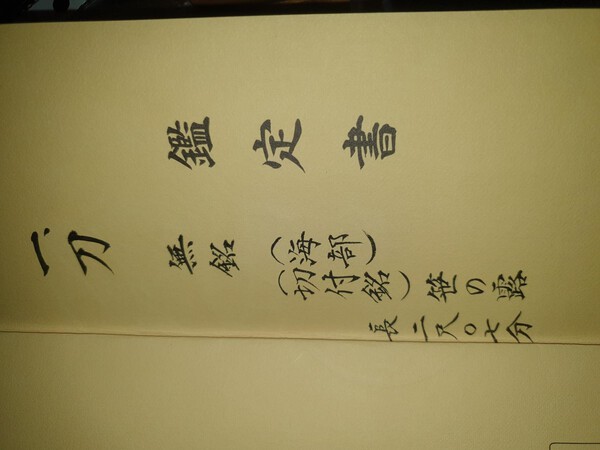
Hi, I was wondering if someone would translate this for me? Sorry I don't know how to turn it.
-
George, I will go along with you on Yasukuni swords, but only pre 1942, I have seen few with Kizu. As for Star Stamps, I believe the smiths made the best they could, with their limited amount of material. I have a Masakiyo with a star stamp, whilst Neil has a Maskiyo without any stamps. Neils Masakiyo doesn't need polishing, hower the Stamp Stamp could definately do with polishing. I will never have the Masakiyo polished ( In fact I'm going to sell it). But if it ever was polished I'd love to see the results. I have to admit I have only ever seen a couple of Star Stamps polished and they had Kizu. Maybe, it depends on how much skin has to be removed?