Ray Singer
-
Posts
5,374 -
Joined
-
Last visited
-
Days Won
147
Content Type
Profiles
Forums
Events
Store
Downloads
Gallery
Everything posted by Ray Singer
-
Thank you both! Kind regards, Ray
-
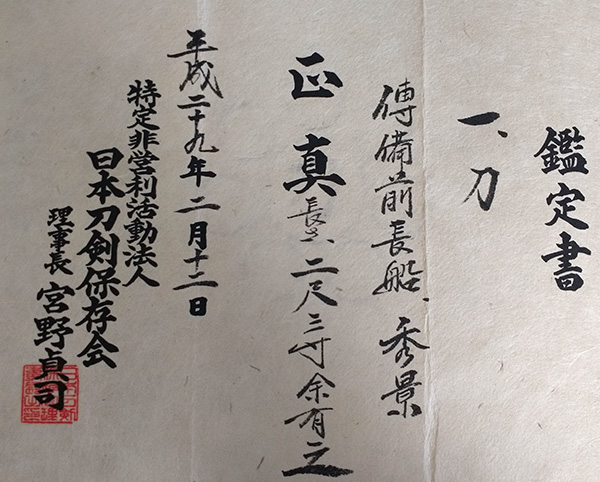
I just received this and am struggling a bit. Would someone be able to help with this translation? It is apparently one of the prizes at the annual sword forging content. Referring to the three kanji after Nihon Bijutsuhin Token Hozon Kai. My guess is that this was the NBTHK chairman's award. Much appreciated, Ray

-
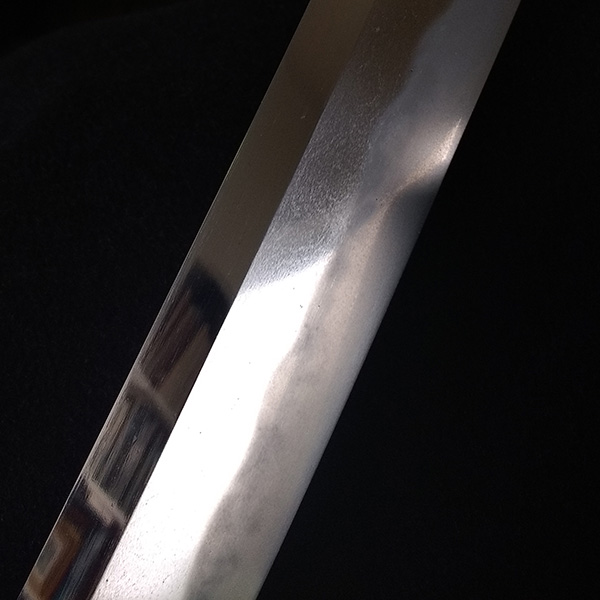
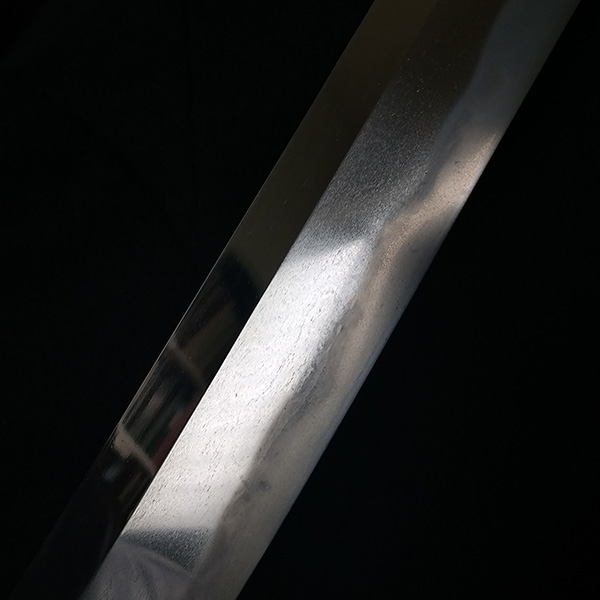
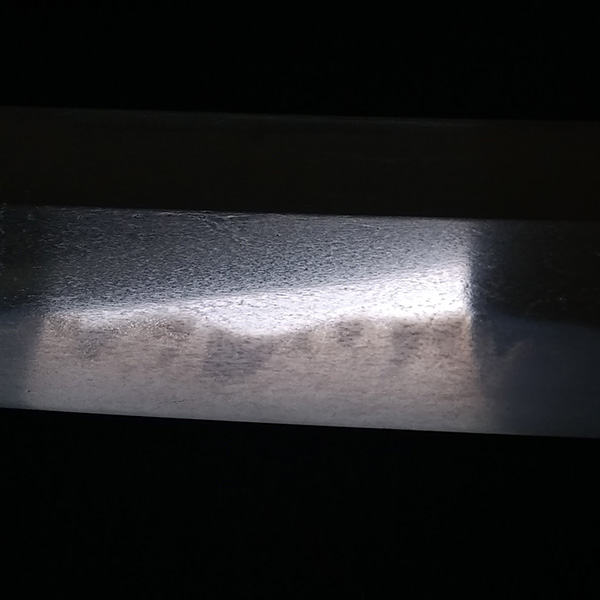
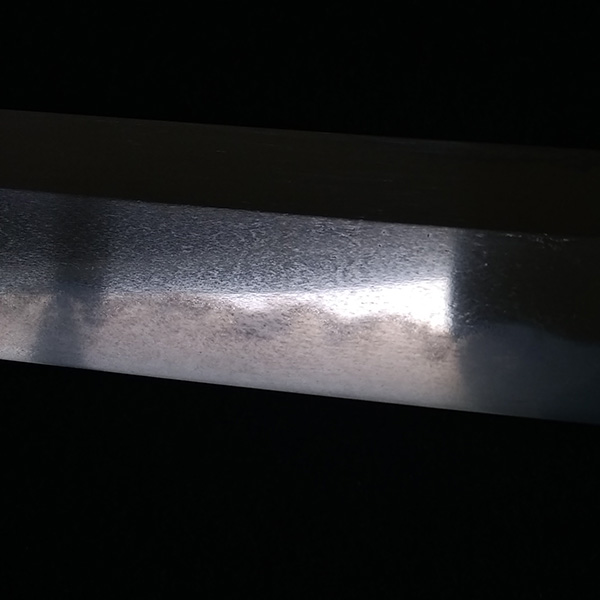
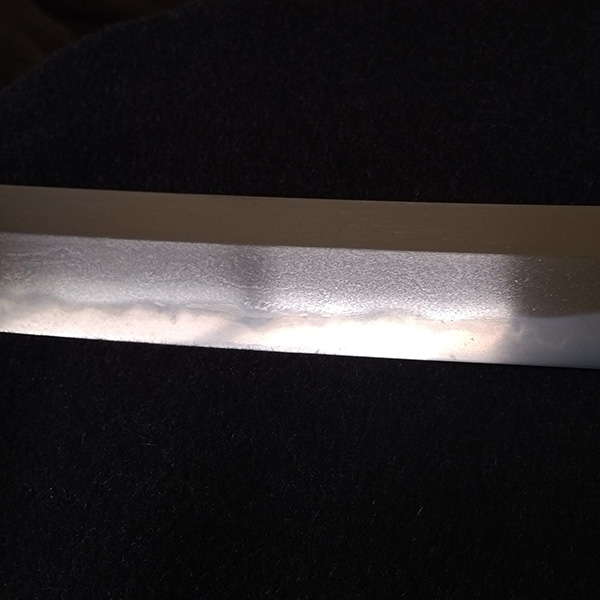
The fact that the o-hada is so plentiful in all areas of the blade, I would lean towards this being a problem with the construction. You would not expect to see so much shingane in what appears to be still be a large and healthy sword, even with a very inept polish. Although there is something funky going on at the mitsugashira, the polish from what I can see seems generally competant (but I do get your point that a poor polish could have been given earlier). Something else interesting is that large machi-okuri. Maybe done because the hamon was too disrupted at the original hamachi on that side and to hide the worst spot in the jihada under a habaki?
-
BTW, it is worth noting that the sword is only Hozon. Granted that many times collectors in Japan are happy to have their swords only validated at the Hozon level, it seems more common that dealers want to sell swords such as this with Tokubetsu Hozon (if it will achieve that level). Of the five Sokan daito which Tsuruta has on his aoijapan.net archive, only one has not achieved Tokubetsu Hozon. The price is also around half (or less) of what a Tokubetsu Hozon Sokan daito would typically sell for in Japan.
-
That is what I am thinking as well. It was surprising to me that the local example (by the noted smith Tanigawa Moriyoshi) was released with patches that were obviously shigane showing, but the overall work quality was very high and he may not have wanted to scrap/recycle the sword even with this issue.
-
Kaji-oroshi is the initial foundation shaping done by the smith before it continues to be refined and completed by the togishi. I had photos of a shinsakuto I purchased from Enomoto Sadayoshi in kaji-oroshi condition, but can't seem to locate those now.
-
My take on this is that a sword which is made using kobuse or other method having core steel, and if the construction method is uneven, may show areas of shingane from the beginning (ie. from the kaji-oroshi stage). There is a shinsakuto in the general area where I live which clearly shows patches of o-hada/shingane in what is otherwise a tightly forged jitetsu. It appears clear that this was not the smith's intent, but the core was not centrally placed within the body of the blade and 'broke through' at an early stage in the sword's life.
-
Can't thank you enough Robert. And much appreciate the link Stephen. Kind regards, Ray
-
This looks to be one of the Kashima sister's swords. They (or their smith/togishi) did not have a thought on an attribution? Best regards, Ray
-
Alton, if you happen to have a link to that article it would be greatly appreciated. Best regards, Ray
-
That you all for the feedback. Best regards, Ray
-
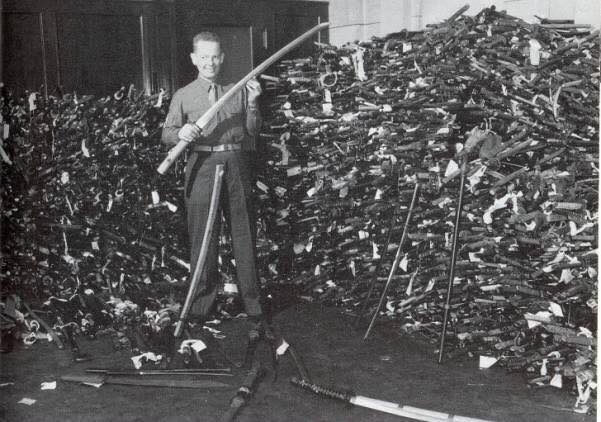
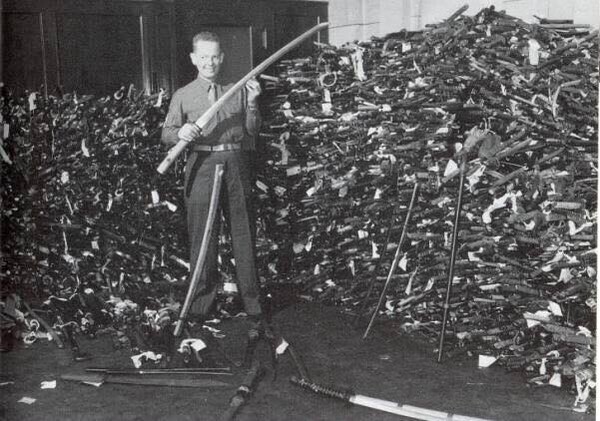
A friend has asked me if I happened to know where this photo was first published. It is that well-known sword of an individual holding a massive sword in shirasaya, standing in front of a large pile of swords. If anyone has details on this photo, including in which reference it first appeared, please let me know. Best regards, Ray
-
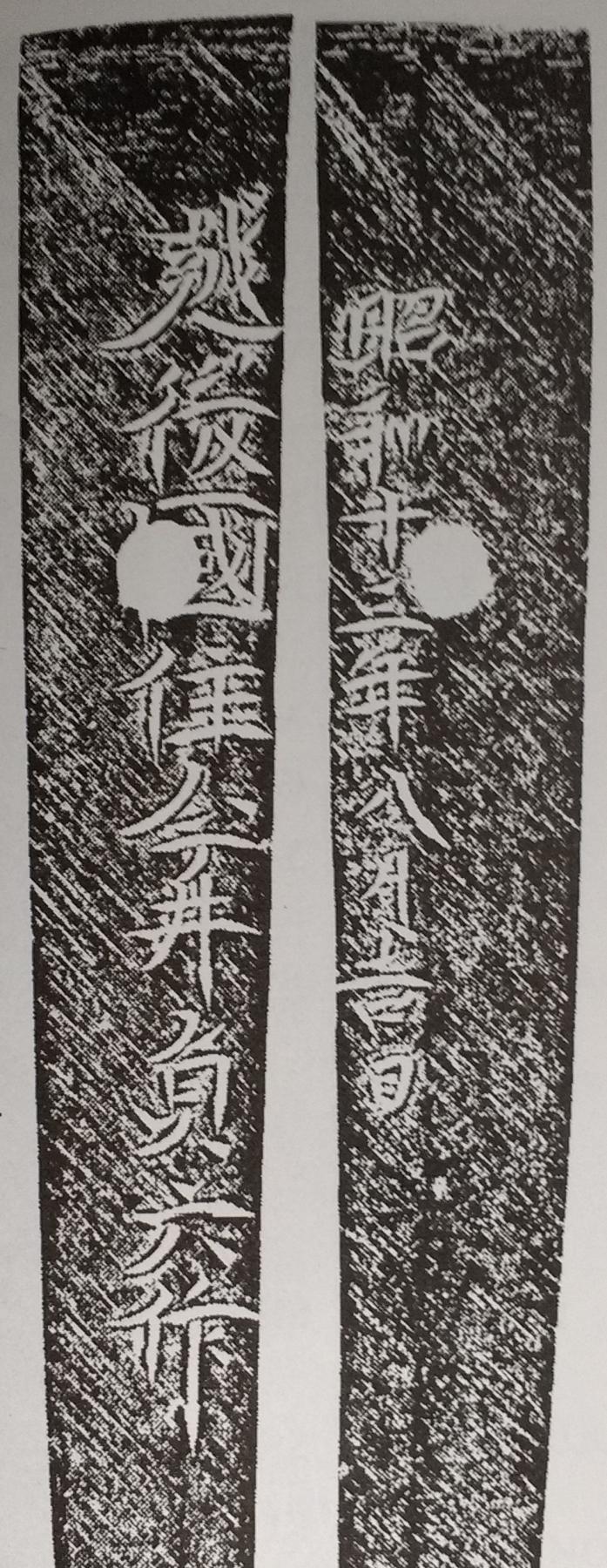
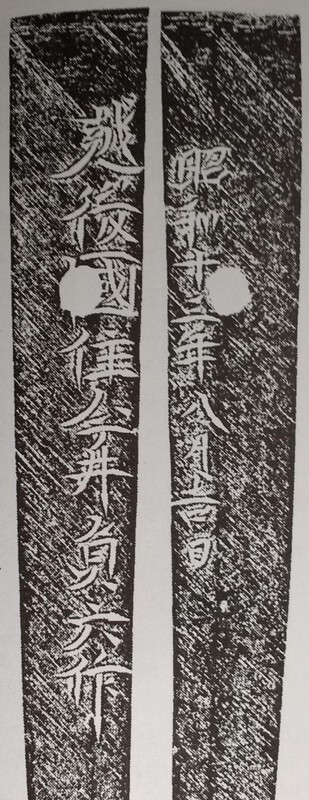
To me that is an indicator that Sadaroku may have signed the sword on behalf of his teacher. It is the way he signed his own blades (refer to the oshigata I shared above) and students often assisted the master to varying degrees. I do not know the circumstances of Sadayoshi's death at the young age of 38, just four months after this sword was made, however if there were health issues it would be expected that the student may have provided support in finishing his master's swords in this way...
-

Fs: Kubo Yoshihiro O-Tanto W/ Tsugaru-Nuri
Ray Singer replied to Salvatori Moretto's topic in Sold Archive
Agreed, well done. There do appear to be examples of his work online. https://www.hamondo.tokyo/product-page/ktg0063-%E4%B9%85%E4%BF%9D%E5%96%84%E5%8D%9A-%E7%8E%89%E9%8B%BC%E5%B0%8F%E5%88%80-%E3%83%8A%E3%82%A4%E3%83%95 http://heiseimeitokai.com/katana/?p=1815 -
I am certain that it is Sada, and I would bet that this is a dai-mei by his student Imai Sadaroku. Compare with the attached oshigata. It appears to be by the same hand.
-
Also as Sadayoshi died in 1937, this sword dated the 12th month of 1936 is one of the last few swords he produced. You may enjoy this article. http://www.nihontocraft.com/Yamamoto_NBTHK.html
-
Being an authentic Amada Sadayoshi, there is no doubt that this is a traditionally made sword and is worthwhile to pursue restoration. Sadayoshi was a top smith of that time period and examples of his work I have seen in fresh polish were wonderful. The fact that it is of 'recent age' is not a concern to preclude restoration. If the sword were mine I would share with Andrew to get his assessment.
-
Thank you both for the kind words. I agree Stephen's comment. If one were saving for that one great sword, but has not budgeted at the Juyo level, this Hidekage is a good candidate.
-
It is clearly trying to read Bizen (no) Kuni Osafune _-_something. The last part of the mei is not clear. I am not confident that this is an authentic signature.
-
I just heard from a friend that messages were bouncing. Any questions on this piece please send an email to raymondsinger@gmail.com. Best regards, Ray
-
More. https://yuhindo.com/ha/den/
-
Bob, this should give exactly the info you are looking for. https://web.archive.org/web/20040613002048/http://togishi.com:80/Den%20article.htm
-
Congratulations! Couldn't be happier for you Bob. Now on to Juyo...
-
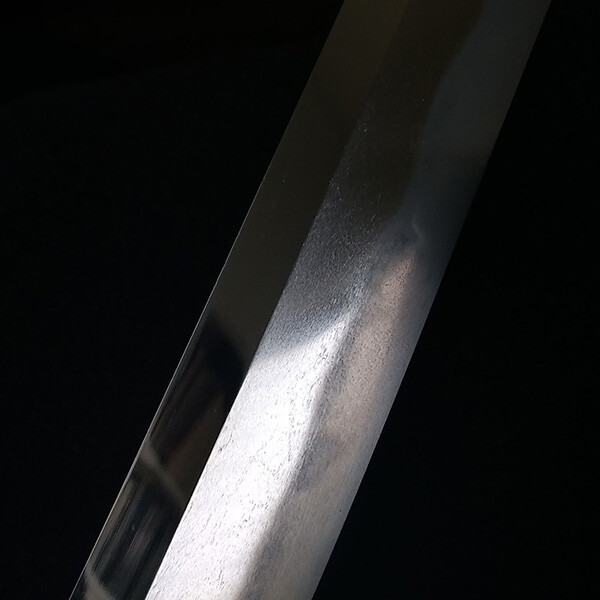
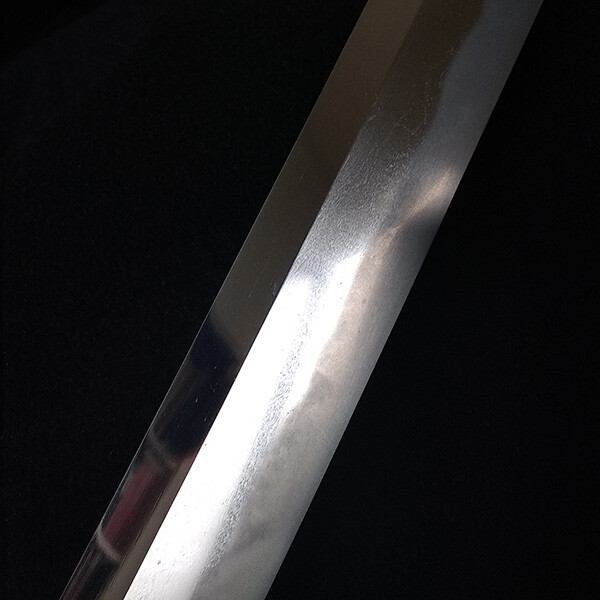
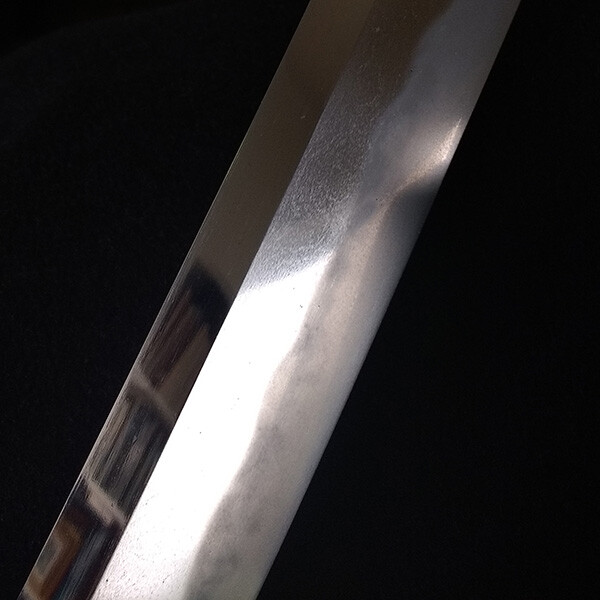
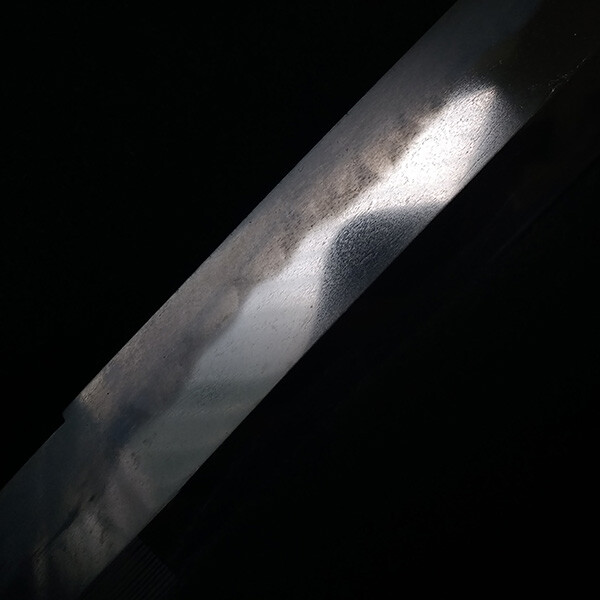
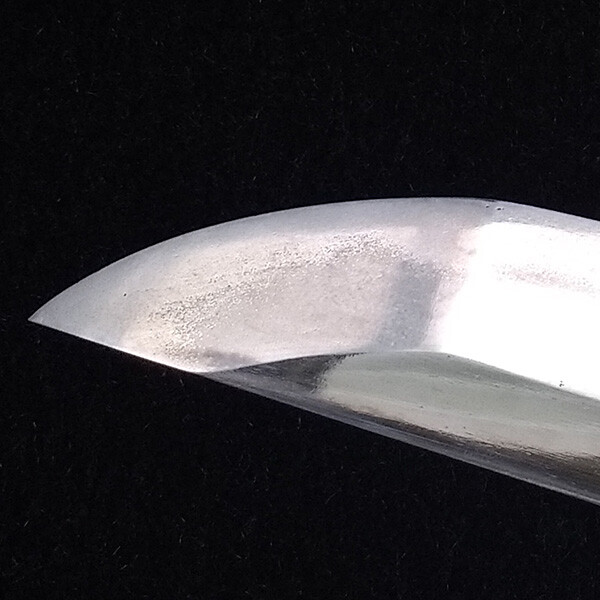
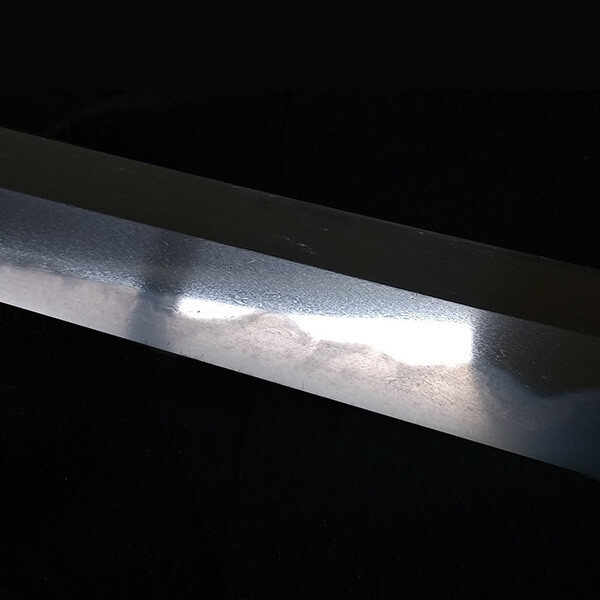
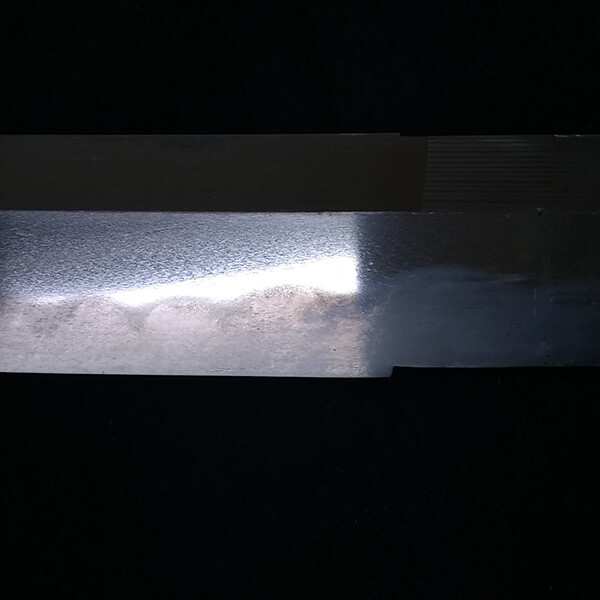
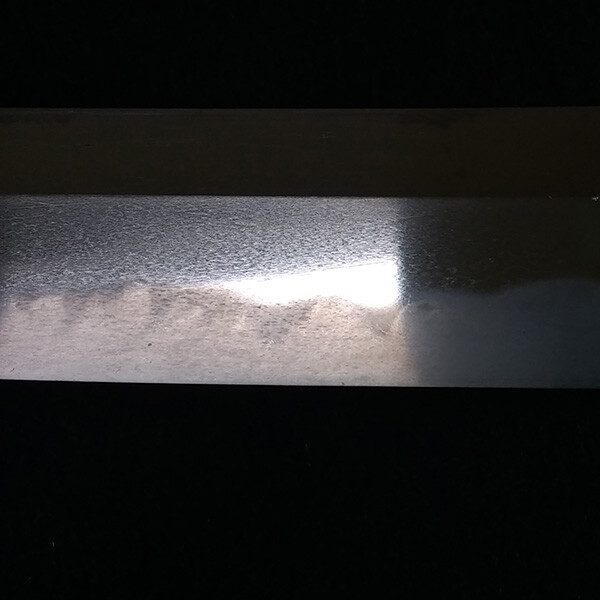
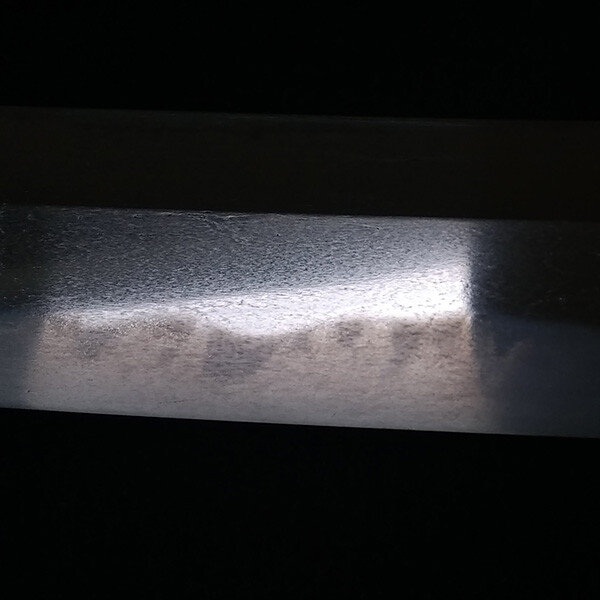
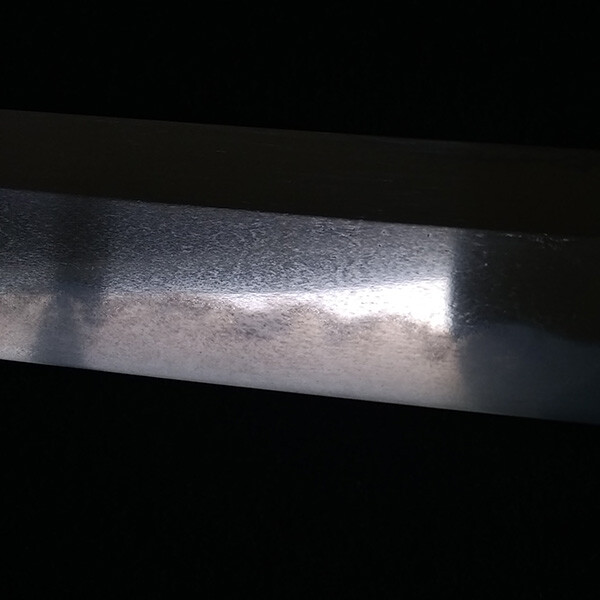
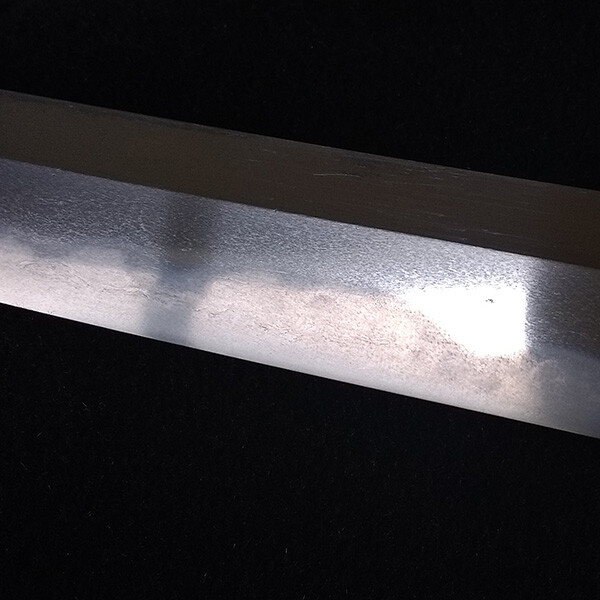
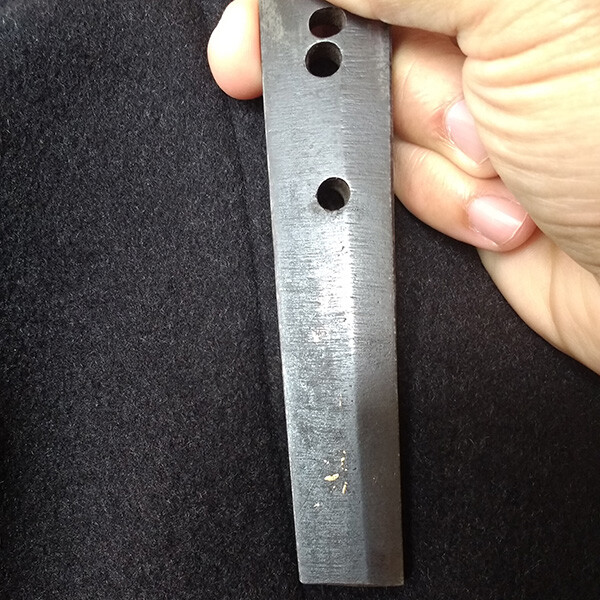
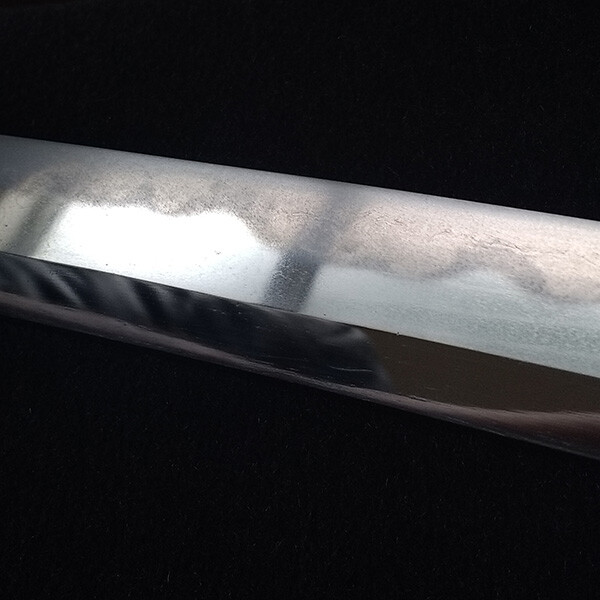
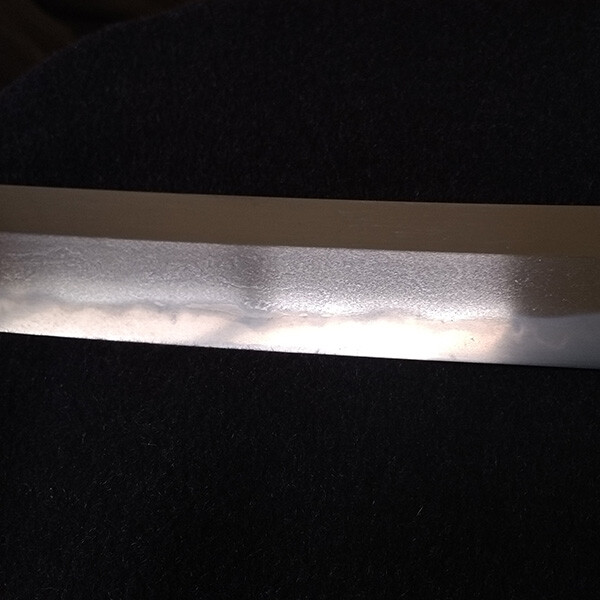
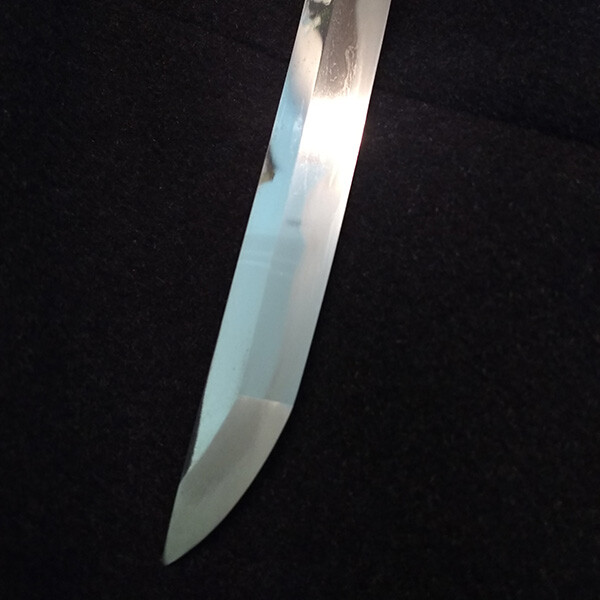
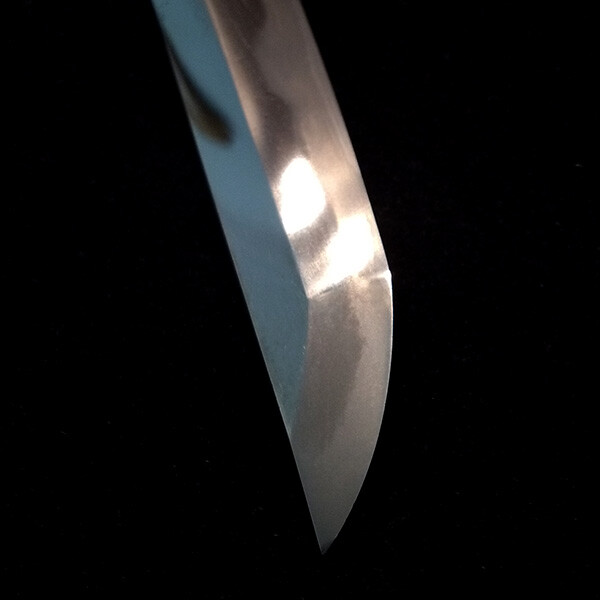
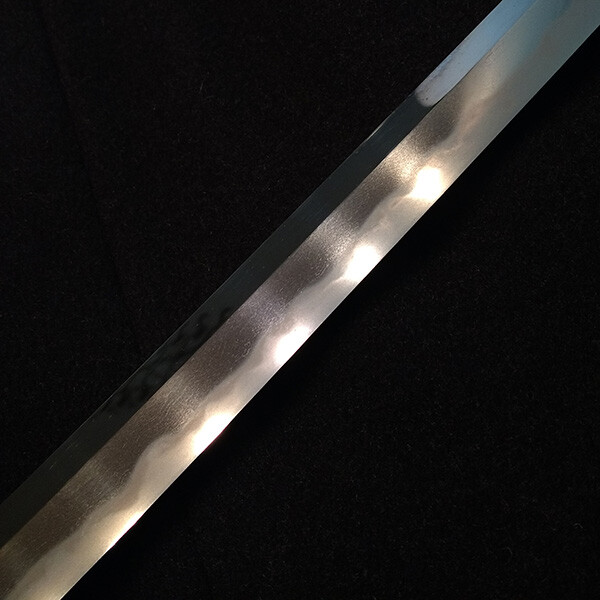
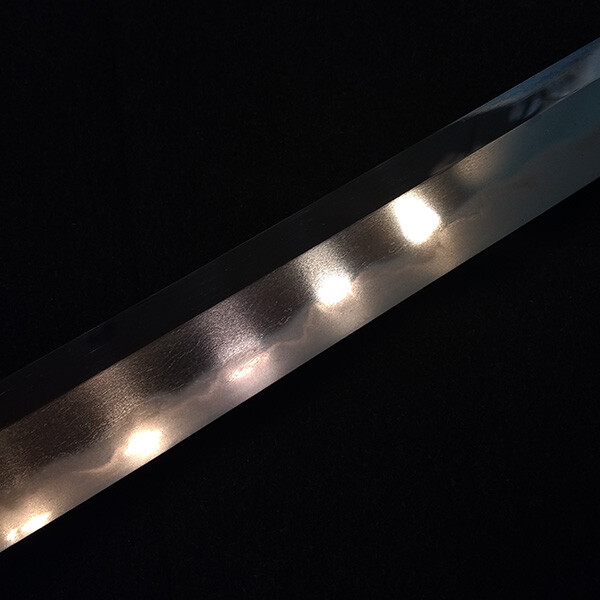
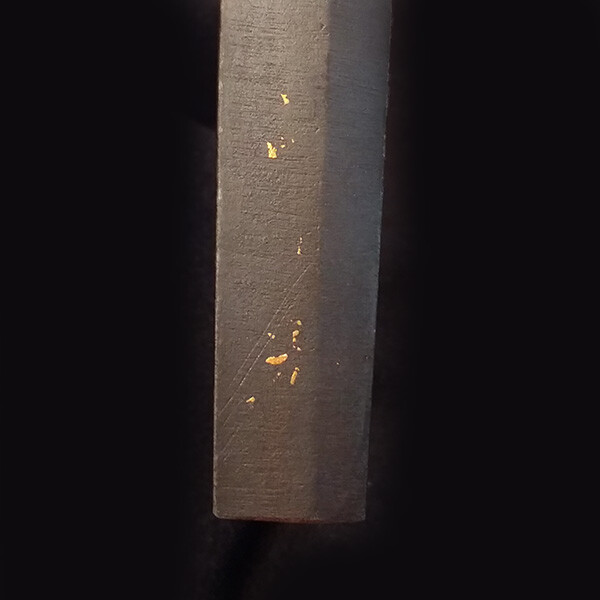
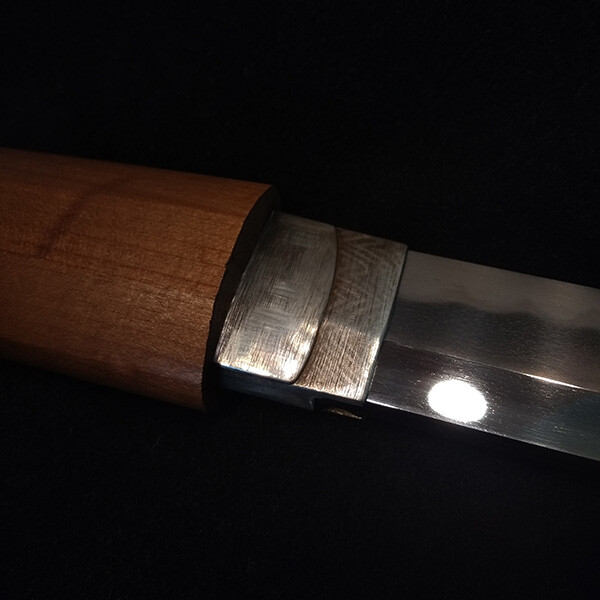
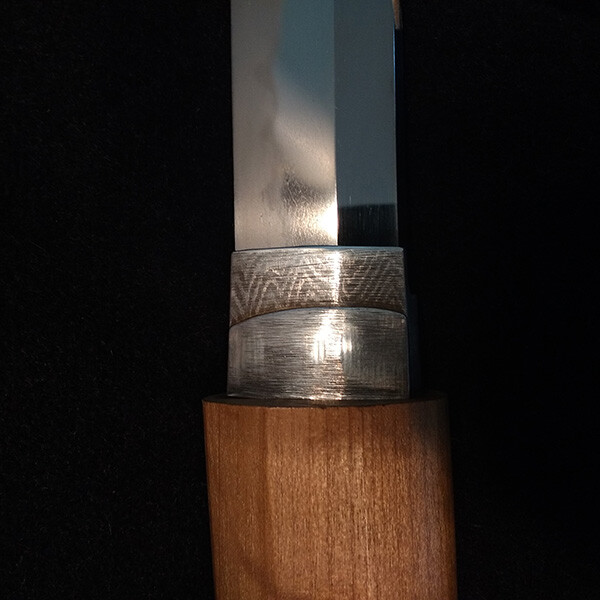
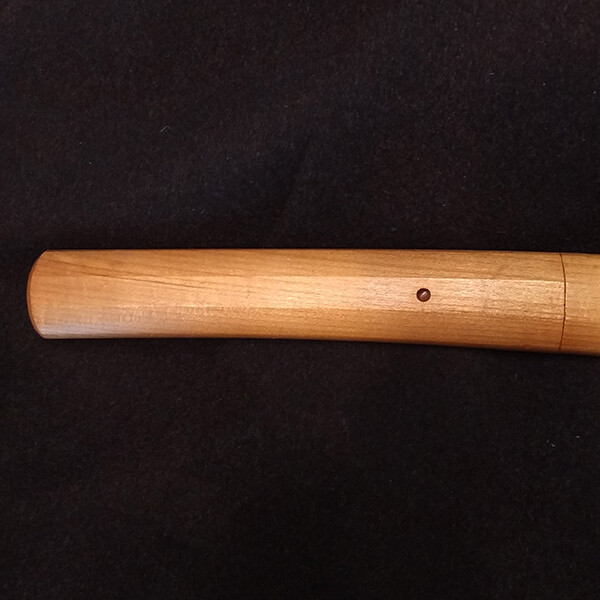
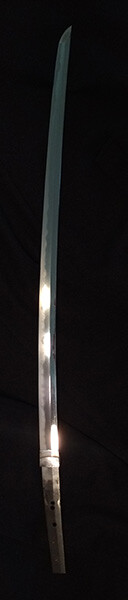
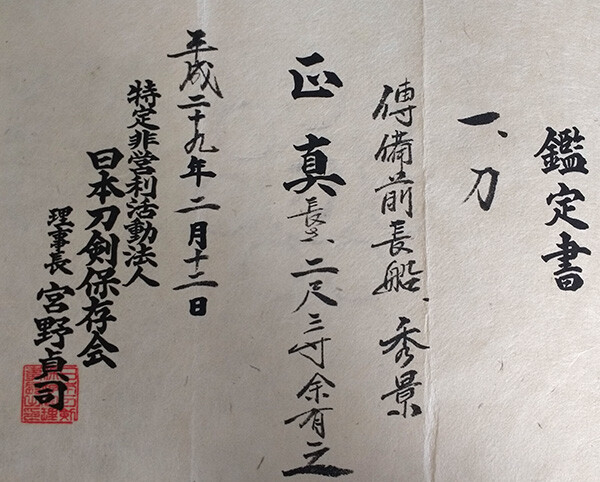
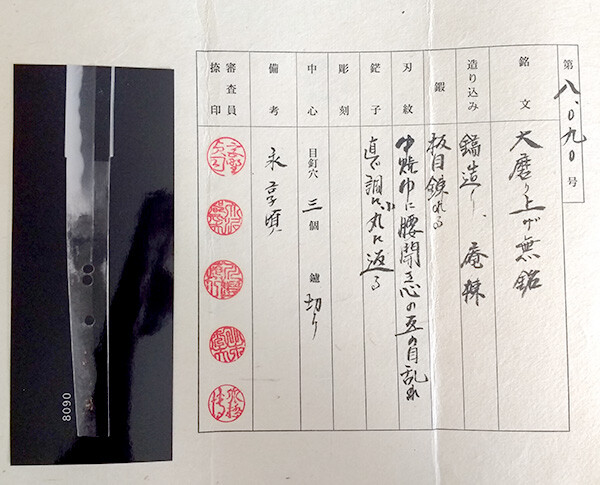
This is one of the nicest swords I have consigned since starting my website several years ago. This is a beautiful daito which was attributed to the Bizen smith Hidekage. Hidekage was the great grandson of the famous Bizen smith Chikakage, and was a famous smith himself who was rated Jo-saku in Fujishiro and ¥4.5M in the Toko Taikan. This particular sword is a flawless example of Hidekage's work. The hamon is a very active gonome choji-ba with kinsuji, covered with fine, uniform ko-nie. I have tried to capture the jitetsu in these photos because it is absolutely beautiful, layered thickly with ji-nie. There is utsuri present, which is typical for this school. The owner shared this with Mike Yamasaki at a recent show, who felt it was Nambokucho Omiya and suggested sending to the NBTHK. The sword is o-suriage mumei with 3 mekugi-ana. There is a remnant of a kinpunmei, that appears to be signed (X)mitsu. The owner is certain that is once read Kanemitsu, however there is not enough remaining of the first kanji to stand behind that reading. There is no lacquer present on the reverse (no indication if this was a Hon'ami kinpunmei). The blade measures 69.9cm, with a 3.2cm moto-haba and 6mm kasane. It has an especially nice niju-ginkise habaki with an unusual decorative pattern. NTHK kanteisho.







- 13 replies
-
- 12
-

-
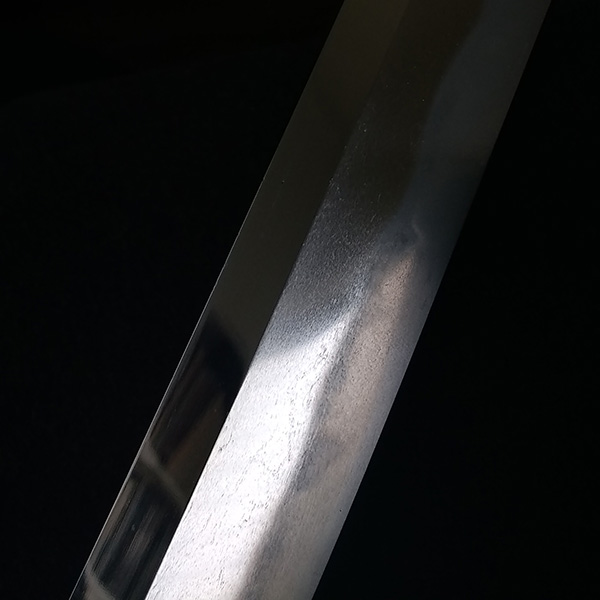
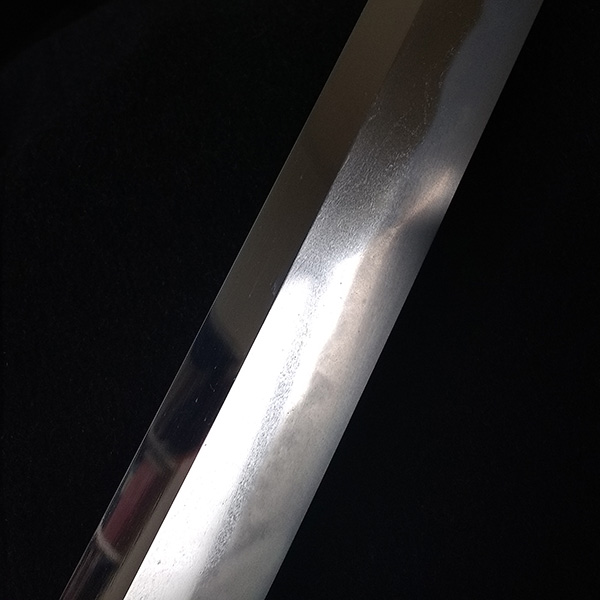
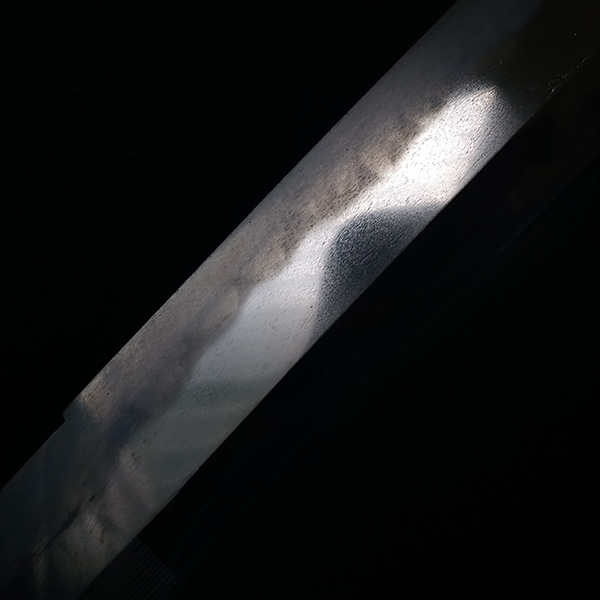
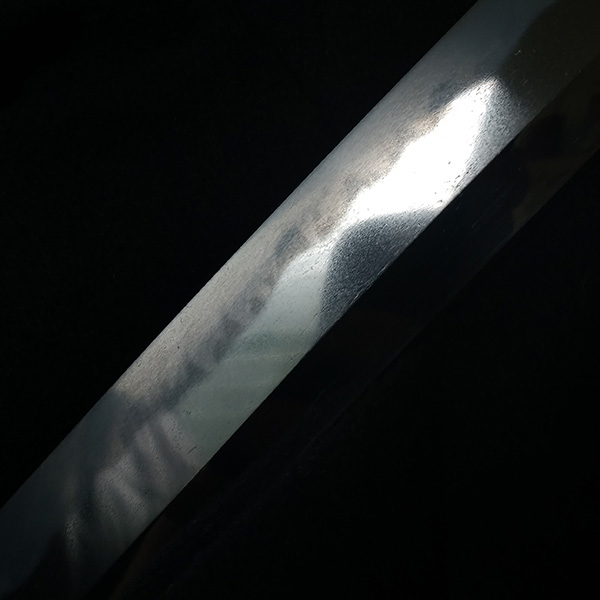
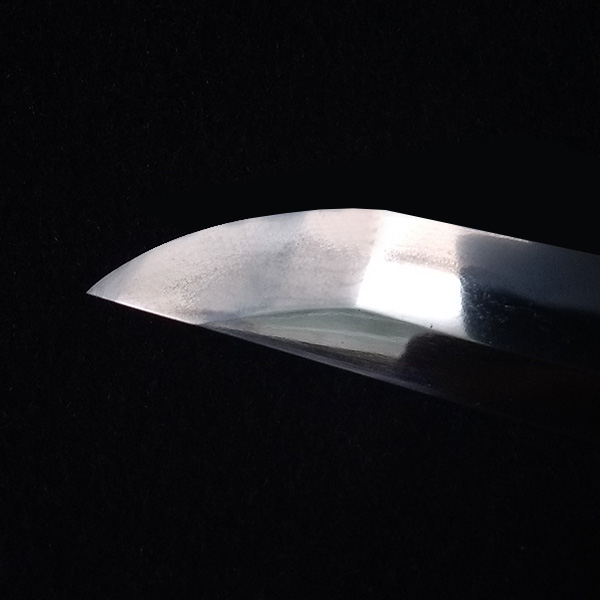
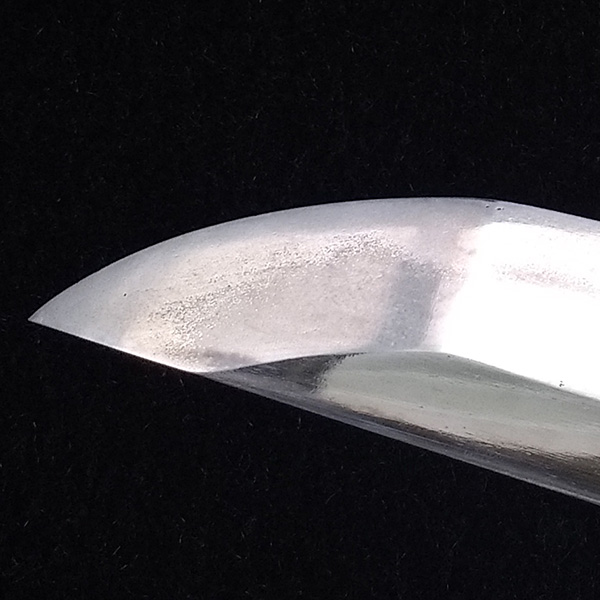
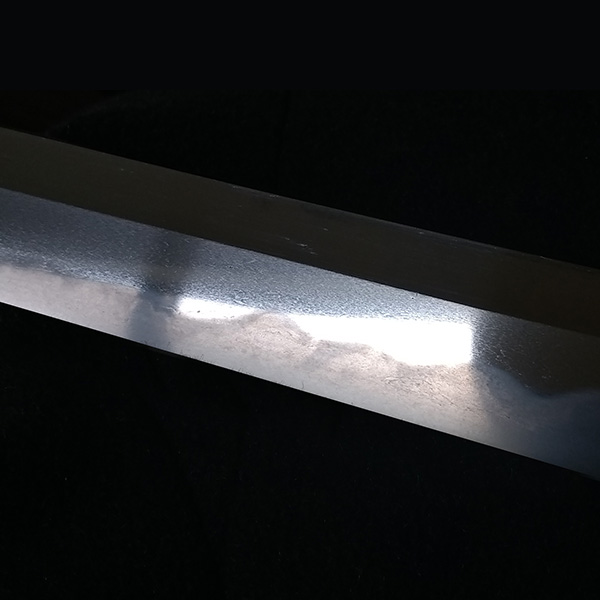
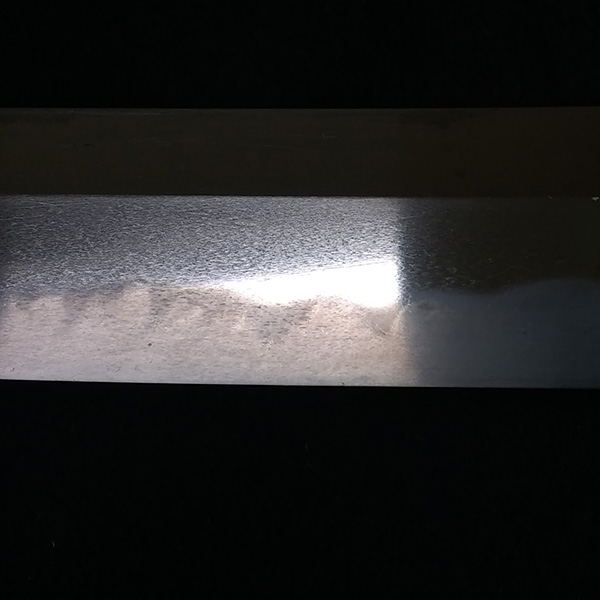
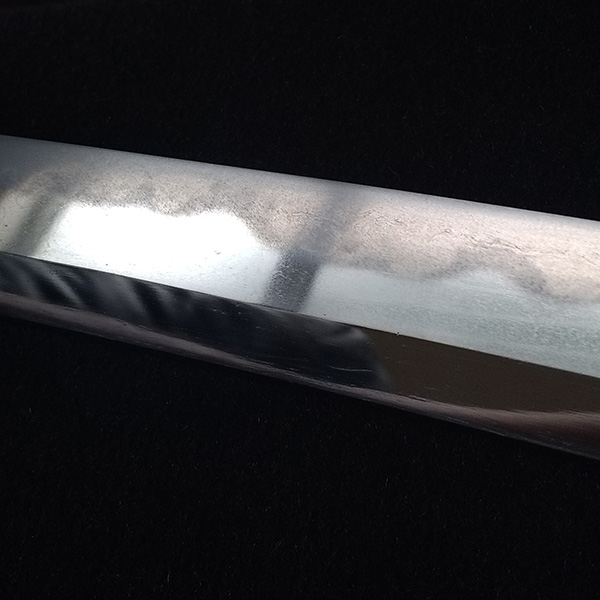
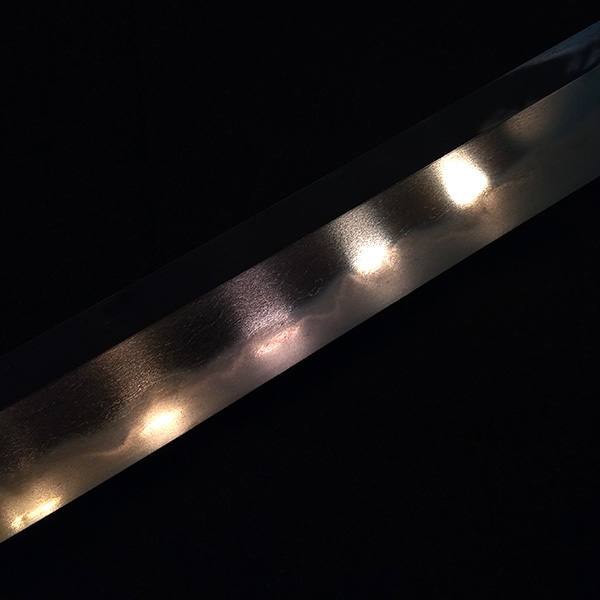
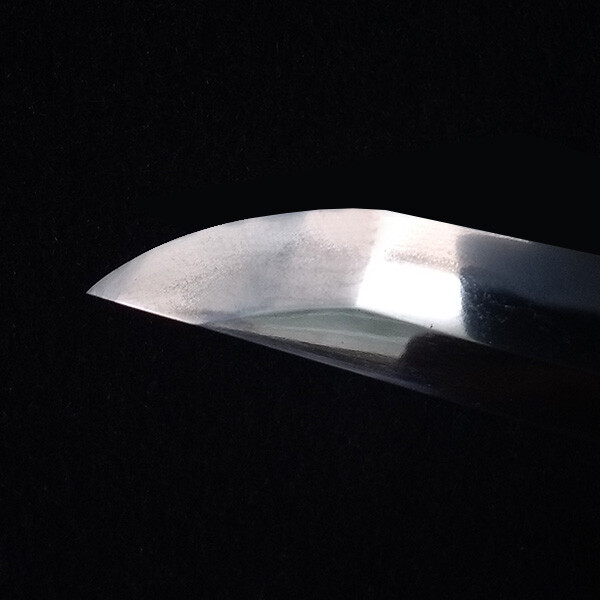
You can see depth where layers of steel have opened up. It appears to be a kitae-ware. If you zoom into the image that is more clear.