Spartancrest
-
Posts
4,034 -
Joined
-
Last visited
-
Days Won
109
Content Type
Profiles
Forums
Events
Store
Downloads
Gallery
Everything posted by Spartancrest
-
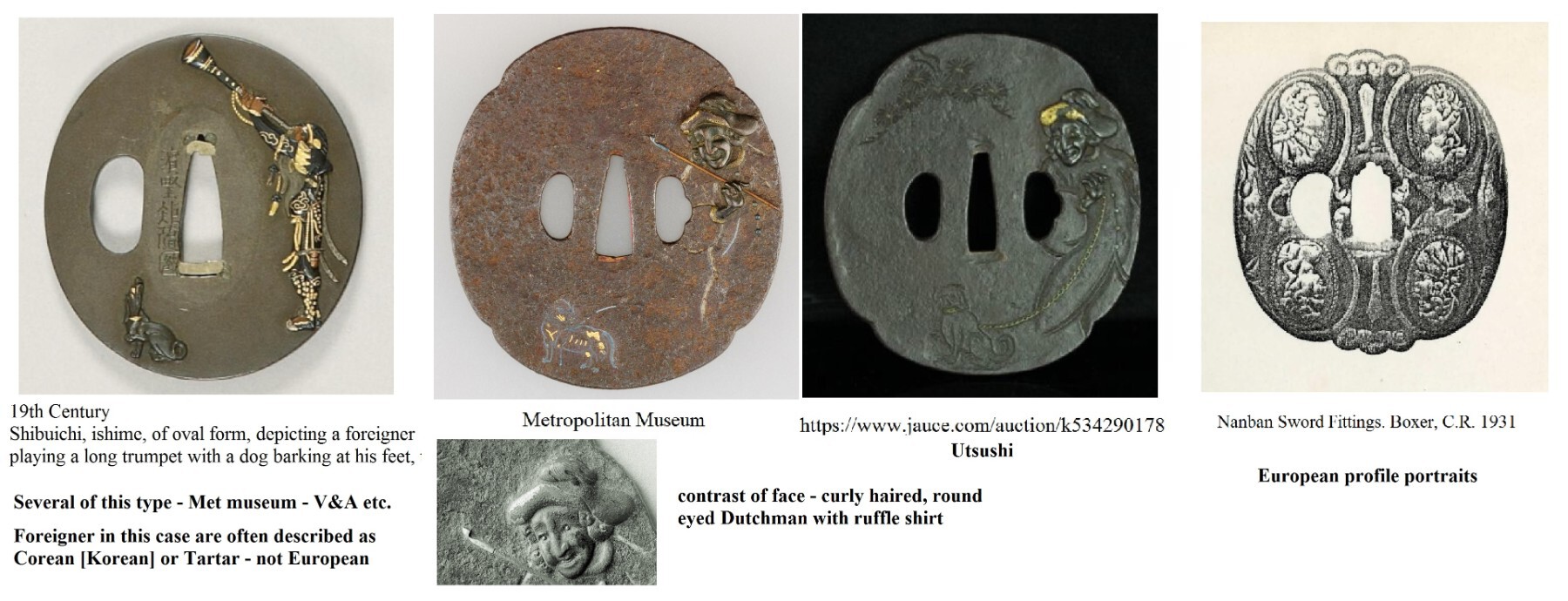
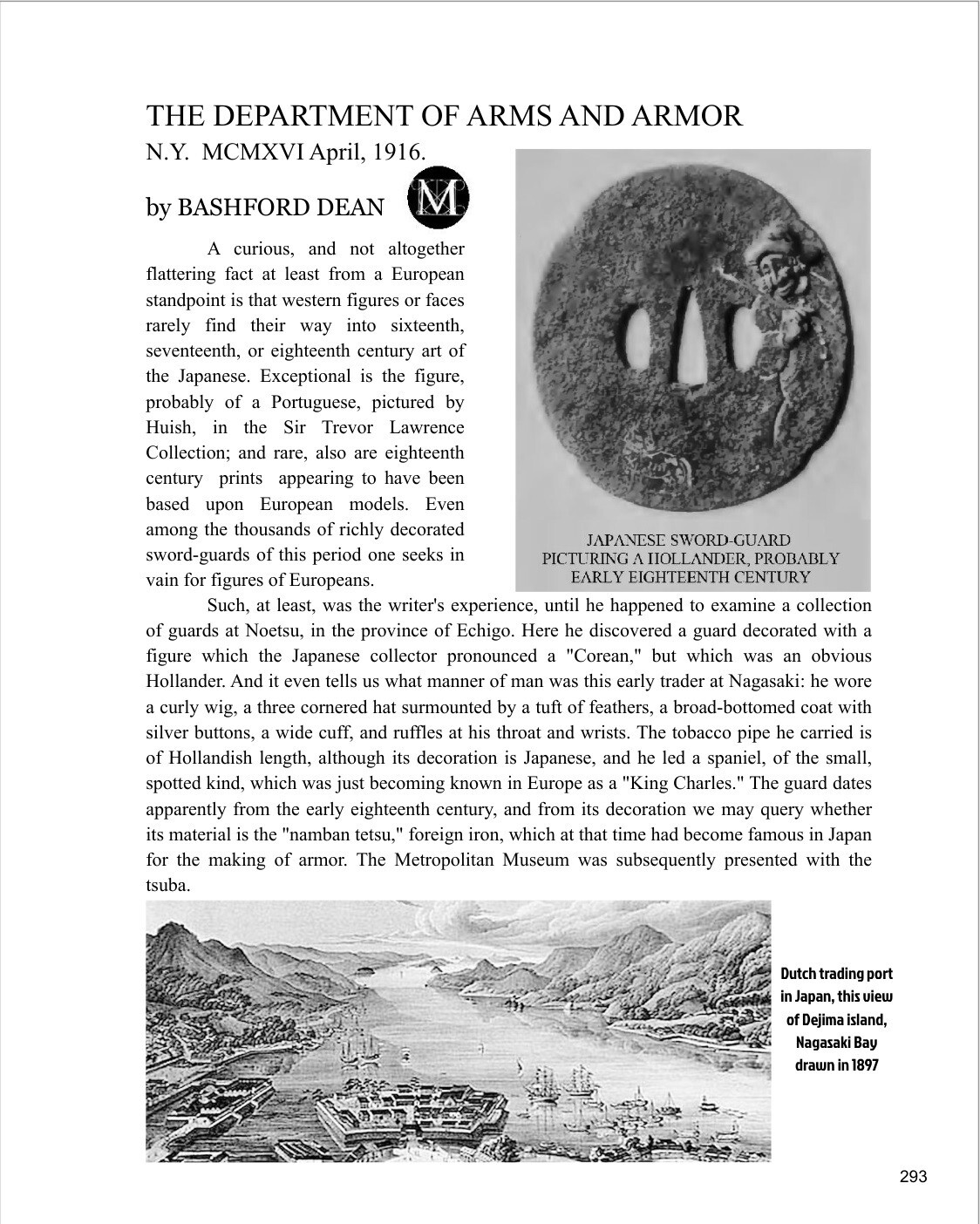
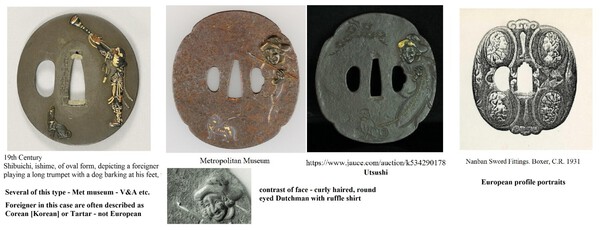
There are a few foreigners depicted on tsuba - but not many on namban that I can find - yet. One in the C.R. Boxer link you already have.

-
I think it has something to do with a legend of a giant peach or plum? - someone will know the legend better than I. For anyone wishing to post eBay links you only need the part of the link up to the question mark{?}. https://www.ebay.com/itm/203993495161
-
-
JMB, one here very similar outline design but obviously Heianjo - https://www.jauce.com/auction/j680580045
-
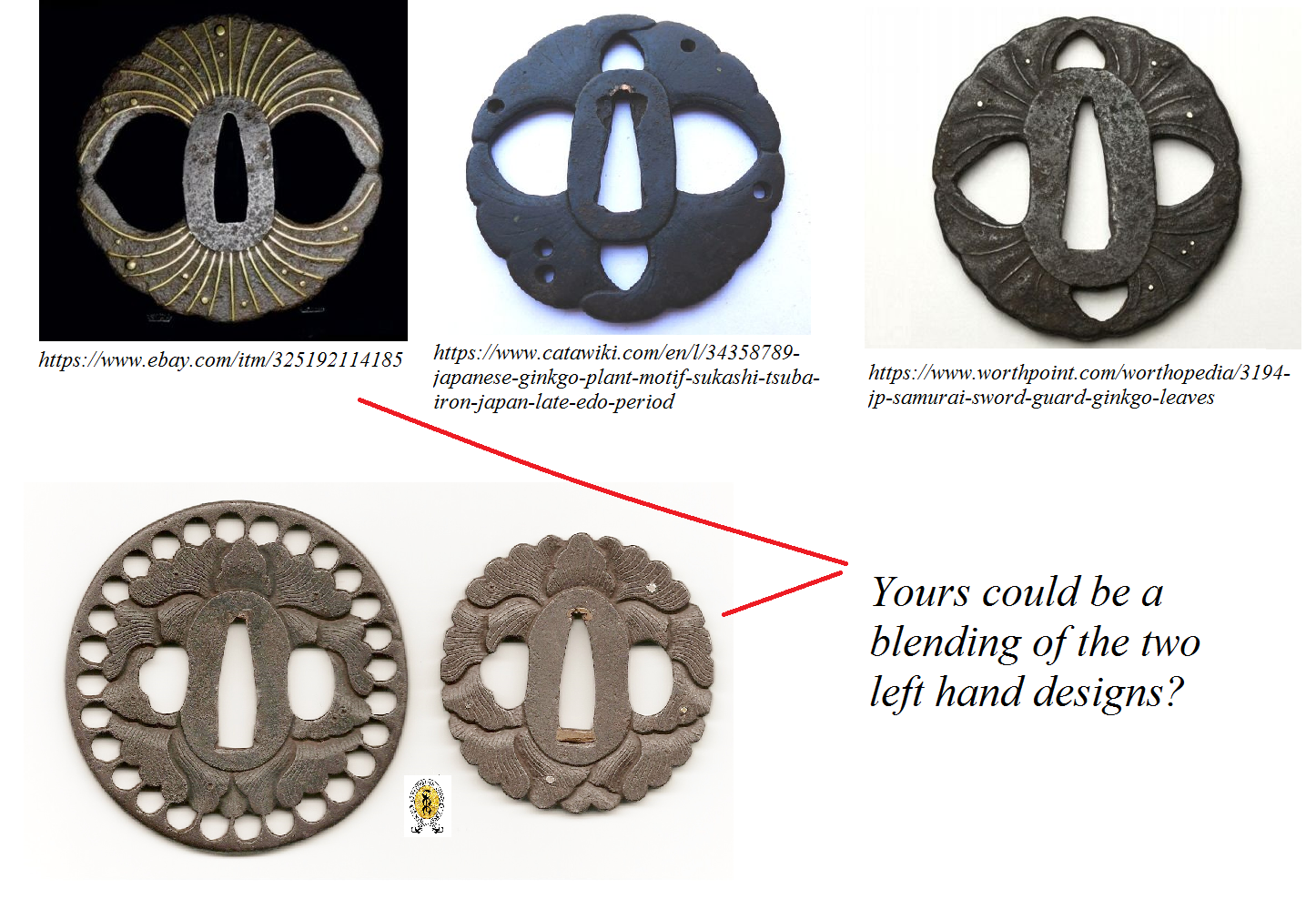
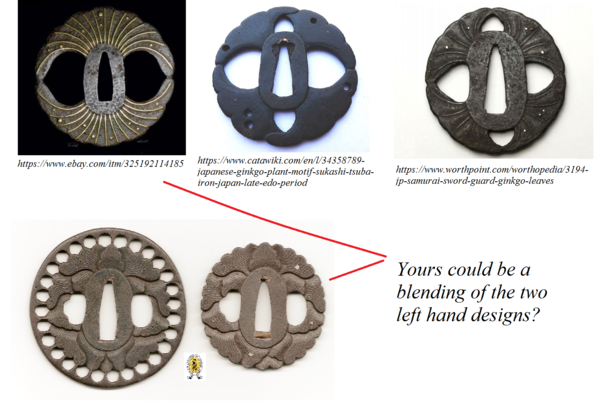
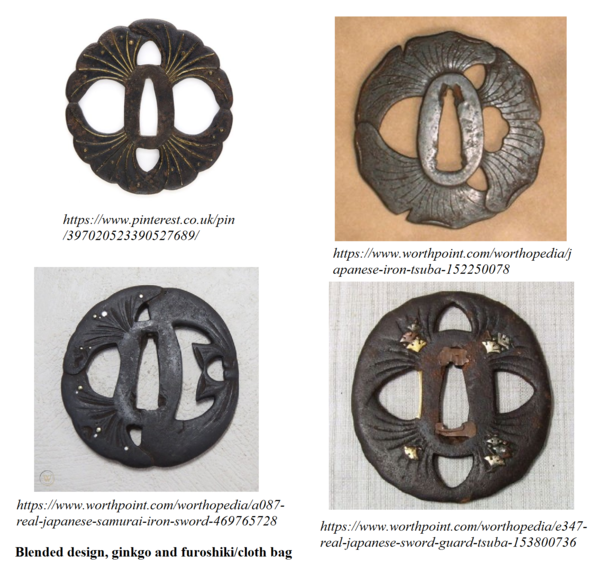
My vote is for leaves. The basic design looks like it goes back to Heianjo style, just the same as the first example. The others all show variations of leaves - usually Ginkgo. Just to make it difficult leaves and feathers have a central rib. You might notice the top middle image has five holes in the leaves - same number as yours. [is this just a coincidence or a copied design?]
-
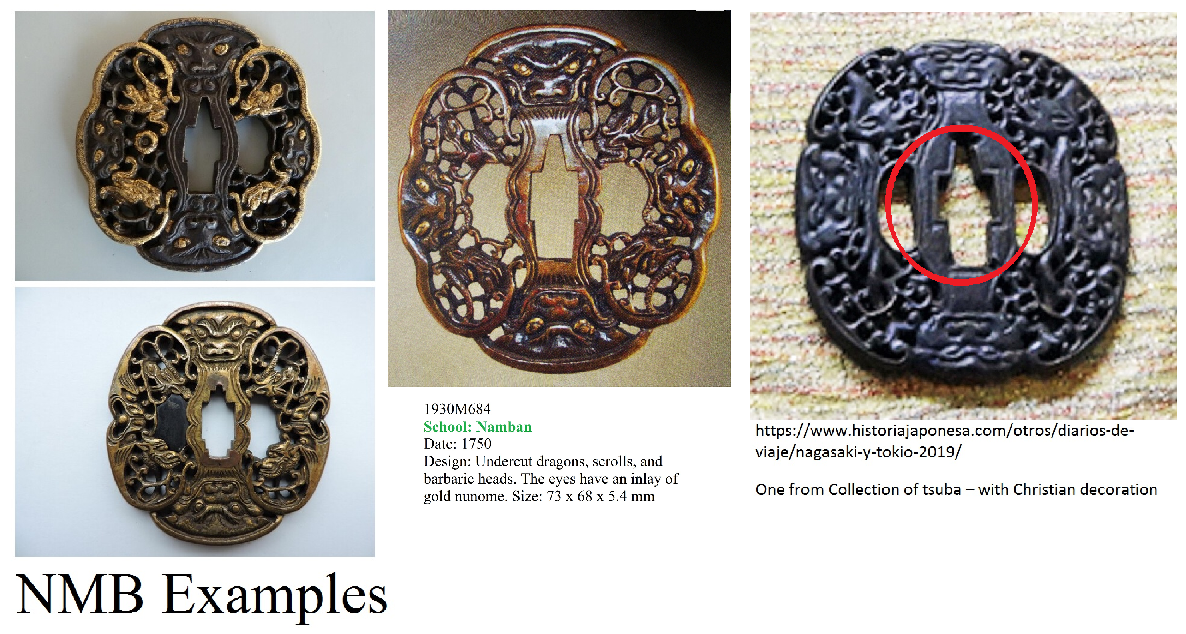
The Ashmolean Museum in Oxford has two square cut nakago-ana namban, amongst their other examples. The holes look cut in at a later date. [Which would seem odd given the date on the second guard?] http://jameelcentre.ashmolean.org/collection/7/10237/10367 Each guard has a good written description. EAX.10809 Two symmetrical ascending dragons amid a little scrollwork; between them, above and below the plain oblong seppadai, are two rosettes with sunk centres (settings for stones?); to right and left are two similar rosettes with palmette extensions above and below them; gold dot eyes; gold nunome on rosettes and palmette borders; kozuka-hole cut later. 18th century (1701 - 1800) 7.4 x 6.9 cm EAX.10815 The front modelled in low relief with a demon-mask above and below, each between a pair of divergent "horns", which help to enclose on either side a panel of fine undercut scrollwork; this is, however, largely invaded by the wing-like ornament beyond each of the ryōhitsu; similar conventional ornament covers all other parts of the front, including the seppadai. The back is cupped and plain, except for the seppadai and winged ryōhitsu, which here rise to the normal thickness of the guard and are decorated as on the front. Kōgai-hole plugged with gold of basketwork surface. 19th century (1801 - 1900) 6.9 x 6.5 cm

-
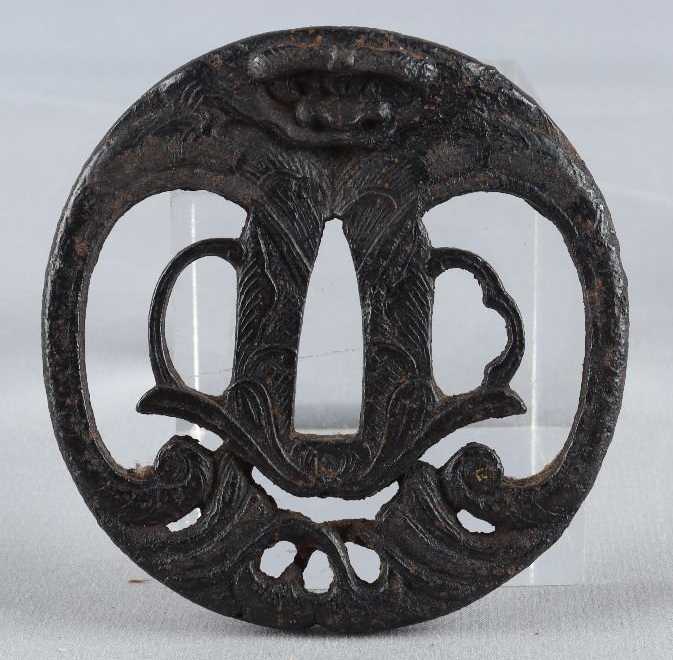
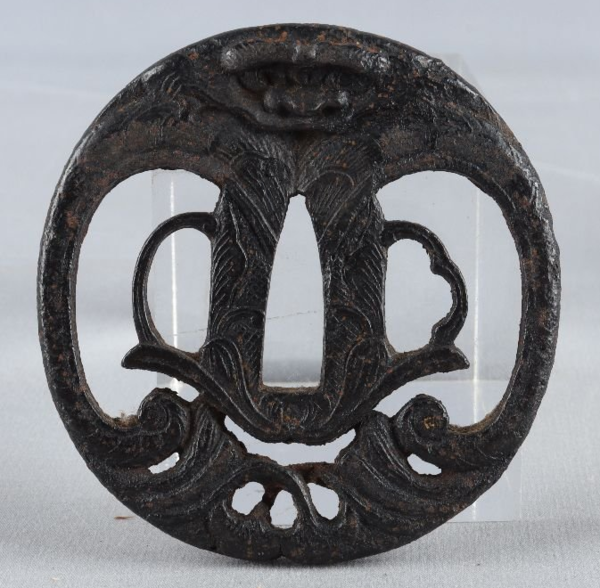
Sorry I don't have any more square hole namban but you might want to add this strange mask face to your list - a real blend of features. The hitsu are clearly Japanese design but that is about all. 69.9 mm x 67.9 mm x 7.5 mm Wt. 89g. Hizen? [likely cast and reworked]
-
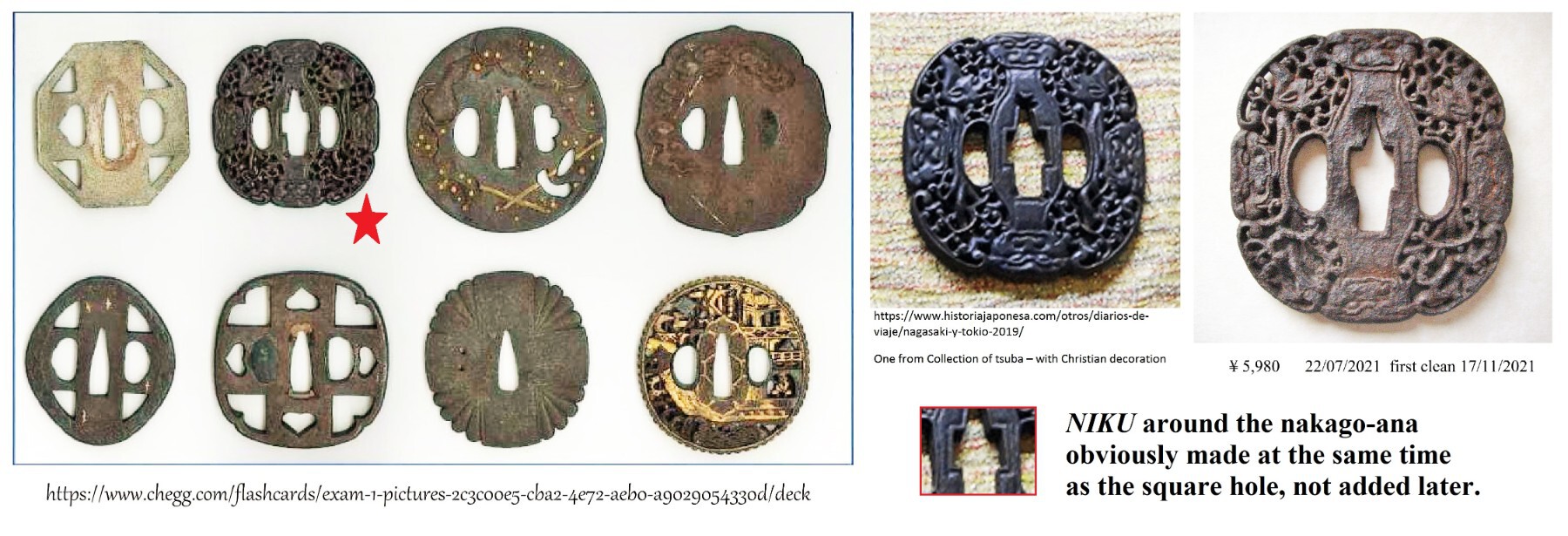
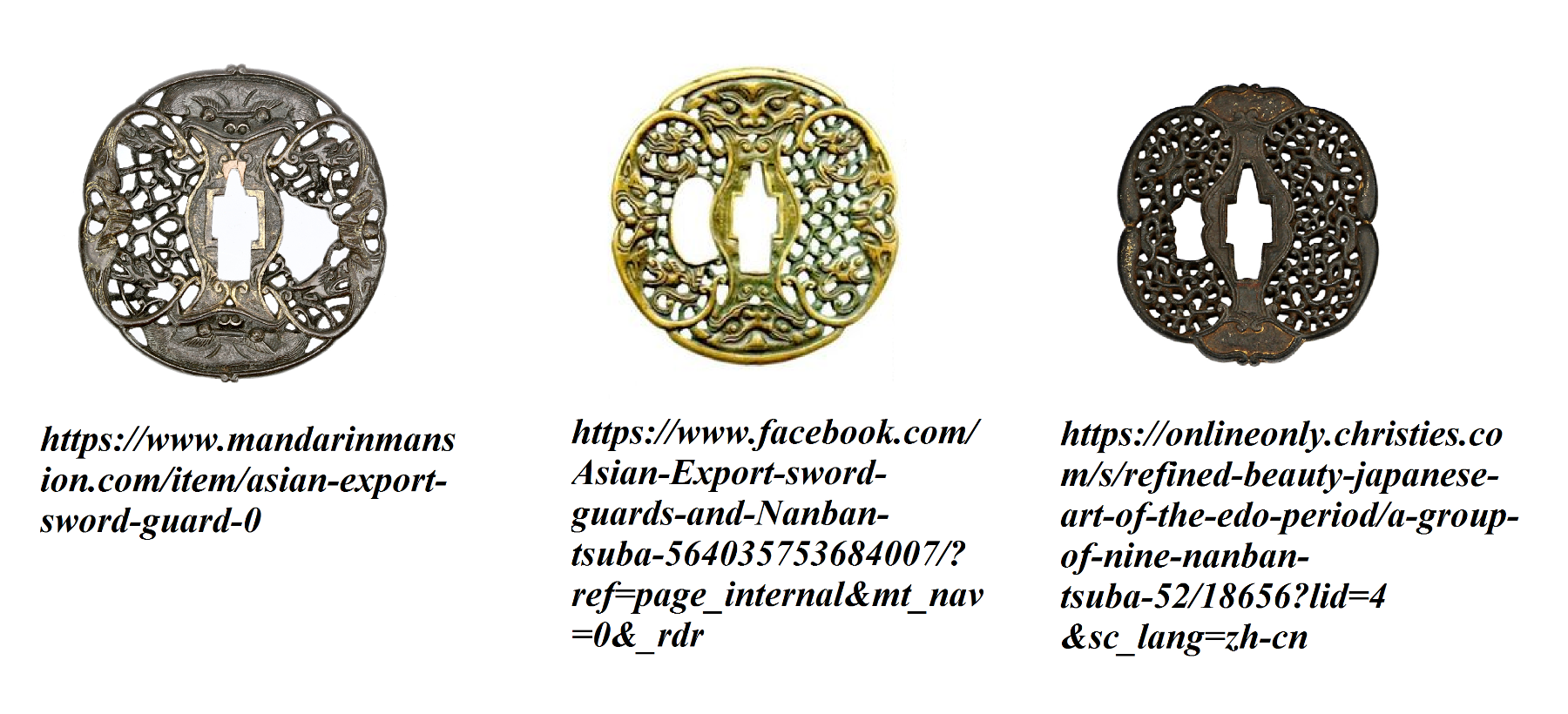
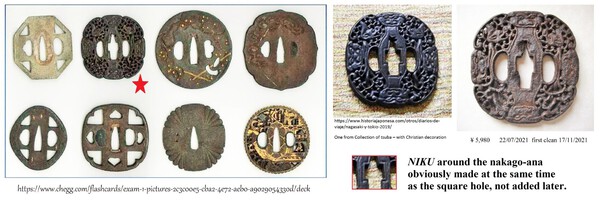
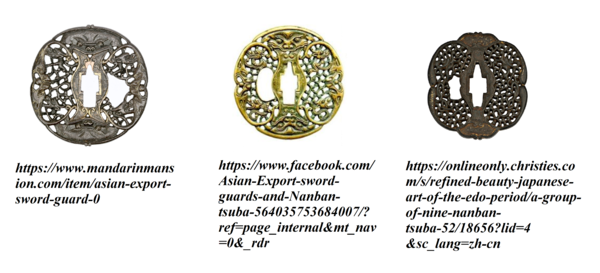
Peter, well the hitsu have not been altered in at least one design, of which I have images of three [one being my own]. The 'niku' around the nakago-ana proves it was part of the original design and not added later. Three other designs all with niku around the square cut nakago-ana. links to same: https://www.mandarinmansion.com/item/asian-export-sword-guard-0 https://www.facebook.com/Asian-Export-sword-guards-and-Nanban-tsuba-564035753684007/?ref=page_internal&mt_nav=0&_rdr https://onlineonly.christies.com/s/refined-beauty-Japanese-art-of-the-edo-period/a-group-of-nine-nanban-tsuba-52/18656?lid=4&sc_lang=zh-cn Altered European guards -
-
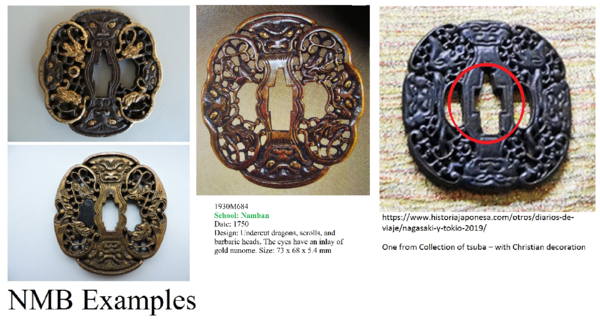
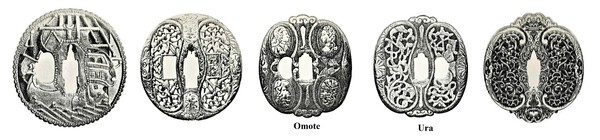
Peter do you mean this square hole? "The Namban Group of Japanese Sword Guards: a Reappraisal" by Dr. John Philip Lissenden https://www.mandarinmansion.com/item/asian-export-sword-guard-0 https://archive.org/details/CRBoxer1931394/mode/2up?q=European+influence+on+Japanese+"sword-fittings%2C"+"1543-1853"+by+C+R+Boxer For those who like to know the author.

-
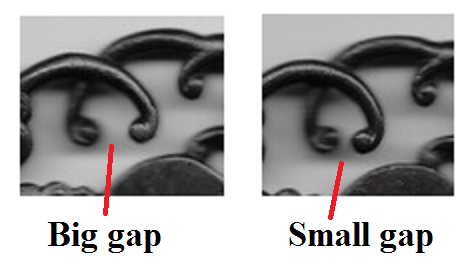
Big and small - you might get away with it, can't see any strict rule why both guards can't be the same size? You can always tell one from the other by the gap in the top wave crests.
-
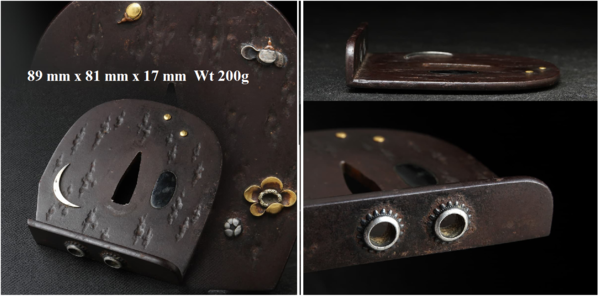
This guard has just turned up, surprisingly most of these angled guards have a thin crescent moon as part of the design. [why?]
-

A series of fittings ( or how not to build a collection )
Spartancrest replied to Bob M.'s topic in Tosogu
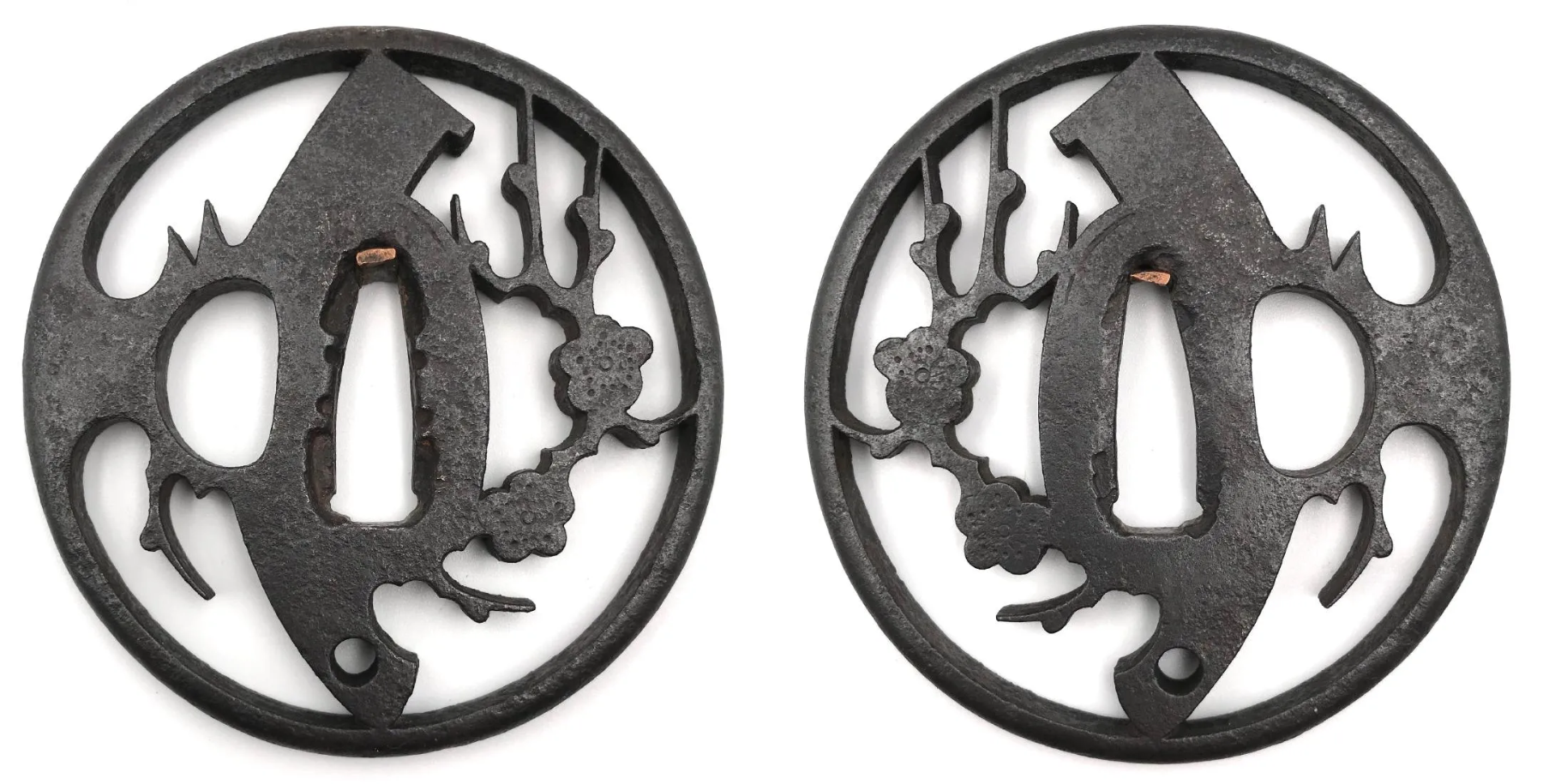
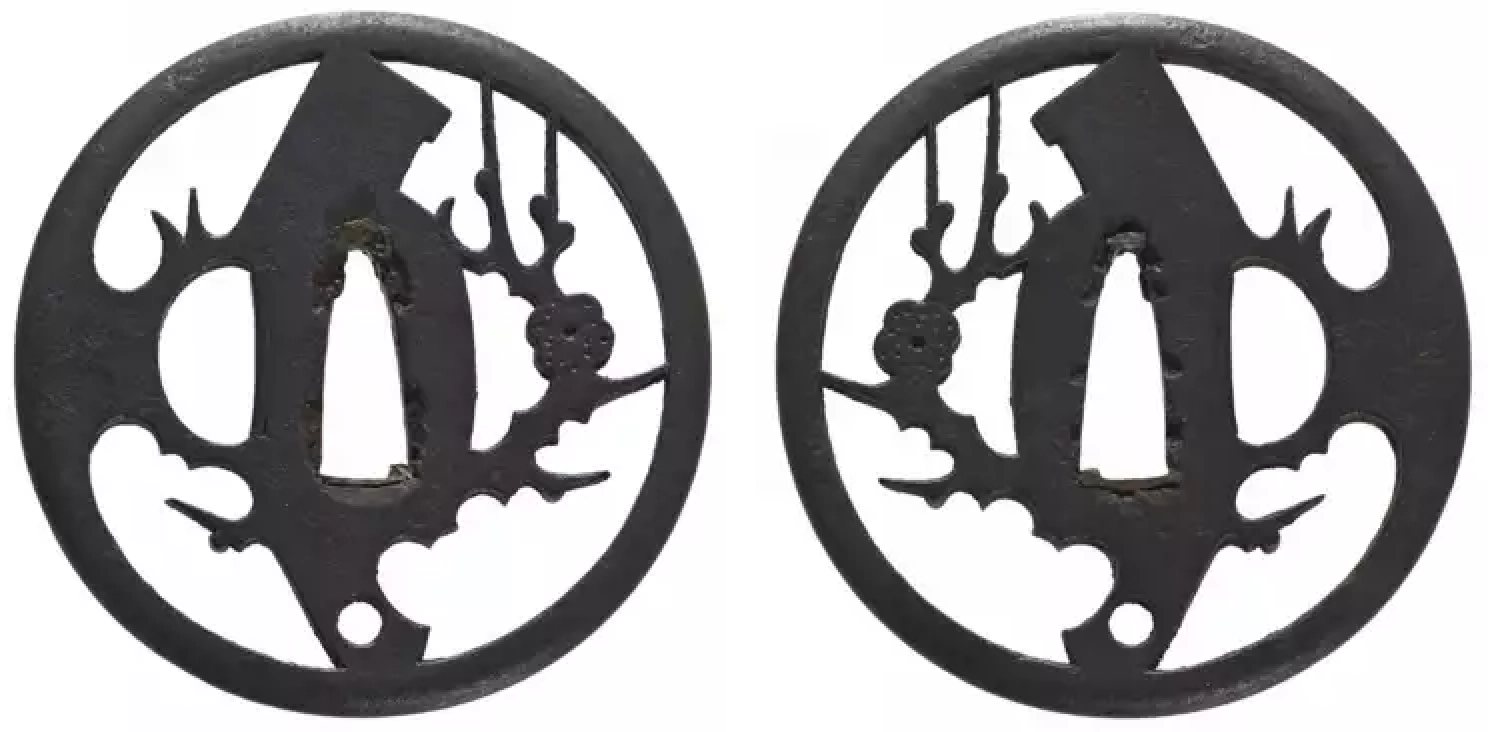
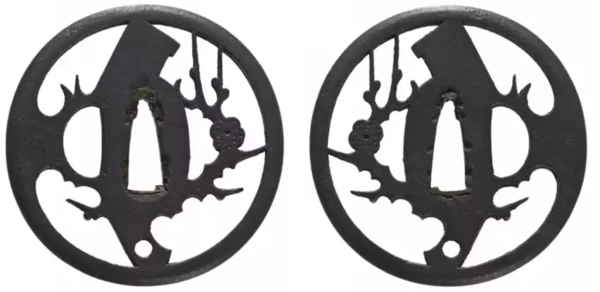
Bob, one you may not be aware of here - https://www.liveauctioneers.com/en-gb/item/62106484_higo-school-tsuba-with-a-plum-tree-and-a-hatchet-motif to be honest it doesn't come across as nearly as nice as yours. And one even less inspiring - https://veryimportantlot.com/en/lot/view/tosen-sukashi-tsuba-mit-bluhendem-pflaumenzweig-un-199850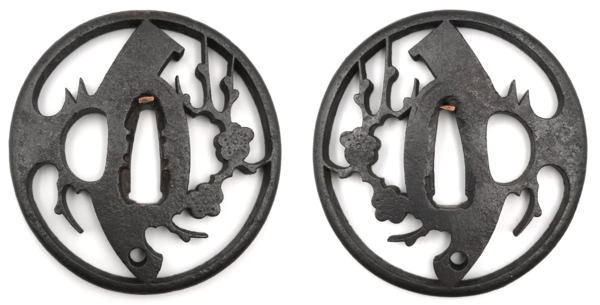
-
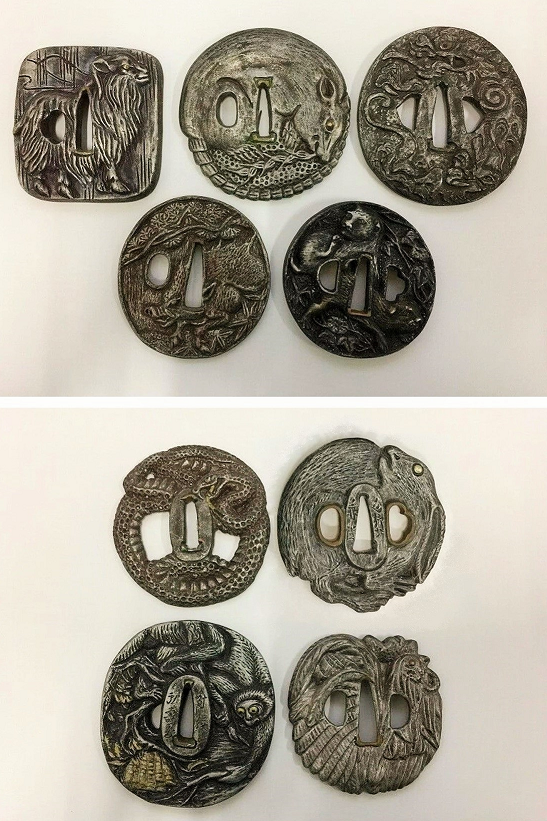
Ray - worse than fake, they are not even trying! Just interested in what the display is called and what it might be for? Year of the rabbit, tiger, monkey etc. or birth sign? They must have been made in commercial quantities but were they made over a twelve year period or just in one year?
-
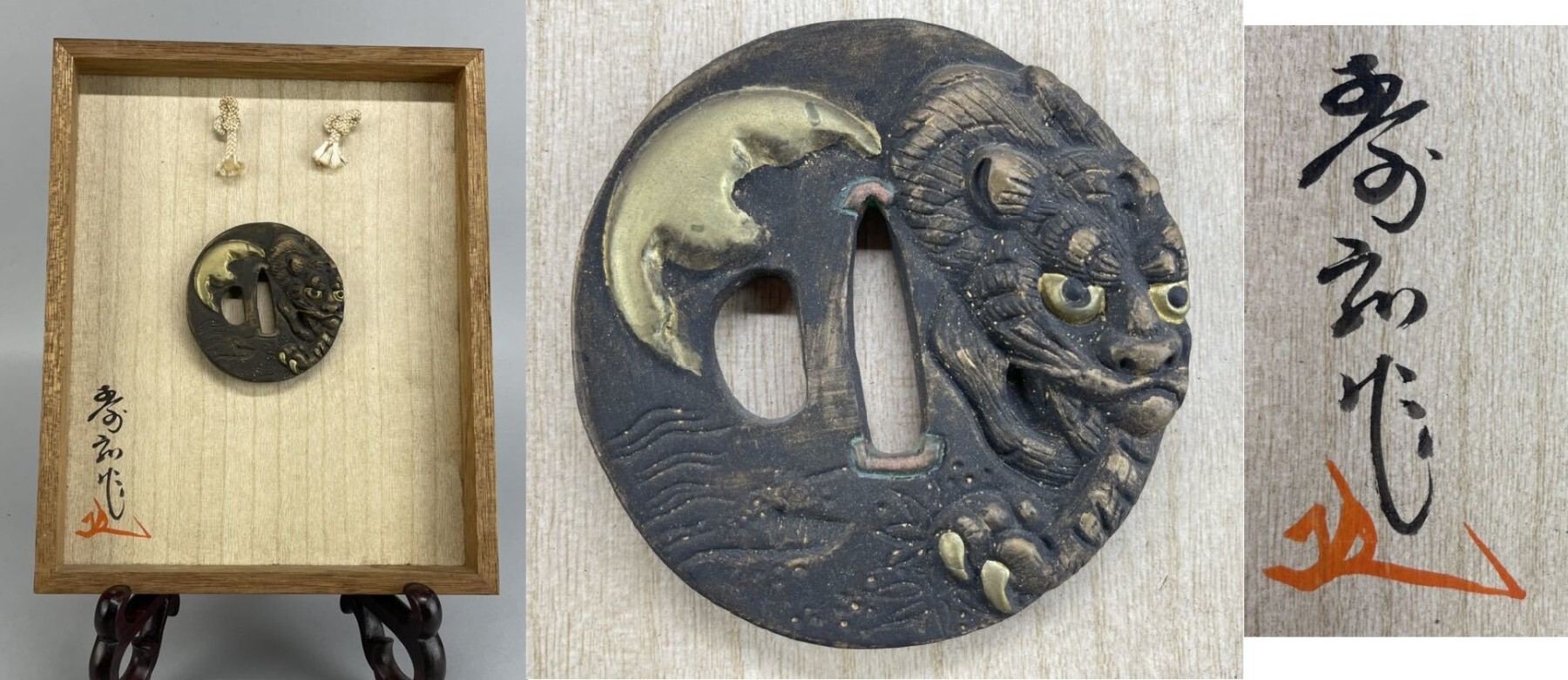
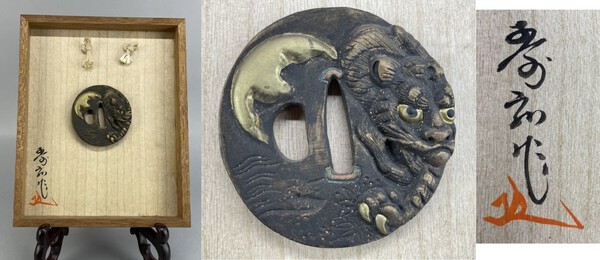
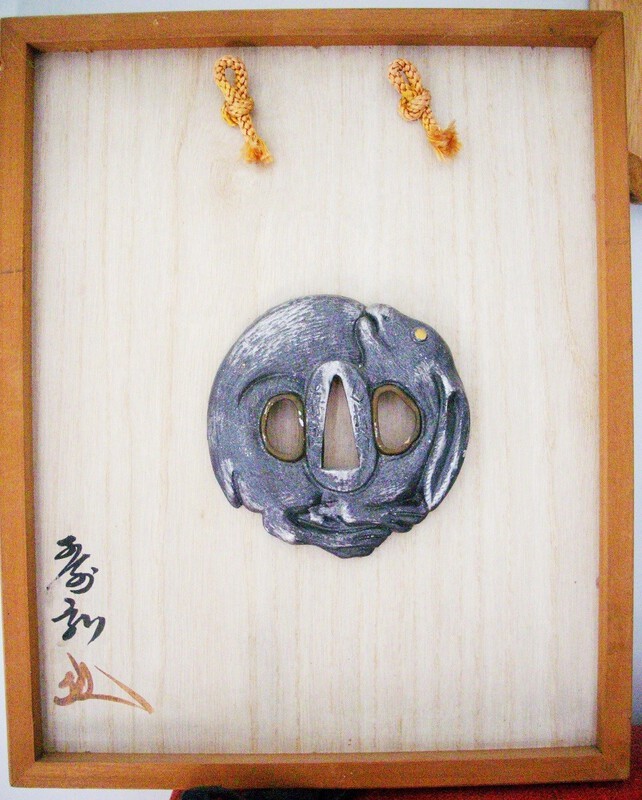
Can anyone tell me the correct name for these wooden wall plaques? Are they Tanzaku ... or something else? I have two of these and I believe there are another ten designs, as I have managed to find images of un-mounted pieces [all made from fired pottery] two missing. I realize they are not strictly Tosogu but all the designs are in tsuba form. It is difficult to research something without a correct name - [please don't say junk, it is self-evident]

-
JMB - Dan is correct about it being mounted at least twice - so you can consider it was treasured. The copper plugs look like they are riveted on in the traditional way edges beaten thin and slightly irregular in shape. The surface of the guard is pitted in certain areas, a lot where the seppa would have been, all pointing to age. School difficult to say - it would just be speculation on my part. Someone might help by identifying the sukashi pattern in the corners - it isn't the common inome style.
-
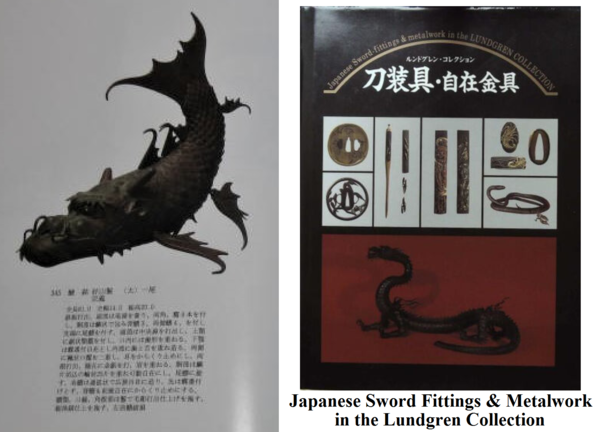
Fins on this one - sorry the images are grainy.
-
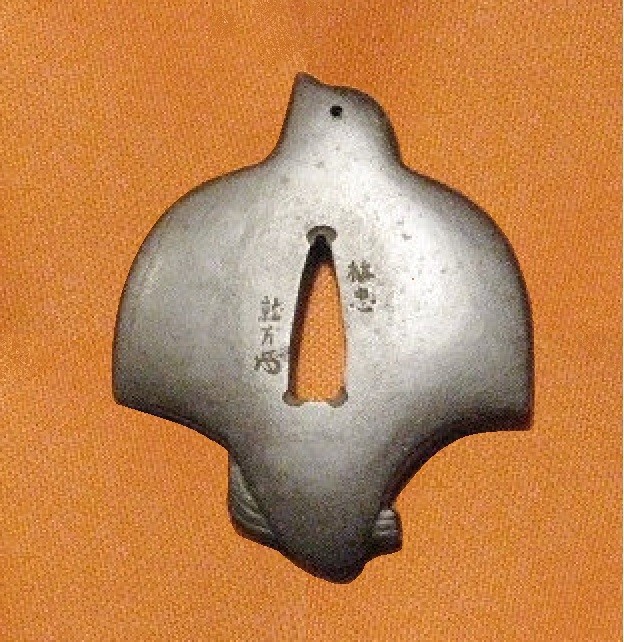
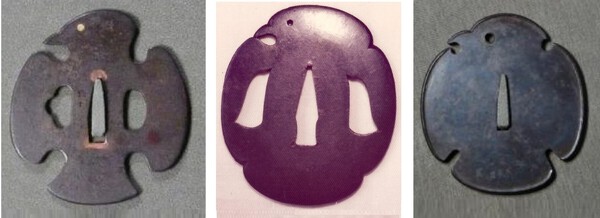
Some other fat birds - at least the beak does not have to be imagined. A shy bird, a pretty plumage bird, a raven and a chidori.


-
I noticed a few birds passing through this month. Two unusual ones a Miochin/Myochin [Nobuie] you have to imagine as a bird and one that must be a casting or how else to explain the raised kanji?

-
Xander, I think late Edo, two tones of gold nunome-zogan (布目象嵌) for the most part in good condition [nunome is one of the easiest decoration types to damage]- it has a faint seppa shadow so it was likely mounted for some time. The patina looks a bit patchy but that might be the lighting - entry level guard but better than my first and I am sure this is true of a lot of collectors. When you post could you include the size? It looks Wakizashi size (脇差) to me but not sure. [how big are your hands?] You can always ask before the next guard you go for - with the caveat that you may be advertising your find to someone with more money in their pocket, don't include any links to auctions that have not finished, images are safer. [links after the fact are ok.] Good luck in your collecting - no one ever stops at one!
-
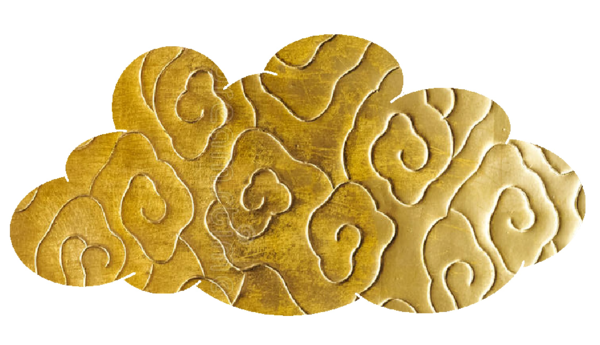
Consigned to the Hizen school - rather than binned? What's not to like? Wangata shape, nunome-zogan, star pattern ategane. It was all the rage at one time in Japan. I am glad you say it is darker in real life - the image is a little overexposed. I think you have two options on the design on the ura - waves or clouds - depends on the dragons. Gold clouds above the dragons heads on the omote.
-
Xander, perhaps you could you post the Jauce link - no images have come through.
-
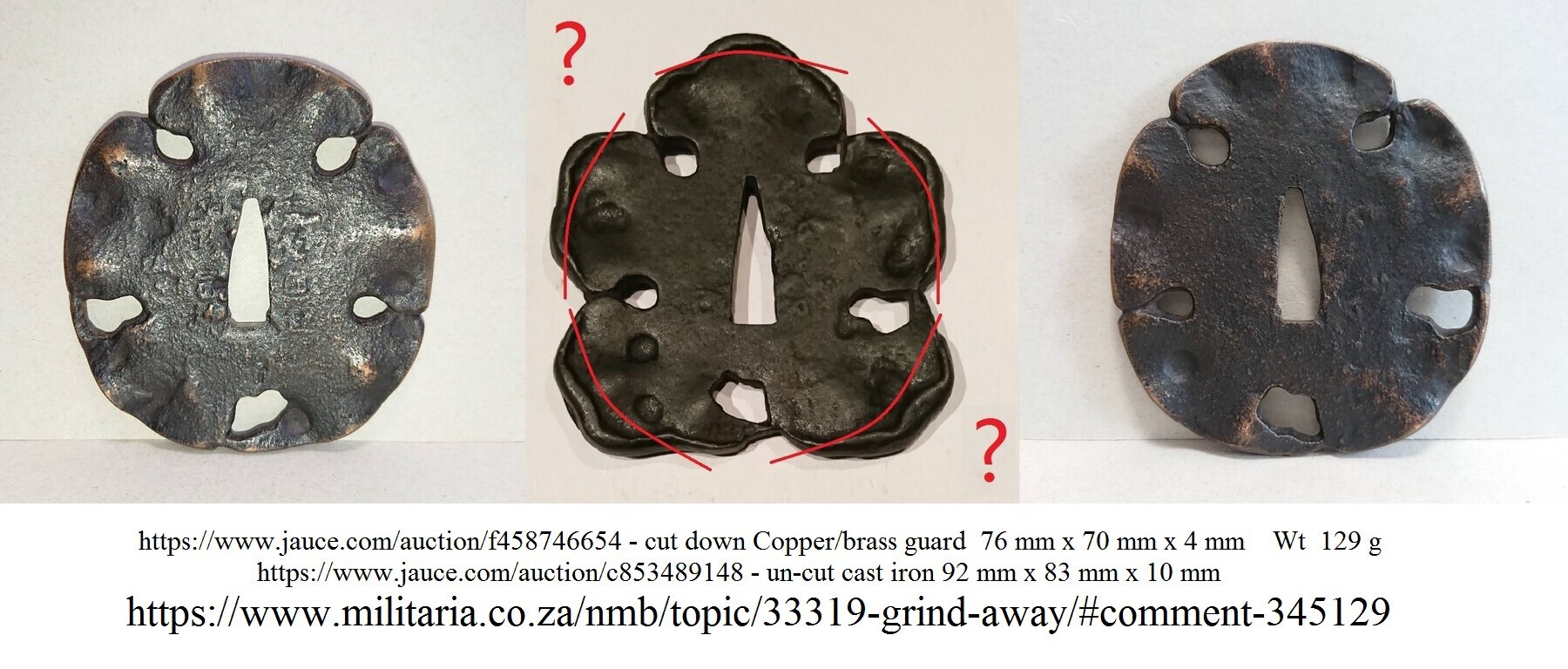
One more from an old thread - this is a 'modern' alteration the guard in question originally a tourist piece that encountered a grinding wheel!

-
Okan you have sparked some interest in 'altered' guards which is a great thing. I am sure there must be a lot of guards that have been 'shortened' or modified to balance new blades. They would sometimes be difficult to tell depending on how well it was done and the time, patina has probably covered up a lot of alteration evidence. Thanks for sparking this thread.
-
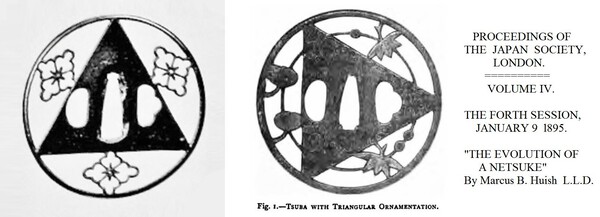
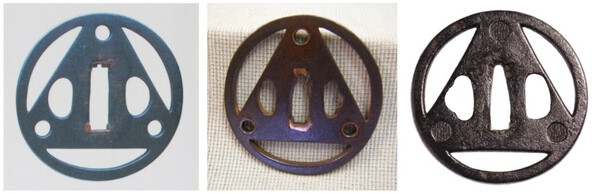
I think it is more likely Akasaka or even Owari - both schools have similar design elements but still possible for another school to take on the design. Triangle sukashi guards are pretty few and far between so you were lucky to grab that one, delicate and functional at the same time. A few of these about but not the same quality as yours. Yagyu design.
-
Well we know where it came from. https://www.samuraimuseum.jp/shop/product/antique-tsuba-for-samurai-sword-t-108/ Another couple of triangle sukashi guards.