


IanB
-
Posts
1,778 -
Joined
-
Last visited
-
Days Won
23
Content Type
Profiles
Forums
Events
Store
Downloads
Gallery
Everything posted by IanB
-
Steve, I see no omodaka or water. I admit the moon is placed in a very low position that to me suggests it is rising or setting and being seen through the vegetation. Since there is dew on the sasa it suggests early morning. Ian Bottomley
-
Sorry Andrey, I missed the y key in the above. Ian
-
Andre, It may be gimei. but I like your tsuba - a variation on the 'Dew on the grass (sasa)' theme. However, it is the back which I find most interesting. Note the three aoi leaves which have little or nothing to do with the design on the front. Could this be an anti-Tokugawa piece? The Royal Armouries has a tanto with a kozuka that I was convinced was anti-shogun. It was the usual shakudo nanako with three aoi leaves in gold, drifting down a stream, indicated by swirling silver lines, above which was a butterfly / mayfly in gold. The fact that the leaves were separate, and floating away, combined with the short life of the insect suggests the idea of the destruction of the Tokugawa. Whilst yours isn't quite so blatant, the separation of the leaves might show the same sentiment. Ian Bottomley
-
Brian, You obviously lead a sheltered life. Fake yanone abound in the UK. Most are crude and many make a fatal mistake when it comes to the finish. They fall down in the junction between the head proper and the tang. Many or even most real yanone have a concave collar at this point, well finished and polished. Many of the fakes I see have this region parallel, where the forger left the original round bar he forged the blade from untouched. Another feature is the tang. Again the real heads have this well finished, with yasuri and often a mei in tiny katakana. The Royal Armouries' collection has a couple of interesting hirane with piercings. The heads are cast iron with a tang of thick iron wire. They must have inserted the wire into the sand mould before pouring. These are of considerable age and probably date to the Meiji period when many tourists were not too discerning. Ian Bottomley
-
All, Russet pieces of armour were also lacquered to prevent corrosion. Normally iron plates for armour were given the full treatment with multiple layers that start with raw lacquer, a layer of cloth, fillers and finally the top coats. The first layer has to be 'burnt' on to the roughened surface of the iron since it is hydrophobic and the raw lacquer is an aqueous medium. I was told by an armour maker that the correct temperature is when the applied lacquer just sizzles when brushed on. Once this coat is on, the resulting surface is then hydrophilic and the rest of the lacquering process is carried out in the normal way. With the vogue for leaving parts of the armour unlacquered, partly so that the quality of the metalwork could be seen and probably also because of the cult of tea, corrosion was a problem. It was solved by applying a coat of raw lacquer to the russet surface and then rubbing it off after a short while. This then hardens in the layer of rust and forms a protective film. One of my armours is completely russet and when acquired, about 40 years ago, was beginning to show out breaks of surface rusting. Working on the principle that antique gun barrels were finished with linseed oil, I rubbed on a solution of boiled linseed oil in turpentine, left it an hour and then rubbed it off with tissue. The result is a finish that glows with a gentle sheen that is still exactly the same today as when it was carried out. Ian Bottomley
-
TAR, Joseph A. Bellamy was Mayor of Plymouth in 1900 - 1901 and hence during the reign of Queen Victoria. In 1907 he is described as Sir Joseph at the opening of the new Plymouth library so must have received a Knighthood under Edward VII. Admiral Togo had studied in England between 1871-1878 and then returned to Japan. He took part in the Sino-Japanese war of 1894 - 95 and then took command of training colleges as well as being commander of the standing fleet. In 1906 he was given British Order of Merit by King Edward VII. This suggests that the meeting with Sir J. A. Bellamy may have been later than you think. Ian Bottomley
-
Since the hole for the kozuka goes on the ura side of the sword, the mei and the decoration on this tsuba would be on the back and invisible when worn. I've noticed this with a lot of copies, the major part of the design being on the left side and hence hidden by the tsuka had it been on a sword worn in the Japanese way. Ian Bottomley
-
Brian, Please accept my best wishes for a speedy recovery. I feel sure that now you are out of the clutches of the medics and at home among your swords you will recover far quicker. Ian
-
Antique Swords becoming illegal in Great Britain?
IanB replied to britainsword's topic in General Nihonto Related Discussion
Mike, I don't know where you have heard this from but I suspect you are mistaken (although having said that, anything is possible). As things stand, antique weapons are exempt from the Prohibited Weapons Act and that includes Japanese swords. What has been added as an amendment to the act are replica swords. Rather strangely even replicas are legal if they can be shown to have been made by traditional methods (whatever that is supposed to mean). What has happened that may be the rumour you have heard, is that eBay, in their infinite wisdom, have decided to ban the advertisement and sale of all swords and knives of whatever kind and origin in the UK. The only exception to this is tableware. As I understand the situation, anyone selling a sword or knife to a UK buyer will be banned from selling on eBay. So, as from the 10th March, we can browse eBay International and look, but there will be no way of bidding. If you know someone in the US or elsewhere, they can buy on your behalf and then ship swords to you perfectly legally, although you will have to go through the usual pantomime with HM Customs. Ian Bottomley -
Steve, I so agree with Piers, it is a minefield that is barely mapped. One relatively useful book is 'Kamon no Jiten' (ISBN 4-87190-714-7) which at least ascribes kamon to names. Another recent publication is 'Kamon of famous people' (ISBN 4-404-03348-6). This lists the kamon used by a variety of big names, both historic and more recent. It illustrates hundreds of variations on each design but does not identify the users of these variations. There are older books but they are also very limited. Sadly I do not think the situation will ever improve. Because there were no officials, like the heralds of Europe, to regulate the system, much of the historic information has had to be gleaned from battle screens. The more recent attributions has come from surviving families. Incredibly, the kamon used by some of the commanders at Seki ga Hara are now unknown yet they were big players in their day. Ian Bottomley
-
Rob According to 'Kamon no Jiten', the kamon on your sword is that used by the Otsuka family. Ian Bottomley
-
Henry Don't forget the 50cm rule. A wakizashi, provided they have stopped measuring the whole sword and not just the blade as the law states, does not come under the restriction. Ian Bottomley
-
Kyle, You will receive a computerised letter in the next few days saying they have a 'banned weapon'. Don't panic, it is routine. Your job is then to raise an 'issue' as required by the Amendment Order 2008. Just sent them a letter stating that you are a genuine collector of antique Japanese swords together with copies of all the documents relating to the purchase, including the original advertisement (I know they may have been incorporated with the package but they seem to ignore these). If you have photos of the sword in the original advertisement, so much the better, send these as well. You will then have 'raised an issue' as the law quaintly puts it. Your letter should should spell this out, saying words to the effect - 'This sword falls under the ‘defence’ provided by the Criminal Justice Act 1988(Offensive Weapons)(Amendment) Order 2008, by virtue of the fact that it an antique made around XXXX. I enclose a description of the sword supplied by the vendor, XXXXXXXXX. I also include details of the payment for calculating duty'. This should be sufficient to raise an issue. It is then the resonsibility of HM Customs to prove it is not an antique. The next thing to watch is that they only charge you 5% VAT. I have had an occasion where they accepted it as antique and then slapped 17.5% on it. Another polite letter pointing this out will do the trick, but it takes months to get your money back Ian Bottomley
-
Jabara is also used on armour, generally to add to the rich appearance of the tailored portions, but on more more recent productions, to cover the join between different types of printed leathers in place of the traditional fusegumi. I always assumed jabara was produced as an entity but when I ordered some recently to wrap a hilt, it arrived as two separate hanks of thread, one S twist and one Z twist. You have to sew the two together, matching the twists to produce the correct chevron effect, before you can even think of wrapping the hilt. Since it was a fairly long hilt, you can imagine how long that took. Ian Bottomley
-
Don't like to be critical, but the kuwagata of your helmet are in the wrong way around. They should be transposed left to right. Ian Bottomley
-
Malcolm, Now that you have a copy of Koop, you need to practice finding the kanji. He uses stroke count first followed by how the kanji can be divided into separate parts. If you get Nelson you will find he uses radicals as the initial search criteria. It seems rather confusing at first but I find these two approaches a boon. If I can see a radical I use Nelson and when (if) I find the character look it up in Koop to determine its reading and / or special meaning in the signature. If no radical is obvious I dive into Koop with a stroke count, often having to look at count sections on either side of the number I arrived at until I find the kanji. In over 50 years of using the book I cannot really recall it having let me down - a fantastic achievement considering how old it is. They were real scholars. Ian
-
Malcolm, Although it is very long in the tooth, A.J. Koop & H. Inada; Japanese Names and How to Read Them, Routledge &Kegan Paul, London 1923, takes a lot of beating. Not only does it have a character dictionary, it also contains masses of informationon dates, titles, towns families and the like. It has been reprinted a few times and copies can be found. I use it in conjunction with Nelson's Japanese English Character Dictionary, Tuttle, Tokyo 1991, and find the two together give me most of the informantion I want. ian Bottomley
-
I had one like this, on a sword carried in WWII so I suspect not terribly rare. It is done by soldering lengths of brass wire onto the iron base. I was under the impression it represented pine needles clustered on the surface of the pond. Ian Bottomley
-
Lee, The Royal Armouries has about a dozen yari given to Queen Victoria with raden covered shafts and they too are shedding pieces of MOP. The conservation staff spent weeks sticking them back to give us a few examples for display. The rest are stored horizontally in lengths of plastic guttering so that any more pieces that drop out are at least kept with the shaft they have come from. I think the idea of a new shaft is the ideal solution. As for the mounts, some of my yari are in the same state and seem to have had paper or some fibrous material jammed under the mounts to keep them in position. Ian Bottomley
-
Kyle, I love the tale about having taken it to the Royal Armouries. Had they done so they would have been told, in the nicest possible way, that it was a Chinese copy. It is possible I did see this wretched item. A guy rang to say his grandfather had died and he had found about a dozen Japanese swords in the attic and that they had been collected about 50 years earlier. On his arrival, clutching a bin bag full of swords, it was amusing to see they were all modern Chinese junk. The guy seemed rather put out that I wouldn't give him a document to say they were all genuine. Ian Bottomley
-
Ron, Welcome to the Message Board. Don't worry about importing swords. Now that the legislation has settled in, it is no real problem providing you let the Customs have copies of the paperwork from the vendor. As long as they have something to put in their files they are happy. Also, take note on how they deal with VAT. Having accepted a sword as antique they occasionally apply 17.5% VAT when it should be 5%. Again a polite letter will get you a refund. Ian Bottomley
-
Steve, Ah the image of the original paper has appeared. Typical of what was issued to officers. Ian
-
Steve, I don't see any surrender documents, just the details set out by a vendor in 1995. Judging by what was said to the original buyer, it is a bit short to be an uchigatana at 18". It was also stained and chipped at that date. Do you know what state the blade is in now? I note you live, as I do, in Yorkshire. Send me an email and we can get together. Ian Bottomley
-
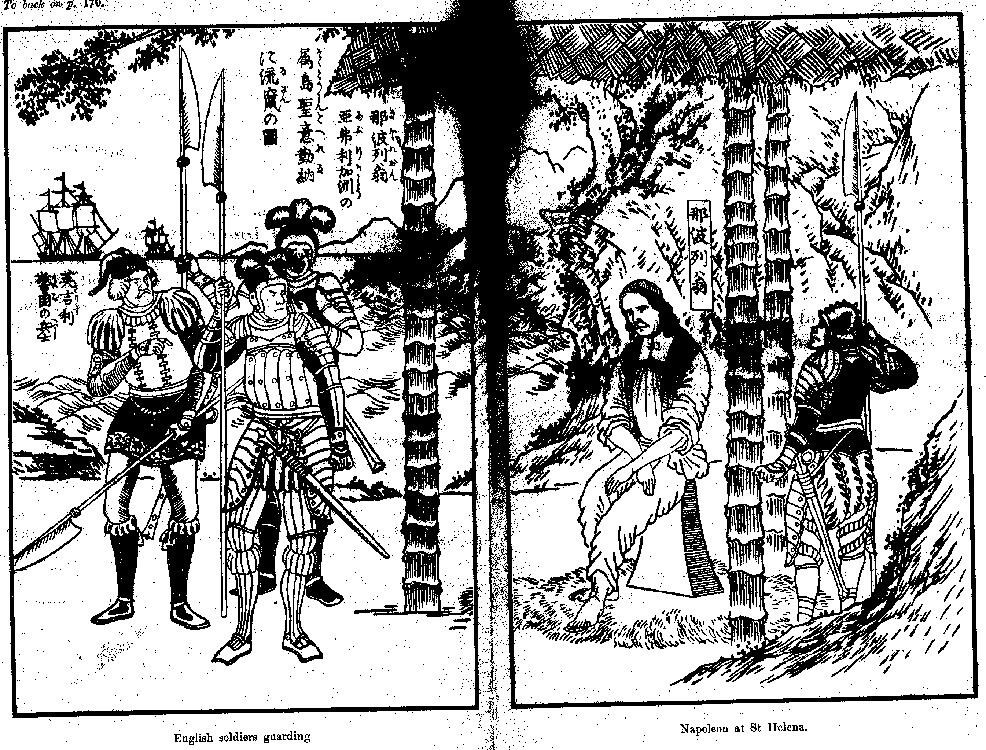
All, In prints, Benkei is often shown with a bag on his back stuffed with all manner of weapons including an axe. Like the kumade of the Heian period they cannot have been common, otherwise a lot more would have survived. As for the names of European staff weapons, the different types were given all sorts of names in different countries and by different authors - it is a minefield. The Royal Armouries has a forest of them with every possible combination of spikes and points that merge almost seamlessly from one into another. It is rather like defining colours - is it a bluish green or a greenish blue? For those interested, the best source on the subject I know of is Ewart Oakeshott's 'European Weapons and Armour' Lutterworth Press, London 1980. Interesting that these staff weapons were met with the same indifference by the Japanese as were European swords. There is a curious little yari in the Victoria and Albert Museum collection (on loan to the Royal Armouries) that has a secondary and separate piece with a cresent shape balanced by a downturned hook on the opposite side, fitted below the regular head. This is obviously imitating a halberd. It is quite small and probably made for a child. In Sladen & Lorimer's 'More Queer Things About Japan', Treherne & Co Ltd, London 1905 there are excerpts from an early 19th century 'Life of Napoleon' in one illustration of which the Japanese artist shows Napoleon on St Helena guarded by British soldiers wearing armour carrying glaives.
-
John, Jean, Technically a halberd is a staff weapon with an axe blade on one side, a downwards pointing fluke opposite and a central spike. At first the axe part had a straight sloping edge, but later more decorative ones developed a curved edge. The nearest thing to a naginata in Europe was the glaive, which has a long, single -edged knife-like blade, again on a shaft about 6 or 7 foot long. What we normally think of as hand held battle axes were quite rare in Europe, being an Indo - Persian weapon. Victorian illustrators usually depicted the axes with, usually, two curved edged blades in the hands of knights because they looked spectacular. In reality, almost all these are Indian or Pesian. Ian
