Bruce Pennington
-
Posts
13,927 -
Joined
-
Last visited
-
Days Won
169
Content Type
Profiles
Forums
Events
Store
Downloads
Gallery
Everything posted by Bruce Pennington
-
The fittings are normal, but someone has over-cleaned them removing the black paint from the seppa and tsuba. The “gold plating” is a figure of speech that we all use. It’s not really gold, and is how all the navy fittings are supposed to look.
-
David, That would have to be my guess too. It's incomplete, but it doesn't resemble any of the known manufacturer stamps, so I'd lean to Seki. Definitely an unusual place for it, but I have seen stamps on fittings before.
-
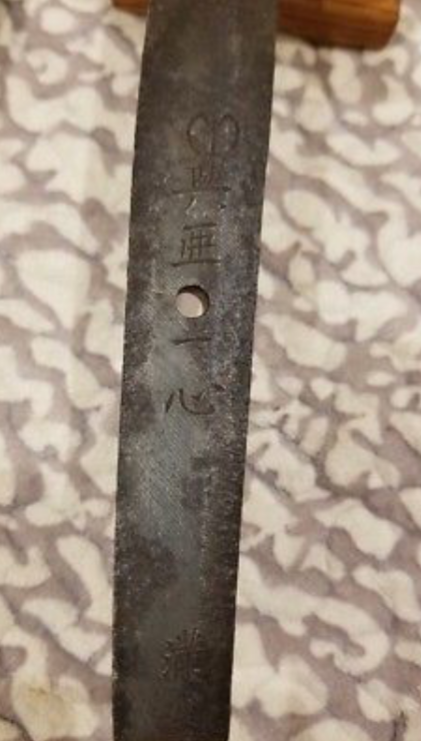
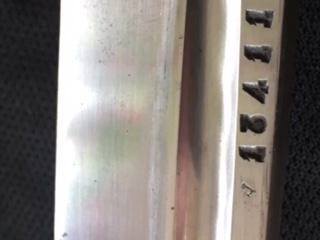
Austus, The stamped number, matching the numbers on the fittings, are put there by the shop that fit the blade out originally. That there are no other stamps present is not unusual. It's not a guarantee that the blade is traditionally made though, as the stamping didn't really get serious until 1940. So it could have been made before that. Also, blades made for the navy didn't seem to get stamped as religiously as the army blades did. Other guys more expert in spotting nihonto will have to chime in about it, but my bet is that it's not traditionally made. The saya was probably grabbed by a G.I. and put with the blade. It was common for a guy to pick up a blade without a scabbard and look around before returning home to find a scabbard for it. Can't say about the edge sharpness. From your pics, it looks like it might have been polished, post-war. Maybe the polisher didn't finish off the edge? There was an official requirement to dull the edge of blades "in peacetime", but as far as I know, there were only a couple of years in the '30s that qualified for that requirement.
-
I'm with Stephen on this. I have my swords because someone offered them for sale on ebay, auction houses, and dealer sites. Each one challenged me to learn more as I went. My grown daughter may keep them, but she may sell them off for much needed cash. The buyers will likely be beginners who are looking for their first good Type 95/97/98, and excited when they receive it in the mail.
-

Attention Mantetsu Owners: A Survey
Bruce Pennington replied to Bruce Pennington's topic in Military Swords of Japan
OK!!! Just finished charting out the numbers by the iroha system, and VIOLA! - they are in a logical order by year!!! I only posted the first number of each group to save space, though in '42 I posted 3 "Ya" numbers because it is the only kanji I have that goes through all 3 seasons (for some reason, I have no record of any numbers marked "summer"). If I could find Moritasan and Thomas I'd hug you both! NEW CHART.pdf -
Attention Mantetsu Owners: A Survey
Bruce Pennington replied to Bruce Pennington's topic in Military Swords of Japan
Sorry Trystan! I'm a bit jetlagged from my trip home from Japan. -
Attention Mantetsu Owners: A Survey
Bruce Pennington replied to Bruce Pennington's topic in Military Swords of Japan
Thomas, Good idea about the upper/lower case for the katakana/hiragana. I checked the "To" blades and ALL of them are hiragana! I've corrected my chart to reflect this. I'm still traveling and my tablet Word doesn't have the links for the kanji. When I get home, I'll check on my laptop. It should have what you are describing. I'll also investigate whether there is a way to get the kanji through my tablet (Samsung/Android). I use it the most, so I'd rather find a way to do it on the tablet. If I can, I'll change all the english versions to kanji. I see no need to record them in English if I can record them more accurately in kanji. Bingo! Good eye on the Ohmura connection! -
Attention Mantetsu Owners: A Survey
Bruce Pennington replied to Bruce Pennington's topic in Military Swords of Japan
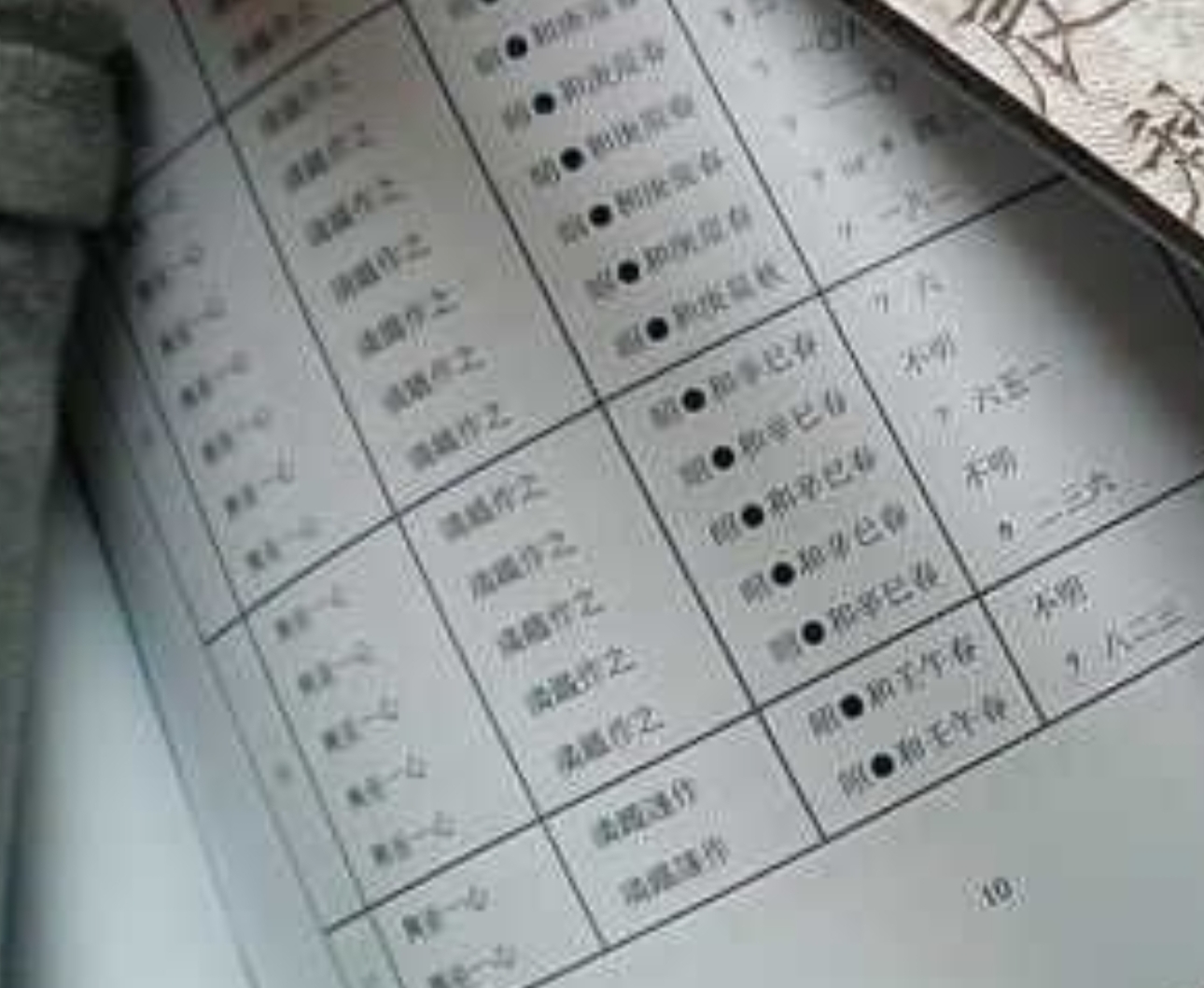
John,What da heck is this!? Thanks for the blade, didn't have that; but did you see the book in the background? It looks like a catalog of Mantetsu serial numbers! The website listed in the photo is a South China business group. Do you know anything about them and/or this book?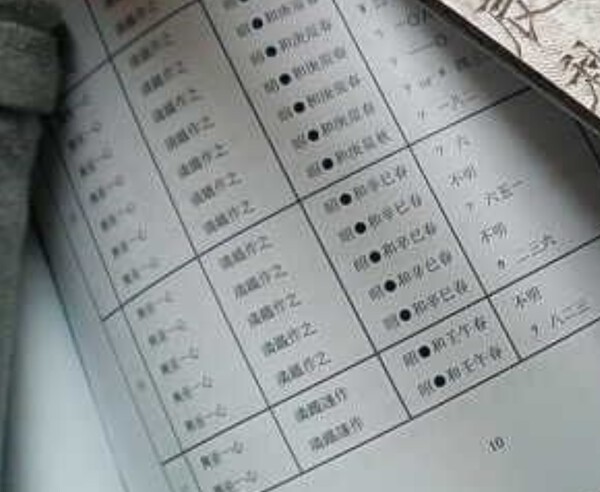
-
Attention Mantetsu Owners: A Survey
Bruce Pennington replied to Bruce Pennington's topic in Military Swords of Japan
Good catch! I had saved the pictures but failed to chart the number. I’ll be traveling today and will make all the corrections afterward. -
Thank you Moriyamasan!
-
Malcolm, it’s the one around the corner from McDonalds. Brian, I didn’t buy it, my hobby money fund is too low right now! He didn’t have a price on it yet, and it’s not registered. He said it would take a couple of weeks to get a certificate.
-
Attention Mantetsu Owners: A Survey
Bruce Pennington replied to Bruce Pennington's topic in Military Swords of Japan
Fabulous Thomas, thanks for the corrections! Can you explain the significance of the parentheses? -
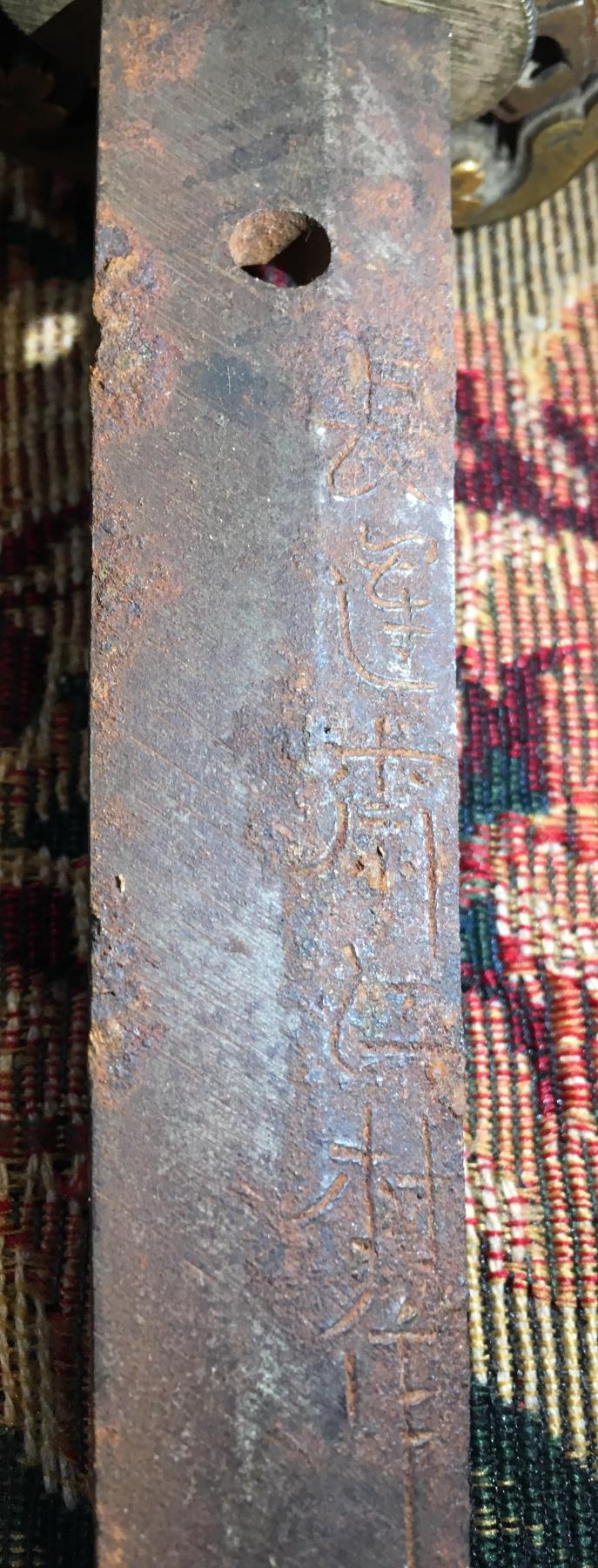
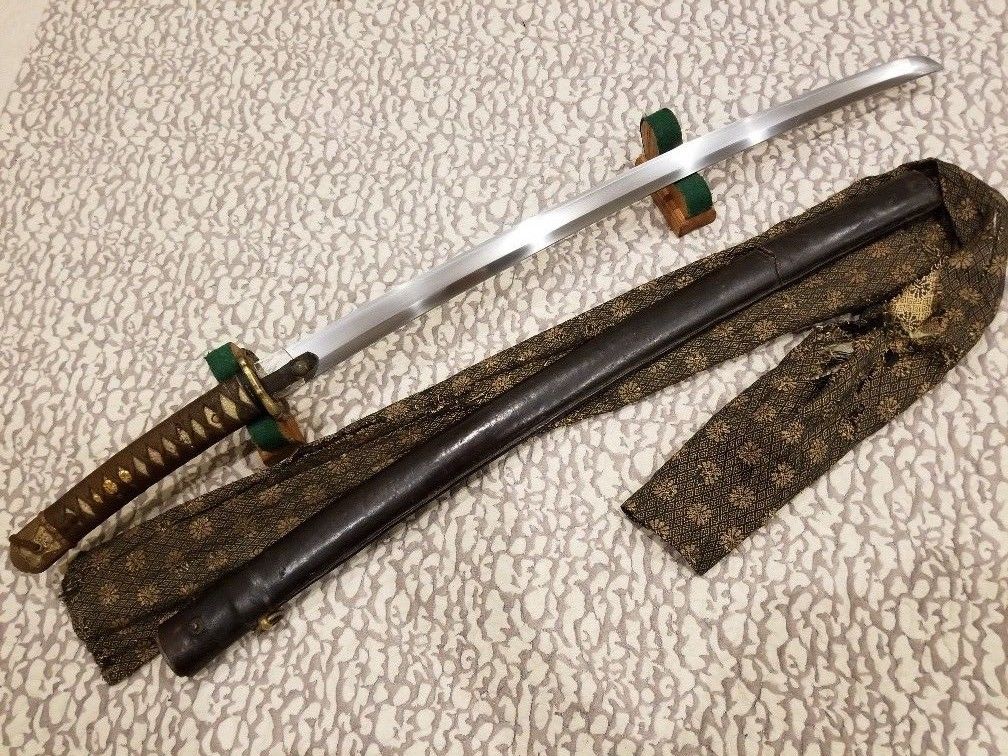
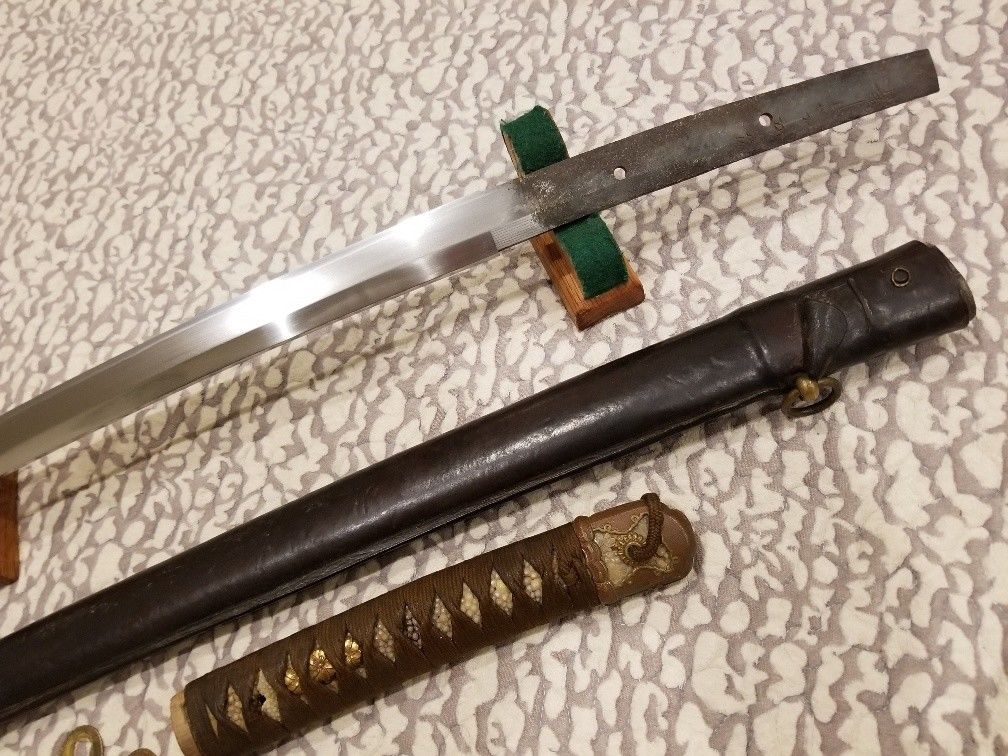
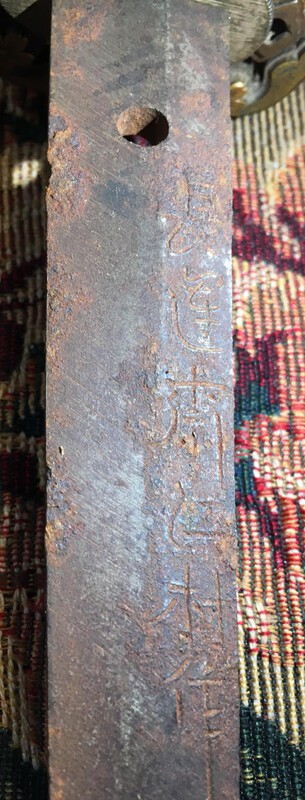
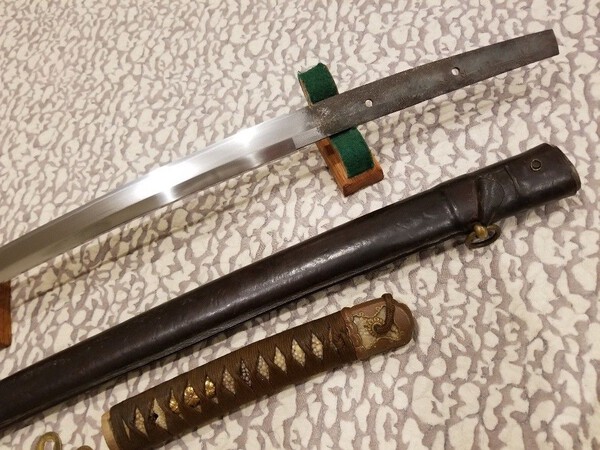
Found this one in a antique shop in Narita Japan. The blade is pretty rusted up, in a leather covered saya.
-
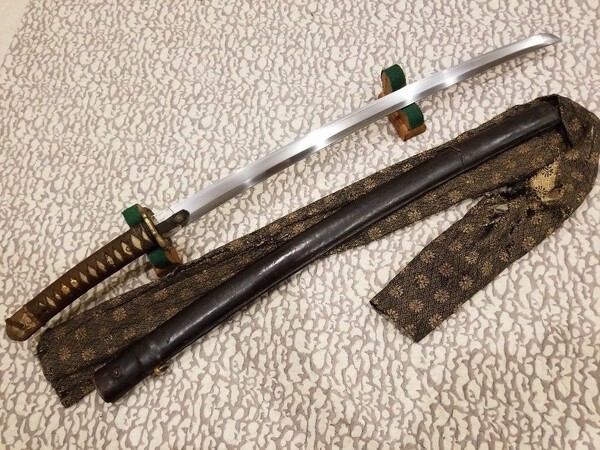
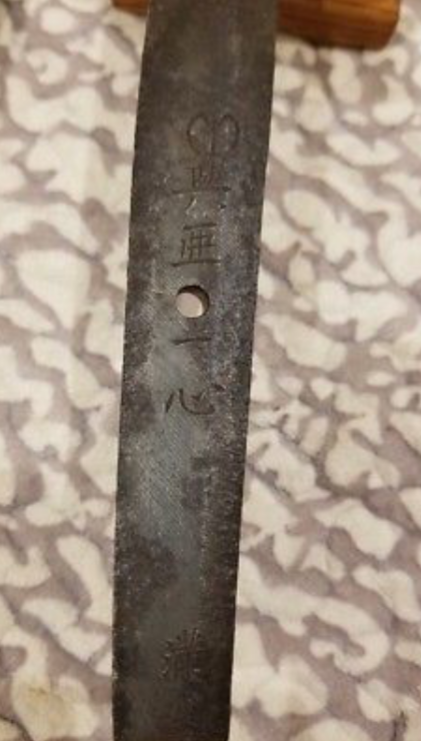
Lev, Don't know if this is the same Mantetsu waki, but this one is a Spring '39, cut to waki length.
-
Attention Mantetsu Owners: A Survey
Bruce Pennington replied to Bruce Pennington's topic in Military Swords of Japan
Moritasan and Thomas - this is exactly what I needed. I needed someone who could see the data through the eyes of Japanese culture, not my American perspective. Now I have some work to do! -
Attention Mantetsu Owners: A Survey
Bruce Pennington replied to Bruce Pennington's topic in Military Swords of Japan
Excellent, Thomas! I was trying to find katakana that fit, but it wasn't working out right. You've nailed it, thanks! -
Attention Mantetsu Owners: A Survey
Bruce Pennington replied to Bruce Pennington's topic in Military Swords of Japan
Posting the latest version of my Mantetsu Study document for anyone interested. I'm hoping someone with an eye for detail might see something interesting that I have missed. Let me know if you do! Not much new lately. Over 160 blades. 60 of the serial numbers are in the "A"s. Some years have obvious groupings, some are all over the place. mantetsu serial numbers (1).pdf -
Ok, cute. While technically within requirement, it still kinda defeats the purpose for a name. A rookie to the hobby won't get it, and will have no idea how to adress someone doing that. I simply thought is was a tagline like some people put below their names. I'm not a legalist by nature, but I enjoy this hobby and the connection to real people that it gives me.
-
Thomas, Your name has dissapeared from your post tagline. Might want to fix that. Great chart! Is that a compilation from Fuller's chart? Or is it something you've compliled yourself? If so, how did you get the data?
-
Sho stamped blade (Dec. 1939)
Bruce Pennington replied to cisco-san's topic in Military Swords of Japan
As in all things Gunto, I can see both scenarios as possible. If David's is correct, for this blade, then the stamp is likely original to it's manufacture, making the stamp one of the earliest I've seen. If Dave's, then the stamp could be original or added at re-mount. As with many areas of our hobby, I wish we knew more about the actual workings of life in WWII swordmaking. If stamped during re-mount, I wonder who would have done so? I don't picture a koshirae fitting shop using a showa stamp. Kevin, Ryujin Swords, speculates that the Sho stamp was used by the Officer Clubs that sold gunto. If true, then maybe the sword was brought to a Club associated shop for remount, and consequently stamped. Going with Occum's Razor, with the simplest answer often being the correct one, I'd have to bet this was an original stamp at time of manufacture. -
Attention Mantetsu Owners: A Survey
Bruce Pennington replied to Bruce Pennington's topic in Military Swords of Japan
Yes, SMR.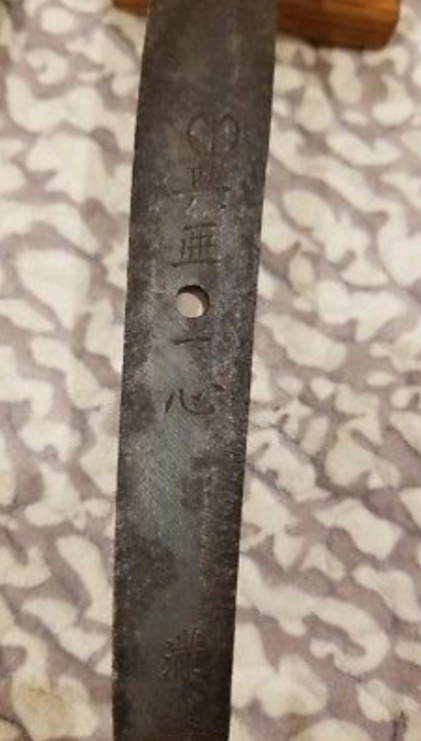
-
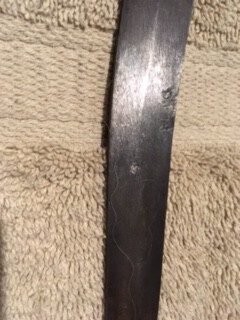
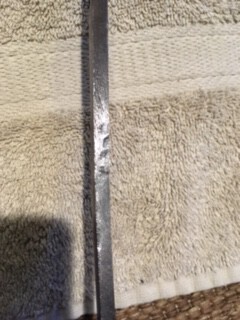
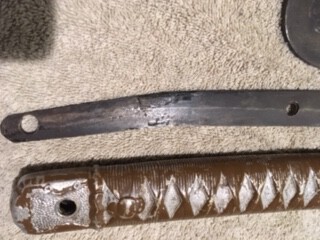
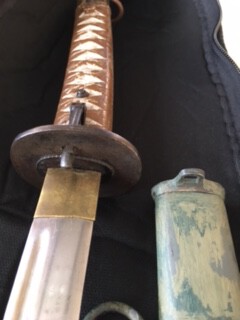
My only odd-ball 95 is a Nagoya side-latch with a crooked nakago. I'm not sure if it was damaged and repaired or if it was just really poorly made. In my opinion, the Nagoya arsenal had a looser quality standard than the Tokyo arsenal. It's also has the odd multi-green paint on the saya that we've tentatively determined to be period paint, not post-war.

-
That's a great story Bob, thanks! Stories like that often give us tidbits that help explain things we see today - shortened blades; showa blades in wooden saya, leather covered, etc.
-
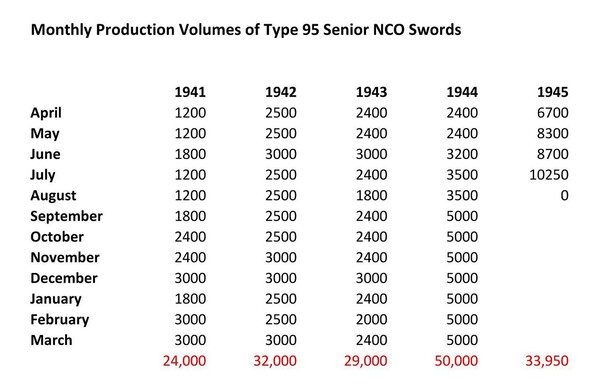
I was going to speculate that the un-fullered blades came toward the end of the war. I read somewhere that since they were under pressure to crank out more blades (they went from an average of 2,400 blades per month to 5,000 in '44, to 6,000, then 8,000, to 10,000 in August of '45), the fuller was dropped to save time. BUT, seeing the fullered "late-war" wooden handled blades makes me wonder about that theory.
-
Attention Mantetsu Owners: A Survey
Bruce Pennington replied to Bruce Pennington's topic in Military Swords of Japan
That’s great news, thank you! I’m anxious to hear what it says. It’s very good to just know that it’s mentioned in a book. It’s the first not 1945 Mantetsu blade I’ve seen.