obiwanknabbe
-
Posts
444 -
Joined
-
Last visited
-
Days Won
4
Content Type
Profiles
Forums
Events
Store
Downloads
Gallery
Everything posted by obiwanknabbe
-

Your Worst Purchase
obiwanknabbe replied to SwordGuyJoe's topic in General Nihonto Related Discussion
My worst purchase ever was my first purchase ever in 1994. It was a Kane Mitsu Gunto, in type 94 mounts, that I bought from the Ebay dealer Augustcornell (who will forever eat through a straw if ever i find out who he really is). It was described as razor sharp, in good polish, and in great shape. Back in the day digital camera pics were very low resolution so it was hard to tell otherwise. When it came, the saya was taped together with black electrical tape (could not see in pics as saya was black) handle was broken, Nakago was ground with a sander and then reblued to look like it had an aged patina, and the blade looked like it had been worked over with a rock. I contacted the seller who claimed it must have been the wrong item that was shipped to me and that I should return it for a refund....... Which i did.... for a refund that never came. He made off with my $450 USD, which was a ton of money to sophomore in high school, and i never heard from him again. This was before paypal and buyers insurance so i was up the creek with no paddle. Total loss. All these years later and it still gets my blood boiling when i think about it. Kurt K -
The easy catch is the date. ALL Mantetsu swords use the zodiacal dating system. This one does not. Also it is lacking the outward, diamond shaped, flaring of the mune above the boshi (i do not know the actual term if someone can clue me in). Kurt k
-
Please correct me if I am mistaken, but the term Naginata may not apply here. Nagamaki perhaps? Or a hybrid thereof? Kurt K
-
No Dadoffour.. That is the name of the smith. Ido Hidetoshi was a showa-gifu smith who worked at the Fukumoto Amahide gunto factory. Slough rates him as having made low to medium grade Showato (non traditionally made blades) and Gendaito (traditionally made blades). With the seki stamp present, you have an example of his Showato work. Hope that helps, Kurt K
-
Is this a matched set? if not, for the Wakizashi anyway, I would suspect merchant mounts. The lower class were not permitted to carry Katana but a merchant or other wealthy enough individual, who was not of the Samurai cast, may have taken their legal to own short sword and had it mounted to look like a long sword. As for the other suggestion of a deceptive draw, Yes. I know 1st hand that this is a practice employed in BikenJitsu. Best Regards, Kurt K
-
Geoff, Please dont try to polish it yourself. Togishi work is likely the most difficult metal working art there is. Even if its not a national treasure, you will likely do more harm than good. The stones that are required for this type of work are highly specialized, as is the individual methodology for polishing a blade from certain periods and/or schools. I know its never what people want to hear, but its better to stabilize it and do nothing further than to attempt a polish and ruin it forever. As a fellow blade-smith, i fully understand the desire to work on it, BUT, i would advise you to use it as a study piece instead. Analyze it from every angle and use it as a template for a work of your own. Much can be learned from simple study. Best regards, Kurt K Dark Star Forge
-
Hi Geoff, Looks like you have a cut down Wakizashi that someone did a serious number on. Judging by some of the proportions, it looks like the Fukura /Boshi may have been ground off (fatal flaw). Hard to say with these pics. Also, image 9751 appears to show remnants of grinding having been done on the Ji up and around the Koshiogiji. I cant tell if that is homon showing in the pic or the reflective angel of sharpening . That said, I don't know if there is anything left for a polish. Some warm vinegar will help expose any remaining hamon along the edge. While in most cases i would not recommend this, i don't really see the harm here. If you can still make out anything along the edge, then it my be salvageable, but the cost of a polish would almost certainly exceed the value of the blade. I hope your not too deep into it ($$). Best regards, Kurt K, Dark Star Forge.
-
If you want to get really good Hamon pictures, use a diffused light source. Then, with tripod, use longer exposure time. Kurt. K
-
Hi Chris, The sword was not issued to most officers. It is my understanding that Officers in the Japanese Military were given a certain amount of $, the amount determined by rank, with which they could go buy their sword from on of the hundreds of suppliers. It is likely that the cut-out tsuba was a higher end option that someone with a little more $ opted to purchase. Im sure others will chime in with more detailed information. Best regards, Kurt.k
-
Jon, The other Kanji is the date. Mantetsu swords were marked using the zoological calendar. The first two Kanji are common, Sho wa. The third is Mizunoto, fourth is Hitsuji, Forth is Haru. Translation: 1943 spring. If it says Koa Isshin Mantetsu, it was made by the Diren Railroad co. What do you mean "railway sword"? There is a prevailing myth that these swords were made from train track. That is not, and never was, the case. Hope that helps.. I have one of these swords as well and the date stumped me for a while. Related, I happen to have a metal saya for a Mantetsu sword. Its unpainted and does not have a wood core or all fittings, but it is dent free and you can have it cheep if you want it. I also have mantetsu kashira and Kojiri. Pm me if interested. best regards, Kurt.K
-
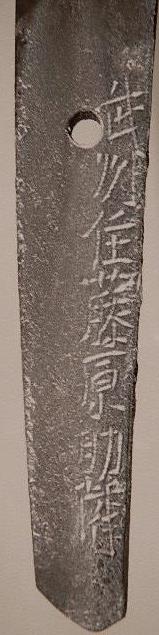
Hi everyone, Thought I would wade into the conversation here with a neat Wakizashi. It was forged by Fujiwara Sukechika of Nambantetsu. The blade was ever so slightly longer than standard wakizashi length (it was not my sword so i don't remember exactly how long), but the saya is more the reason I am mentioning it. Outwardly, it was of Katana length. Initially, I thought that perhaps it was a mismatched pair, but seeing that the saya needed to be restored (it was in bad shape), it needed to be taken apart and cleaned. It turned out that while long on the outside, it was carved to match the length of the blade on the inside. This led me to make one of two conclusions. One, that It was a Merchant's sword, OR, and far cooler, that It may have belonged to a Ninja. Having studied Genbukan Ninjutsu with Tanemura Sensei in Japan, I learned that it was common place for the Ninja to carry a sword that was shorter than it looked, giving them a half second drop on an opponent. Just food for thought. Thanks again for the wealth of information. Because of you, I find myself answering questions to some of the newbies I meet. Knowledge is contagious and I spread it with pride. Kurt K Edit: Forgot to mention, but you can see, the tsuka is a bit longer than usual as well.



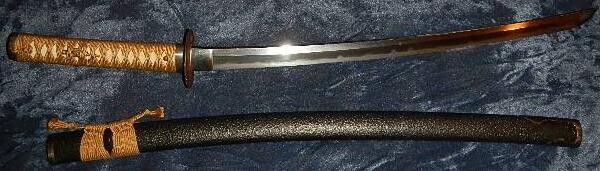
-
This is my favourite piece.
obiwanknabbe replied to Nickupero's topic in General Nihonto Related Discussion
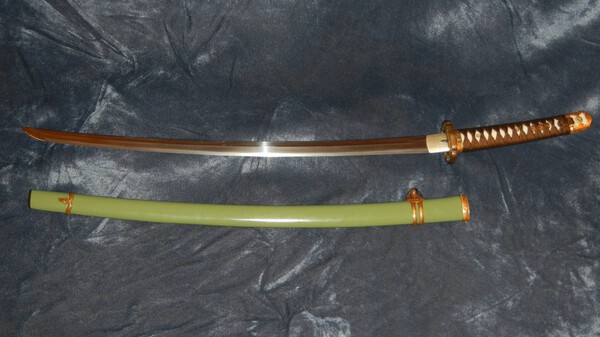
Of the pieces in my limited collection, I would have to say that this Koa Isshin Mantetsu is my favorite. It was such an utter mess when I found it buried in a corner at an antique shop in NY (and paid $100 USD for it). Now it looks wonderful and I revel the fact that it was saved from the scrap heap to be enjoyed by future generations. Kurt K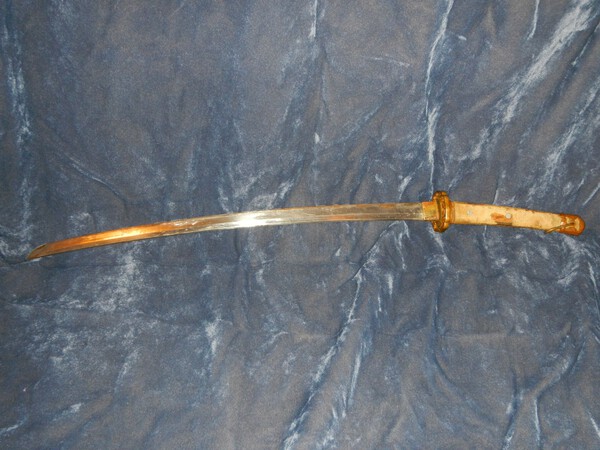
-
Is this katana worth a buy?
obiwanknabbe replied to bobtail44's topic in Auctions and Online Sales or Sellers
For that kind of money I would pass. The blade seems to have seen MANY polishes of the course of its life and is not in the greatest shape as it sits. For $4000, you can get yourself a beautiful Katina in spectacular condition from any of the reputable dealers listed in our link section. Just my 2 cents. Best regards, Kurt.K -
Hi James, Welcome to the board. Well as I am sure you know, there is not a whole lot of detail visible due to the state of the polish. What I can tell is that what you have is a Wakizashi. Its probably on the younger side of old. I might venture a guess of it being an edo period piece. I say this solely based on that it looks to be on the stout side, i don't see much in the way of loose grain, the steel has a rather uniform look to it, and I think i see a Suguha Hamon. In other words, it looks solid and utilitarian. Again, just a guess. I am also leaning towards the conclusion that this blade was cut down from a longer sword. I don't see any evidence of Yasuri-mei (file marks) on the Nakago and there appear to be cut off marks towards the bottom. I am sure others will chime in if I am incorrect here. The saya and tsuka look original to the blade. I suspect that leather battle cover was a later addition by a GI or some subsequent owner. Value? Very hard to tell. Most of us dont like to talk price because its just so hard to tell what you have through pictures. Its entirely possible (though largely unlikely) that it could be a blade from a famous school and worth more. It would need far greater study to determine if that were the case. What I can say is that I have seen similar, un-papered, blades in about the same condition, sell in the $200-$400 USD range. This is, of course, assuming that there are no fatal flaws present. I know that is likely not what you wanted to hear, but cut-down blades are in no short supply. Regardless, its a nice piece of history and a good opportunity for further study and learning. Best Regards, Kurt.k
-
I know nothing about this sword I got from my grandfather.
obiwanknabbe replied to Omonogo's topic in Nihonto
Hi Omonogo, Welcome to the forum. First, as per board rules, please be sure to sign all of your posts with at least your first name and last initial. That way we can address you more personally. Now for the blade in question: Well at first glance it appears that you have a sword in Kai Gunto mounts and in pretty good condition. It is Japanese (or so it appears... There are many fakes out there but Im not saying that this is one) Where it is from cannot be determined from the pictures you provided. We would need to see the Nakago as there are sometimes stamps or Mei which can answer that question for you. Who owned it? No way to know unless the sword came with a surrender tag or it was a custom order with the owners name inscribed (very rare). $$$$????? No way to know at present. Tips on preservation... now thats easy. Get yourself a sword maintenance kit (they are usually pretty inexpensive) and oil the blade once in a while. Wipe it clean. Here is a link http://www.nihontomessageboard.com/faq.html Beyond that, it is impossible to answer your questions in any detail without more, very clear, up close pictures of the blade and its Nakago (tang). If you remove the pin, the tsuka (handle) should slide off with just a few taps. The members of this board, myself included, would be delighted to help you gain a deeper understanding of your sword. Just post up some very clear images and we will see what we can do. Here is a link detailing photographing techniques http://www.militaria.co.za/nmb/viewtopic.php?f=9&t=5740 Regarding the pictures you did post, I will pose the question to the rest of the members here; Have any of you seen lacquer underneath the Ito before? It seems like something that would have been done on naval mounts ( I have seen plastic samegawa) but I have not come across this before. Best Regards, Kurt.K -
If I had to guess, it looks as if something was removed. Perhaps a slogan against some enemy or the like that was ground away after the battle was lost and the other side was victorious? Was this not a tradition to do remove the emperors Mon if a weapon was surrendered? Just wild guess, but the removing theory seems more likely than it having been done "artistically" . Kurt.K
-
Ill chime in and agree with Brian in saying that it looks to have been cut with a dremel tool. Just my 2 cents. Kurt.K
-
koa isshin with the South Manchurian Railway Company logo
obiwanknabbe replied to Gilles's topic in Military Swords of Japan
jealousy, level expert. Can you post some blade pics? Kurt.K -
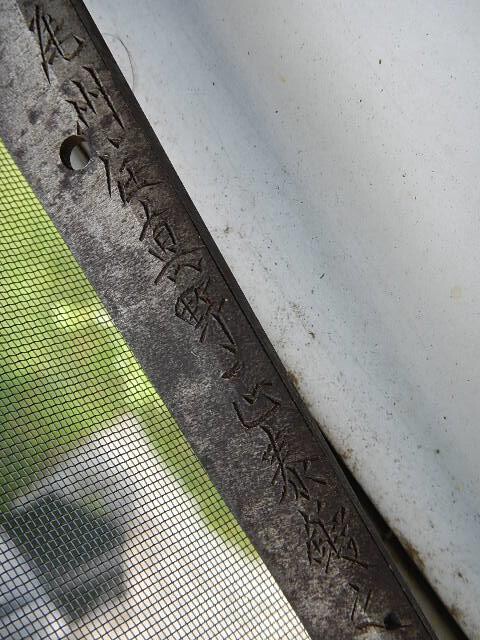
Gentlemen, I also have a Masayasu Katana and I would like to add something to the conversation regarding Shoshin Mei. It seems that there is a Kantei point that has been largely overlooked, or at least I have never seen it mentioned. Nakirishi mei aside, I have observed that every piece that has been deemed to be the work of the master smith, and not the students, has one little feature in common. Look at the very bottom of the Nakago. Every shoshin blade I have ever seen has the same punch mark at the bottom of the Mei. It appears in Slough as well. Thoughts? I hope that adds something to the discussion. Kurt K
-
RE-Post Officer's Katana Identification
obiwanknabbe replied to 8 Ball's topic in Military Swords of Japan
Hello Max, From the pictures It looks like you may have a late war Showato. The Picture of the Nagako is kinda blurry so its hard to be sure. There appears to be a stamp or some carving. Can you get a clear pic? I think the Paint reads 2, 5, 0, 9 Likely an assembly number. Late war blades were often just kinda thrown together. The 2x ashi looks like a later addition, but then again it could have been assembled that way. Kai-Gunto were mounted that way and this is not a Kai-Gunto mount. This is why i say "thrown together". That tsuba is interesting and rather nice looking. I don't know much about those but I know enough to say that its definitely not war issue. Other members of the board know more that I do regarding tsuba and I am sure one will chime in and enlighten us as to what style/age it is. How well does it fit BTW? Does it look like it was made for the blade? The Hamon may be water quenched. The state of the polish makes it difficult to tell. Is there hada? Is there Nioi or Ni? The placement of the Kissaki looks a little off to me. Anyone else see what I'm seeing? My best bet is that this may be a Semi-traditionally made blade from the end of the war. Still, its an interesting and rather well preserved example. Best regards, Kurt.K -
Your page was the very first one I ever came across when I was bitten by the bug all those years ago. Its been a downward spiral of spending and drooling over Nihonto for me ever since .............and I wouldn't change a thing! I am greatly pleased that It will be there for future generations and equally thankful that it is being hosted here. Kurt.K
-
Thanks guys... Also, I was wondering if any of you out there had Oshigata for san148? I have not yet seen an example for proper comparison. Kurt.K
-
Hi everyone, A while back I posted about a blade in Kyu Gunto mounts with Tachi Mei. It was signed Hoki No kuni ohara sanemori (or so im pretty sure) . viewtopic.php?f=15&t=18264 Long story short, I made a trade and now she is mine. On the advice of several members of the board, I sought a professional, in person, analysis of the blade. I met yesterday with the president of the Ny Nihonto owners club (http://www.nihontoownersclub.com/) Dr Kazuhiro Hayashi. Before I continue, please let me say what a pleasure it was to meet and speak with this great gentleman. He welcomed me into his home, shared his knowledge, and allowed me to view some amazing elements of his personal collection. It was a wonderful experience. His assessment of the blade in question was that is was almost definitely a late Kamakura period sword. This would put it right into the working range of SAN148 (1335-AD). He also noted that it was a flawless example which he found very interesting. He suggested that its condition may be due to it having been a family shrine blade though he admits that this conclusion is only speculation. With these new pieces of information, my question to all of you is: what do you think I should do next? Should I submit it to Shinsa? Suggestions? Thanks in advance, Kurt.K
-
Hi everyone, I was curious if any of you folks out there had some insight into the following: Why is it that there tend to be so many mekugi ana drilled through the nagako of older swords. Now I fully understand that it was because of remounting, but wouldn't it have just been better to use the hole that was already there? I see so many Mei that are partially obliterated by this practice. I know that When I make Tsuka for my blades, I mark the hole in the nagako first, then fit the wood. I drill through the steel and one half of the handle. Next I glue the halves, then drill all they way through. Now granted this is an extra step or two, but I would think that with an older sword, and more pertinent to this conversation, its mei, would be coveted enough for the craftsman to make a little extra effort to avoid defacing what was carved. Anyone know why it was not done that way? Kurt.K
-
More natural picture