TosoguCz
-
Posts
49 -
Joined
-
Last visited
Content Type
Profiles
Forums
Events
Store
Downloads
Gallery
Everything posted by TosoguCz
-
I can only say they are cast.
-
Hi Franco, Thanks for the obervation. I really can't tell if the shakudo was repatinated or not. Whould like over opinions about this. The nanako-jita has a fair number of scuffs, scratches, and is worn down in places. The deep color is also consistent from the omote to the ura with its polished finish. It's ok. Looks naturally. The most exposed place is everytime the most projected above surface. You can see marks of worn off patina mainly on the relief, and on the ura side. Photos aren't quality enough to examine the nanako bacground in detail. But you can't patinate only one part of kozuka and other not. Panel could be waxed or lacquered, or not. Is hard to say without crisp close up-photos. There is some dirt and oxides maybe in nanako. The background isn't good quality but it looks natural to me. Original patination was made by chemicals of course.. The most important than shakudo quality is surface treatment before patination.
-
Have you noticed, that the tsuba has been lacquered?
-
From my amateur point of view, there isn't nothing too significant to determine it as the Azuchi-Momoyama Period piece. Neither motif nor used techniques. What I see is a motif which was popular through centuries. Fire gilding is known and used for 2000 years already. Execution of the main motif is simple and standard quality. Nothing spectacular. Nanako isn't well marked. Is shallow and lines aren't straight enough and there is obvious bumpiness.This type of workmnanship you can see on hundreds or thousands cheap edo fittings. For me it looks like a quick production piece from edo period. But I am not a connoisseur and can be wrong.
-
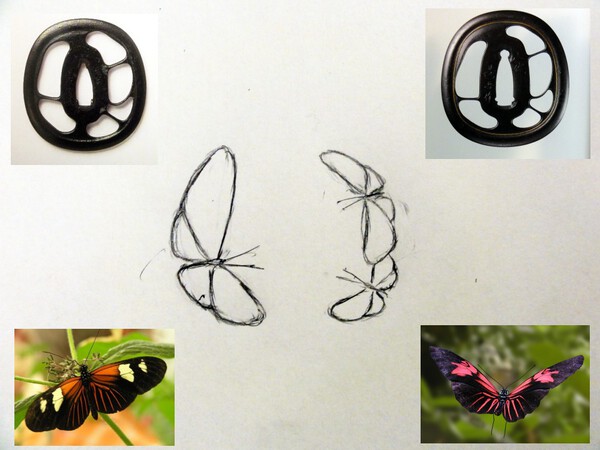
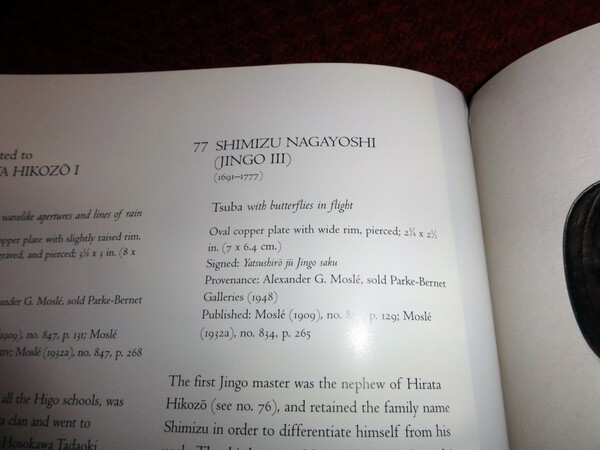
Mariusz, I can't produce evidence, I can only explain why I see there butterflies, not hand bones. Conclusions are up to you all of course. It's only matter of stylization grade.
-
There is no debate that the motif aren't bones of the hand. Even if it wasn't written in the book, the motif are stylized butterflies.

-
I remember that argument about authenticity. Thank you for sharing.
-
There is no doubt that these examples are masterpieces, but you can see specific techniques used in each piece. There is only different motif, but techniques are almost the same. Inlay, carving, engraving, texturing, gilding, or gold plating. These techniques are basic but mastered.
-
Yes I meant the middle part. It looks that is it even cracked/broken between shishi's head and a flower. This could happen very easily because gold sheet could be about 0,2mm thick. That's true about risk of buying such things only through pictures.
-
One of them is damaged.
-
Kevin, the whole motif is stylized so why are you looking for the real looking tree?
-
May I see them from the back side?
-
Hello, An execution of the mimi on the examined tsuba remids me this picture I have.

-
Thank you for sharing. I am glad the pictures are still active.
-
I don't see reversed image. I see probably the same place but different view and different tree.
-
Thank you all Mike and Curran.
-
Hello all, Does anyone have an idea what is the thickness of these tsuba? Thank you.
-
Thank you Barry.
-
Hello all. I am Roman Urban from Czech Republic. I am mainly interested in tosogu and related themes. My passion is tosogu making. I am very influenced by Patrick Hastings and Ford Hallam. Two of the world best tosogu makers. Thanks to them I am on this way. My shedule for this year: Spend some time in foreign countries in order to learn more of this workmanship. Become a professional and produce high quality sword fittings for living. Survive and continue :-)