Higo-san
-
Posts
734 -
Joined
Content Type
Profiles
Forums
Events
Store
Downloads
Gallery
Everything posted by Higo-san
-
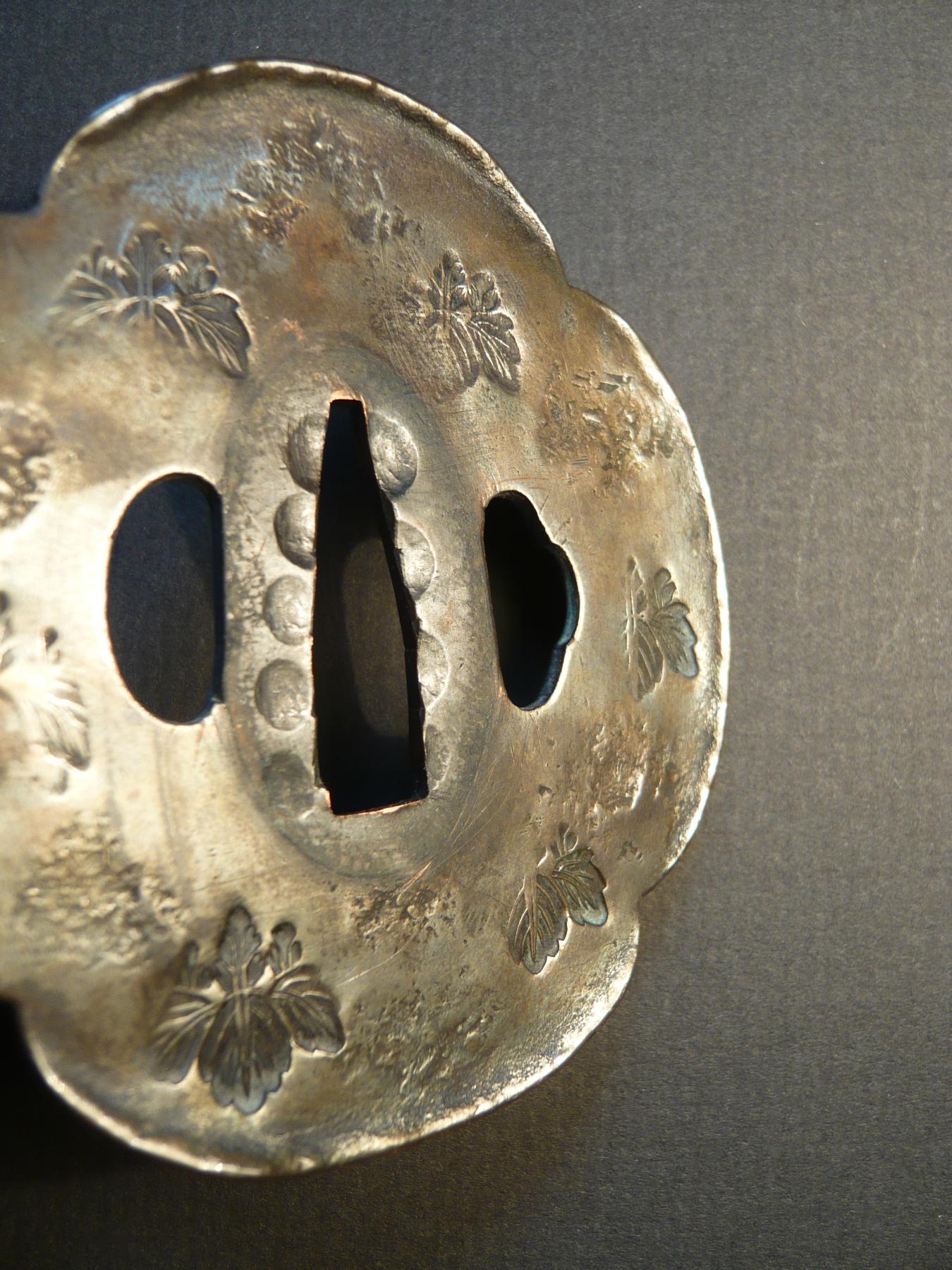
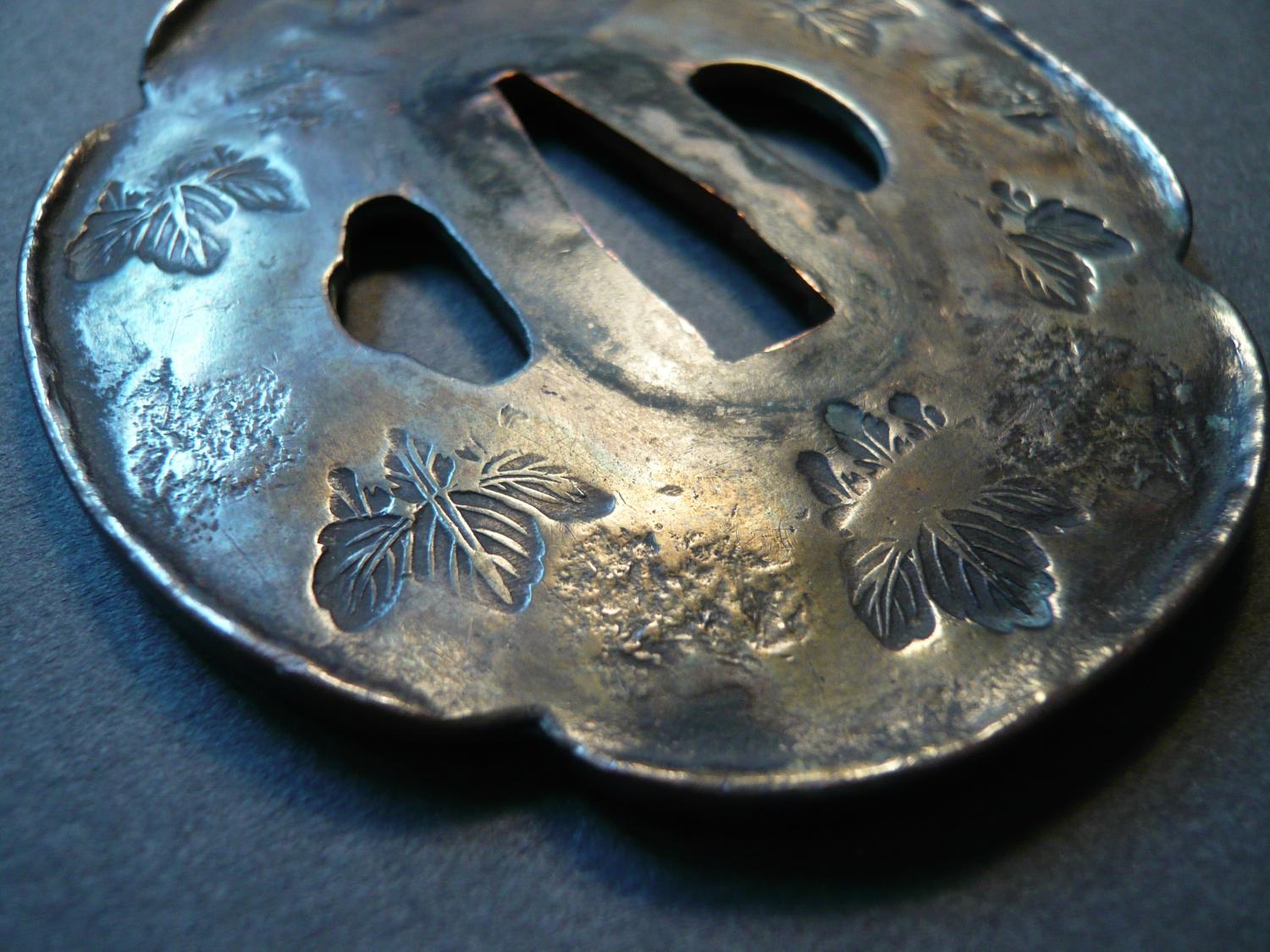
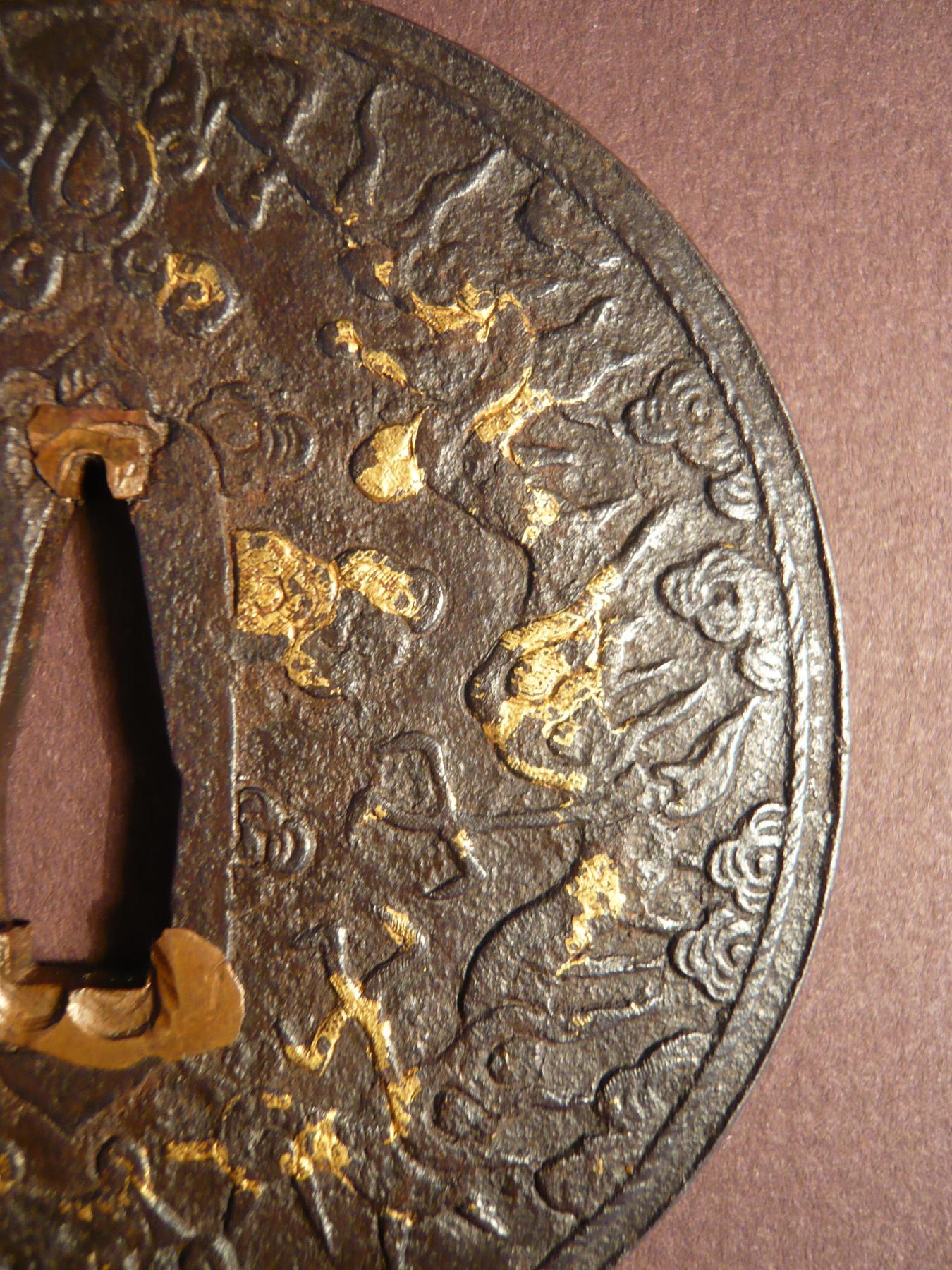
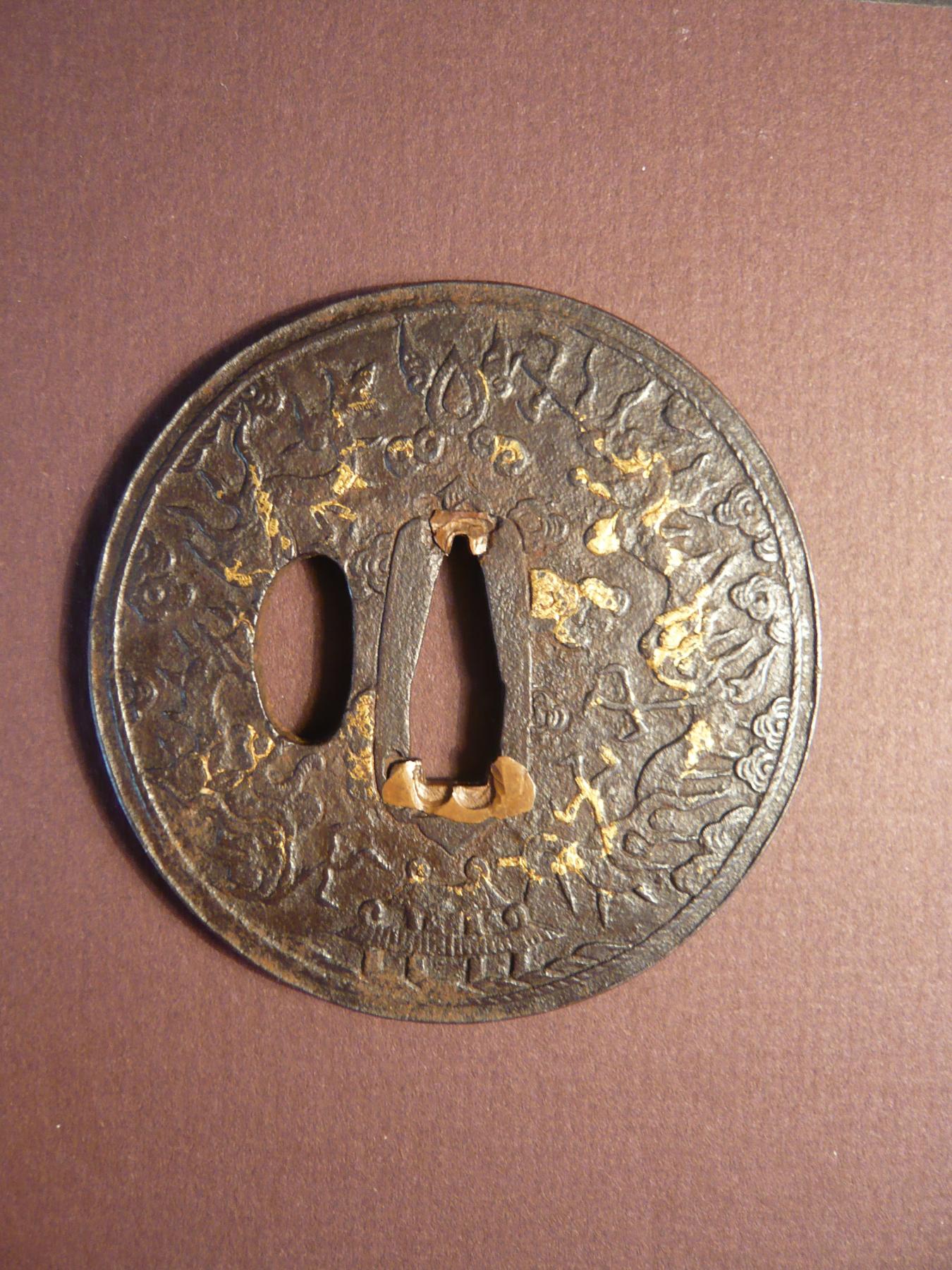
Dear gentlemen, I would very much appreciate your opinion on this tsuba (it came from that source: http://www.nihontoantiques.com/archive/gallery.htm- I am thinking about selling this one in order to find a matching one for the koshirae). Facts first: - measurements: 7.8 cm x 7.1 cm x 0.5 cm (on the raised rim) - the nakaga ana has been reshaped recently (clearly visible due to (i) the lack of patina in comparison to the kozuka and kogai ana and (ii) the different filing) - the kozuka and kogai ana do not look like they have been reshaped recently or have been added later - the kiri mons have been stamped on the tsuba (most probably the very same stamp was used for all twelve kiri mon) And now my thoughts on this tsuba: The tsuba seems to have been cast, then hammered and finally stamped. We find this kind of casting technique on early soft metal tsuba (e.g. Kagamishi tsuba); also, many schools used stamps for early decorations on tsuba (like theTenpo tsuba though these were made of iron). Therefore, one may think that this tsuba is rather old - e.g. Momoyama period. On the other hand, the finish looks somehow "made to look old" to me (hard to describe...). So this tsuba could as well be gendai. Finally, I will be happy to hear your thoughts on this tsuba! Best, Chris


-
John, I already thought about asking you on your educated opinion on this issue but I did not want to urge you into a discussion... Therefore, thank you very much for your highly appreciated contribution to this topic! Best, Chris
-
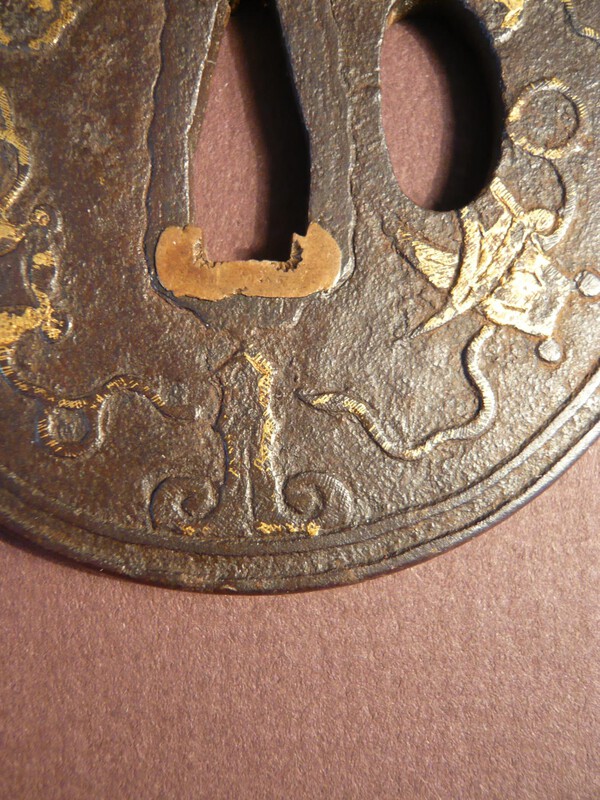
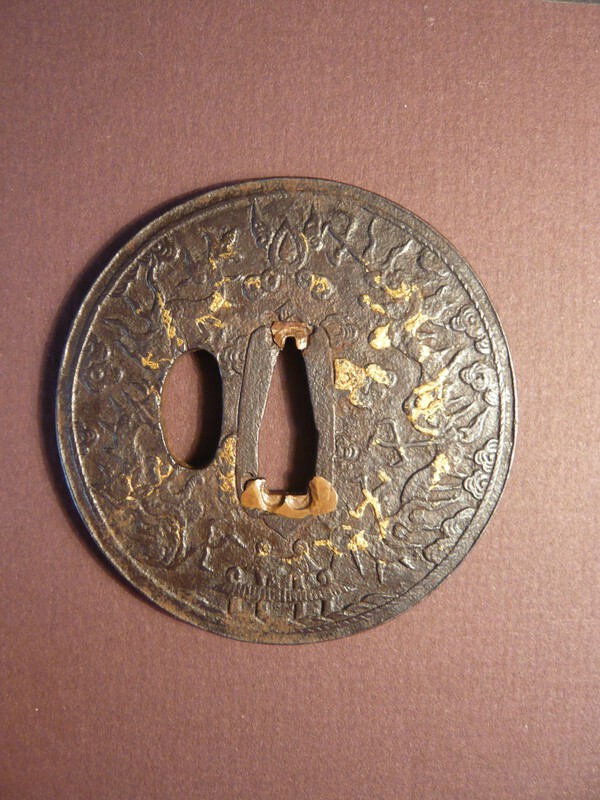
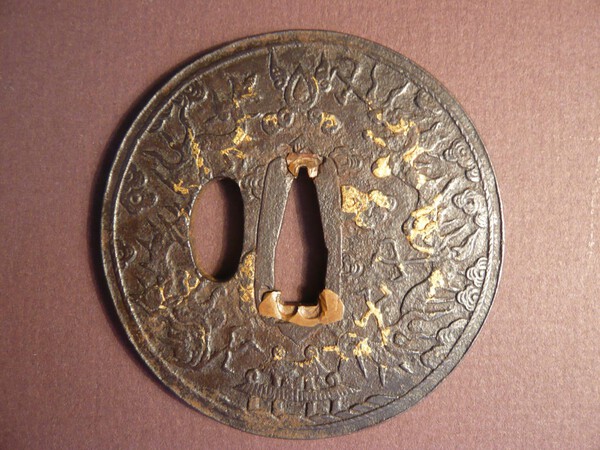
Peter, thank you very much for your question! I am not an expert on Nanban tsuba but I would say that both tsuba were made in Japan (which is - despite their Name - also true for most Nanban tsuba that we see around on the market). I tend to say that the first tsuba is actually a Hizen tsuba because of the following aspects: - the design is neither typical for Indian or Chinese tsuba made for the Japanese market nor is it typical for those type of tsuba called Nanban that were made in Japan (No. 2 is rather typical for those IMO) - the whole design has a Chinese legend flair (similiar to the Choshu or Jakushi landscapes) but uses techniques and symbols which show a certain stage of tsuba craftmanship evolved throughout the centuries (just like Choshu and Jakushi tsuba do) - the iron plate is carefully forged and the gold application has an educated appeal which I would not expect from Nanban tsuba (not saying that these do not have their very own appeal) Taking all these factors together, one may identify the first tsuba as a Hizen tsuba. But it will always remain a lot of gut feeling in the end ! Best, Chris
-
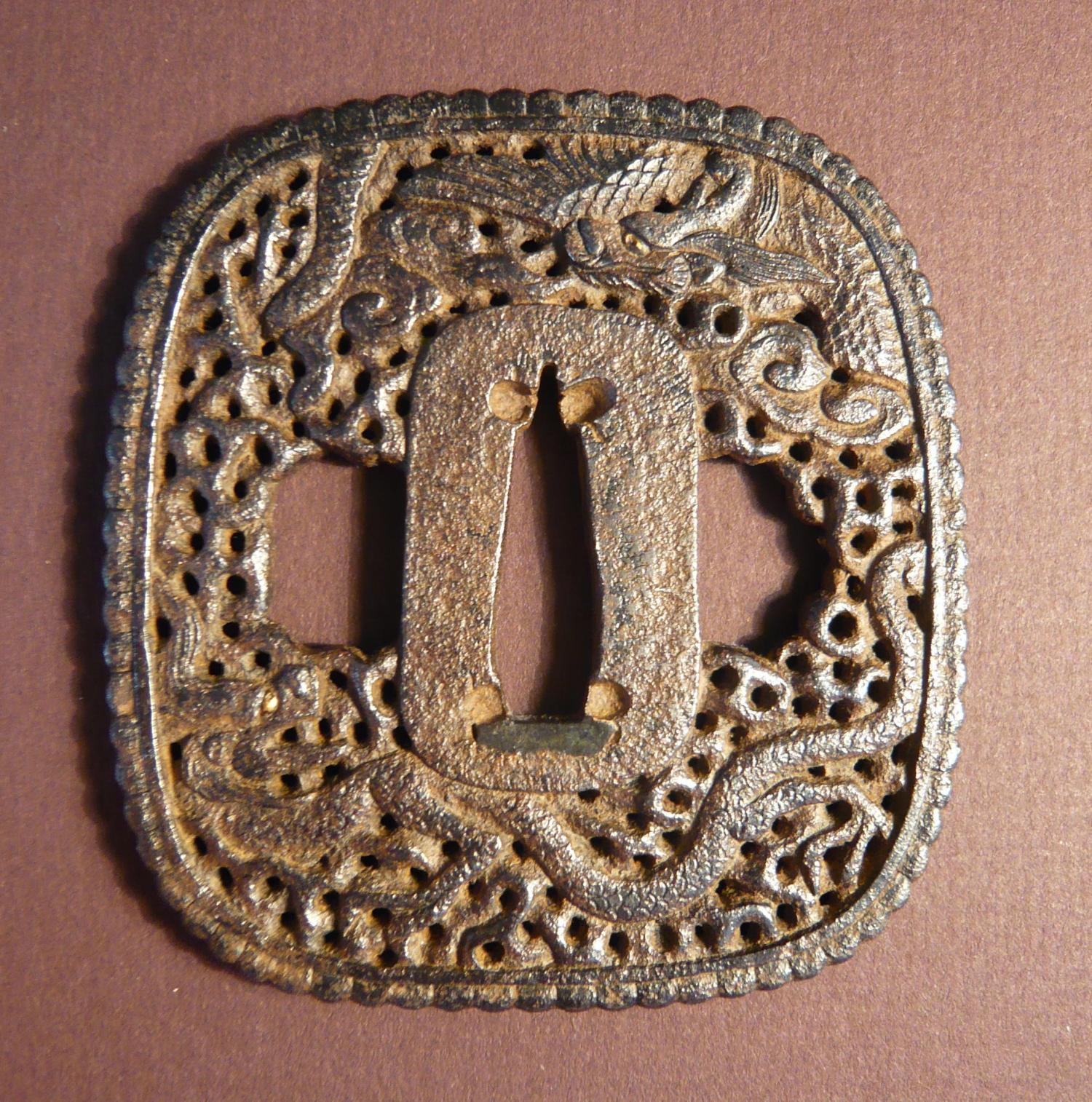
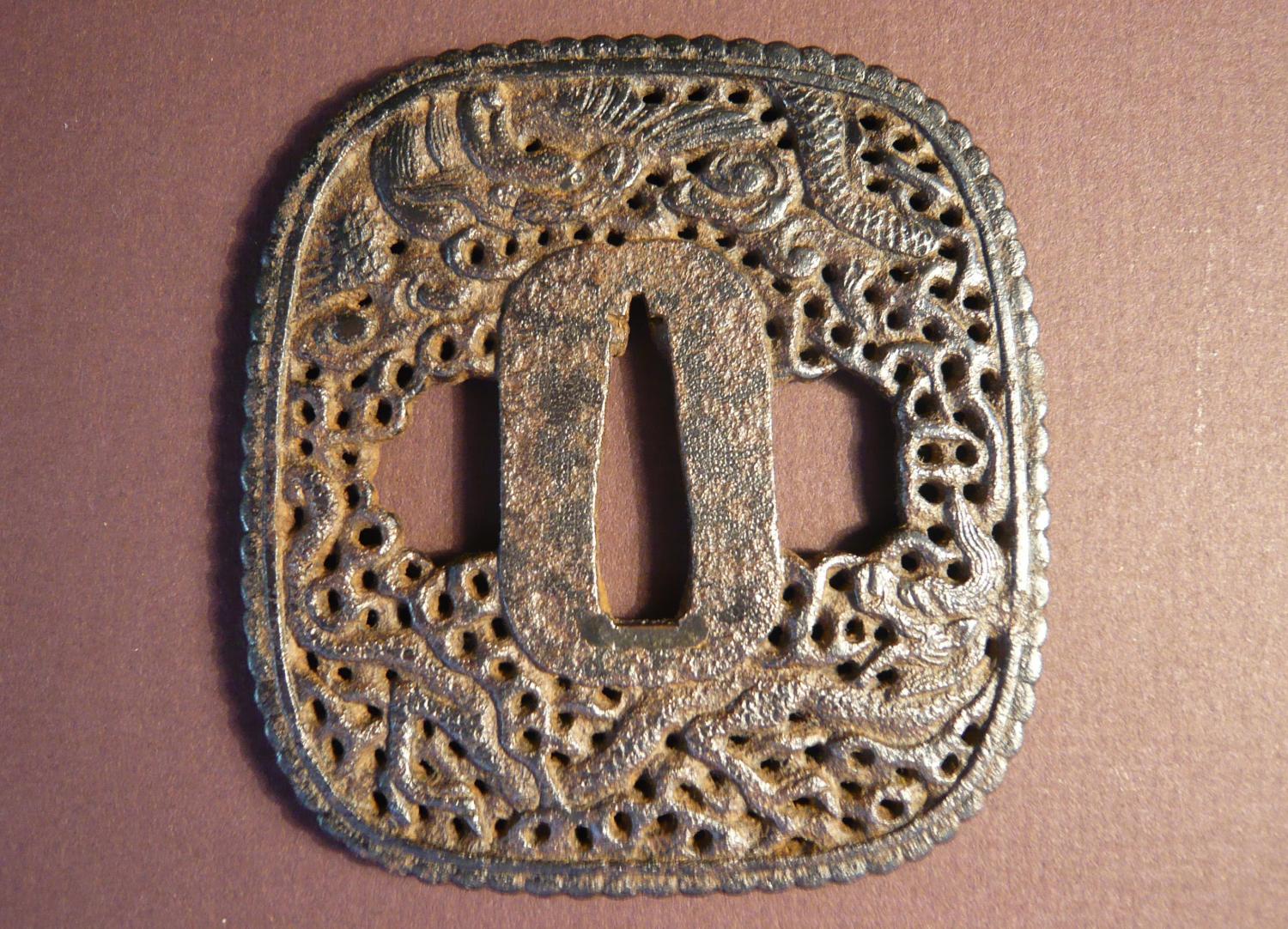
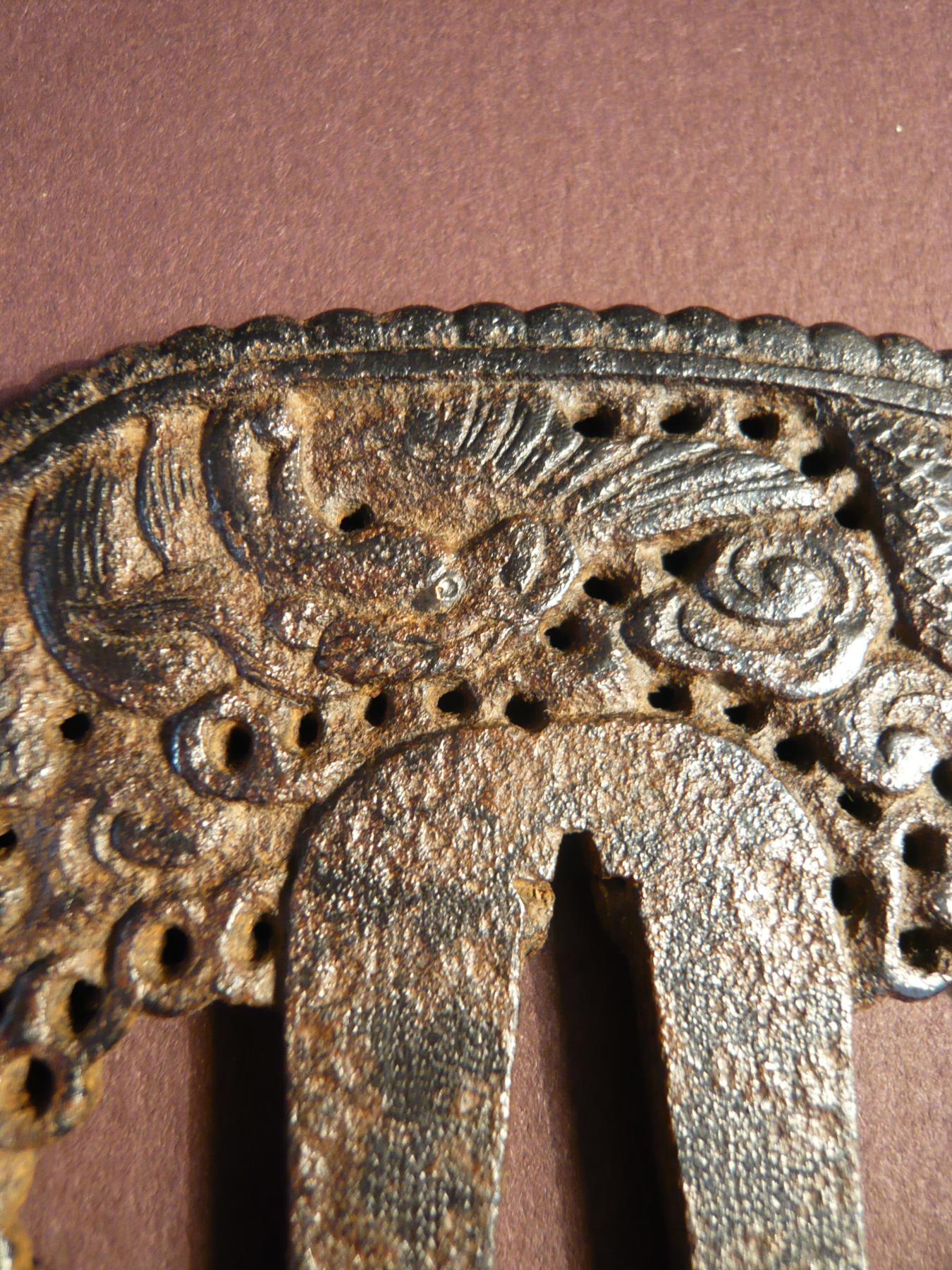
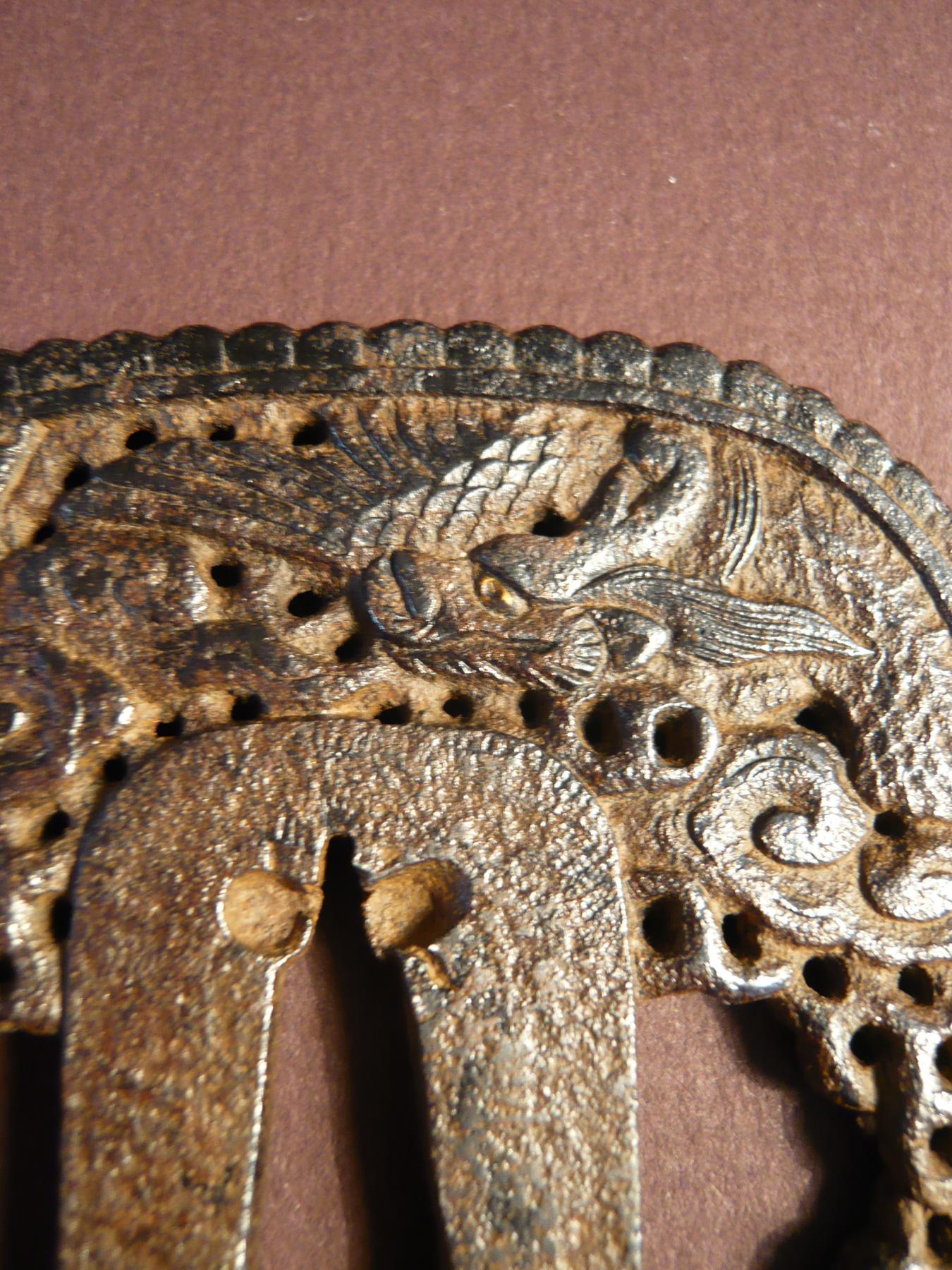
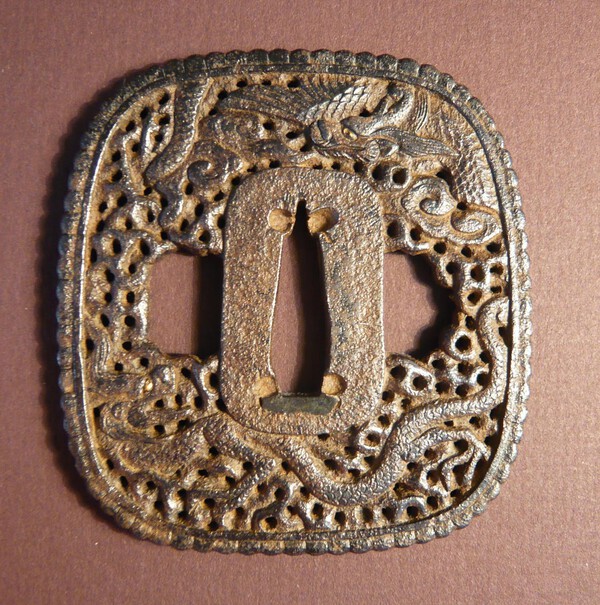
2) Nanban tsuba Design of different dragons; unfortunately a little bit rusty.... diameter: 7.8 x 7.8 cm asking price is USD 240. Best, Chris

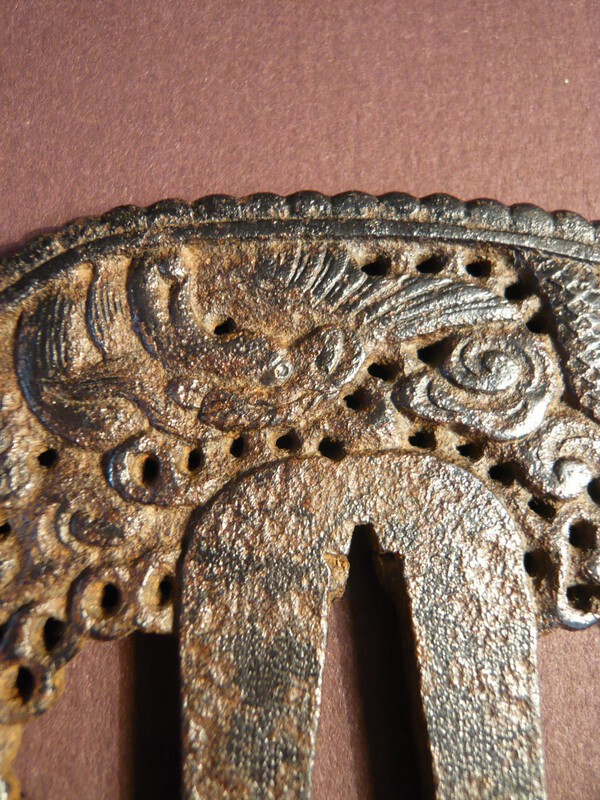
-
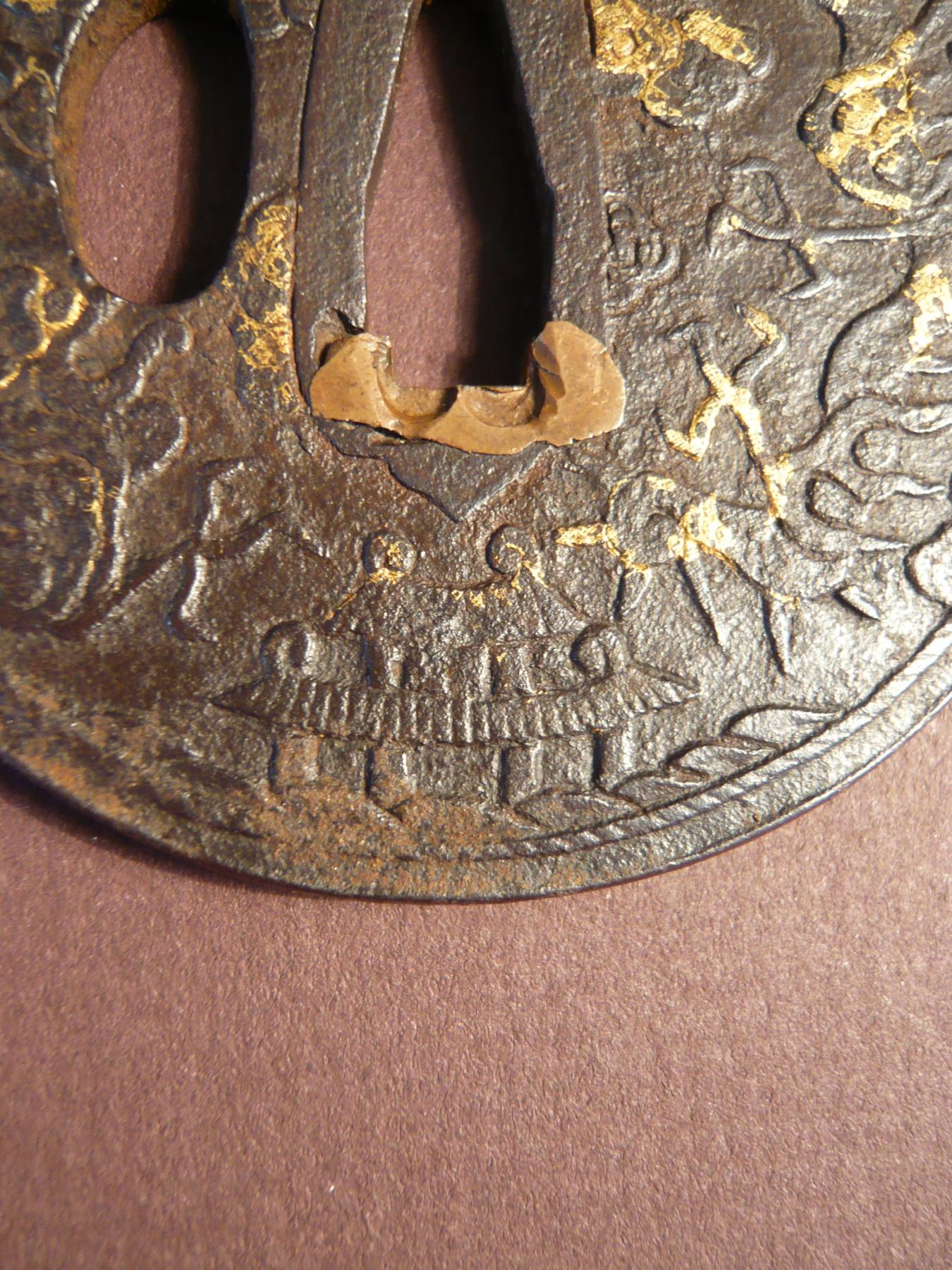
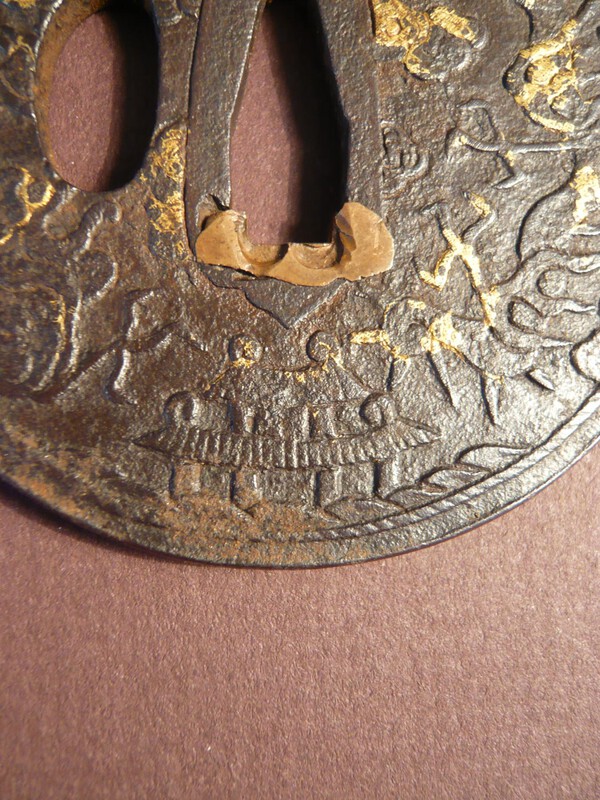
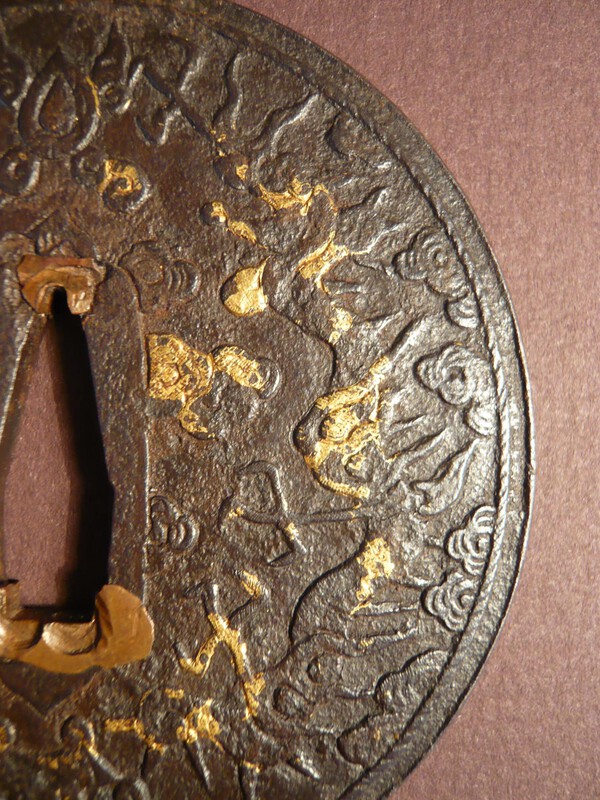
More pictures of tsuba 1)
-
Dear fellow board members, I would like to part with two nanban tsuba that have been in my collection for quite a long time now. All prices include PayPal fees and worldwide shipping! 1) Nanban or maybe Hizen tsuba Design of a temple with cloud dragons chasing a tama pearl on the obverse and botan flower, Ken and probably a paper dragon on the reverse side. It is a fantastic and powerful design! diamter: 7.0 x 6.9 cm asking price is USD 290.


-
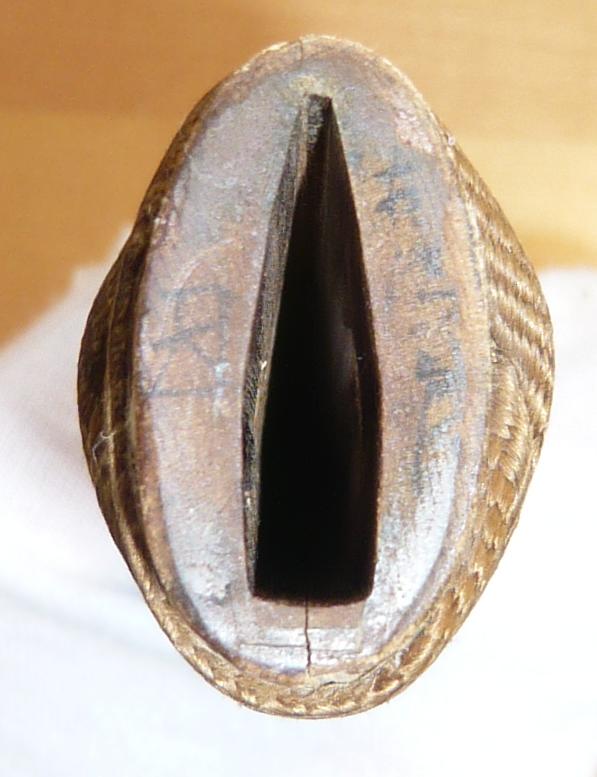
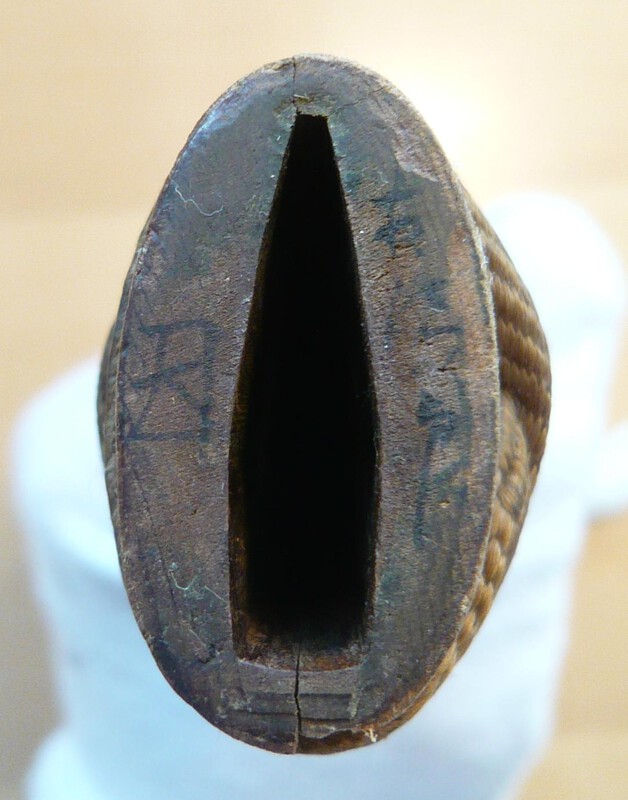
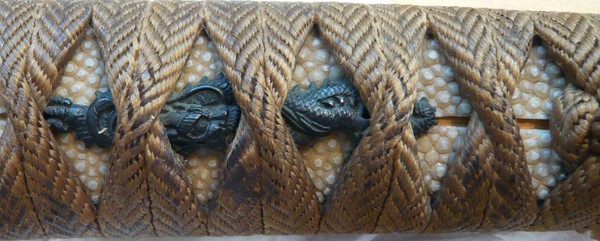
Dear fellow board members as the (lucky) new owner of this Sendai Kaneyoshi (http://www.nihontoantiques.com/g104.htm), I am on my way thorugh all the details of the sword and it's koshirae. What is still keeping me busy, is the mei on the tsuka. I was once told by some fellow collectors that a tsuka mei may not only refer to the person who actually made the tsuka but may also give a reference to the blade for which the tsuka was made. Even though that this second alternative may not be the case with this tsuka mei, I am still trying to find out which workshop or craftsman did the tsuka. Maybe someone from the board can assist on this issue? I have also attached two pictures of the menuki which I believe to be Waki Goto works (and which originally may not have belonged together). All the best, Chris P.S.: beautiful new layout BTW !



-
Hi all, there is a large auction coming up here in Germany in December at Van Ham. Here is the link: http://www.van-ham.com/kataloge-ergebni ... kunst.html Best, Chris
-
Hi Stephen, looks like a beautiful Kaga Yoshiro tsuba; more common are those which had some kind of mon design - however this piece clearly shows the typical brass inlays and iron surface; plus there are other sukashi tsuba like this one recorded e.g. in the Moslé collection. Great item which could well be Momoyama. Best, Chris
-
Here is just another very similiar example with a completely different attribution: https://www.bonhams.com/auctions/22248/lot/1208/
-
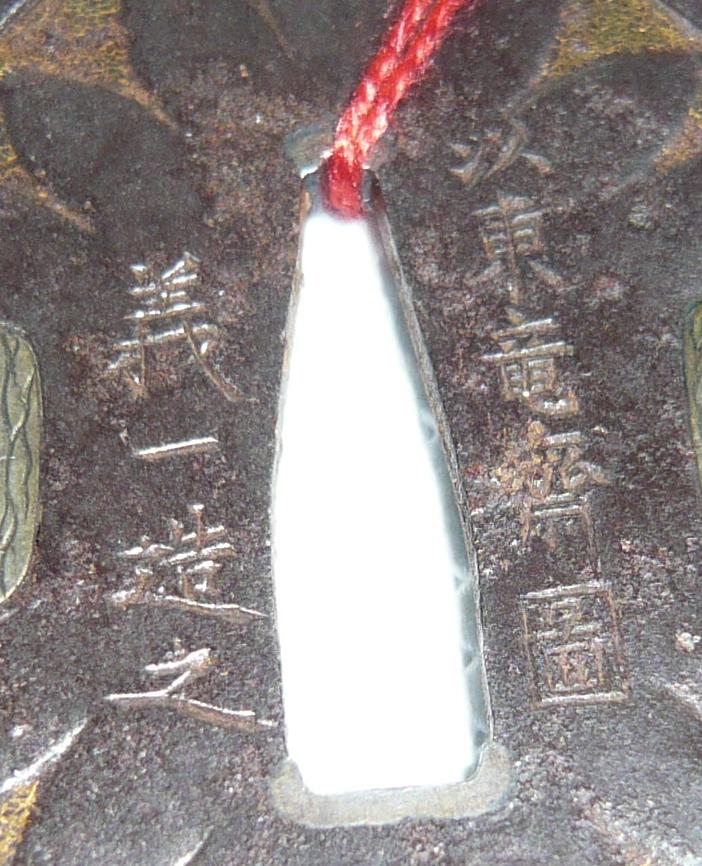
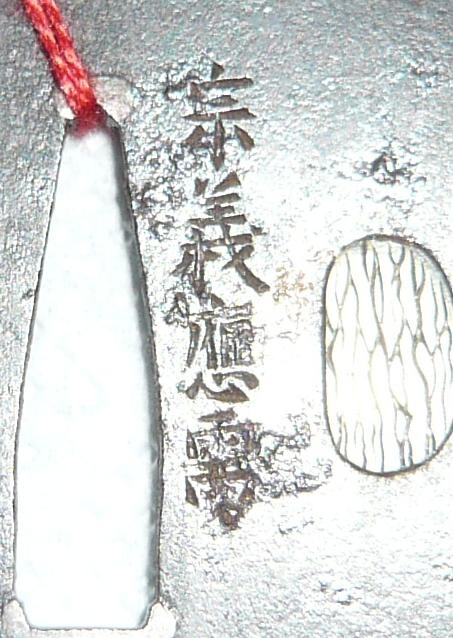
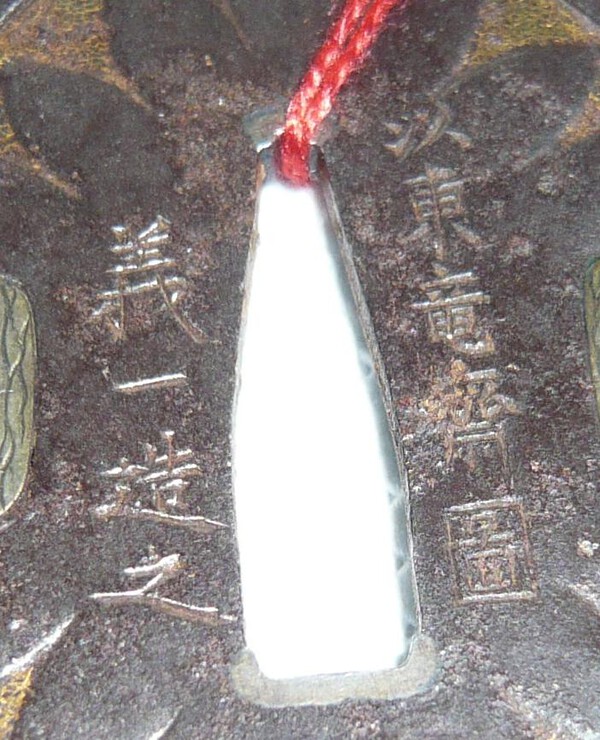
Many thanks for your help, gentlemen! I should have noticed the Kanji for Toryusai (東竜需); it may well be that the signature means that this tsuba was made by the order of Muneyoshi using a probably well-known Tanaka design. Great info - thanks alot!
-
Dear fellow board members, could someone assist translating this signature for a friend of mine? I can read MUNEYOSHI on one side and YOSHIKAZU KORE SAKU on the other side - seems like Yoshikazu is the maker but what does the reference to Muneyoshi and the rest of the signature mean? Thanks for your help! Chris
-
My best guess is also Tosa Myochin !
-
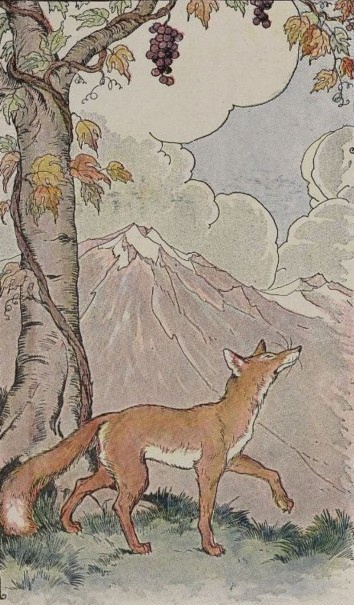
Thanks for the citation, Peter. The meaning of the Chinese/Japanese version seems completely different than the idea of the ancient version by Aesop (since a squirrel can easily reach the grapes while they would remain out of reach for the fox). Therefore the similarity may well be a mere coincedence. Best, Chris
-
I was really happy when I read the name of your topic, Grev! I am still thinking about the scene shown on this beautiful tsuba; the legend about the fox and the grapes (vine) is quite well known at least in some parts of the western world (I myself grew up with this story in my childhood). But I am still wondering whether this legend made it's way to Japan (together with other nanban influences) or if it was even the other way round... Nevertheless, all the best for you and your new tsuba! Chris

-
It looks like a work from the Kawaji school from Choshu. Please compare an almost identical signed daisho on this site: http://www.choshuya.co.jp/1/0802/member ... ttings.htm. Best, Chris
-
Just another idea: Kamiyoshi Fukanobu.
-
Thank you very much, Ian! Your advice is much appreciated ! It is very interesting that there are indications of an originally lacquered finish. At closer examination I have found tiny spots (close to the rim and in the corners) which look like thin layers of old black lacquer - unfortunately it is almost impossible to make a picture of those parts. I am really looking forward to what the suggested treatment may reveal. Many thanks again, Chris
-
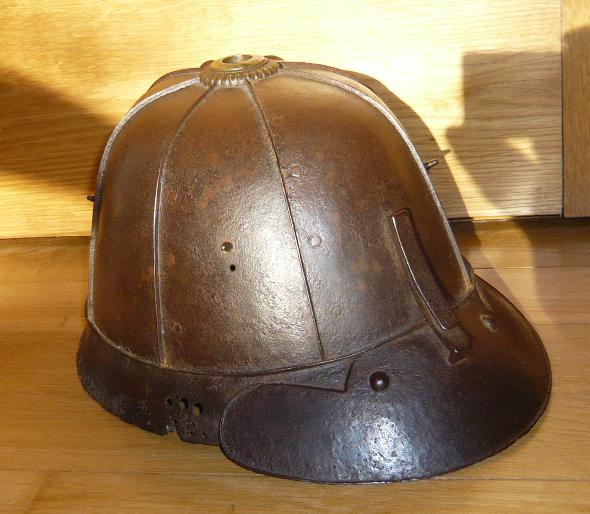
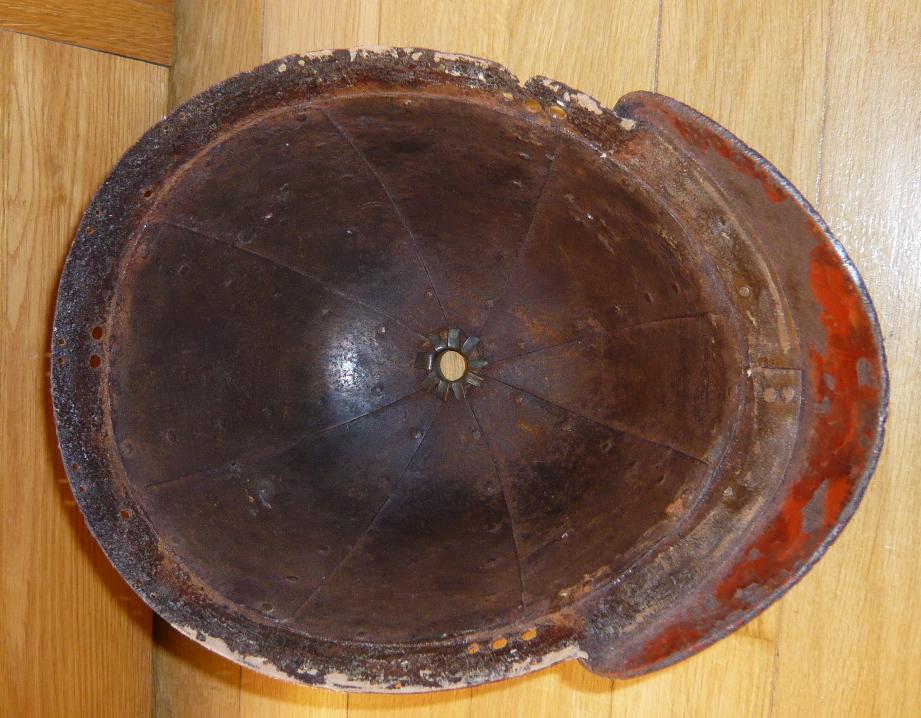
Many thanks and vielen Dank for your help, Justin and Uwe! A very good point concerning the number not being an arsenal inventory number; I think I could have reached that conclusion myself . Nevertheless I like the idea about the shikoro, Uwe. The shikoro of this kabuto is also covered in thick layer of glued newspapers and paint which seem to keep the rust together . I will carefully try to remove it and maybe I will find a matching number on it - in any case I will let you know. Your point about ranking is understood, Justin. My thinking was that it may have been possible to roughly determine the status of person (common soldier, low ranking or high ranking samurai) by looking at his armor - like it is possible to determine the rank of soldier nowadays by looking at his uniforme (in order to e.g. make the chain of command work in a battle). But even if it may be easy to seperate between common soldiers and high ranking samurai, this may well be a bad comparisons... One last question I would like to ask is about restoration and conservation of the piece. I have a feeling that the color of the kabuto should be different (it looks almost the same like the color of the shikoro which has been definately repainted in modern times (if not the early Edo/Momoyama Japanese read western newspapers in their spare time) and completely different to the color on the inside of the helmet). Do you have any ideas of how to carefully clean the kabuto without destroying it? Should it be repainted/relacquered afterwards in order to protect it from rust? Please forgive my lack of basic knowledge about preservation of Japanese kabuto but at least to my eyes it looks like most of the suji-bachi kabuto seem to have had a lot of restoration work done on them (which is quite understandable if you look e.g. at the lacing, lacquer work etc). And when it comes to down to treatment of a metal surface, - at least from my tsuba experience (sword polishing is of course a completely different issue) - noone is willing to write down their methods of restoration in a book (like carrying an iron tsuba in a good old Levys or giving them a lot of fresh air to accelerate the patination process and so on) although almost everybody does it. I am also happy for PMs if people do not want to share and discuss their ideas in puplic. Best, Chris
-
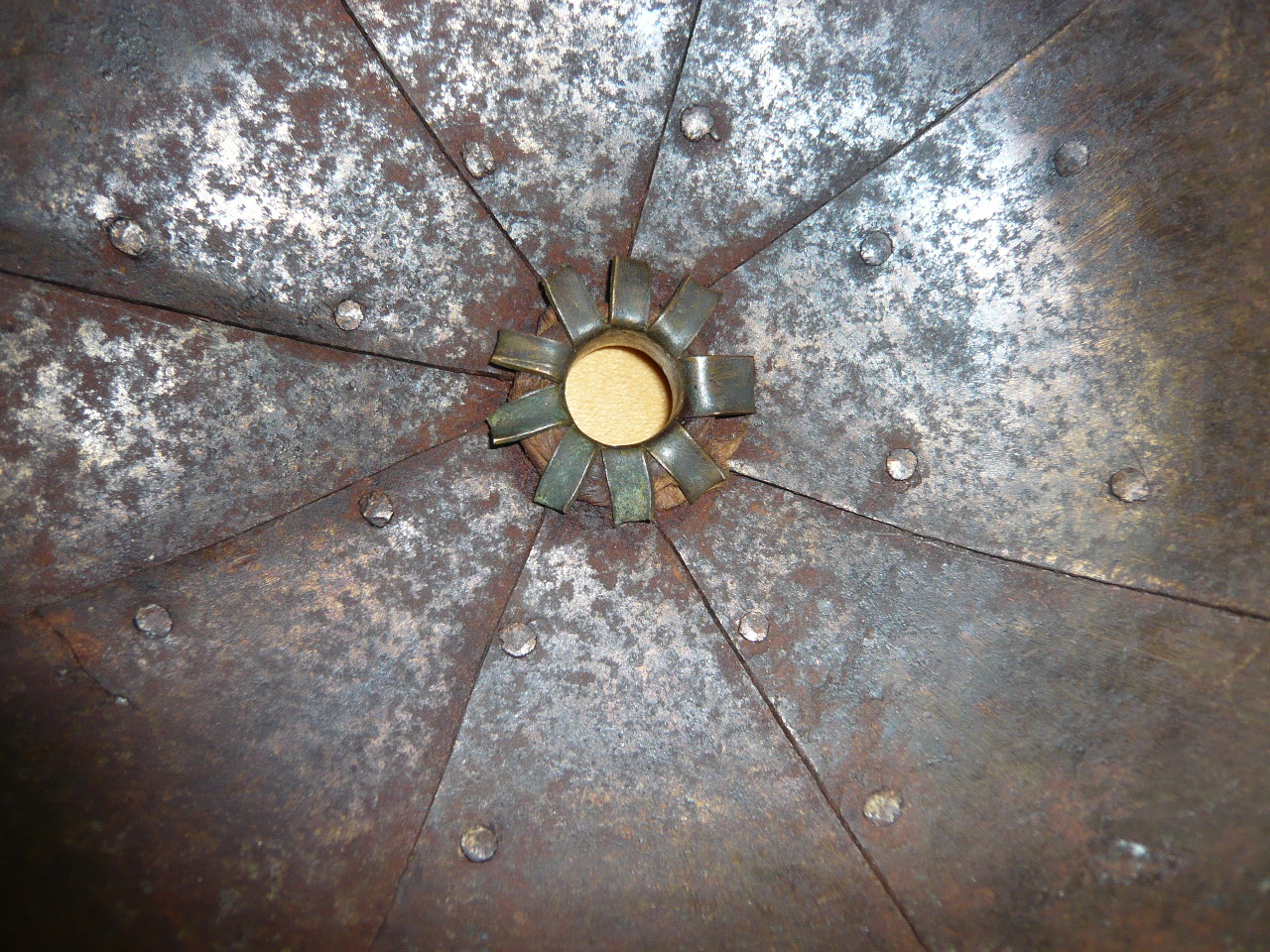
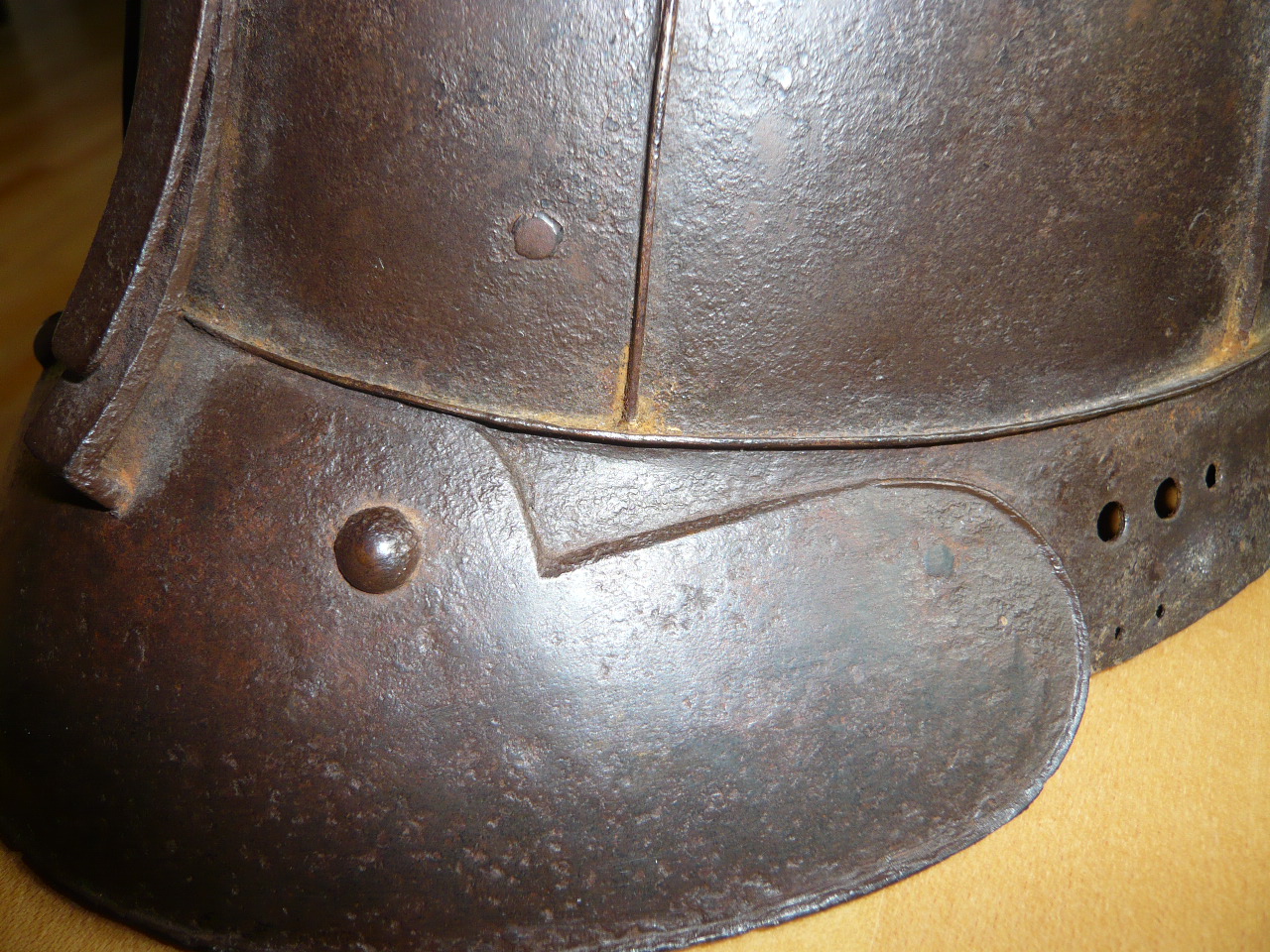
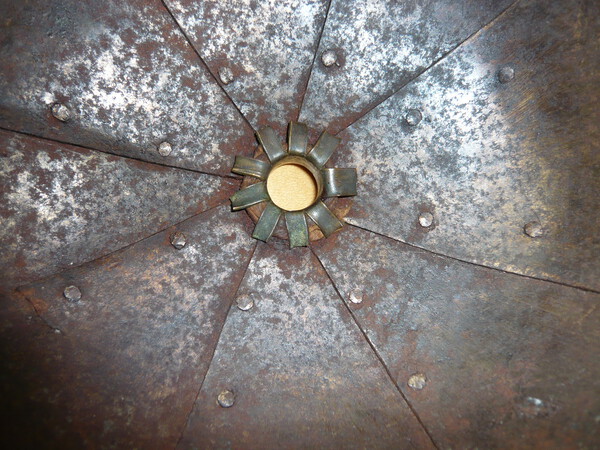
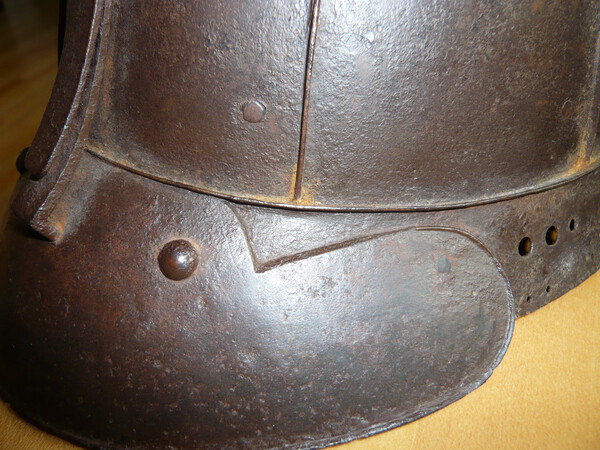
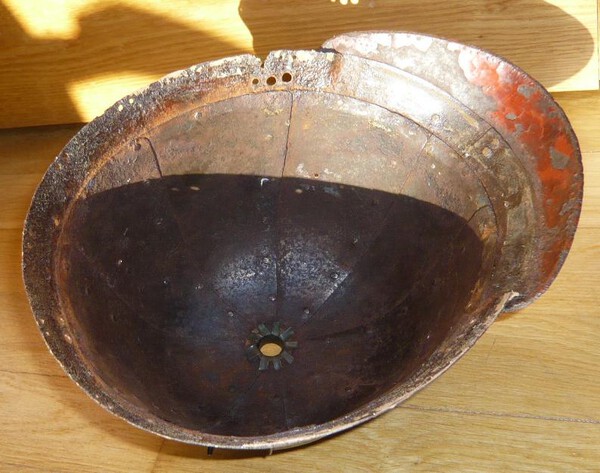
I have attached some more detailed pictures (the inside has a bluish/black iron).

-
Dear fellow board members a couple of years ago, I felt a strong urge to add a kabuto to my Japanese collection. It had been restored in a smart but not necessarily professional manner by e.g. sewing the inside of a baseball cap to the area where once an old Japanese fabric used to comfort the bearer and stuff like that. Anyway, I did not mind about that at all since the helmet still looked impressive enough. Lately the idea of learning something about that field came to my mind and I started to undo the restoration (hoping to perform a more professional approach one day in the (far far away) future). I have attached some pictures of the bowl of the helmet. I could not find a signature - only a number (十五) on the outside of the bowl which had been covered by the shikoro before. My best guess is that this is kind of an arsenal number stating that this very helmet was made number 15 out of an unknown number of helmets ordered for a local warlord. I have shown the helmet to someone more educated in that field and he told me that the helmet may date be from the Momoyama times and may have been made for the personal guard of a higher ranking samurai or a local lord - at least the last part of the thesis would be in line with the number I found. Can you provide me with any more in-depth information on the helmet (concerning age, quality or probably even a school)? Who would have been the owner of helmet like that (a common soldier or even a lower ranking samurai)? Then I can start a research based on that information. Any information is appreciated! Chris



-
Your kozuka depicts parts of a rats wedding ceremony; I also quite like that theme and your kozuka though I fear it is gimei (a nice reference piece of Haruaki Hogen was discussed here: http://www.nihontomessageboard.com/nmb/ ... =2&t=13993). All the best, Chris
-
Many thanks for your kind words, gentleman! I will look through the different Higo artists and try to find a similiar tagane "signature". Best, Chris
-
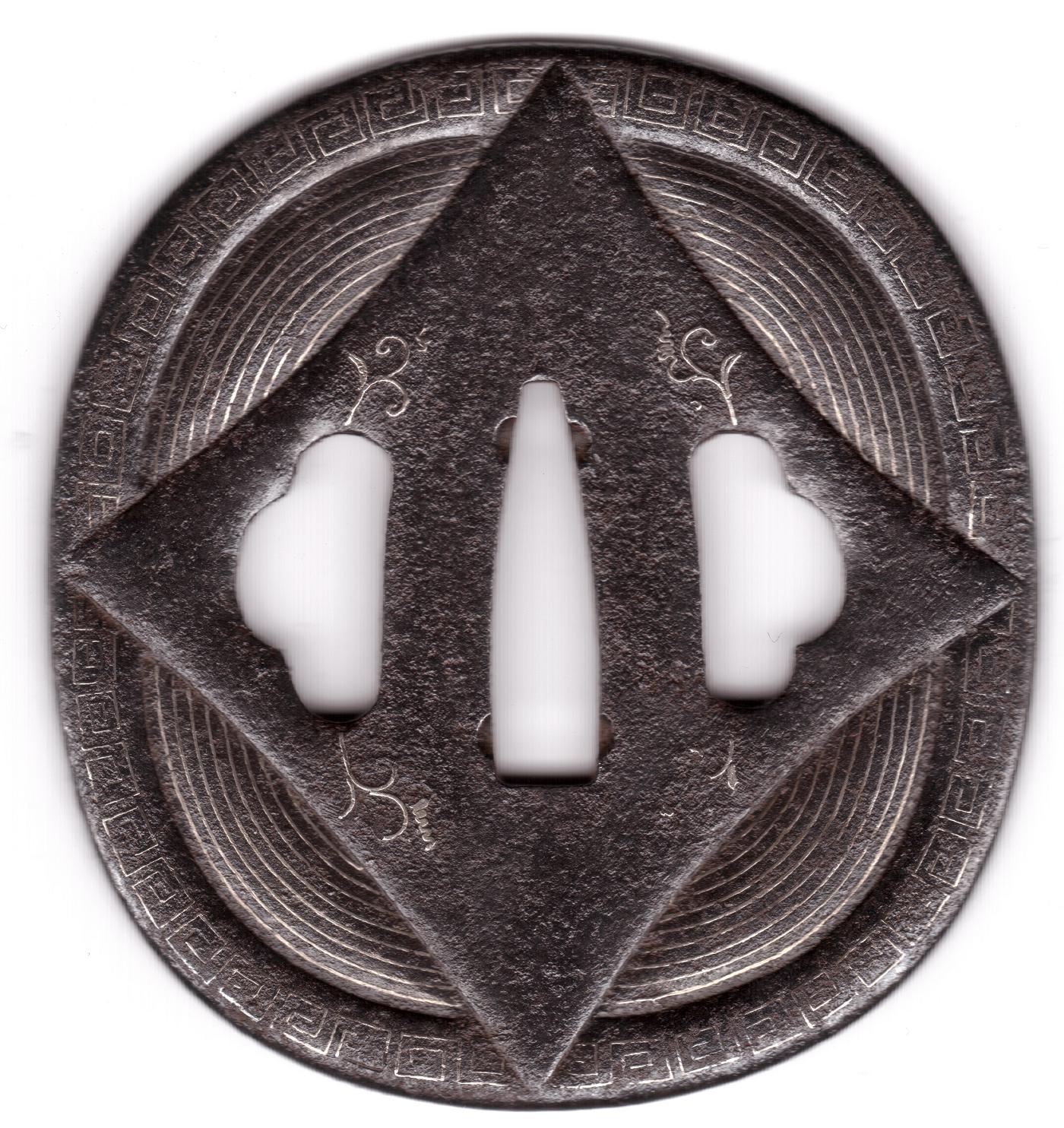
I forgot to tell the dimensions: it is 8.2 x 7.7 x 0.35 centimeter.
-
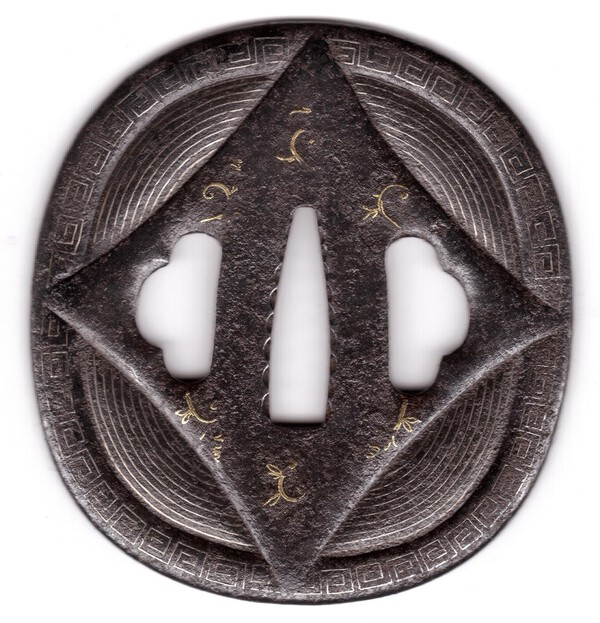
Dear fellow board members, I recently acquired a tsuba which fascinated me from the very moment I first saw it. It`s (almost Jingo like) wet iron surface and the very fine inlays are amazing. I would be happy for any opinion on this tsuba. I have seen a very similiar design on a tsuba in the Boston Museum collection attributed to Shoami school. Nevertheless I believe this one to be made by someone who was trained by a Higo man because of the "wet" iron surface, the beautiful Zogan work etc. The tagane may also indicate a certain maker. I hope you will enjoy this one, Chris