Higo-san
-
Posts
734 -
Joined
Content Type
Profiles
Forums
Events
Store
Downloads
Gallery
Everything posted by Higo-san
-
How can you tell, Curran? I had two rather high-class Tanaka tsuba in hand lately (both published, at least one with Juyo status) - judging from the pictures only I cannot see much of a difference in workmanship... Best, Chris
-
Thank you so much, Morita san !
-
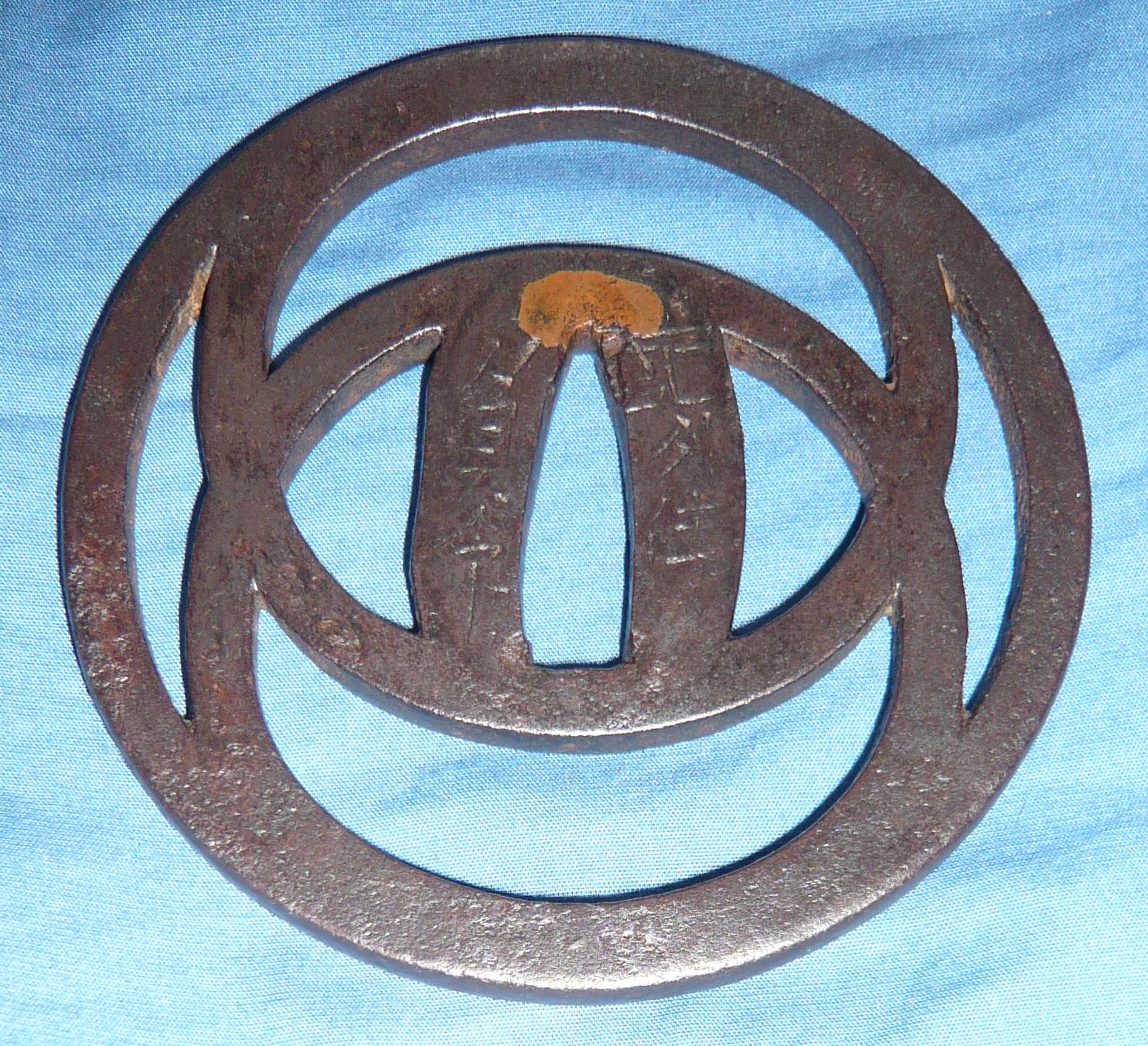
Dear fellow NMB members, I have attached the picture of seppa-dai of one of my tsuba - after what felt like three hours research I gave up trying to figure out what it says besides ???Province??? Ju Masa???. Could someone assist? Thank you very much, Chris

-
Hi David, I totally agree with the attribution to the Kamiyoshi school from what I can see from the pictures. Of course, judging the quality of the iron from photos is almost impossible. But have you noticed how the carving of the leaves fades into the seppa dai? This is done in a rather nice way and you can find this on many Higo tsuba. I think you cannot attribute a tsuba to a certain Kamiyoshi master judging only from photos - at least as long as there are no very unique features like Rakuju`s famous almost Matashishi like zogan. But in my uneducated opinion, I would not put my bets on Fukanobu. His tsuba have a different "feeling" - even on pictures. Nevertheless your tsuba looks really nice - and not being made by Fukanobu does not at all mean that your tsuba is of minor quality. Best, Chris
-
Great tsuba, Mike! THANK YOU VERY MUCH for sharing these. It is very interesting to see that many versions of Wachigai. Although some versions seem almost identical, the signatures differ alot. This allows two possible conclusions (under the assumption that no tsuba is gimei): 1) some of the tsuba are made by the very same person; but this person used a huge variety of writings. If this is true, a theory about only two generations of artists signing Kishu Ju Teimei would be possible. 2) the different Teimei artists worked very similiar; then a two-generations theory would - at least in my eyes - very hard to defend. It would be interesting to have a genealogy of the Kishu school and the Teimei masters.
-
Hi Justin, are the pieces in question (all) signed? And if so: how are they signed? Chris
-
Since the question about kantei points came up, I wanted to post another Kishu Teimei tsuba with a sashigane design. I believe it was made by the first Teimei master because of the following reasons: - the rim of the tsuba is still rather small and strongly reminds me of older Ko-Kyo sukashi tsuba - there is plenty of granular tekkotsu on the rim and even some areas where I believe to see a technique called yakite (which is quite common on older tsuba from the Owari province but very rarely seen on later Kishu Teimei tsuba) - the iron surface shows some - what I can only describe as - ko-nie particles; in general the iron quality is much better than on the other tsuba I posted (from my collection) - the form of the hitsu ana (especially the kogai hitsu ana) reminds me of older sukashi tsuba I am looking forward to your comments! Chris
-
Hi David, I can see your point! Nevertheless I do not believe that the tsuba seen in your link is a Kishu Teimei tsuba due to two main reasons: 1) the rim should be "sharper". Please compare your former tsuba to another sold tsuba from the very same site (http://www.japaneseswordbooksandtsuba.c ... 181-teimei); the last picture shows best what I meant. 2) the kanji used for Sada does not correspond to the ones used by Teimei masters. Unfortunately I cannot judge from the pictures if the criteria regarding the iron surface (mentioned by Mike) are met. But you do definately have a point with regards to the design! Any other opinions? Best, Chris P.S.: What do you think about this one (http://www.silk-road.us/rings3.html)?
-
Many thanks again, Mike!!! Great info!!!
-
Thanks alot for this interesting point, Mike (and John) ! I have not yet made a connection between the Kii Tokugawa branch and the Kishu tsuba since I allways thought that Kishu tsuba were almost only intended for use by a lower class of warriors. May I ask you about the motif of your tsuba (or even pictures )? It would be interesting with regards to the catalogue of suggested kantei points.
-
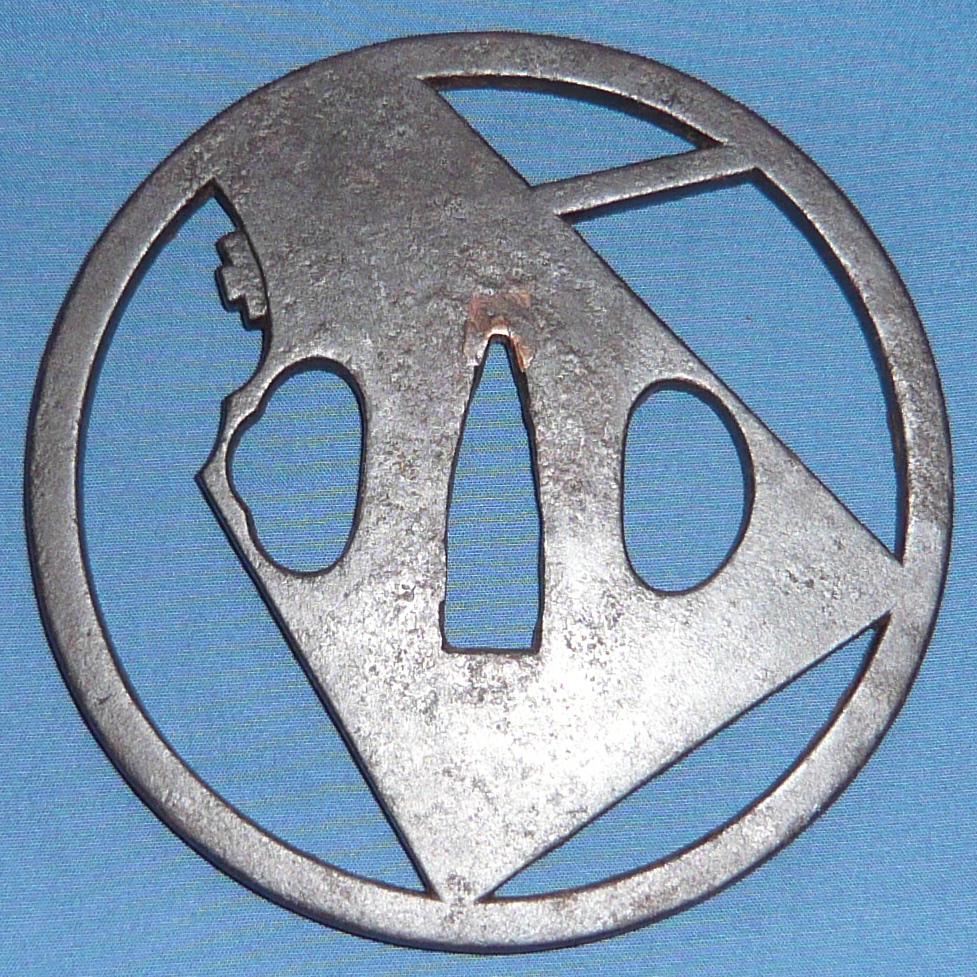
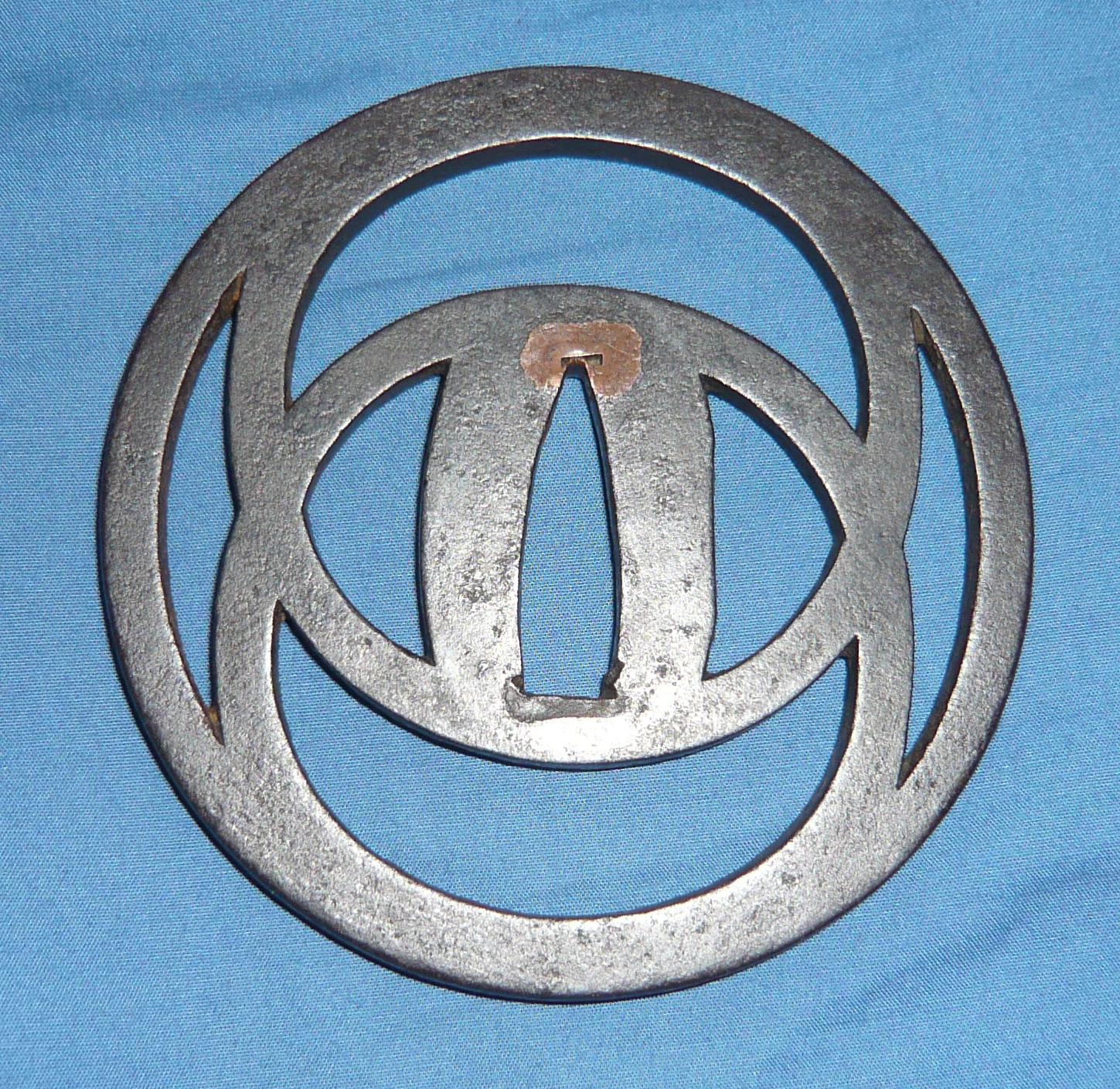
Thank you very much for the translation, John! May I ask you to also give another look to the Token Bijutsu issues? I have attached pictures of another Teimei tsuba in my own collection. It shows a Kaji (rudder) design. Regarding kantei I would summarize the following criteria (for a start): 1) the sukashi is broader than those done in other schools 2) basically almost all Kishu tsuba are signed 3) the diameter is allways around 8cm; the thickness varies between about 0.45 and 0.55 cm 4) the iron has a slightly "greyish" touch 5) the design is simple and based on geometrical figures, stellar constellations, grops or everyday items; it can also be inspired by earlier Owari, Ko-Shoami or Kyo Sukashi designs.
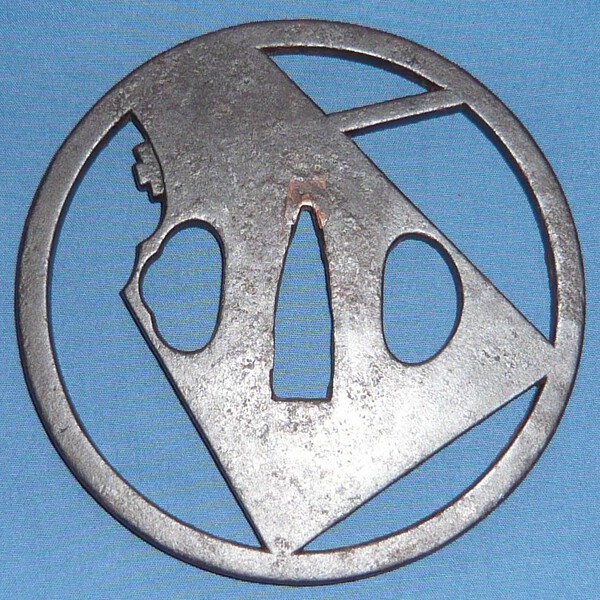
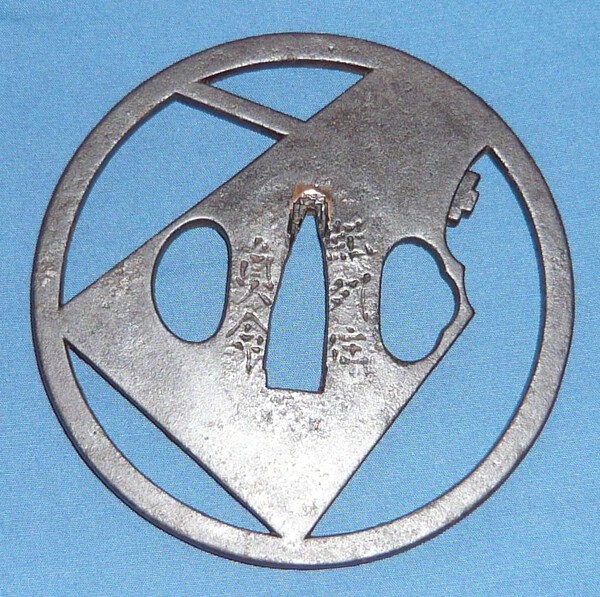
-
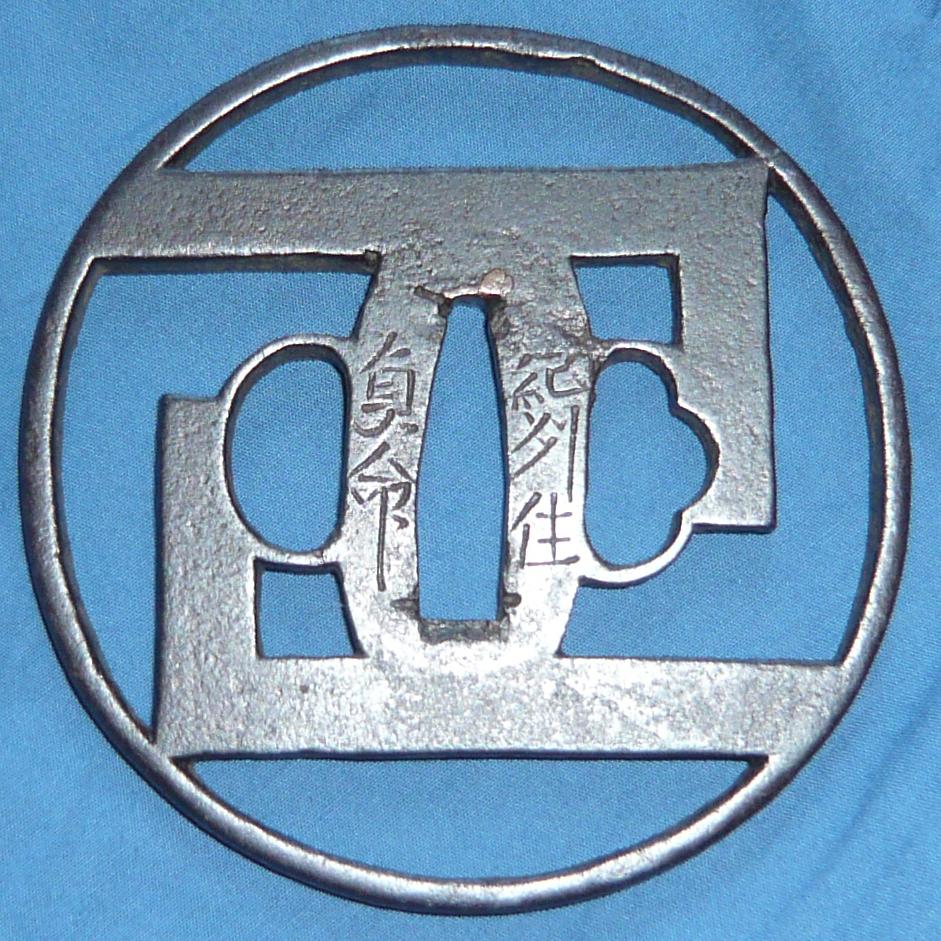
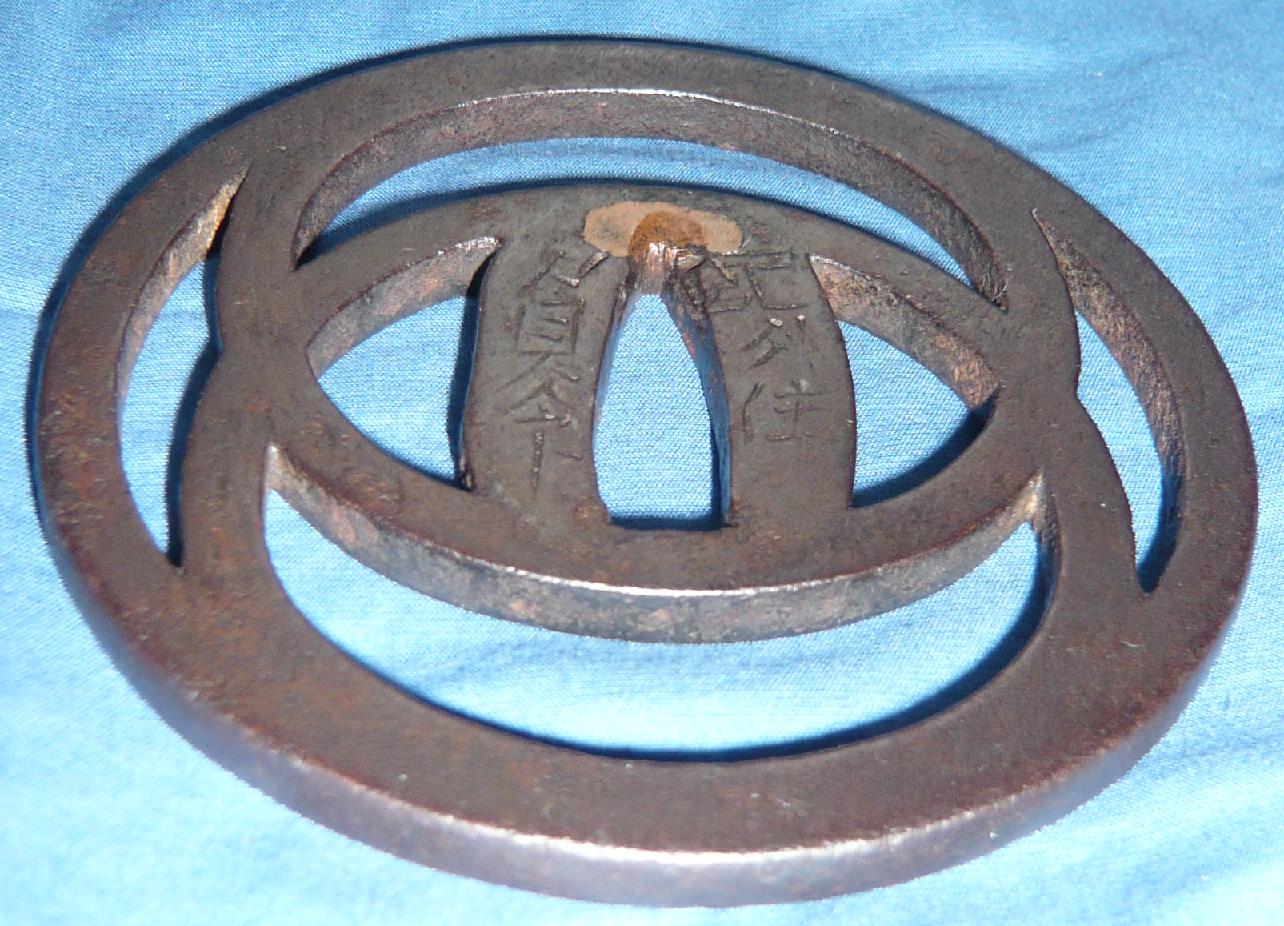
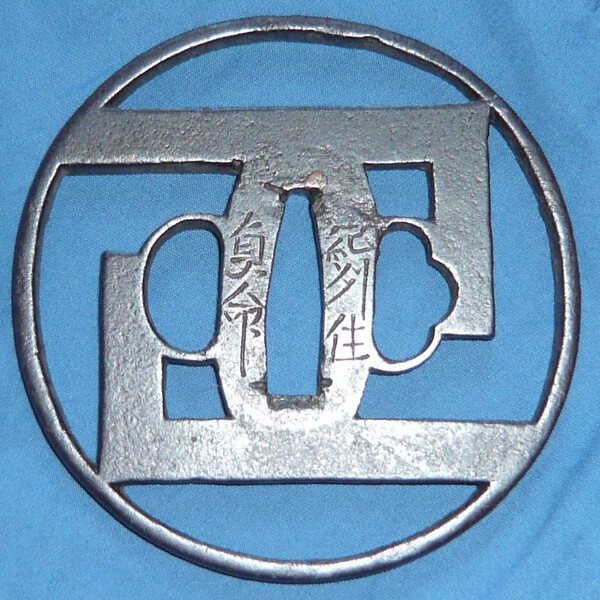
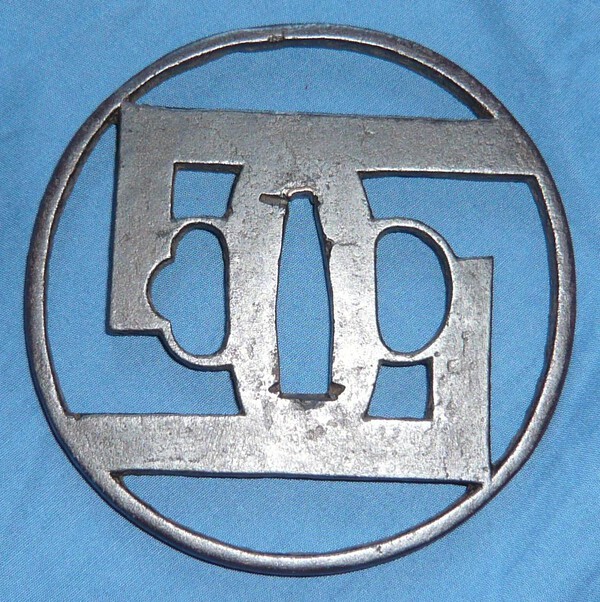
Thank you for your encouraging words, gentlemen! I have attached pictures of one of my own Kishu tsuba (picture number 4 is very close to the real colour). It has the typical Kishu Teimei measurements of 8.2 cm diameter, a thickness of 0.5 cm and is signed Kishu Ju Teimei (紀州住貞命). The design is called wachigai; it seems to be rather popular with Kishu Teimei masters (or at least one of them). As you can see, my tsuba resembles the one shown in the book in the very first picture. If somebody could assist with the translation, this may bring in some more light. Chris
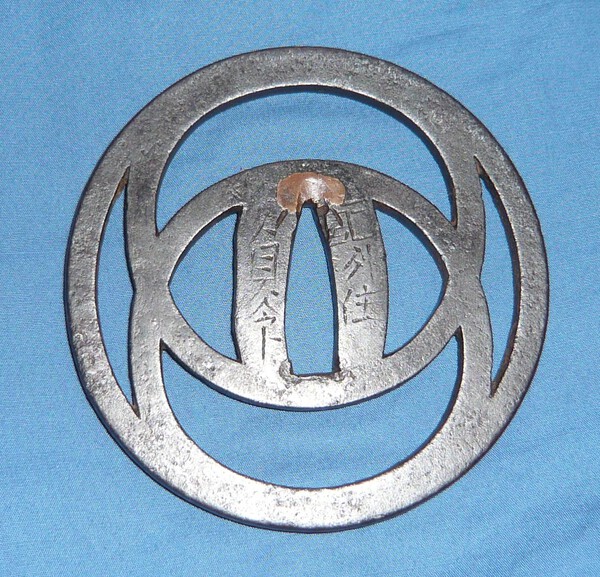
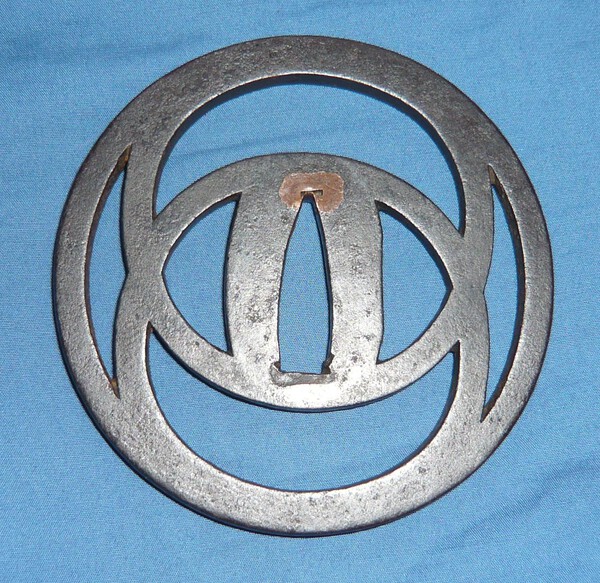
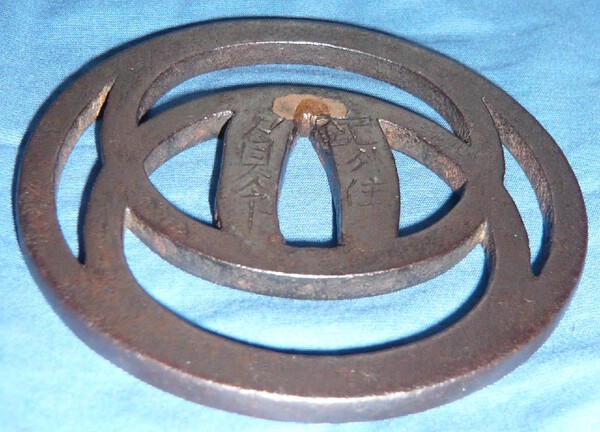
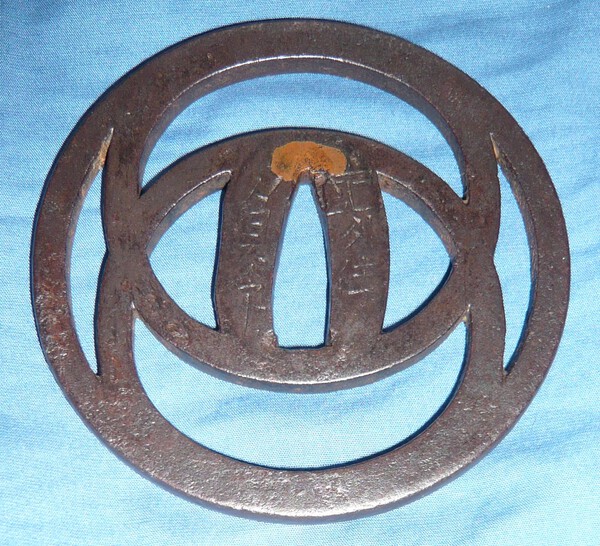
-
Part 2 of the scans. Best, Chris
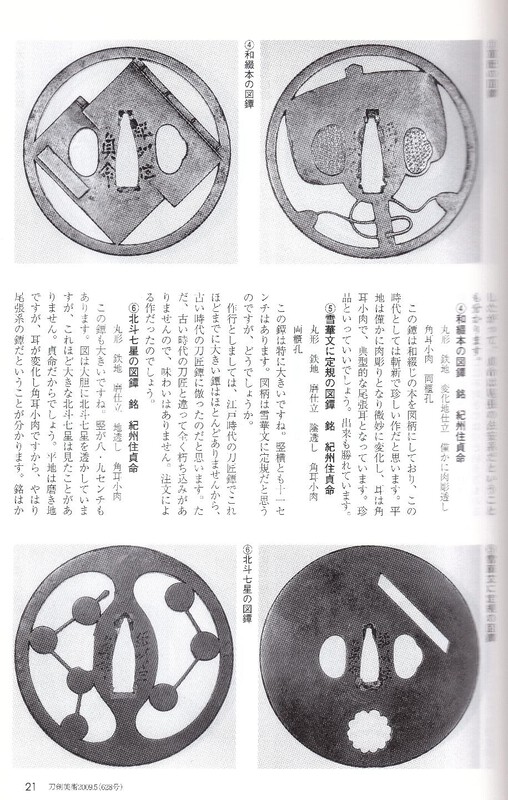
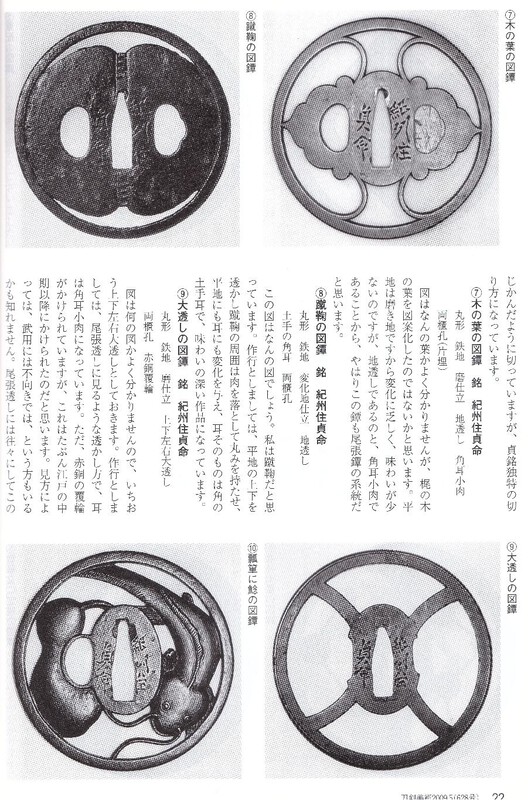
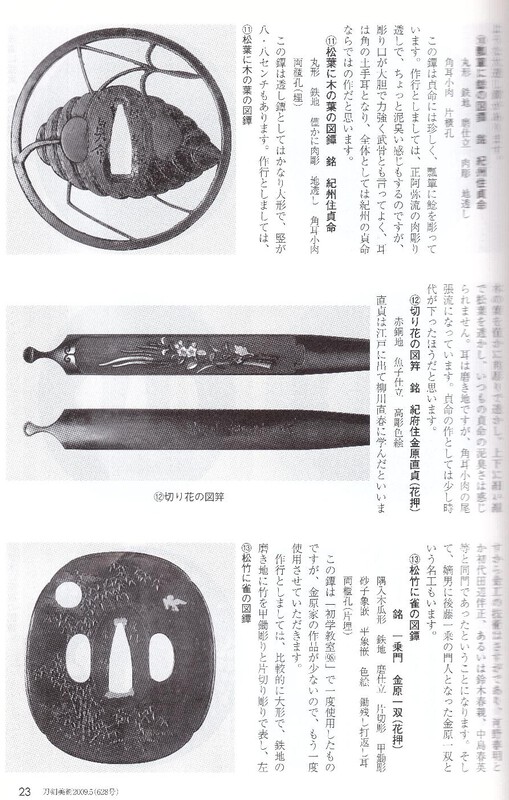
-
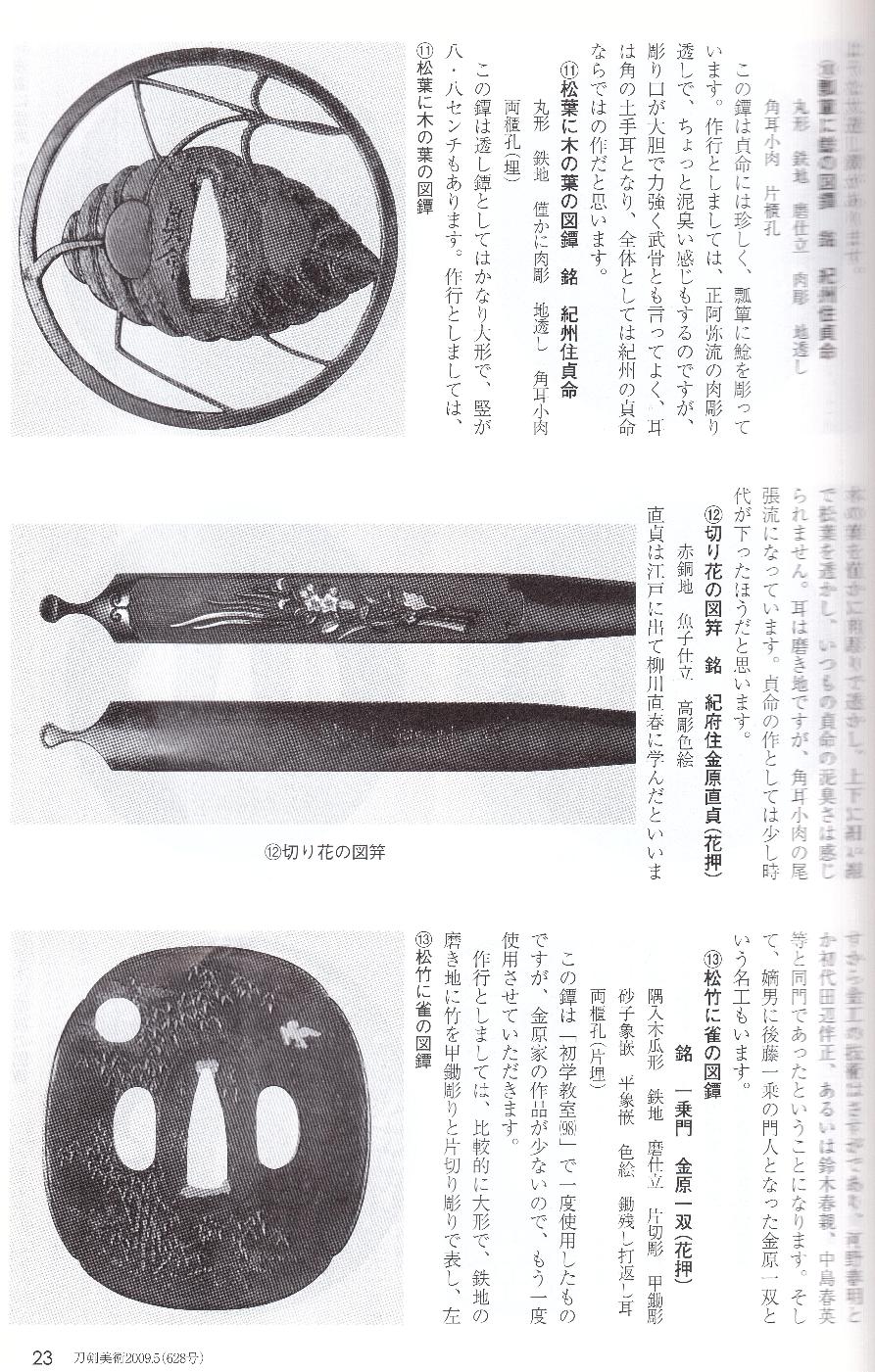
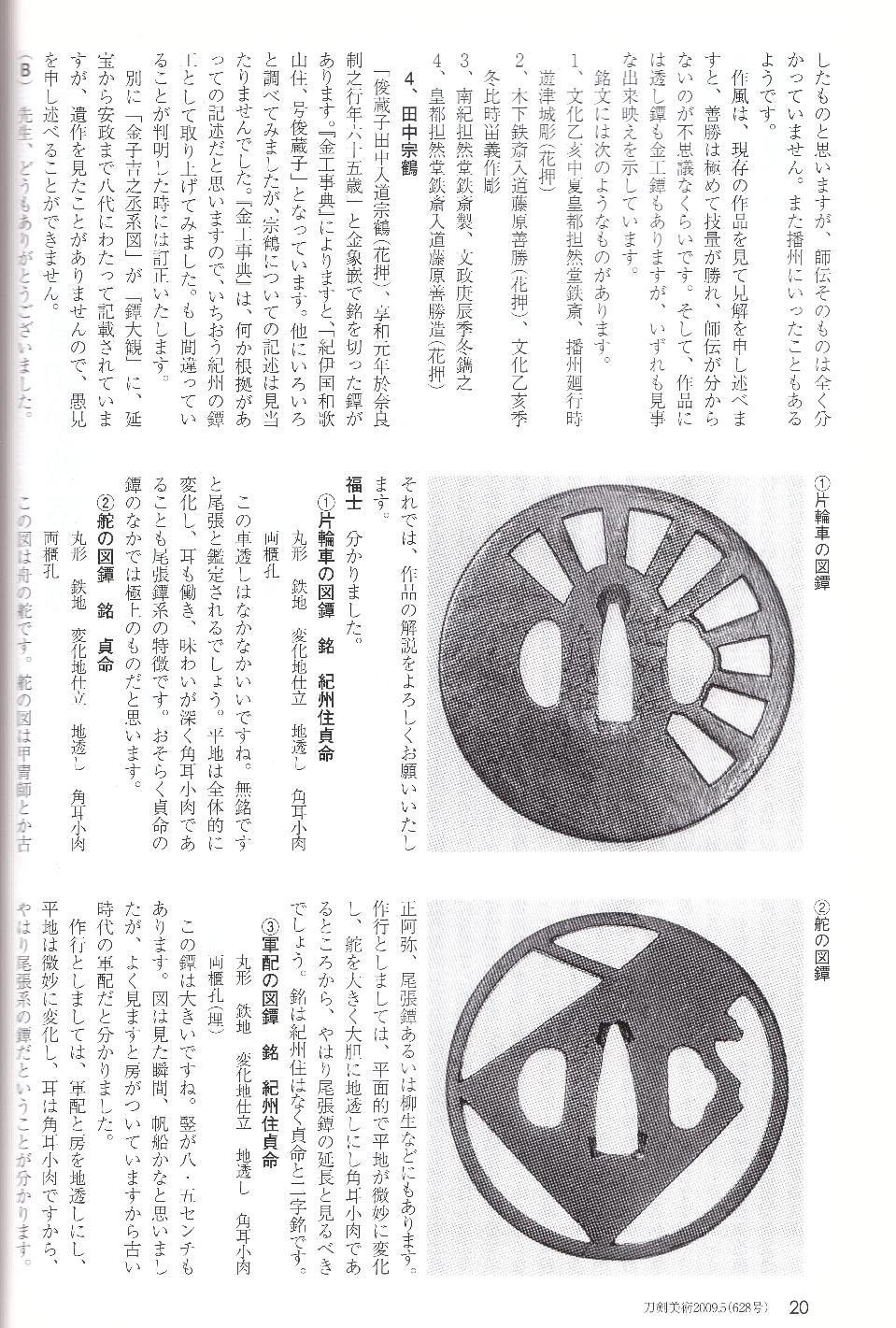
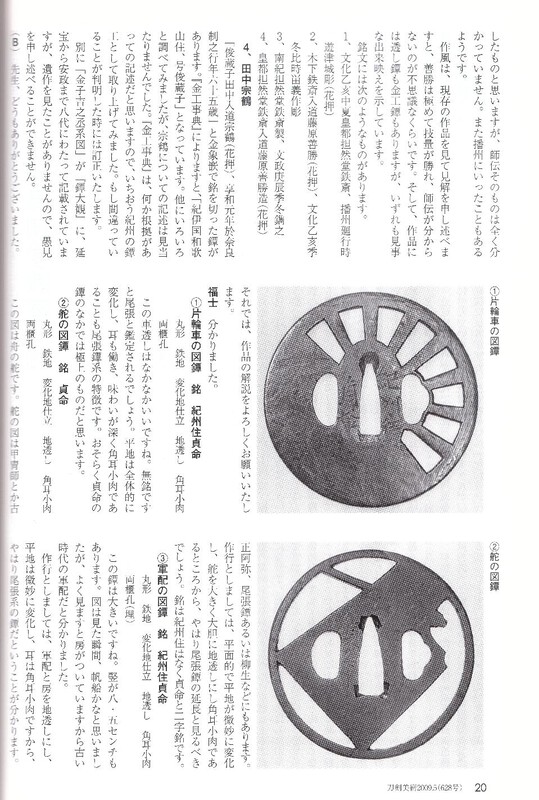
Some while ago, I started researching in Kishu Teimei tsuba. If people are interested in, I would be happy to share the theories I came across during my research and to learn what other people may have found out. For a start: Kishu Teimei tsuba are regarded inferior with regards to quality in comparison to Kyoto, Owari or Akasaka tsuba made in the middle of Edo times. Nevertheless I noticed that in almost every big and famous collection Kishu Teimei pieces can be found. I was told that the better ones are those done in mokume style. These tsuba are comparable in quality to pieces done by the Myochin schools. But - when it comes down to Kishu Teimei tsuba - one should never spend a too critical eye to quality (at least if a certain - rather high - quality level is met), but to design. Under this point of view, Kishu Teimei tsuba can be shortly described as simple but very effective when mounted on a sword. Those tsuba are not at all as fine and educated as e.g. Kyoto tsuba, but strong and clear in their message. Therefore some people believe, Kishu Teimei tsuba were mostly used by mercenaries who lived in the Yamato province. Others told me that these tsuba were (also) used by (warrior) monks in the monasteries of Yamato. As you can see, there is a large discussion when it comes down to Kishu Teimei tsuba. What can be regarded as fact is that there are about two to five generations of masters who signed Sadanaga (or otherwise read Teimei) who have been trained by Hoan masters. I am curious if somebody in this forum has studied Teimei tsuba before and is willing to share his knowledge. I did attach some scans from books and a Token Bijutsu issue which I am - unfortunately - unable to read. Any help would be much appreciated! If people are interested, I can also attach some photos of my (four ) Kishu Teimei tsuba. Many thanks for reading and I hope people will enjoy reading this post and maybe share a bit of my fascination about Kishu Teimei tsuba .
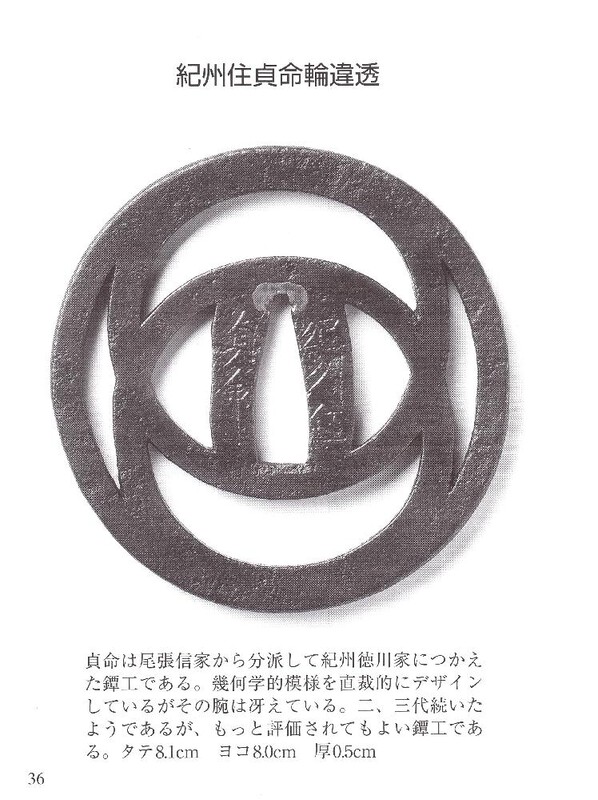
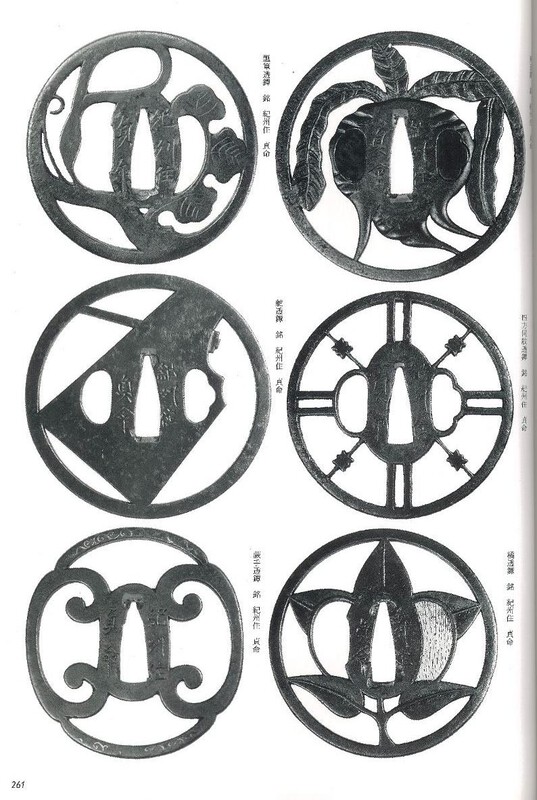
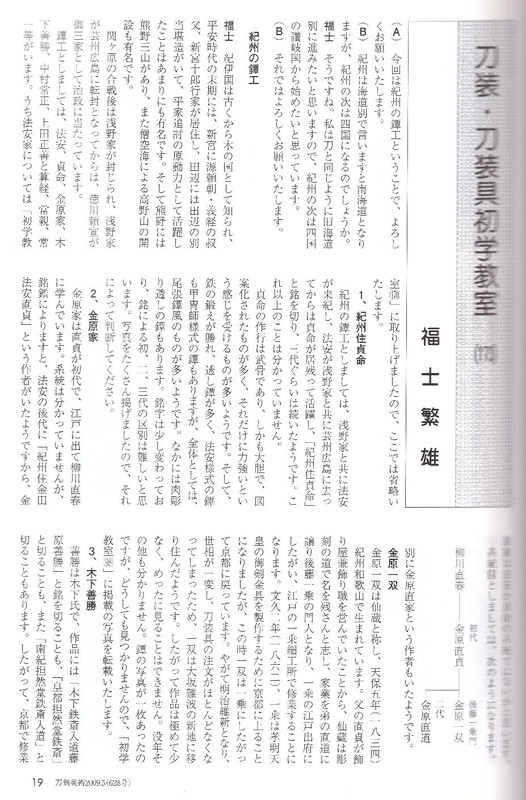
-
Hi Pete, I believe that there are also some roof tiles shown on your tsuba. A very beautiful Sunagawa Tsuba by the way! Best, Chris
-
I would also guess for a modern artist! Patina can be misleading, but the way the surface is hammered at the rim, the way the decoration is chiseled and the overall motif speak for a contemporary tsuba artist. Best, Chris
-
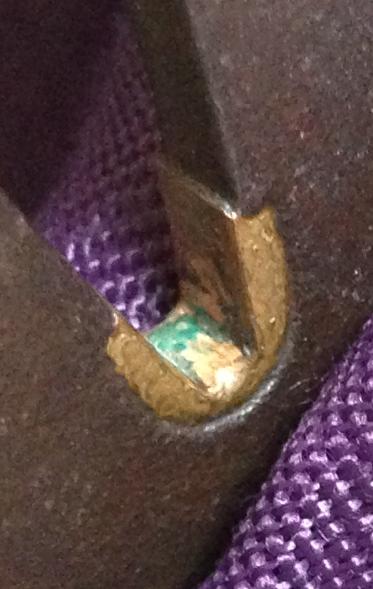
Hi Grey, the magnet sticked to the metal but fell off when attached to the sekigane.
-
Hi Grey, The tsuba might be bad, but trust me in this point - the sekigane are real inlaid sekigane and if I may add: IMO the inlay is done in a rather nice and accurate way.


-
Thank you for your statements, Mariusz! To be honest, I totally agree with you with regards to quality (and books). The other tsuba, that were taken as reference works, are done in a much higher quality. Nevertheless, I simply wanted to discuss the features of this small tsuba. I do not want to convince anybody that this a treasure find! But I do believe that this tsuba is worth disussing it, since it has some features that are worth a discussion. This is the reason why I try to challenge people into a discussion. I do like the idea that this tsuba was done by some non-trained guy named Masasada (what does the rest of the mei say BTW?) who tried to imitate the style of tanaka. And then - looking at the parts where he failed in - understanding what makes tanaka special. In my opinion you cannot discuss the big names (like Kiyotoshi...) only by seeing photos. You will allways miss something - and this something is what makes them spectacular. A good example are Higo tsuba: If you ever had the oportunity to hold at least two iron Jingobei in hand, you will understand what pictures can never teach you. To come back to this very tsuba: on this tsuba one could (if I were be a more talented photographer...) see everything one needs to see from photos to fully judge the tsuba. And that`s why I wanted to discuss this tsuba and not a Kiyotoshi - besides the fact that I do not own a Kiyotoshi .
-
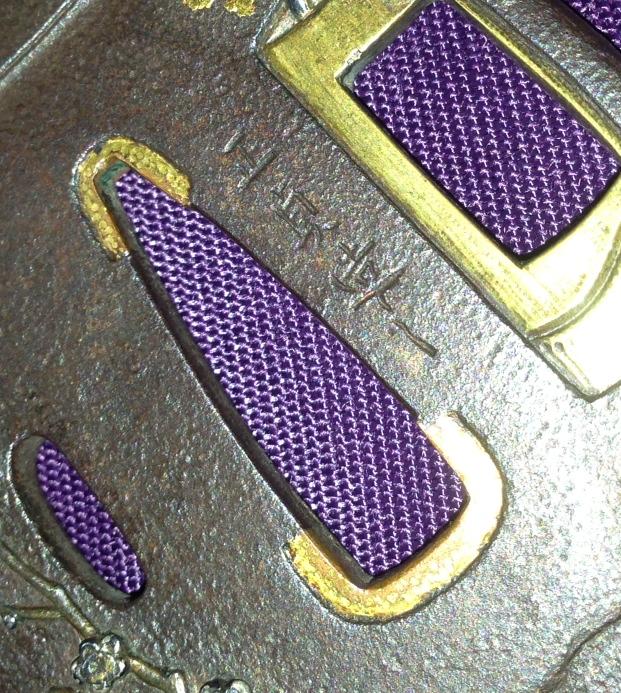
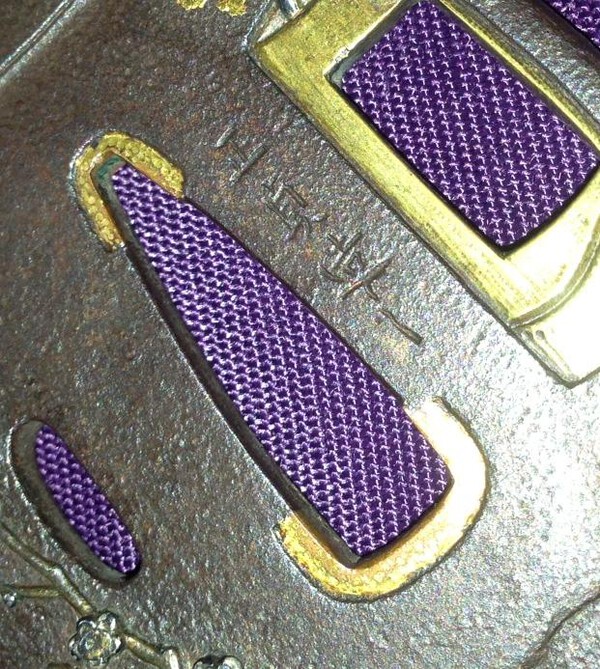
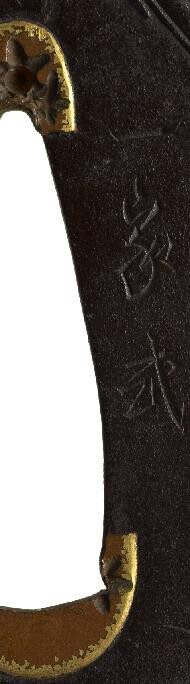
And a close up of the signature ! Seems a bit like someon did not find the time to finish the signature (with that last stroke being sort of misplaced)...
-
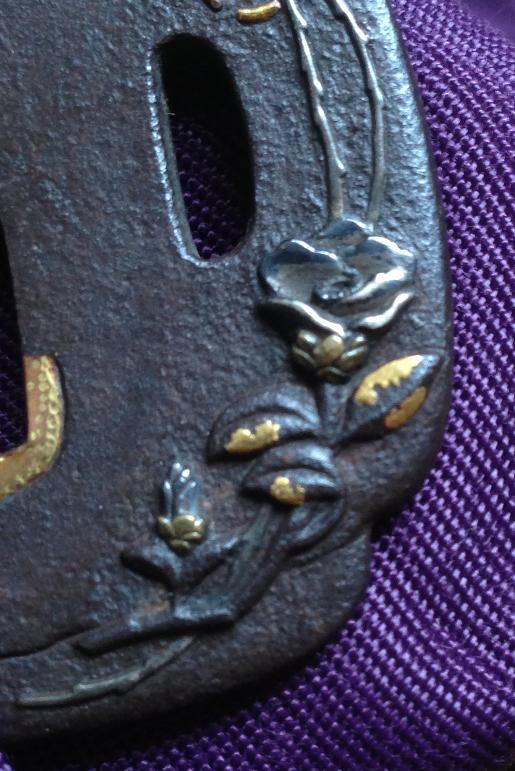
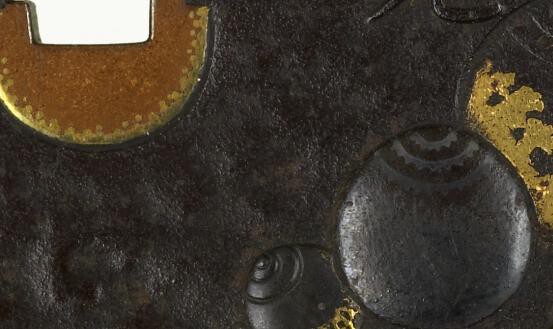
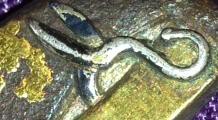
That is a start, Mariusz ! Of course, the tiger is nicely done and costs, for sure, fifteen times more than my tsuba. But if you do compare the way the gold is applied to the leaves beneath the tiger and the way the small twig is done, it reminds me of my tsuba (I have attached another photo; the best I can do with my mobile phone...). Can you see (from the pictures) that the long twig and the flowers body are done by using two different metals and techniques (silver inlay and iron cutting)? IMHO, that makes it too costly and difficult for low quality tourist stuff. I have also attached a close-up of the scissor to show the rubbing effect; it is actually done in three different metals: silver, shakudo and a very small gold plug (where the scissor opens). Also, I have attached a photo of another tanaka piece. It is interesting to see the way the surface was done (completely different than the one posted by Mariusz).

-
At least, the discussion is very interesting. @ Mariusz: Mariusz, can you give reasons for your statement? Please, do not get me wrong! I do not say, you are wrong; but I think one can only learn, if a reason for a statement is given (and I can only evaluate an opinon if a reason is given). May I remind you, that your arguements until now were: "Those "sekigane" serve no purpose. Never seen sekigane painted gold.". Well, then you do not have seen too many tanaka tsuba, I am afraid. Again, no offense to you or your expertise on tsuba, Mariusz! I am just curious about the "why". That is why I am very much with Brian. The reason why I have posted this tsuba is the following: it does not have any NBTHK papers attesting anything to it. It does have some really nice features (like the hammered surface, the gold applied, the way the blossoms are done: did you realize that there is some shakudo layer on top of the silver which has been rubbed away (intentionally?) in order to show the silver that lies beneath it?), but on the other hand there are things like the smaller hitsu ana which does not fit well into the design (and that is really untypical for tanaka). Thanks again for reading and replying to this topic. Please put me in cc when you send those PMs to Brian ! I will not take any offense in criticism. Since Christian has already pointed a gun into my face, I do not think it can become worse )))!
-
BTW: what does that pistol stand for? A cherry blossom that gave someone a heart attack???
-
Thank for your comments so far! The sekigane are made out of copper with dotted gold points on it (I have attached another photo of a tanaka tsuba which shows the very same technique; I am sorry for the bad quality of my photos). And tey are not cast into the plate and then painted. As suggested by Christian, I opened some books and I realized that tanaka sekigane did never ever serve any other prupose than being decoration ! Let`s come back to this litte tsuba: I do think it is tanaka school tsuba. The reasons for this being: - the surface of the iron plate (which has the typical brownish color) is done in a nice way. If you do compare this tsuba to bigger ones done by the tanako school, you will realize that the bigger ones have a fantastic tsujime. Since this little tsuba (only 5 cm in height) does not offer enough space for a extended tsujime, it was done in a smaller way to fit the smaller size. You can see this effect best on the third picture (which actually comes closest to real). - the sekigane are nothing else but average quality tanaka sekigane. - the whole picture is somewhat "framed", which means that the decoration creates a frame (one of the elements, the tanaka school is famous for) and at the very same time the frame is the decoration. - the mei is not imposed; it is carved. But I could only find one other poor resolution picture of another tsuba showing the Masasada mei. Does someone have another reference signature? Adding all those hints together, this one should be a tanaka tsuba. Did I convince at least some of the critics ? I believe it has been made for a kaiken or something very small. The picture itself (a garden scene) also suggests that. But I am happy for other ideas! Maybe someone recognizes this scenery? The discussion also raised another question: how did the tanaka guys do the gold spots on the sekigane? Were they painted?
-
To be honest, I do not get your point about the sekigane. They are neither faked nor unreal. The metal body of the tsuba and the sekigane are two (or rather three) different parts (maybe the thin line between the iron and the copper is not very strong on the pictures, but it is definately there)...