Steve Waszak
-
Posts
981 -
Joined
-
Last visited
-
Days Won
4
Content Type
Profiles
Forums
Events
Store
Downloads
Gallery
Everything posted by Steve Waszak
-
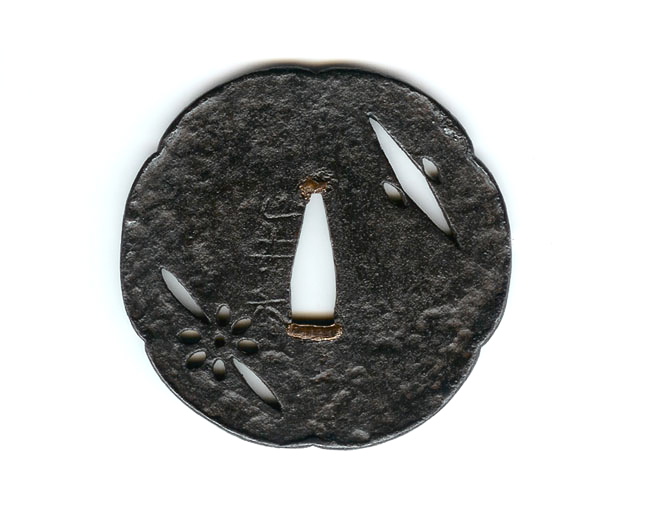
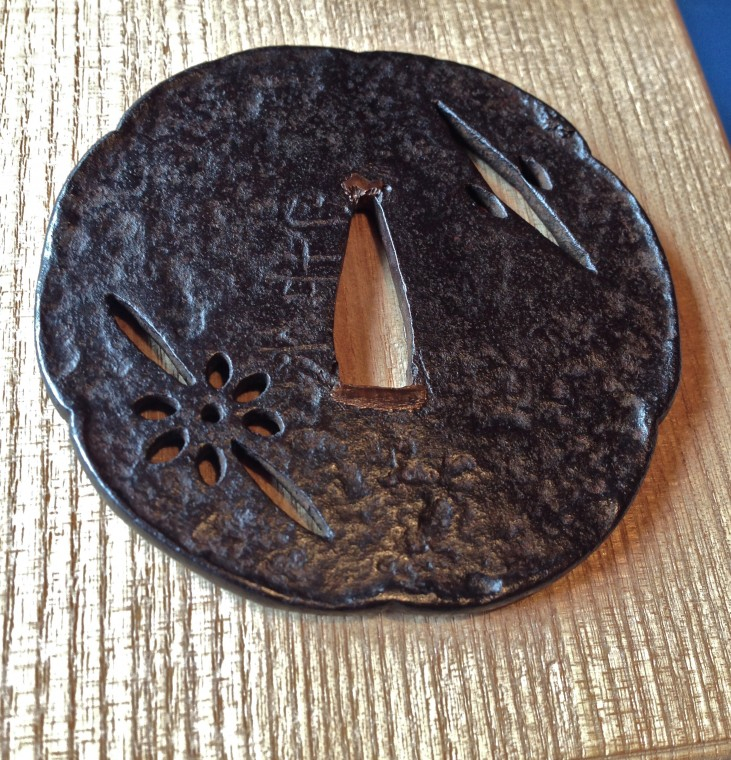
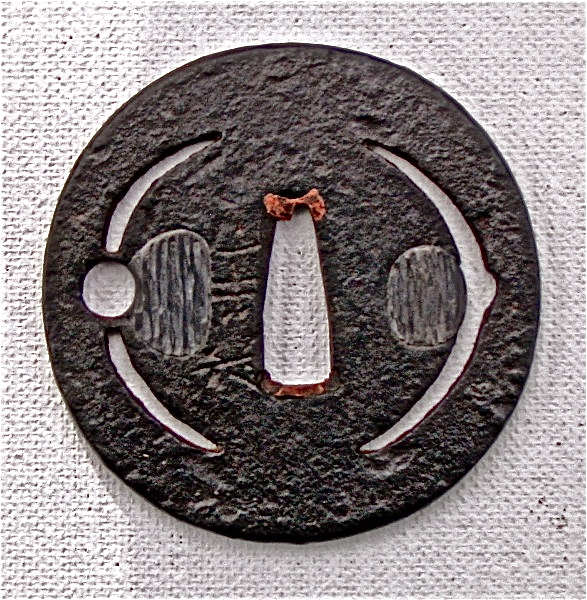
Evan, Nice tsuba. Really good to see a fine early iron guard here. My initial thoughts would be Owari, as the motif, the symmetry, and the rim style all speak to Owari sukashi. Probably early Edo, judging by the finish (little to no bold tekkotsu) and the kogai hitsuana. Good pick-up, Evan. Cheers, Steve
-
Markus, Many thanks for the post. I'm sure we're all looking forward to the finished product, but first things first: recover, get your health back. This is the priority. I'm sure it feels good to have the surgery behind you; now it's the recovery process, one step at a time. There's no rush, just get well soon. Cheers, Steve
-
Very best wishes, Markus. Back surgery is not a lot of fun (been there), but once it's over, you'll be quickly on the road to recovery. Then we'll expect three books a year. Take care, Steve
-
Alan, You raise some very good questions here. I haven't sufficient knowledge in this area to offer a useful comment, but I hope that your questions elicit some good responses. Cheers, Steve
-
This fascinatingly peculiar tsuba has been reduced to $375...
-
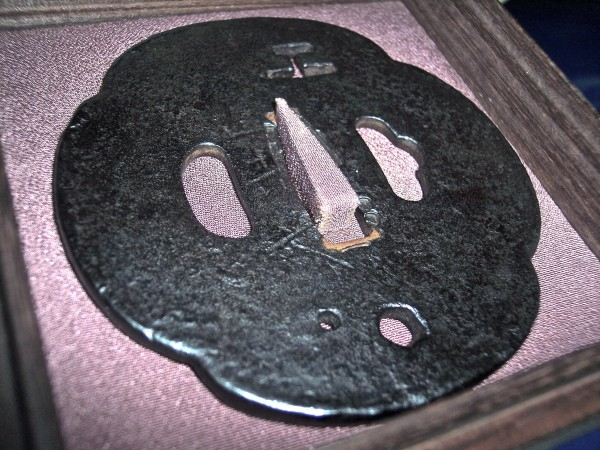
My guess is that both of these are 19th-century Bakumatsu Period revivalist pieces. The mei in both cases seeks to copy that of the shodai (hanare-mei) of the Momoyama Period, but details in the way the mei is done indicate it isn't that of the master. Of course, the work itself departs considerably from what we see in the shodai and nidai. 19th-century revivalist works often copied the great tsubako of much earlier times (Nobuie was a popular target), sometimes combining motifs and other features (rim structure, dimensions, etc...) into one tsuba but frequently overdoing it. IMHO, these pieces here are "valid" works in their own right (i.e. they are products of their time, forged rather than cast, and appear serviceable) , but perhaps not brilliant examples of tsuba art. Cheers, Steve
-
Perhaps not either/or, but influenced by both?
-
Addendum: I have heard from a seasoned connoisseur that this tsuba is likely to be a Namban variant or at least to display strong Namban influence. While I am far from knowledgeable about Namban(-influenced) tsuba, this possibility does seem to have some merit.
-
Thanks for those ideas, guys. As I say, this tsuba is kind of a head-scratcher for me. I certainly can see the earlier traditions being "represented" here, but aspects of the tsuba---the nunome, that intriguing area around the seppa-dai with the silver inlay---create question marks as to the tradition or school here. It really is a cool old tsuba, though... Steve
-
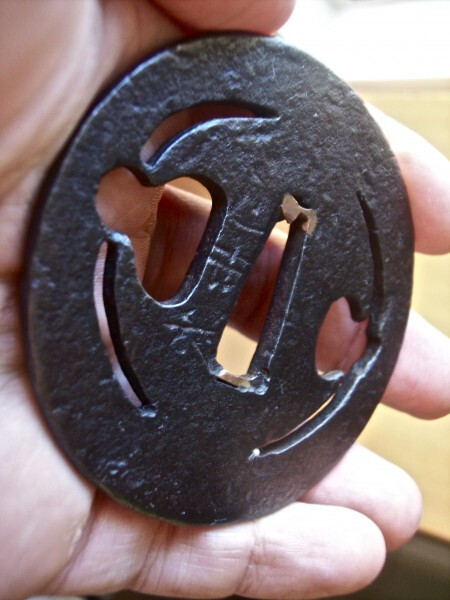
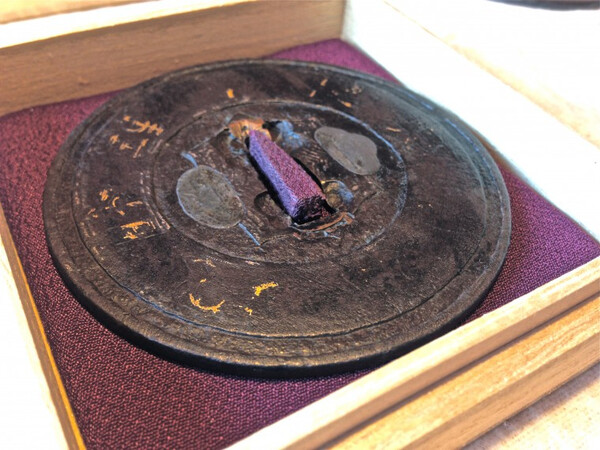
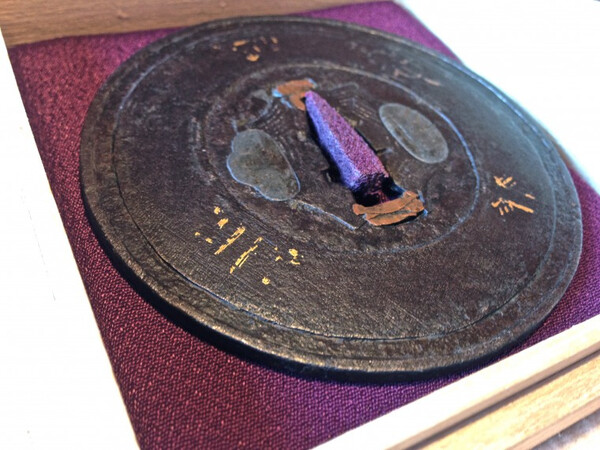
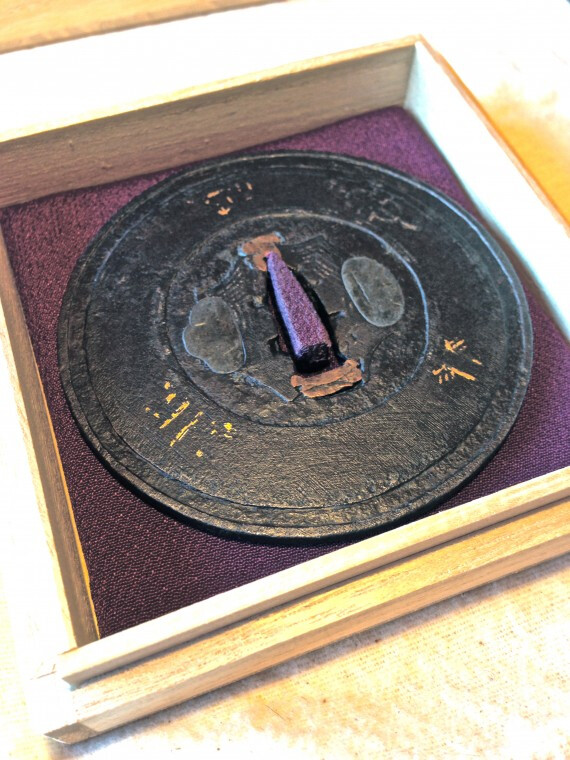
This tsuba is a bit of a stumper for me in terms of identifying a "school" or even the period it may have been made. In my experience, it is a very unusual piece. It is rather large and relatively thin, at 8.7cm x 3mm, and the concentric circle design/motif is one that I believe dates way back, even as early as Kamakura Period work. This tsuba is of course nowhere near that early, but I do wonder if it may be a late-Muromachi work. More conservatively, I would date it to Momoyama, if for no other reason than the comparative freedom and "wildness" of the design. The strait-laced conservative sensibility of the Edo period would seem to preclude this as a time of production, though earliest Edo is possible. The tsuba has lost most of its nunome inlay, as can be seen in the photos. I cannot make out the motifs of the inlaid areas exactly, but some appear to be characters. The plate is of iron, and an interesting detail is what appears to be very fine cross-hatching all over the central band of the plate, not merely where the inlay would have been. There is a very curious area around the seppa-dai, inlaid in silver I believe, though again, much of it has gone missing. The shape of this raised area is one I don't recall ever having seen before. The hitsu-ana are plugged, with lead? Pewter? Not sure about the material here... This is certainly not a tsuba you see everyday. It has good age and presence, and as I say, is an exceptionally uncommon design. Experienced collectors who have seen this piece have suggested that this is an early Satsuma guard, and is quite rare. More photos available on request. $450 plus any applicable paypal and shipping fees. Cheers, Steve
-
Death & Injuries In Samurai Battles
Steve Waszak replied to Gordon Sanders's topic in General Nihonto Related Discussion
"Was this plain stupidity or was it 'makin' a statement'? Not the knowledge of the fact that they would be heavily outnumbered, this was not much to be done about...But fighting in a 'traditional' way?" "The big shock/drama/lesson though, was not so much tactics and/or hardware per se, as the fact that an army of samurai--hereditary, professional fighters--could be beaten by one composed of conscripts. The whole episode was, in fact, essentially suicidal from the outset, and Saigo knew it." --Karl Friday I find it curious that Friday reaches the conclusion he does ("shock/drama") in the second quoted passage, given the observation he makes in the first ("...heavily outnumbered..."). A pack of hyenas can drive a lion from a kill, and even kill the lion. But one on one, the lion will kill, effortlessly, a hyena. Does the outcome of the Battle of Thermopylae mean that the Persians were stronger fighters (individually) than the Spartans? Hardly. What, exactly, were the numbers involved in Saigo's rebellion? By what ratio was his "army" outnumbered? Cheers, Steve P.S. I cannot make the shaded-quotes function work on my computer. Doesn't matter what I try, including checking the FAQs on quote insertion. -
In Kokubo Kenichi's "Ten Rules of Tsuba Collecting" (1972), he states the following: "Iron tsuba differ from other iron craft products in the sense that iron tsuba can be played with in one's hands. Even a rusty iron tsuba that defies the scrutiny of our eyes may have the right tactile qualities. Thus, revealing its potential. The touch and weight of a guard in one's hand is important in the appreciation and evaluation process. When making a tsuba, it is difficult to reach a good balance between the niku and the mimi. Therefore, if a tsuba feels good in one's hand, it usually is a good one (the balance of the thickness of the tsuba's center vs. the thickness of the mimi and the overall shape of the tsuba all play an important role here). Therefore, when enjoying an iron tsuba, we need to see with our hands as well as our eyes." I can personally attest to the value of being able to feel the texture of a steel tsuba, and so would agree with Kokubo's thoughts here... Steve
-
Michael, I am quite certain that Ford is well aware of Christian history in Japan. I think Ford's point had to do with the hopelessly sloppy critical thinking employed by some theorists/scholars in reaching the conclusions they do regarding the presence of Christian iconography in tsuba design. While there are some tsuba from the latter 16th century I am quite confident employ such iconography, far too many guards from this or later eras are interpreted to do so. Just as a quick example, I have a piece on the sales page currently (an Owari guard) which features a big, bold "cross" as its dominant design element/motif. Is this, then, a Christian tsuba? No, it isn't. I think what Ford is saying is that much too often, highly dubious conclusions are drawn, using even more dubious critical inquiry. Needless to say, I would agree. Cheers, Steve
-
I have heard conflicting viewpoints on this, but in general, I agree with Guido. The one qualifier I would add, though, is that apparently, some individuals are burdened with a more "acidic" body chemistry, such that when they handle iron, there is higher likelihood of the inducing of rust formation. I can't say whether this is a "true fact," but probably the metal craftsmen here will know better than I... I can say that I do handle my steel guards without gloves, and haven't noticed any ill effects. Cheers, Steve
-
Payment made. Thanks, Markus! Cheers, Steve
-
Hi Bruno, No problem. Just to clarify, too, when I say the shape is not correct for the Yamakichibei smiths of the Momoyama years, I mean that the sort of tall, stiff mokko shape seen for the tsuba in your photos is not seen in those early works. Their mokkogata pieces have far more "life" to the shaping of the guard. Cheers, Steve
-
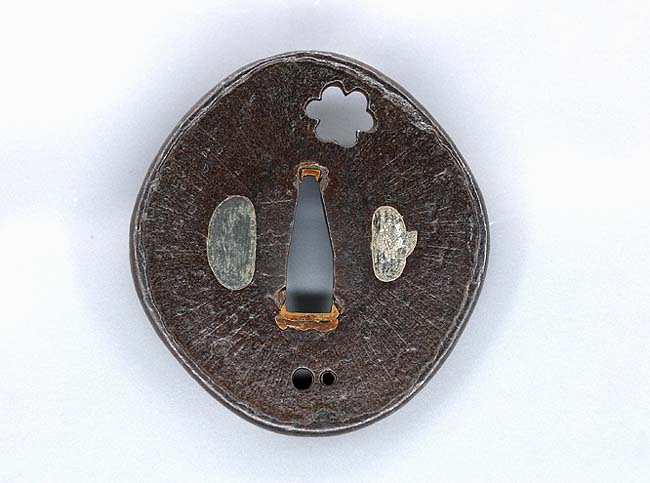
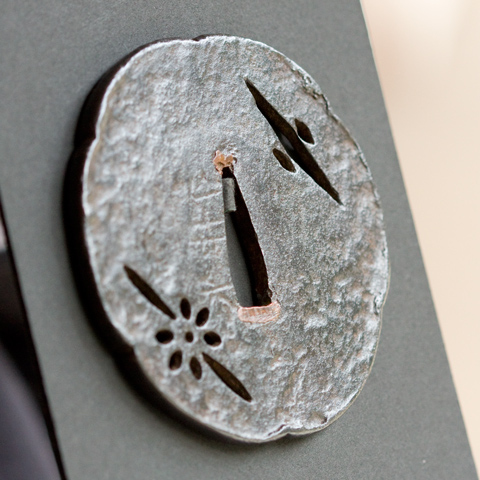
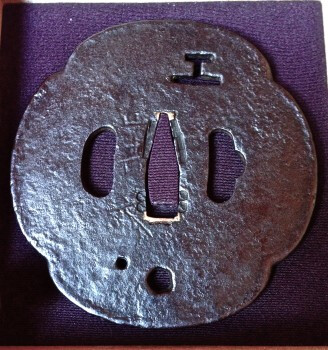
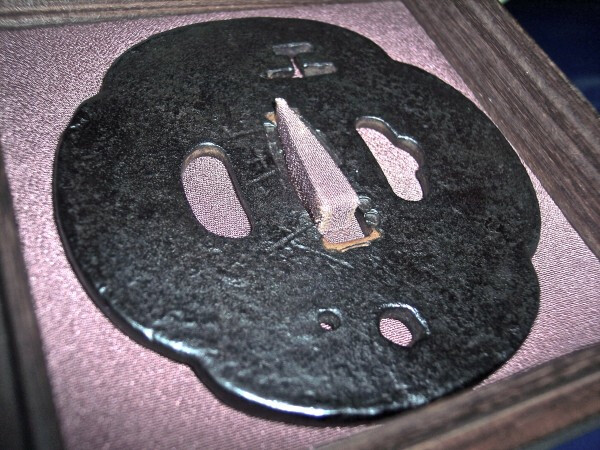
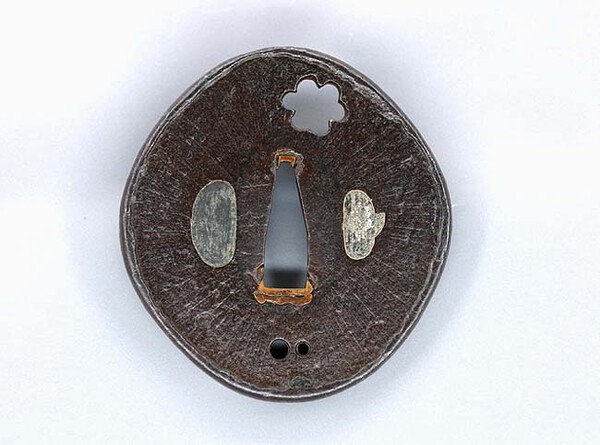
Hi Bruno, You are probably right: this is a late Edo copy of or "homage" to Yamakichibei (specifically, to the nidai, who was a smith in the Yamakichibei atelier in the Momoyama and very early Edo Periods). The other possibility is that this is a post-Edo Period piece. It is certainly no earlier than 19th-century. The rectangular hitsu-ana are not kantei points for the authentic Yamakichibei smiths: I can't recall seeing any genuine works with such hitsu-ana. As for the motif, this is one associated with two of the smiths of this atelier---the nidai and one other tsubako (see attached photo for example of his work). I don't know that I have seen any explanation/identification of this motif that is confident or certain of what it is. I have seen it described as a katakana "e" character, but I am a bit skeptical of this. As to the mei, since this is a piece having been made at least 200 years after the end of the actual Yamakichibei workshop, the signature of course cannot be "legitimate," if by this term you mean to reference one of the authentic tsubako of that workshop. There are many other indicators in this tsuba that show it to be a very late copy/homage: the steel is nothing like actual Yamakichibei metal. The shape is not one used by the 16th/17th-century smiths. The rim is perfunctory and ho-hum (nidai Yamakichibei rims are sublimely excellent). The "amida-yasuri" are amateurish (compare to authentic nidai amida-yasuri in the photo below). Hope this helps... Cheers, Steve
-
I'll definitely want the hard copy, too. Markus, do you have any other translations of publications on major tsubako planned? Cheers, Steve
-
I'll definitely want the color print copy, myself. Agreed: $125 for a quality 250-page work focused on one of the greatest names in tsuba history is a bargain. Speaking of bargains, if you can find a "real deal" Nobuiye for anything in the four figures, please let me know right away! They routinely go for five figures in my experience, and not always the low five figures. Cheers, Steve
-
I'm in for sure.
-
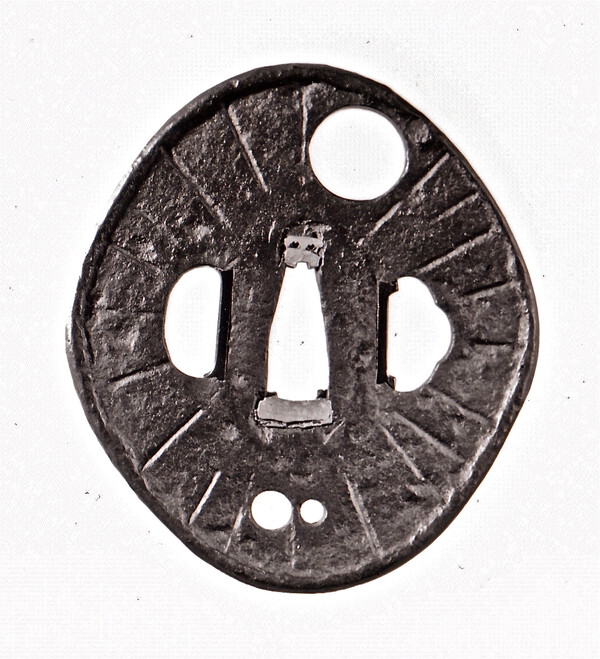
Another nidai Yamakichibei. Otafuku-mokkogata. Tsuchime. Uchikaeshi mimi. Momoyama Period. Ex-Lundgren collection.
-
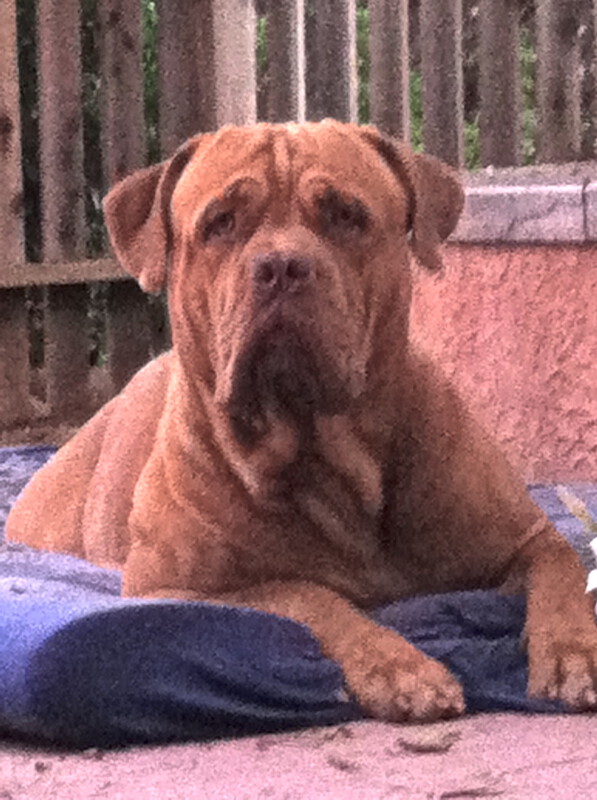
Ed, I don't want to hijack the thread with this sub-thread, but yeah, your home defense will get it done, too, that's for sure. One comfort about having a small pack of huge dogs roaming the grounds is that i don't have to be home. They see and hear everything.
-
Ed, I definitely hear what you're saying. Having a few of these on the property helps with my peace of mind.
-
Ahhh... Thanks, Ed. Some great pieces there.
-
Man, where is all the steel? Time to right the ship a bit. A pair of nidai Yamakichibei tsuba: