Marius
-
Posts
3,200 -
Joined
-
Last visited
-
Days Won
26
Content Type
Profiles
Forums
Events
Store
Downloads
Gallery
Everything posted by Marius
-
Jean, I will provide pics of the tsuka next week. And also of the blade that this koshirae is housing. The owner will refrain from a sale until he has an (educated) opinion on the mei of the kozuka. If the kozuka proves authentic and not gimei, it will be sold separately. I know that chances are slim, given the name, but maybe he is lucky :-) Please forgive me my indolence - I am ignorant in Edo kodogu, I have never studied them and my knowledge is non-existent. I have to rely on the kind help of the NMB members concerning the mei on the kozuka. I don't even have literature that could help...
-
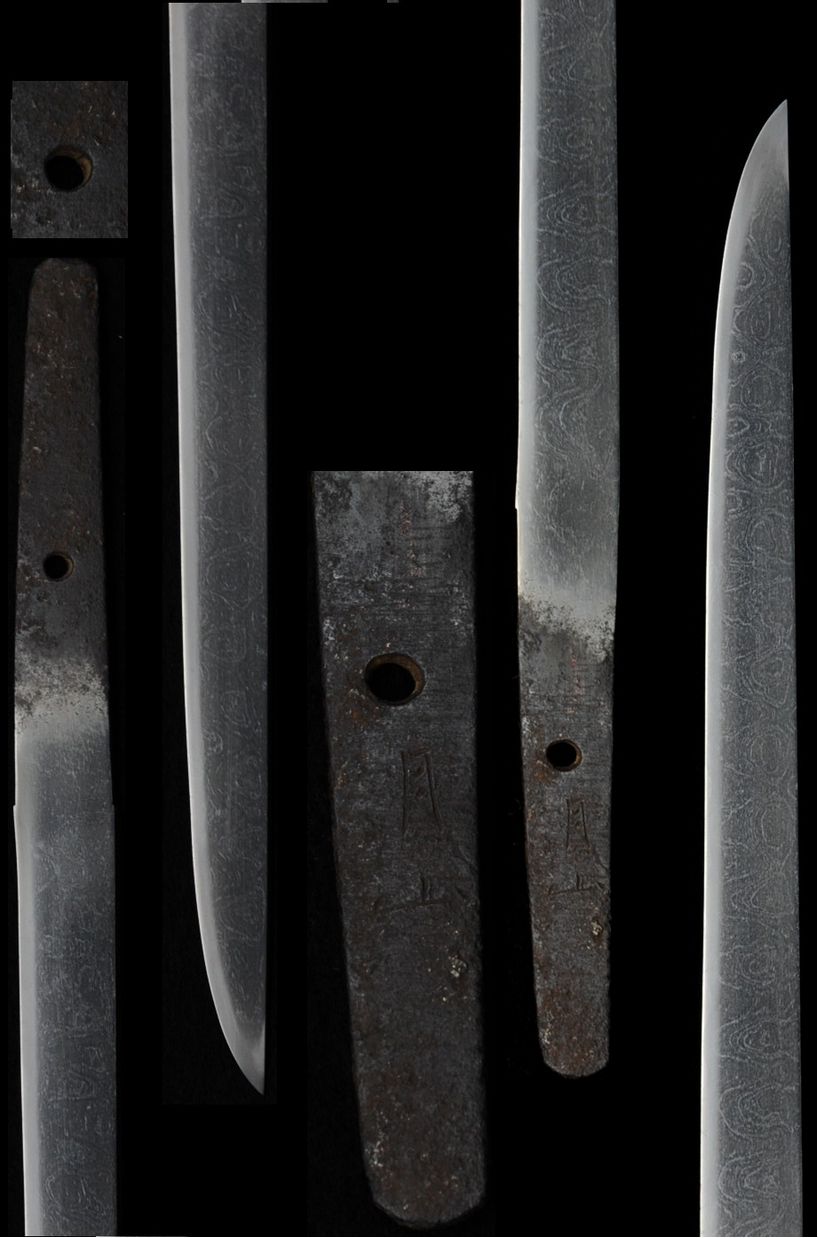
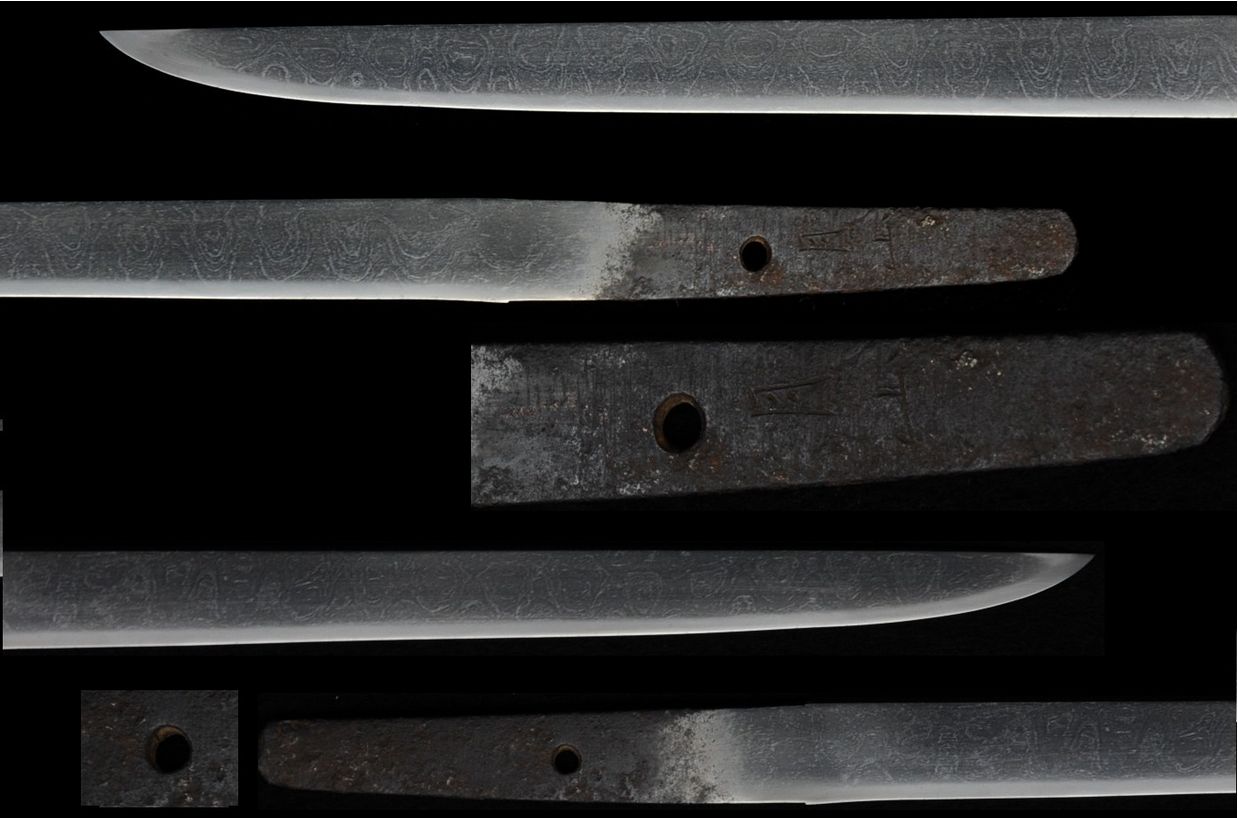
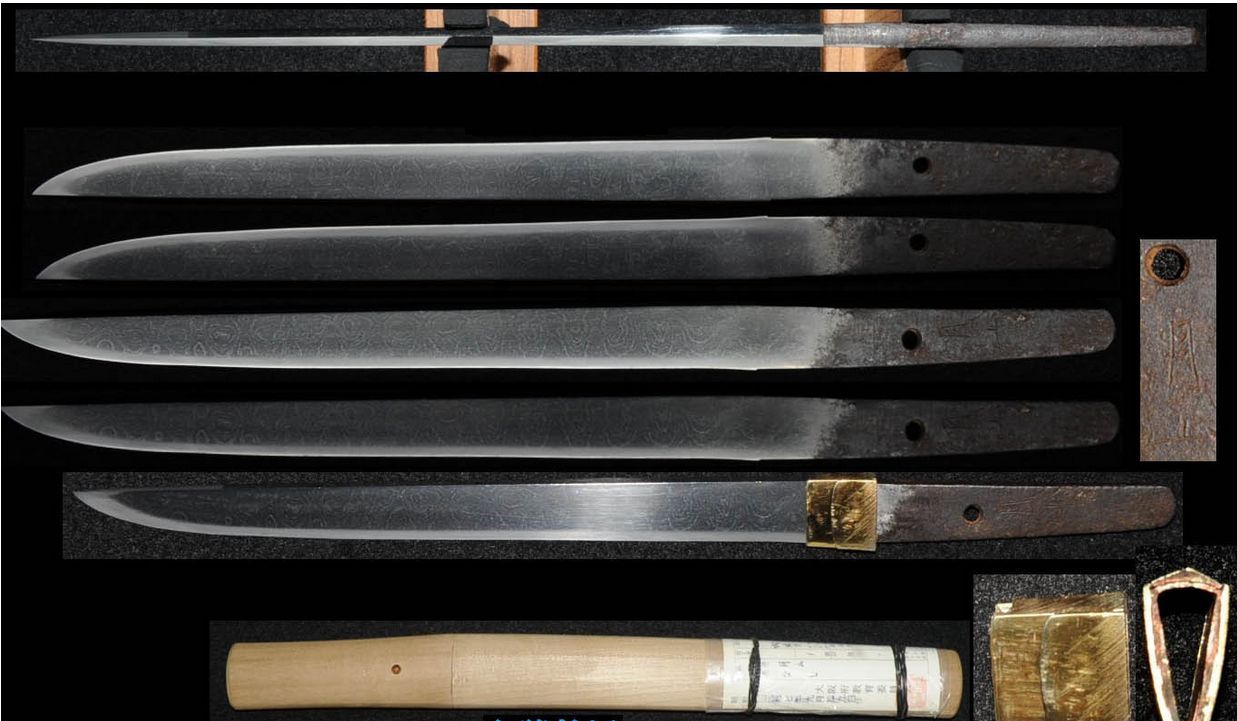
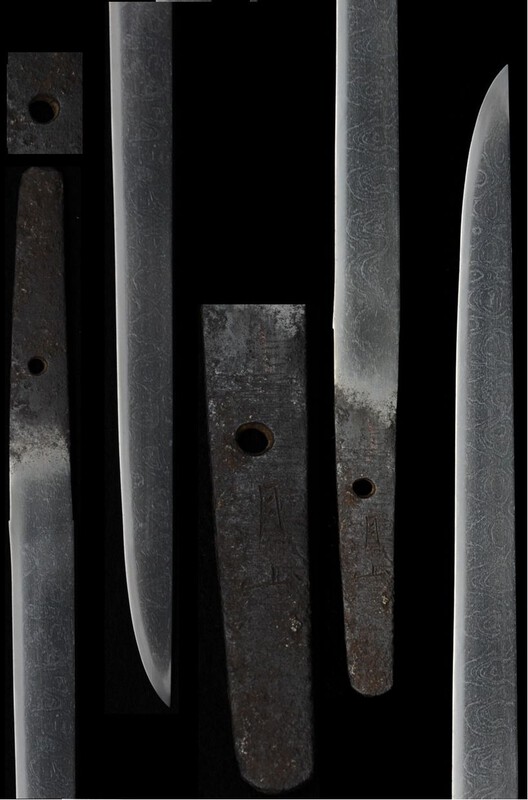
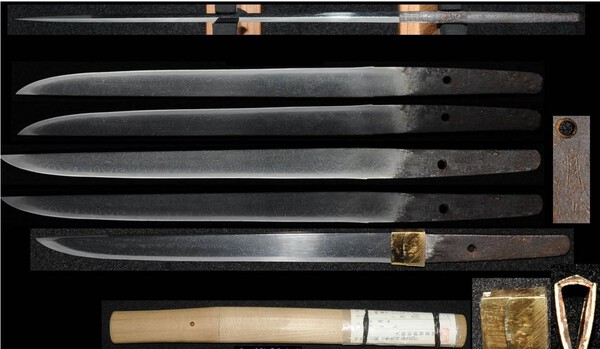
Gentlemen, thank you for your input, I have put together a combination of pictures showing Dewa Gassan ayasugi - one of these swords is my tanto, the other two are papered (the tanto having a Tokubetsu Hozon): http://s1150.photobucket.com/albums/o610/Gomahashi/
-
there is a tsuka, no wrapping though (as said, menuki have been stripped).
-
Gentlemen, thank you for your valuable input Yes, there is a blade for this koshirae, a rather hefty tanto in old polish. I don't have photographs now, will be able to take some next week, hopefully.
-
Well, I have recently bought a tanto with a prominent ayasugi hada. It has a shape typical of Muromachi, nagasa 21cm, slightly machi okuri, polished dwon, suguha hamon, pretty weak. It is signed Gasasan. Of course, the signature is far off what I coul find in Fujishiro. Pics are attached. I know that there have been other sword makers in this period who have produced hada similar to the classic ayasugi. There is a good article on "Ura Japan" nihonto - http://www.nihontocraft.com/Ura_Nihon_no_Toko.html However, this ayasugi is identical to some papered Dewa Gassan swords, including one with NBTHK TokuHozon. What is your take on that one and your opinion on ayasugi hada? Is it a true Gassan trade-mark, hard to copy or was this tanto made to resemble Gassan?
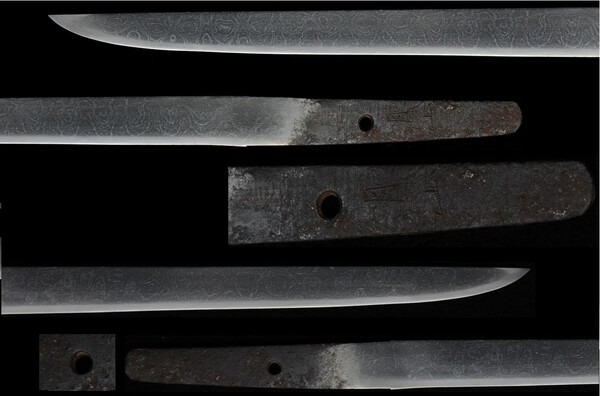
-
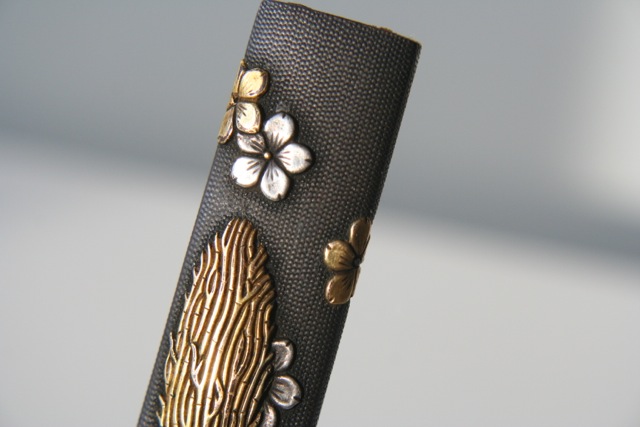
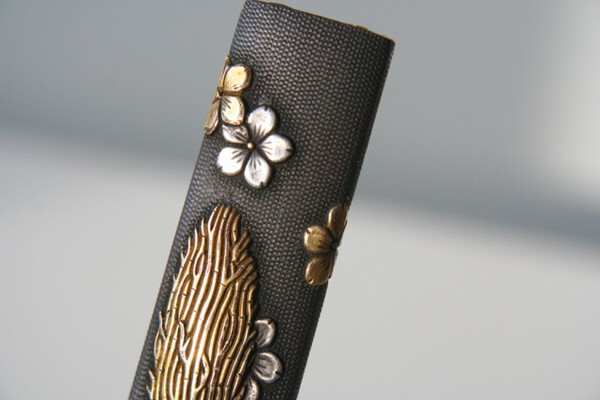
and here goes the kurikata and the kozuka.


-
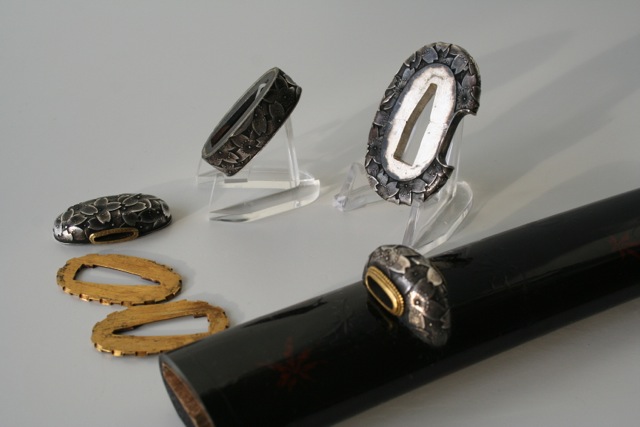
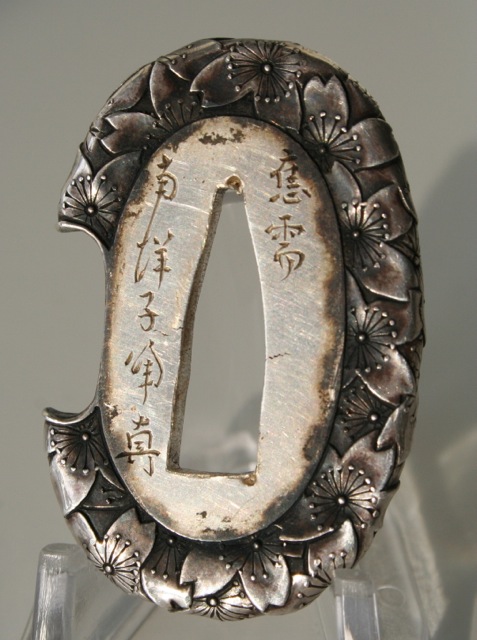
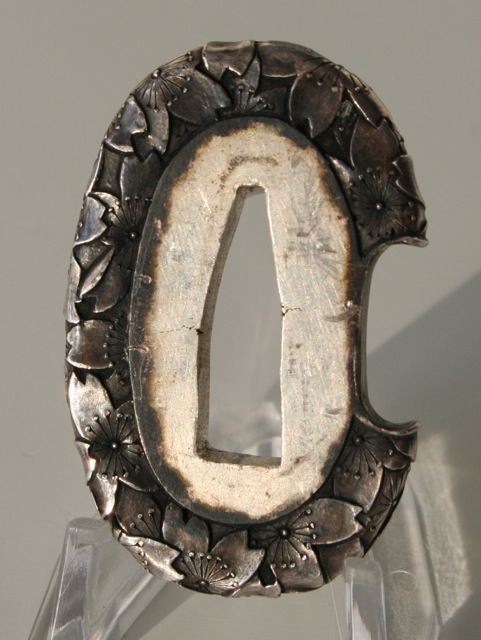
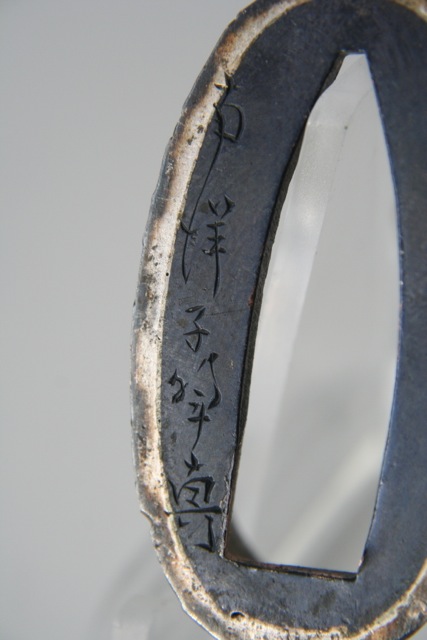
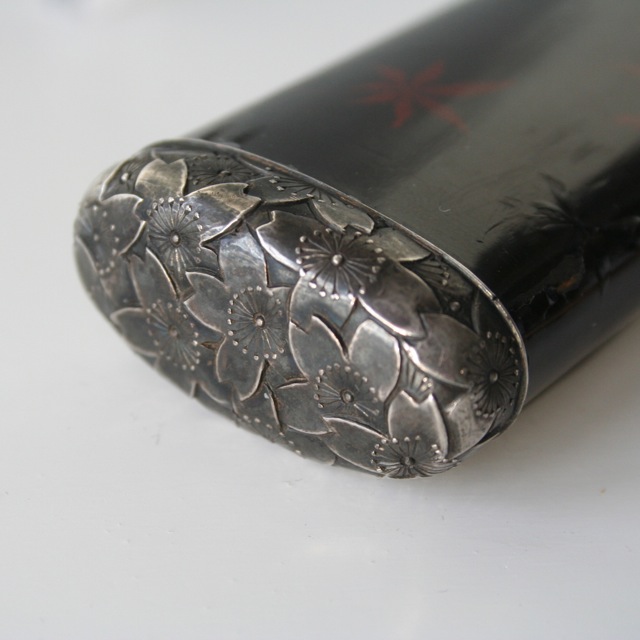
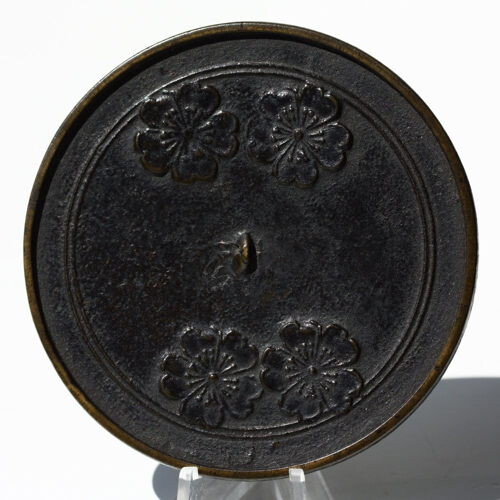
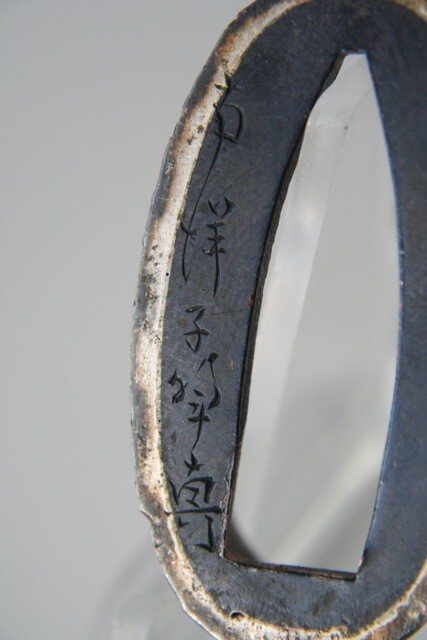
Dear All, a friend of mine (a pre-Internet person) has a tanto koshirae from an old, 19th c. collection. He wants to sell it and I want to help him to establish a potential value - a "price range" would be wlecome. He has been offered a price for this ensemble that I have found a rip-off, so I wanted to consult the board members in order to establish what these items could fetch in the open market. My friend may want to follow my advise and offer this for sale on the NMB, so please treat this post as an introduction to a sale. I will suggest my friend seller to make a donation to the board if he sells through it. The koshirae has everything in terms of kodogu except for menuki: tsuba (plus high quality, gilded seppa) - 5 x 3.5 x 0.5 cm fuchigashira kojiri kurikata All these parts are a set by the same maker and they are made of silver. A kozuka is present, too, nananko shakudo with broomm and sakura blossom, signed. The koshirae had been stripped of menuki, which were converted into earrings around 1900. They are missing since. The tsuka is missing too, but the saya is still around, done in lacquer with a motif of ample leaves done in red and black lacquer. Shown in photos, but it is very difficult to phoptograph lacquer objects. Saya is 33.5 cm long ad has a sori of 1 cm. Could you please indicate what you would deem an appropriate value? I am not asking you for offers, as once these items are for sale, they will have a price tag and will be posted in the sale section. Thank you for your kind help. I hope the admins will not think this post an abuse, as the intention to sell is stated clearly from the outset. Any kind of help - attributions based on workmanship, translation of the signatures on tsuba/fuchi and kozuka will be highly appreciated. Shoul you wish to see the photographs in high resolution, send me a PM with your email address please.


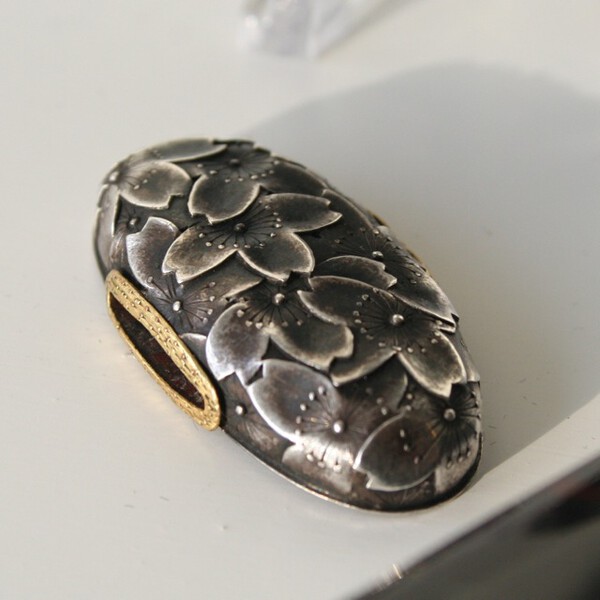

-
sanmai is done in repousse. This one is not. It is solid copper or some alloy. Yes, the roof is obvious, thank you for correcting me.
-
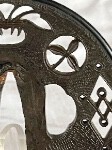
Jason, this tsuba seems average, sorry, I hope I have not shattered hopes for a masterpiece It is therefore safe to assume the an inexpensive method of gilding has been used. BTW, the motif seems a warrior-monk with naginata (ishizuki is visible) and there is a bridge. If the planks were missing, I would say - the battle of Uji 1180. WIth all planks intact I am not so sure that's the motif.
-
The gilding looks like very fresh work, no?
-
Geraint, I thought that "Methods of gilding include hand application and glueing, chemical gilding, and electroplating, the last also called gold plating" (Wikipedia). I might be wrong, as Wikipedia is not always correct. I guess that what Jason has described is the effect of mercury gilding.
-
Geraint, I beg to differ. Gilding of Buddhist statues made from bronze or other alloys has been an ancient technique. Ko-kinko used this technique (which called for the use of mercury) when gilding kodogu. You will find a few examples of this gilding in pre-Edo tsuba published by Mr. Haynes in his Gai-So-shi study.
-
Hard to tell from these pics. Nakago looks rusted, but not very old. Mekugi ana looks crisp and relatively new.
-
Edo. Earlier kagamishi are much more beautiful and have a naive charm. They are held in high regard by those who like the austere style of pre-Edo soft metal tsuba. You might want to read this article here: http://gomabashi.blogspot.com/2011/02/k ... agami.html BTW, the motif on the tsuba you have posted is Daikoku and Ebisu. Repeated a zillion times in these Edo tsuba.
-
Thierry, I know. Still, I thought you would be reluctant, to say the least, to discuss motives on Chinese crap, even if the motives are Japanese. This stuff is so awful, it hurts. Are we going to discuss hamon on Chinese-made blades next?
-
I have seen a genie coming out of a bottle and the likes. But yes, most are ugly copies of real Japanese motives. I guess we had better stick to Japanese tsuba. It is a waste of time to discuss any aspect of a Chinese fake, unless the fake is good enough to be confused with the genuine stuff and a discussion is educational for newbies. I would suggest EOT, won't you all agree?
-
Jason, are you interested in the motif on this Chinese fake? Why bother?
-
Great Owari masters: Yamakichibei, Nobuie, Sadahiro, Hoan. But also unnamed masters of the Owari sukashi and Kanayama "schools". Some Yagyu tsuba meet your criteria, too... Then again, many kagamishi and tachi kanagushi tsuba, as well as ko-tosho and ko-katchushi are distinctly zen.
-
Almost straight and ubu. Bakumatsu?
-
Denis, do not expect a National Treasure sitting there, forlorn... There are thousands of ruined swords, bought wholesale for a couple of dollars and sold to newbies in the West. The chance to find one is akin to winning the lottery. Most of neglected blades that hit the market in the west are swords that the Japanese dealers and collectors do not want to restore and that some naive gaijin jump at, driven by romantic notions of samurai history or/and the unfounded hope to find the next Kokuho.
-
Can anybody identify this unknown knife?
Marius replied to Not2Sharp's topic in Auctions and Online Sales or Sellers
I think Brian is being quite generous in his assessment of the value. It is almost worthless, a trinket, as already stated. Sorry. Just for fun, please read this short article. You won't fid your "knife" there, but it might be a good reading (at least you will see a real nakago and some nakago similar to that of your item): http://www.jssus.org/nkp/fake_japanese_swords.html -
I am a tsuba guy, here are my picks: Boris Markhasin and Andy Mancabelli. Loads of what they have is top grade. Tetsugendo.com - high-end tsuba Yakiba.com - more for blades, but some tsuba are quite fine otherwise private collectors.
-
Peter, the tsuba seems decent and it looks like an Akasaka piece. I was asking about senkotsu, because I thought I see it in your tsuba an it is one of the kantei points for Akasaka (not that I am an expert when it comes to this school). You have lost nothing indeed. The tsuba is defaced, and if what I think (a Meiji modification) is true, it is an interesting artefact.
-
Sebastien, you are probably right. No senkotsu, then. But the iron looks decent, while the zogan is very very bad and to ad insult to injury, it intrudes on the seppa-dai.
-
"Retrofitted" Akasaka, with gold inlay done by a clumsy shop apprentice with the aim of making the tsuba attractive to gaijin "tourists"? Do I see senkotsu in the rim?