Prewar70
-
Posts
416 -
Joined
-
Last visited
-
Days Won
1
Content Type
Profiles
Forums
Events
Store
Downloads
Gallery
Everything posted by Prewar70
-
That seems unbelievable to me but I know very little in comparison to others. Did it leave Japan without any papers or did it receive TH?
-
Koto Kongobyoe Wakizashi NBTHK Hozon
Prewar70 replied to JakeNYC's topic in Swords and Edged Weapons
That is beautiful -
Nvm I found the thread. So sad. Seeing a new sword listed in his site was almost like Christmas morning to me.
-
I must have missed something but did Darcy pass?
-
Beautiful nakago
-
That nakago looks suspicious almost looks tempered like the sword is suriage.
-
I’m intrigued as to the reaction of collectors in Japan that play at this level of swords. I would think they’d be stumbling over themselves to own it
-
Go ahead and mark this one SOLD. Thanks for all comments and interest. I believe there is a sticky on how to make a donation to the board which I will do.
-
Just to be clear, what's in the photos is the whole package. Nothing more nothing less.
-
Correct, everything is in the photos, what you see is what you get. Thank you
-
-
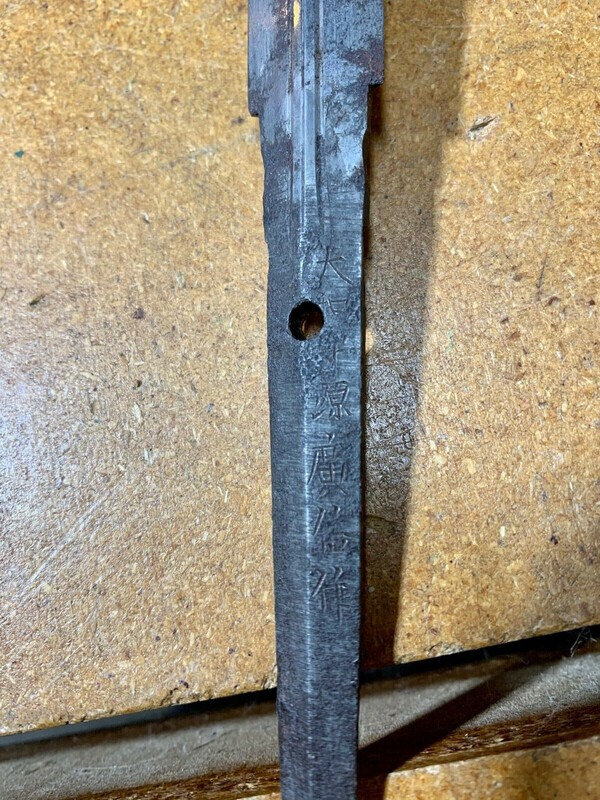
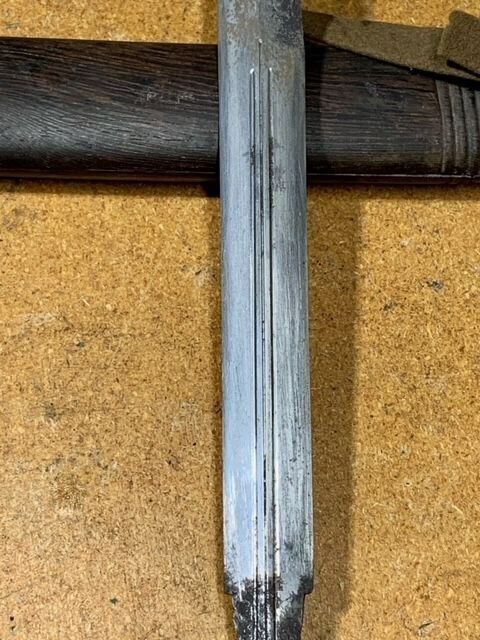
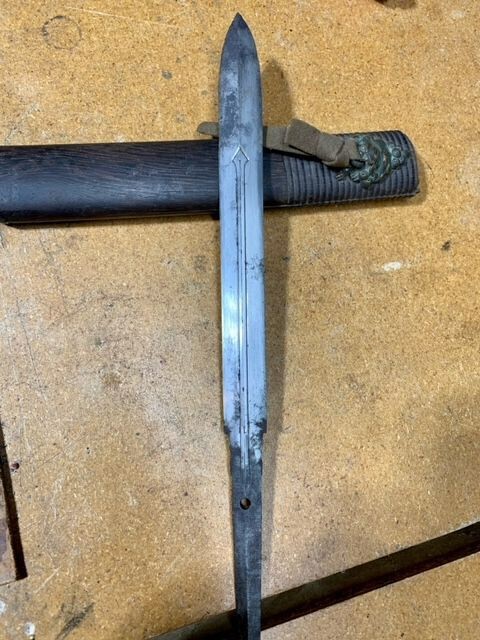
I've had this for about 5 years and was planning to restore. I went as far as sending it to Jimmy Hayashi for him to take on the project. He started some foundation work on it. At that point I halted the project due to funding. I think it would make a great piece in someone's collection. I am open to offers and will make a donation to the board if it sells. I listed it on ebay as well with a reserve and would love to end the auction early and sell it here. Thanks for looking. SOLD 大和守源廣信作 - Yamato no kami Minamoto Hironobu saku




-
Blade by Masahiro in Type 98 Shin-gunto Setting
Prewar70 replied to tbonesullivan's topic in Nihonto
Beautiful mei -
Katana Kurihara Chikuzen nokami NOBUHIDE
Prewar70 replied to BjornLundin's topic in Auctions and Online Sales or Sellers
This topic is very interesting to me and something I've thought much about in my short tenure with Nihonto. I think Darcy and Rivkin both make good points and are both correct, but coming at it from different angles. I cannot articulate it like Darcy, but here's what I've concluded, and am curious if you agree. Nihonto is art, and therefore not a commodity and prices are what the market will bear. The top 5 highest prices paid for a Monet ranged from 50M USD to over 100M. Now they are all Monets, and without being too presumptive, all are very desirable. But even at those prices, there is a different pool or "class" of buyers for a 50M painting v. 100M. Is the Water Lilies in the so called "danger zone" because it sold for half of the most expensive? Diamonds, Rolexes, gold, silver, these are all commodities, with very set prices. Art is not a commodity. SO the danger zone in my opinion is overpaying for whatever level you buy at. Chances are with 8 billion people on this planet there will be people and a market for the Juyo sword that barely passed in a weak session, as long as you didn't overpay. Is it the tired Kaneuji worth less than a healthy one, of course. But if my budget only allows for the tired one and that is all I can afford, then I will buy the tired blade. I don't have unlimited funds to build a museum collection so I want to enjoy what I can afford. And if I didn't overpay I can sell it to the next person that is also in a similar situation. There's a big spectrum of swords and collectors that keeps the collecting of nihonto moving along. -
I’d love to see the nakago. Beautiful sword.
-
Katana Kurihara Chikuzen nokami NOBUHIDE
Prewar70 replied to BjornLundin's topic in Auctions and Online Sales or Sellers
I’m curious can you explain a bit more about being in the danger zone? I see plenty of juyo priced close to this in Aoi too. What are the different segments of pricing as you see it? -
Shizu Kaneuji
-
Any thoughts on generation?
-
Harim no kami Teruhiro saku. My head hurts. Thank you for nudging me along.
-
The 2nd kanji is a mess but the first looks better except for the ana. I am truly guessing but keep coming back to Harima, Echizen or Bingo based on the first kanji.
-
Is his title Kami?
-
Is the last character 7 strokes, Saku? And are there 16 strokes in the next kanji up? Not sure if the 2nd from the bottom is 1 kanji or combo of 2. Ugh
-
Thank you , Respectfully, James

-
How many though are of this shape and a cutting test? I think 15mm yen is conservative no?
-
Just thinking out loud, how many swords did Kiyomaro make approximately? How many of this type that we know about, and how many with cutting tests? Is this sword the rarest of the already rare? And if so, how did it end up outside of Japan and at a gov't auction? I am very much a novice but I do know how coveted his swords are and it just seems so crazy that this level nihonto ended up where it did. Given its presumed rarity, is it possible to research it's history?