
C0D
-
Posts
507 -
Joined
-
Last visited
-
Days Won
11
Content Type
Profiles
Forums
Events
Store
Downloads
Gallery
Everything posted by C0D
-
I'd say with the same steel a blade with utsuri has more resilience, so can withstand hits without breaking, more than a blade without. Sharpness is due the hamon so not directly influenced by utsuri. I agree with Kiita saying that first times could had been accidentally created by trying to avoid heating the blade too much and for too long time, but then became a feature when they figured out it worked better on the battlefield
-
Kapp never mentioned cycling in the book, it's heating at different temperatures at the time of yakiire, which is the same I said in my first post. So if nobody did that in modern times, how do you know it was made that way back then?
-
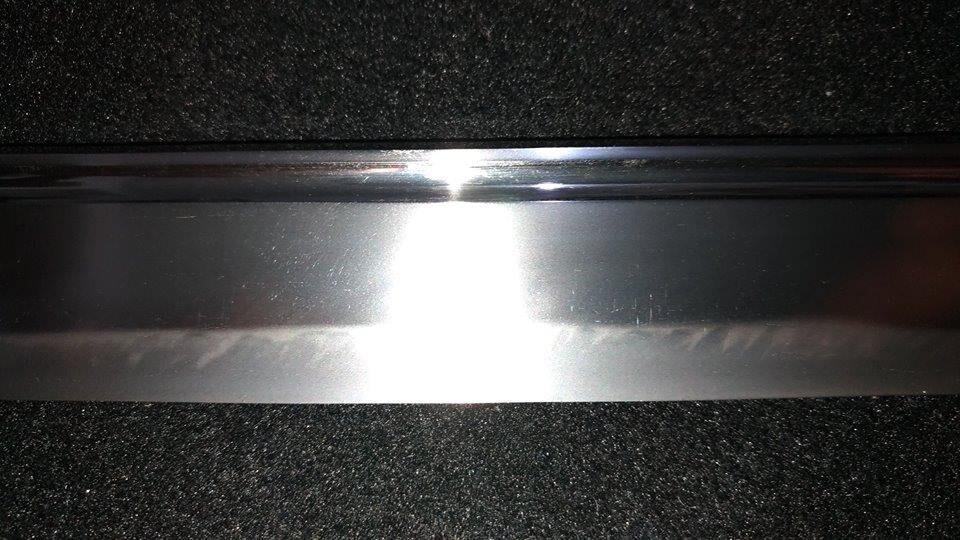
Just to understand, is this utsuri to you?

-
So where are the blades that we know for sure are made with this method?
-
Yes but doesn't create hamon nor utsuri from what I know, do you have any actual example of hamon and utsuri create by this method?
-
same blade as the same picture, not a second hamon. I know how to look at utsuri another blade from same swordsmith, is this "real" utsuri? Who made this theory? Do you have any evidence or experiment about this process? This sounds an overly complicated process for someone who wants to reduce the risk of mistakes during hardening, not to mention this might give some extra internal stress. This would not be easy even with modern day tools.


-
I never said he did master the old koto masters utsuri, and anyway those are just two examples that I actually own. This topic isn't about who made the best utsuri, but how utsuri is made
-
The smith is Kei'un Naohiro

-
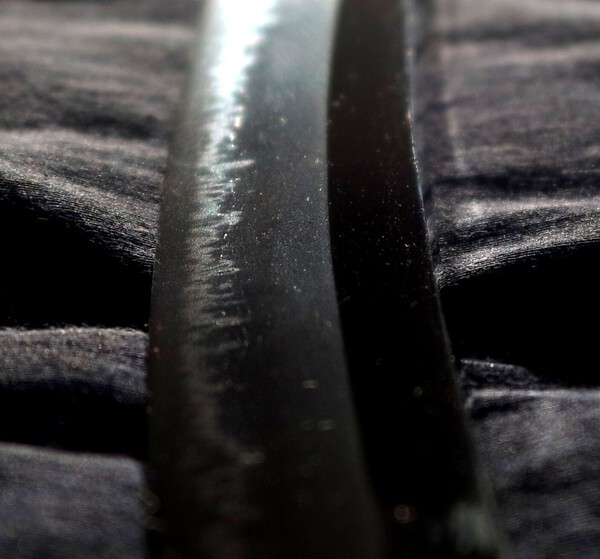
In that case is because the whole area is not covered in clay, so the hamon is created naturally by the slightly uneven temperature and the steam that occurs when plunged in the water, since the temperature decreases in uniform way from edge to spine the utsuri would tend to have same shape of hamon. Of course there are some specific cases that can also be made with clay, I assume Yoshii School used clay but managed to have a shadow utsuri, maybe just making deep ashi with clay
-
I have in my collection swords from Kamakura, Nanbokucho,Muromachi, Edo and modern with utsuri, so the utsuri never disappeared, just "fell out of fashion" cause other styles became more popular. I also have some experience in making knives with modern steel in Japanese style, and i succesfully made utsuri in several. First of all there are many kinds of utsuri, some i have no idea of how they're formed (tho i have some theories), but i'm gonna talk about what i found out by experience first hand and watching a Japanese swordsmith working that actually makes utsuri in most of his blades. The utsuri i made is the most common style of utsuri is the one found in many Bizen blades (of course also in many others, but just to understand what i'm talking about). The way to create that utsuri is actually "simple", you heat up the edge of the blade only to the temperature of quench, so the rest of the blade will have transitional temperatures which will turn out in different cristalline structures in the metal and different hardness, resulting in a different appearence once polished. This can be done with or without clay or with clay only on the shinogi-ji to help control the temperature.
-
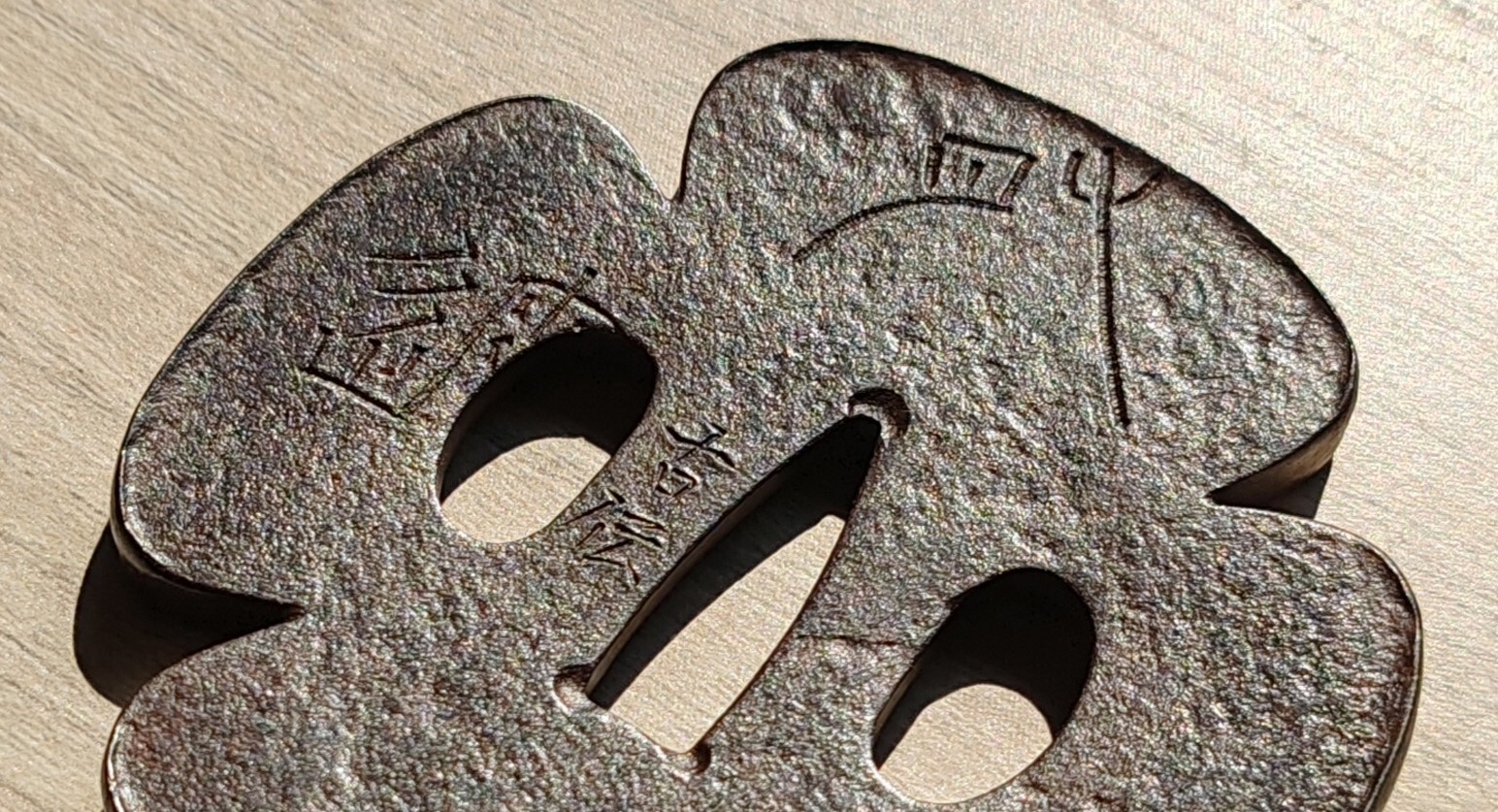
That's a stylized rain dragon, common in Kaga zogan pieces
-
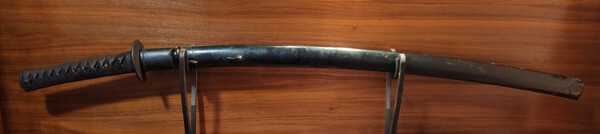
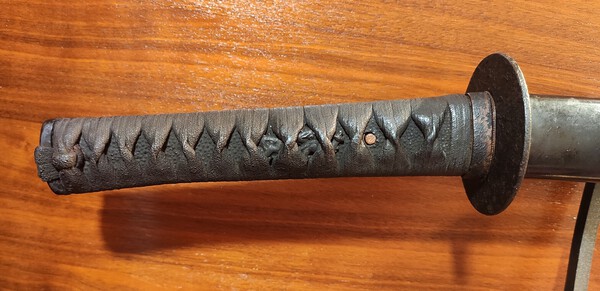
I have one even earlier than Edo period, Tensho koshirae from Muromachi period, still with the original blade inside. All lacquered black, even the original seppa have traces.
-
Thank you for entrusting me with this restoration, at first it looked quite serious but after removing the oxidation I found that the original patina underneath was pretty much untouched by corrosion, also the zogan was rock solid in position, a testament to the quality of the work from this tsubashi. So I just had to make a new patina on the brass and stabilize the iron patina. It was a pleasure bringing back to life this excellent work.
-
Small groves are filed to ensure more grip and prevent it to slip towards the center of the nakago ana
-

Ubu TBH koto Senjuin tachi on Yahoo Japan
C0D replied to Gerry's topic in Auctions and Online Sales or Sellers
Actually it is listed in Sesko's Sworsdmiths book MOTOSHIGE (元重), Genkō (元享, 1321-1324), Mino – “Motoshige” (元重), “Rokurōzaemon no Jō Motoshige” (六郎左衛門尉元重), first name Rokurōzaemon (六郎左衛門), it is said that he moved once from Kyūshū to Yamato to join there the Senju´in school, in the second year of Genkō (1322) he moved to Seki and acted their as one ancestor of the Seki smiths, kiri-yaasurime, no authentic zaimei blades are extant by him, it is also said that he was the same smith as Motoshige (基重) I followed the auction as i thought it's an interesting blade to own, but that's way above my means -
I agree with paint, more than lacquer. Patina doesn't flake off. An alternative would be fire scale, but the tsuba doesn't look it's been damaged by fire so that's unlikely.
-
Sekigane are simply held by friction, many times an inlet is filed on the tsuba to make them hold more firmly, then filed to the exact size of the nakago. The umegane of hitsu ana are cut and filed to the precise size needed to lock in the hole and decorated, then tapped in. Usually they're not a single piece but two thin plates with pitch between them which helps to stick even more.
-
I tried use a Japanese AI tool, still doesn't make too much sense but maybe can help you fill some blanks

-
Thank you Steve, very interesting, I'll try dig more on that
-
During my last trip in Japan I found this nice nozarashi themed painting, but the translation is way too hard for me, can someone be of assistance?

-
Looking for statue (bust) of Col. C. V. Cadwell in Japan
C0D replied to Jeffrey's topic in Military Swords of Japan
I think i remember seeing that bust at old NBTHK museum, before they moved to the new location, so i think most likely it's in the new museum https://maps.app.goo.gl/NmUZRNhaapaCiXHt7 -
If anyone of you guys is going DTI this year and wish to say hi and see this tsuba and another one of mine in hand just drop me a message
-
No, there's no kozuka slot. The saya Is plain with horn koiguchi, kurikata and kaerizuno, kojiri Is missing
-
Yes, everything is lacquered, there's also traces on the seppa. Probably that's why it preserved so well
-
Bushū-jū Masatsune (武州住正恒)