Lance
-
Posts
435 -
Joined
-
Last visited
Content Type
Profiles
Forums
Events
Store
Downloads
Gallery
Everything posted by Lance
-
I think the main reason for a higher rating given to swords with Sukehiro's grass style mei and Doran hamon would examples of him at the peak of his abilities, while the square style mei were generally on swords from when he was younger and still perfecting his skills (I think most of his earlier styler swords had a straight hamon?). There's probably more to it than just the mei and hamon, and that the shape and construction methods changed/improved, and as he became more famous he probably had access to better materials to make swords. Regards, Lance.
-
Announcement of New Swordsmith Index
Lance replied to Markus's topic in General Nihonto Related Discussion
Count me in too! I recently picked up your book, Legends and Stories around the Japanese Sword, very interesting and enjoyable reading. Regards, Lance -
Questions about the mountings of Handachi
Lance replied to edzo's topic in General Nihonto Related Discussion
From your pictures I'd say it's from mid to late 1800's. Generally, most koshirae with silver fittings date to Shin-Shinto to Meiji period late (1700's-1800's) Most I've seen were either Meiji (1800's) with silver fittings or Taisho-Showa (1900's) with brass fittings and the lacquer quality wasn't as good as on what you posted. Most Taisho-Showa swords look more like "Toys" while your's looks like a real sword, only smaller. I like the menuki too, they look to be around Meiji period as well, where some of the stylization of earlier work is replaced with some Western influence. Also I don't think that boy's day swords were remounted too often like "adult" swords so most likely the blade and mounts are contemporary with each other. (Take into account that I was very general, and there's always exceptions, especially from looking at pictures instead of in person, hopefully I'll be corrected if anything I wrote was wrong) Regards, Lance -
Those are fairly common fittings for Showa period, especially the fuchi-kashira. I've had 2 swords with those fittings, one with the same brass tsuba, the other was the same except the tsuba was iron, plus others I've seen in person or online. Below is a sword (not mine) with the same fuchi-kashra http://www.nihonto.com.au/html/masanobu_katana.html Is there a Seki or Showa stamp on your sword? Just asking because the swords I've had or seen with those fittings were wartime Seki showato, I always thought those types of swords were just drawn out and shaped from bar stock, then oil hardened/tempered. Lance
-
interesting ebay text for claimed chokuto...
Lance replied to cabowen's topic in Auctions and Online Sales or Sellers
I think it's this one, http://www.ebay.com/itm/ANCIENT-JAPANES ... 5646db89f3 too slow in posting........... Lance -
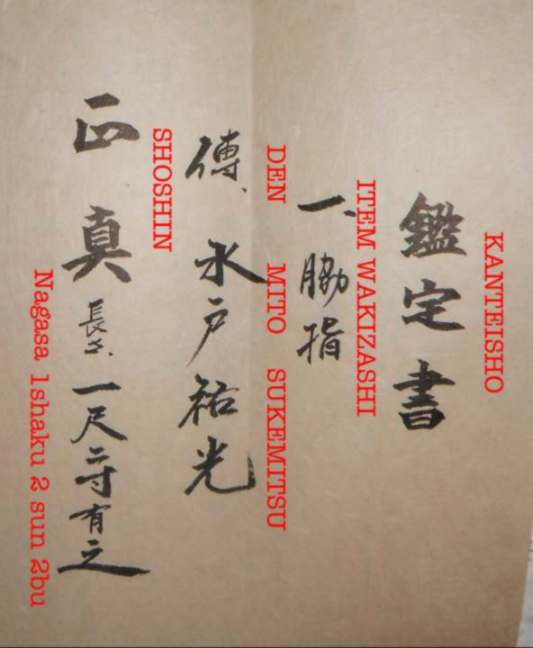
Below are links to some articles that explain anattribution of "Den" before a smith's name. I have the same thing on a papered sword, and from what I've read it appears they've attributed your sword directly to Etchu Uda Kunimune (If that's a standard way of using that terminology across different groups ofsword study in Japan as Adam stated before me) From Darcy's Nihonto.ca and Bob Benson's sites: http://www.nihonto.ca/classification.html One very important thing to note is that if Den is used before the name of a swordsmith, it is not talking about a tradition. For example, Den Kinju or Den Niji Kunitoshi means in regards to an example of their work that it is not exactly the sum of their known characteristics. In the case of these smiths where many unsigned works have been attributed, the characteristics are formed from old written reports and what can be observed in the realm of the signed works left to us. For smiths with only few (or no) signed works left, it makes it hard to establish a complete reference to their overall style. Given that a smith could work for decades, and styles evolved, it should be clear how difficult it can be to make a perfect reference out of a handful of examples. When Den is used like this, the work may be considered to have a small number of features that are over and above the expectations for the smith, or it may be missing a small number of features. It absolutely does not mean that the work was made (or possibly made) by one of the smith's students and it is not a mark of uncertainty of the attribution. http://www.bushidojapaneseswords.com/Den%20article.htm Regards, Lance
-
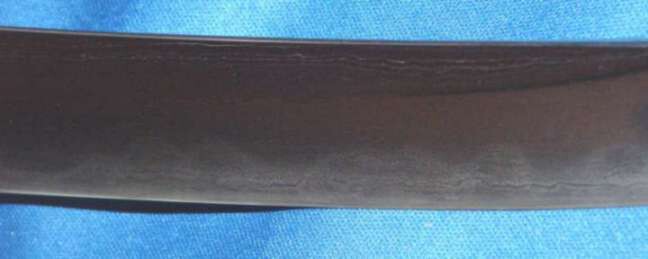
Thank you Koichi-san and Piers, I think have a better understanding of their descriptions with your help, I'm sure missing the finer points though. I attached a few pictures of the sword, as well as my thoughts of my sword: 1. I thought Hada-kitae would just mean grain forging, but doesn't seem to describe the pattern itself? I was thinking the forging could be considered hadamano or Yakumo-kitae, it would be a good description of it, fits with some Mito swords of that time period, but the characters on the paper don't match with the kanji term glossaries I have available. 2. hamon as a large irregular gunome with coarse nie (ara-nie?), inazuma and kinsuji, 3 Boshi looks like a pointed midare komi with large or coarse nie and a short kaeri. thank you again. Best Regards, Lance



-
There's actually a lot of information online if you just google Heianjo Nagayoshi. He was a well regarded smith and an excellent carver of horimono who worked during the late 1480's to early 1500's. He was also supposed to have been a teacher of the more famous smith Muramasa. If you look at the picture on the bottom of the page linked below there's a good example of Nagayoshi's as well as info about his school/lineage. and a signature to compare yours to. (just remember the more famous a sword smith the more skeptical your supposed to be...) I also added another link to the same site with a sword by Muramasa where you can see how similar their swords were. http://www.sho-shin.com/heianjo.htm http://www.sho-shin.com/tokai2.htm A good book to learn about judging swords in general is "The Connoisseur's book of Japanese Swords" by Kokan Nagayama. JSSUS (Janese Sword Society of the United States) has a set of books: "Sue Koto, Japanese Swords of the 15th and 16th Centuries by Yoshikawa Koen and others" is a great source of information, especially for $60 http://www.jssus.org/ Hope this is Helpful, Lance
-
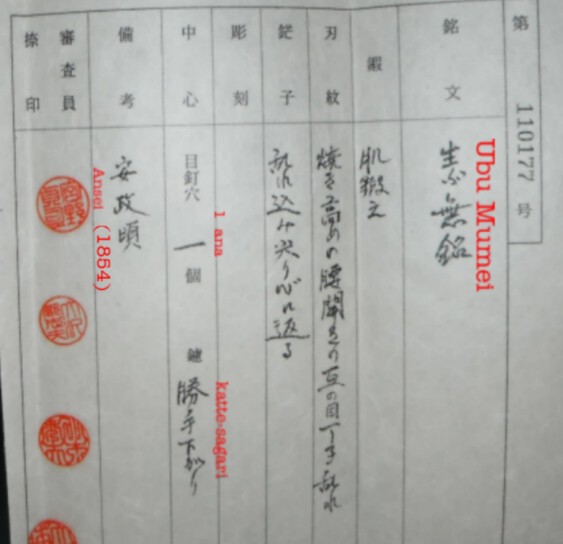
all, I've been working on a set of NTHK NPO papers that came in the mail (thanks Chris and Larry!) I took a couple pictures so I could add notes for what I was able to translate, I was hoping someone would like to give me a hand with the sections I couldn't come get, which appear to be the hada, hamon and boshi sections, I have an idea how I'd describe those parts, but I'd like to know how the judges described them (any corrections to what I have wrong would be greatly appreciated too). Thank you in advance for your time, Lance

-
Interesting about smiths having many blades lying around their workshop, I remember seeing a small number of swords a few years back for sale online made by a WW2 Gendai smith (Nobufusa or Shigemitsu?) that were supposed to have been found by a family member. I always assumed Koto and Shinto smiths weren't working on as small or personal a scale as they do today? At least during the Koto period, due to the higher demand for weapons, would they have had what could be considered mini-factories? The better or more talented students assisted him personally, forged swords that their teacher would sign with his own name if the work was good enough, and supervised others in the style of the head sword smith? Would the output be increased if there were more apprentices/workers doing a lot of the prep and finishing work back then? Regards, Lance
-
I've only seen a few seki or showa stamped swords with bohi. From what I remember none of them were in military mounts, they were in traditional Showa period (same age as the blade) samurai style fittings and saya. Regards, Lance
-
Explaining the Shinto era
Lance replied to Peter Bleed's topic in General Nihonto Related Discussion
Maybe it was a combination of the reasons below?: Beides the post-Korean campaign need to restock swords, another large loss would have of have been the Sword Hunts, when those in power confiscated potential enemies' weapons to prevent any rebellions. (read this one somewhere ,dont remember where though) Once a sword was around 100 years old it was looked upon as too valuable, spiritually or monetarily for every day use by the average samurai fanilies, weren't carried around so much and became more of a family heirloom or used for gifts? Even though many old swords were remounted and/or shortened by wealthy Daimyo, they'd still want a newer sword (Gendaito for time period they were living) for daily use and training, and many of the older sword's shapes weren't optimal for the newer sword fighting schools popping up during the Edo period. Demand for swords by the merchant class, they probablty had to buy new swords as the samurai didn't seem to be too fond of them and weren't likely to sell them their own swords, unless they were completely broke. The style flashier style of Shinto swords made for the merchant class became popular to the Samurai as a status symbo/symbol of wealthl as previously mentioned. I think at least the demand for newer swords due to training or daily use aspect could be valid, especially with the rising popularity of Kambun style swords during that time period. Regards, Lance -
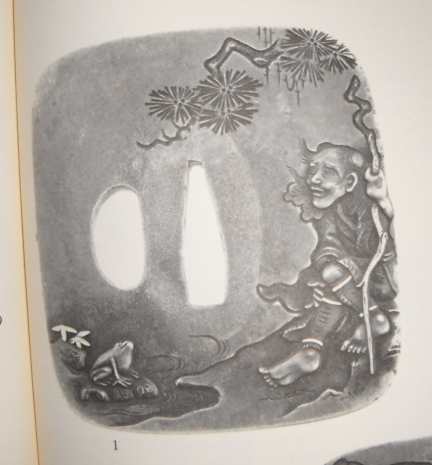
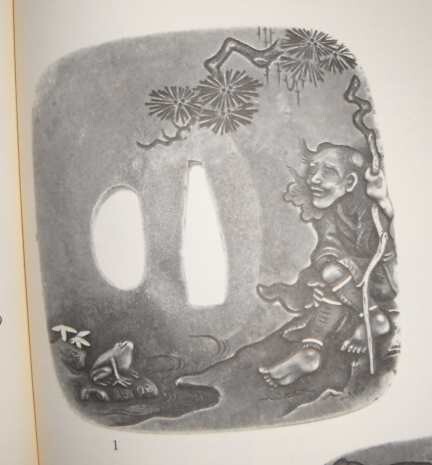
Below is a pic and some info for a tsuba similar to the Soft metal one from The Peabody Museum's Japanese Sword Guards catalog. The tsuba in the catalog also has the design going into the seppa dai , and shows signs of mounting to the patina as well. Described as Nara school, circa 1750. pic of this tsuba is in black and white in the book, and only shows the one side. The one in the catalog is of a higher quality, I would guess that your tsuba was either made by a different-later Nara school maker, or a different group that was influenced by the design. Nice pair of tsuba to pull out of a box, hope this is useful, Lance

-
Tada Mitsu Wakizashi ID----updated pics
Lance replied to DeepSouth's topic in Translation Assistance
Looks like someone beat me to it.......... Can't help with the signature on the fuchi, but the Sword itself looks to be signed: Bishu Osafune Tadamitsu, and the date looks to read Eisho go nen hachi gatsu hi: A day in August, 1508 Eisho (1504) 5th year, 8th month last character is day Below are some pages to help read with kanji on swords http://www.jssus.org/nkp/index.html http://www.jssus.org/nkp/common_kanji.html It looks to have active red rust on it, you should check out the faq below and look under care and maintenence for how to oil and maintain Nihonto, http://www.nihontomessageboard.com/faq.html Regards, Lance -
Big exhibition in Paris
Lance replied to Jean's topic in Sword Shows, Events, Community News and Legislation Issues
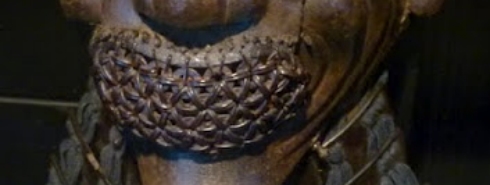
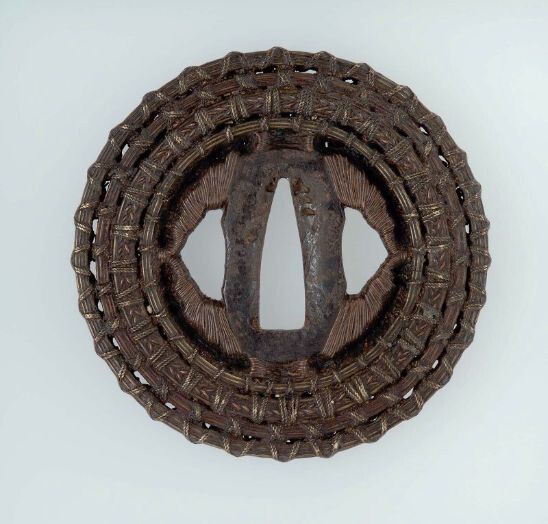
I can't tell for sure, but could the piece covering the mouth be a solid pierced plate instead of mail, with wire woven through it, similar to Shingen style tsuba? Regards, Lance http://educators.mfa.org/objects/detail ... =90&page=6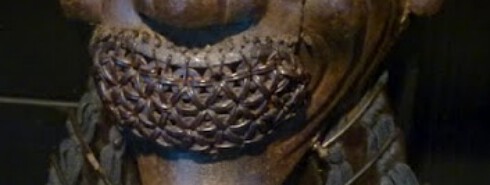
-
What if you had 3 different quality levels of blade from the same school, like Bizen for example? That way they would all be similar and the best one out of the 3 could show what the other 2 smiths could have been shooting for? Below is a link to another post with scans drawings from a book that shows the special handles used for Tameshigiri viewtopic.php?f=3&t=11036 Regards, Lance
-
If you were looking for a good reference book for Hizen School smiths, there's HIZENTO HANDBOOK, by Eguchi, translation by Robson, was published by the JSS/US (Japanese Sword Society of the United States) Below is a link to the society's books, last one on the bottom of the page, and appears they still have copies available. Regards, Lance http://pages.suddenlink.net/afuresearch/afu/jss.htm
-
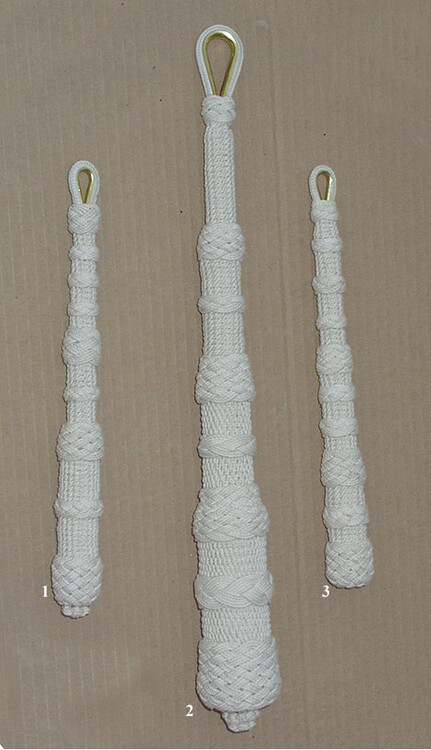
Sorry about your father, was your grandfather in the navy by chance? I only ask because whenever I've seen that knot work/weaving on Japanese swords, in person or in militaria auction catalogs, they were always described as being done by returning Navy servicemen on the trip home, when off duty. I attached an image of this type of knot work for naval bell pulls, and although modern shows the same type of weaving. Regards, Lance
-
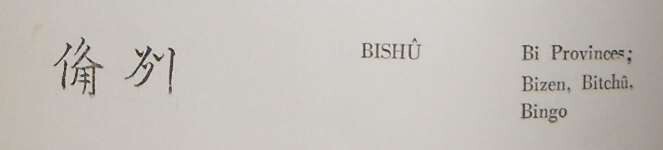
It does look koto from the nakago. I haven't seen too many koto swords with the smith's mei and date on both sides, but I don't have the amount of experience as other members who are much more knowledgeable. I attached an image from my old copy of Yumoto's handbook. I have other more extensive and useful books, but this is a decent example to compare it to, it's written more like what you'd see in a signature than as type face/font. Looks a little different but I think it's close enough to make up for the smith's sloppy writing. (maybe he was a lefty, I have terrible penmanship) Maybe from one of the other provinces listed? I think you'd need to take clearer pics to get any further or show it to someone in person that could make out the characters as they're pretty worn, and look at the blade itself. Regards, Lance
-
Most signatures do tend to be either centered or closer to the right/back side of tang. From the pictures of your sword it looks slightly shortened with one hole, when shortening was done they wouldn't just cut off the the end, they would reshape much of the tang as well. That could be why it's closer to the cutting edge side now. Always exeptions but the usual rules should still apply, smith's mei facing outwards edge up carried on the left side is a katana, edge down is a tachi. I'm left handed, so there's a lot of katana I could have carried on my right side as tachi (probably made righties out of any left handers back then though.....) Regards, Lance
-
The character below yoshi looks like it could be" Kane 包" different than the one you usually see used by Mino smiths. Below that could be "kore 之 " (made) The beginning of the date the other side looks like "Taiei 大永" (1521) I can't make out the rest. My abilities aren't anywhere as good as others here, so I could be off. Defintely appears to be katana mei not tachi mei from the pictures though. Below are some links to a great site for figuring out kanji , the last page has a search feature for looking up smiths. http://www.jssus.org/nkp/kanji_for_mei.html http://www.jssus.org/nkp/koto.html http://www.jssus.org/nkp/swordsmith_database.html Hope this is useful, Lance
-
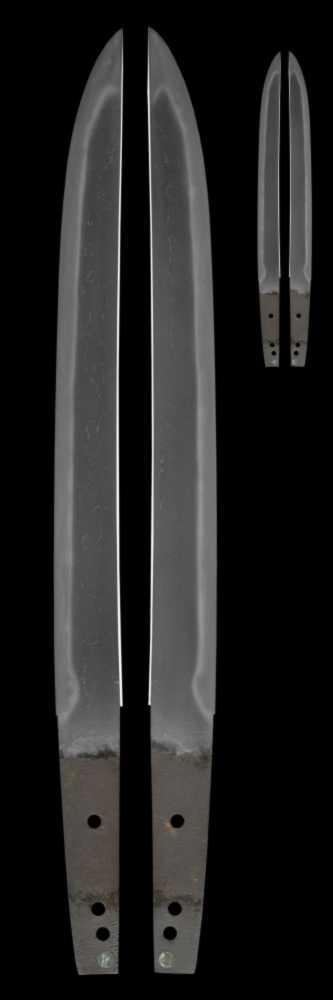
I've seen a lot of tanto that seem have extra holes added in odd places, and look to have been done during the blade's history in Japan. I took a quick picture of a tanto I have with the second hole below the original, papered to Heianjo Yoshifusa for another example. I've always wondered why they didn't just make new mounts using the same fittings, must have been expensive back then too? Regards, Lance

-
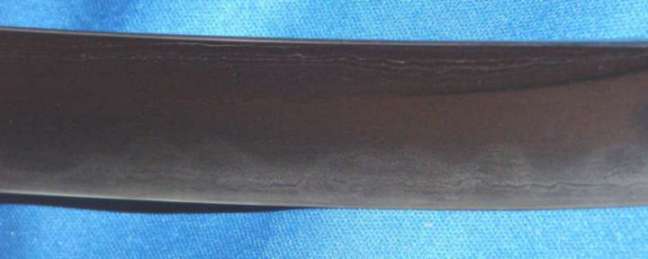
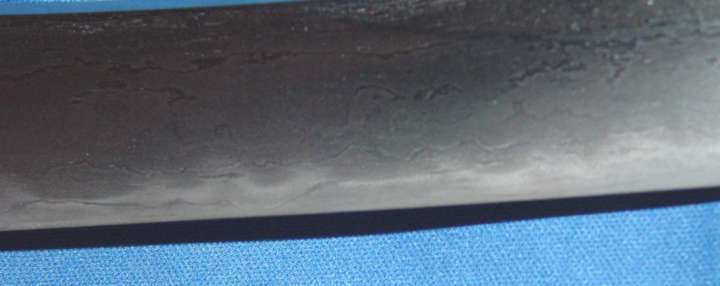
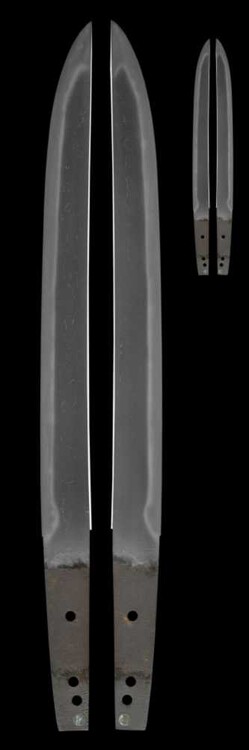
I think that when (Muramasa) school smiths used suguha, there would usually be one or a few large waves near the hamachi (koshiba?) Most likely when it was shortened/reshaped a couple of the waves were lost and the width of the blade was reduced near the tang. I attached link and a picture to a site I had saved to illustrate my idea, second listing from the top. If you compare the two and imagine the hamon's first couple waves started somewhere in the area of the hole nearest the hamachi, it could show what it might have looked like originally. http://connoisseurarms.com/index.php?op ... &Itemid=10 Regards, Lance

-
From what I've read over the years, swords were given as gifts instead of land when there weren't any major wars being fought, so these domains didn't change hands too much. I think it was 1st generation Echizen Yasutsugu who made some of these swords for the shogun, attributed to famous koto smiths with origami, given as gifts and that these were often given back as a gift later on, both sides knowing what was going on and that it was the ceremony and idea of the gift that were more important. I'm sorry I can't reference a specific book but below is a link from the Token society of Great Britain, top part of the article that explains the whole thing better than I could. http://www.to-ken.com/articles/giftspresentations.htm Lance
-
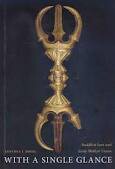
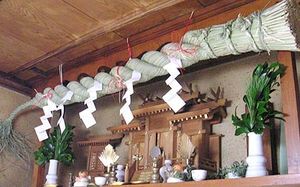
Could the 2 side pieces not be kanji at all, but a pair of stylized Vajra? The bottom could be an incense burner?, and maybe at the top above the seppa dai, it could be one of the paper ribbons hung in Shinto shrines? Lots of maybes, or I just failed the Rorschach test....... Regards, Lance