Ford Hallam
-
Posts
3,091 -
Joined
-
Days Won
78
Content Type
Profiles
Forums
Events
Store
Downloads
Gallery
Everything posted by Ford Hallam
-
Jean, a mimikaki is a real thing , and that little hook scoop on a kogai is called a mimikaki too. https://www.youtube.com/watch?v=O-qJajDioWQ more details here.
-
and cleaning ears
-
Stephen, you wanker you had me worried
-
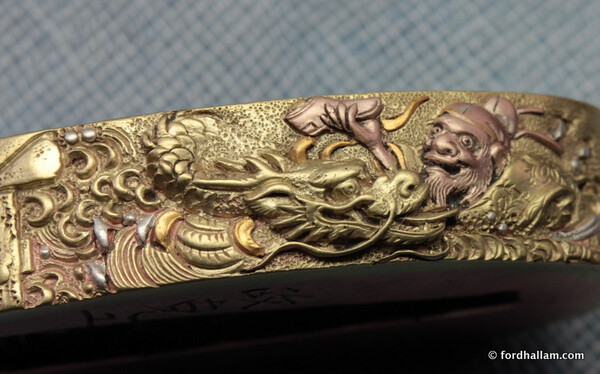
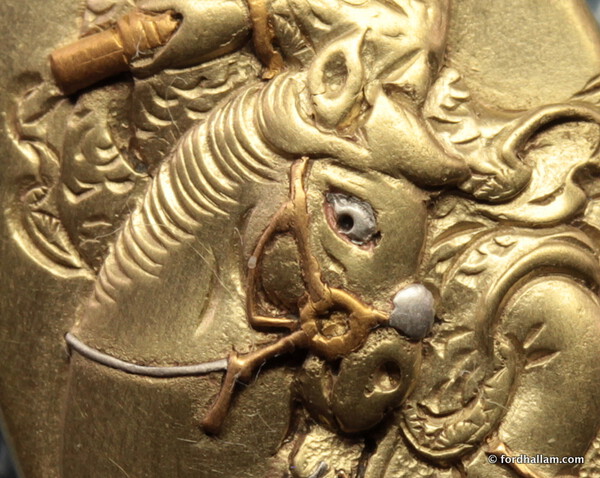
Cleaning is always a pleasure...when I get to see what the maker did nearly 200 years ago.
-
Well, I can't be always right (although I usually am ). that's my line
-
Hi Guido, apparently the figures are from a Kabuki play depicting the Chinese sage Huangshi Gong on Horseback and the Chinese warrior Zhang Lian mounted on a dragon. I was going to talk about that when I do the next bit http://www.artic.edu/aic/collections/artwork/21978
-
This is a little something I've just started to experiment with. As and when I get interesting pieces in my studio I may, with the owner's permission, do similar little explanatory film clips. And I'll get the close up focussing sorted as I get better at this sort of filming. "Tosogu Insights with Ford Hallam - Episode 1" https://www.youtube.com/watch?v=3td3YAE7Q7E
- 17 replies
-
- 12
-

-
These are called 'suuring' in Afrikaans. As kids when in the veld we used to pick them to eat the stems, for moisture when it was really hot.
-
Brilliant, thanks so much, Steve. You've saved me a fair bit of book time.
-
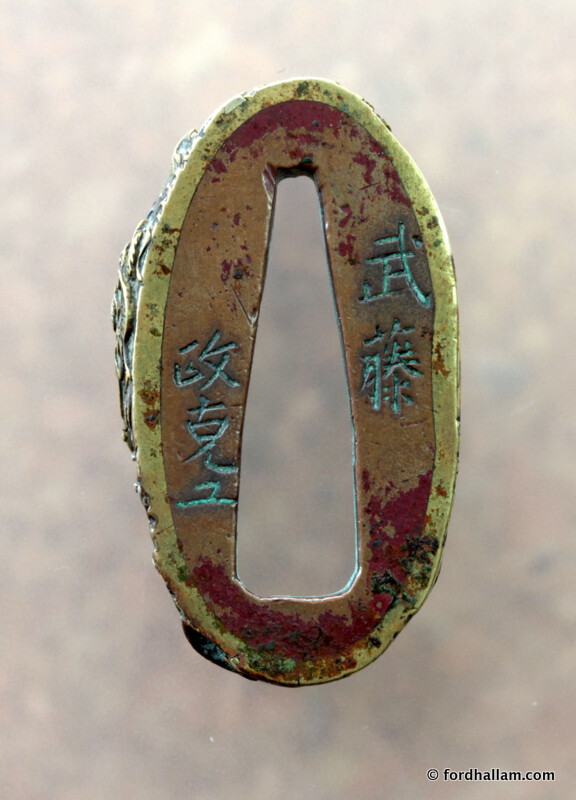
This is a pretty good piece. f/k set, that I'll be doing a little expose of sorts on shortly but the mei is proving a little elusive. I'm reading (so far) Take something, Masa-katsu. Any input thoughts would be most welcome. Thanks Ford
-
For what it's worth, from a bloke who actually does work with metal quite a bit , I'm sorry to say that I agree with those of my fellow board members who've expressed doubts about this being a genuine antique tsuba.
-
I'd be interested to see an image of the edge. Like Henry, I'm not convinced this is a very old piece of iron.....
-
Hi Greg from what I can discern from the image you've posted your menuki are modern cast copies. Sorry.
-
Brian, these composite type pieces are not particularly common but there are a fair number of relatively well published examples in the literature. Particularly right at the end of the Edo period and into the Meiji.
-
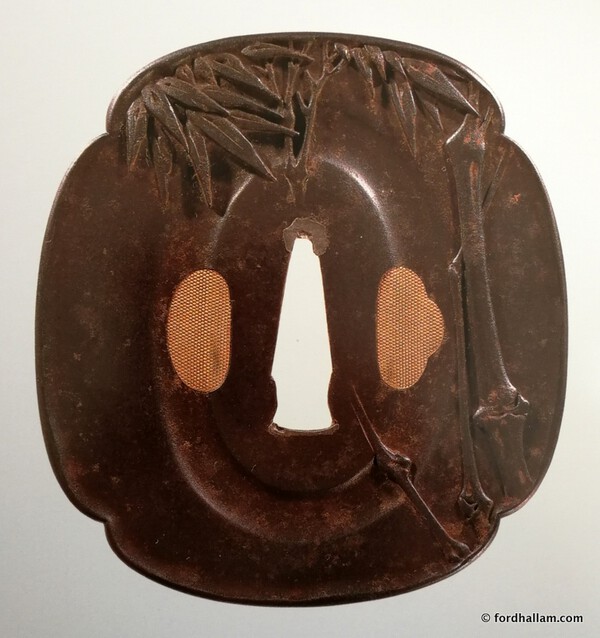
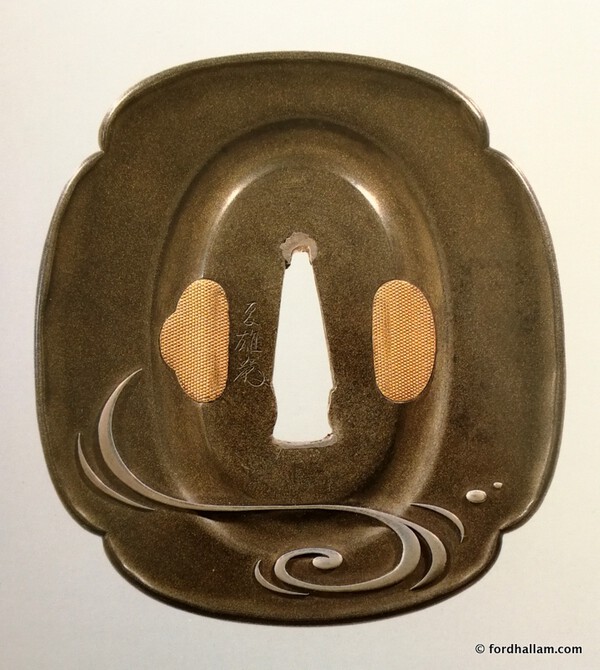
The fake mei on the bamboo tsuba is indeed Ishiguro but the original tsuba it's based on is by Kano Natsuo. The front is in iron. and the reverse is shibuichi with silver inlay.
-
Hi John thanks for your considered response, as you say there is quite a lot to consider. The fundamental problem is that we tend to start with a whole raft of assumed 'truths' as handed to us by our Japanese teachers. By this I mean the establishment with respect to the sword world in Japan. If we are to be more critical in our thinking we ought not to be considering anything that is simply asserted without it having at least some evidence to support it. We might hypothesise, for example, that Portuguese traders may have brought brass to Japan almost immediately they begun trading, but without actual written records it's just guessing. Add to that the detail we do have with regard to the type of trade and quantity then the likelihood of a sudden and significant influx of brass seems ever less probable. Fresh evidence may yet come to light and ideas must then be reevaluated, of course. The truth of much of what we take as the early history of tosogu hasn't come down to us in any reliable form from those early times but were in fact simply 'invented' at the end of the19th and early 20th centuries. The western references/catalogues are all guilty of simply repeating the same unsubstantiated ideas with regard to dates. None of them can reference a primary source that can actually offer any evidence or rationale for these dates. If we examine those dates they do all seem very specific, authoritative even, yet they don't really know at all, it's all just subjective guesswork masquerading as scholarly study. To further illustrate my point about 'accepted wisdom' try these out... Is there even one bit of actual historical evidence that Onin guards were made in Kyoto during the Onin wars? I can't find any. What were Kamakura guards called before the 19th century? and where were they made? Was there even a person called Nobuie? or was it merely a workshop brand name? Is there any evidence at all regarding the identity this mystery tsubashi, either one or two or several individuals. Who trained Goto Yujo? And what evidence is there that any of the first three Goto masters actually made tosogu? Goto Yujo's primary profession was as a money merchant, his business was in the issuing of gold currency. What evidence is there, really, to suggest Myoju the swordsmith and Myoju the tsuba-shi were the same person? Certainly the mei on swords and tsuba are very different, so different in terms of calligraphic skill as to suggest to me that they are by different hands. And did Miyamoto Musashi really make the dozens of tsuba and other tosogu attributed to him? kind regards Ford
-
Hi John can you point to these Japanese scholars and the evidence they rely on for their datings please?
-
I think it can be reasonably demonstrated that the processes employed in the production of pierced work prior to the introduction of piercing saws in the late 19th century were a combination of drilling, chiselling and filing.
-
I would have to say I agree with Jean's assessment that this is a modern copy. Probably made from commercial mild steel plate.
-
hmmm...someone has to say it The Edo period is generally taken to have been the period from 1603 and 1868 although the exact 'start' date is a matter of debate. The Momoyama period (starts 1573), immediately proceeds the Edo period.
-
Hi Peter the best descriptions of a number of lacquer techniques, including egg shell, are to be found in "The Inro Handbook" by Raymond Bushell
-

It Is Real Kikuoka Mitsuyasu Daisho Set Or A Copy?
Ford Hallam replied to Krystian's topic in Tosogu
Kurt, yes, in this case I think your observation is correct. The surface had to be smoothed after casting but it looks like the wax model was slightly distorted, this is sometimes inevitable with thicker bits of wax because as they cool from having been molten they can shrink unevenly. Good eye there :-) -
It Is Real Kikuoka Mitsuyasu Daisho Set Or A Copy?
Ford Hallam replied to Krystian's topic in Tosogu
In my opinion this set is a cast copy. Note the cast in place seki-gane in the nakago ana (image 3) and the crude edge to the ryo-hitsu. Image 2 shows clearly that the gold 'inlay' is actually not inlay at all but part of the main body (the whole tsuba is one cast object) and the gold is merely plating. Further, I can't see this as even a copy of a genuine Ishiguro school work. So we have a cast copy of a fake Ishiguro tsuba. Edited to add: a sure giveaway on copy/cast tsuba with a nanako ground is when there is no nanako on the outer edge. Of course some nanako tsuba have plain edges but examine the edge carefully and if you see the nanako is not a neat and distinct row of grains, if that outer edge is a bit 'worn' over, you should suspect that the piece was cast and the outer edge had to be filed to remove the mould line left on the wax model when it came out of the rubber mould. See images 4 and 7 -
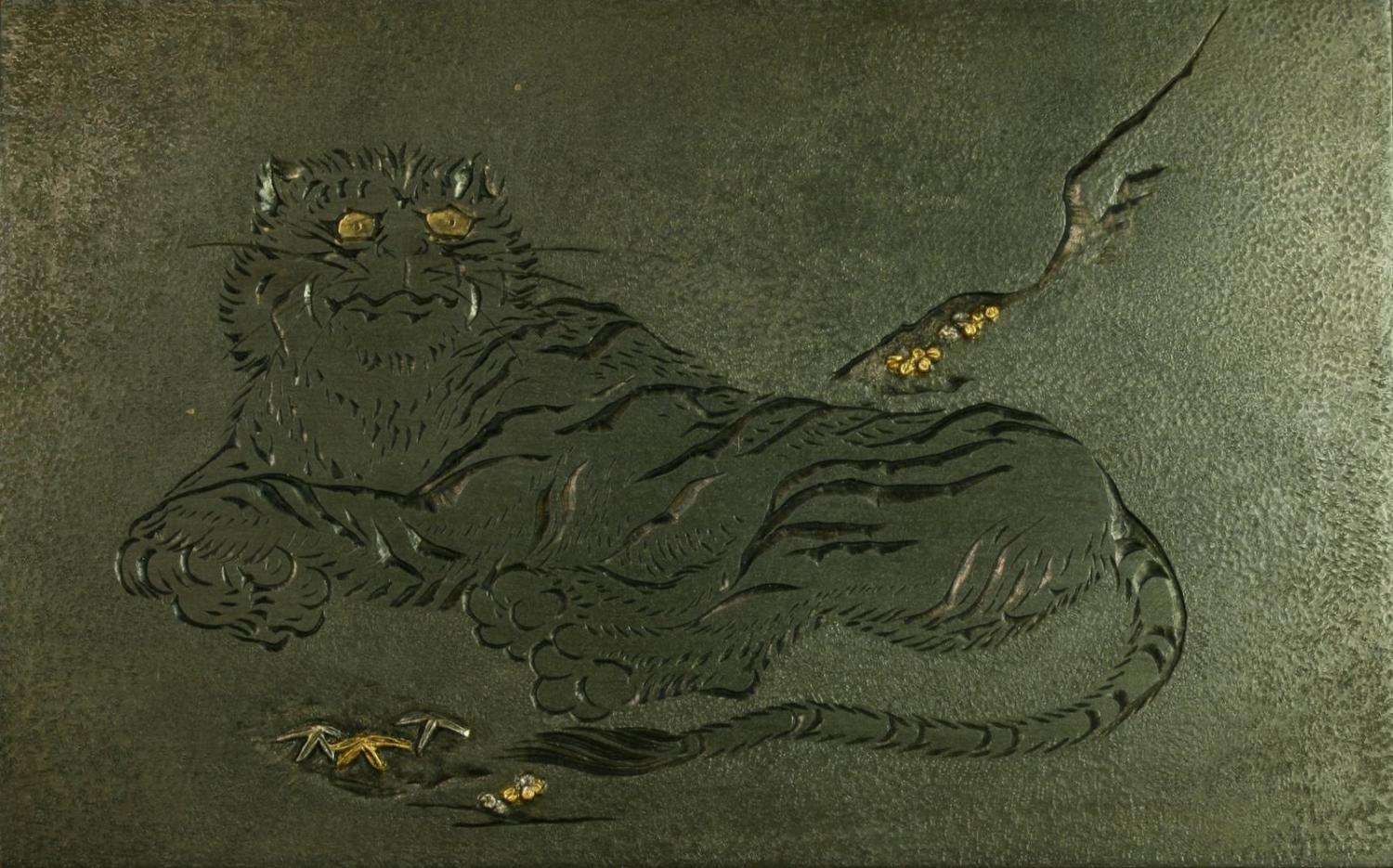
Kanzan and Jittoku by Unno Shomin. The alloy is shibuichi, probably around 12% silver with copper. One of the great tsuba masterpieces imo. I did a little study of the tiger about 23 years ago shortly after I came back fro y first Japan study trip.

-
Without writing a mini thesis here I'll simply offer what I can with regard to these Yoshiro mon style guards and their brass inlay/insets. I've analysed the brass in a reasonably representative number of these types and the results are fairly consistent. Here are 9 examples I did at the V&A. https://photos.app.goo.gl/0J1LzUE5olRy70oT2 The zinc content ranged between 25 and 30%. This is unequivocal evidence that the brass was made by adding metallic zinc to the copper. Adding zinc ore, like calamine, will only result in a maximum (after repeated melts) of 20%, generally less than that. When adding metallic zinc to copper and melting, or remelting brass itself, we must allow for a 15% zinc loss due to vaporisation. This then gives us, in the samples analysed, starting zinc percentages of 28.75 to 34.5% This composition, roughly 1/3rd zinc to 2/3rds copper, was in fact a standard brass alloy in China by the middle of the 17th century and is recorded is a number of period texts. Zinc ore was not identified in Japan until the very end of the 19th century and only mined and the metallic zinc distilled out at the beginning of the 20th cent. Therefore I can say with a high degree of certainty that the sample Yoshiro tsuba I've analysed carry brass made with metallic zinc. The zinc and/or brass came from China as India at that time was herself trying to get zinc and brass from China, their own supplies having been exhausted. The process of distilling metallic zinc from zinc ores in China developed in the Wanli period (1573 - 1620) of the Ming Dynasty. This was by order of the government in response to the need to produce coinage and the need for accurate control of the alloying processes. It should be noted though that the development and adoption of the metallic zinc production technology was gradual and based on the analysis of brass coins of the period (the whole object of zinc production) we only really see the full scale use of metallic zinc by 1621 when records no longer mention lead or tin additions but only copper and zinc. It has been demonstrated reasonably convincingly that by the 17th century Portuguese traders out of Macao and Chinese merchants in Canton where involved in exporting zinc to Japan. By 1637 this trade involved more than 180 000kg of zinc a year. I haven't had the chance to analyse many Onin guards but those I have also reveal a zinc content ( more than 30%) that makes it clear the brass was made with metallic zinc , so most probably also very late 16th cent at the earliest but more probably early 17th century. Of course it's possible that brass was being used at an earlier date in Japan but if we want to make that claim we need to show from where and how the brass got there. If a material analysis shows the zinc content to be more more than 20% ( a theoretical maximum of 22% has been claimed) then it can only be post 1573 at the very earliest. My view at present is that to begin with (early 17th cent) the Chinese didn't export the zinc but rather sold ready made brass, this would have made far more sense commercially by making their merger copper supplies go further and capitalising on the evident market in Japan for this exciting 'new' alloy. By the mid 17th century we know there was a good trade in metallic zinc to Japan from Canton and Macao. Looking at known trade contact and trade goods, it seems to me that the general introduction of brass into the Japanese metalworking culture most probably started at the beginning of the 17th century. I would also like to mention that in China, while brass had long been made by means of adding zinc ore to the molten copper this alloy was used almost exclusively for religious and ceremonial objects by the Imperial court. Brass being regarded more highly than iron and copper and that the alchemical process of transmuting base copper into gold, by means of the zinc ore, meant that the resulting alloy was now more purified and 'evolved' according to Taoist thinking. I'm of the opinion that this idea that brass was 'nearly gold' came with the alloy to Japan and that the alloy was appreciated for its bright yellow shine, just like gold.