Guido
-
Posts
3,242 -
Joined
-
Days Won
99
Content Type
Profiles
Forums
Events
Store
Downloads
Gallery
Everything posted by Guido
-
62Nd Juyo Sword Auction On Aoi
Guido replied to Vermithrax16's topic in Auctions and Online Sales or Sellers
It does matter indeed to many collectors, especially in Japan - I know quite a few people who never would buy a katana below 70 cm . Personally, I think it depends on the shape and overall balance, not only the length (which I also used to tell the girls when I was younger ...). -
Hasebe Kunishige? Your Thoughts Please
Guido replied to mareo1912's topic in General Nihonto Related Discussion
I don't understand why anybody would reply to this post - it's as outlandish as it gets.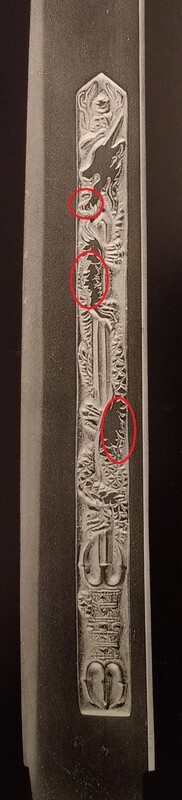

-
The signature reads Seiryūken 成龍軒 Eijū 榮壽, but I have my doubts about its authenticity.
-
Hmm, looks more Higo'ish to me than tōshō. Anyhow, square tsuba aren't really that uncommon.
-
Auction Sword - Worth A Look
Guido replied to Vermithrax16's topic in Auctions and Online Sales or Sellers
Both at the same time would be great, because smiths often adopted/taught students who were more promising than their biological sons. However, I guess this would make a very confusing chart, I myself wouldn't know how to tackle this challenge. Anyhow, I hope I'm allowed some unsolicited praise: in recent years I go more often to your publications than to the gold standard "sensei isn't to be questioned"-books . Keep up the good work - 頑張って! -
Auction Sword - Worth A Look
Guido replied to Vermithrax16's topic in Auctions and Online Sales or Sellers
Markus, that genealogy is quite different from your book "Genealogies and Schools of Japanese Swordsmiths" (and what you wrote elsewhere) and other sources I know of - is it based on some new research I'm not aware of? -
Auction Sword - Worth A Look
Guido replied to Vermithrax16's topic in Auctions and Online Sales or Sellers
::sigh:: Mainline Rai Kuniyoshi → Kuniyuki → Kunitoshi (niji) → Kunitoshi (→ Kuninaga 1) Nakajima Rai Kuninaga 1 → Kuniyasu 1 (→ Kuniyasu 2) Echizen Rai Kuniyasu 2 → etc. And of course all three ran kind of parallel for some amount time - a school didn't exactly drop the hammer immediately after the other started. But that's just semantics. To spell it out: Mr. Tsuruta's (or one of his staff) explanation is a little ... hmmm... "confused" ... -
Auction Sword - Worth A Look
Guido replied to Vermithrax16's topic in Auctions and Online Sales or Sellers
Not really parallel - Echizen Rai came later, it's an offshoot of Nakajima Rai, which is an offshoot of mainline Rai. IMO, Echizen Rai isn't of the same quality as Nakajima Rai (generally speaking). OTOH, good Nakajima Rai is often better than lesser mainline Rai. Let me give an example: if you submit a Nambokuchō mumei sword that shows typical Rai traits, but isn't up to the quality of the top Rai guys, you might get either Nakajima Rai (i.e. Kuninaga), or Rai Kunizane; personally, I would be happier with Nakajima Rai. Although the above is just my personal opinion, it's often reflected in the pricing of the respective schools. -
Just a date: 昭和十五年七月十六日 = July 16’th of Shōwa 15 (1940)
- 1 reply
-
- 3
-

-
Auction Sword - Worth A Look
Guido replied to Vermithrax16's topic in Auctions and Online Sales or Sellers
It is indeed a nice sword, but unfortunately shortend to a degree where so much of the original shape is lost that it looks kind of stubby. Echizen Rai 越前来 is not the same as Nakajima Rai 中島来: the Echizen Rai school was founded by Chiyozuru Kuniyasu 千代鶴国安 - who was a student of the Nakajima Rai smith Kuniyasu 国安 - and joined by Rai Munemitsu 来宗光.The main body of work of the Nakajima Rai school was produced by Kuninaga 国長 (shodai and nidai). -
Looks like it - Seika Saburō maybe.
-
Russell's teapot?
-
戦勝の新春 = senshō (victory) no shinshun (new year)
-
I'm not entirely sure about some of the kanji, and being on a Yamanote line train back from lunch (and a couple of beer ) with Gordon Robson, I think its reads 戦勝の新春 呈諸槗君 成家三郎
-

-
I can’t comment on the habaki in question, but might be able to explain how gold habaki are described/marketed in Japan. There are basically two types: 1. Kinmuku 金無垢, i.e. solid gold. In a strict sense this means junkin 純金, 24 ct, but often 18 ct is used (at least I was told so). 2. Kinkise 金着; this is often called "gold plating", but actually means "gold application", usually in the form of gold foil. The correct term for gold plating is kinmekki 金めっき. The base material for kinkise-habaki is copper.
-
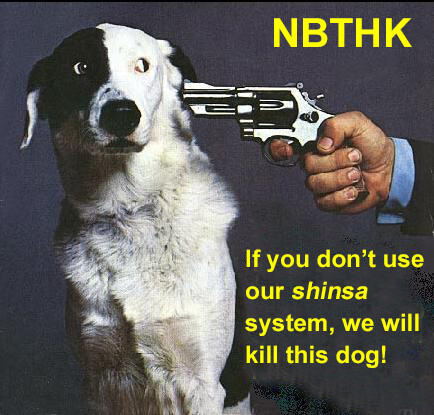
What's wrong with generating profit? Do *you* work for free? Besides, it's not a privately owned business but an educational institution, the profit doesn't make the president richer or pays for a luxury lifestyle of the NBTHK officers, the money is used Going through tbh first also acts as a buffer for jūyō shinsa - you just have to look around on this board to realize how many people have no idea about judging the quality of a blade or fitting, assuming jūyō is some kind of lottery with a (barely achieved) hozon paper as the entry ticket.
-
Ebay Seller Japaneseswordgallery
Guido replied to Stephen's topic in Auctions and Online Sales or Sellers
Well, both tsuba linked to by Stephen and Sergei are on a website that does sell internationally ... -
Ebay Seller Japaneseswordgallery
Guido replied to Stephen's topic in Auctions and Online Sales or Sellers
The advice he gives there is sipmply priceless:
-
Ebay Seller Japaneseswordgallery
Guido replied to Stephen's topic in Auctions and Online Sales or Sellers
Just found out that the domain is registerd to a Takeru Sado. I also looked up the address given on Japaneseswordgallery, and wonder how he fits the store in the pictures into a 21.26 square meter apt. (reminds me of "Fantastic Beasts and Where to Find Them") :
-
Ebay Seller Japaneseswordgallery
Guido replied to Stephen's topic in Auctions and Online Sales or Sellers
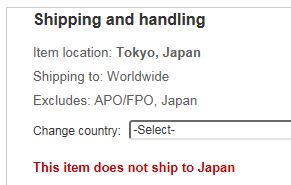
There's even a third price ($7,470) if you buy directly from Japaneseswordgallery: http://japaneseswordgallery.jp/tsuba-Japanese-samurai-sword-katana-koshirae-guard-crane-in-the-nest-openwork/ What I find a little odd about this seller is that he claims to be located in Tokyo, doesn't give his name or e-mail address, only lists a cell phone number, the website is only in English with prices in US $, and he doesn't ship within Japan:
-
Hmm, I don't think "nao" is a possible reading for 若, the name of the smith should be Kanewaka.
-
Figures. Unlike real animals, cats are vain.
-
FWIW, 10 and 8 - however, the mei strokes differ from the "dictionary kanji". Anyway, kudos to you for trying! And in case you get stuck, here are the "regular" kanji (in the same color as the background ): 兼若. P.S.: BTW, Brian, there used to be a "spoiler" option - is that gone, or did I have just too much saké yesterday?
-
鑑定書 appraisal certificate 作者: 五代 清水六兵衛 maker: 5’th generation Kiyomizu Rokubē 品名: 緑釉盆栽小鉢 product name: green glaze small bonsai pot 重さ約 115 g weight approximately 115 gram つばさ tsubasa (shop name?) (seal) 岩崎 Iwazaki