estcrh
-
Posts
2,003 -
Joined
-
Last visited
-
Days Won
8
Content Type
Profiles
Forums
Events
Store
Downloads
Gallery
Everything posted by estcrh
-
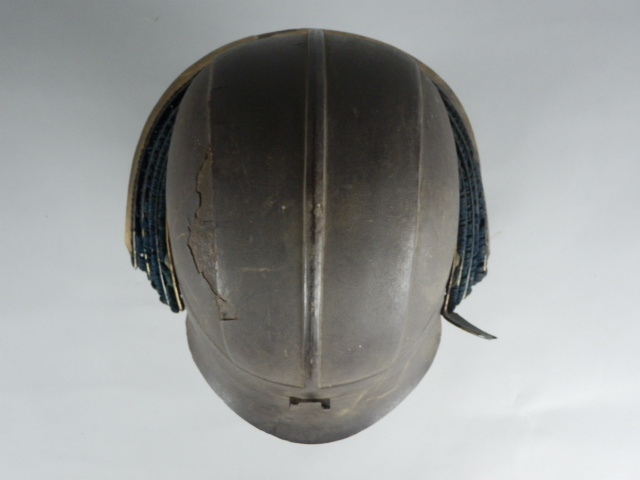
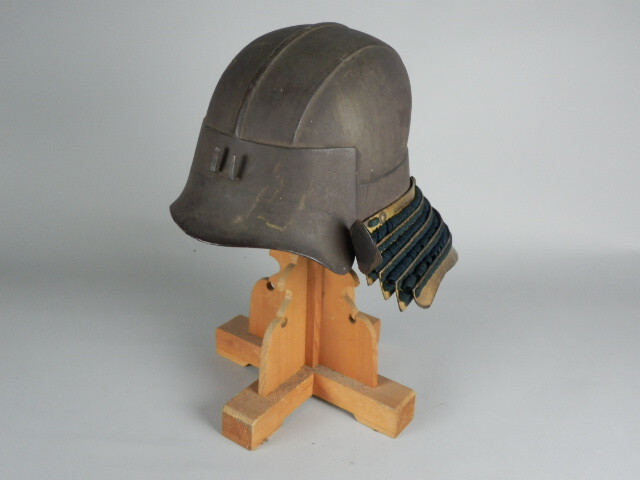
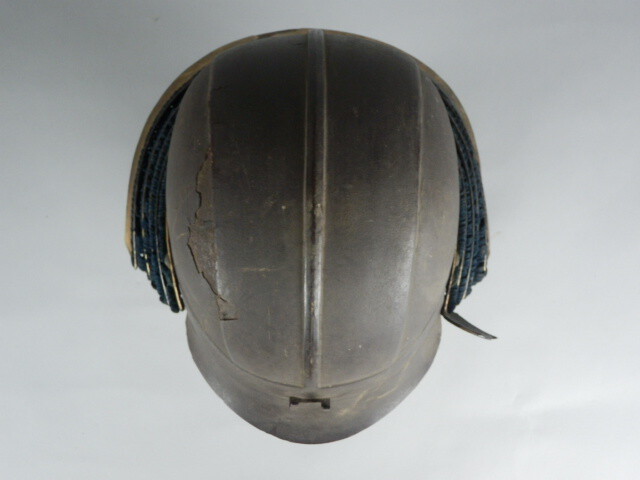
Here is a few examples of what Japanese lacquer can hide. Anyone else have any? This dou is pretending to be hon iyozane, which is large individual scales, but with the lacquer missing you can see that it is really kiritsuke hon iyozane or false iyozane. This is a much cheaper method of construction, instead of having to make hundreds of individual scales the armor maker just lacquered strips of plate to look like real scales. This kabuto is another example of how Japanese armor is not always what it appears to be. What looks like a unique zunari kabuto with a seam on top is revealed to be just an ordinary zunari kabuto with a seam built up from lacquer and possibly a metal strip. Looking at the inside shows the armor plates have no seam on the inside. I have seen several examples of kabuto that looked like much more expensive multi plate kabuto that in reality were much more simple kabuto with a lacquer build up making them look like complicated kabuto with many more plates. I have found that a magnet is very helpful when purchasing Japanese armor, once covered with lacquer sometimes only a magnet can tell you if an armor item is actually made from leather/rawhide or built up with lacquer instead of being all metal.



-
This Week's Edo Period Corner
estcrh replied to Bugyotsuji's topic in General Nihonto Related Discussion
Malcolm good link as usual, here is a quote from the site which I think most people on the forum can understand. -
This Week's Edo Period Corner
estcrh replied to Bugyotsuji's topic in General Nihonto Related Discussion
Piers and Ian, I personally think that the three piece haori sets were used for several different purposes. I have seen many fire capes and helmets, and many of the three piece haori sets but I can not remember ever seeing a matching cape, helmet, haori combo come up for sale. The three piece set I have is made from a luxurious golden see through material that made me wonder from the day I saw it how why anyone would go near a fire in it. Ians mention of the daimyo gyoretsu makes more sense. While mine is packed away I distinctly remember trying to wear the belt/headband as a head band and it was rather stiff and large for that even though it looks like it should be a head band, I cant remember how long the cord is but next time I am near it I will see if it is long enough to be worn as a belt. When I google hachi maki I find images like this in period prints. -
This Week's Edo Period Corner
estcrh replied to Bugyotsuji's topic in General Nihonto Related Discussion
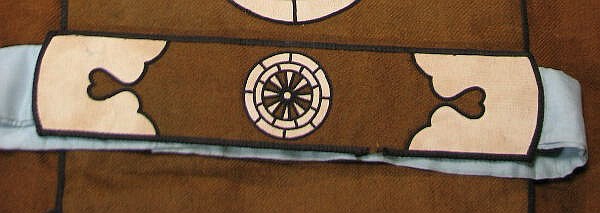
Here is another three piece haori set from a well known Japanese dealer, this one is labeled as a travel coat I believe, the translation mentions "belly band". 源氏車紋の道中羽織。腹当と帯がついており状態も良い。 Douchuu Haori, Edo period, Genjiguruma crest coat along the way. Good condition and equipped with this belly band.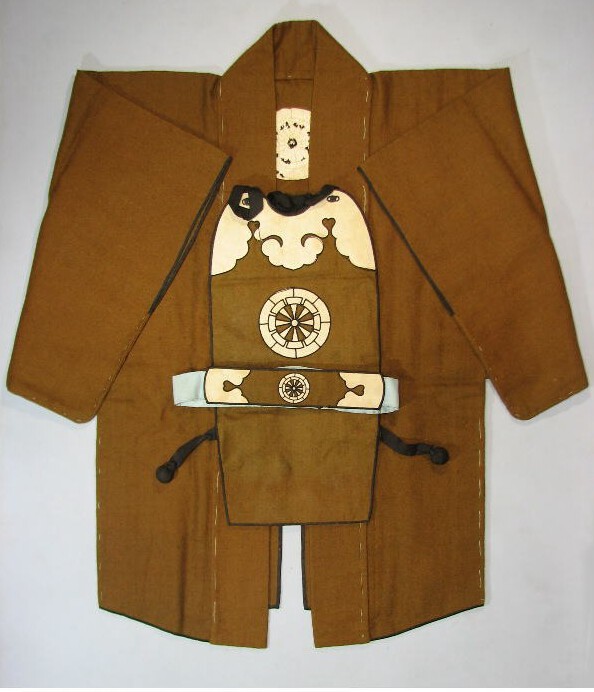
-
This Week's Edo Period Corner
estcrh replied to Bugyotsuji's topic in General Nihonto Related Discussion
Piers now I am confused, is it a head band or a belt? -
This Week's Edo Period Corner
estcrh replied to Bugyotsuji's topic in General Nihonto Related Discussion
Piers, did the muneate and are-obi come with your haori, they look like a match. Any way of finding out if those haori with matching muneate and ate-obi were specifically meant for fires or if thats just a word thrown out by sellers. -
This Week's Edo Period Corner
estcrh replied to Bugyotsuji's topic in General Nihonto Related Discussion
Piers, does this look familiar to you? 時代物、「九曜紋」入、火消装束、3点セットです。鉢巻・腹掛・上衣。鉢巻 縦 約8センチ、横 約33センチ(紐含 約145センチ)。腹掛 縦 約 52センチ、横 約29.5センチ。上衣 縦 約100センチ、横 約64センチ(袖~袖 約131センチ)。有る旧家に眠っていた物です。多くの大名家に 関りの有る「九曜紋」が入っており、当初は「飛脚装束」かとも思いましたが、有る識者の方より「火消装束」では無いかと伺いましたので、敢てそ の説で表記いたします。かなり古い物の様ですが年代詳細不明。シミ・汚れ・カビなど少し有り。虫食いの小穴が少々有り。敢て出てきたそのまま 出品させて戴きます。地はしっかりとしており、保存状態は悪くは無いと思います。見栄え良く、使える楽しめる良品だと思います。御解かりになる 方、御興味の有る方、如何でしょうか。あくまで古い物ですので、ノークレーム・ノーリターンで御願い致します。 *Other、各種・多数出品しております。宜しかったら、一度覗いて観て下さい。* -
This Week's Edo Period Corner
estcrh replied to Bugyotsuji's topic in General Nihonto Related Discussion
Piers, thanks a lot for clearing up the ate-obi question, I have wondered about that for a long time, any idea if those sets were actually intended for use in fires exclusively or were they used for other purposes, I have seen images of people firing tanegashima in modern times wearing what seems to be the exact clothing. Nice work on the jinbaori, looks like it was always there, is that a repair I see at the top near the neck. In the west people use jinbaori only for sleeveless jackets but I notice in Japan jinbaori seems to include jackets with sleeves also. -
This Week's Edo Period Corner
estcrh replied to Bugyotsuji's topic in General Nihonto Related Discussion
I have always thought that these were head bands, I have this one and it looks like a head band more than an obi. -
This Week's Edo Period Corner
estcrh replied to Bugyotsuji's topic in General Nihonto Related Discussion
Piers, maybe you can answer this, something like your hachi-maki is seen as a matched set with haori and muneate. I often see these sets with the jackets being called kaji baori, kaji haori or even jinbaori, the item which looks like your hachi-maki is called by several different names and it is alternately pictured as a belt or a head band, can you shed any light on this item, here are some pictures. http://www.sanmei.com/contents/en-us/d35.html Japanese overgarment JINBAORI, MUNEATE and ATEOBI set of three colors, Three colors complete 9 pcs sets of Overgarment, Apron and Headband http://www.ebay.com/itm/Antique-Navy-Co ... 259wt_1164 Antique Navy Cotton SAMURAI Jin-Baori, Mune-Ate, Hachimaki http://www.iz2.or.jp/english/fukusyoku/kosode/42.htm The firefighting dress of samurai consists of following items: a "jingasa" hat or a "kabuto" helmet, a "kaji-haori" hjacket, a "mune-ate" protector, an "ate-obi" belt and "no-bakama" trousers (the each item has family crests). -
This Week's Edo Period Corner
estcrh replied to Bugyotsuji's topic in General Nihonto Related Discussion
How about "Edo period corner II", so were is that hachi-maki you mentioned? -
An unnamed UK museum owns it now..I wonder http://www.asianoffbeat.com/default.asp?Display=1530
-
This Week's Edo Period Corner
estcrh replied to Bugyotsuji's topic in General Nihonto Related Discussion
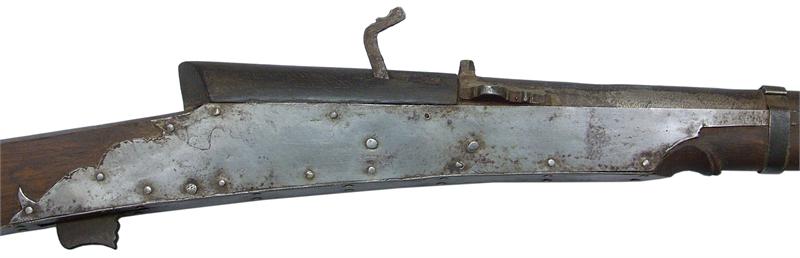
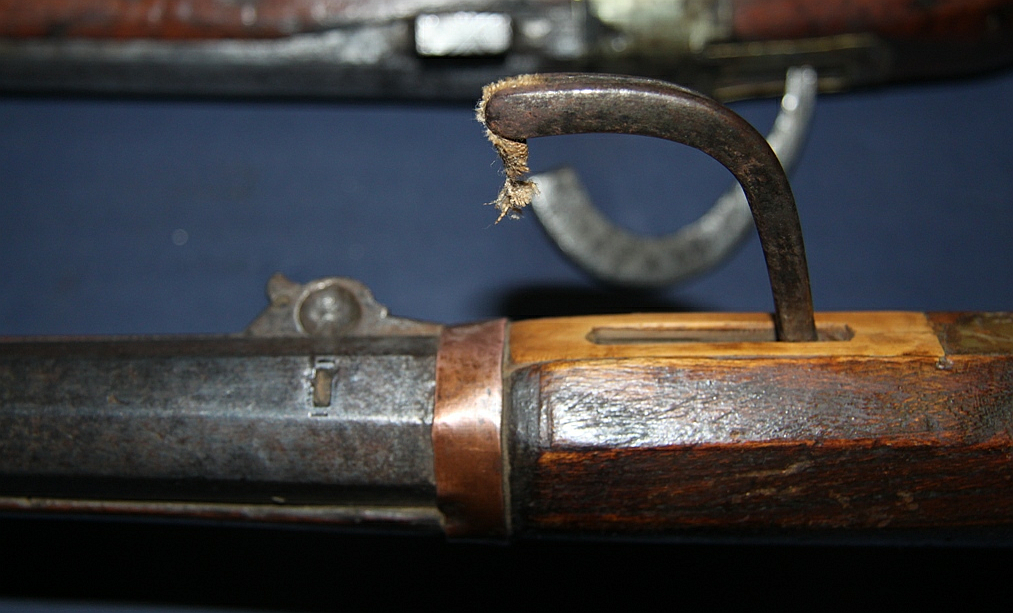
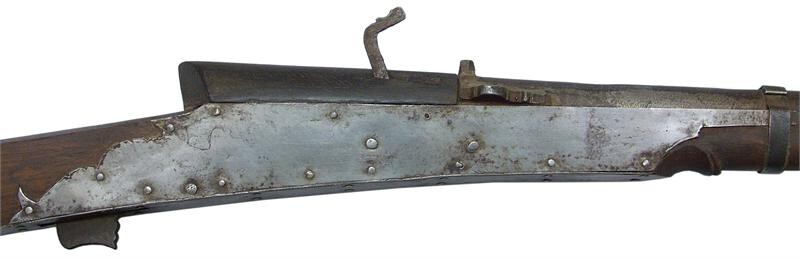
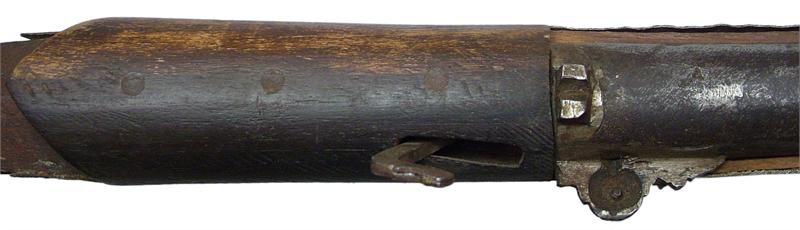
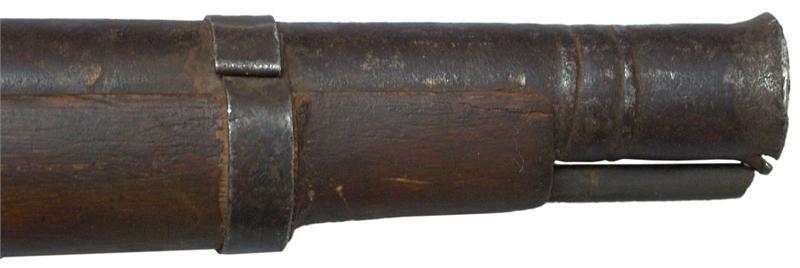
I have noticed that to, even the plain unadorned tanegashima have the same basic workmanship as the more highly decorated ones but other cultures seem to have a much wider disparity between their higher level matchlocks and the basic ones. Here is a picture of an Indian matchlock supposedly from around the 1700's, its pretty basic.
-
Mark..a bit?? You are to kind, I can see NOTHING about the blade or koshirae that would justify this price. I see great swords that have trouble being sold on this forum that blow this sword away, a papered nagamaki in koshirae sold for less recently on ebay, how insane.
-
Thanks for the info, do you know if photography is allowed in the exhibit?
-
Justin, if you watch yahoo Japan they regularly are for sale, next time I see one I will let you know.
-
Any sign as to if this was the original finish or if the whole kabuto was previously lacquered. Here is a link to the Wikipedia commons Category:Kabuto (individual parts) http://commons.wikimedia.org/wiki/Category:Kabuto_(individual_parts) )
-
Considering the time period, they were about to be out of a job, plus this image as opposed to many of these early photographs which were taken in a studio may have actually been taken outside.
-
Roy, the helmet would be considered as Edo period, I do not know any way to get a more accurate date, I would call it a hachigane/hitai-ane forehead protector with a kusari shikoro. Here is an image of them in use.
-
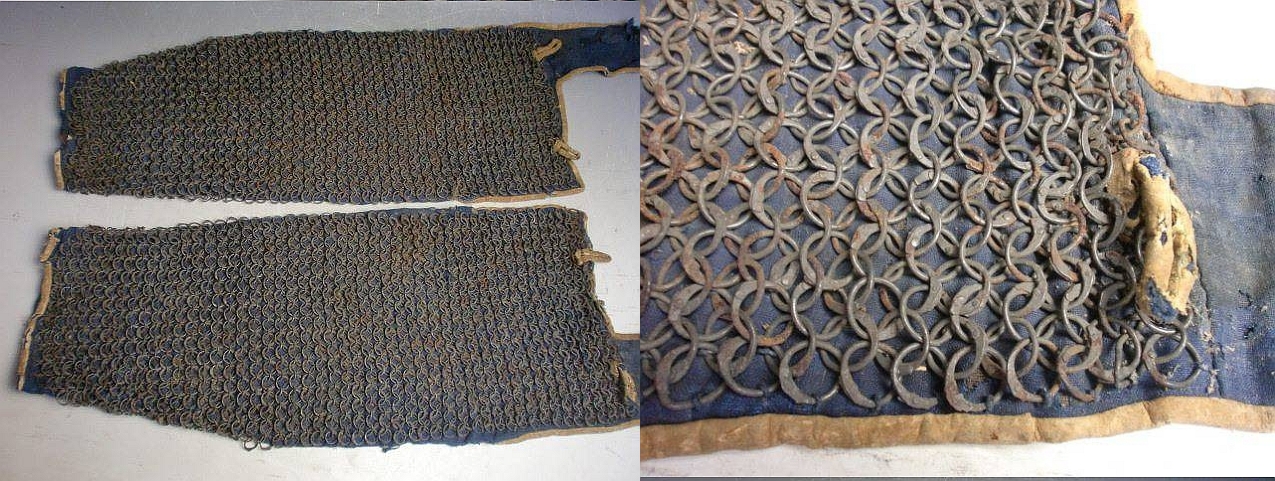
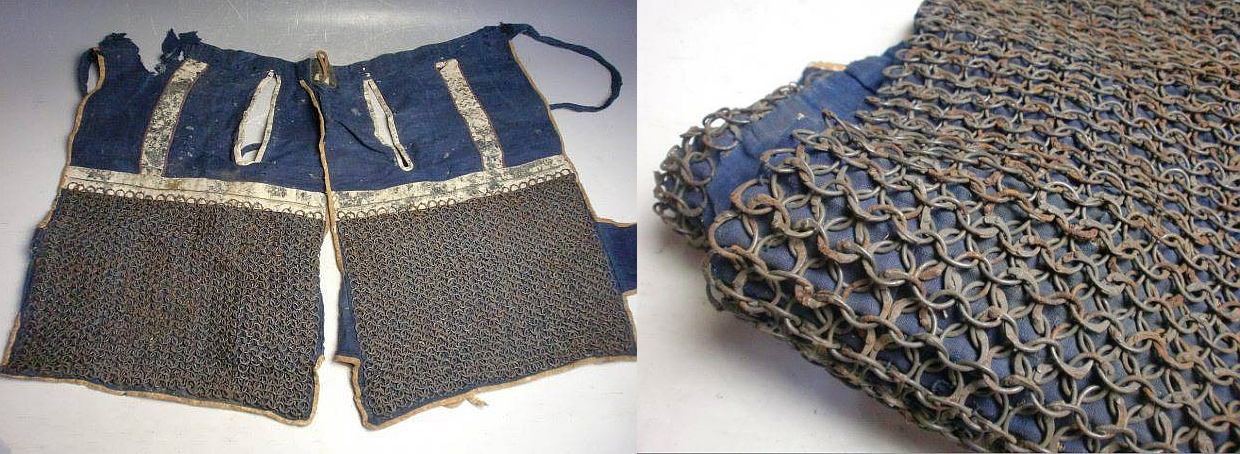
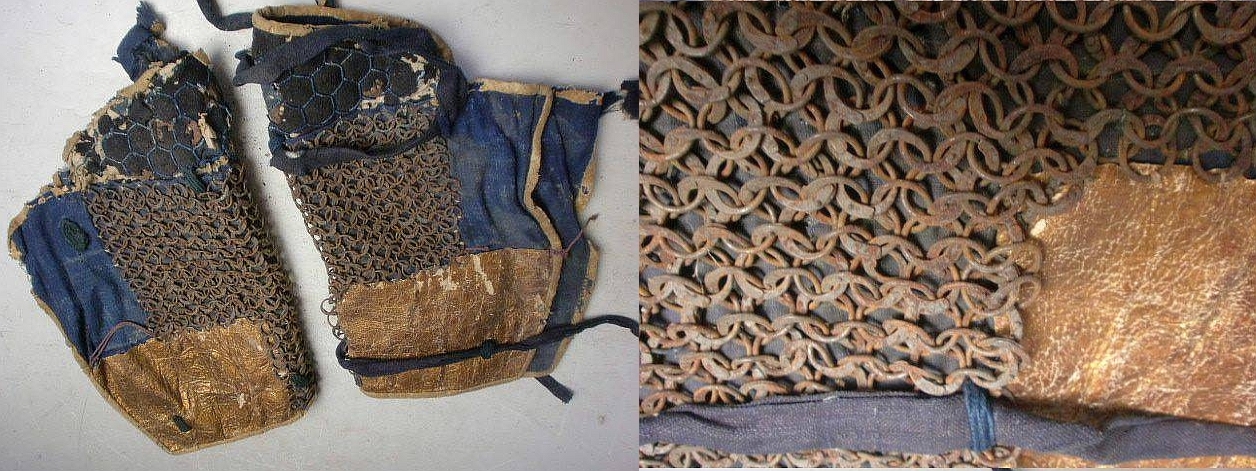
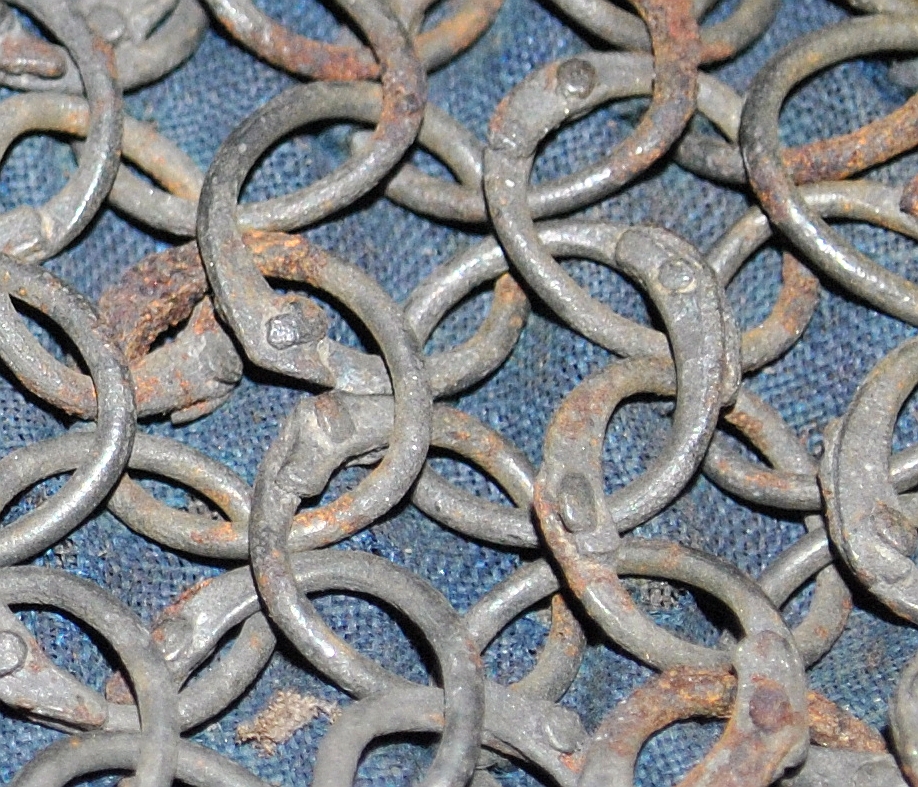
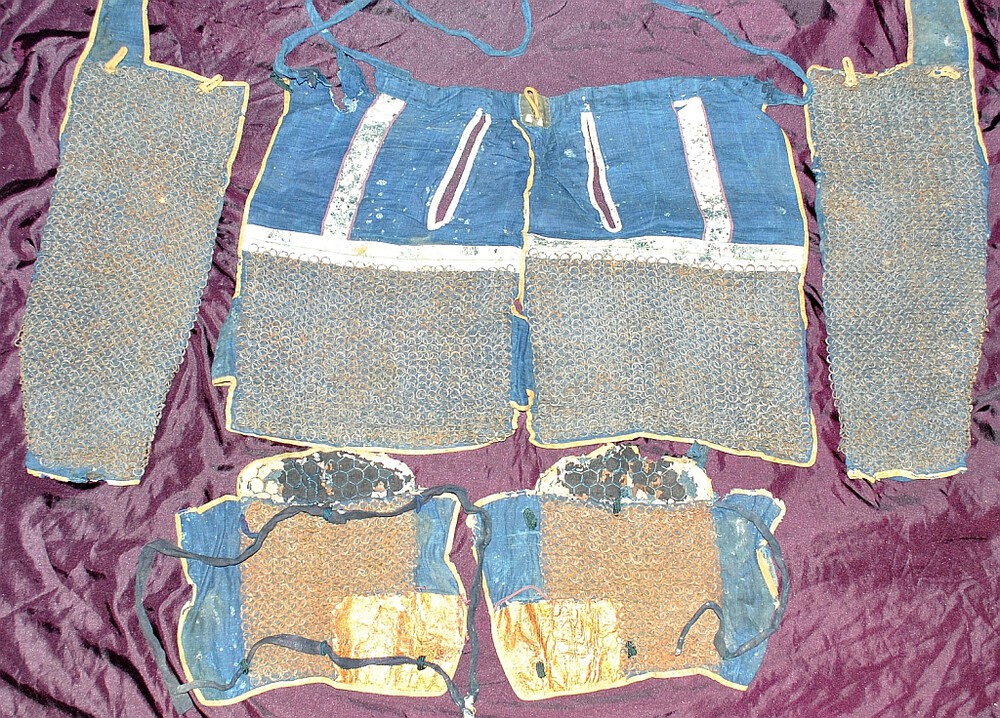
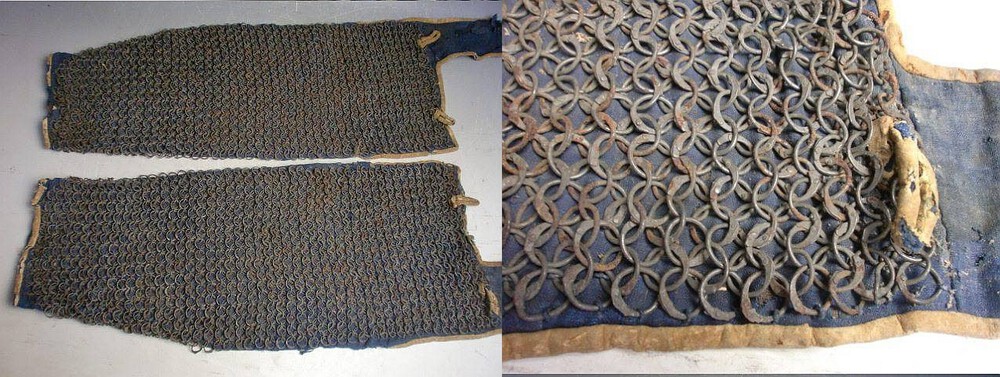
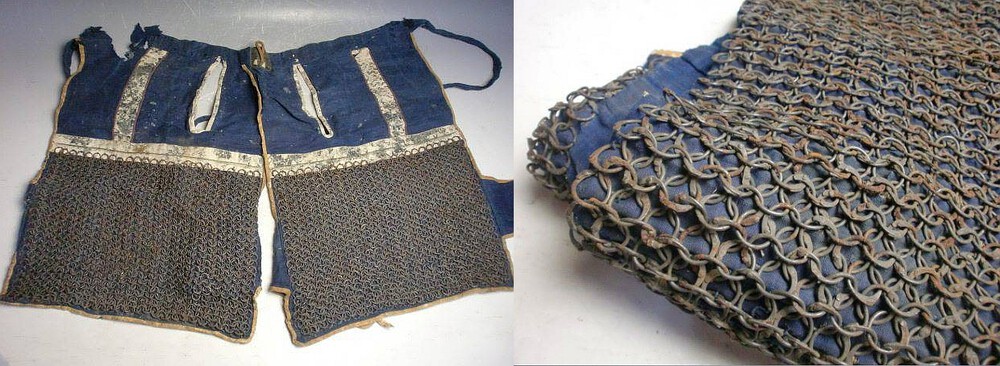
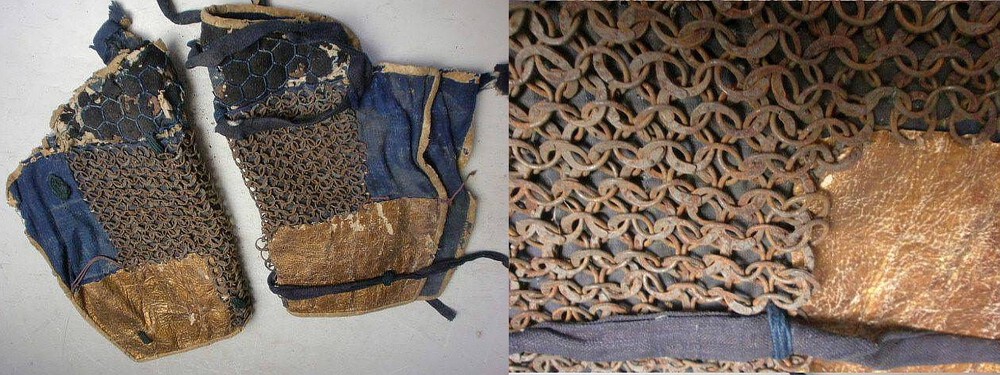
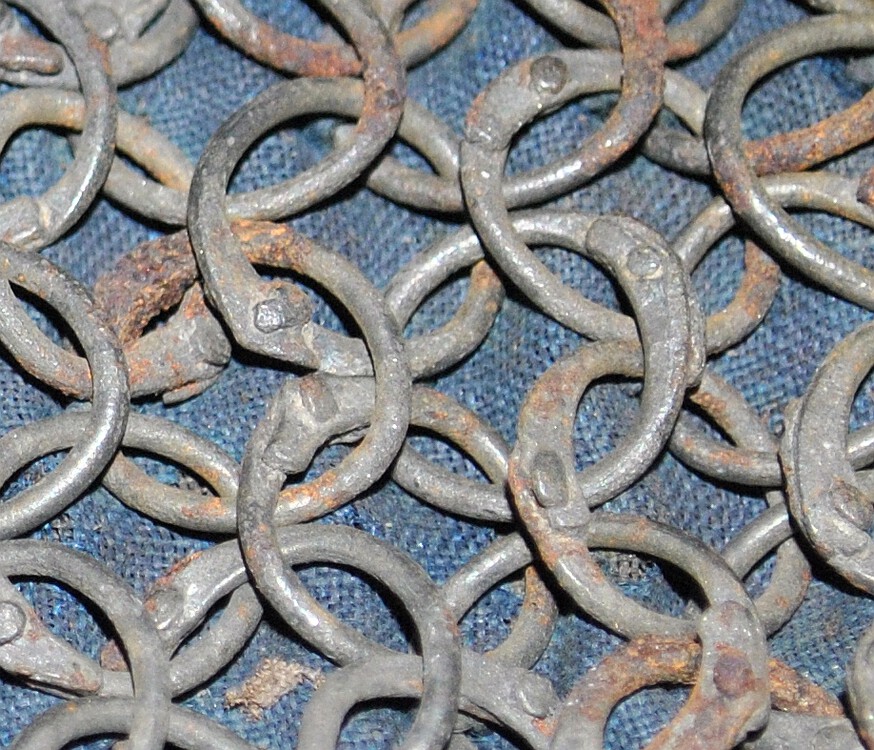
The rarest Japanese armor that I am aware of is riveted Japanese mail. There were up until now only two images available in the world of this armor type. Recently I purchased three matching armor items for the extremities (sangu) consisting of haidate (thigh armor), suneate (shin armor) and kote (armored sleeves). These historical items were being sold in three different auctions and would have been split up never to be seen again. I know of only two reverences to riveted kusari, one in late 1700's book "The manufacture of armour and helmets in sixteenth century Japan" = (Chukokatchu seisakuben) Author :Sakakibara, Kozan,Translated by T. Wakameda ; Rev. by A. J. Koop and Hogitaro Indada, 1912 ; Rev. and edited by H. Russell Robinson, 1962. Publisher London : Holland Press, 1963. pp 83-85. . George Cameron Stone mentions a "kote with riveted European-style 4-in-1'' image # 475.10 in his book "A Glossary of the Construction, Decoration and Use of Arms and Armor: in All Countries and in All Times". The only image of rivered kusari I have seen published is in "Japanese Arms & Armor Introduction by Robinson, H Russell", 1969 P.58 , the image is listed as being an "Early 19th century breastplate from Museo Orientale Venice", in addition Dave Thatcher told me that he has seen this type before in Sasama's big book which I have do not have a copy of and have not seen. The remaining question is whether this example was of Japanese manufacture or was this some foreign type acquired by an Japanese armor maker and used to make this particular armor. The links are not lacquered black as other types of Japanese mail, the links have the appearance of being possibly tinned or galvanized and as to the comparison of other types of riveted mail, the links do not look like eastern riveted mail samples that I have seen or like European riveted mail links. I showed some images of the links to Ian Bottomley and he was kind enough to give an opinion the this looks like it may be riveted mail of Japanese manufacture due to the fact that in Eastern mail the riveted links are connected by solid links and with European riveted mail the links are riveted with a wedge shaped rivet. The mail I have was made with eastern type rivets but all the links are riveted with no solid links. Indian riveted mail European wedge riveted mail
-
The good news is that Trevor can publish ebooks of the unpublished volumes with very little cost, here is the email for those who have not seen it
-
This Week's Edo Period Corner
estcrh replied to Bugyotsuji's topic in General Nihonto Related Discussion
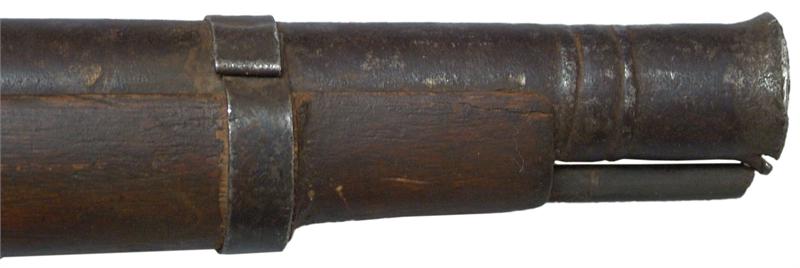
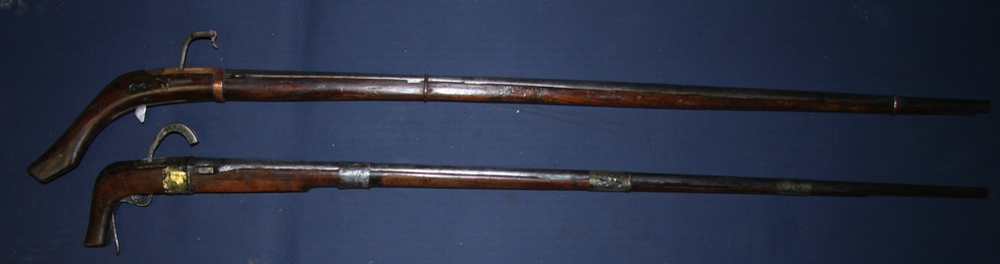
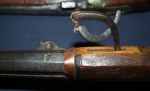
Chinese matchlocks, here are a couple of images and a link to an interesting site with information on Chinese matchlocks etc. http://chinese-gun.freewebspace.com/photo.html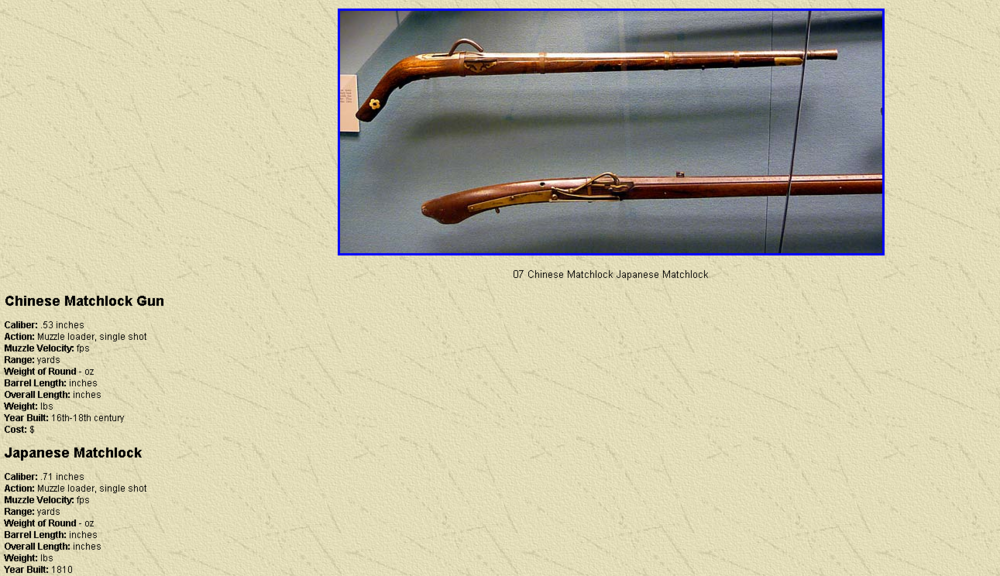
-
This Week's Edo Period Corner
estcrh replied to Bugyotsuji's topic in General Nihonto Related Discussion
Stephen, interesting thought, or maybe some enterprising Japanese gun smith saw the nock gun and decided to copy it.