FlorianB
-
Posts
466 -
Joined
-
Last visited
-
Days Won
2
Content Type
Profiles
Forums
Events
Store
Downloads
Gallery
Everything posted by FlorianB
-
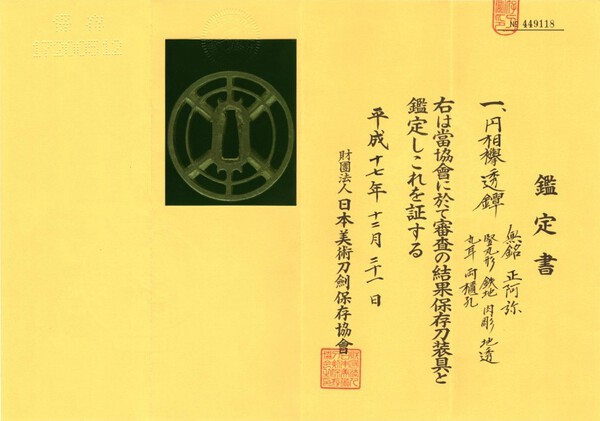
The paper seems to indicate, that the NBTHK played safe and therefore attributed to Shoami - that figures always. In such cases it’s a pity that there is no explanation to the outcome. Interstingly there is written “maru mimi” instead of "kaku-mimi ko-niku". A minor mistake only, but maybe an evidence of a certain routine. By the way: Obviously based on this certificate it was sold as “Ko-Shoami from Muromachi”. The mentiond Kanayama: Is it the one with the salmon? Florian
-
Well, I stick to my story. A very tasteful daisho and the tsuba suit well! Congrats! Florian
-
Gentlemen, I won’t conclude this telling discussion without giving You a glance on the paper issued for this particular Tsuba: Best, Florian
-
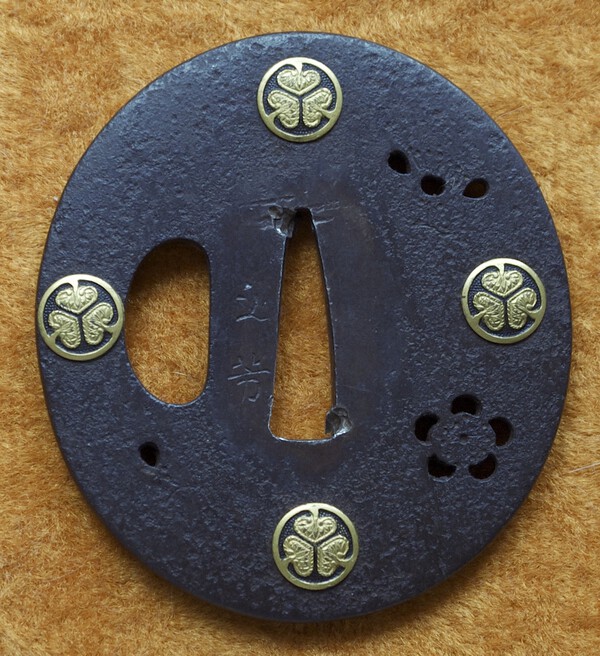
Hello Joel, very interesting indeed. I agree they are from the same school and maybe even the same maker. I do not think they are a daisho though the size differs. Just two similar Tsuba reunited. I bought in my younger days (in the last century) the below depicted Tsuba. It is signed as Yukiyoshi (or Koreyoshi, I'm not sure) and the seller said that this man belonged to Edo Ito-school. The Aoi-mon have been applied at a later date. I'd like the idea, a poor samurai came in service of a Tokugawa branch, but he couldn't afford a new formal Tsuba thus he altered his Tsuba like this. Nice story, isn't it, but probably it was just done to enhance an attractivness maybe for tourists. Best, Florian
-
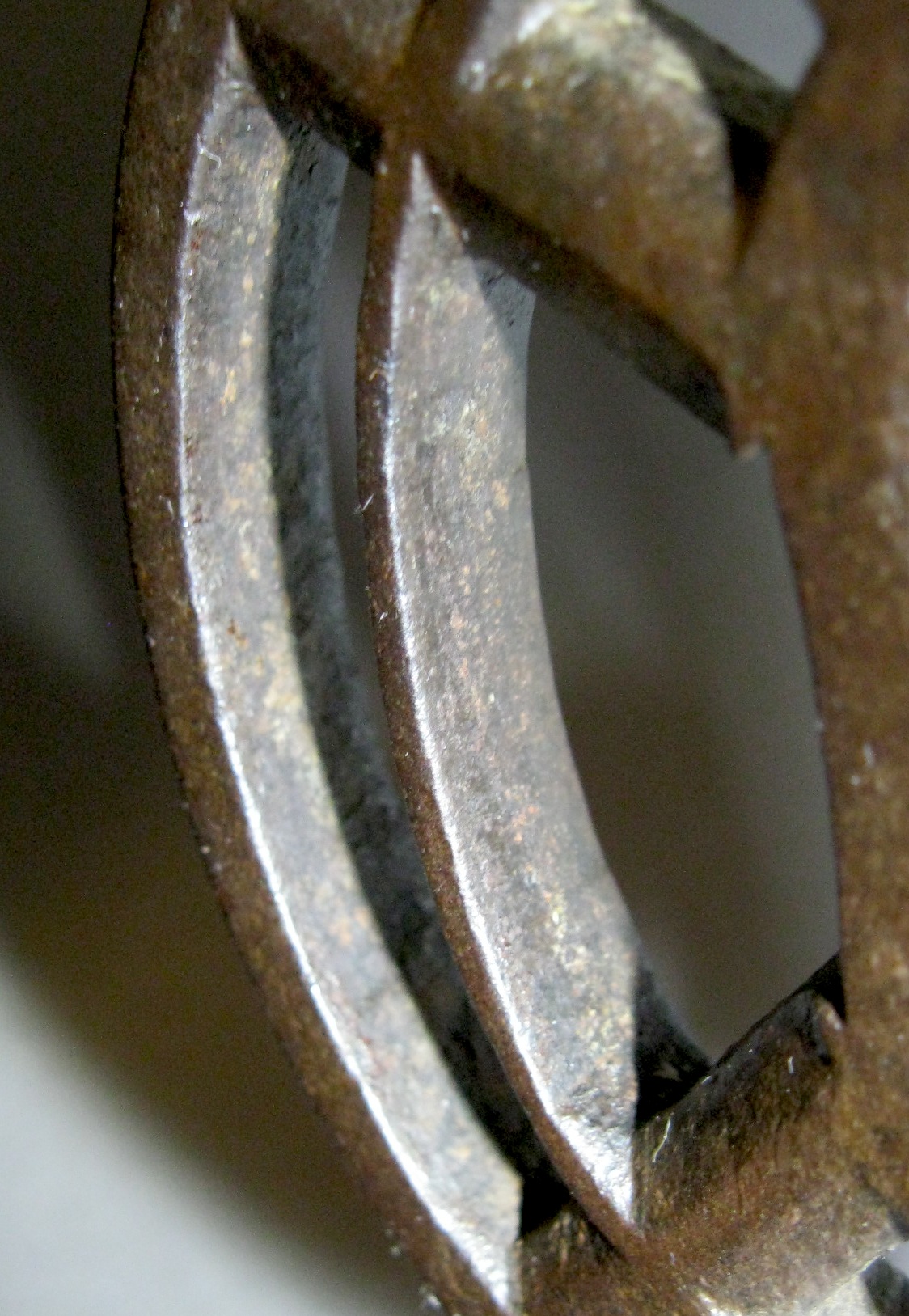
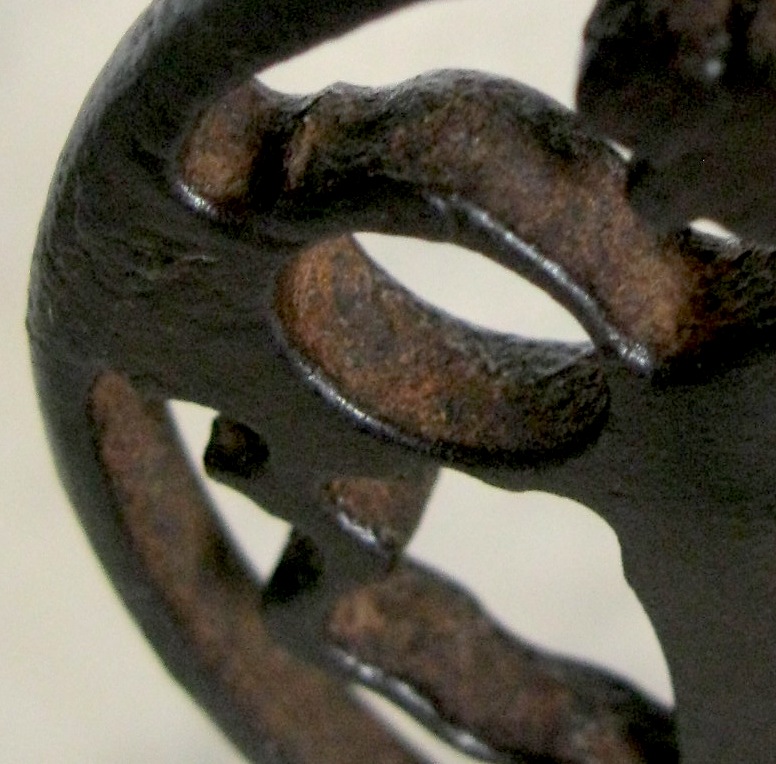
Curran, I examined this Tsuba anew, but I'm not sure if those structures result from the 3-Layer-technique or by use and/or corrosion. I tried to make some pictures but I apologize for these mediocre ones. But please have a look by yourself. Best, Florian
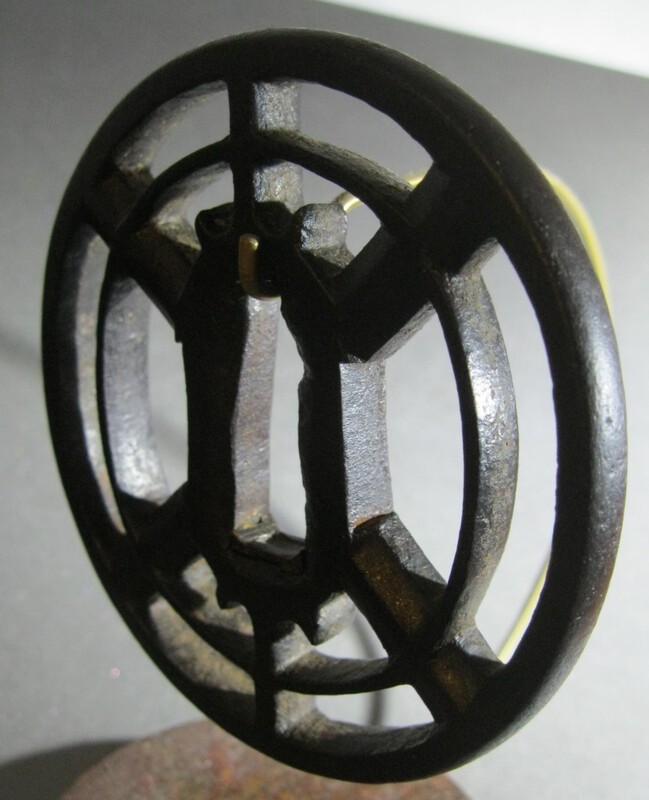
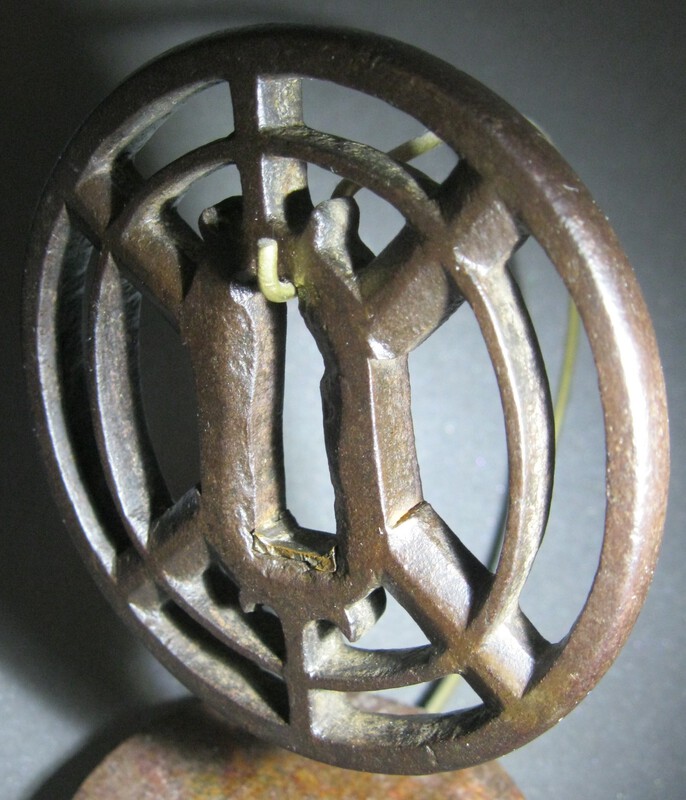
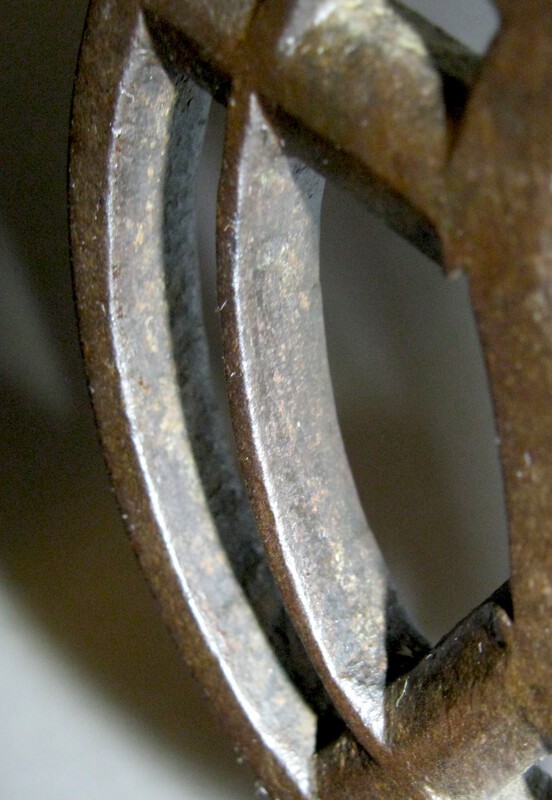
-
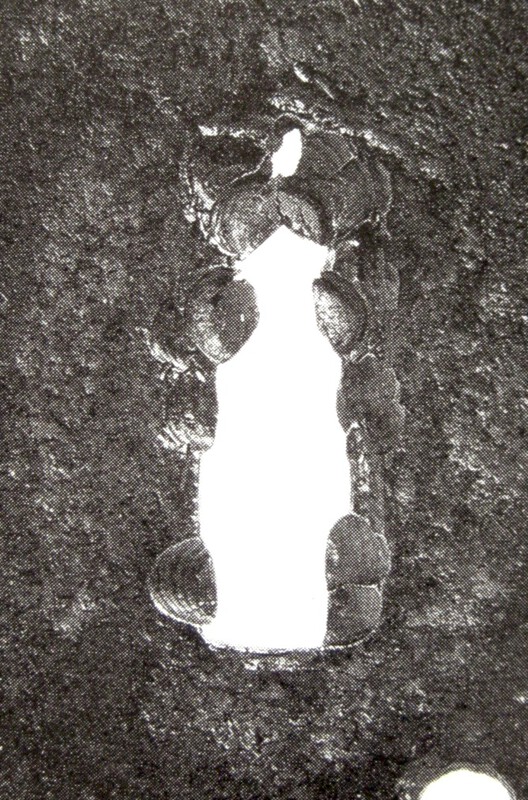
Hello Jean, on earlier Tsuba the rim of the nakago-ana was optimized by more or less hammering, later seki-gane (softmetal inserts) where in use, so there was only seldom need to alter the nakago-ana itself. In my opinion a lot of nakago-ana haven’t changed too much and extremly modified ones are notorious. See example below. Cincerly, Florian
-
cit.: "...how one could judge the NAKAGO-ANA of an old and obviously 'used' TSUBA in terms of size and shape..." If You compare nakago-ana of a certain Tsubako common traits (shape, seme-tagane) appear frequently. But, of course, later alterations have to be carefully examined and considered. It’s the same with seppa-dai which are modified in many cases as well. Best, Florian
-
Yes, we’re talking about the very same person. No wonder that he, too, named the 3. Generation as possible maker. He dispelled my above mentioned doubts as an exception to the rule. So You see why I hoped to get shown some examples to prove those exceptions. Florian
-
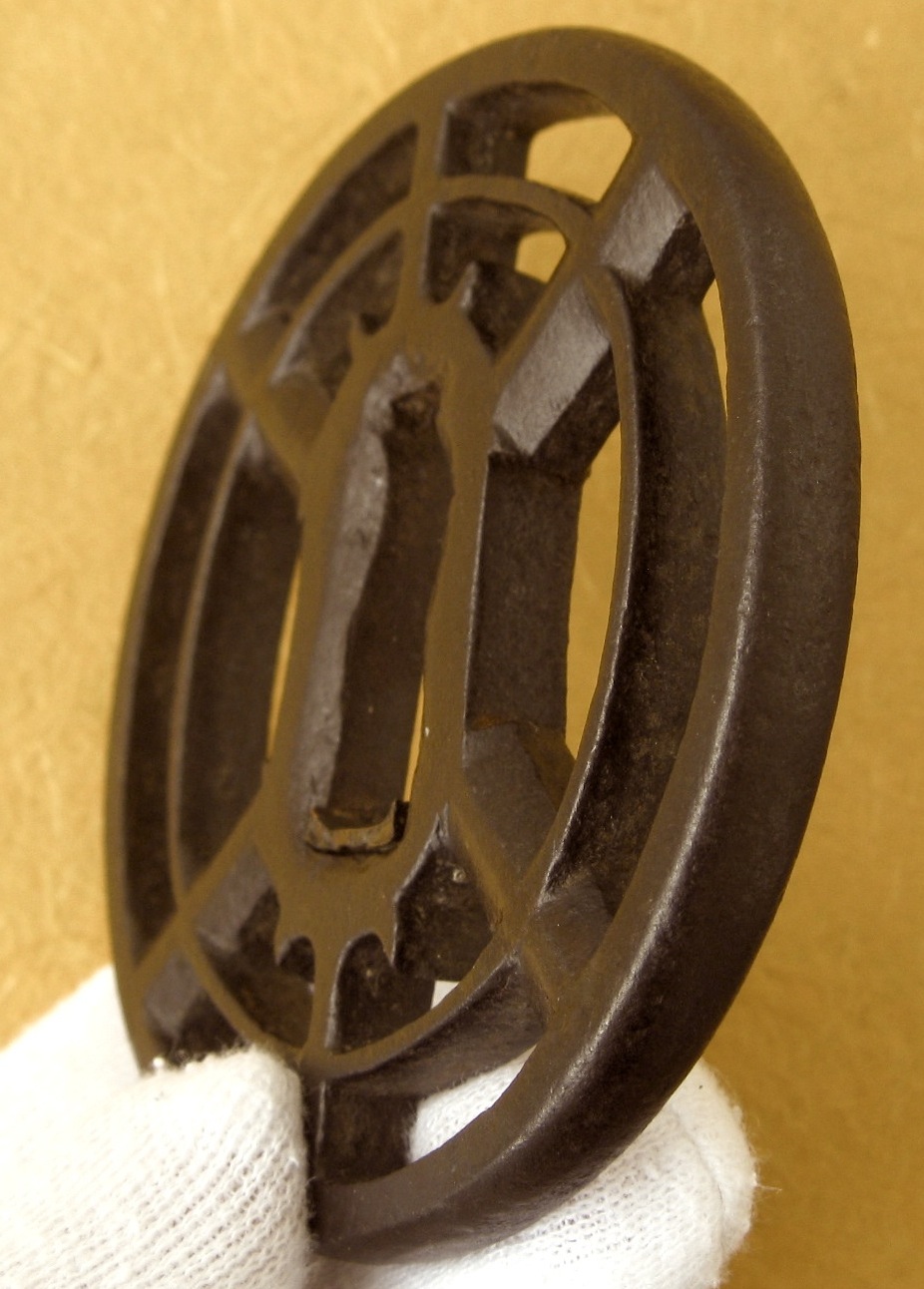
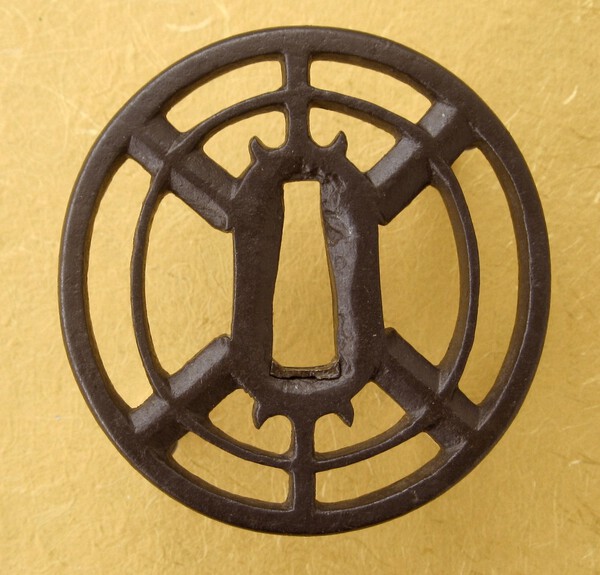
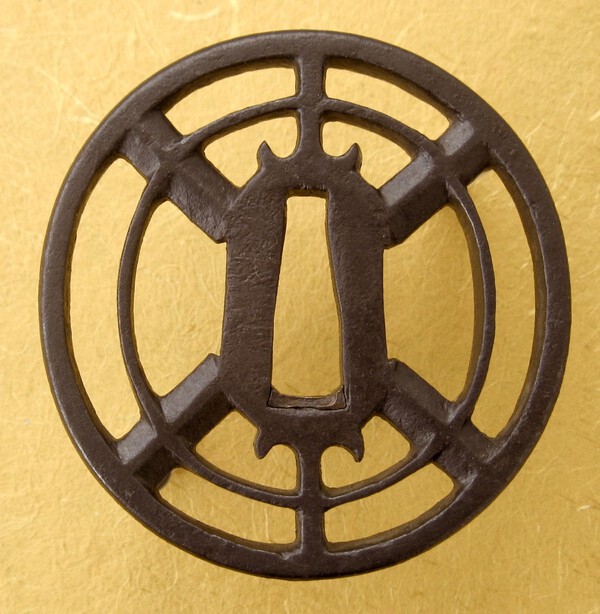
In the opinion of a famous german Tsuba expert it has to be Ko-Akasaka. Thickness, steel and tekkotsu support this. Certainly I won’t dare to contradict, but I’m puzzled by this stiff Owari Design, the angular mimi, the lack of awari-gitae (indeed there is no hint of any linear structure in this Tsuba) and I miss a widening of the sukashi at the rim. Best, Florian
-
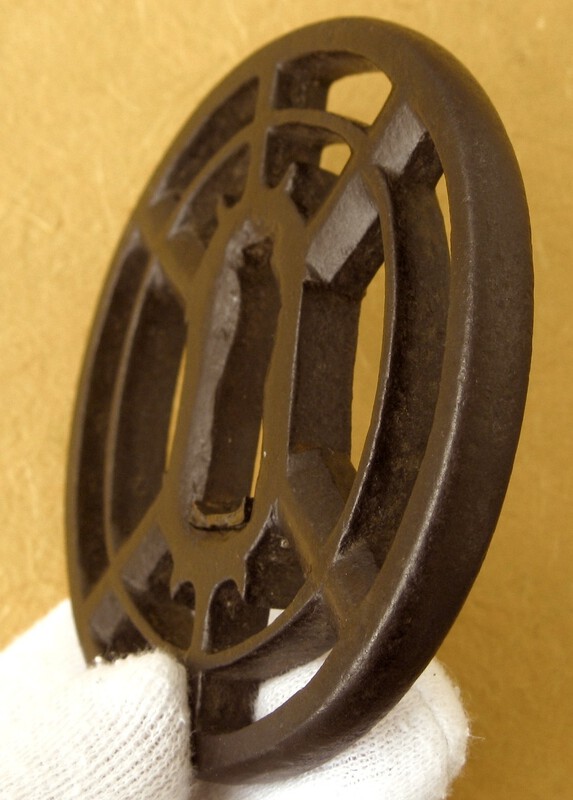
To specify the thickness: 7,8 mm at the rim, Seppa-dai is as thick as the rim, maybe about 0,2 mm thinner, it depends where You measure. Yagyu is an interesting supposition. I’m not an expert but to my knowledge Yagyu Tsuba are smaller, thinner and the edges are rounded off so the sukashi has a smooth appearance. The design itself I can’t relate to Yagyu. This design hints clearly to Owari and a friend of mine pinned the Tsuba down to this school. The steel would fit, too, but I haven’t seen Owari with such niku-bori yet. Best, Florian
-
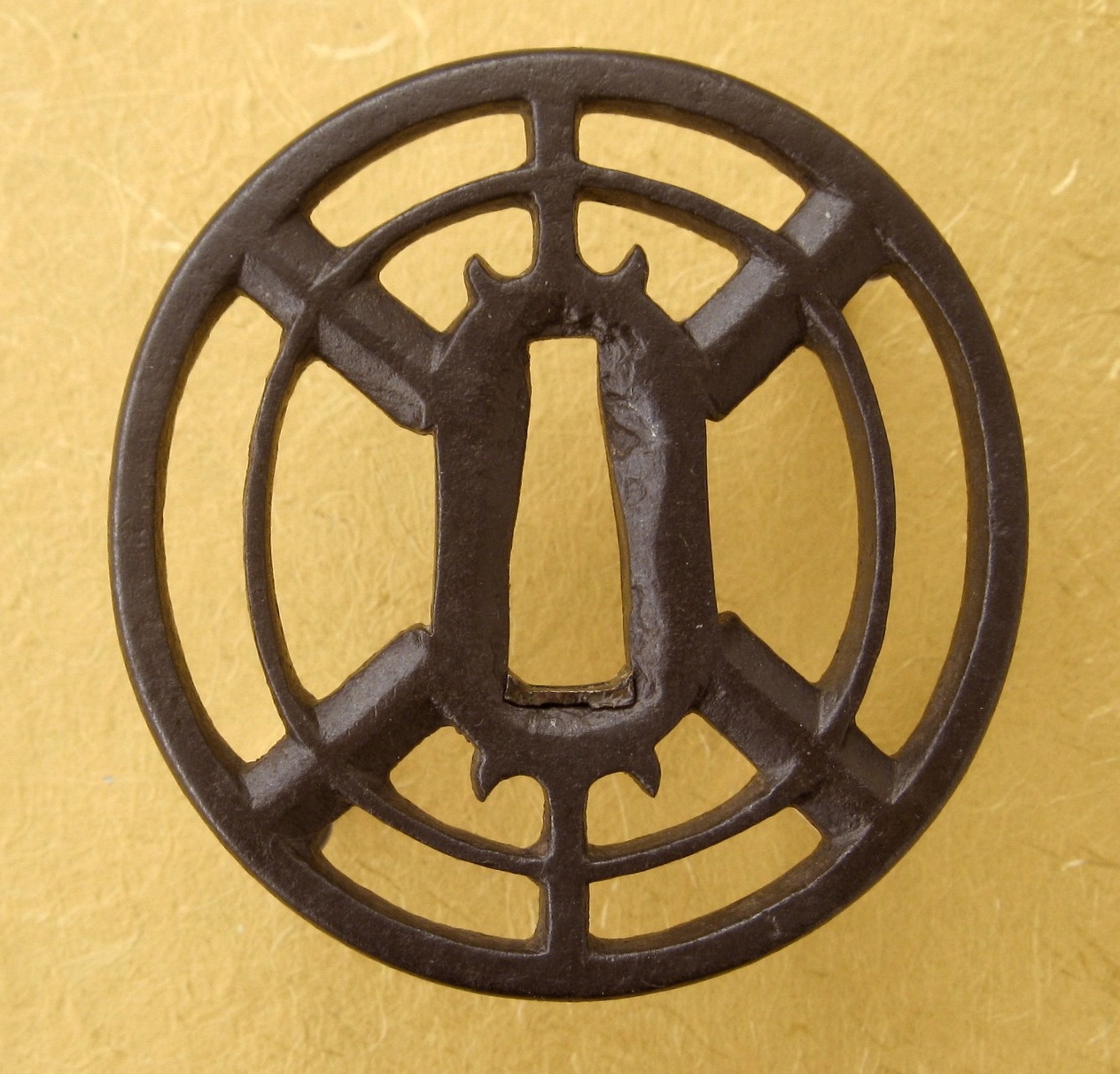
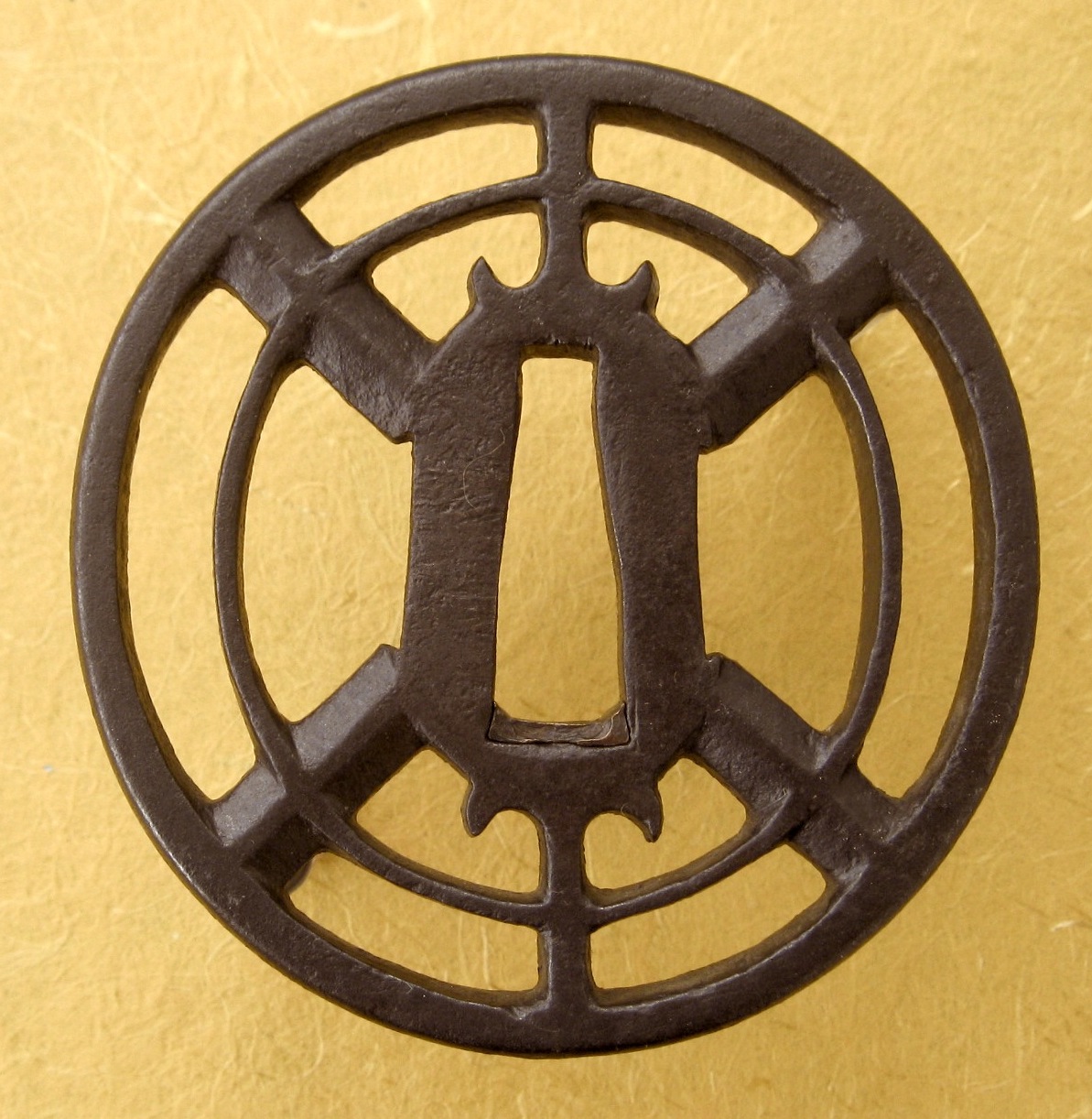
Hello everyone, I want to show You a recently purchased tsuba. H: 81 mm, W: 78 mm, thickness 7,8 mm Excellent steel with granular tekkotsu in the rim (kaku-mimi-ko-niku). The design comprises enso, warabite and crossed timbers (latter in niku-bori). Though quality is out of question, opinions of fellow collectors differ concerning age and school. So I’d like to ask the community if there’s an idea where to put it. I also would be glad if there are one or two pieces out there to substantiate the origin. Thank You, FlorianB
-
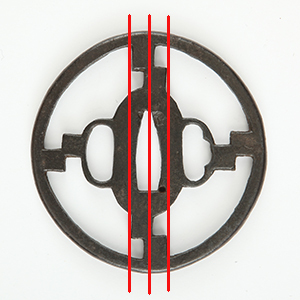
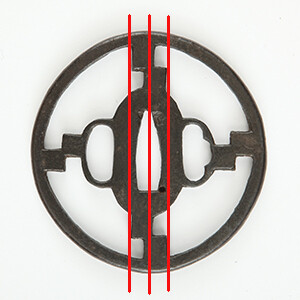
Jean, lovely Tsuba with wonderful movement! I don’t recognize the design, maybe a weaving pattern, flash of lightning or modiefied manji, but it was clearly made intentionally. Look at my sketch below You’ll see, that a vertical was held. Thus the general impression is slanting but not unstable. Of course there are little variations, but this is acceptable - possibly intentioned to create a more livley effect. Florian
-
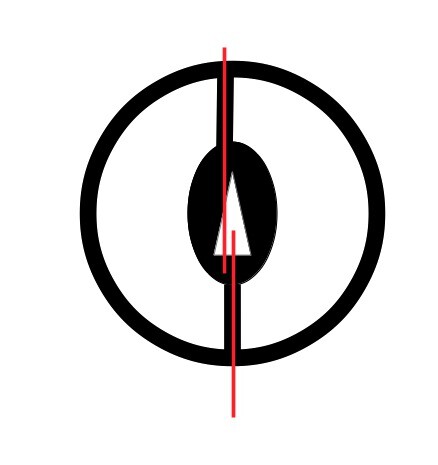
Thank You for Your input - there’s something to think about. Of course I recognized the purpose of a firm connection between seppa-dai and mimi, but it seemed too obvious in my eyes. Often a pair of karigane or myoga can be seen instead so I considered a symbolic or other reason in this single beam. Allow me one more question: Years ago I was shown an alleged Muromachi-Tsuba with a centerline. However, the upper and the lower fillet were not exactly in line but slightly misplaced (alas, I have no picture so please refer to the simple sketch below). That seemed unaesthetic to me. Was this Tsuba indeed of inferior make or wasn’t I able to appreciate an intentioned asymmetry? Thanks again, Florian
-
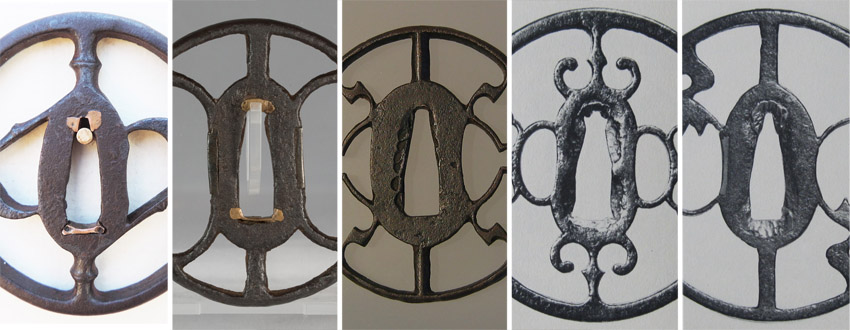
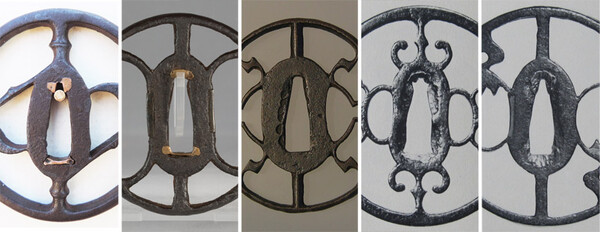
Hello everybody, maybe someone can sort out a problem that bothers me. There are several Sukashi-Tsuba with an accentuated vertical centerline (some random examples assembled below). Is there a particular idea in this design or was it just a kind of fashion in certain times? Thanks, Florian
-
I’m not an expert but judging by these pictures I would say Shoami at its best. But it's just a shot in the dark. Try the search at the Boston MFA: http://www.mfa.org/search?search_api_views_fulltext=tsuba%20shoami&page=1, there are some to compare with. Maybe that helps to get an idea. Furthermore unfortunately the nunome seems missing partially due to use. Any pictures of the reverse? Florian
-
What Does The Term "art Sword" Mean To You?
FlorianB replied to Alex A's topic in General Nihonto Related Discussion
Quotation from above: “ "Swords are utilarian objects before all". They are not anymore and modern swords are still considered as art.” Maybe it wasn’t expressed proper: a sword - if old or modern - has to be a functioning weapon at least - even if it isn’t used in battles nowadays. Please remember: the tiniest hagire kicks a blade from the heights of art to the hollow of scrap because it is considered to break IF You would fight with it. The usefulness of a sword is therefore one aspect of the art. Florian -
What Does The Term "art Sword" Mean To You?
FlorianB replied to Alex A's topic in General Nihonto Related Discussion
Interestingly I have struggled with this term many years ago. This is - in short - my answer: A smith has an idea of how a blade should look like. Every step of his work has irreversible consequences to the final result. And the result could only be seen after polishing! So: The better a smith controls the steel the better the result is. An Art-Sword has to be technical perfect (including its function) and should show the smith’s intention clearly. The aesthetic value results by what we see on the blade - shape, hada, hamon et cetera. And the aesthetics could only be appreciated by understanding how a blade was made. There’s a lot more to say (and I have to stop myself by doing so) but I think this is the essence. Florian -
Could Use Some Help With This Tsuba
FlorianB replied to mareo1912's topic in General Nihonto Related Discussion
I have still doubts. Certainly an auction house would not admit offering junk - they just want to sell. I don’t know what interest You have in this peculiar tsuba but my advice is: be careful. Nearly 1300 Euro (PLUS additional charge and VAT about 16 - 1700 Euro) is an amount of money You should better invest in a distinct quality. Florian -
Could Use Some Help With This Tsuba
FlorianB replied to mareo1912's topic in General Nihonto Related Discussion
Hi Marco, judging by the picture the Tsuba is junk. I don’t know to which auction house You do refer, but serious auction houses won’t offer cast things. There are experts who judge the items if they are worth to be offered. Nowadays (as far as my experience goes) Tsuba below the middle class are even often declined. However, speaking about auctions I think it is worth to take the chance for preview. Here You can handle the auction items and train Your eyes on different qualities. This is by far more important than looking at pictures. If You could not manage study the auction catalouges also to get a feeling for prices. Look for the results, too. Catalouges and results should be nowadays online available. Best, Florian -
Hello, defintiveley not an very old one. The motif is what Jean wrote and You can consider if the two dots at the bottom are udenuki-ana. The otafuku-gata-shape hint to Edo period. The tomoe is adapted to the shape - this is a later design attitude, too. The large halfcircled hitsu-ana can be found on later Edo period examples (Higo and others). The surface looks old with it’s rough structure - however it looks too perfect to be a result of rusting over the centuries. It’s artificial done by chiseling. As I said before on this board there are Tsuba from 18th/19th century so cleverly done You think they’re very old at the first glance. Finally, though I’m not able to sort out the school the combination of styles and motif elements hint IMHO to late Edo (18th century at the earliest). Florian
-
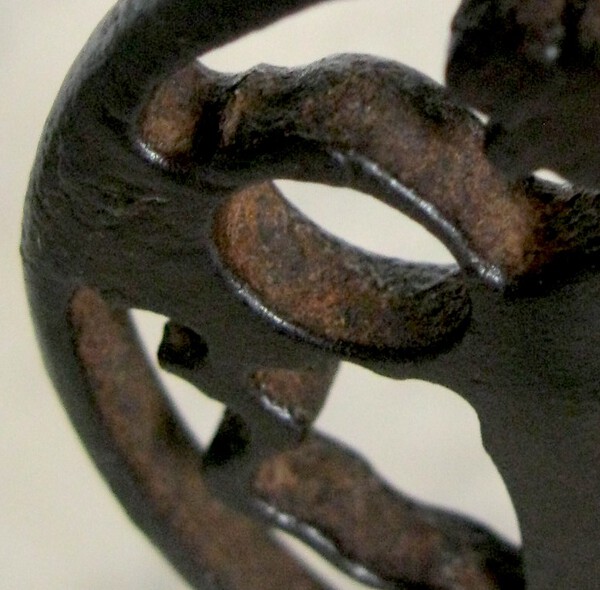
Hello, I’m convinced You did a careful job and certainly I don’t blame You of any fire-treatment. But I repeat: the inner sides must not been cleaned! The shot I’ve made isn’t best quality but I hope You get the point. Note the contrast of the polished plate as well as the rim and the unpolished (though slightly rusty) inner sides. Especially on filigree motifs the rust can be very deep, so if You rub off the rust eagerly holes could appear and even the delicate bars simply could crumble to nothing. FlorianB
-
Hello, it seems, that the inner sides have been elaboratly cleaned, too. This should never be done! However, several spots with a dull appearance and the crusty patch on the seppa dai hint to damage by fire - so it’s not a great loss. FlorianB
-
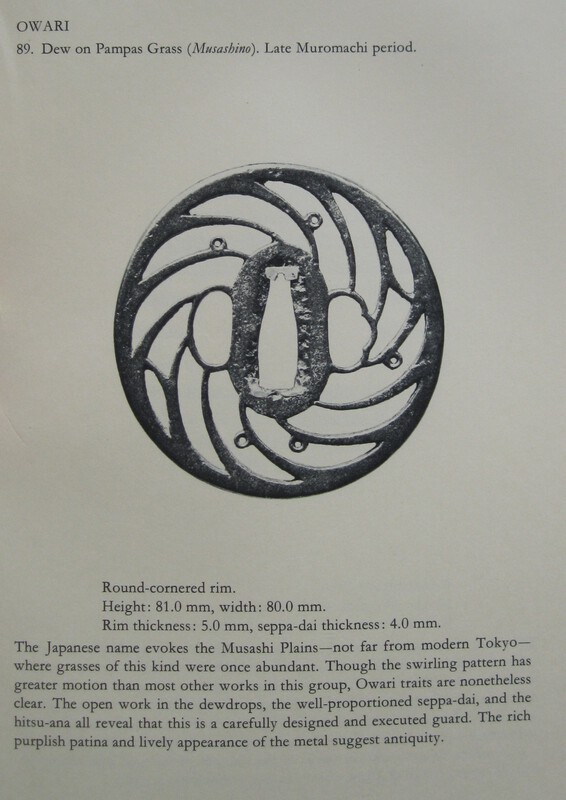
Hi Evan, the shot was taken from Masayuki Sasano’s “Early Japanese Sword Guards - Sukashi Tsuba” published 1974. I remembered this peculiar tsuba because of the rather unusual design that seems not typical for Owari. Furthermore it is the only one with Musashino motif in my books and picture collection with pierced dewdrops. Florian
-
Evan, indeed a gorgeous tsuba! Judging by the pictures alone and without knowledge of the dimensions the steel surface and the seppa-dai (as mentioned above) could hint to Kyo, because of the sturdy execution it shows otherwise Owari traits. But that's only speculation. It was a very popular subject so I think, also other schools can be considered. I'm not sure, but are there horizontal layers visible in nakago-ana and the hitsu-ana, too? I found a similar Owari-tsuba in Sasano's book, classified as late Muromachi. Yours must be later, IMHO about early Edo - Genroku. Florian
-
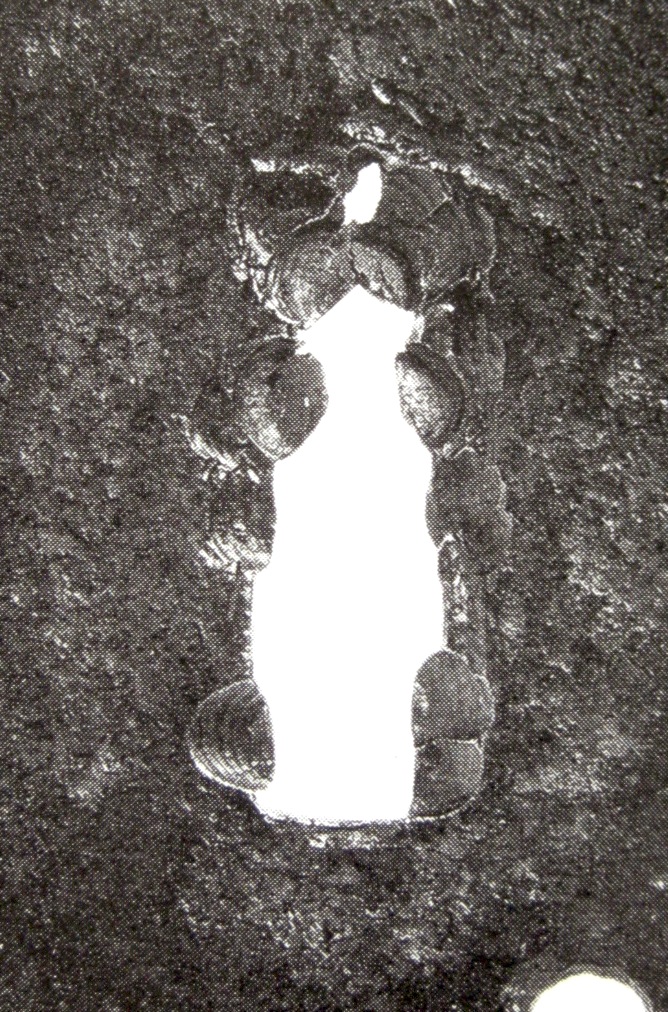
Jean, at first I thought so too, but the linear traces appear only partial on the rim and they aren't easily visible so I was lucky to catch them in the shot. Florian