Darcy
-
Posts
1,522 -
Joined
-
Last visited
-
Days Won
101
Content Type
Profiles
Forums
Events
Store
Downloads
Gallery
Everything posted by Darcy
-
Does Kirikomi Add To Or Detract From A Sword's Value?
Darcy replied to Chango's topic in General Nihonto Related Discussion
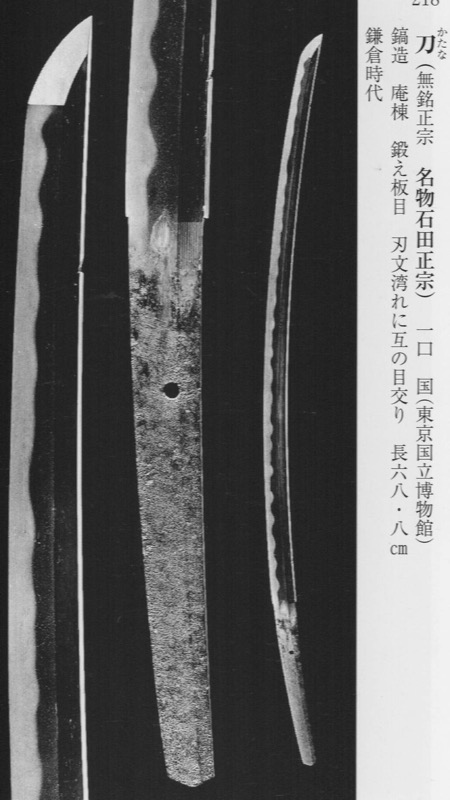
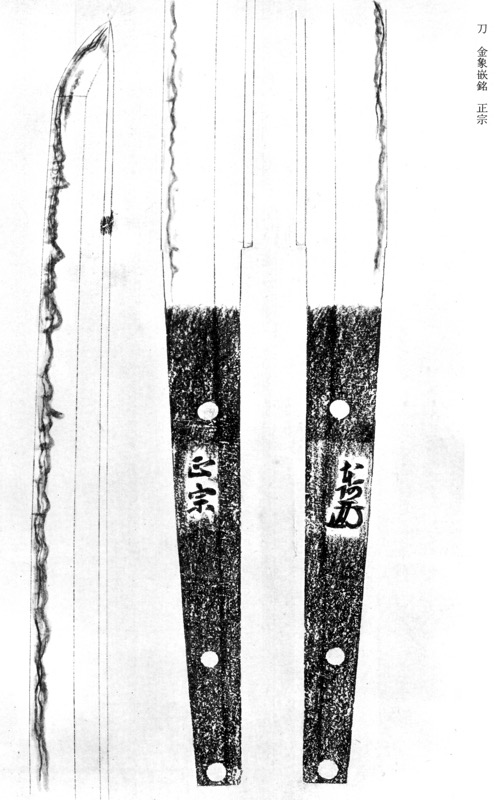
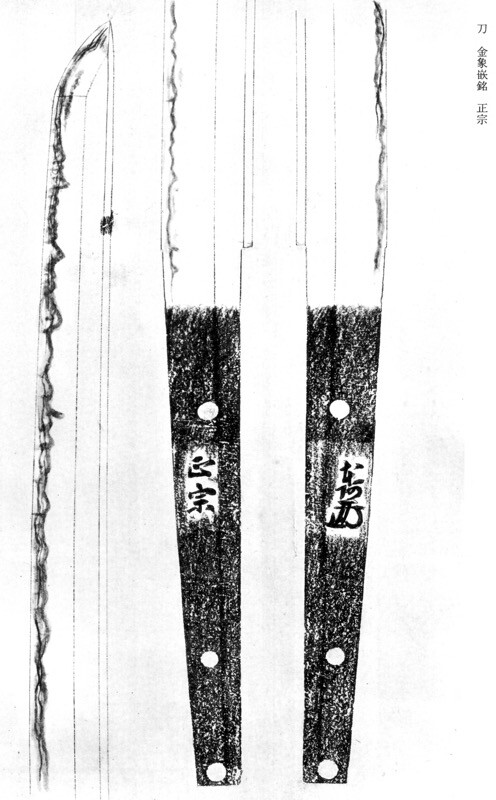
Also attaching two examples. One is a juyo Masamune with a Kirikomi. NBTHK takes pains to illustrate them as can be seen. Other 'flaws' not so much. You find those out in the photos. Also here is the Jubun Ishida Masamune. It is also known as the Kirikomi Masamune. That these blades carry the scars like this adds to their mystique. Otherwise you don't get people naming them after that. Or maybe choosing another to elevate to Juyo Bunkazai and I believe this is also one of the Kyoho Meibutsu Cho swords.
-
Does Kirikomi Add To Or Detract From A Sword's Value?
Darcy replied to Chango's topic in General Nihonto Related Discussion
I don't understand why someone would think Kirikomi do not add something. Every warrior who carries a wound home has his scar to bear testimony to the fact he met the enemy and survived. Want to do a real sword cutting test? Forget straw mats. Hit it with another sword or on a helmet. Proof of the pudding is in the eating. Vast majority of Shinto blades were not used and when tested to breakage performance was not good. This understandable ... If you designed cars and people bought them to park mostly you'd end up marketing to whatever got them to buy rather than make a great race car a lot of the time. A banged up sword filled it's duty and didn't break. Maybe the other did which is why this one is here with us now. In the case of USA found stuff we don't know the history but we do know it still took a beating somehow. Maybe even worse to be in the hands of a 12 year old boy than in a 15th century fight. It's a mark of honour. The sakakibara Masamune was covered with Kirikomi and left like that. Blade was tough as nails and one of the criticisms of so shut is maybe that it's is brittle but this is a counter example. Unfortunately a 2,000 pound bomb leaves a very big Kirikomi and it died in WWII. Prominent swords like Masamune or Rai that bear scars show that they were not made for show. That they were first made for murdering a guy who was trying to kill you with a four foot long razor blade. That is ultimate what you need to see with Kirikomi. It didn't break, it was a real tool no matter how fancy, and this one saw blood. After 1600 if it was blood it's more likely a samurai cutting down a defenceless peasant to test his blade. So to me they mean a lot. -
Ogi-Ba (Fan Shaped Hamon) In Masamune Swords
Darcy replied to Wah's topic in General Nihonto Related Discussion
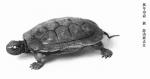
1. You are thinking of the Kikko Sadamune probably. Close enough to munge memory. 2. It's a turtle shell in the nakago 3. If anyone tries to sell you a Masamune with flowers in the hamon, run. 4. Flamboyant horimono is a Sadamune thing and most Masamune avoid any. Some like the Fudo horimono carry doubt for some authors. But there are no flowers there either. -
It was priced dead on and is no bargain. Perception of a bargain means that someone doesn't understand the massive deval that comes with mumei Shinto state. So the reason why it's so cheap is not a mystery. It's not cheap it's just right and a signed one is by far preferred in the market that the price is a high multiple. Failure to understand this is a big problem. Buy a gold coin for 2k and yeah you got an expensive one. Buy a potato at $50 and you sir are the one who really bought the expensive thing. Put them side by side and the potato is more expensive than the coin. People will burst it off and go ahh it's just 50 who cares. Then repeat the logic 20 times. Next thing you know they have 2000 worth of potatoes good for a family meal. No value. Bad grasp of math, economics and risk. The guy with the 2k gold coin still has gold. Value goes up and down but he doesn't have to eat it. Study study study.
-
If you take the lead from the Goto school, you will see that they made far more mitokoromono than tsuba early on. If the early generations even made tsuba at all (there is one Ko-Goto tsuba which is Juyo). But it implies that "mismatching" was common because there's an asymmetry in the remnants left to us now. It's probably unfair then to even call it mismatching, though I would agree with Franco in that you're going to most likely harmonize the mitokoromono first and above the rest. Fuchigashira together match and as long as the tsuba doesn't clash you have yourself a set. The one thing that I think you really would not want to do is to mismatch the fuchi go the kashira unless it's a horn kashira, and you don't want to mismatch a kogai to a kozuka. For the rest you have some flexibility, you just don't want it to look like patchwork.
-
Do Modern Collectors Need To Be Suspicious?
Darcy replied to Peter Bleed's topic in General Nihonto Related Discussion
The guarantee, it really matters based on what the price is. The Soshu daisho I got at Christie's apparently the previous owner paid $1 million for it. I don't know if that's true or not but it was what I was told by some of the European collectors who were at the auction and talked to me after about it. If that guy were buying a Yukimitsu and Masamune with no papers and spending $1M I think he should expect a written guarantee... but I don't know anyone nor would I be comfortable myself forking over that kind of money on even a written guarantee. On the other hand you have collectors who want to speculate and buy something and not pay anything for it. And they want a guarantee as well that they can return it. So from the dealer's point of view, if you see this Soshu Masamune on my table and it has no papers and the price is $4k, and you want a guarantee that it's going to pass as Nanbokucho or Kamakura period Soshu with the NBTHK... you're asking to own all the upside but return the risk to me. It's like buying lottery tickets and asking for a full refund policy in case of disappointment. So, different prices, different expectations. If you're getting a speculation price, speculate and the risk is taken by the bold, and so does the beating or the reward. A lot of people are attracted to just the gambling aspect of it, where if you take the papers off of it they'll be interested, put the papers on and they will lose interest. Same sword, just the upside is gone. The middle ground is 100% dangerous because these are swords that circulate, people with an itch to roll the dice or get something without paying for it will buy it, submit it, fail, then they immediately try to get their money back on it. There is a Rai Kunitoshi with no boshi that circulated for a long time migrating from table to table at various sword shows as people gambled and found out the truth on it. There is an "Ichimonji" that people buy and send in then find another sucker to take off their hands. The common thing is that people look at these items and are convinced they are bargains because of the association with high level makers. But they have inherent problems, the one having no boshi and the other not being Ichimonji. If you want legit Rai or Ichimonji work generally it comes with an equivalent price and if the price is not up there then there is probably a reason for it. Ultimately you need to rely on your own scholarship too as people pass over all kinds of stuff that ends up being perfectly good. All those study groups in Europe and the NBTHK branch and major collectors on hand to review the Soshu Daisho at Christie's and I was the only bidder. Everyone was caught up in the fact that it was not Masamune and was not Yukimitsu. Afterwards when I sent it to the NBTHK Tanobe sensei said the tanto was most likely Sadamune. So here you had all the people with all the knowledge and experience and nobody would stick their neck out with Soshu Sadamune sitting on the table. And I can tell you from my perspective when you are the only guy who did stick your neck out, which sounds maybe a bit like the item you're considering, it makes you nervous because you don't know if you're the smartest guy in the room or the most stupid guy in the room while you're doing it. Anyway at the end of the day if he's asking a legit price for what it appears to be then he should be prepared to back it up. If it is priced way below what it appears to be, then you know what you're getting into and he's not trying to make a huge profit and disclaim responsibility at the same time. -
Curvature is not in its favor but the rest of it is. The work looks like Soden-Bizen and curvature is not the majority of the game. The generalities in the books and the handwaving that is involved in shoehorning things into little boxes which make tutoring and authoring convenient do not always line up with realistic examples. There are Tokubetsu Juyo Kanemitsu that are saki-zori so if you want to look at something like that and make a one feature kantei saying it cannot be Kanemitsu because it has saki-zori then probably you end up being wrong. The work is the first and foremost thing about making the attribution and the boshi doesn't look very shinto to me, nor does the hamon. I agree that the sugata looks interchangeable with an ubu Kanbun blade but I don't think that is the only thing to look at.
-
I stick with the opinion that it is 3rd gen. If you get this papered you should get a sayagaki because the NBTHK is most likely going to just write Kanemoto on the paper. Or have someone check the paper when it gets back and see if you need to get more info from there. Sometimes the 2nd gen made them more regular looking at first glance but when you look at them closer it's groups of 2 in there mixed in with the groups of 3. So it is just not his style but something that the third gen liked in his work and formalized and then the line after that stayed with.
-
There is a very good Russian maker working out of Moscow. Because swords in and out of Russia is not easy, he tends to go to the swords for what he needs to get to get started. One of my clients has his work on a series of Tokubetsu Juyo blades. When I heard Russia I was skeptical but his work is really nice when I saw it and photographed it. He trains in Japan. Also does a good job picking up and matching sets of kodogu for people to use in projects. I can put Europeans in touch as it's easy for him to get to and work on your stuff. - darcy
-
What you can fab in a lab in 2016 or even in 1900 is not mimicking the process of "rust", don't conflate "oxidation" with "rusting", and even in chemistry oxidation means something different than how we use it. The entire reason that Gold has value is traditionally it was the only thing that didn't change in the environment. Empires fell, mountains fell, rivers dried up, but the pharaoh's mask remains as it was made. This connected people to the permanent world outside of our world and for that reason gold was often treated as a holy object. Look at the churches, the native americans, the buddhists. Gold is a big deal everywhere precisely for this. There is no get out of jail free card for Japanese menuki which somehow magically have the ability to undergo a magical unexplained process and "rust" on their own without American Chem Inc throwing their factory behind it. The Japanese dude who claims to have Au2O3 in kinsabi, well you need to do better than just a one liner saying you saw this on wikipedia. The formulation of this compound involves: - Perchloric acid which is stronger than Hydrocholric and will get you dead very nicely if it doesn't catch you on fire first - Quartz flasks because the stuff you're going to be dealing with will probably melt or burn glass - High temperatures - Some unnamed alkali which is probably some other horrific thing that holds the gold in the first place, formed by other first world last century chemistry - And last but not least 30MPa pressures. All that on one line on wikipedia for google arguers to point at and conclude "gold rusts." That is not rust. 30MPa is the equivalent pressure to 3km under the sea or 300 times atmospheric pressure. This is what is necessary to force gold to react with this very evil very horrible acid and incredible oxidizer to get gold to pick up the oxygen. This is not an Edo period jeweler's workbench kind of process. This is not an "oops I left it in the rain in the backyard for a week and it rusted" kind of process. 1km under the sea will crush the USA's most sophisticated nuclear submarine into a tin can. Perchorlic acid will melt your eyeballs out of your head and is a precursor to rocket fuel. It's the go-to when sulfuric just won't burn someone's face off fast enough for you, or if you think nitric acid is for children, then you use a man's acid like perchloric. Which you need to heat quite high in order to get a reaction with gold. Material handling notes: When heated to temperatures above 150° C perchloric acid becomes a strong oxidizer and eventually becomes unstable. Concentrated solutions are very dangerous and can react violently with many oxidizable substances, such as paper and wood, and can detonate. Vapors may also contaminate work surfaces or ventilation equipment with perchlorate residues, which may form highly unstable compounds, such as metallic perchlorates. These compounds may ignite or detonate under certain conditions. This is just not reflecting the kind of chemistry that you will see in your drawer turning your menuki red. This is the kind of thing mixed with a very strong acid that is required to pull electrons from gold. And nobody wants chemicals that detonate in their workflow on a daily basis because sooner or later KABOOM. Probably sooner. And even if an Edo guy could use some magical process not involving modern chemistry to oxidize gold, why would he? For instance, any one of you can go and light 100 dollar bills on fire, but you don't do it. You can use other things to light your cigarettes or burn down whatever you want to burn down. But you don't use 100 dollar bills. If you can crush a red rock and mix it with lacquer and paint it on, presto, you have "kinsabi." These attempts to connect it to gold are just the results of cognitive dissonance. People have been told it's connected to the aging of the gold for so long and they didn't question it that it's hard to let go of. So some intermediary steps are proposed but none of it makes much sense. Mosle is perhaps the first guy to write about these things for the west, and his sources lived in the Edo period. And they told him bang, the Goto mixed some crap and put it on these items to satisfy a trend. Somehow from there we lost that fact and it became gold patina. So this whole patina thing is not even that old, if the guys in the Edo period didn't believe it then why should we? Outside of the immediate evidence of this being painted on stuff... already replicated by Ford, as seen in items shot at high magnification (and Japanese publications almost never do it, they love to shoot things at life size so you know what they look like in your hand... why that is useful for an 80 year old Japanese guy who needs glasses I don't get, I like to shoot it big enough that I can see the details and the details tell the story). Lastly, anyone ever seen kinsabi on the back? Maybe. I haven't. My backs look like gold and my fronts look like someone painted purplish red crap on them under the macro lens. At arm's length to 80 year old Japanese eyes it's "gold rust". But it doesn't stick unless you cover it and real rust develops where you don't cover it. I think the evidence is clear it is a cosmetic finish put on, Gold on its own is the most noble of metals and doesn't react with anything in the environment (yes, exceptions in the lab, we can also fuse hydrogen in the lab but it's not happening on the Edo period workbench or by leaving a glass of water on my desk for 300 years). Contents of the cosmetic finish, again doesn't even matter because it's defacement of older work to adjust it to a new trend. If the new trend today was blue menuki and I painted mine blue because I thought it was cool, 300 years from now should someone accept that? I don't think they should even if we all agreed that blue menuki were the way to go and did it en masse. Anything a guy like Goto Mitsutaka made red and signed, that should not be touched at all. This was his finish and his group and his period. That's authentic to them. But they messed with old stuff and that wasn't right. And anything trying to just cling to the idea that gold menuki rust and no other gold in the world is doing it... I mean I made a ring out of the gold from my father's fake tooth about 15 years ago. He had it in his mouth for 40 years. It never rusted then and it hasn't rusted since and I don't think even if I pretended it was a menuki it would suddenly break all the rules and turn red.
-
Ford! Very good answer! Love having data. Very interesting and in agreement with what I've been thinking. Natsuo doing it on a Natsuo piece is something to never ever touch. I will continue my tirade against mid-Edo guys mucking up earlier work. I am just looking at some new menuki today that arrived. Low res and high res photos. High res is at full capability of my macro lens so can show on a screen at about 10x ... microscope. First, amazing how much detail these guys did and we cannot even see without this kind of magnification. but this is another case study of the "gold rust" as this is a Ko-Mino Muromachi period menuki and was remounted in the Edo period and recently unmounted. During the Edo period someone did the kinsabi treatment on it and then it was wrapped. This treatment completely wore off on the high points between the wrap and elsewhere between the wrap to a lesser extent. Under the wrap it remained in place so we can see the different states. If it were a natural process then exposed areas would age, not covered areas. If it is an effect applied on top, then it will wear away where exposed and stay in place where covered. And it's not on the backs. So it's not an effect of being covering. This leaves us only the Frankincense type of treatment. This in areas looks like it was layed on thick and it pooled before hardening. It completely covers some of the dragon's scales in low areas. In other areas I can see some brushmarks. To me now, this is bad condition because we have nice old menuki that someone messed up in middle edo and now half of their messed up stuff wore off so it is a mix of everything that can be wrong with them. If it was just old and dirty that is correct for antiques. But returning it to its state before someone messed it up is not destructive. Similarly you don't want them to become BLING like they were made yesterday. This kind of thing needs to be evened out and made to be reasonable so that it looks its age appropriately without having much of a trace of the 1700s era defacement left on it. High res link: http://nihonto.ca/gold-rust.jpg Photo below. The big photo above is really interesting to look at just other than the 1700s wack job on it. Very high res photo of old Muromachi work.
-
I am with the human error group but I think it's sloppy and along the lines of the "you had one job" memes. With the error frequency on something that people are counting on precisely for accuracy sake it is worrisome, because sloppiness is something that is within your control. Limits of knowledge are harder to get into and everyone is subject to that.
-
These are no longer recognized as anything by the NBTHK. They gave a lot of time to upgrade the papers into Hozon and Tokubetsu Hozon. Now a blade with these is effectively unpapered. The long time mission was to give people a window in which to move good blades that had old papers into new papers which were more secure. Over time the pool that had the old papers would continually decrease in quality. There are some exceptions: some people are lazy, some people are out of the loop, some people are cheap, some things like tsubas with an obvious attribution and nothing exaggerated, no reason to even make the change. For swords with moderate to big names or big claims, the papers are no good now. Maybe they are a hint. There are still dealers selling these blades with these papers to people with a lah-dee-dah type of attitude neglecting to mention all of the problems with them and now that the NBTHK won't even recognize them. You need to be on the alert, what is left with these papers is a cesspool after extracting everything that had a good reason to be extracted. They are almost a reverse paper now, you can kantei it to anything but what is on the paper. So in the spirit of the other buyer beware thread: BUYER BEWARE even moreso every passing hour on old papers. Dealers that refuse to acknowledge that these papers are dead or inform their clients of the risk involved with them and pass blades on with a nod and a wink are not doing anyone any favors. They burn people and eventually they come back around to someone like me to consign their blades and I say I can't take it with those papers. My own stand on them is I will not sell them. People have to replace the papers if they want me to consign them. I have been destroying some of them as I come across them. If an item will not upgrade and it's mine, I destroy the paper. If it does upgrade then the paper is a curiosity. Time to move this stuff into the extinction file I think. Don't accept these papers from dealers as anything more than if it were a dealer paper at this point (I can write papers to Masamune if anyone is interested, cost is $300 per). Push back on anyone trying to circulate these. If you like the piece tell them that you'll buy conditional on it getting Hozon and get that paper out of circulation. Or save your money when it doesn't pass.
-
Common Mekugi-Nuki On Aoi Art
Darcy replied to Alan F's topic in Auctions and Online Sales or Sellers
At this point they are lazy enough that they're using the photo of the previous one I guess because they wrote that the bag is a little bit different than photographed. I guess that implies by omission that everything else is identical. I agree that buying trinkets gets you into trouble wherever you are and buyer beware when it comes to them, but it is also a bit manipulative to be auctioning off commodities by trickling them into the market like this like they are one-offs. It's meant to catch people off guard, and to take in the non-obsessive site reloader, and it would appear to be working. -
Well that takes the fun out of it for everyone else when you look it up. I had a good look at it in Japan. It's Juyo Bunkazai.
-
It was a great exhibit. I had seen Kiyomaro a few times before that exhibit. And Kotetsu. I always left thinking ho-hum. Then I saw what was exhibited there... and I went, Ohhhhhhh nowwwww I get it.
-
Nobody wants to do kantei on this one?
-
To be an utsushi I think you need something to model on and I'm not sure there have ever been any Rai Kuniyoshi to model on. Not having it in hand and just going on the blade I think it is koto something that someone upgraded with the signature later on. It can narrow but not be tired, it doesn't look tired. We lack a word for the between state from healthy to tired. The narrowing, if there is any, will point to koto and if not then more of a mystery. I'd knock the signature off and send it in.
-
These museums are being endowed specifically to take care of swords. The guy with 11,000 swords has five full time employees caring for the sword collection. That will be a museum one day as well for him. There will not be any dumping because these institutions will be permanently endowed and both of these characters see it as doing their duty to protect these swords permanently and past their lifetimes. For a standard museum who will never display their swords or oil them, it obviously helps nobody. Not the sword or an individual or everyone collectively. A museum though that will exhibit and care for their pieces helps everyone. That you can go see David or the Mona Lisa is a wonderful thing. Swords are no different. It's just that a normal museum is not the right home for them because they will give priorities to other things and that puts the sword at risk. Being able to go see these things even through glass is one of the major steps in sword education that a collector can make.
-
No there isn't a guy who owns 10,000 swords. Because he now has 11,000.
-
Agree with Stephen. In this condition and with this kind of thing, a few minutes or hours with uchiko is the time and place for it.
-
No, this is his rival!
-
This was discussed here as sounding a bit strange at the time, also on facebook. There were very harsh words given to people who said it sounded strange both here and on facebook. I believe one guy even got banned from a group for questioning something related to this. I stuck my nose in and helped him get unbanned. Now "it's a festivus miracle" the sword appears just after Canada Post paid out. The question now is, which was not mentioned in your closure update, is: did you guys give Canada Post back their money?
-
Question About Shipping To Germany From The Us
Darcy replied to Jiro49's topic in General Nihonto Related Discussion
UPS is great if you want a box of two Tokuju and two Juyo swords stolen because you told the driver it was heavy and valuable so you'd help to carry it down to the van and he decided if it was valuable he might as well drive it to his house and play with the contents until you raise holy hell with UPS and make it clear you're sending the cops and then the box automatically shows up with no waybill, the packing removed, one of the swords damaged at your billing address and not the origin or destination because that was the only thing on the computer associated with your complaint so when the driver got tipped off internally that was the only place they knew to send it since he never scanned it and threw away the waybill. No I'm not still freaking out about it 10 years later. Use USPS. Fedex going internationally now is hit and miss about whether they will take a sword. Because TERRORISM. -
You're not alone. I've had a similar experience with something someone was trying to sell me, where they neglected to note that the kojiri was signed so there was no comment on that. The fuchi was passed and noted though it was a tragic mismatch for 100% of all of the very very big name famous smith's in-book examples. I have the paper but as I didn't buy this and the owner didn't believe me I will leave it all buried. At least it was indisputable that he had a signed kojiri and no mention of it on the papers so who knows if it is good or not. Owner had no idea because he can't read Japanese. So the third item, the tsuba, I didn't see anything wrong with that but as they missed one signature, got the other wrong, maybe being right on the tsuba completes the circle. I've also seen some that were "translated" on the worksheet to say things that were not written in Japanese. So the "translator" whomever it was seems to have been inserting his opinion in English where the judges were not writing it into the Japanese section. The worksheet is a worksheet, it's not the official paper so people need to keep that in mind when looking at them. A translator "being helpful" and not being literal is not something you can rely on when you pass it over to someone else and sell it. If you can't read Japanese you should always have someone else check your papers and at least flag stuff that might need looking at again if it looks strange or something seems missing like in these cases.