Conway
-
Posts
607 -
Joined
-
Last visited
-
Days Won
1
Content Type
Profiles
Forums
Events
Store
Downloads
Gallery
Everything posted by Conway
-
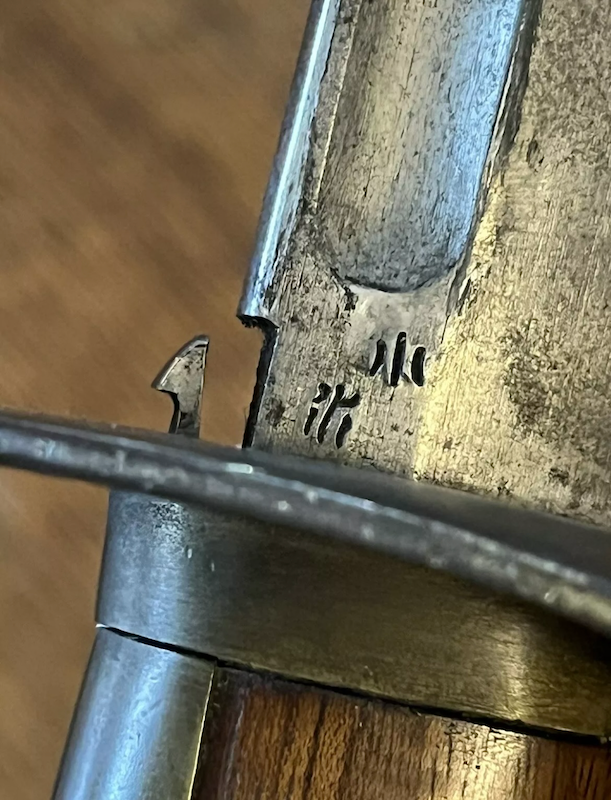
Edward, Nice find. You correct in assuming this one has been depot refurbished during its service. The "0" is a clear indication. As you may have already read, the date is usually stamped on the guard where the current markings are found. In addition to the 小, the other markings are seal script inspection marks, which may correlate to an individual inspector. The undated guards are typically earlier production. The scabbard throat piece on this example is also less common. Here is a great link with lots of solid info on Type 32s and other military swords: http://ohmura-study.net/962.html Conway
-
Does anyone know what the "1" signifies? Is it an inspector's mark?
-
WW2 Japanese OFFICERS GUNTO GENDAITO SWORD (SUKENOBU)
Conway replied to Swords's topic in Translation Assistance
Steve, This sword was discussed on the forum in December. I wouldn't trust that it's a "gendaito" just because the seller states that. Many of these RJT smiths also made non-traditionally made swords as well. -
Looks like the nakago has not been shortened based on the photos. Other Kanenao examples like this in souvenir koshirae on Pg. 95 and Pg. 96 of "Japanese NAVAL SWORDS WW2 Swordsmiths & Workshops" by Mal Cox. Conway
-
The green tsuka ito appears from time to time. I’ve seen quite a few on Iijima swords. I guess a question it raises for me is whether the tsuka for Type 95s were made in-house by the subcontractors or provided from an external supplier. Conway
-
Help requested with a Kai-Gunto Handmade Showa Blade.
Conway replied to tbonesullivan's topic in Translation Assistance
David, It looks to be signed Takai 高井Sadatsugu 貞継. Conway -
Fredrik, The smith is 兼則 Kanenori. There is an article in the NMB downloads section with more information on him. The date is May 1943. Conway
-
type 19 kyu gunto dress swords, i love them.
Conway replied to lonely panet's topic in Military Swords of Japan
Sam, Personally, I’d say $300 -$500 depending on the condition and whether it’s a field grade or company grade sword. There’s so many plain company grade swords of poor workmanship out there so it’s nice to have a more unique example. But that’s just my opinion as someone who’s a bit addicted to parade swords. Someone else who just wants one to complete their collection might not pay that much, but they also might not recognize the interesting historical context. Conway -
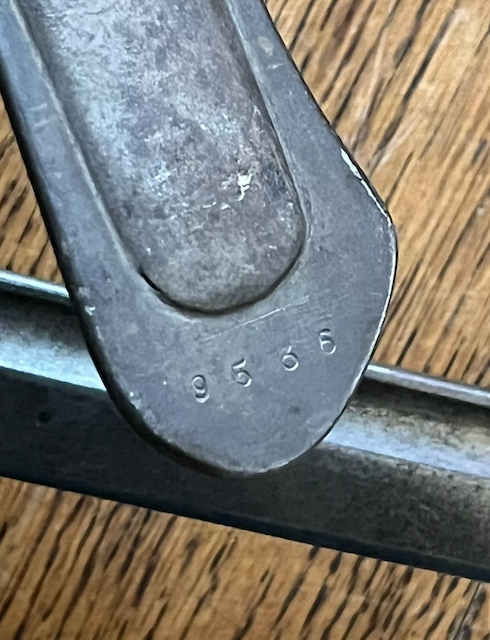
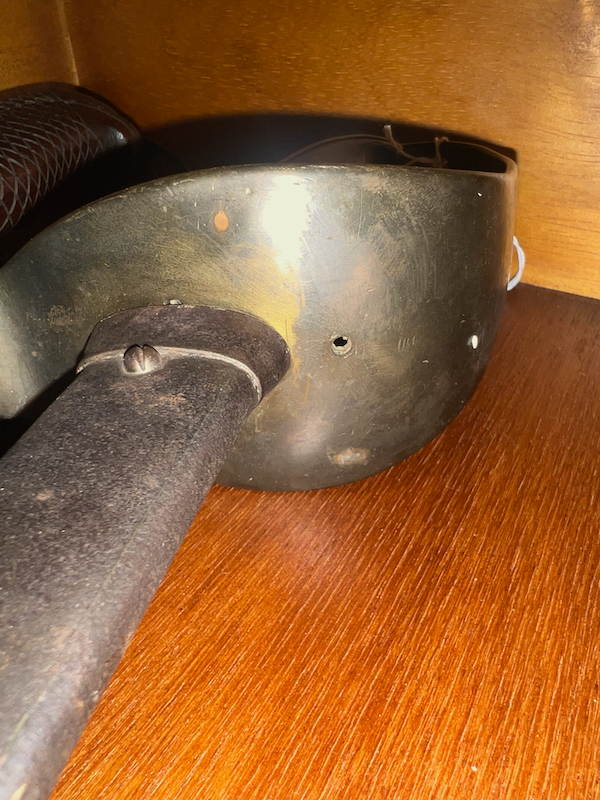
Thomas, The scabbard is matching. It does not have an arsenal stamp on the guard, which corroborates the warrelics EU article stating that the arsenal marks appear in the higher serial number ranges. The hole for the finger loop is present, but the leather and fastener are missing. It does have the typical sharpened cutting edge. Conway
-
type 19 kyu gunto dress swords, i love them.
Conway replied to lonely panet's topic in Military Swords of Japan
Hello Sam, I have one by E &F Horster with the two fullers. It also has a "double" Suya logo on the guard. I am always looking for examples of parade swords with the marked German blades. You should try to go back for it Conway -
John, I saw this one when it was listed for sale. It's a very nice example and deserves a real knot IMHO. The brown leather knots with the slider are correct for this variant. See the link below - "Middle Type" http://ohmura-study.net/957.html Conway
-
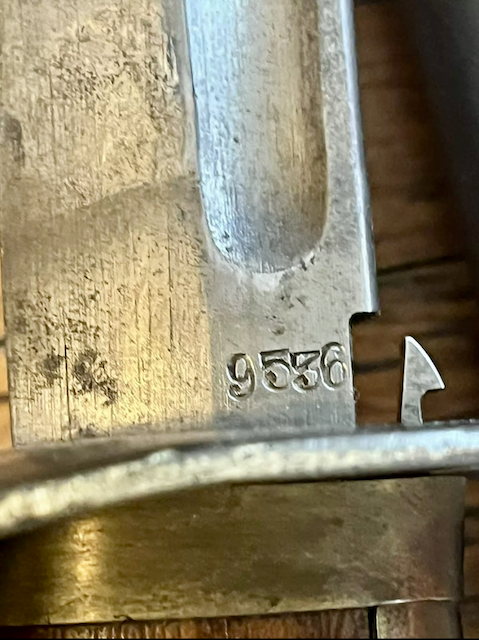
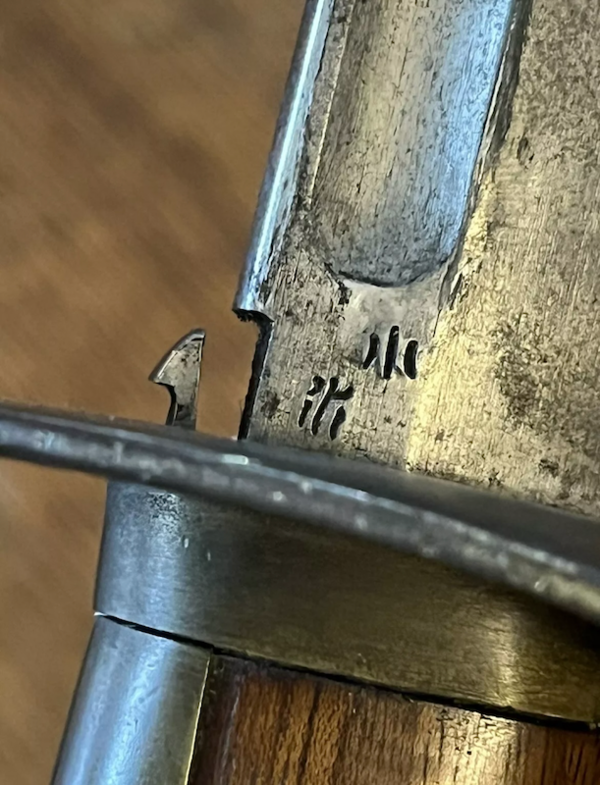
John, Here is the one I currently have. I don't keep any records of serial numbers, but I would say what makes them difficult to research online is that many people don't know these are a distinct model so some examples get labeled online as just NCO, cavalry, or Type 32s. I also think you should ask Brian to repost this thread in the military section for better visibility. Conway
-
Looks like the Yamamoto Gunto shop. See page 46 of the attached document. This stamp is also found in a few posts in you search it. Conway
-
For the fuchi, Kokura oversight of Iijima is still correct for this serial number range. The streaky paint on the scabbard may be an indication it was touched up or repainted. Conway
-
Prototypes or just Variation of Type 3 Rinji?
Conway replied to waljamada's topic in Military Swords of Japan
@Bruce Pennington Ki Masatsugu is mentioned in "Showa Period Swordsmiths of Fukuoka Prefecture, Kyushu and the Kokura Arsenal" by Mal Cox too. A few references to the smith. -
Prototypes or just Variation of Type 3 Rinji?
Conway replied to waljamada's topic in Military Swords of Japan
Bruce, -
Prototypes or just Variation of Type 3 Rinji?
Conway replied to waljamada's topic in Military Swords of Japan
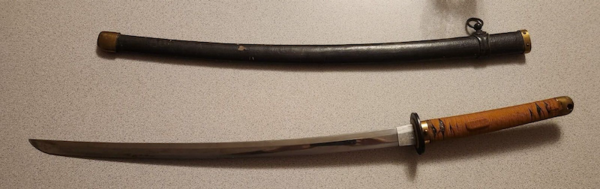
Another example on eBay right now: - Signed Ki Masatsugu https://www.ebay.com/itm/306045414160


-
Sam, One of the longer threads about Type 95s on NMB: Type 95 Gunto Worksheet - Starts with late Suya production swords with un-fullered blades - Mentions rare subcontractor Mizuno - Discusses Ichi and Kobe swords Another unique post on the Pattern 3 with the transitional tsuba and Jinsen Arsenal inspection marks: Type 95 Transitional Tsuba Conway
-
Hi Josh, I think you misinterpreted the comments here. No one said it is not of collector quality or indicated it has no value. Most people on this forum won't encourage restoration vs no restoration based on pictures alone unless the piece is obviously low quality. That is why it has been suggested that you should have someone examine it in-hand. Conway
-
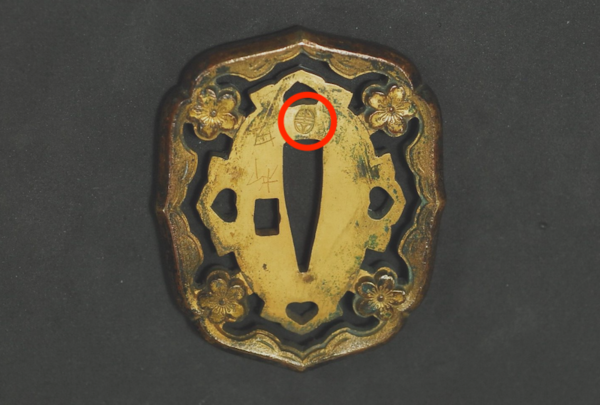
Tony,这把锷有没有徽标? Conway
-
type 19 kyu gunto dress swords, i love them.
Conway replied to lonely panet's topic in Military Swords of Japan
Greetings, I stumbled upon this short, but informative article over on Warrelics written by the late Nick Komiya. I have't found this particular article shared before on NMB. The article on parade swords starts about half way down the 1st page of the thread. Of particular note, is the switch from nickel to chrome plating and the re-using of old parade swords to conserve materials. Dummy Sabers In the Shadow of the Samurai style Gunto -
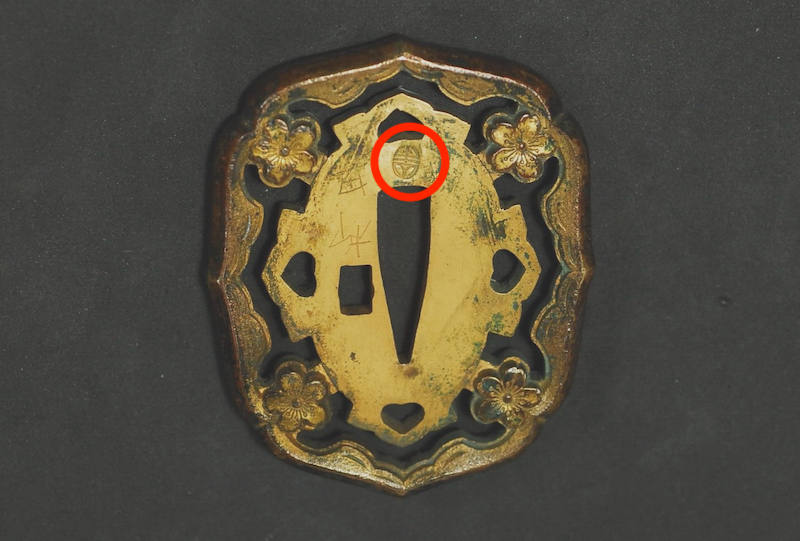
Saw this on a colonial sword guard. The only maker I am familiar with that marked swords "Tokyo" is Suya. The characters below are difficult to make out without a better photo.

-
What's the length of the nagasa? It reminded me of a recent post of a Naohiro blade in Suya fittings here:
-
Beautiful sword! Out of curiosity, did you buy that in China? From time to time, people post nice finds from China so I am just wondering about the collector's market there. Conway
-
Believe so. I saw it too. Conway