John C
-
Posts
2,699 -
Joined
-
Last visited
-
Days Won
18
Content Type
Profiles
Forums
Events
Store
Downloads
Gallery
Everything posted by John C
-
rare papered Yasukuni shrine Tanto by Ikeda Yasumitsu
John C replied to Volker62's topic in Military Swords of Japan
Thank you, Simon. This is great information. John C. -
rare papered Yasukuni shrine Tanto by Ikeda Yasumitsu
John C replied to Volker62's topic in Military Swords of Japan
Thank you, Simon. I'll follow-up on that as well and see if I can find any pics of it. John C. -
Odd that the kikusui seems a bit clumsy. John C.

-
rare papered Yasukuni shrine Tanto by Ikeda Yasumitsu
John C replied to Volker62's topic in Military Swords of Japan
Colin: Yes, it does add to the research - thank you. It originally came in shirasaya, so do you know if it was made for an Army officer or for a naval dirk? Or are they interchangeable? John C. -
rare papered Yasukuni shrine Tanto by Ikeda Yasumitsu
John C replied to Volker62's topic in Military Swords of Japan
Volker: I am doing a little research on these dirks and maybe you can answer a question or two. I assume these were ordered by officers from smiths similar to the way swords were ordered. Do you you have any information on that process or which smiths were involved? Also, in reference to the Yasumitsu, is that the original habaki? Thank you, John C. -
Thank you, Thomas. I hadn't seen anything in writing that says that. Does this also apply to other swords where they use a 3 or 4 digit number? John C.
-
restoration Does anyone know a Joseph Machids?
John C replied to Gordon Sanders's topic in General Nihonto Related Discussion
There seems to be a Joe or Joseph MACHIDA listed in New Jersey who may be associated with this kind of stuff. John C. -
I guess starting over at 100 would indicate some sort of batch process. But it seems only a few smiths used a letter to differentiate batches. (I know - I know.."Batches? We don't need no stinking batches.") Seeing duplicate numbers could indicate some sort of subassembly process whereby the numbers stand for parts in a bin. But I think the numbers go too high for that - anywhere from 2 to 4 numbers (including all blades, not just souvenir). And there is that picture you posted of the polishers in the factory where all of the blades seem to be marked in the 300's. Seems odd, unless it does refer to some sort of batch process. In addition, the souvenir blades only use black paint. Is there any significance to that? Bottom line is I'm still not sure exactly what they mean. John C.
-
Looking for info on WW2 Army/officer dirks
John C replied to John C's topic in Military Swords of Japan
Thanks, Bruce. I'll take a look. John C. -
Looks like the shadow of what used to be a 6 under the 7. John C.
-
Looking for info on WW2 Army/officer dirks
John C replied to John C's topic in Military Swords of Japan
Mikasa-to seem to be the same basic style. Sure wish I could afford one of those - if I could find one! Also, this style seems to be quite different than the so-called "kamikaze" style; or regular soldier style. John C.
-
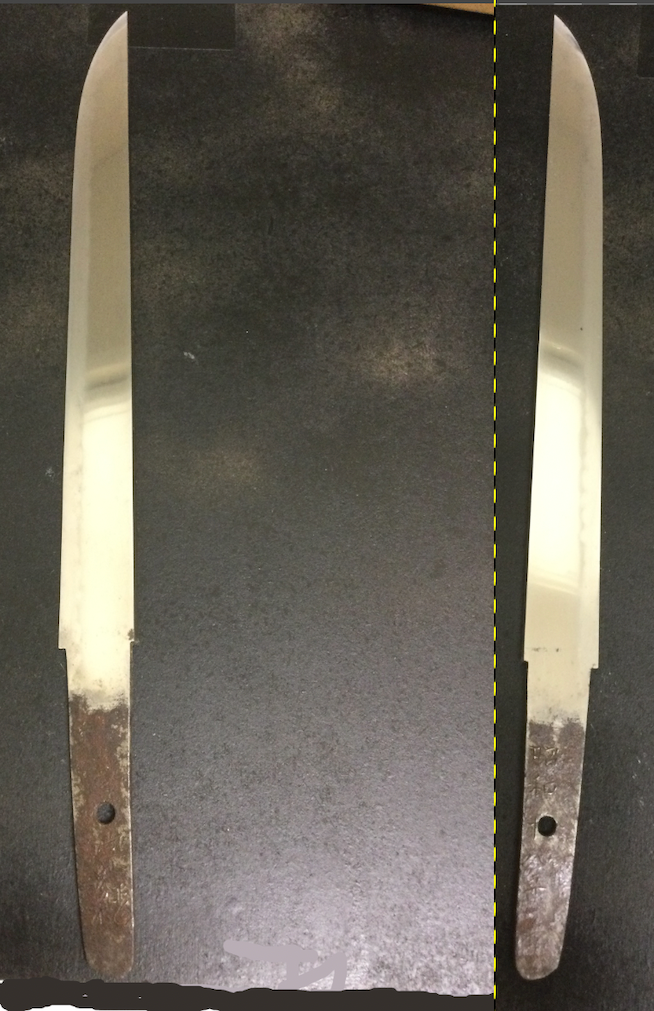
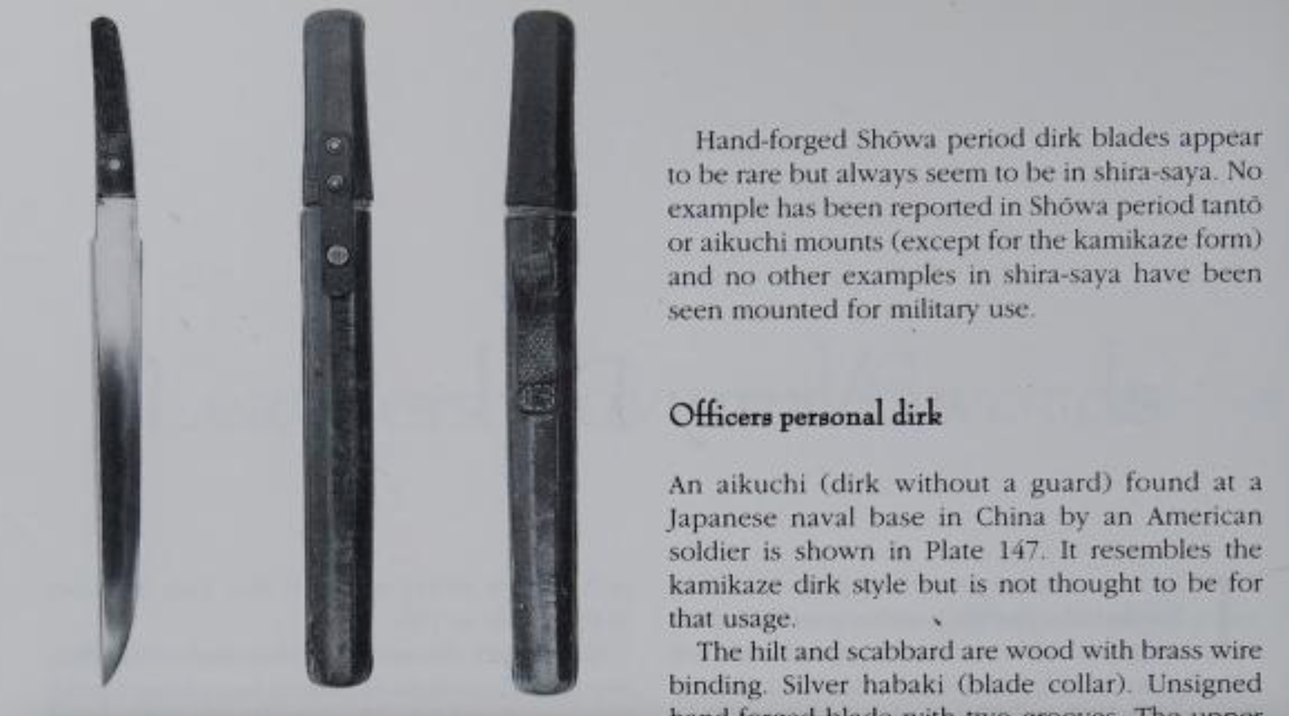
Everyone: I have a (Tanaka?) Munetsugu dirk dated 1943 and cannot find much information on these. It came in shirasaya. Munetsugu was a relatively unknown mediocre RJT smith. The first pic is my dirk and the second is a blurb from Fuller and Gregory about these. I have a few questions about these I hope someone can answer. 1. Is there any literature beyond F&G and Dawson that talks about these? 2. Would these have been made along side swords at Seki or Yasakuni, for example? 3. I assume these are special order, however did all WW2 smiths make dirks as well as swords? Thank you for reading, John C.


-
No. Just modern numbers, however the tartara ovens have been there for quite some time. John C.
-
Steve: Just came across this in Leon Kapp's book: "The Yasakuni (shrine) tartara was operated from 1933-1945, during which time is was operated 118 times and produced about 50 tons of tamahagane." Modern Japanese Swords and Swordsmiths, pg. 81. John C.
-
John: Here is a link to a great article on the different Japanese battle flags. https://www.warrelic...lden-brocade-647336/ John C.
-
For those interested, F&G's book is available for 1 hour online loan at Internet Archive. It was added July 2021. https://archive.org/...ull/page/n1/mode/2up John C.
-
- 2
-

-

-
Handwritten description of sori on torokusho
John C replied to John C's topic in Translation Assistance
Thank you, Moriyama-san. That extra vertical mark was throwing me. Much appreciated, John C. -
I know nothing of forging so I'll ask since this has confused me as well. Although the V marks are a result of applying the clay, would they look differently based on the method of cooling? Or is the color difference simply a product of the rate of cooling? John C.

-
Hello: I've been able to get most of the translation done, however under the sori label there are two handwritten kanji or hiragana I cannot figure out. Thank you for looking, John C.

-
Not sure of the mei, however the date is 1943. John C.
-
interesting. One of our first duplicate numbers. With some 8,000 plus souvenirs being made, we should see some duplicates. John C.
-
John: Go easy, bro. English is not Chris' first language. Indeed, there are many people who live in different countries and speak many languages and they do quite well at getting their points across. Just my two cents at keeping the discussion civil. John C.
-
Bruce: Two observations - 1) are we sure that last character is a number? It looks a bit strange for a 5; 2) I don't think (at this point in my research, anyway) that these are production numbers that should be viewed consecutively. If they are truly assembly numbers of some sort, 8224 could come before 2045, depending on what they mean. Not sure exactly what they mean yet. But as you know, I am usually wrong so please feel free to correct me!! John C.
-
Bruce: This looks a bit like a stylized M over a "castle" shape. Are there any forges that begin with the letter M and are associated with a castle? John C.
-
It is a repro. The link shared by Moriyama-san has that helmet with "copy" on the tag for 62 dollars. John C.