
Soshin
-
Posts
2,945 -
Joined
-
Last visited
-
Days Won
3
Content Type
Profiles
Forums
Events
Store
Downloads
Gallery
Everything posted by Soshin
-
Hi Keith, I don't think that out of focus feature is a tekkotsu on the mimi. I would say that it more likely a casing flaw or some very heavy rust. A quick trick to tell is to use some hard wood, dry bamboo, bone, or horn and see if it comes of with some rubbing. If it is rust it would start to wear off if it is a iron casting flaw or a tekkotsu it would not be effected by the rubbing. It might not be worth it as the tsuba is likely case and any iregulaties in the surface of the rim are the result iron casting flaw. I purchased one cast tsuba and I returned to where it came eBay. I was just nice enough to say that it was cast in the item description when I listed. Just my two cents. Thanks for sharing and the discussion. Yours truly, David S.
-
Hi Keith, Could you post some photos of the actives at the rim and hitsuana of the tsuba you describe on your post? If you can't I fully understand as it isn't really easy to photograph such fine detail. For the tsuba in question I have seen this motif frequently on tsuba listed on eBay. Yes before anyone asks I am still spending time looking for a "diamond in the rough" so to speak on eBay. The quality as Eric states is fairly poor in my opinion as well. The tsuba also shows some condition issues in regards to red rust around the dragon design that are independent of the quality. Yours truly, David S.
-
This is generally true for Kanayama tsuba. The sukashi design is often turned on their axis if I remember correctly. I would say that Henry's fine Kanayama school tsuba has a very similar theme but the method of execution is very different. I also find it interesting in the post linked by Henry that their was also a debate if the design was butterflies/moths or lotus leaves. Yours truly, David S.
-
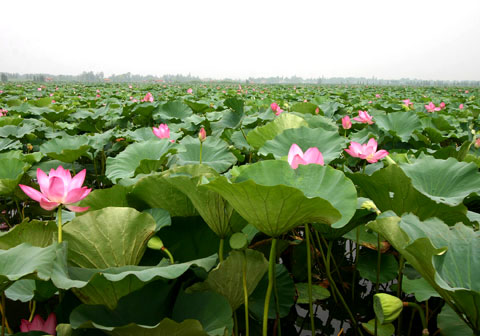
Interesting idea Ford once I did some thinking about it and also did some searching on the internet of photographs for lotus leaves. Here is a good photograph of lotus leaves for reference. The interesting thing is both the leaves and stems are radiating out from the seppa-dai. I wonder if anyone knows of a tsuba with a similar lotus leaves done in kage-sukashi (影絵透) and the lotus stems done in Ji-sukashi (地透)? I am sure there is likely a number of earlier tsuba that used this or very similar designs. Thanks again for the information Moriyama-san. Yours truly, David S.

-
Thanks for the wonderful observations Moriyama-san and Malcolm. I would agree the design is the Japanese Hummingbird Hawkmoth. Moriyama-san what would be the Japanese (Romanji and Kanji) for Japanese Hummingbird Hawkmoth? This will help me apply my learning of Japanese to a hobby. I know that butterflies and moths are also frequently executed in kage-sukashi (影絵透). I have a much older Ko-Shoami tsuba dating from the Momoyama period that is of butterflies done in kage-sukashi (影絵透). Not sure if the tsuba in question can be attributed to a specific school as it was produced so late in the Edo period but I think a good starting point would be Shoami. Yours truly, David S.
-
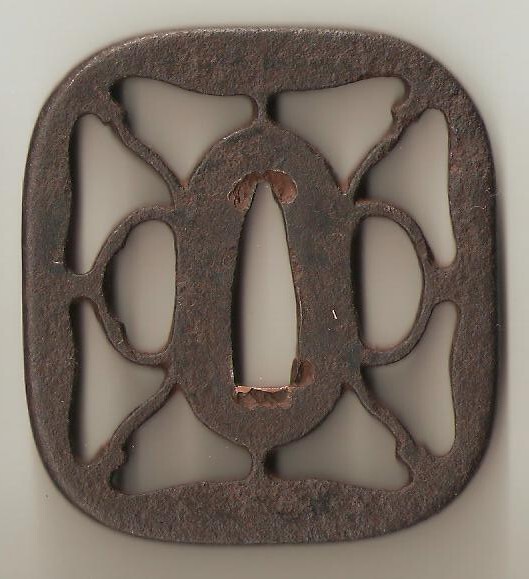
Hello, tosogu forum. Had this tsuba for awhile it was one of the first tsuba I ever purchased about seven to eight years ago from Japan. Not sure of the design motif but I was thinking on the lines of a signal large cherry blossom done in kage-sukashi (影絵透). This is a common method used for blossoms. Does anyone else have any ideas in terms of what the design is. As for the tsuba age I was told at purchase that it was made during the late Edo period which I agree with in terms of the overall size, color (black with blown overtones) of the sabi. Comments and educated guesses as to the design are welcome. Below is a omote side scan of the tsuba let me know if you need me to scan the ura side but the design is the same on both sides. Sorry for the dust and lint on this scan of the tsuba. Thank you. Yours truly, David S.
-
Dear John L., I would agree your tsuba is likely Ko-Shoami dating to some time during the Momoyama period or is a very early Edo period Shoami tsuba. The small size makes me think early Edo but other factors such as the rim do remind me of Momoyama period Ko-Shoami work. I would like to hear the opinions of more experience members of the board. Thanks for taking the time to share photos of your nice tsuba. Yours truly, David S.
-
I think you are completely correct Martin. That type of design is very often around the nakago-ana of Namban tsuba. I have a earlier Edo period Namban (Kanton subtype) tsuba done in classic Namban-bori carving style of a with the similar style of decorations on the seppa-dai around the nakago-ana. I would consider it one of the hallmarks of this type of tsuba. My Namban tsuba is of normal size for a katana. Yours truly, David S.
-
Hi Yumi, The design on the first tsuba are fern sprouts and are called warabi (蕨) in Japanese. They are a common motif in Edo period tsuba and a traditional food in Japan. Yours truly, David S.
-
Thats a good point as tsuba is a Japanese term and there isn't a plural or singular forms of the word like there are in English. Yours truly, David S.
-
The presence of "iron bones" the Japanese term is tekkotsu (鉄骨) was one of the deciding factor for me to acquire the tsuba for my collection. The first three generations of the Yamakichibei all had good tekkotsu. I am also leaning towards more tosho or kakushi style tsuba for my collection. I will give Gery half permission as posting photo of the tsuba was for educational and not commercial reasons. Yours truly, David S.
-
Should I be the one to tell him? Well here goes... The second tsuba is not signed Kaneie (金家). It is signed Umetada (梅忠) left side of nakago-ana and Yamashiro Kuni Ju (山城國住) on the right side. The tsuba looks like it dates to the late Edo when members of the Umetada school and those making copies of the school's work started signing Umetada (梅忠) using the original Kanji for Ume (梅) in the family name. I would not say this tsuba reminds me of Umetada school craftsmanship so it might have been made by another tsubako and then just signed Umetada. The reverse might be possible as well. A Umetada tsubako working in a Shoami style. Hope you find the information helpful in your study. Yours truly, David S.
-
The tsuba looks like a late Edo period work of the Namban school. The kin-zogan and Chinese style dragon and diamond motifs are all classic Namban. Some people sub-categorize the Namban tsuba with a Chinese influence as Kanton tsuba. I viewed the tsuba at the Sloans and Kenyon auction house in Bethesda, MD USA last weekend. Here is the link the auction site: http://www.sloansandkenyon.com/. You don't need to register at their website to see anything. The sale was today and it is part of lot number 831. The lot is dated at Meiji period but I think that time period is in reference to the two mixed metal vases which are also part of the lot. I was sad at the fact that is was the only tsuba up for auction this weekend. Hope you find the information helpful. Yours truly, David S.
-
I fully understand. :D The tsuba is a nice late Edo period Bushu-Ito school piece. The condition looks good especially the kin-zogan. It is likely a product of Masakata workshop. Or at least a piece done in the style of Masakata by a later artisan. I did notice the similarities between the signatures of the listed tsuba but I am not a expert on this. I did some quick research and Masakata (正方) died 1774 and was the third master of the Ito school of Bushu. Yours truly, David S.
-
Thanks for sharing Marc. Nice tsuba from the Meiji period with a fake signature. I would love to look it up but most of my books are in boxes as I have started the process of moving. Yours truly, David S.
-
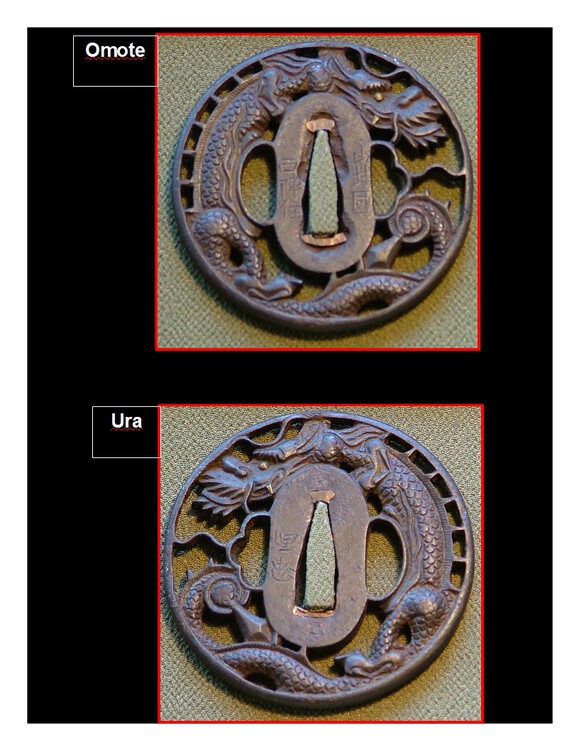
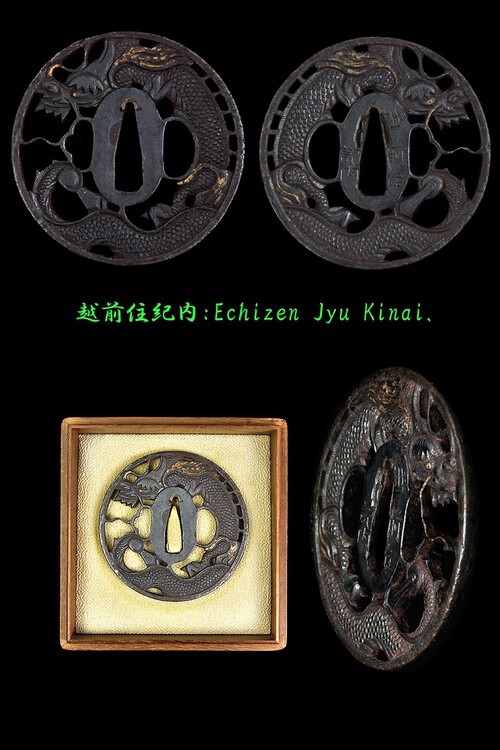
Hi Andrey, The Echizen Kinai school also had workshops that produced many tsuba with similar motifs or overall designs during the middle to late Edo period likely with different signatures. The Kinai unlike the Bushu-Ito school had I think more of a range in quality very unlike the early Akasaka school. Keep also in mind that there was also coping done by other schools as well. In the case of the Kinai school the Aizu Shoami school would offten copy there original designs during the late Edo period. These copies had a great range in quality as well. I know that at times during the middle Edo period as well other schools would take a motif classically done in one school and do their own version of it. Here is an example of a classic Kinai school design of the rounded dragon done by a Umetada school artisan the second is a Echizen Kinai school artisan doing their own classic design. The difference in carving ability and composition is very apparent and is in favor of the Umetada artisan. :D Yours truly, David S.
-
There were workshops making tsuba like these during the late Edo period by the Bushu-Ito school. Most of them being made by students of Masakata. I don't think the term mass production with or without quotes should be used as Japan at the time was not industrialized. The industrialization of Japan did not happen until the Meiji Restoration. One must also keep in mind that this idea of workshops is not a late Edo idea or concept in anyway or for that matter a sign of a lack of quality. I think the group to first do this during the early Edo period was the Akasaka school. The first three generations and a merchant (Kariganeya Hikobei) left Kyoto and establishing a workshop in Akasaka, Edo. The merchant helped design the tsuba and also worked with quality control to make sure only the best tsuba were made by the Akasaka school of the early Edo period. Yours truly, David S.
-
I remember reading a few different places that the Ono school was one of the first schools making early Yagyu tsuba on commission. Some of the early designs of Ono school were also adopted for Yagyu use. Other schools that also make Yagyu tsuba were the Owari, Kanayama, and Shoami schools. Yours truly, David S.
-
Generally this idea of a need for quick draw of a katana from its saya is I think a incorrect assumption mostly develop by the exposure to Iaido and similar Nihonto drawing arts. In a real combat situation (think battlefields of the Pre-Edo period) trying to draw any katana with or without kogai or kozuka would spell death. A quick observation of some of the remaining kenjutsu techniques indicates this fact as well. Quick draw techniques only became important until the Edo period during a non battlefield civil situation such as self defense along the street or during a single duel for honor. This question of having two kogai hitsu-ana I have seen some Pre-Edo tsuba with two kogai hitsu-ana or only one kogai hitsu-ana. I have recently purchased a tsuba for my collection that dates to the Momoyama period and it has two kogai hitsu-ana. A contras to this I have a late Edo tsuba that also has two kogai hitsu-ana. As for the use of a kogai I am really not sure but the use as a hair styling tool sounds reasonable. Just my two cents. I am really enjoying the discussion while waiting for better photos of the original tsuba in question. :D Yours truly, David S.
-
Hi Keith, I have often equated the large number of smaller size tsuba of the Edo period to belong to one of the two possible categories: 1. Belonging to a samurai's wakazashi. 2. Belonging to a merchant's wakazashi. This is due in part to the fact that merchant's were allowed to wear wakazashi. I am also aware that peasants were allowed to wear tanto in public if I am not mistaken. I do see many Edo period tanto tsuba as well ranging in quality. This social structure was finally implemented by the government of the Tokugawa Shogun but started by Oda Nobunaga. Yours truly, David Stiles
-
Dear Keith, Being a Tsuba or Tosogu guy in general I would say you need to take some good in focus photos of the tusba under normal lighting conditions. The quality of the scans that you have of the tsuba are just not that great and the color and contrast looks strange. There is a old saying that looking at a tsuba under direct sun light is the best as it will allow you to see and possible photograph a image where the true condition of patina of the tsuba can be observed. The overall color and condition of the patina can help determine age. With the current quality of the images I am not even going to try and guess. Yours truly, David S.
-
Paul, Just sent Mr. Heckmann a email asking for more information about this upcoming publication. It looks really nice as I have read other works by Robert E. Haynes on this topic and found them very helpful. Yours truly, David S.
-
Dear Kris, I would say late Edo. Please follow the link to a related thread about Kunihiro: http://www.militaria.co.za/nmb/viewtopic.php?f=2&t=7377&start=0&st=0&sk=t&sd=a. I have a tsuba by them as well. There was a total of four to six artists in total working in Edo during the late Edo period (circa 1770 to 1868) using that name. Not sure which Kunihiro is mine or yours for that matter. I like there simplistic Tosho styled designs. I don't know much about Myochin school. There was a Kunihiro that was one of the "Founding Fathers" of the Shinto sword period but I don't think he made tsuba. I hope I was helpful. Yours truly, David Stiles
-
The first photo is out of focus and not at the best angle. The second one is much better. There is what looks to be active red rust on the tsuba which isn't a good thing. The design reminds be of the following Ko-Shoami piece. Overall it looks like a nice tsuba even with what looks to be a really bad photograph. The design is called Matsukawabishi in Japanese. Here is a similar tsuba with the same design. The tsuba in question is likely a high quality Edo period copy that would look wonderful in my collection. It might belong to the Edo period Shoami group as designs of the Ko-Shoami were copied by it and many other schools in the Edo period. Just my thoughts I am sure someone more knowledgeable will chime in on the discussion. Thanks for sharing. Yours truly, David Stiles

-
Dear Eric, Yes this was the Nihonto that that was originally for the Koshirae in question. Thanks Eric for taking the time to find a PDF of the thread. I was not able to find anything else about the Nihonto in my file folders. I was able to find another Nihonto made by someone working in the same school at a latter time period. Here is the link in has nice photos and good amount of information. http://www.sanmei.com/contents/en-us/p1445.html The sori of my daito was much greater then this Nihonto in question and it had more of a Koto overall character to it. For someone who has given up Nihonto I sure still enjoy talking about them. :D Yours truly, David Stiles