Scogg
-
Posts
1,915 -
Joined
-
Last visited
-
Days Won
20
Content Type
Profiles
Forums
Events
Store
Downloads
Gallery
Everything posted by Scogg
-
 I agree with Geraint. In my opinion, at best it’s a piece together with a mix of real and fake parts. If these crudely cast fittings were actually late-war; I would think that we would have seen them more frequently on other late war examples. Here they appear ill-fitted and with brand new tsukamaki. I do not think that is writing on the sarute. To me, it looks like scratching from using a tool to crimp the sarute into place. Another sign this might have been put together recently. -Sam
 -
I have watched a few videos of modern smiths adding broken pieces of older nihonto to their billet. I imagine this would help provide a level of diversity from one sword to the next in steel composition. Interesting stuff, -Sam
-
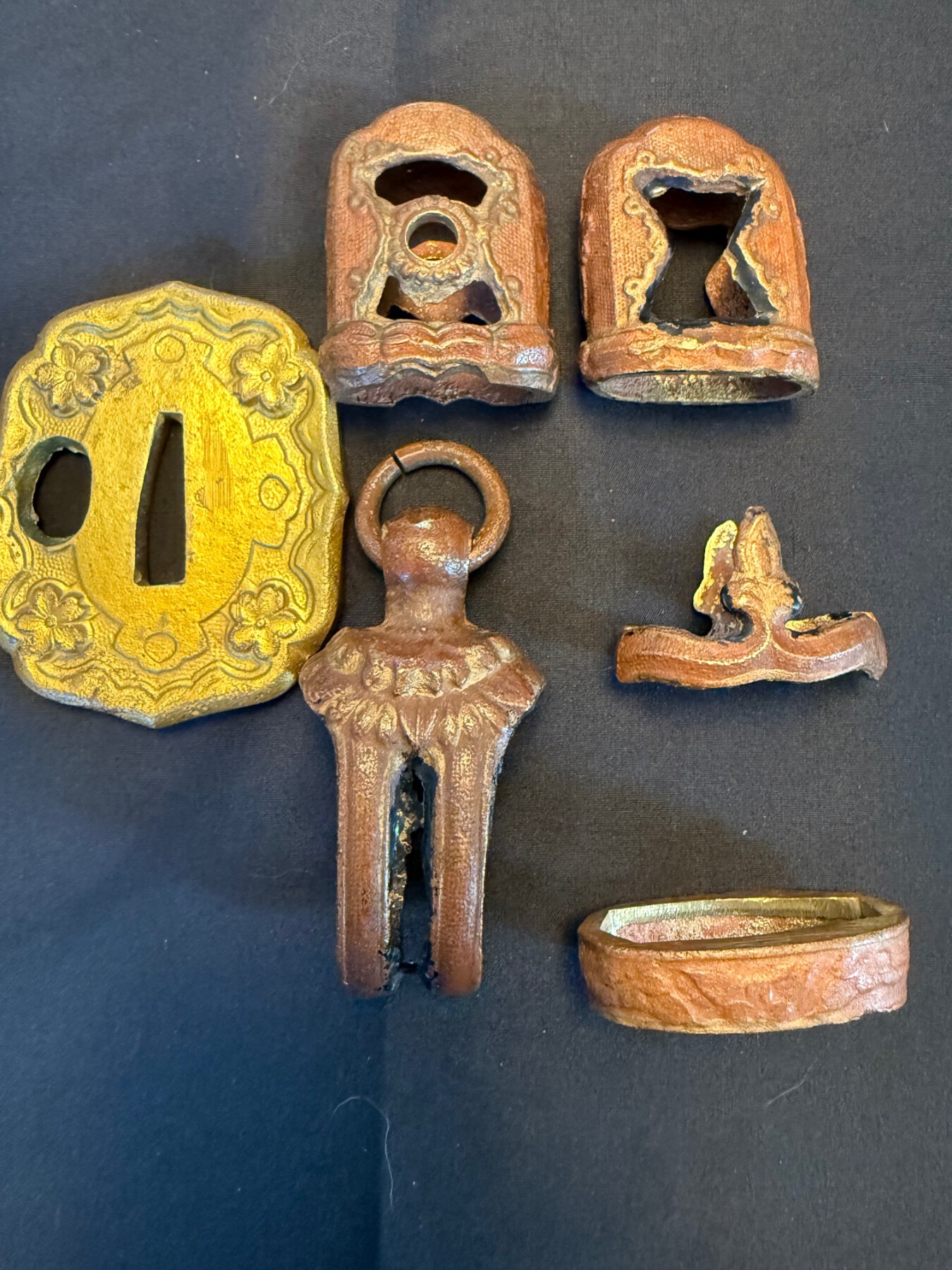
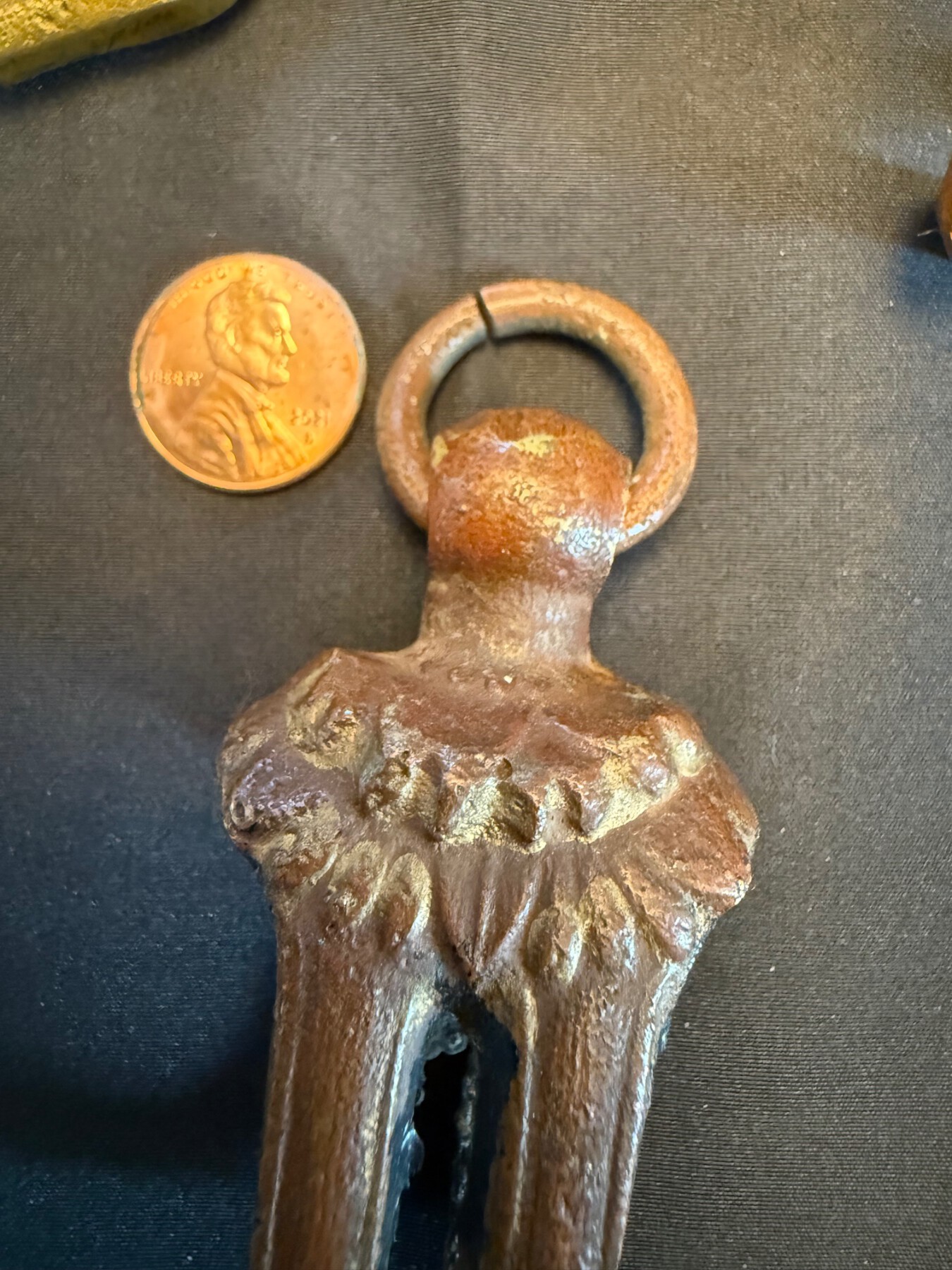
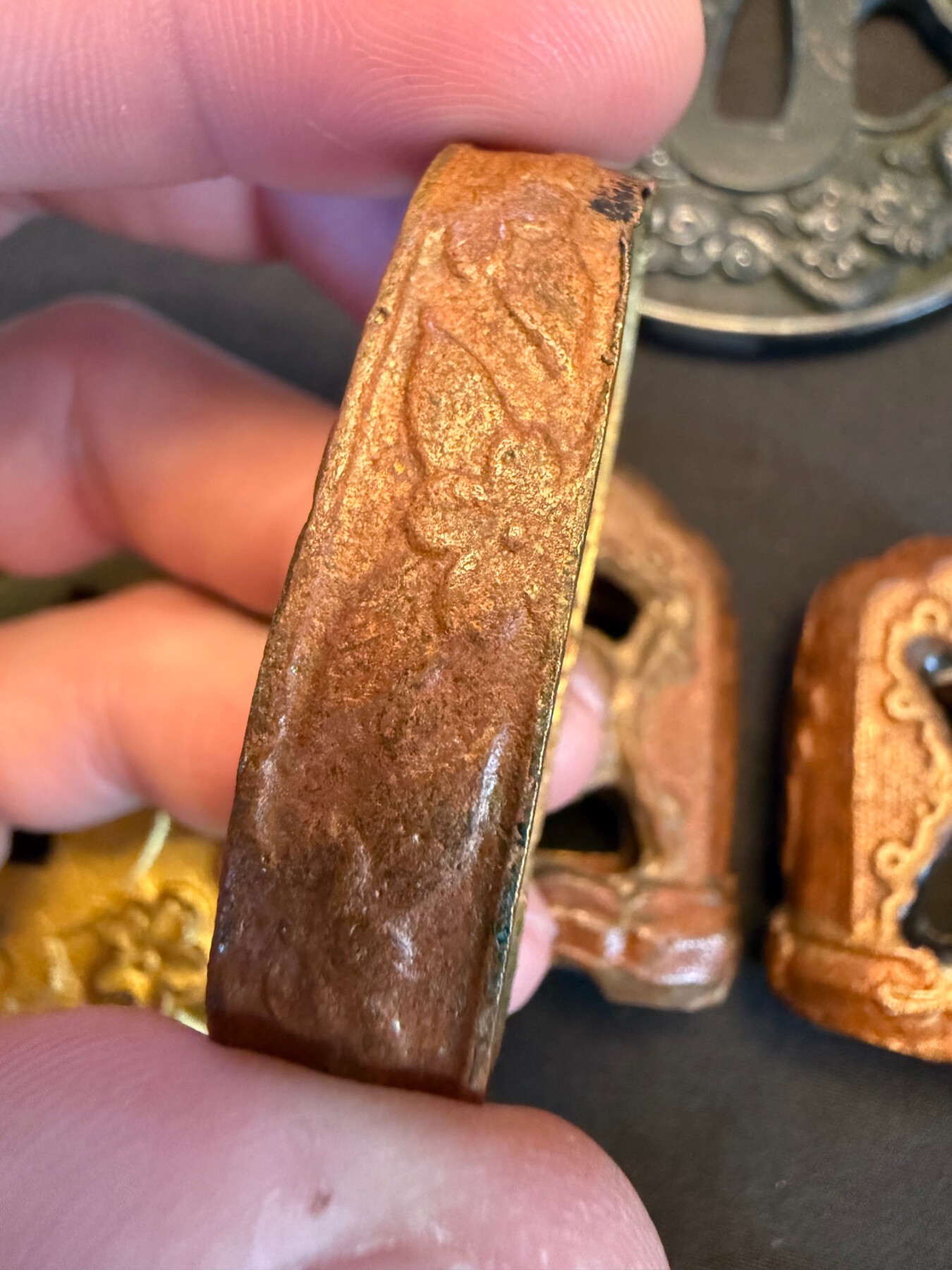
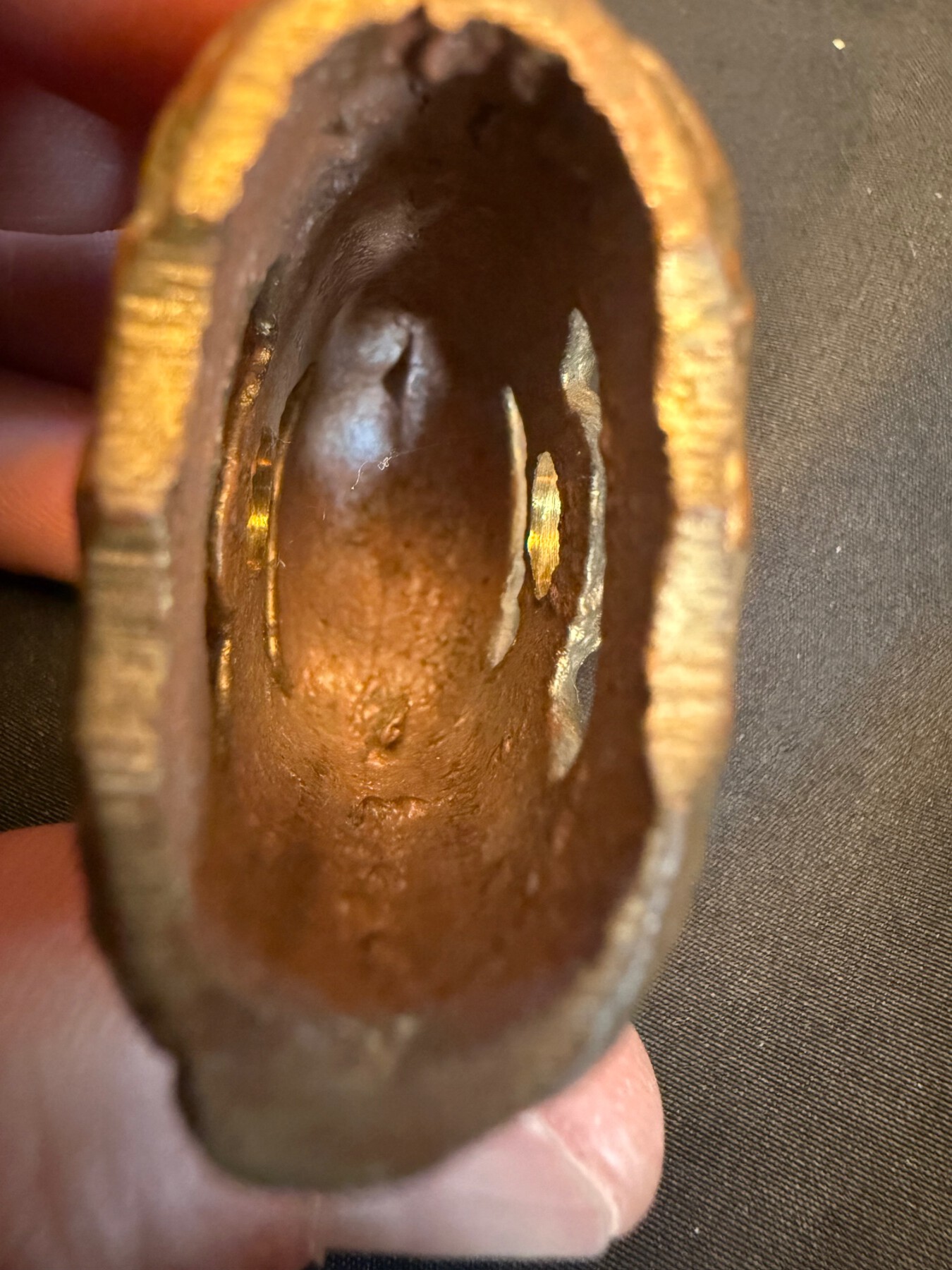
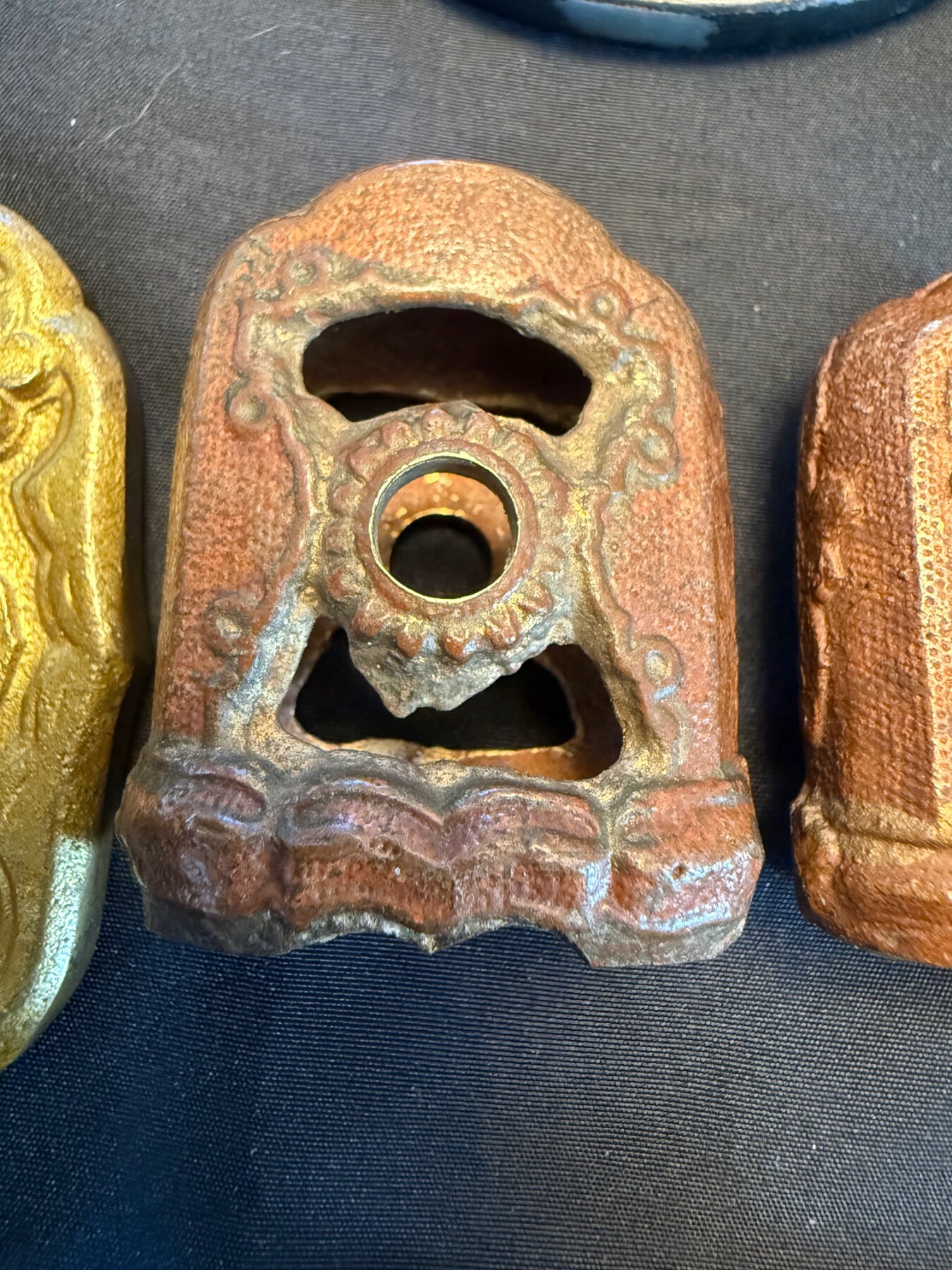
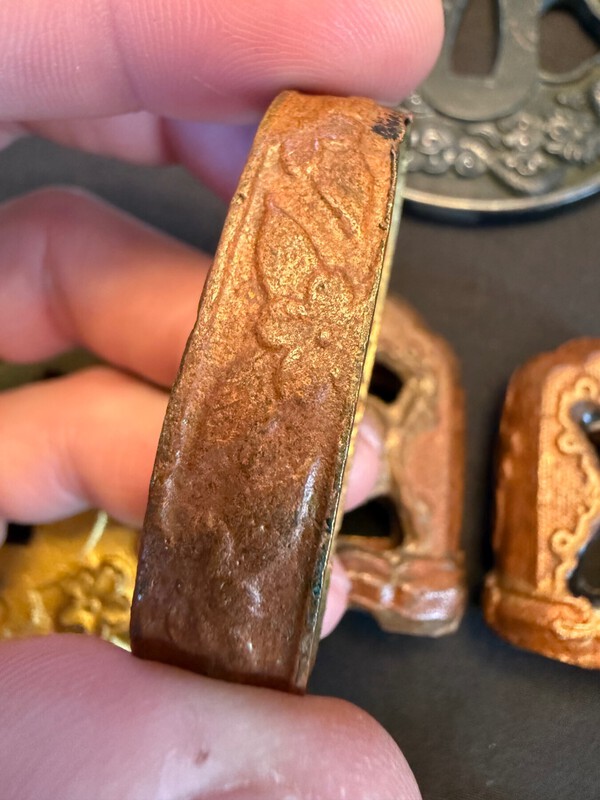
I think I have a very similar set of this type of very crude fittings. They came to me in a bag of miscellaneous parts and fittings. It has always been my assumption that they are modern reproductions or outright fake. They appear extremely crudely cast, and the hanger looks too small. Mine have remnants of paint on them. Again, I always thought they were fake, and keep them as a curiosity. -Sam




-
That is a wise decision. Excluding old “family” swords, and Gendaito; many WW2 swords, and especially machine-made blades and showato; are simply relics of their time and the war. Their value and collectibility is associated with their history, and there’s a level of acceptable condition issues. People in the militaria collecting world will see more value and intrigue in an item that shows some wear and tear, and will look at a “clean” or “pristine” item with scrutiny and skepticism. Nobody likes to see evidence of modern alterations on vintage or antique items or art. Best to leave it as-is. Best of luck, -Sam
-
Partly because it’s in a poor state of polish and condition. Different light and angles = different reflection and illumination
-
@Vampyres, I’ve merged your newly created topics to this old one again. Please reply to this ongoing topic, instead of creating new topics
-
1798 Ozaki Gengomon Suketaka
Scogg replied to Frye1001's topic in General Nihonto Related Discussion
We do not promote or encourage DIY polishing on the Nihonto Message Board under any circumstances. Our focus is the study and preservation of genuine Japanese swords and fittings, and proper restoration is a critical part of that responsibility. If a proper restoration is not financially possible, that does not justify attempting to do it yourself. Owning a damaged piece does not grant license to restore it, just as one would not attempt to repair a damaged Rembrandt without the necessary training, knowledge, and expertise. Sorry to be blunt, but it reflects the standards we uphold. DIY polishing sets a dangerous standard within the hobby and ultimately risks irreversible damage to the very objects we are trying to preserve. DIY polishing is an ALL STOP situation here. Regards, -Sam -
I do have concerns about the sword. In my opinion, it looks severely altered or messed with. The proportions make me wonder if it’s been machi-okuri, and the nakago looks like artificially accelerated aging rather than natural patina. That makes me question whether there might have been an effort to obscure a stamp, or make it "look" older than it is.
-
@Vampyres I combined another new topic to this pre-existing thread... Instead of staring a new topic for every grouping of photos, please "reply to this topic" and do not "start new topic"
-
Hi @Vampyres I have combined your topics for this sword. Please keep one sword per topic; Otherwise it will get very confusing, and you'll have several discussions about the same item happening simultaneously. I'm going to relocate this to the "Military Swords of Japan" section. I think you will get better feedback there. All the best, -Sam
-
Lovely piece @Volker62, best of luck with your sale. It will be a wonderful addition to any collection. Relocating to "Assorted Samurai, Japanese Art and Related Items" in the For Sale section. All the best, -Sam
-
Help in authenticating Japanese sword - translating history
Scogg replied to RW-Maryland's topic in Nihonto
@RW-Maryland Now that we’ve seen your sword, I’m going to relocate this to the Nihonto section Best of luck, and thank you for sharing your blade with us. -Sam -
Help in authenticating Japanese sword - translating history
Scogg replied to RW-Maryland's topic in Nihonto
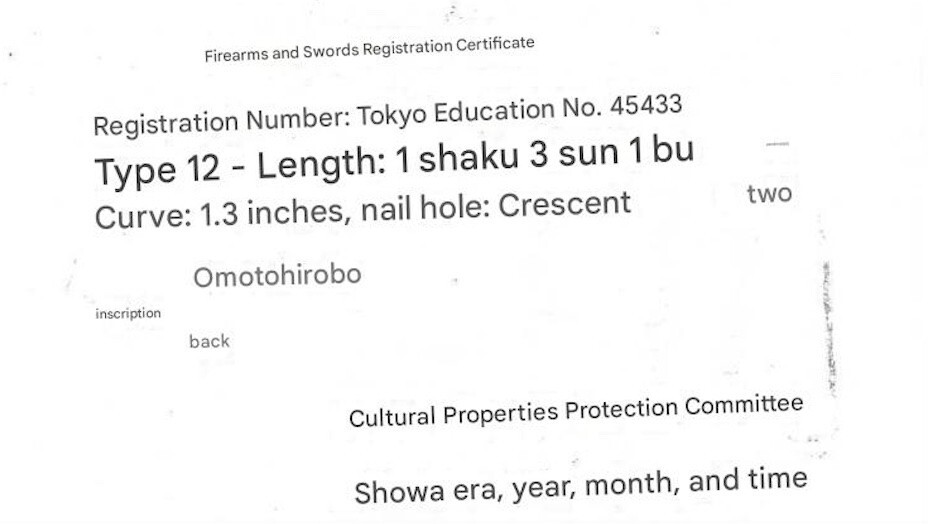
Your download appears to be the paperwork that would have been with the sword while it was in Japan. It states the length, and that the paperwork itself was legally required to be with the sword. As I understand it, the paperwork is not an appraisal or authetification in itself, but rather is a legal document. If you have photos of the blade itself, people here could offer input and opinions. A quick google-image translation reveals the following in my attached images below: (Please understand that google-translate is subject to errors. But this at least provides the basics of the content of the paperwork.) Best, -Sam


-
WW2 Japanese officers sword Yoshishige)
Scogg replied to Swords's topic in General Nihonto Related Discussion
Let’s cool it guys. This isn’t on topic or going anywhere good. For what it’s worth, people with gold memberships can see who’s upvoting and downvoting who -
Thank Marcin, I am proud of it. Although, I must say, that it only scratches the surface of the crazy amount of variences of these Type 95 swords. Even today I'm making small discoveries that are very difficult to quantify. I am hoping that my second edition is more thourough and even more detailed. Still a long way to go -Sam
-
Pretty awesome example. Looks like matching scabbard and blade, number 80849
-
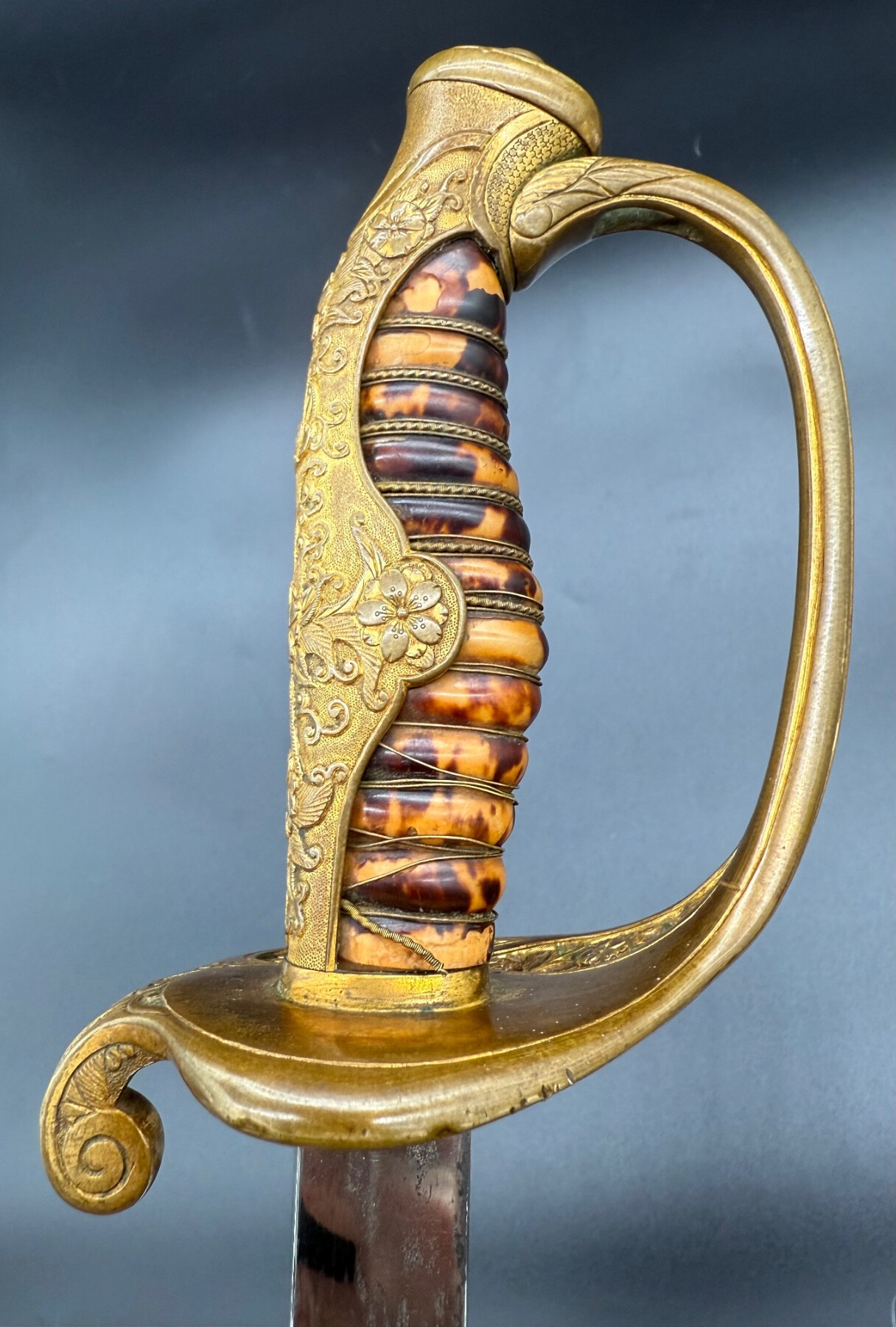
I’m reluctant drawing any conclusion from the images and description provided when these swords can be so diverse. I thought the sword in question was a company grade army dress saber. Originally with untempered, dull, and nickel plated or chromed blade with an artificial hamon. Often threaded or peened to the handle. These have been found with huge variety of blade styles, even foreign blades. They are often dull. They can be bought and sold for around $200 USD, unless they have unusual or interesting features. https://www.militaria.co.za/nmb/topic/13294-type-19-kyu-gunto-dress-swords-i-love-them/ Is there something I’m missing (other than the seller description) that suggests the blade is a zink or alloy replacement? With respect, -Sam
-
@Kiipu, are you saying that you think this parade sword / dress saber is a replica? I agree the one in your link is modern, but that’s a much more desirable and different type of kyu gunto. I’m not so sure about this one. I figure it’s advertised as a replica because this type of sword would otherwise be illegal to sell in Japan (where it is being sold from)
-
These Kyu Gunto dress swords are relatively inexpensive and fairly common, which is why they are rarely faked. The few replicas I’ve personally encountered have been very obvious; typically much more poorly made than this example. They were generally unsharpened and often feature an etched hamon. Of the couple dozen I’ve handled, the quality has varied quite a bit, with some clearly better made than others. My understanding is that these were produced by a wide range of workshops, which explains the significant variation in both design and overall quality. @lonely panet would be the guy I would ask for confirmation, if he's willing to offer his input. -Sam
-
The Kyu Gunto is not a replica, IMO. If the description describes a replica, then they may be talking about that sword keychain. Maybe a scam? Makes you think its a kyu gunto, but really it's for the keychain? Alternatively; I have seen some people on Facebook Marketplace list genuine swords as "replicas" or "props" to bypass facebooks weapons-selling-ban algorithm.
-
Wonderful Trystan, thank you so much for the translation, document, and interpretation. How fascinating! @Rawa, your guess is as good as mine. This is just a listing on eBay, and it is not in my possession. It looks like the haikan is affixed to a leather band that is wrapped around the wooden saya. Maybe it can slide up and down. All the best, -Sam
-
type 19 kyu gunto dress swords, i love them.
Scogg replied to lonely panet's topic in Military Swords of Japan
A general grade knot would be the cherry on top. It's always hard to justify when I can get a whole sword for similar prices I have two company grade sword knots (One seen on my saber, the other is near-mint condition in-box) and also a field grade knot that's near-mint condition and also in-box. All three knots in-box would be really cool to have alongside these sabers. Maybe someday! -Sam -
type 19 kyu gunto dress swords, i love them.
Scogg replied to lonely panet's topic in Military Swords of Japan
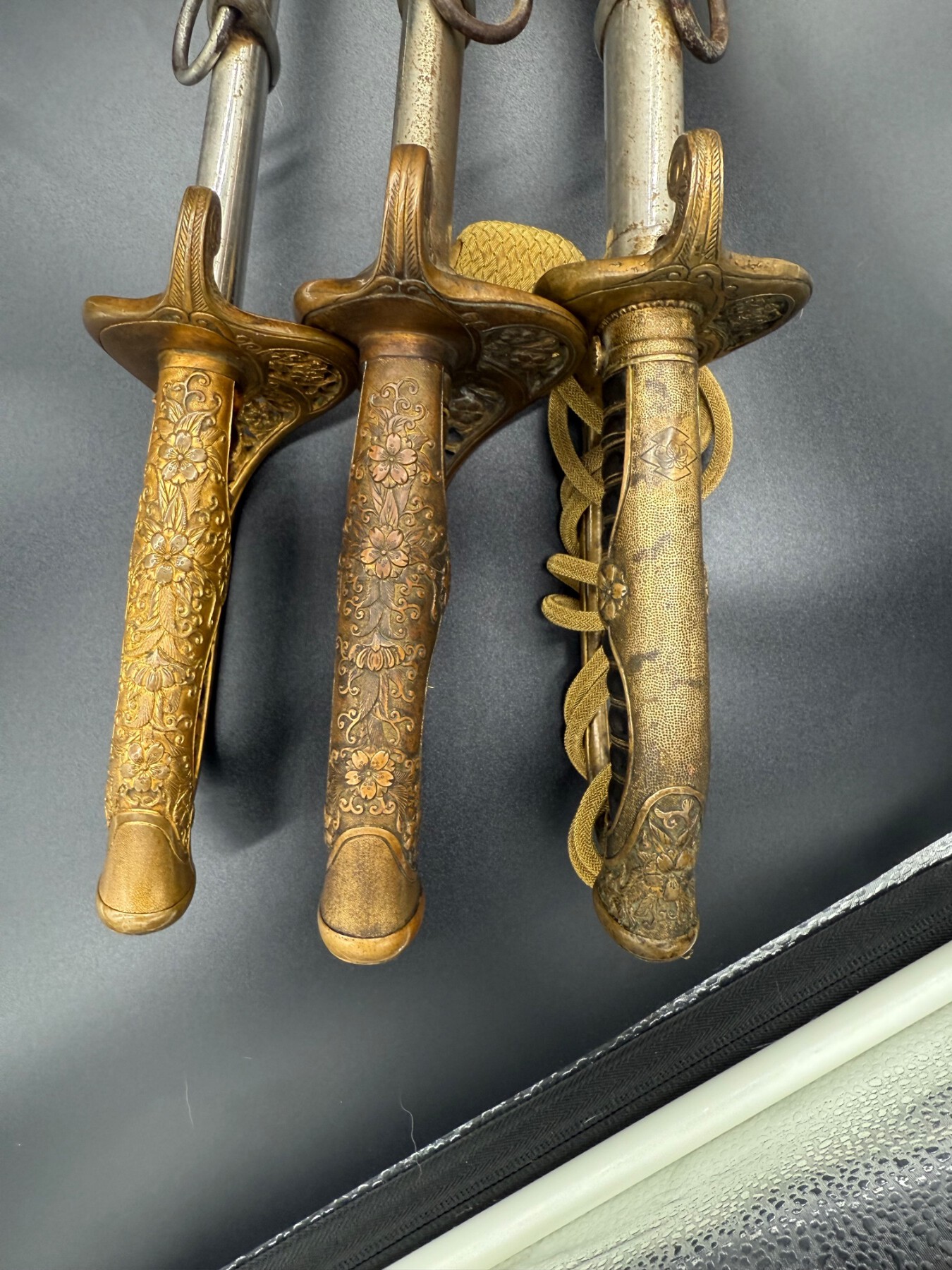
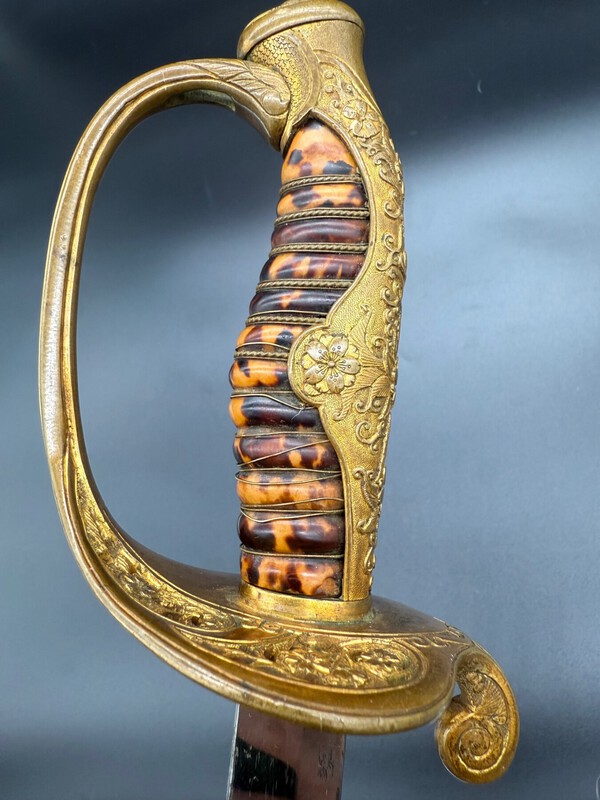
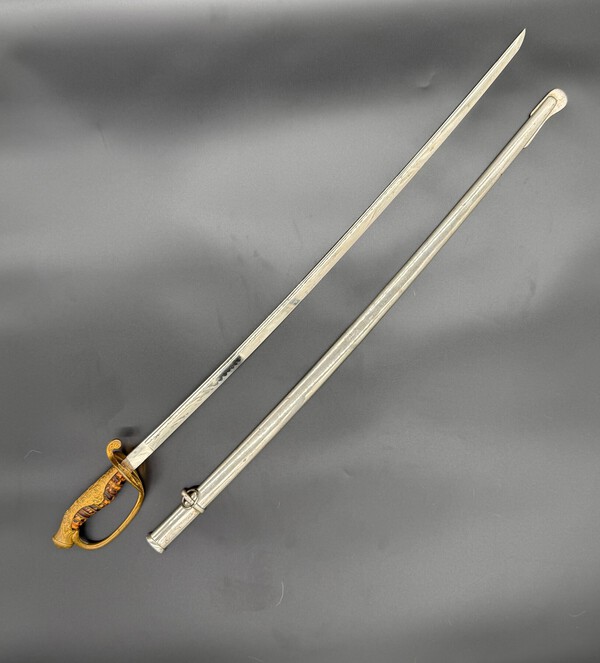
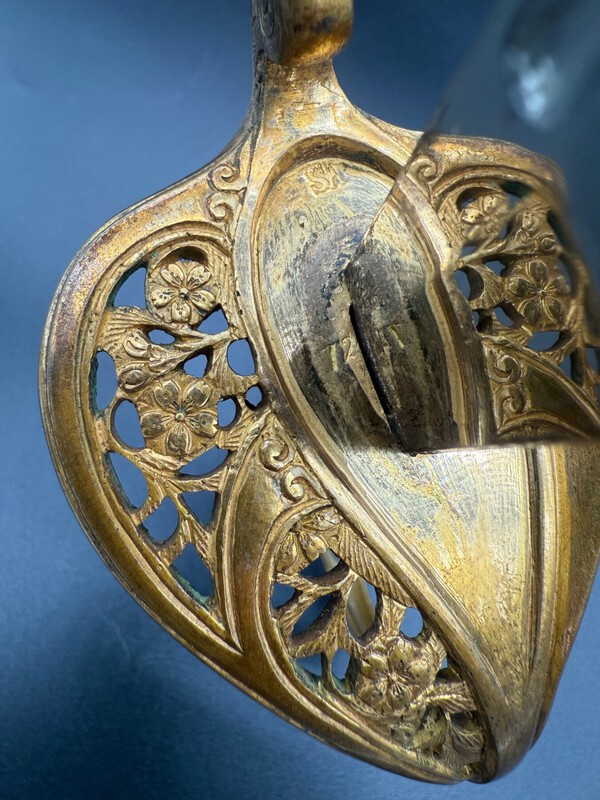
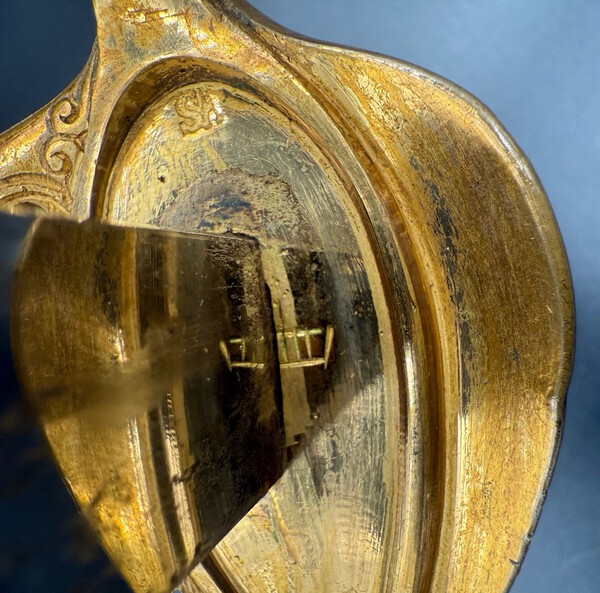
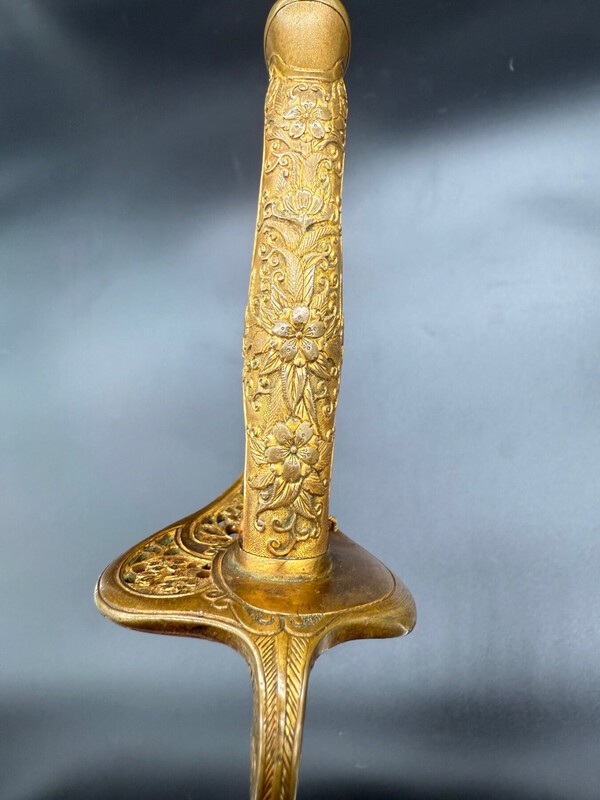
General grade saber arrived today. Excited to round out my collection of these. The general grade saber is very standard, not sharp, no mon, but it has that SA stamp, and some other unusual markings around where the blade enters the guard. From left to right: General Grade Dress Sword. Field Grade with straight imported blade. Company Grade with sharpened blade. Best, -Sam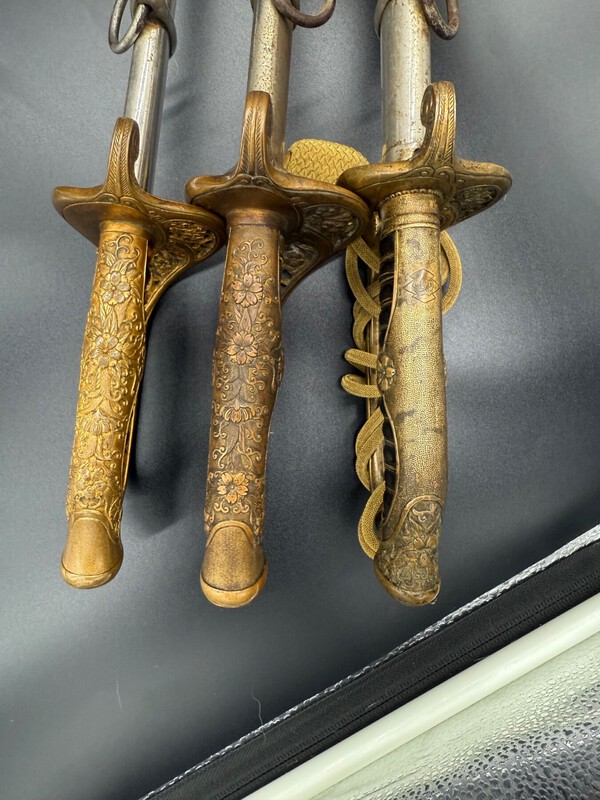



-
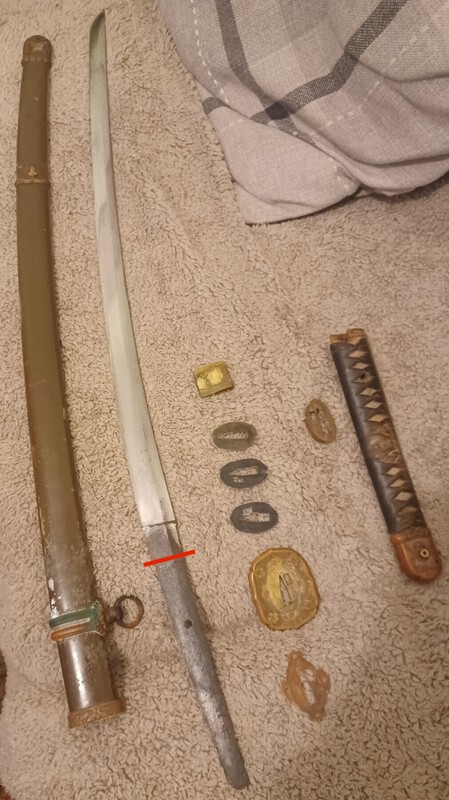
Hi @Ben A Harris, @vajo, @John C and @Bruce Pennington I have relocated this thread to the NIHONTO section. Ben, I did this because it seems that your blade is not machine made. It appears older, and maybe interesting. Sometimes older blades were put into WW2 fittings to be carried during the war. Now that we're in this section, you will be asked to provide more detailed photos (if willing). You will want to remove all the fittings, including habaki, and focus on the blade. Use my photo below for some guidance. Please understand that it's very challenging to get blade details photographed, so it will not be an easy task. I recommend looking around the forum, and getting an idea of what some good photos look like. Looking forward to seeing more of your sword, if you choose to share with us. All the best, -Sam

-
Thanks Steve, great point. To me it looks like red paint, which doesn’t necessarily raise or lower any flags. If it’s paint, it could have worn off other examples, or it could have been applied later by anyone. I’ve never seen anything like it -Sam