


Tim Evans
-
Posts
188 -
Joined
-
Last visited
-
Days Won
1
Content Type
Profiles
Forums
Events
Store
Downloads
Gallery
Everything posted by Tim Evans
-
Tsuka could possibly be Satsuma Rebellion time period. Usually swords so mounted will not be great treasures.
-
Well, that's a mind blower, finding out it is published. I wonder how it got to Singapore? The Japanese refer to that as a horidashi, or a great piece bought cheap.
-
Another one for sale on Yahoo Japan https://www.jauce.com/auction/t1141725534
-
Yes, it is the same one.
-
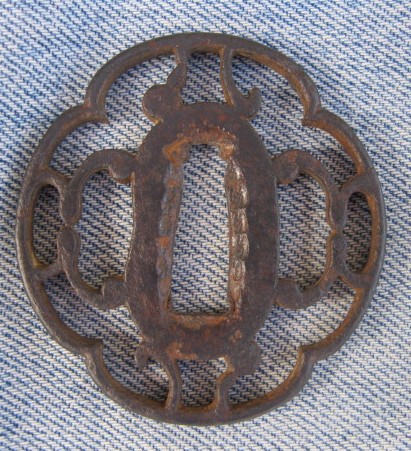
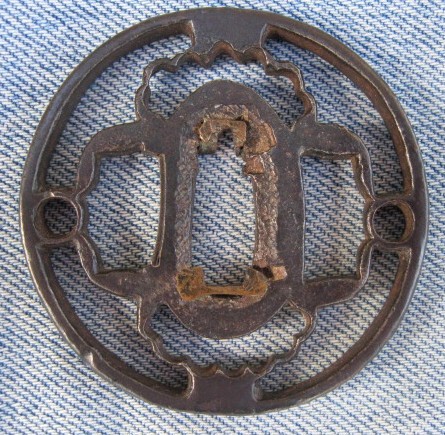
Two more. The mokkogata tsuba has hyotan top and bottom as well as forming the hitsuana left and right. The marugata also has the hyotan forming the hitsuana
-
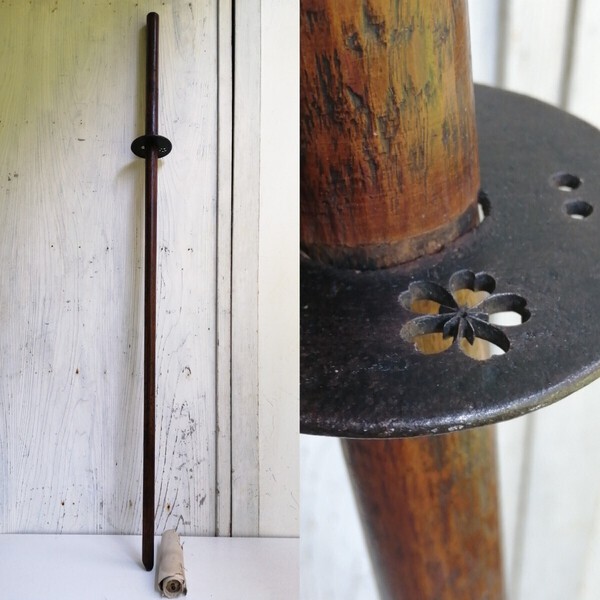
Occasionally we will see images of tsuba with the seppadai area cut out. Various speculations have been offered as to why, however, I recently came across these images showing that this was done to mount a metal tsuba on a bokuto. There is attendant documentation implying that this bokuto dates to about 1888, or 20th year of Meiji. The tsuba looks much older. Mounting old tsuba on bokuto seems to have been a martial arts fad at one time based on on the number of modified tsuba that turn up.


-
- 9
-

-

-
If you are looking for a Muromachi period tsuba then the types that are from that period are known by their group or school names, since there are extremely few signed examples. Here are some commonly available types from that period: Iron Kotosho Kokatchushi Heianjo zogan (some of these are signed) Onin Heianjo sukashi / Kyo sukashi Koshoami Kamakura bori Softmetal Kokinko Masayuki Sasano has published a few books on early iron tsuba that would help you identify these Muromachi tsuba types. He also includes Owari sukashi and Kanayama tsuba as Muromachi period, but there are those of us who think these are Momoyama at the earliest.
-
The paper is a bit interesting because it says mumei tsuba, Hoan. Most of the mumei attribution papers will either say Hoan den or kodai Hoan. The use of acid etching was introduced to Japan by the Europeans and there are a number of tsuba shops that utilized this technique. I have seen signed etched tsuba with both Jingo and Umetada mei, and I think most of the tsuba papered to Hoan Den are really one of these two groups. However, low relief acid etching and sukidashi bori can be sometimes hard to tell apart. Here is a brief description of the Hoan group: Shodai Hoan is a mysterious figure. He used Hoan as a personal name, whereas the later Hoan smiths used Hoan as a family name. What little information we have tells us that he was of a Buke family and was initially named Kawaguchi Hoan. He was adopted by Takada Sakyo, who was the lord of Kunotsubo castle in the Kasugai district in Owari Province. Sasano noted in the publication, Tosogu Yuhin Zufu (third edition) that according to Hoan family tradition, “when the the Oda family diminished, Sakyo’s child became an armor maker. He also made tsuba.” The diminishment of the Oda family in Owari can probably be traced to Oda Nobuo being removed from Owari Province in 1590, after quarrelling with Hideyoshi during the Odawara campaign against the Hojo. After losing his position as the heir of Takada Sakyo, Hoan reverted back to the Kawaguchi surname and became a metal worker for the Asano family in Kai Province. The Shodai Hoan is known for his unique and artistic treatment of the iron including a very visible coarse folding of the iron (uwebamegane), acid etched designs, and high heat melting of the the finished surface to create patterns. There is a statement in the Nihonto Koza (Afu translation) concerning the establishment of the Hoan family name: “Upon command of his lord (Asano), he (the Nidai) was called HOAN HISATSUGU, and his decendents also used this name”. What is implied here is that a family line was established in memory of Kawaguchi Hoan. This Hoan familly continued to serve the Asano as iron workers for several generations and apparently were employed in making iron fittings for ships. The Asano were moved from Kai province to Aki and the Hoan group went with them. The later Hoan continued to make tsuba and these are usually signed Hoan Hisatsugu. Also seen are tsuba signed Hoan Kanenobu. It is uncertain as to where he fits in the geneaology.
-
Also keep in mind or make a list of the user IDs that offer sketchy items so that they can be avoided or at least dealt with caution. This applies to the other auction sites, not just ebay.
-
There are two broad categories in tsuba: Kinko and Tsubako. Kinko is mostly soft metal, but some iron Generally pictorial and easy to relate to Primary aesthetic is about the quality of the carving expressing the design Tsubako is mostly iron, but some soft metal Tsubako aesthetics is very much about the material, so it is more like sword appreciation The quality criteria between the two types is distinctly different, that will affect the reference material you will need. There are several articles concerning fittings in the Downloads section. I wrote one concerning Tsubako titled "Assessing Quality in Iron Tsuba". 2 essential books: Tsuba, an Aesthetic Study by Torigoye Nihonto Koza Volume VI Kodogu Part 1. Translated by Harry Watson
-
The repros and the fakes are usually cast in one piece. This one shows the typical 2-piece fabricated construction and some age, so looks to be period correct.
-
https://www.aoijapan...ira-mumeiunsigned-4/ This looks to be for wakizashi so it may be a little small for katana, especially the fuchi. Check the dimensions against your tsuka. Katana fuchi lengths are more like 37-40mm. The top of the kashira is a little bit dented or flattened. If copper, this can be reshaped by making a punch out of a hardwood dowel, then put the kashira down on a thin piece of closed cell foam and tap the dents out. You may not get it totally smooth, but at least the shape will look right. Alternatively, you can ask whoever is going to wrap the tsuka to fix it for you.
-
I think mounting a tsuba on a koshirae is a good idea. After all, that is what they were made for. I sometimes find that a tsuba that is not very interesting to look at in a box or in-hand really shows off well mounted. This happened recently with an Owari tsuba I had sitting around for several years, I slipped it on an old koshirae and discovered it really improved the overall look of the mount. I now have a higher opinion of it than I did before. Also, it is interesting to try different weight tsuba on iaito and learn how that affects the motion of the sword.
-
I saw above that you mentioned it was papered to Tanshu Sadamasa (papered by which organization?). The signed tanshu tsuba I have seen usually have fine grained iron, no tekkotsu, and the sukashi elements are usually rather thick. I like their designs but the iron is kinda bland and looks cut out from sheet iron plate rather than hand forged. However, just to consider an alternative, this tsuba looks like it has rather coarse grain hada and you mentioned the flattish, globular tekotsu, as well as being rather thick and kaku mimi. I don't normally kantei by photograph, but from what I can see I would suspect this is an Ohno tsuba. Is there tekkotsu or folding visible on the mimi?
-
Katakiri carving with a chisel usually results in a sharp cut, meaning that the cross section of the cut will look like a "V". Cast copies won't have that feature, the cross sections will look like a "U". Dirt or other coatings may disguise the sharp cut. This is difficult to tell from a photo sometimes so may need to enlarge or use a magnifying glass. Another tell on these reproductions is the extensive use of silver. Silver was usually used to pick out small details.
-
 Age attribution on early, unsigned tsuba is a difficult subject because there is not a lot of hard evidence. The earliest signed pieces are from the Muromachi period, so these signed examples can be tied back to a known person. Even so, in some cases we do not know exactly when they worked. Some early tsuba are documented as being donated to shrines on a particular date, so that helps establish some data points. But, we may not know how old they were when that happened. There are also datable kozuka and kogai examples (we know which Goto masters made them and when they worked). Masayuki Sasano did much original research tying changes in style of kozuka and kogai to hitusana shapes and established a dating regime based on that research. His findings are in Tosogu no Kigen and Early Japanese Sword Guards, Sukashi Tsuba. Of course, later tsuba smiths copied earlier styles sometimes so hitsuana shape is not definitive for date; the other aspects of the tsuba, such as proportion, construction, decoration and oxidation need to be taken into account. The best way to learn is to look at a lot of tsuba in-hand with some personal guidance. Going to a sword show and asking questions from more experienced collectors is a way to do that. Preparation for doing this study is a collection of reference books to build up a visual knowledge of ages, styles and characteristics. A few comments on the images in this thread. You asked about if the rectangular hole crossing the nakoana can be a dating element. Chinese tsuba, or kagonami, were first imported into Japan probably by the Portuguese mid to late 1500's, so the appearance of that feature dates from that time period. If this is seen on older tsuba then it was added later. There are a few tsuba with really big center holes shown above. I think these were modified to fit on a wooden sword (bokuto or bokken) and was a fad among the kenjutsu practitioners probably in the 19th and early 20th centuries.
 -
I think you mean the nakagoana? These holes are usually rectangular. The purpose is to mount it on a non-Japanese sword, usually Chinese or European.
-
Recommended books about Koshirae
Tim Evans replied to Avidmark's topic in General Nihonto Related Discussion
There is an article in the Downloads area called A BRIEF OVERVIEW OF Japanese SWORD MOUNTS OF THE LATE MUROMACHI THROUGH EDO PERIODS. The specific books on koshirae in the biliography are these: Ogasawara, Nobuo. Uchigatana (no) Koshirae. Tokyo, Japan: Tokyo National Museum, 1987. Okubo, Kenichi. Zukan Toso no Subete. Tokyo, Japan: Kogei, 1970. Suzuki, Katei. Nihonto no Koshirae . Tokyo, Japan: Tokuma Shoten, 1964. There are also several coffee table type books that illustrate the mid to late Edo, really pretty, Kinko koshirae primarily made for merchants. -
This odd surface looks like it may be from this Japanese tsuba smith. His site is worth checking periodically so you know what the reproductions look like. See the top left image for the odd surface. http://tsubaryuken.com/sono2.html
-
When I was first starting out, a more advanced collector mentioned that he thought kanayama tsuba (and other types of tea influenced tsuba) were "400 year old abstract expressionist sculptures". By which he meant the process of making was visible and not completely finished. I found that a remarkable idea that the Japanese had developed an advanced aesthetic language that visually paralleled what was happening in the 1950's New York art scene.
-
I had a near identical set at one time, very thin solid gold. These were NBTHK papered to Kyo Kinko, Edo period.
-
Good observation. Similar ideas are discussed in the Nihonto Koza, Volume VI, as translated by Afu, in the section called Token Kinko Gaisetsu by Kuwabara Yojiro. He is using Goto fittings as an example, but I think these presentation trends apply generally to other sword fittings as well. The pertinent section starts at page 357 and discusses three changes over time: Formal Period (pre-Edo), Stylistic Period (early Edo), and Realistic Period (mid to late Edo). Another motif classification system relates to the rank and use of images. These are Formal, Semi-formal, and Informal. The tea-ish treatment of the plate would indicate the tsuba was used on an informal koshirae. I agree the design elements are drawer handles. In regard to Sasano’s ideas about the monkey dolls design, I think he was mistaken, and this sukashi image depicts a deteriorated mushroom. The small hole is the stem, and the bigger hole is the flopped over head. It may refer to Buddhist ideas about impermanence, change, and process. See a Higo kinko example below.

-
Hi Dan, Tsuba are a fascinating subject, and after looking at them for over 40 years, I still see forms I have not seen before. Because of the wide variety, there are any number of valid ways to form a collection, such as a “one of everything” collection, collecting certain images, collecting certain artists, signatures or regional works, unusual shapes, etc. However, I think a common characteristic of a satisfactory collection is a drive to find quality examples, and I would recommend the beginning tsuba collector learn how to evaluate a tsuba for quality charictaristics. Quality tsuba are not necessarily expensive and I think it is possible to build a quality collection without a big outlay, but doing so requires a good eye, knowledge, and patience. One reference work on tsuba quality that I think is valuable was written by Dr. Torigoye in Tsuba: An Aesthetic Study. I have attached a copy of that essay below. There was also an article by me titled "Assessing Quality in Iron Tsuba" in the downloads section but it appears to be missing, so I have asked Brian to repost it. Dr.T.doc
-
Cleaning corrosion off tsuba represents an element of risk because it is not possible to tell if the patina and/or base plate is damaged underneath (probably should assume some). If it is extensive, then you may need to have a professional address the damage and repatination. The first step is to decide if this tsuba is valuable enough to require paying a professional to restore it. Verdigis is usually a copper chloride or copper sulfate compound That said, if you decide to clean the verdigis your self, I have had some success with the following approach: Step 1 is to soak briefly in alcohol to remove any accumulated oils from handling. Step 2 is to soak in room temperature DISTILLED water. Distilled water should be just H2O with no dissolved minerals or chemicals such as chlorine Distilled water is commonly available in the US because it is used in steam irons. Not sure if available in Japan The verdigis can dissolve in the distilled water, so it will need to be changed every few days The process is slow, it may take weeks or months depending on how extensive is the corrosion. That also makes it controllable so you can stop doing it when an acceptable level of reduction is reached You are just soaking it in water so that should not otherwise damage the tsuba. That is assuming that the black color has not been touched up using ink or paint, which might come off with either the alcohol or water Your mileage may vary
-
Some brief notes about kogai Age – As with most pre-Edo fittings, there are no known signed examples, so dating is speculative based on a few intact jidai koshirae examples. However, there is a classification called Jidai kogai that are dated frequently Muromachi - Nambokucho periods Terms: Kanagu = tsuba, seppa, habaki, fuchigashira, metal saya fittings if any Kodogu = kogai, menuki, kozuka Mitokoromono = a kodogu set with all three pieces made with a unified theme Iebori = house carvers. Worked as retainers to Daimyo Machibori = street carvers. Independent metal workers who sold to anybody There were different ranks of Samurai There were also members of Buke clans who were not Samurai but who were allowed to carry swords Non-Buke people also were sometimes allowed swords. Generally restricted to the shorter lengths Koshirae and kogai (based on review of existing illustrated examples) Tachi – Have kanagu, but no kodogu (except menuki) Katana and uchigatana– Usually both kozuka and kogai or, neither. Some rare exceptions with either one or the other Wakizashi – Usually kozuka only or, neither. Also rare exceptions, usually from late Edo period Tanto – Usually both kozuka and kogai or, neither. Hira-zukuri blades may also have been mounted as ko-wakizashi and have kozuka only I have not found a definitive explanation for the kogai. Although kogai are thought to be a grooming tool, it is also thought to have functioned as a Buke rank identifier. This could explain why it was mounted in the saya so it was visible The theory is that kogai were allowed only to upper rank Samurai and Daimyo and forbidden to low rank Buke and common people It is thought that kogai were made primarily by Iebori workers for Daimyo and their higher ranking retainers. Frequently made as mitokoromono Kogai, as noted above, were mostly mounted on upper class Samurai katana and tanto koshirae Lower class Buke and commoners primarily wore wakizashi koshirae, no kogai Edo period machibori koshirae, which can be very luxurious and high end, are generally kozuka only wakizashi koshirae, with some exceptions for Daimyo quality koshirae More information on koshirae in general, and a reference book list can be found in the NMB archive in an article by me, titled, A Brief overview of Japanese Sword mounts of the late Muromachi through Edo periods



