Tim Evans
-
Posts
188 -
Joined
-
Last visited
-
Days Won
1
Content Type
Profiles
Forums
Events
Store
Downloads
Gallery
Everything posted by Tim Evans
-
A good start. Quite often a cleaning project will look worse before it gets better, so that requires a long term commitment. There is a detailed description of the iron tsuba cleaning and patina growth process in Sasano's "gold" book: Sasano, Masayuki. Sukashi Tsuba. London, England: Robert G. Sawers, 1974. It may be possible for you to find a copy through the local library if you want to read it first. As Sasano states, after removing the red rust the next step is to stimulate the formation of black rust, so avoid lotions or oily perspirations that would shut out air and interfere with the oxidation process. A wash with mild soap and water is ok to degrease and get off any remaining loose red rust. Setting it in a sunny window is helpful because adding some mild heat will increase the rate of oxidation.
-
An interesting comment in the Varshavsky collection reference from Dale. Provenance: Robert E. Haynes, Mark Weisman. This is what shibuiswords.com says about this tsuba: Just for context, Robert (Bob) Haynes is one of the foremost Japanese sword fittings authorities in the US, having studied with Dr. Kazutaro Torigoye in Japan in the 1960's. There is a lot of useful tsuba material by Bob on the Shibui Swords site, Elliott and Bob collaborate a lot since they live near each other.
-
On the subject of books, a must have for beginning collectors is "Tsuba, An Aesthetic Study", by Kazutaro Torigoye and Robert Haynes, from the "Tsuba Geijutsu-Ko" of Kazutaro Torigoye. The characteristics of Yagyu tsuba is one of the topics. More info and how to order at the the Northern California Japanese Sword Club web site. http://ncjsc.org/ncjsc_publications.htm Also Markus Sesko's website is worth a look. Free blog articles on swords and fittings plus books to order. https://markussesko.com/
-
Actually the Europeans and the Japanese mounted them both ways. For the Japanese, mounting it convex side toward the tsuka would make any carving or decoration more visible, also less likely for the tsuba to interfere with the fingers. Attached is an example of one mounted concave side toward the tsuka, also a rapier mounted convex side toward the hilt.


-
The cup shaped tsuba were influenced by the swords worn by Europeans. Anything European was exotic and fashionable in the 16th century and later. The main seaport the European ships used was Nagasaki in Kyushu so a lot of the cup shaped tsuba come from Kyushu tsuba groups like Hizen and Higo. European influence in tsuba design has been discussed several times. https://www.militaria.co.za/nmb/topic/44557-funny-shape-tsuba/#comment-462729 https://www.militaria.co.za/nmb/topic/18403-namban-hands-up-if-you-like-namban-tsuba/ for examples. The shape of the tsuba is mostly about the visual effect the smith desires, the shape would not noticeably affect the balance of the sword.
-
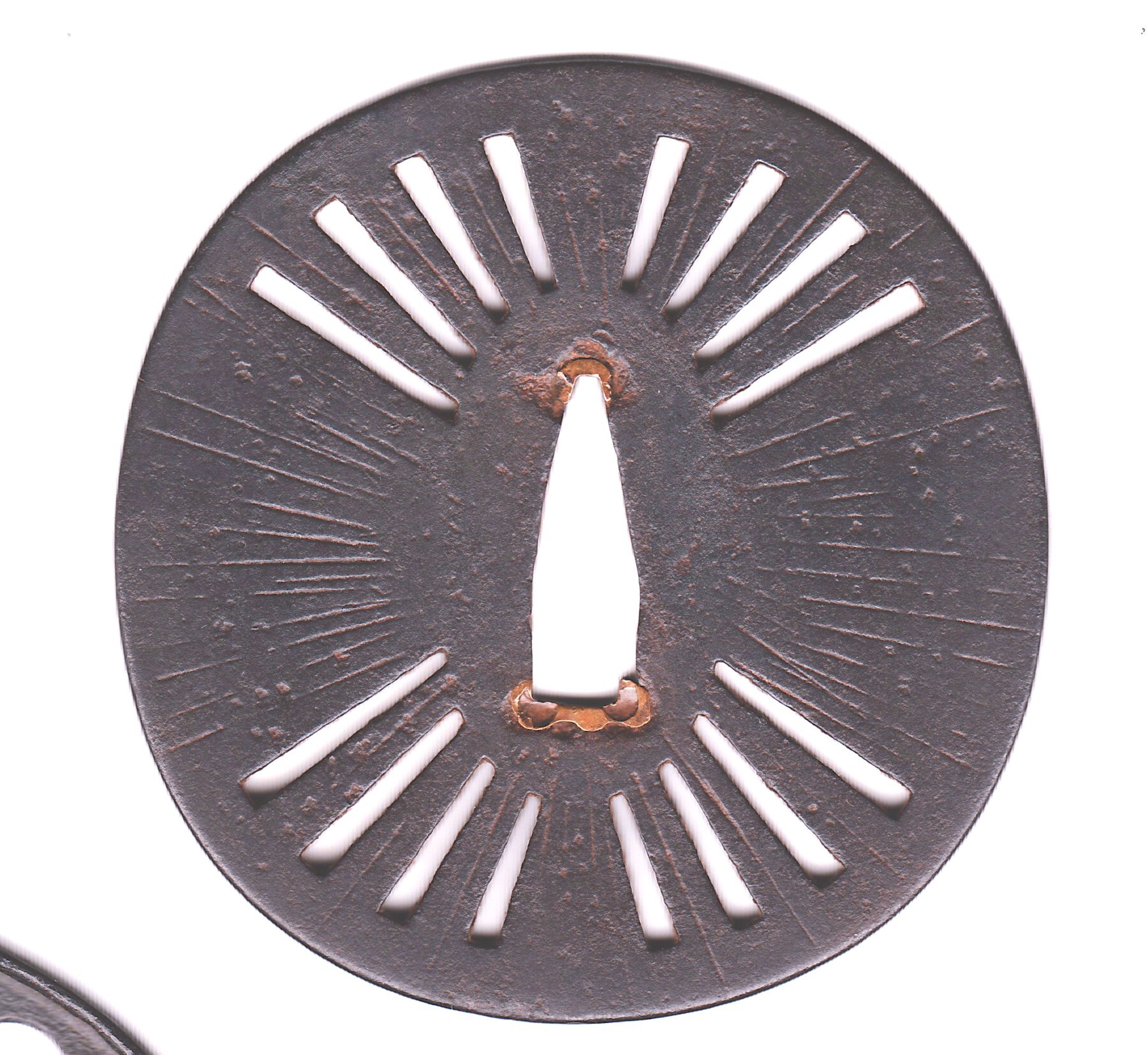
Mid-size tosho, multilobe mokko shape. The use of repetition and alternation shows a more sophisticated design than what is typical. It does not seem to be a ka-mon. The narrow hitsuana indicates a mid-Muromachi timeframe.

-
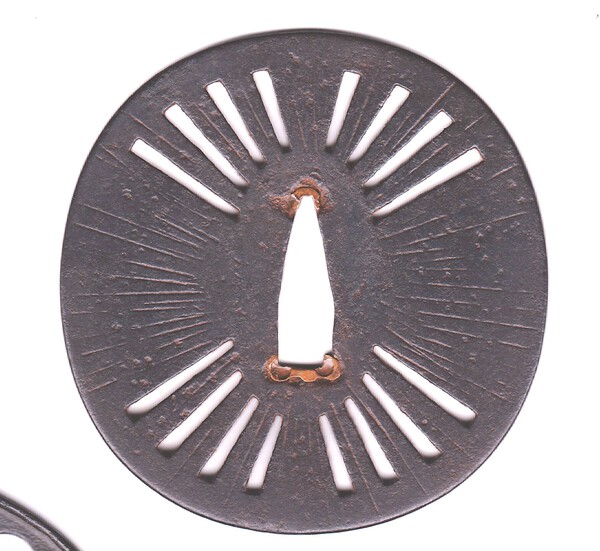
Hosokawa connections to Catholicism Hosokawa Tadaoki (Retired name is Sansai) was a patron of the famous tosogu-shi of Higo province. Although not a convert himself, according to the Historical and Geographic Dictionary of Japan by E. Papinot: Married to Akechi Tama who was baptized in 1597 as Gracia Son, Tadatoshi, who was baptized in 1597. Later made to recant at the request of the Tokugawa Bakufu Son, Tatsutaka, who was baptized in 1587 as John Brother, Okimoto, who was baptized in 1594 Tadaoki was very friendly with the Jesuits, particularly Gregorio De Cespedes Presented is a Higo tsuba that bears a strong similarity to a Catholic monstrance. I attribute this one to Hirata, although Nishigaki has been suggested. A monstrance is a Catholic ritual object, an example below. Fred Geyer has done a deep dive into Christian symbolism on 16th century and later Japanese objects. If this interests you then check out his old NMB posts or find his essay, Kirishitan Ikenie Tsuba in the 2006 Kokusa Tosugu-Kai book

-
Post with pictures of tsuba mounted on bokuto https://www.militaria.co.za/nmb/topic/49004-why-is-there-a-big-hole-in-this-tsuba/#comment-509896
-
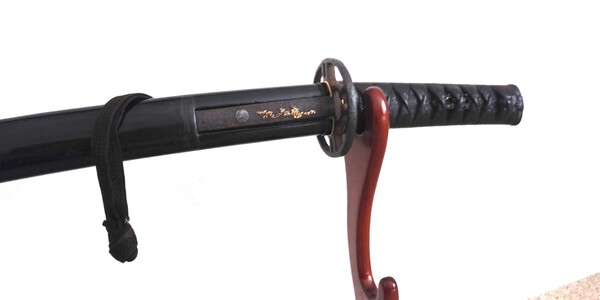
Thanks Manuel. One other question, is there a pocket for a kozuka in the saya? I see there is a kozuka hitsuana in the tsuba.
-
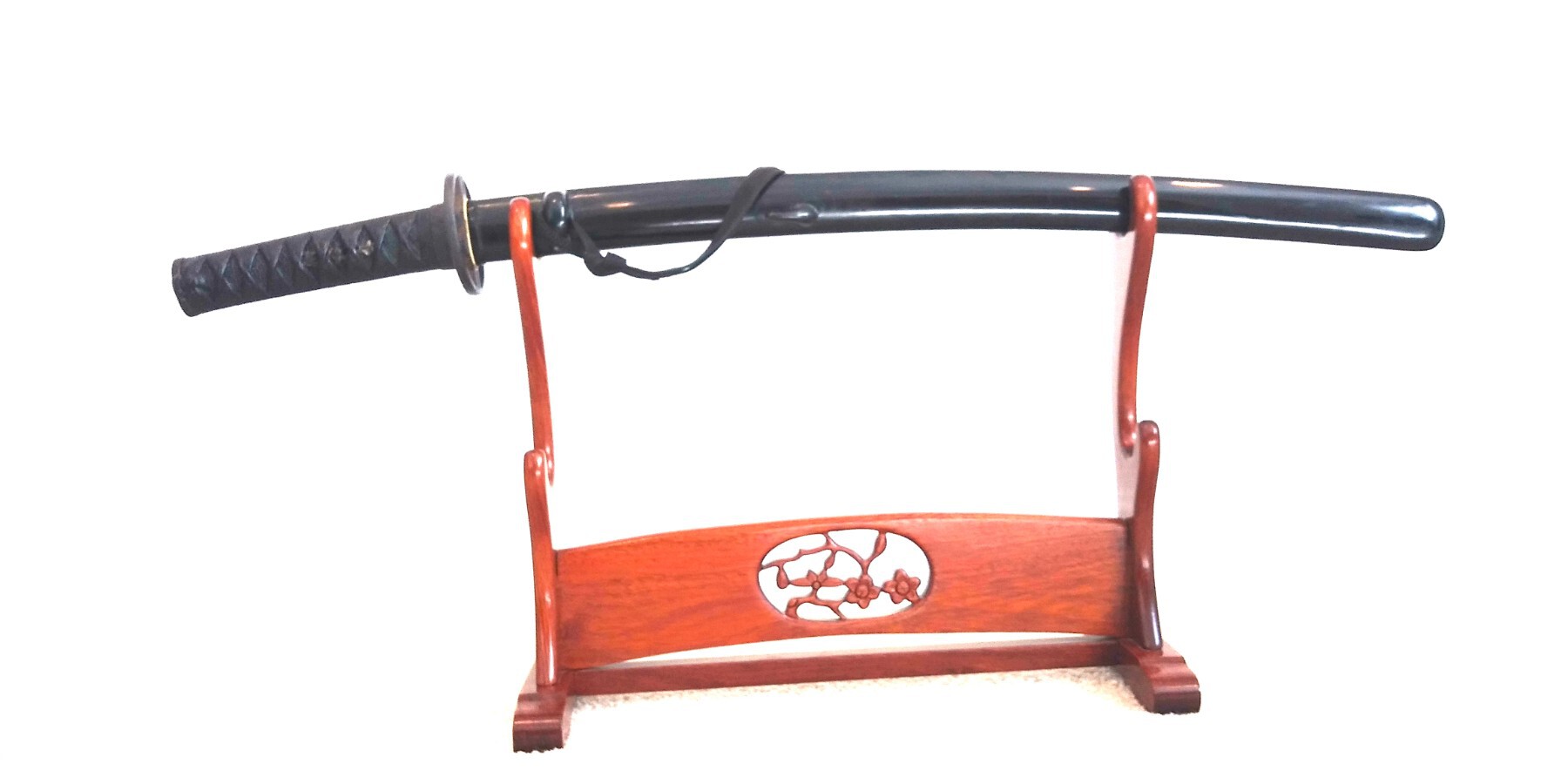
I am curious, is the tsuka-ito lacquered? it looks like the fuchi is lacquered also.
-
For some reason I am not able to edit my initial post. Anyway, some images right side up.

-
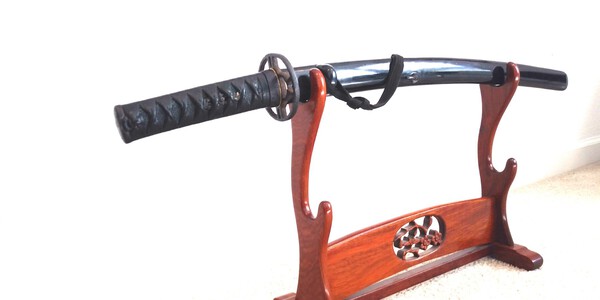
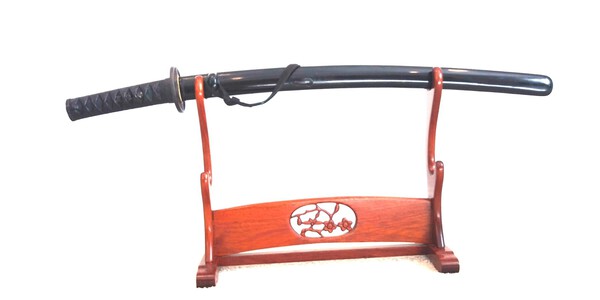
Nice! Also really rare, especially outside of Japan. Here is one I have. I date it a little newer, probably late 1500s to mid 1600s, Owari style koshirae. Iron fuchigashira, tsuba, and kozuka. I apologize for the last image being upside down. It seems the website is ignoring the exif orientation tags.

-
Iron Kozuka What is represented here is a bamboo flower container that is used in the Japanese Tea Ceremony. This type is normally hung on the wall of the Tokonoma in a Soan, or Wabi style tea room. A very famous example, and considered to be a prototype of bamboo flower containers is the Enjo-ji, made by Tanaka Soeki (Rikyu) while in attendance to Toyotomi Hideyoshi during the siege of the Hojo in Odawara in 1590. This flower container is named in reference to the bell at the Enjo-ji temple which is cracked. See here for a picture of the flower container in the Tokyo National Museum. http://www.tnm.go.jp...geId=E15&colid=G4217 Because the Enjo-ji flower container is cracked, it leaks a bit, and this is evoked by the four dots, representing water drops, below it. Age: It is likely that this kozuka was made sometime after 1590. My guess is Bunroku through Genna, by which time the new capital in Edo is firmly established. I have seen two other kozuka like it, so I think it is a production item sold to warriors who practiced the Tea Ceremony. Maker: Heianjo Zogan Inlays of copper and silver in addition to the brass suemon (excludes Onin) Inlays being raised slightly above the iron surface (excluded Yoshiro) The archaic and stylistic “Onin-like” nature of the design (Umetada, Higo, etc. are more naturalistic)

-
More Philosophy? What is it that appeals to you in tsuba?
Tim Evans replied to Winchester's topic in Tosogu
What appeals to you in tsuba? Collecting any art form is an adventure in seeing, so it is about developing my eye and my taste. i have been doing this for a long time and I am still learning new things Since this is a Japanese art form, then I think learning the Japanese standards for quality is important My focus is, what is good quality and taste from a Bushi perspective? What we know about Bushi taste comes largely from Akiyama Kyusaku, who was a Tosa Samurai that was assigned to evaluate sword fittings for the Tosa Daimyo. After the Meiji Restoration he continued to study and write about sword fittings and published a lot of his ideas in a journal called Token Kai Shi. His last student was Dr. Torigoye Kazutaro, the Mentor and Sensei of Robert Haynes, who translated much of the Akiyama and Torigoye aesthetic ideas in Tsuba, an Aesthetic Study. Sasano Masayuki was also heavily influenced by Akiyama and published several work in English. Tsuba, an Aesthetic Study separates tsuba into Tsubako (mostly ironsmiths) and Kinko (mostly softmetal carvers). The tsuba of the Bushi were mostly made by the Tsubako. I usually do not have much interest in the Kinko, especially Edo period machibori, which was marketed to the Chonin class, the commoners below Bushi in status, but some wealthy enough to own short swords. The urban Chonin had their own aesthetic ideas, look up "iki" and "kwaii" and "kabuki" to get some sense of that. What appeals to me are the tsuba that I think would have been chosen by warriors. These will be rather quiet, sober and serious and are well made and strong. They may also show the influence of Wabicha (a type of tea ceremony) and may express Buddhist concepts, but not necessarily Buddhist symbolism. They can be very low key and it takes study to understand this type. To the uninitiated some of them look like iron mud pies. Regarding the quality question, there is an essay by me in the Downloads section that goes into what is quality in iron (Tsubako) tsuba. -
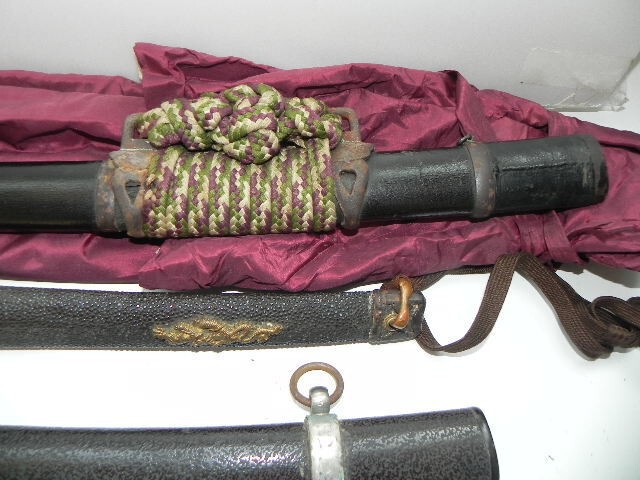
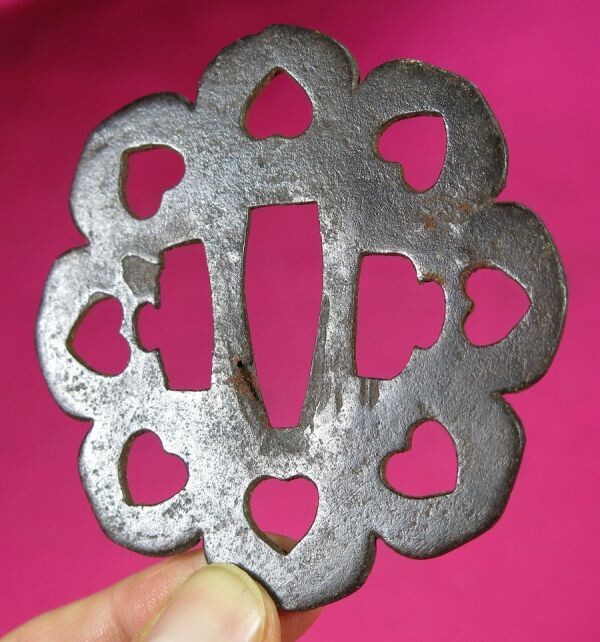
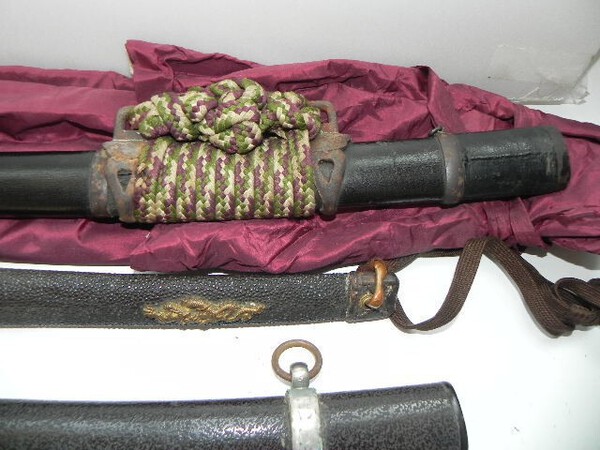
Jidai koshirae material rarely turns up on Yahoo Japan but it does happen. Here is a pile of parts that was offered that included a leather covered tachi saya. I think the unwrapped tsuka went with it. I bid on this but did not get it, the bidding went a lot higher than I was willing to risk based on the picture. Also a leather covered tsuba from a different auction that would have been a good visual fit. There is this tsuba currently for sale on Yahoo Japan. The seller claims it is Nabokucho, but I think I would need to research it more before agreeing. Another approach is to work with a US dealer that has well established connections to the Japanese dealers and collectors, such as Fred Weissberg, Bob Benson, or Andy Quirt to name a few. Also Boris Markhasin is a specialist in jidai material. It may be possible for one of them to dig up what you are looking for since such items are normally not offered to the general public. A third approach is to check with the big auction houses, Sotheby's Christies, Bonhams, etc. Sometimes old tachi koshirae, usually with the blade, turns up there.
-
Books for beginners in English
Tim Evans replied to Ikko Ikki's topic in General Nihonto Related Discussion
Connor, One place to look for Japanese sword books is at you local libraries, you might be surprised. Also interlibrary loans are worth a look. For example, my local university East Asian library has several sword books available. As mentioned, books and internet images are not enough, you need to examine swords in-hand, preferably with experienced guidance. There are some options that do not require buying a sword first. I see from your profile you are in the United States, so you may try the following: Find out if there is a local Japanese sword collector club Find out if there is a local Japanese sword dealer you can visit. Most of them are willing to help you learn. When I started out I was fortunate to have three local dealers who let me look at swords. Find out if there is a local specialist Japanese antique shop Look for local: Gun shows Militaria shows Antique shows Knife/sword shows Usually there will be a nominal entry fee. But be aware that there will be fakes and reproductions mixed in with the authentic nihonto. It is useful knowledge to recognize the fakes, so it would not hurt to handle a few. Most likely any authentic nihonto will be out of polish, but you can still learn from them. Lastly, check the the Shows section of this forum and take a trip to one of the annual Japanese sword shows. You will meet a lot of knowledgeable people and be able to look at swords in polish. Some shows will have a Sword Study room with polished swords of a particular school. You may need to join an organization such as the NBTHK-AB to access that event. Yes, it will be expensive (travel, hotel, admission, meals) but it would be a great learning experience. There is also the opportunity to network with other collectors and with dealers you may want to do business with once you are ready to buy one. There are resources on NMB describing correct sword handling etiquette. Learn this and you will get along a lot better with sword owners. -
If you send it in to an NBTHK Shnisa, it would likely be papered to Shimomura Yoshishige (AKA Fukumo), a known Ohno smith, rather than Yagyu. It does have some Yagyu-ish characteristics. This is an important reference piece because it is fully signed.
-
# 1, 2,and 4 have the distinctive tekkotsu and coarse jigane. This needs to be seen in-hand, not something that can be accurately depicted with an image. #3 is more of a guess based on the design elements. Okamoto, Sasano and Kremers allow for finer grained, no tekkotsu, maru mimi tsuba with the right "look" as late Ohno.
-
Here are some other Ohno candidates that I have had, some have been sold here on NMB so maybe the present owners can provide details Mokko with tessen mon as used by the Nagai clan of Mikawa, very strong tekkotsu on the mimi Marugata, mitustomoe. Many clans used this mon. Nadekakugata with Yagyu-ish elements – Waves, diamonds, rectangular seppadai. Probably later work since thinner and no tekkotsu Marugata, with miyoga mon. Also used by many clans and commonly found in Owari works.


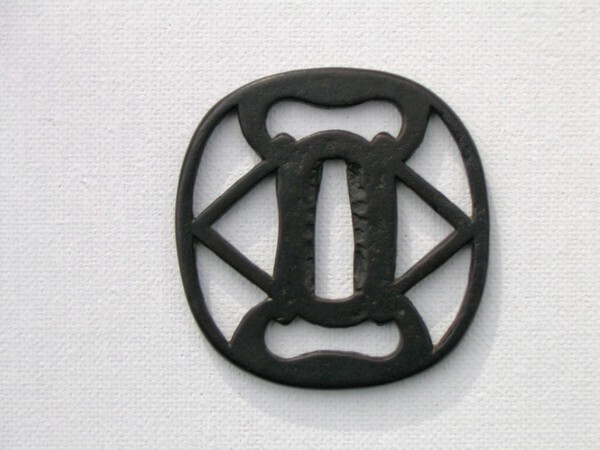
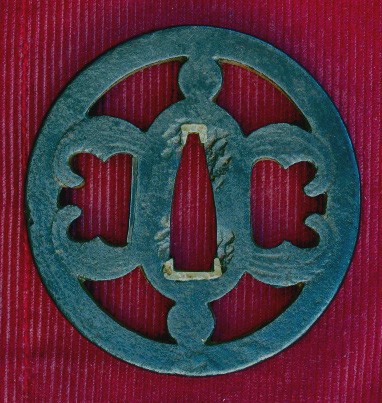
-
I have only seen one first period Yagyu tsuba with a history to Renya, and was not allowed to hold it. I have owned a number of second and third period Yagyu tsuba and those did not seem to be noticeably lighter or heavier than something else the same size. They do tend to look a little small. It would be hard to say if the later ones had an association to the ryu.
-
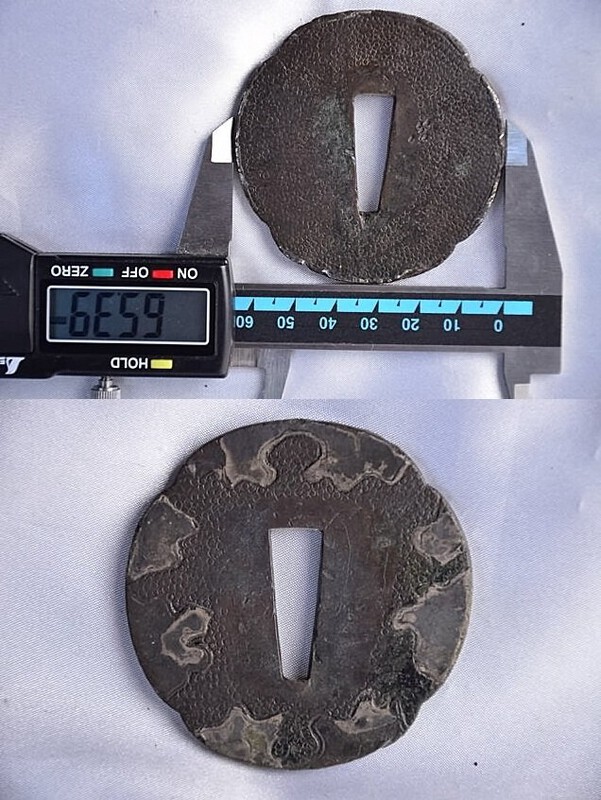
Jake has summarized what Sasano is getting at, basically a change in tsuba size as a response to the transition to Shinto sugata swords. I think there are some other possibilities. First some numbers. I measured a typical Kanayama tsuba and a massive Ohno that I have. I consider these to be for shorter swords based on the seppa-dai length. Kanayama - 65.5 X 6mm. Weight = 67 grams Ohno - 69 x 7mm. Weight = 128 grams The Ohno weighs significantly more even though it is not that much bigger. So why is that? I am not sure Sasano's opinion applies in this case because of the large weight difference. I would not think the weight would need to be increased that much. It could be that a martial ryu commissioned heavy tsuba to complement specific sword techniques. This consideration still exists for koryu bokuto, where some bokuto are made light and others are made heavy depending on the training application. Or, maybe it is just about achieving a desired visual or psychological effect with the massive, broad rim, weight not being a consideration? Sort of like a style or culture statement, a teabowl on a stick? Apparently the thicker heavier tsuba trend did not catch on since most other tsuba shops did not make similar products. Today's tsubaka highly value the massive rim Ohno and Owari sukashi tsuba because of the strong virile sculptural shapes.
-
Here is one similar to #123 in the Yagyu inventory. Dr. Torigoye notes three production periods of Yagyu type tsuba, so this is a later Akasaka copy of the style by Tadatoki. Also another, #94 in the inventory signed Yamakichibei

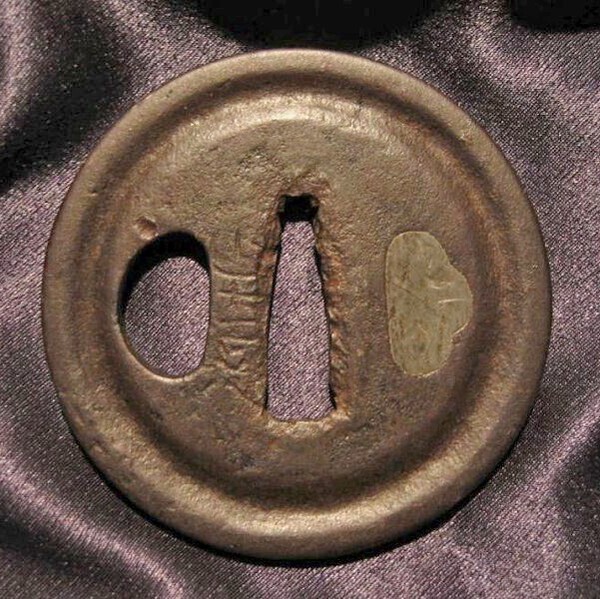
-
"You can clearly see the difference in thickness between the karmic wheel tsuba and its two counterparts. This observation gives me pause as it makes me wonder why the tsuba of the Momoyama period would be thinner given the assumed decline in practicality of tsuba over time." On page 8 of Early Japanese Sword Guards (gold book) Masayuki Sasano opined that smaller, lighter sukashi tsuba were made for the slimmer, lighter, Late Koto one-hand uchigatana, and, that tsuba then became thicker to balance the more substantial Early Shinto daito and shoto. Alfred Dobree wrote a book titled Japanese Sword Blades where he discussed the Center of Percussion (as it relates to the cutting efficiency of the sword), which is related to Center of Mass, which can be affected by the weight of the tsuba.
-
Maybe they are ivory or bone by a netsuke carver? I have an old tsuka that has ivory or bone menuki carved in the shape of a tiger's tooth. This fashion likely dates around the time of Hideyoshi's Korean campaign.
-
The correct kantei discipline or process is to consider the mei as the last factor. Kantei is first based on: Sugata Jigane Yakiba What does the assessment of the above factors say about time period and swordsmith group? THEN look at the mei. Is the mei in alignment with the above assessment? This process cannot be reliably done by looking at pictures (especially with an important name). Since the consensus of the thread is not obviously gimei , then it needs to assessed in-hand by a knowledgeable person. A common error is to get excited by the mei and then try to rationalize the sugata, jigane and yakiba to fit the mei. I have done that myself when I was first starting out so I am offering this observation as a caution.