PietroParis
-
Posts
772 -
Joined
-
Last visited
-
Days Won
4
Content Type
Profiles
Forums
Events
Store
Downloads
Gallery
Everything posted by PietroParis
-
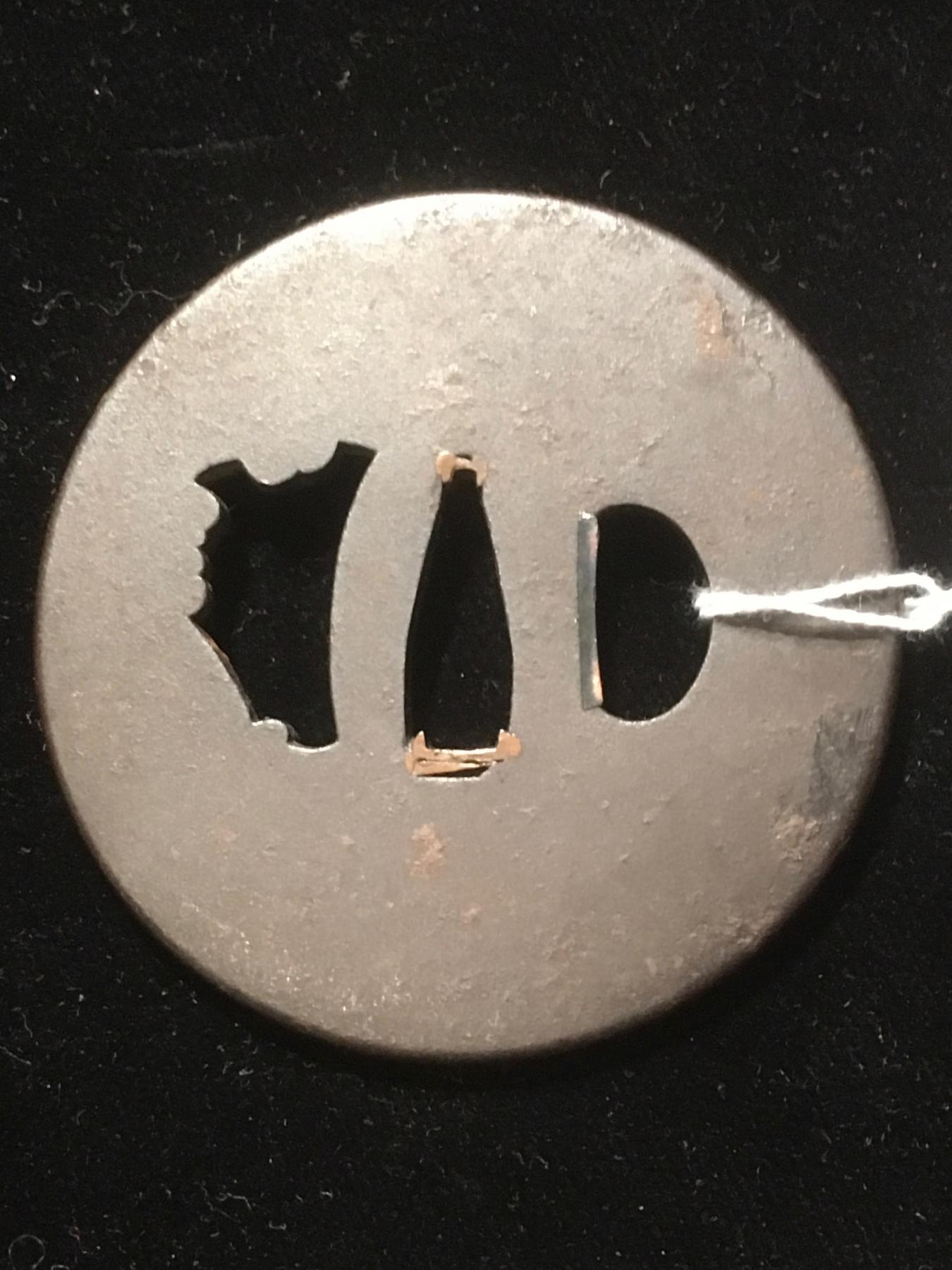
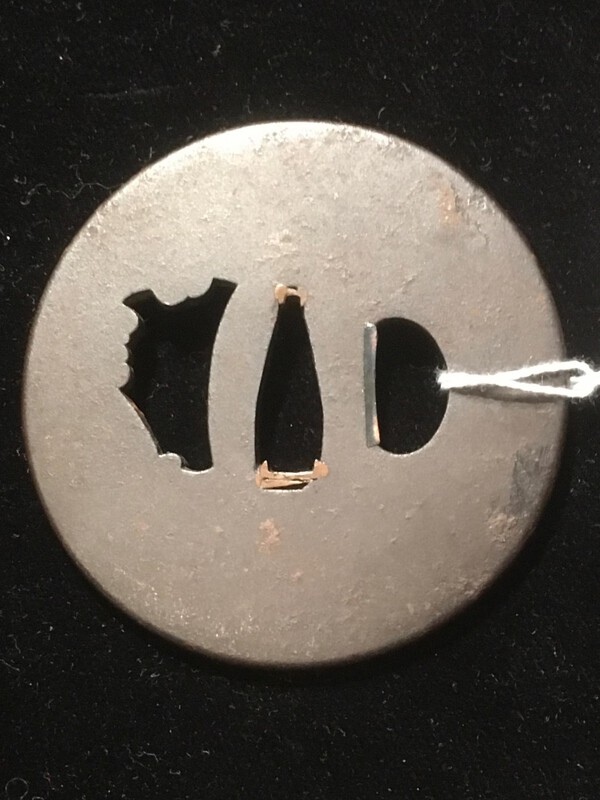
Thanks for your replies! On a second thought, the blank side is the one facing the opponent, so maybe it was meant to make him depressed and less likely to counter the attack...
-
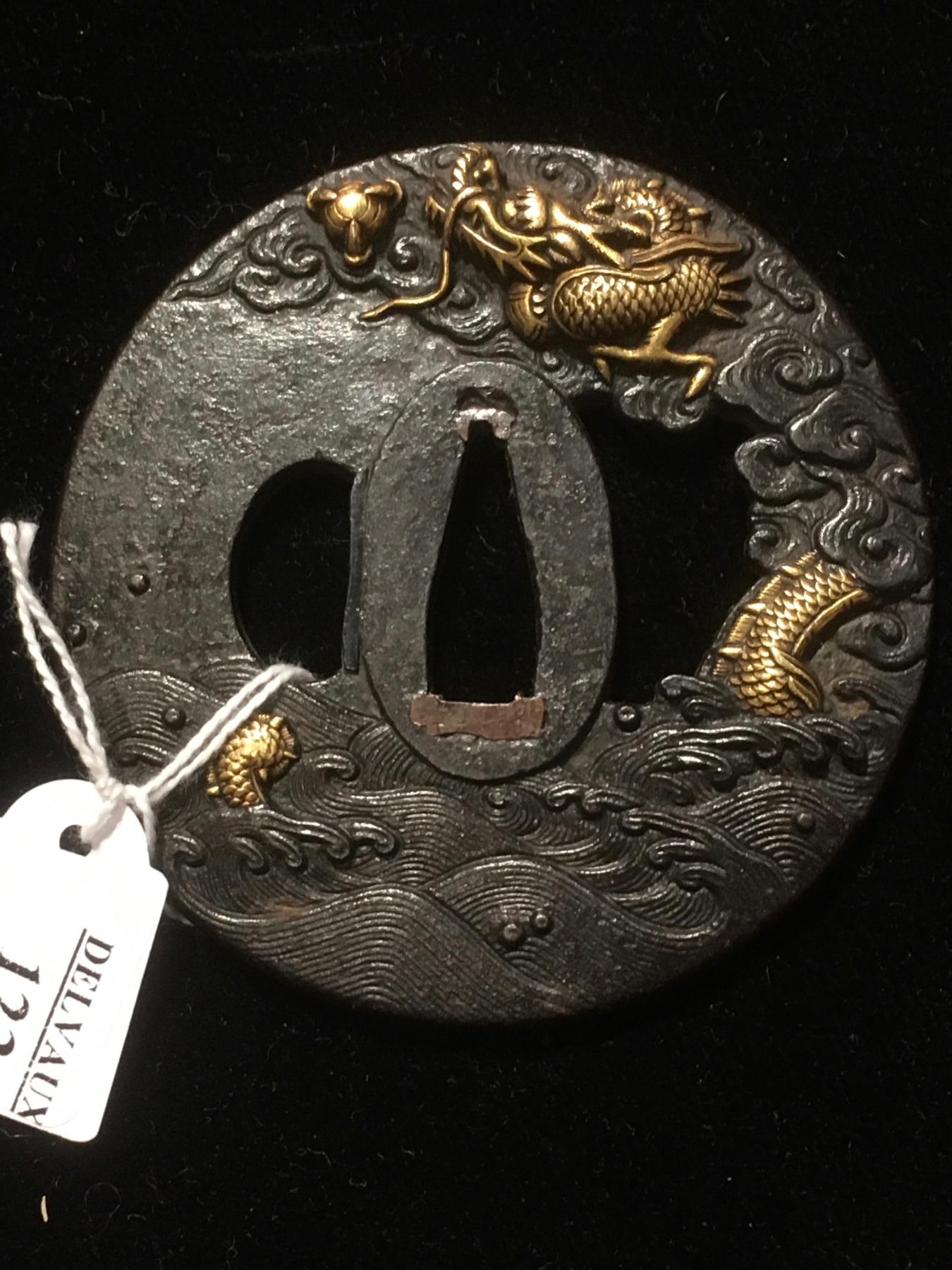
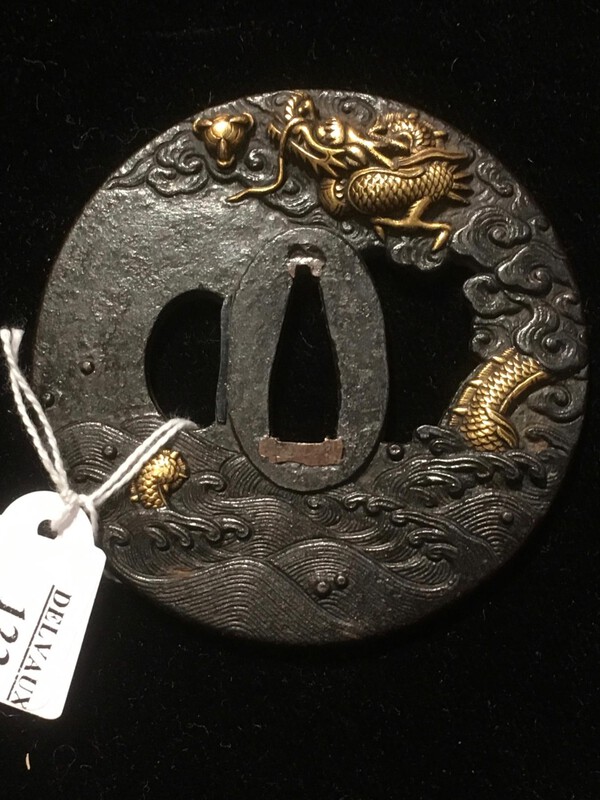
Hi All, I was checking items at an auction and my attention was drawn to a tsuba (not exactly my kind, but it seemed one of the nicest on show). When I flipped it, I was surprised to see that the ura side was completely blank! Is it something known to happen or it denotes an unfinished work? Thanks in advances for your comments (to be clear, I am not planning to bid on this tsuba anyway). Cheers, Pietro
-
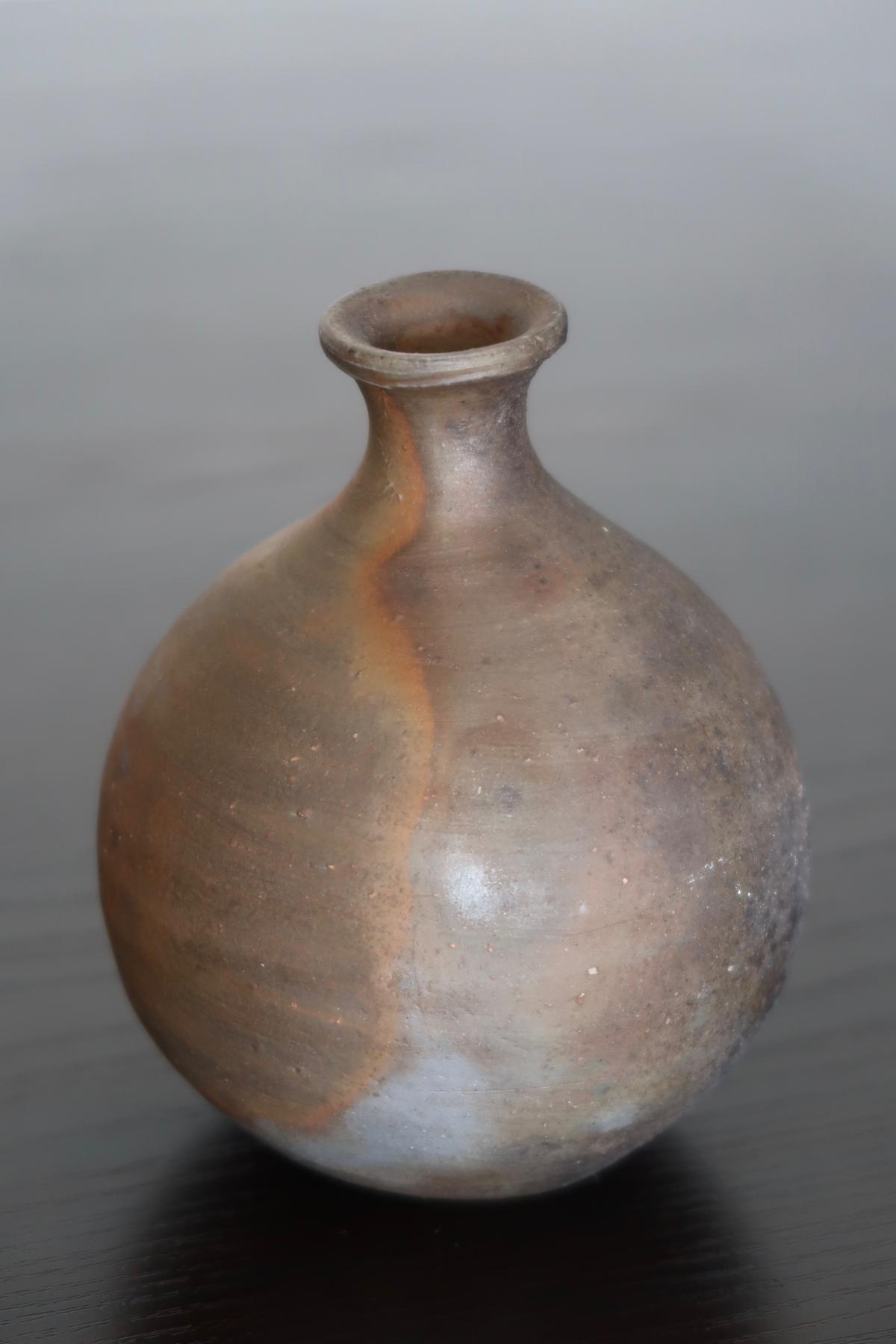
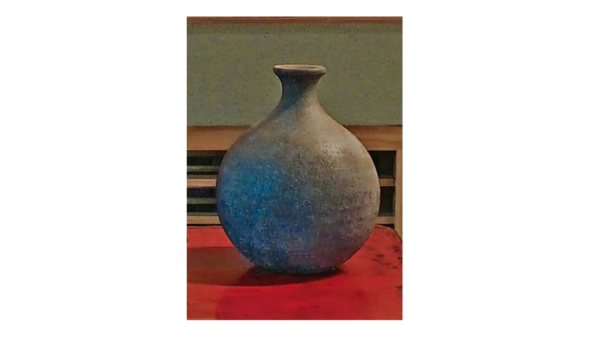
I just found that my tokkuri may have a somewhat illustrious provenance. It really looks like this one, which was sold ten years ago in Paris from the collection of Kenzo Takada: (for the record, I paid much less than the price it made at that auction) Cheers, Pietro
-
Sorry, I appear to have messed up something. Duplicate thread and no photos! Let's try again: Cheers, Pietro

-
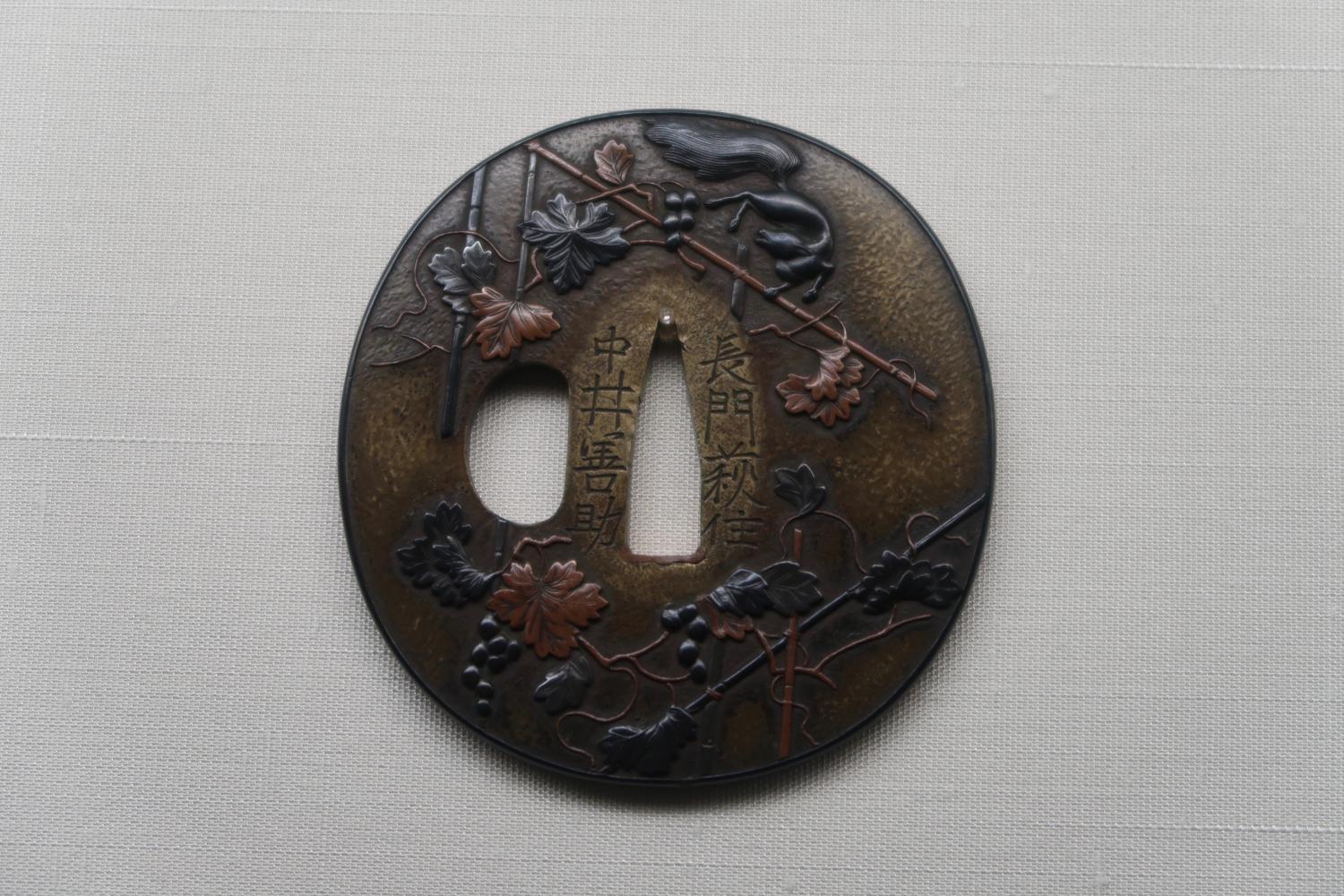
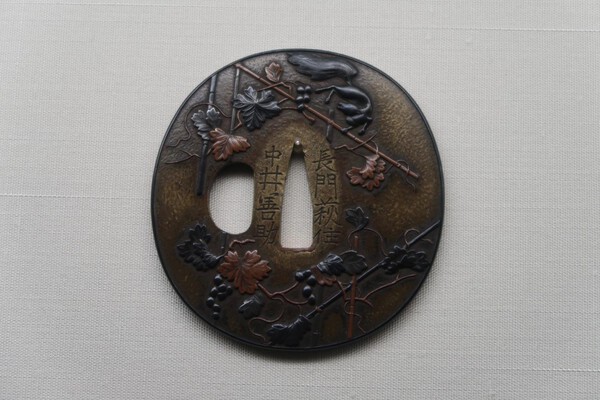
Hi All, browsing through some old pictures I found these three tsuba which I had seen last November at Tokyo National Museum. I guess someone will appreciate them: Cheers, Pietro
-

Translation Help needed on this "Woodblock"
PietroParis replied to barnejp's topic in Translation Assistance
P.S. These links can help: http://shinhanga.net/doiseals.htm http://www.ukiyoe-gallery.com/doipage1.htm -
Translation Help needed on this "Woodblock"
PietroParis replied to barnejp's topic in Translation Assistance
Hi, Usually the author’s name and seal (within the image) and the title (on the right margin) are part of the woodblocks, so they are just as “legit” as the print as a whole. What you might want to determine is whether this is an early or late printing, and whether it is from the original blocks or from recarved ones. The editor seals (which are added after printing) may provide some help on this. Cheers, Pietro -
Hello Ford, I am a novice in this field and I am following this thread with great interest, because I would like to learn how to tell whether a tsuba is cast. Could you please elaborate on what are the crisp details in the pictures above that make you conclude that this one is not cast? Thanks in advance for your help! Cheers, Pietro
-
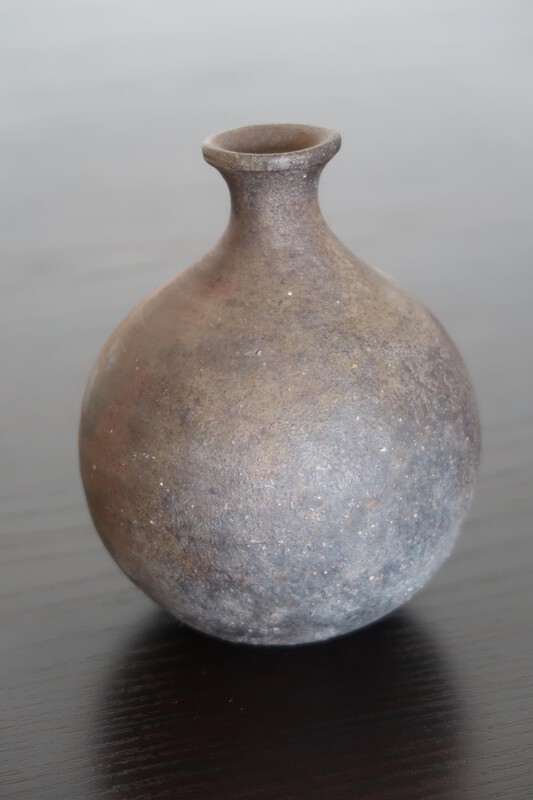
Hi Jean, thanks for your comments! I suppose you are right about the age. There is some very light wear along the rim of the foot (?), but nothing that would indicate many years of real-life use. I guess I will have to drastically increase my sake consumption to give the bottle a more respectable look... Cheers, Pietro
-
Hi Robin, thanks a lot for your advice! Cheers, Pietro
-
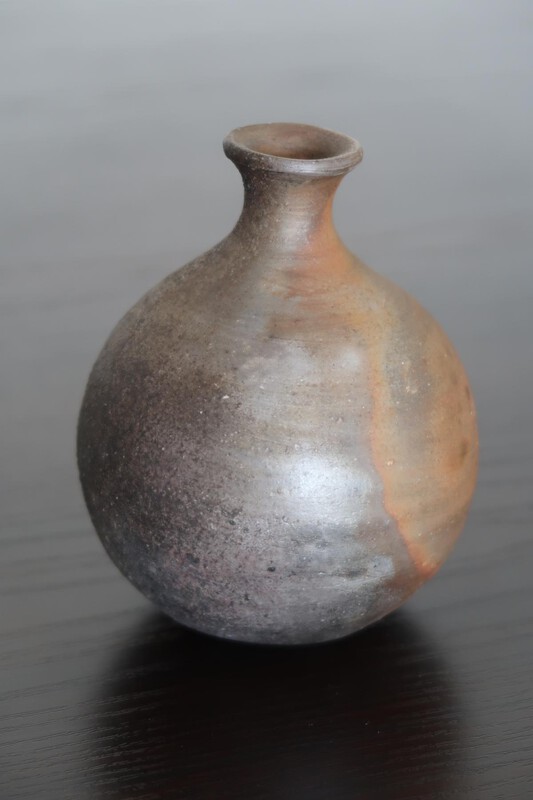
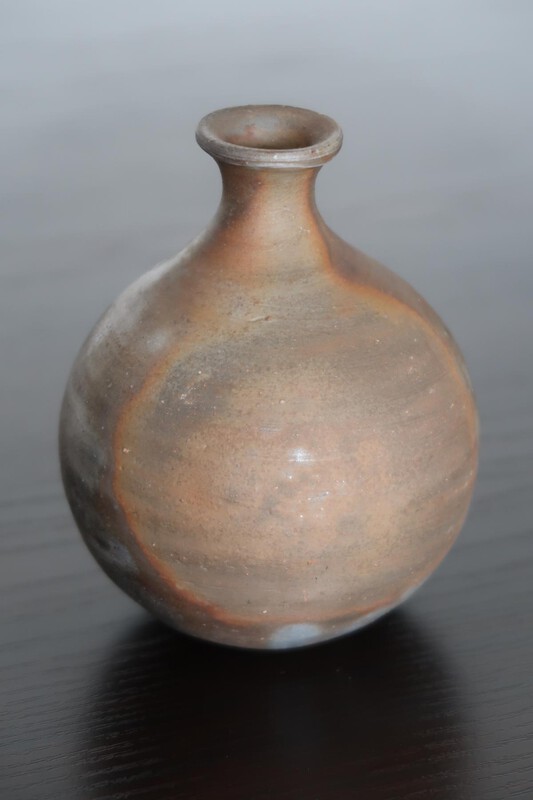
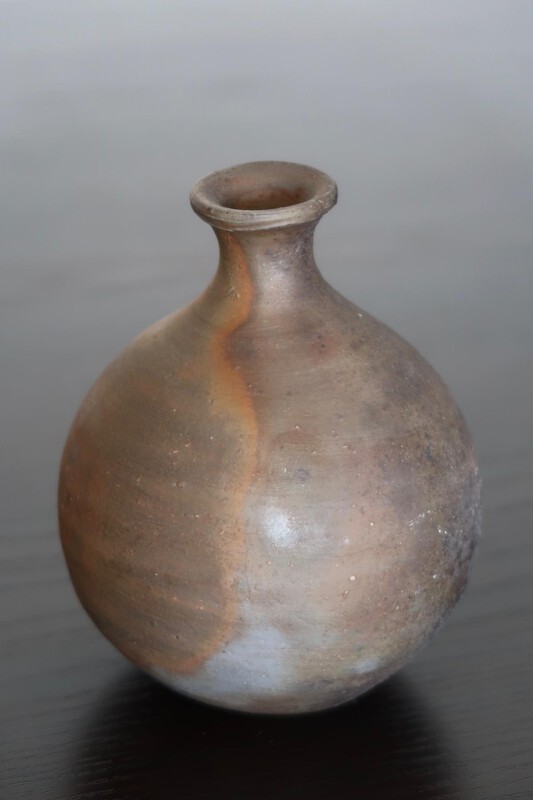
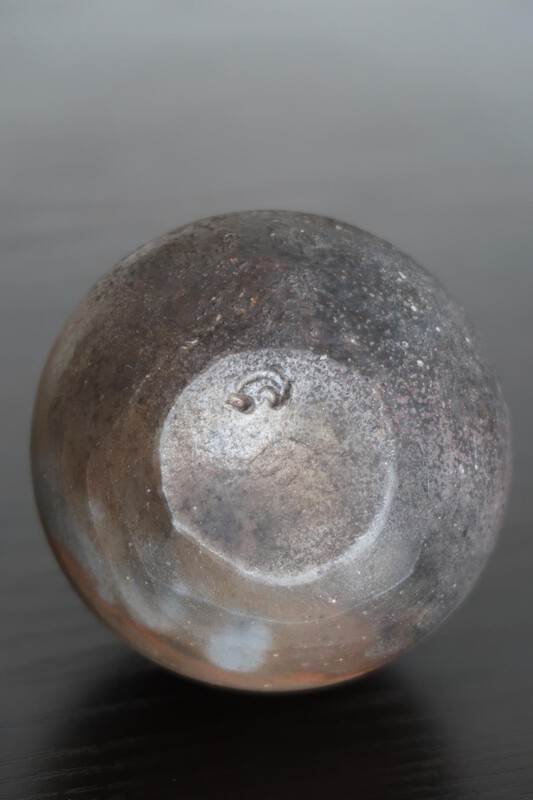
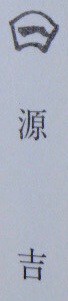
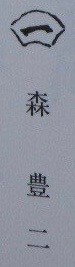
Hi All, Recently I bought a sake bottle at auction. It was among the cheapest items on sale and I was the only bidder, thus at least I did not get ruined. The auctioneer's description "stoneware bottle, 13cm" was (as usual) not very helpful, thus I am turning to the learned members of this forum in the hope that somebody will help identify what I have: From a quick look around the internet it believe it is of Bizen style, is that correct? I also embarked in a rather hopeless quest to decipher what I presume to be the kiln mark in the last picture above. I found a webpage with a long list of Bizen marks, but none of them corresponds without doubt to the one on my bottle. The only two that - to my untrained eye - might vaguely resemble it are on pages 20 and 31: Google reads 源吉 as "Genkichi" and 森豊 as "Moritoyo" or "Moriyutaka", but all searches of those names in the context of Bizen ware end nowhere. Of course I realize that mine is an absolute shot in the dark, and many things could have gone wrong (e.g.: it's not Bizen at all; it's not one of those marks; Google's translation is incorrect). Maybe some eagle-eyed member of the forum has a better suggestion? Do not worry about hurting my feelings, I like the bottle anyway and I got it relatively cheap, thus I will not be devastated if it turns out to have no age or artistic merit. This said, I have one more question: before using my bottle to actually pour sake, I would like to clean it (after all it was in some stranger's collection for who knows how long). Is there a proper way to do it to avoid damage? Thanks a lot in advance for any comments and/or help. Cheers, Pietro
-
I presume you already have this, but just in case...
-
Hi, I think that tanzaku refers to the narrow format of the print (see e.g. this page). Cheers, Pietro
-
Stephen, a limited number of Hasui's designs were published by editors other than Watanabe, see e.g. this page. It also could happen that a new editor acquired the rights of an existing design, and either used the original blocks or re-carved them (as Nakajima Shobisha did in the 50s with the prints originally published in 1929-30 by Kawaguchi & Sakai). Thanks to Steve's providential lead, you can check this page for what appears to be a sibling of your print. It says: "Although some impressions of this print bear the seal of the publisher Doi Sadaichi, this impression was published by Iida Kunitaro, whose seal is also found on another tanzaku print associated with Doi from the same year (Dusk at Itako). It would seem that while Doi was most likely the original publisher of both designs, he briefly consigned publication of the prints to Iida Kunitaro in the 1930s, where the production was supervised by the carver and printer Hirai Koichi and the printing was done by Sakakura Seijiro. " Then there is also this page explaining the current fate of the woodblocks for "Snow at Funabori". Cheers, Pietro
-
The print is titled "Snow at Funabori" and was first published by Doi in 1932 (see here some examples from the web). Information on the Doi seals can be found here and here. At first sight I cannot find in those pages a seal like the one on your print, is it possible that another editor bought the original blocks from Doi and reprinted it with a different seal? Anyway, someone who can actually read Japanese will certainly be of more help than me. Cheers, Pietro
-
In fact, I was not even registered to bid. I am a beginner at collecting Japanese art, and I would not try to buy items that I have not seen “in the flesh”. My question was aimed at understanding why the auctioneer would set the starting prices so low with respect to the reserve. As a result, many items (perhaps half of the total?) received several bids but went unsold anyway. Cheers, Pietro
-
Chris, Could you please clarify the concept of "price-testing pieces" to a novice? Today I watched online the Bonhams sale, in which a substantial fraction of the lots went unsold. In many cases I noticed that the auctioneer set a starting price much below the lower end of the estimate, and received numerous bids from the audience, but declined to sell the lot unless the bids reached (or at least got very close to) the lower estimate. I was wondering what the logic of this time-wasting strategy was, and why the auctioneer did not just start from a price closer to the reserve. Do you mean that the seller sets an unrealistically high reserve just to see how high potential buyers will go? Where is the profit for the auction house in this strategy? Thanks for your help, Pietro
-
Hi John, thanks a lot for your comments and also for the link to the Oxford/Ashmolean website, it looks really informative! It will take me a while to explore it in detail... For the rest, I'll check out the Peabody book, I suppose it can be found second-hand. Another book that was recommended to me is "Sukashi Tsuba" by M. Sasano (1972), which also can be found second-hand (although a bit on the pricey side). Finally, browsing around the forum I learned about this thesis on the namban style, downloadable from the Durham University website: http://etheses.dur.ac.uk/4129/ Cheers, Pietro
-
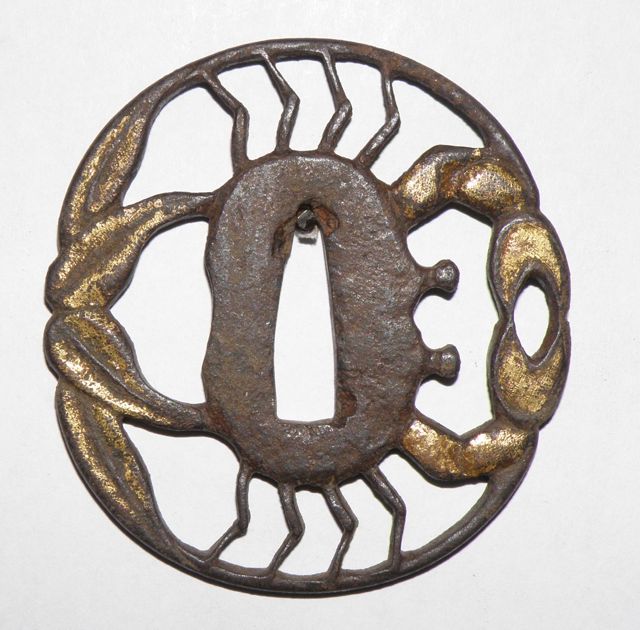
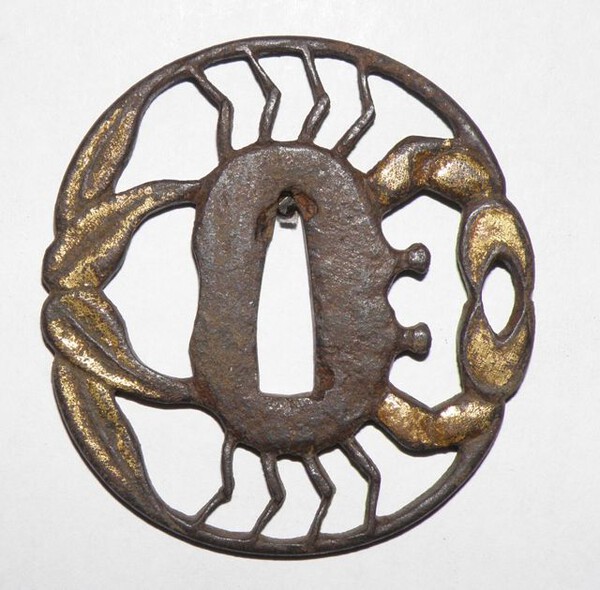
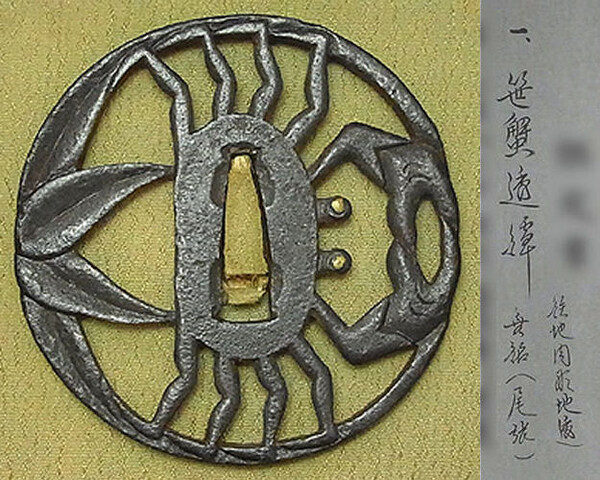
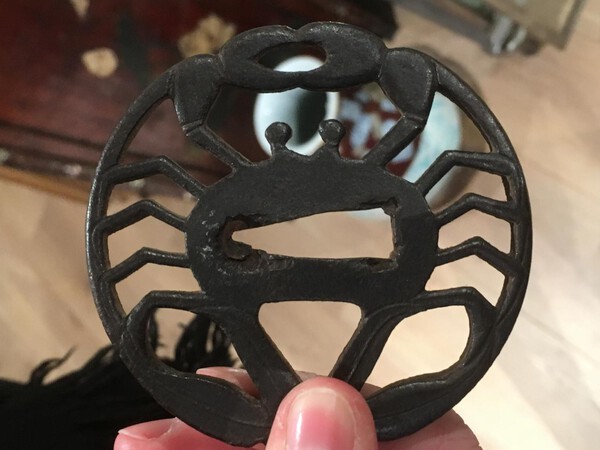
To my totally untrained eye, the first crab in Mauro's post above looks nicer than both the one from Marius' 2010 post (#3 in this thread) and the one I saw yesterday (#8 in this thread). Cheers, Pietro [EDIT: added side-by-side pictures]
-
Don't worry, the thought of buying this tsuba - for more than 1000 EUR! - never crossed my mind... I took the pictures because I think it will be useful for my "education" to research any pieces that, for one reason or another, attract my attention. By searching "crab tsuba" in this forum I found the picture posted by Marius, which is exactly the same design but with gilding and (to my eye) a finer carving. Cheers, Pietro
-
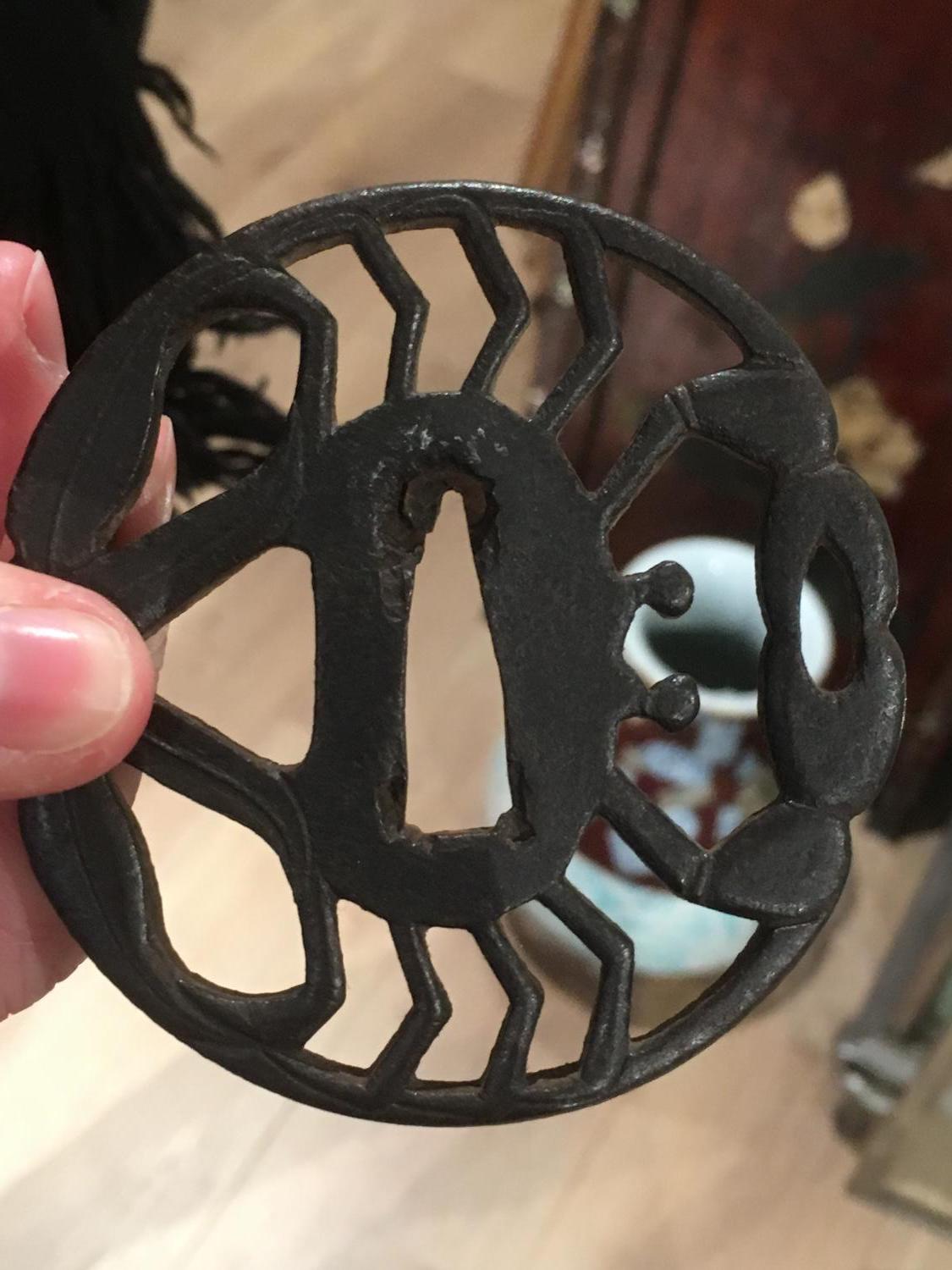
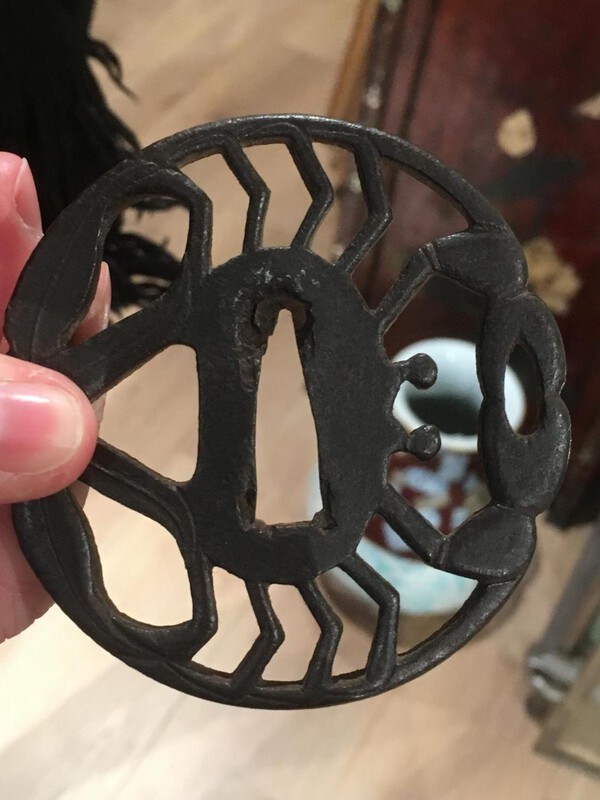
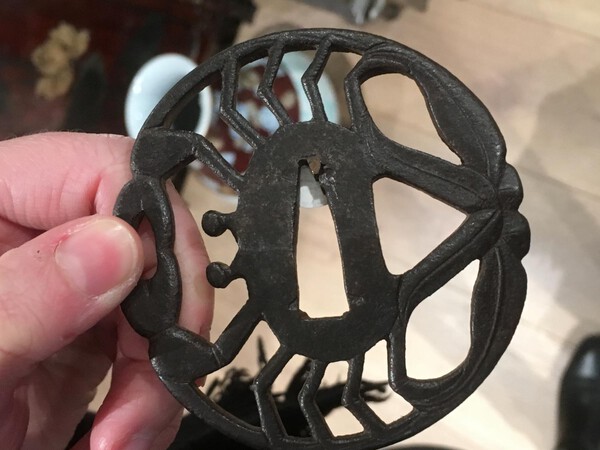
Hi All, I am a newbie in this forum and I am not sure it's good etiquette to revive a long-dormant thread. If it isn't, please accept my apologies. I would like to contribute two pictures of a very similar crab tsuba that I saw yesterday in an antiques shop (sorry for the atrocious cellphone pics including the fingers of the shop owner!) To my untrained eye, the carving looks somewhat coarser than in Marius' crab. It was described only as "17th century sukashi tsuba", and sold for a quite hefty sum (which, at this stage of my education, I would not have been prepared to pay even if I had really liked the tsuba). Anyway, it was basically the only Japanese item in a shop devoted to Chinese antiques, thus there might be doubts on the reliability of the description... Cheers, Pietro
-
Hello Jean, thanks so much for your welcoming words, and also for the reassuring news about the tsuba. In my searches I had indeed noticed some similarity with the nanban style, but I believed that the decoration of my tsuba was not "arabesque" enough to fit in the category. Clearly I have a lot to learn... I also agree with you that the "flowers" of the auctioneer's description could very well be birds. As to the fissure, I am quite sure that repairing it would cost more than I paid for the tsuba in the first place. I will just accept it as part of the life of the object (no big deal if it affects its value, I am not planning to resell it anyway). This said, I will certainly keep learning from this forum and try to develop my taste and experience before embarking in new purchases. Thanks again for your kind help and Best Regards, Pietro
-
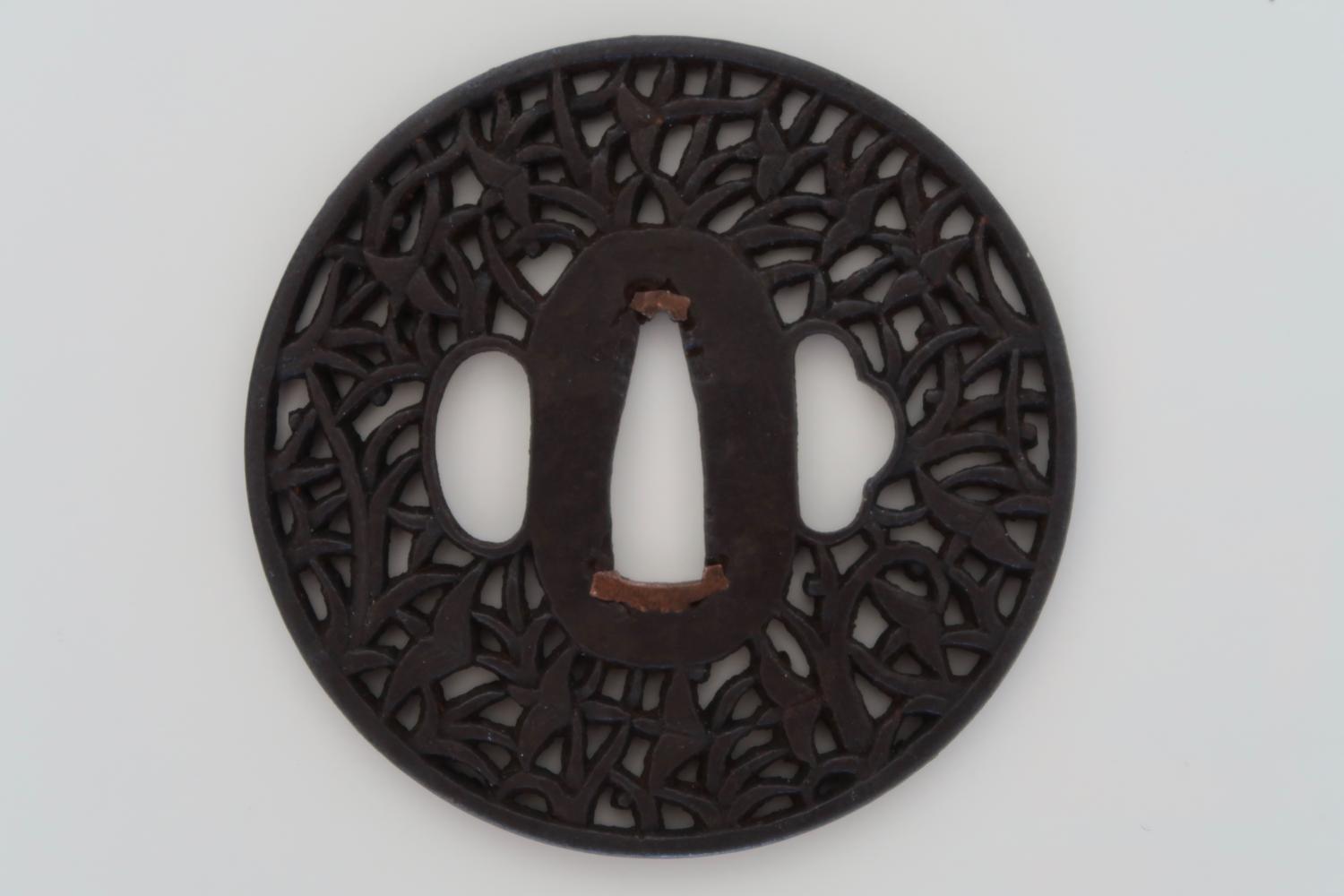
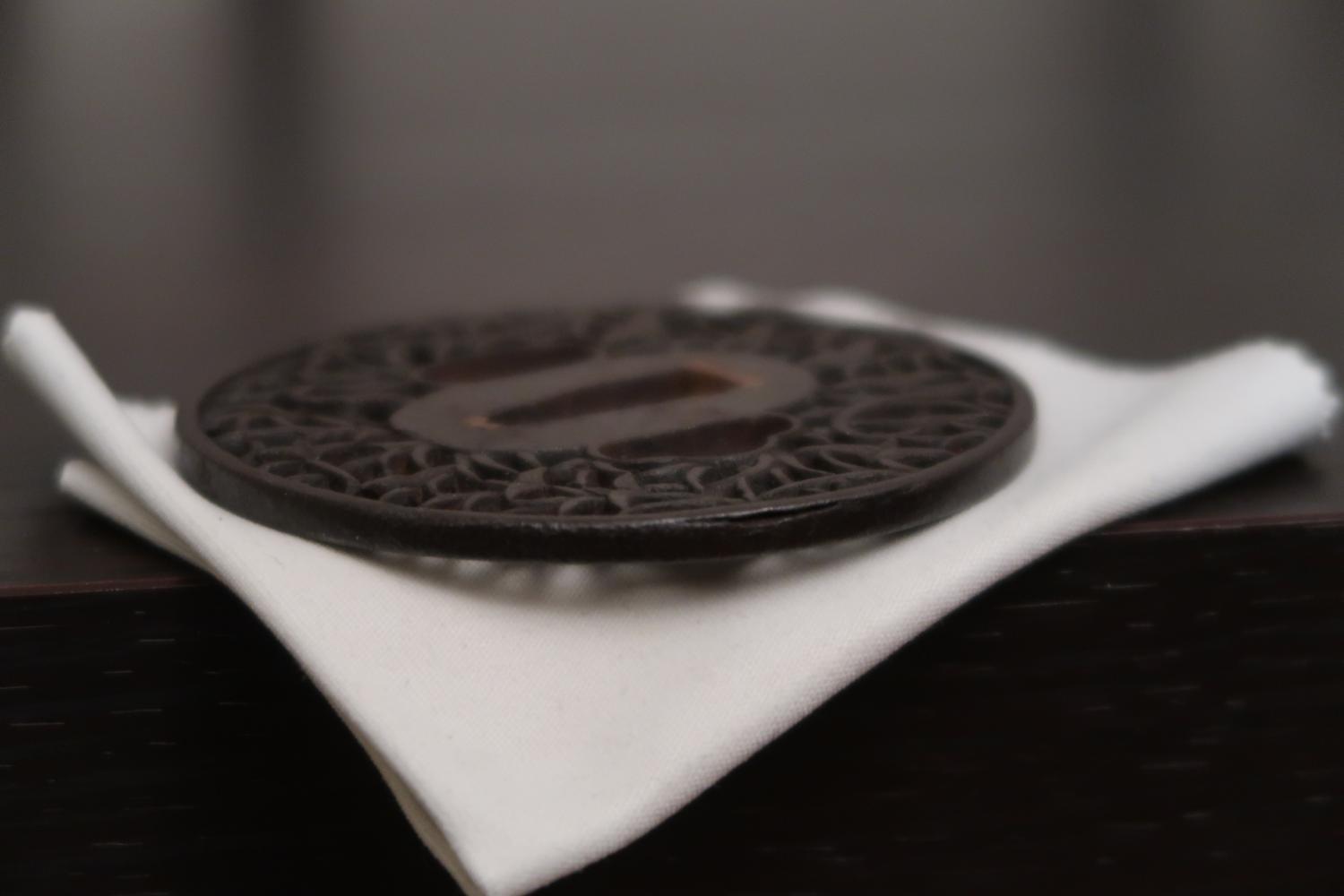
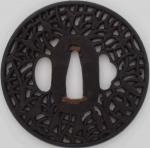
Dear Forum Members, I have been fascinated for a while by some aspects of Japanese art (mainly shin hanga, more recently netsuke) but I am a complete novice for what concerns sword fittings. The only book I could find so far on this topic is Joe Earle's "Lethal Elegance" on the collection of the Boston Museum of Fine Arts, and I will be grateful for any suggestion for further reading. The reason why I am posting here is that recently I felt like buying a sukashi tsuba (for no special reason, other than I find the openwork decoration the most pleasing to my aesthetic sense), and after following a few non-specialized auctions of Asian art in Paris I ended up with this one: I would greatly appreciate any insight on the origin and quality of my tsuba. Both the estimate and the price I eventually paid were on the (very) low side compared to what I see in antiques shops, thus I don't have particularly high hopes/expectations. The diameter is about 7.5cm and the thickness about 4mm. The auctioneer's description (my translation from French) was: "Edo Period (1603-1868). Iron maru gata with maru bori openwork of flowers in their foliage. Unsigned". I know by now what "maru gata" and "maru bori" mean. I presume that the dating should be taken with some skepticism (although other tsuba in the same sale were described as "Meiji Period", "20th century", and even "cast iron", i.e. there was at least an attempt to differentiate them). I made some searches online but I could not find any item with a similar design (I don't take this as a good sign...) If I understand correctly, the presence of sekigane and of tagane marks should indicate that the tsuba was once mounted on a sword, although of course they might also be spurious. Finally, I don't know how to interpret a small fissure (about 1cm long) near the back edge of the rim - see the third picture - but I have a bad feeling about it... Please let me know if I should post any other pictures to help in the identification of this tsuba. Again, I will be very grateful for any comment by this forum's learned members, and I won't be devastated (but maybe a bit disappointed!) if it turns out that I bought a tourist piece... Cheers, Pietro