
Dan tsuba
-
Posts
860 -
Joined
Content Type
Profiles
Forums
Events
Store
Downloads
Gallery
Everything posted by Dan tsuba
-
"You have miles to go before you reach that". What do you mean? I need to collect more money so I can buy stuff and then have a "professional interest in Japanese art"? You have dug your own hole long ago and have not realized it. You are already "baited" by your own bias, and you can't figure that out! Oh well, good luck!
-
Of course you have "no comment to the above". That means you would have to "take sides". Let's just keep talking about the "dollar bill". That is much safer! With the respect you think you deserve (wait, no once again I am being too kind!. Let me just say with "no respect") Dan
-
That’s interesting. So, it seems tsuba collecting is all about the “dollar bill”? Let’s forget that Brian stated to me in another thread “Who cares?? Everyone with a decent and professional interest in Japanese art. What a stupid thing to say. As for negative comments....good. This is NOT a safe space. We call out stupidity here. I suspect _____ is a far more mature person and will take the criticism to heart and become a better collector without taking it personally. Unlike yourself.” So, who wouldn’t take this comment from the “Head Administrator” personally? I could never afford to spend over $300.00 U.S. dollars for a tsuba (usually between $50.00 to $150.00). Well, Brian, here is a negative comment. So, a collector that can’t spend a s**t load of money is not a “professional” and doesn’t have a professional interest in Japanese art? What is a “professional tsuba collector”? Someone that can only afford “museum quality” pieces? Dealers? Hey, how about us other “tsuba collectors” that survive on one social security check to the other? Are we considered “collectors”? Are we “worthy” even though we collect “inferior” pieces, and as stated to me on another thread “and earn your place here.”? And oh yeah, make no mistake. I would have responded to Brian on the other thread if he hadn’t “locked it”. How convenient is that for him! Dan
-
It looks to be cast and made in the Edo period! Ha, ha, ha, ha, etc!!
-
Hey my friend Vitaly! How are you doing? I like your tsuba! So, maybe you overcleaned it. No big deal, it is your tsuba to do with as you want! I also have overcleaned some of my tsuba. Who cares! I still appreciate them, display them, and learn from some of my mistakes. Man, some of the “negative type posts” from some of the so called “experts” is ridiculous (where is an administrator or moderator when you need one)! Good thing I never had to contend with that (yeah right, I refer you to my “tsuba casting molds?” thread!). For me, I just now pretty much stay off the forum and let the “good old boys” hash things out. You ask to learn and ask for assistance, and you pretty much get “slammed”. That is not fun! Just my opinion! With respect, Dan
-
Yes, I really like the crane and turtle design. It is supposed to represent longevity. Just wanted to show the one I have. I think it is really a nice piece! With respect, Dan


-
Hello all! In response to Brian’s post, it was stated “If you ask them, they will tell you that their opinion is that cast tsuba are modern-ish reproductions to deceive. They say that old tsuba are used to make the castings for these reproductions. There are more tit-bits around their website.” So, Brian, I took your suggestion (thank you!). I did “ask them” by email and received a fairly rapid reply to my question. My email and the reply from the dealer are shown below- My email question- “Hello! (I sent a message but I don't think it went through. So I am trying again.) My question is do you think that cast iron tsuba could have been made during the Edo period of Japanese history? It seems to me that this could be possible. Thank you for your time and consideration. With respect, Dan And the dealer’s (from Japan) reply. Which includes the website of the cast iron tsuba article referred to in my earlier post of June 21st , and that website shows several pictures of the cast iron tsuba that the below email reply is referring to- “Yes, I agree with your opinion. All the cast iron tsuba look from Edo period for my eye. cast iron (ksky.ne.jp) Sincerely yours. Sumie Kashima, operator of Usagiya” Of course, the dealer could be incorrect in their opinion. But the fact that they state “look from Edo period for my eye” is extremely interesting! Thank you again Brian for suggesting that I ask them! With respect, Dan
-
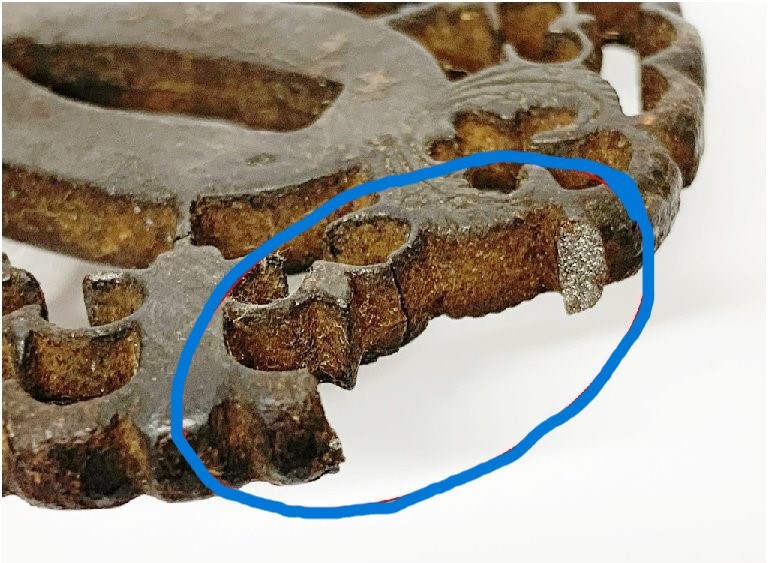
So more interesting stuff! I found this at this weblink: http://www.ksky.ne.j...des.html#cast%20iron A piece of the article is quoted below- “9) Cast iron tsuba Kokaji found an iron tsuba at an antique dealer. Its design was that he was looking for so far. But it looked like cast iron by studying it in his hand. It was a casting copy of a good Owari tsuba. Cast iron tsuba is far cheaper than steel tsuba, even if the design is so good. The difference of their prices is ten times or more in the market. Cast iron tsuba is a toy and never could be a weapon. He said to the dealer that he was sorry for that tsuba because of it was cast iron. The dealer didn't agree with him, because the dealer was sure it was steel. Then they studied it carefully but never agreed. There was no seam mark on the cut out surface. The seam mark caused by casting work had been removed by filing carefully. The dealer said, "I believe this tsuba is steel, so please break it. If it can not break easily, please buy it." Kokaji didn't want to break it in two pieces, so he settled it on vice and punched a small part of it. A small amount of metal was broken off easily. It never bent. Finally they got the solution. It was a very cast iron tsuba. It was so brittle.” What is interesting is the ingenuity of the Japanese craftsman in filing down the cast iron seam marks! You may have to magnify the mage shown below (from the article) to clearly see the tiny piece of shiny exposed cast iron that the red arrow is pointing to. I am not saying this tsuba was cast in the Edo period, since there is no way to prove that. I just think this is an interesting weblink along with the other weblink in my previous post (both from the same Japanese dealer) that shows several cast iron tsuba. The adventure continues! With respect, Dan

-
Hello all! So I was searching around on the internet again and found some interesting stuff on cast iron tsuba. I found it very insightful and informative in that it has pictures of broken cast iron tsuba. I believe the link is from Japan. I have included the website and a few of some of the pictures below. cast iron (ksky.ne.jp) With respect, Dan


-
Tsuba in everyday objects - the culture of Tsuba
Dan tsuba replied to Spartancrest's topic in Tosogu
Hello all! A lttle off topic here. But if that water kettle with the tsuba motif could be dated (thanks GRC!), it may give an insight into if water kettle makers also made cast iron tsuba (possibly in the Edo period?). Hey, just a thought! With respect, Dan -
Yes Jeremy, maybe some sort of banner pole without the banner. Or maybe it was used to mark the entrance to the village? So, the pole marks the entrance to the village that is evidently in the mountains (as shown by the mountains in the background). Then it looks like you pass some sort of temple. Then as you continue down hill you pass a waterfall , a bridge (?) and some beautiful trees. As you continue on in the village you come to a house that seems to be built next to a smaller waterfall (which is on the left and the house looks to be built on some stilts or pilings) with people on the terrace (a tea house?). Then you have the people on the boat in the small lake who are playing a game of "go". A very "relaxing" scene and a wonderful piece of art (hey, just my opinion!). I can definetly see what you were describing in the first paragraph of your first post! One question. How did you take such great pictures of the detail of the tsuba? With respect, Dan
-
Hey Jeremy! Wow, no one replied to your post! Bummer! That is a nice tsuba! Congratulations! I don't know anything about your tsuba, but I like how you found the guys playing the game of "go" on the boat. I bet that is a rare thing to see in a tsuba! With respect, Dan
-
Hello Alex, I have mounted antique tsuba on two of my iaito. The nakago ana of the tsuba was too large to fit tight on the tang of the sword. So, what I did was take a pair of tinsnips and cut a small piece of metal thinner than the thickness of the tsuba. I then took long nosed pliers and bent the metal strip (so that it fit inside the nakago ana) and lined the inside of the nakago ana with the metal piece. They work fine with no movement at all. Upon rethinking it, I maybe could have used a piece of stripped copper wire to line the nakago ana and accomplish the same thing? But like Jean stated, if the nakago ana of the tsuba is too small for the sword I guess the only way to fit it would be to file it down or file down the sekagane if it is already in the tsuba. Hope this helps you out somewhat. With respect, Dan
-
Hello Tsuba Steve! First I would like to welcome you to this great forum! As far as your tsuba is concerned, I can't tell you much about it. There are other members on the forum that will tell you exactly what you want to know. I can tell you that I like the motif on the tsuba. Also the mei (signature) on the tsuba looks (to me) like it could be an original signature (but of course, I could be wrong!). If you want the signature translated you can always post the tsuba on the "translation assistance" page of this forum. Anyway, I hope that your tsuba turns out to be all that you expect it to be! With respect, Dan
-
Hello Colin! Thanks for your posts. Just to avoid any further confusion, I edited my original post to take out my assumption of "so someone thought the description was accurate and purchased the tsuba!" Thank you! With respect, Dan
-
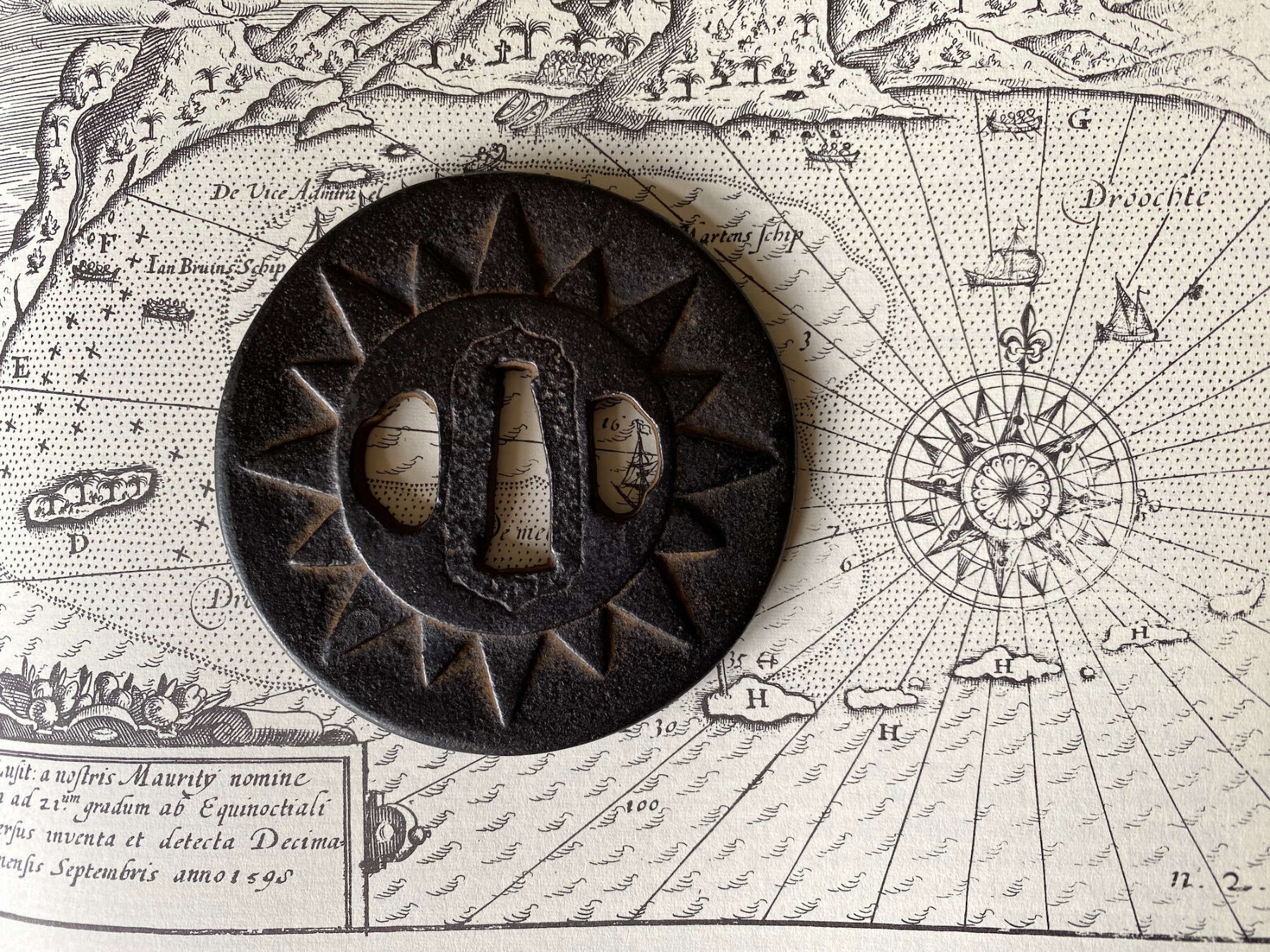
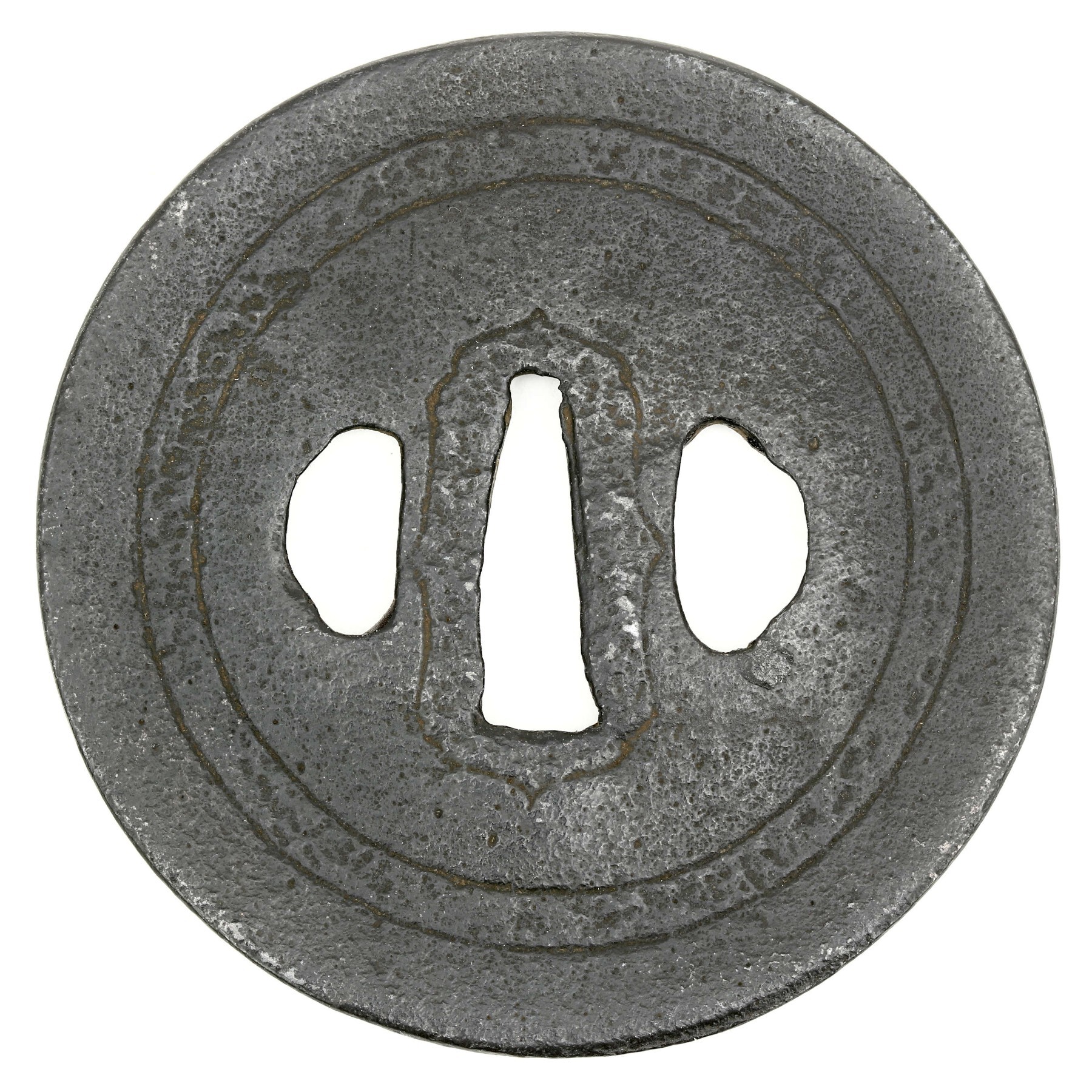
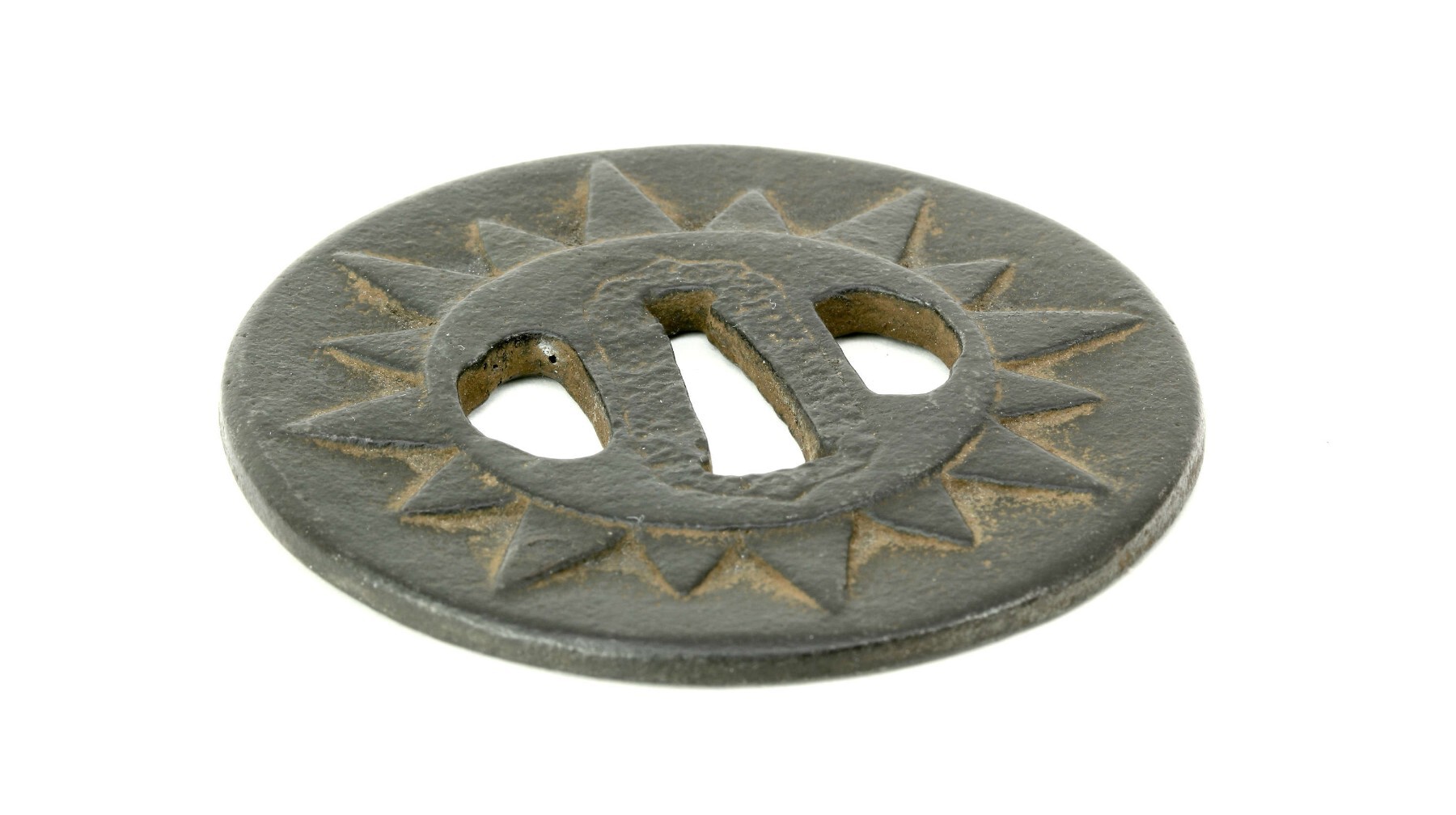
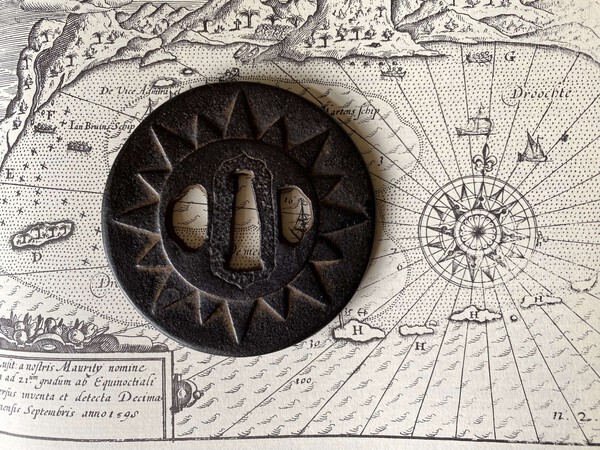
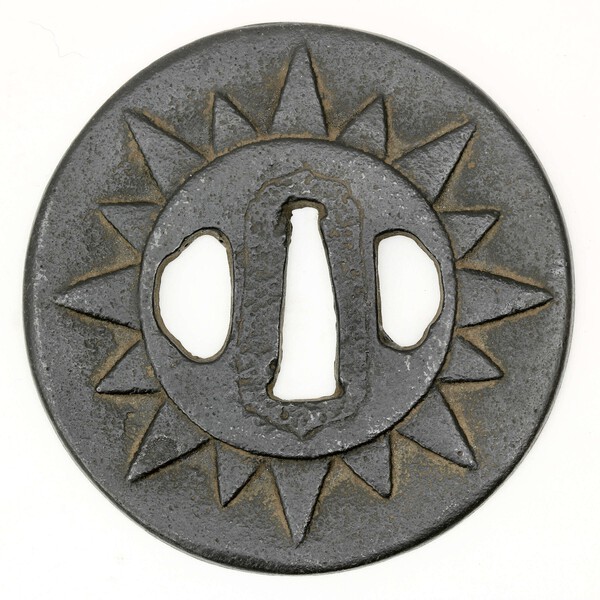
Hello all (yes, I was searching around on the internet again!) Now, as was referred (and described) in the article in my last post; Perhaps some Namban type tsuba are an example of a cast iron tsuba made in the Edo period that may have been used on swords in Japan. And I remember from reading it somewhere (although I can’t recall the reference- maybe it was Dr. Lissenden’s thesis?) that Namban type tsuba were not only made in Japan but several were exported from China (and maybe other countries) and imported into Japan. The thesis by Dr. Lissenden on Namban tsuba has been brought up several times on this thread. I refer the reader to page 1 of this thread (for some insights into his thesis) and then page 2 (which lists the PDF link to the thesis). I also refer the reader to page 136 to 139 of that thesis itself for a discussion of cast iron Namban tsuba. ---- So up for your viewing pleasure today is a piece described as a cast iron Namban type tsuba that was made in the Edo period. It is described at the below website- (and some pictures are also included below)- https://www.mandarinmansion.com/item/cast-iron-compass-rose-guard (the name of the creator and the link to the license can be found on the above website). Here is a small preview of what you will find on the above link- “Description A cast-iron sword guard of unknown origin. It is a flat disc with a raised circular panel, with a star motif emerging from its edge. It has three openings, one for the sword tang and two others that emulate the hitsu-ana found on Japanese tsuba, openings for a pin and by-knife often carried alongside the main sword. The workmanship however tells us that this guard is not made in Japan.” (to read entire the article you will have to click on the “read full article” red section. Also, if you scroll all the way through the article, you will see several close-up pictures of the tsuba). I have included some of the pictures below. This tsuba has been sold. Also, if there are any questions about the reputation of the dealer (which was established in 2005), I refer you to the top of the link where you can see and click on his “about” section. Anyway, the adventure continues! With respect, Dan


-
Even I can tell that it is not a bargain! The main question is, "is it made from cast iron in the Edo period?" Ha, ha, ha, ha etc! Just having a bit of fun With respect, Dan
-
Hello all! I found a very interesting article about cast iron tsuba. I don’t know if it had been placed on the forum before, but I thought it was worth mentioning (again?). The article was written in Japan in 2016 (and is copyrighted). It deals with several aspects of tsuba (including cast iron tsuba and shows pictures). I have included the link below (although sometimes Google will translate “tsuba” as “bell”). https://asahitoken.jp/contents/06_kokogaku/kokogaku-E.html The article must have some truth to it otherwise why would someone in Japan bother to write it and place it on the internet? Anyway, I think it is worth reading and gives some good insights into cast iron tsuba. With respect, Dan
-
Hi Amber and welcome to this fantastic forum. That (to me at least) is a nice tsuba. I would say it is shakudo (copper with a small amount of gold). It has nanako ji punch marks (those tiny punch marks on the tsuba) and a nice motif. Well done! With respect, Dan
-
Hello All, Thank you, Steve and Brian, for your great posts in response to mine. I understand what you both are saying and appreciate it. The fact that you both state something along the lines that “I want it to be true” is an insight for me! I actually find this a fun and exciting area to research and study. It has led me into other interesting areas of research, and I have learned much about Japanese culture and technology during the Edo period. But like a “bulldog with a piece of leather in his teeth”, I am not going to let this go. It is my time to spend and do with as I wish! Although there is one thing Brian stated that I take offense with. He stated, “Until you came along, and decided that you need a legacy.” Now, I consider that totally out of place and untrue. Brian, in my life I have done more than most but not as much as some. To think and state that I need this forum to create a “legacy” is absurd. Unlike some on this forum, tsuba (and other Japanese antiques) are not my life! This forum is just a minor diversion for me! But like I stated above, it is fun (until someone comes along and tries to “belittle” me!). With respect, Dan
-
Hello all! I just thought of something (I know many of you are saying “Oh no! Not again!”. Ha, ha, ha, etc!) I have a question for my friend Brian, You and others have taken a “firm and immovable” stance on the subject of cast iron tsuba not being produced during the Edo period of Japanese history. As you stated in one of your recent posts on this thread “There's a reason all the oooold collectors with experience are not joining this debate. Pointless,…”. It is my conclusion from the results on this thread that the “house of cards” that you and others have so diligently built concerning the negative (no way) possibility of cast iron tsuba being produced in the Edo period will (in time) come tumbling down (with a crash!). I am certain of this and have no doubt. Maybe it won’t happen in my lifetime, but it will definitely happen. And remember, my friend, you started this debate! I refer you to page one of this thread that is quoted below- Brian Administrators 18.5k Location:South Africa Name: Brian Posted January 24, 2022 “Yes...but what about cast iron tsuba? :)” So, I and others have (over time) responded to your question (with many posts that have included stated references). Yet it seems to me that you (and others) are vehemently against the idea of cast iron tsuba being produced in the Edo period. Since you brought up this line of inquiry on this thread, why are you (and others) so totally against the idea that you initally started and brought up on this thread? Hey, just a thought! With respect, Dan
-
Hello my friend Brian, My thought and opinion is that maybe the reason the “oooold” collectors are not joining in the discussion is because maybe they don’t want to subject themselves to possible ridicule from other members? Better to stay in the “safe zone” of a known area than to “venture out” into the unknown and “unsafe” zone of the question of cast iron tsuba possibly being made in the Edo period. Although it is my opinion that this thread has possibly changed the thinking of several members on that subject. Maybe before when they thought that cast iron tsuba could not and were not made during the Edo period, maybe now they think that it could be a possibility? With respect, Dan
-
So, off topic here. My personal opinion is that some recent posts to this thread, in response to other posts, are not very nice. I have learned from my past experiences on this forum a saying that goes something like this (which was found on the internet)- “Arguing on the internet is like playing chess with a pigeon. No matter how smooth or strategic your moves are, the pigeon is just going to knock down all the pieces, crap on the board, and strut around like it won”. So, my friends, let’s just ignore some of these "not so nice" recent posts and move on and forward! With respect, Dan
-
Hello again Steve Waszak, I noticed that you stated in one of your previous posts that- “Well, if investigative efforts into the literature could result in a reliable, confirmed, original/primary source, then sure, that would be good to find, even for this topic, I guess. But if initial efforts show that there aren't any such sources, and that all the literature in question that mentions cast iron tsuba production and its origins itself begins with publication dates in the 20th century, then this effort becomes futile.” If my recollection is correct (who knows I am getting old!) there are a couple of references to cast iron tsuba that were published in the late 19th century (and very early 20th century) that are stated somewhere in the 11 pages of this thread! I believe that they are not comprehensive or “long winded” references, but they were written in the late 19th century (and very early 20th century).. Anyway, I just did a quick search of this thread and found references stated on p 2,3,5,6,7,and 9. I am certain that you are already familiar with several of the references stated. With respect, Dan
-
Steve Waszak, I understand what you are saying in your post and thank you. And as has been stated before (by me in this thread and other threads) the only way to tell for certain if a tsuba is hand forged or cast is to subject it to non-invasive or invasive metallurgical testing. From doing the research for this thread I have found that the ingenuity of the Japanese craftsman is not to be underestimated. Also, there are evidently many members interested in this thread as can be surmised by the number of views. The bottom line is this: If I bought a tsuba from a reputable dealer and spent anywhere from 500 to 3000 U.S. dollars (or more) would I be interested if it turned out to be actually made from cast iron and not hand forged (as I thought or was described as such)? As stated above, “the ingenuity of the Japanese craftsman is not to be underestimated.” What would you do if you purchased a tsuba that you thought was hand forged and turned out to be made from cast iron (and possibly hand worked)? With respect, Dan