
Dan tsuba
-
Posts
905 -
Joined
Content Type
Profiles
Forums
Events
Store
Downloads
Gallery
Everything posted by Dan tsuba
-
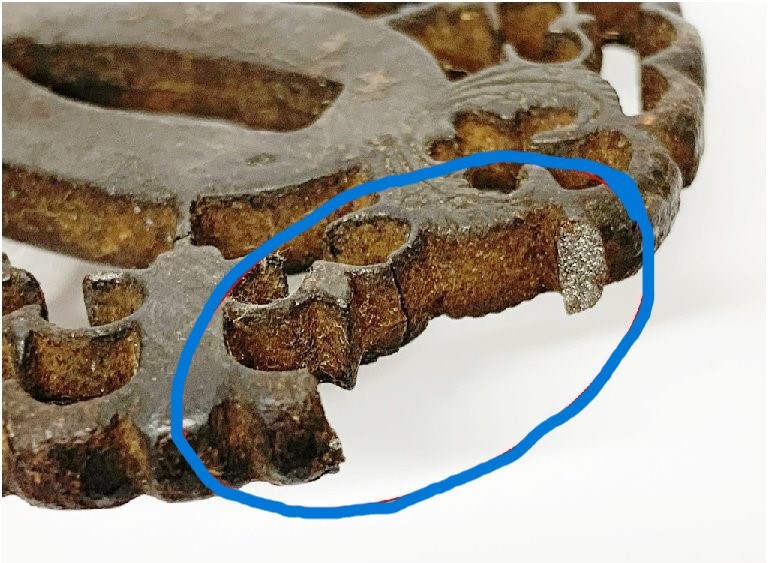
Hello all! Were they casting tsuba in Sendai? I don’t know. The first tsuba listed in this thread appears (to me) to be sand cast with obvious casting flaws. Notice the “casting flaw” in the first picture to the left of the nakago-ana on the seppa dai. Also notice some possible casting “flaws” in the mimi. In the first post it states that the tsuba went through “shinsa” and was attributed to “late Edo”. My thoughts are sand cast, hand worked (?) Edo period cast iron tsuba. from the Sendai province? Just my opinion! With respect, Dan
-
Hello all! I now feel the need to “defend myself” from “personal attacks” by members. So, I do apologize for going “off topic”. Darrel, in one of his posts directed towards me on this thread stated- “I think you are suffering from the belittled syndrome because your interpretations have not been universally accepted. I didn’t have the website open when I posted the site name and figured it could be easily googled with the title provided”. So, Darrel you just couldn’t “let it go”. You continued to “belittle” me on a worldwide forum. As I stated to you in a previous post on this thread where you also tried to belittle me- “Are you trying to "belittle" me by stating "please read the references"? That can be a two-way sword, my friend.” So, in my view you had already been fairly advised! Also, members, if you read one of my previous posts on this thread you will understand why I have become somewhat “intolerant” of members trying to “belittle” me. Now, Darrel, I would like to inform you that there is no such term as “the belittled syndrome” it was just your lame attempt at a “put down”. Although there is a term that I think applies to you. That term is the “Narcissistic syndrome”. You can find information about that at the below link- (also Darrel notice I posted the link and did not make it hard to find). https://www.mayoclinic.org/diseases-conditions/narcissistic-personality-disorder/symptoms-causes/syc-20366662 I include a slight overview of that syndrome below- “Overview Narcissistic personality disorder is a mental health condition in which people have an unreasonably high sense of their own importance. They need and seek too much attention and want people to admire them. People with this disorder may lack the ability to understand or care about the feelings of others. But behind this mask of extreme confidence, they are not sure of their self-worth and are easily upset by the slightest criticism.” I do apologize to members for having this slight diversion “off the topic” of this thread. But I could not let this “personal attack” go unanswered on a worldwide forum (as in the past I have left many such “attacks” unanswered). Dan
-
My friend Darrel, Don't shoot the messenger! First off you didn't list the website where one could look up the information you presented. You stated "it was found online". So, why not list the website? That would have been easy to do. Is it in PDF? Next, did you not see this reference in my last post- I never stated "solid means cast", that was stated by the author of the referenced article. As he also stated in that article- "In fact, I have seen several broken tsuba in the past, so it is certain that all works in the genre of Nanban iron tsuba in the late Edo period are cast iron." I know it is just the author's opinion, but you seem to conveniently overlook some relevant information. Are you trying to "belittle" me by stating "please read the references"? That can be a two way sword, my friend. Like I stated, why didn't you provide an "easy" website to check out your stated references? What was up with that? Dan
-
1kinko (Darrel)- I downloaded the website that OcenaoNox stated- https://asahitoken.jp/contents/03_forum/report/forum-B/forum-B-104.html "In the descriptions of the old Kogai in this column, I think I have often mentioned that it is made of solid material. In that case, the sword fittings are solid, that is, cast. The most likely products made from this casting are Kogai, Menuki, Tsuba, and various metal items attached to Koshirae. In fact, I have seen several broken tsuba in the past, so it is certain that all works in the genre of Nanban iron tsuba in the late Edo period are cast iron. The fracture surface is so-called "zuku" iron, and it is a perfect casting. However, among those genres, there are three-dimensional double arabesque figures that are intertwined, which is an amazing technique, and it is often seen that the nunome inlay is applied to the casting tsuba, so there is some kind of technique. I have no choice but to think." I hit the "English" button when the site came up (located on the upper right hand side of the website). With respect, Dan
-
Hello all! So, I have read the post by GRC. No one answered the subject presented in his post. He was “immediately called out” for the use of one word! That may have been a tactful way to “sidestep” the information presented on his post. Now, what is interesting is that a “moderator” immediately “jumped in”. Where were the moderators and administrator’s when I had to put up with my “crap” from members? I refer you to only a couple (and I reiterate “only a couple”!) of comments from various threads directed towards me below- “I sincerely think that your "crusade" for EDO JIDAI cast iron TSUBA is at its end.” “As for being considered 'a leading expert' or whatever, not my claim so please don't be so rude as to try and demean what I have achieved, it's a strawman argument at best. And if you're looking for a comparable specialist in the craft/technology of tosogu in Japan let me know when you find them please. Spoiler alert, you may be in for a disappointing let down.” “I could go on and on....and such is the dogma we accept without challenge. So I suppose if someone wants to invent a 'hidden' Edo period casting technology to validate crap fake tsuba what's the harm?” “It seems to me that your defence of your theory is becoming somewhat desperate, not to mention distasteful. "It seems my friend Jean has made a good job of holding up the practical side of the discussion, and I've previously written a shed load on the subject here too but some dead horses apparently won't stay dead- (with "beating a dead horse" emoji posted!) “Love it when Ford really gets into a topic. Ford, trust me, your thoughts on this don't get lost. Most of us, including those with differing opinions, love to hear these facts and theories.” “But I waste my time here wading through your Gish Gallop. I have no further interest in engaging in such an ugly and poorly informed discussion.” “But if someone is on a mission (or should I say 'crusade'?) to "prove" that cast TSUBA must have been made in EDO JIDAI in large quantity 'for the masses' (who were they? who would have bought inferior TSUBA, and for which purpose?) only because the technical possibility was given, then there is the danger to use any related information (be it correct or not) as a saving straw.” “In response to Dan's valiant defence I must comment the following. That Mr Huish asks about cast iron tsuba is not evidence of the fact of cast iron tsuba at all. Reading his other queries it is very obvious the poor man knew practically nothing at all about the subject. A point his actual letter makes abundant clear and is the whole point of his enquiry.” “As the history of sword forging in Japan only started in about 500 CE, it is probably not interesting” “Nope, it’s the knowledge syndrome. Brian- please grant Dan his wish. Enough- none are so blind as those who won’t see.” “Throwing a childish tantrum isn't the correct path if you're trying to create a wide discourse of knowledge and information.” “Dan, you seem to be the only one concerned about "likes", "views" and titles. You may as well be jealous about stained underpants, given enough time everyone will have them” “To the address of Dan: In fact you don't do any research. You gather passages from texts and present them with your personal interpretation. You use citations out of context to support your opinion, but in fact you lack the very basic knowledge and understanding of many subjects you are dealing with. You post a crude hypothesis - far away of what is known and agreed upon by experts - and are happy to create a turmoil. Everyone is wrong who disagrres, but as a forum community we have a responsibility towards the (newer) members and towards the actual state of knowledge and science.” “Group think. Yeah. One person rebelling against mainstream thought does not a proper contrary argument make. When you have a group of scholars maintaining the same theories, then maybe you can start crying foul.” I could go “on and on”, but you should get the point by now! Just “food for thought”. The belittling, bullying, and Mr. Know it All attitudes were sometimes “hurtful”, but this stuff hasn’t “phased me” in the least! The adventure continues! With respect, Dan
-
So, here is a thread frome 2018 that refers to some cast iron truncheons of the Edo period- https://www.militaria.co.za/nmb/topic/25702-the-tekkan-or-tekken-can-be-considered-as-nihonto/ The last post on that thread states that they could be made from cast iron. Just some interesting stuff. These truncheon type weapons are not difficult to find on the internet. And many sites selling these as made in the Edo period state that they were made from cast iron (wheter that is true or not cannot be determined). With respect, Dan
-
Hello all! Well, this is interesting! Never been on “this side” of the forum before! Don’t know what led me here, but I am going to “go with it”! Now, many of you are saying “oh no, not again!”, but here it goes. Long story short (and this time I am not going to list my references – too much work!). But it seems that these jitte, hachiwari, and kabutowari (some of them-not all of them) were made from cast iron! They were used primarily during the Edo period. Now, we know that cast iron will shatter when hit against steel or a really hard object. But these “truncheon” type weapons were evidently used by those during the Edo period that were not allowed to carry swords. So, when hit against a head, arm, or leg they were probably very effective. Now I know from personal experience that a cast iron skillet in the hands of an angry wife can be very effective (not really-just kidding!). But you get my point on the effectiveness of a cast iron weapon. I don’t know if this is “off topic”, but it is “food for thought” about cast iron being made and used as a weapon during the Edo period! I never thought of that before (and thank you Bugyotsuji for naming those weapons so I could look them up!). The adventure continues! With respect, Dan
-
Hello all, Members, make no mistake. My end conclusion in my most recent post to this thread of “Edo period cast tsuba” (where I stated “I will take this newly presented information as a “win” in showing that cast iron tsuba were produced during the Edo period”) was arrived at over several threads and under several different titles and it took time (about 15 months) of research, stated references, passion, dedication, knowledge, and the “quest for answers and truth” attitude of several NMB forum members. The latest information presented on this thread by a member stating what he found on a Japanese website relating to cast iron tsuba is just “the final proof” for me (and I reiterate “for me”). This research and discourse on the subject of cast iron tusba in the Edo period was something I could not and did not do alone. Now, the majority of members on this forum (that I can tell) have never started a thread that may be “controversial”. I have. And I have done that because I have “dared” to see the possible “bigger picture.” In this endeavor I have had to put up with the “belittling”, “Mr. know it all” attitudes, opinions (unsubstantiated by research), disparaging remarks, “beating a dead horse” emoji, pompous rhetoric, and other several derogatory posts directed towards me. In my opinion, those members that did that should be ashamed of themselves (but knowing “human nature” none of the members that did that will ever see themselves in that way). I am not overstating the above information. And you don’t have to take my word for it. You can find out for yourselves by viewing that “Tsuba casting molds?” thread. That will make clear what I have referred to. It will show you (in my opinion) how “unpleasant” and “closeminded” some “grand masters” and others can be to members on this forum. In the U.S. military we had a saying. “Either you are part of the solution, or you are part of the problem”. It seems that during the discussion on the various threads relating to cast iron tsuba in the Edo period (over about 15 months) several members went out of their way to be “part of the problem” (just my opinion!). Hardly anyone stated that cast iron tsuba in the Edo period “could be possible”. Many members said something like “no”, no way! They stated something like it couldn’t be done because the Japanese craftsman did not have the technology to do it (or words to that effect). As can be seen in several of the threads relating to cast iron tsuba, the Japanese craftsman did have the technology to make cast iron tsuba. As far as the cast iron tsuba being produced in the Edo period question, I am done. Either the members of this forum will agree or disagree. No amount of research will change the minds of the “non-believers” (or flat-earthers!).” Yes, cast iron tsuba may not have been “mass produced” as some say (or maybe they were – who knows!). And no collector of tsuba that spends a “s**t load” of money for an artistic hand forged tsuba may be interested in possible cast iron pieces. But it is still an interesting subject (to me) and may be a part of the “bigger picture” of the history of tsuba making in the Edo period in Japan. Hey, just my opinion! So, other members can keep up the debate. Personally, I am done with the subject (for now). With respect, Dan
-
Hello all! Well, there you have it (my opinion)! Thank you OceanoNox (Arnaud) for posting those internet sites (that originated in Japan) dealing with cast iron tsuba being made in the Edo period (or maybe before that period?). This can be ascertained in relationship to the other tsuba information included on those sites (referring to the "Imonoshi" (casters), whose main business was the production of pots, kettles, Buddhist altar fittings, and temple bells on one sight; and then referring to Namban tsuba on the other site). Personally, I will take this newly presented information as a “win” in showing that cast iron tsuba were produced during the Edo period. As stated in that old television show the “X-Files”; “The Truth Is Out There”! And I think OceanoNox found it! The cast iron tsuba adventure (more than likely) will still continue! With respect, Dan
-
Hello all! So, as Toryu2020 stated- “Dan - we need to looking at Japanese websites and talking to Japanese collectors - fiddling around on English websites is not gonna get you a definitive answer...” Now, that has always been an interesting area for me to question! Here we are discussing Japanese antiques. Yet the majority of opinions that are presented on this forum are presented by members in Europe, England, Canada, the United States, Australia, New Zealand, Tasmania, South Africa, and only a few members in Japan. And from those few members in Japan, how many are actually from Japanese ancestry? Are we really getting “all the information”? Or are we being “fed” only partial information? The adventure continues! With respect, Dan
-
Hello all! Oh no! Another long post! So, as was stated on a previous post to this thread- “Proof that jewelers and auction houses have no knowledge of kodogu or metallurgy.”’ Now, in my previous post I described 4 tsuba listed as “cast iron” (or possibly cast iron). Let’s look at the history of these “dealers”. I will refer to the dealers as number 1 through 4 as it relates to the 4 tsuba websites shown in my previous post. 1. (tsuba described as finely cast) Since 1973, Haig’s of Rochester Fine Jewelry & Objects of Art has been a trusted name in jewelry. It is one of Rochester, Michigan’s largest family-owned jewelry stores and antique galleries. With a solid reputation for providing quality gemstones and jewelry, unique finds, dependable repair services and award-winning jewelry designs 2. (tsuba described as possibly cast) Welcome to Liverpool Militaria. Dealing in a broad range of Militaria ranging from 15th Century through to WW2, we are well known for our Edged Weapons and specialise in Japanese Swords. Using our 35 years of trading experience we strive to accurately describe and photograph all items for sale. Unless stated otherwise all items are original and authentic to the period and carry a moneyback guarantee. 3. (tsuba described as cast iron) About Auctionet "We help new owners inspire new life into old items" We are a marketplace where auction houses from all over Europe sell furniture, art, design items, collectibles and more. The items are sold at online auction, much like eBay, but with a significant difference: all items are carefully inspected, described and photographed by experts, so you can bid with confidence. Guaranteed! 4. (tsuba described as cast all of iron) We offer 1 on 1 FaceTime (Video Call) appointments Price on Request Items are priced over 10k usd For purchase inquiries please email or phone The Zentner Collection has become a heritage business spanning multiple generations, 40+ years and offers the largest and finest collection of Asian Art available for sale in the USA. All tucked away in our historic 36,000 sq. ft. building. We offer an incredibly broad selection of Asian Art in all categories . All pieces are either directly imported from the country of origin, purchased from estates, or consigned from select collections. We are grateful for this opportunity to serve you, please don't hesitate to reach out. Japanese antiques include Tansu, Samurai arms and armament, mixed metal objects, Cloisonne, Imari, Netsuke, Ikebana baskets, Mingei items, Japanese scrolls, screens, prints and framed art. Under Chinese antiques you will find Chinese hardwood furniture, Chinese scrolls, porcelain and pottery pieces dating from Song, Ming and Qing dynasty, coromandel screens, jade, snuff bottles and Neolithic period bronzes and pottery pieces. In addition we have a large selection of authentic Korean furniture, Koryo and Silla Dynasty pottery, Korean screens and art along with Southeast Asian and Himalayan religious statues and Middle Eastern rugs. All the objects shown online are viewable in person in our store. So, in 3 of these dealers the minimum years they have been around is 35 years! Evidently, they are not reluctant in using the term “cast iron” to describe some of their tsuba. Why is that? They evidently have their “experts” check this stuff out. Are they using “cast iron” and “wrought iron” interchangeably? That doesn’t make any sense to me since these professionals know that they would get more money for a hand forged wrought iron tsuba than for a cast iron tsuba. They obviously have their stuff checked out by experts. And since they have been in business for quite a while (numbers 1, 2 and 4 for at least 35 years!), I would suspect that their experts know what they are talking about. Maybe the description of the metal used to make a tsuba is less concerning to an “old” established dealer than it is to “newer” dealers of tsuba. I did notice that on a few of the “newer” dealers tsuba websites the “dealers” do not differentiate between “cast iron” and “hand forged”. Maybe they are just trying to “cover all their bases” if the tsuba actually would turn out to be made from cast iron (as determined by metallurgical testing)! Just some more interesting stuff to consider! The “cast iron” tsuba adventure continues! With respect, Dan
-
Cast iron tsuba on the web? In all of my previous research, I have never looked this up before in this way But just on a whim I searched for “cast iron” tsuba on the web and found some links listed below! Now, what is interesting could it be that some of these tsuba are actually made from “cast iron” as listed on the seller’s website (I believe they are all listed as Edo)? Did the seller make a mistake? Why would a seller list something as cast iron when he could fetch more money for an item that would be listed as “hand forged”? There has got to be a mistake in the listing on some of these tsuba! https://www.haigsofrochester.com/product-page/edo-iron-tsuba-signed-tomotsugu https://liverpoolmilitaria.com/shop.php?code=50794 https://auctionet.com/en/1873676-nanban-tsuba-Japan-or-possibly-import-edo-period-cast-iron-with-remnants-of https://www.zentnercollection.com/items/1328090/Japanese-Iron-Edo-Period-Tsuba Anyway, just some more interesting stuff! The adventure continues, With respect, Dan
-
So, over a couple of weeks I have been looking at several tsuba in my collection with my stereoscopic microscope with eyepiece digital camera attached to take pictures on my computer (you just take out one of the microscope eypieces and place the digital camera where the eyepiece would be - simple!). Wow! It adds a whole new dimension to tsuba collecting and is so much better than just using a magnifying glass! You get to see really close-up details of carvings, inlays, surface texture and other stuff that you could not make out using your eyes alone without the microscope. Personally, I would recommend that if you can get a stereoscopic microscope do it! It is a neat way to scientifically look at and view tsuba! I don’t know why I never thought of this before! You can purchase a stereoscopic microscope and an eyepiece digital camera, or they make the microscope with its own viewing screen! If you search around on the internet, you can probably find either one for a very reasonable price (much less than you probably would pay for a tsuba!). Well, got to get back to looking at more tsuba through the stereo microscope! The adventure continues! With respect, Dan
-
Hello all! So now onto more "on-topic" stuff (Oh no! Not again!- Ha, ha, ha, etc!). So, I researched some current threads dealing with the possibility of cast iron tsuba made in the Edo period- (other than that “Tsuba casting molds?” thread). https://www.militaria.co.za/nmb/topic/43646-an-edo-period-cast-iron-tsuba/ https://www.militaria.co.za/nmb/topic/44289-another-iron-wasp-tsuba-choshu-hagi-ju-tomomichi/page/2/#comments Some interesting stuff here in these threads! Many members on these threads have stated opinions (as usual), and other members have stated their conclusions based on stated referenced research. Of course, it is up to the reader of these threads to make their own decisions on the opinions and or research presented. The adventure continues! With respect, Dan
-
We should all now be able to get our degree in “Tsubaology” or “Tsuba no Kenkyū” as described in the following thread with definitions of the term “Tsuba”! Referring to this thread (a fun thread!)- https://www.militaria.co.za/nmb/topic/42135-tsubaology/ Just a bit more fun here! The adventure continues! With respect, Dan
-
Hello all, So, this is a very interesting thread! But it is tending to restate several areas already discussed in the “Tsuba casting molds?” thread found here- https://www.militaria.co.za/nmb/topic/38416-tsuba-casting-molds/ Now, why do I constantly refer members to that particular thread? Yes, it happens to be a thread I started. But that is not the reason I refer members to that thread. The reason I refer members to that thread is because it is an eye-opening thread (my opinion, and for more than one reason as members will find out) that started in January of 2022 and went (off and on) for about a year. Evidently a lot of members were interested in it! It covers (probably) every area of the possibility of cast iron tsuba being made in the Edo period. Many members that contributed to that thread did excellent research (again, my opinion), and stated their references in their posts (and as in this thread Dr. Lissenden’s excellent thesis was also referred to and discussed). Now, at 10 pages in length it will take quite some time to read. But I think if a member is truly interested in the possibility of cast iron tsuba being made in the Edo period, they should read that particular thread. Anyway, just my 2 cents worth! The adventure continues, With respect, Dan
-
Hello all! Some very interesting information! Thanks to all for some great posts! And also, thank you Rokujuro (Jean) for separating known facts from opinions on some metallurgical processes. You made a difficult subject (at least for me!) somewhat easier to understand. So, what I get out of all this is that the technology was in place during the Edo period to make cast iron tsuba in sand or clay molds. Now, whether this was ever done is still an area of debate. As has been referred to on this thread and that “Tsuba casting molds?” thread there is no “hard” evidence of a cast iron tsuba being made in the Edo period. Although on that “Tsuba casting molds” thread there were pictures shown of “papered” tsuba from the Edo period where specific areas were pointed out as perhaps having gone through a casting process. It was also stated in a previous post to this thread- " It would be a cold day in hell the day Ford Hallam decides to make a cast iron tsuba! So the tsuba makers of the Edo period, who ate and drank and slept and breathed tsuba, and who had as their holy grail the great tsuba makers of the past and their present didn't really make cast iron tsuba. There was a pride and an honour to that. Now they're dead, but people like Ford Hallam keep their work alive.” Well, the statement “So the tsuba makers of the Edo period, who ate and drank and slept and breathed tsuba, and who had as their holy grail the great tsuba makers of the past and their present didn't really make cast iron tsuba.” Personally, I find that a very well written and stated opinion. And that is all it is, because it is not a proven fact! Also, “‘It would be a cold day in hell the day Ford Hallam decides to make a cast iron tsuba!” Why? I think that it would be a valuable experiment to conduct, and many questions could probably be answered regarding the making of cast iron tsuba. In the end, it is as I have stated on many threads regarding cast iron and forged iron pieces. I will reiterate something like it here. “The only way to ascertain for certain if it is made from cast iron or forged iron is to subject the piece in question to non-invasive (or even invasive) scientific metallurgical analysis. Otherwise, everything else is just an individual’s “best guess”. Until they make a “cheap” way to do the above-mentioned analysis, I figure I for one will just keep guessing! Oh well, all this makes for a very interesting thread! The adventure continues! With respect, Dan
-
Thank you my friend Jean for joining this thread! And as you have stated before in some previous threads, the correct usage of cast iron kettles is "water kettles". I just can't seem to get it through my "thick head" that they are not "tea kettles"! I don't know what is up with that! I will try to use the correct terminolgy in the future. Thank you! The adventure continues! With respect, Dan
-
Thanks, Carlos, for your scientific and detailed explanation. You make me feel as though I need to return to the university, and this time acquire a degree in metallurgy! However, I have a question. My question is “during the Edo period (or even maybe before that period in Japanese history) did the Japanese craftsman make tea kettles from cast iron that they poured into a sand or clay mold?” I believe the answer is probably “yes”, since I can find some very nice cast iron Japanese Edo period (at least that is what the description states!) tea kettles on the internet. It seems to me that the metal must have been heated enough to make it pour easily. In the video referred to in your fist post to this thread (link below) the heated metal looks like it is easy to pour into the mold! https://www.youtube.com/watch?v=pqrJC8D3eEs Now, in the video above they probably use a different furnace than what was available to the Edo period craftsman. But the artistic results and craftsmanship of the finished products still appear quite similar! So, again they evidently had the technology to do this. They also seemed to do this on a regular basis. Thoughts or insights? With respect, Dan
-
Hello all, So, it seems that (once again) a discussion on the possibility of cast iron tsuba in the Edo period has strayed into the subject of the temperatures needed to melt cast iron. And, once again, it seems that the tatara could not reach the necessary temperature. But we know that the Japanese craftsman had the technology (as early as the 1600’s) to melt iron into the making of tea kettles. Now, what type of furnace they used for this melting process (whether a modified tatara, blast furnace, or some other type of furnace) is interesting but maybe suited for another thread dedicated to that subject? I know that this subject of furnaces and temperature has already been discussed on that “Tsuba casting molds?” thread, but I am not going to research all 10 pages of that thread to find the answer! I just consider it a foregone conclusion that the craftsman during the Edo period had the technology to reach the desired temperature for melting the cast iron and then pouring it into molds (as evidenced by the making of cast iron tea kettles). I don’t know, maybe I am “missing” an important point somewhere? The adventure continues! With respect, Dan
-
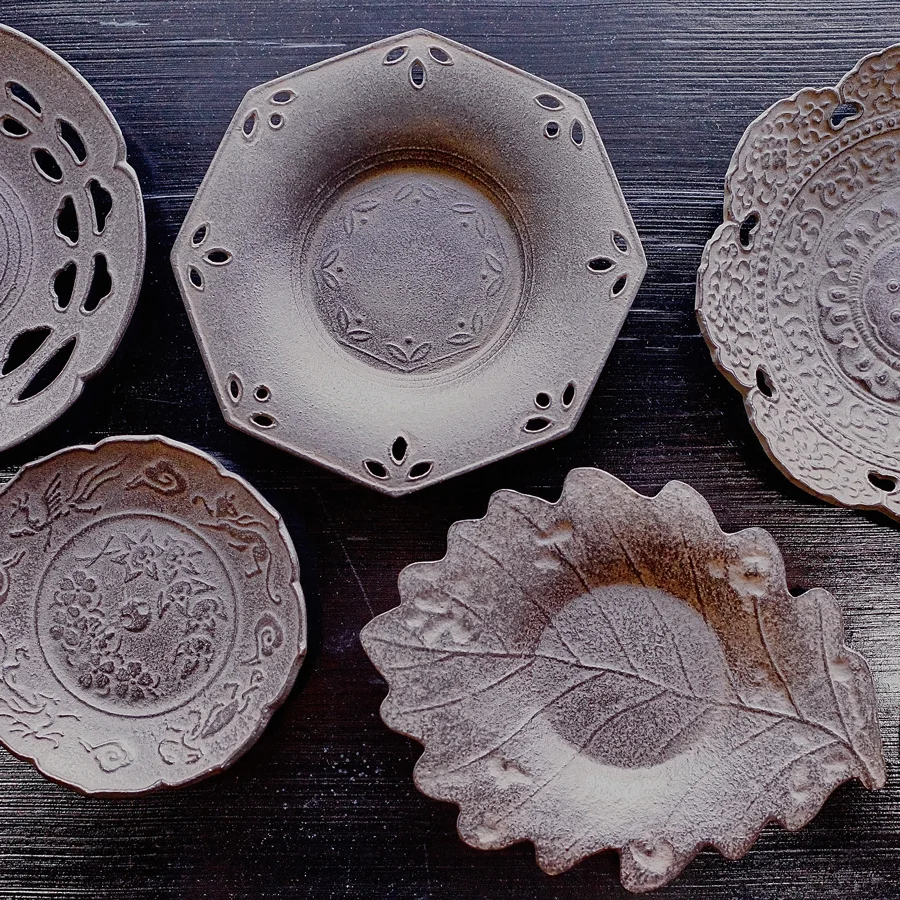
Hello all! As Carlos stated in his (wonderfully done) post. “There have been many posts recently (and also in the past) regarding cast iron tsuba in the Edo period. As Ford Hallam has argued in the past, and then again recently, it is unlikely that any authentic Edo period Japanese tsubas were cast, and there is no actual evidence that they were. However, strangely, there still seem to be a lot of forum members who disagree with him.” That is correct Carlos, and (as many members know) I am one who disagrees with him. Now, I am not going to argue with members (that doesn’t get anybody anywhere!). But I would just like to bring up the following as an area of interesting information (well, at least I find it of some interest!) and something that may be considered by some. - I referred to the Suzuki Morihisa cast iron studios in one of my threads. I purchased a beautiful cast iron bottle opener from them and showed close up photos to compare the surface texture to some tsuba (and “no” I haven’t used it to open any beer bottles – It is just too beautiful to use if for that!). That post can be found here- https://www.militaria.co.za/nmb/topic/38416-tsuba-casting-molds/page/8/ This is information for the cast iron studio- “SUZUKI MORIHISA 鈴木盛久 Established in 1625, Suzuki Morihisa is one of the oldest Nanbu Tekki foundries in Iwate. Together with four other master casters, the first generation Suzuki was invited to settle in Morioka by the ruling Nanbu clan and played an important role in the foundation of Japanese cast ironware. The family business is now in its 16th generation and is the holder of two notable firsts in the history of Nanbu Tekki: the 13th generation being appointed an Intangible Cultural Property of Japan, and the 15th generation as the first female caster in Iwate. Suzuki Morihisa continue to preserve traditional techniques through their robust ironwork that can be used today and across many generations to come.” (from below weblink) https://www.sunday.de/en/nanbu-tekki-suzuki-morihisa-square-trivet.html Now, if you check out their catalog of cast iron items (in the below link) there are some very nice cast iron artworks in it. To me (at least) some of the cast iron items could look similar to tsuba. Picture from part of the catalog included at the end of this post. https://morihisa.stores.jp/?page=2 Some of these cast iron items are so beautiful (at least to me) I think I need to purchase a couple of more different items (after I get my next Social Security check! Ha, ha, ha, ha, etc!) The adventure continues! With respect, Dan

-
Hello all, Does anyone know in what period of Japanese history the Wari-Kogai (split kogai) first appeared? Thanks for your assistance.. With respect, Dan
-
Hello Carlos! What an amazing post! Thank you! I may not agree with everyting you stated, but your research and in-depth knowledge is much appreciated. Again, just a wonderful and fascinating post full of great information. With respect, Dan
-
Hello Akaei, I noticed no one responded to your post! Not that I know anything about kogatana blades! But it does appear to be as though it has been seriously shortened. Also (as you stated), it looks like some sort of design or writting on the blade (I wonder what that is all about?). Hey, I may be wrong (I usually am!). With respect, Dan
-
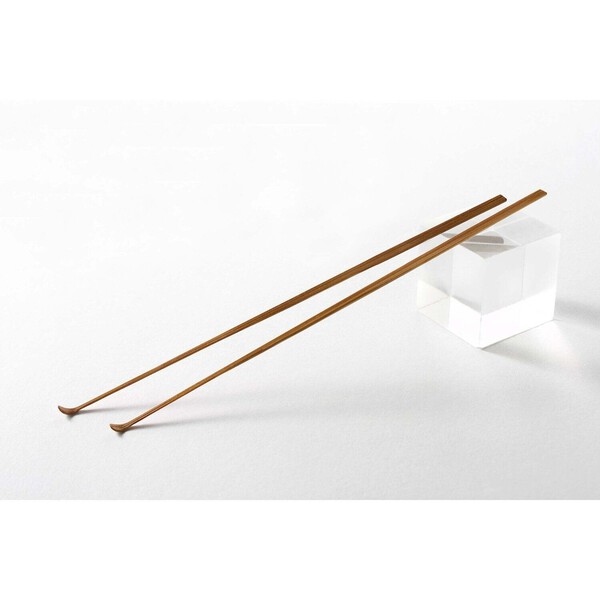
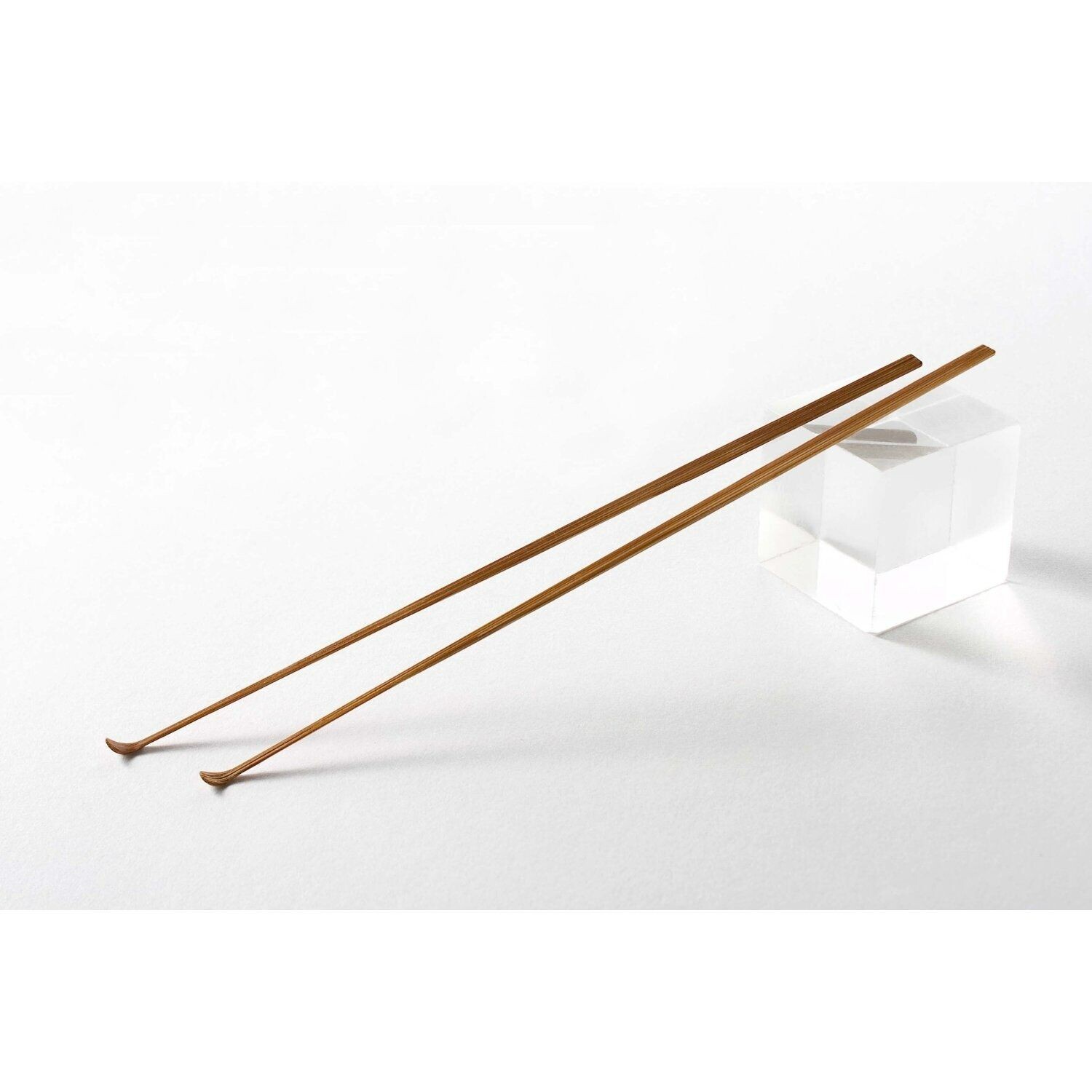
So, another long post. But stay with me here members! First, I would like to thank all the members that have spent hours (probably!) researching and referencing their material on this thread. I know how difficult and time consuming that can be! Now, evidently (found on a post to this thread) there was another thread (started in 2018) that deals with the similar question of the usability of a Kogai.- https://www.militaria.co.za/nmb/topic/25292-usability-of-kogai/ That thread has a lot of interesting stuff on it also! Now, one of the things I found from that thread is that there are two different kinds of ear wax (I know, a little too much information!). But that would explain why those of Asian heritage are more concerned about keeping their ears clean (they have a “dryer and harder” ear wax than some people of other heritages). If they do not clean their ears, the wax buildup evidently can become quite painful (the ear cleaning tool in Japan is known as a mimikaki). Now I have included parts of some posts on the above thread- "Question: where can we find in Japaneses litterature the way kogai were used? Cleaning ears has long been mentioned but I encourage people having one to try: highly inefficient (I have tried)” “…existence of mimimaki, I was just wondering (even if it has the same name because it has the same shape) the use of of kogai as mimimaki. The mimimaki is a spatula with a long neck, on a kogai you have just the round end of the spatula without its long neck, the ear canal is around 2,5cm long and the kogai mimimaki is at most 1cm,…” So, the above statements are interesting. And the fact that a person tried to clean his ear with a Kogai and it was not effective is also very interesting (known as the empirical method of scientific observation). Now, what else have I learned? We also know that the samurai shaved the top of their heads to keep it from itching when wearing a helmet. We also know that the Japanese craftsman were intelligent, good at what they did and developed. So, let’s say if I were to come up with a “scratching tool” for my itchy head when wearing a helmet, and something that can also be used for ear wax removal; what would I develop? Would I come up with a straight tool like a Kogai. No, because that is an impractical design! I would craft something like a small “backscratcher”. Something where the point and tip of the piece was bent (like a backscratcher”) and it could get under the helmet, under the hair and scratch my scalp and also be used to remove ear wax. Something like the Japanese ear pick shown below (mimikaki). This type of design is not what we see in the older Kogai. I should also state that If I was in camp after a long day on the battlefield, the last thing I would be interested in is cleaning my ears! So, was the Kogai initially developed for use as a head scratching tool or ear wax removal tool by a samurai? My thought is “no” it was not. And the Kogai, centuries ago, probably started off and was used as some sort of “slain enemy” marking tool. More than one reference states it was used to put in a slain enemy’s ear to “mark it” so the samurai at a later time in the battle would recognize his own Kogai and cut the head from the body so he can bring it to his Daimyo. Or he pulled the Kogai out of the slain enemy’s ear, cut off the head, put it in a “bag” took his Kogai, and was ready for the next “kill” and “marking”. As to the statements, stated previously on this thread, “Yup, and kogai are usually made of shakudo or another copper alloy that had better be very sharp or it will surely bend thrusting it through the skull deep enough to label it as your kill.” Also, it was stated “If there was any intent to use it for piercing, we would see kogai with sharpened tips. Have not seen one single one. Wonder why?” Well, it may be that the “old” kogai used in battle were forged from iron. If they were not made from iron (made from copper, another copper alloy, or shakudo and the point was not sharp), the only way to ascertain if a Kogai could be thrust through the ear (as stated as one of its uses) or ankle (also stated as one of its uses) is to test it on a cadaver (I know, morbid and it will never be done!). Maybe the Kogai was only thrust into one ear of the slain enemy for marking purposes (and not through both ears). Otherwise, stating that it could not be done or used in this way is just all conjecture. Maybe over the centuries when the warring period in Japanese history was over, the Kogai still retained its relationship with the "human ear”? Maybe in the non-warring period of Japanese history (the Edo period) it may just have been carried for ornamentation in the saya, possibly used as some sort of ear cleaning tool, or hair arrangement piece? Anyway, the adventure continues! With respect, Dan