Ray Singer
-
Posts
5,426 -
Joined
-
Last visited
-
Days Won
151
Content Type
Profiles
Forums
Events
Store
Downloads
Gallery
Everything posted by Ray Singer
-
Here is a link for that sword.
-
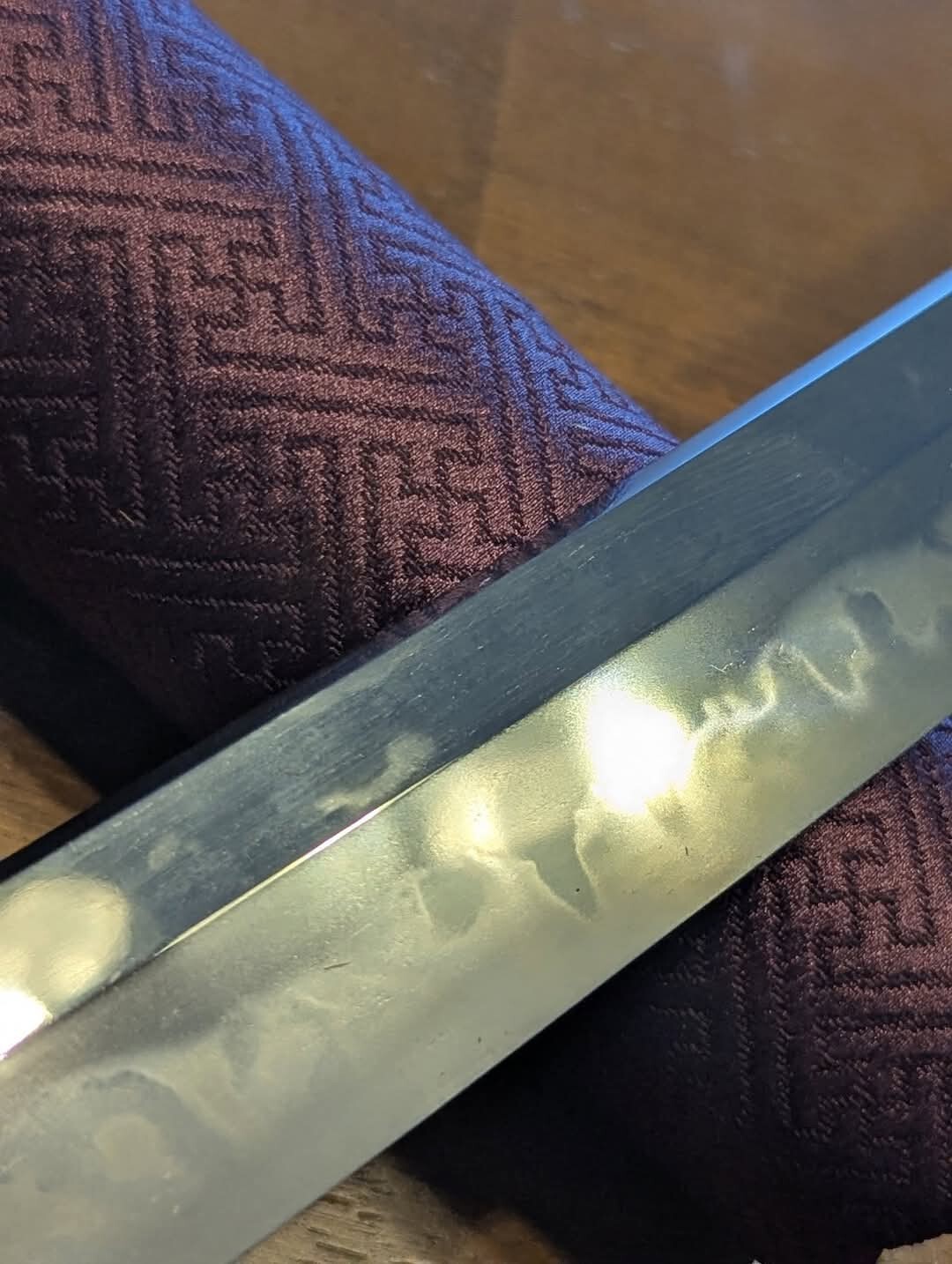
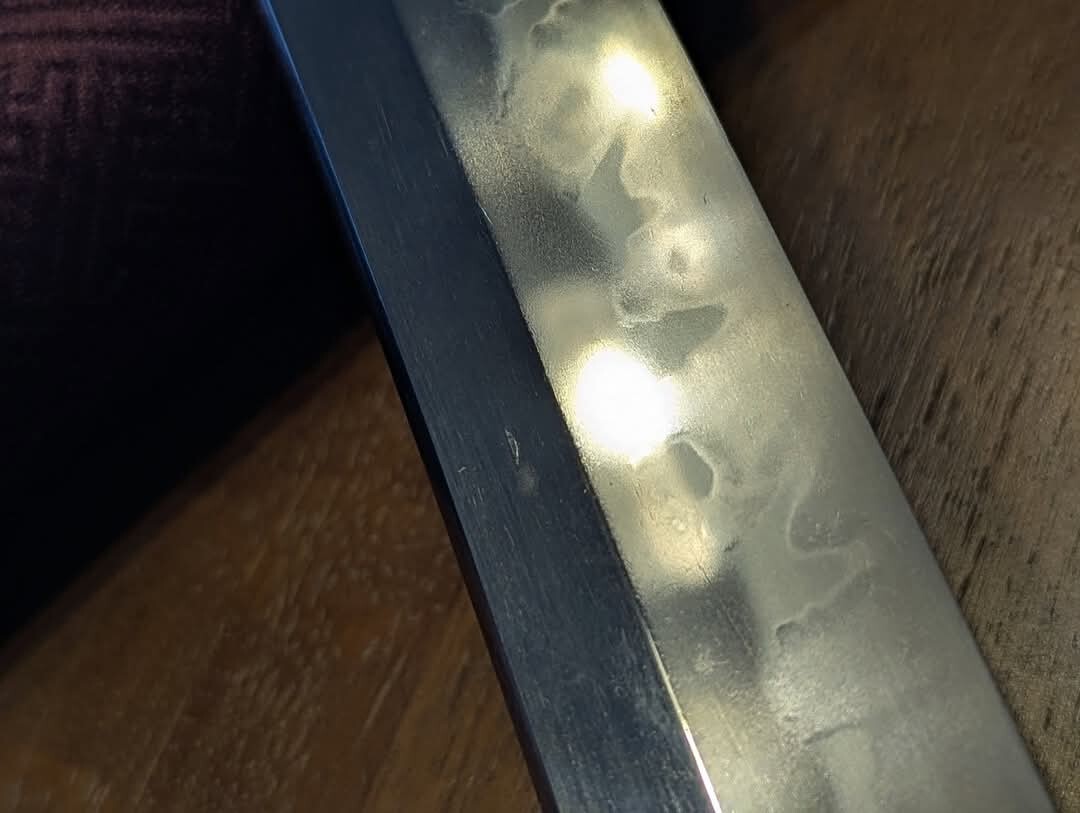
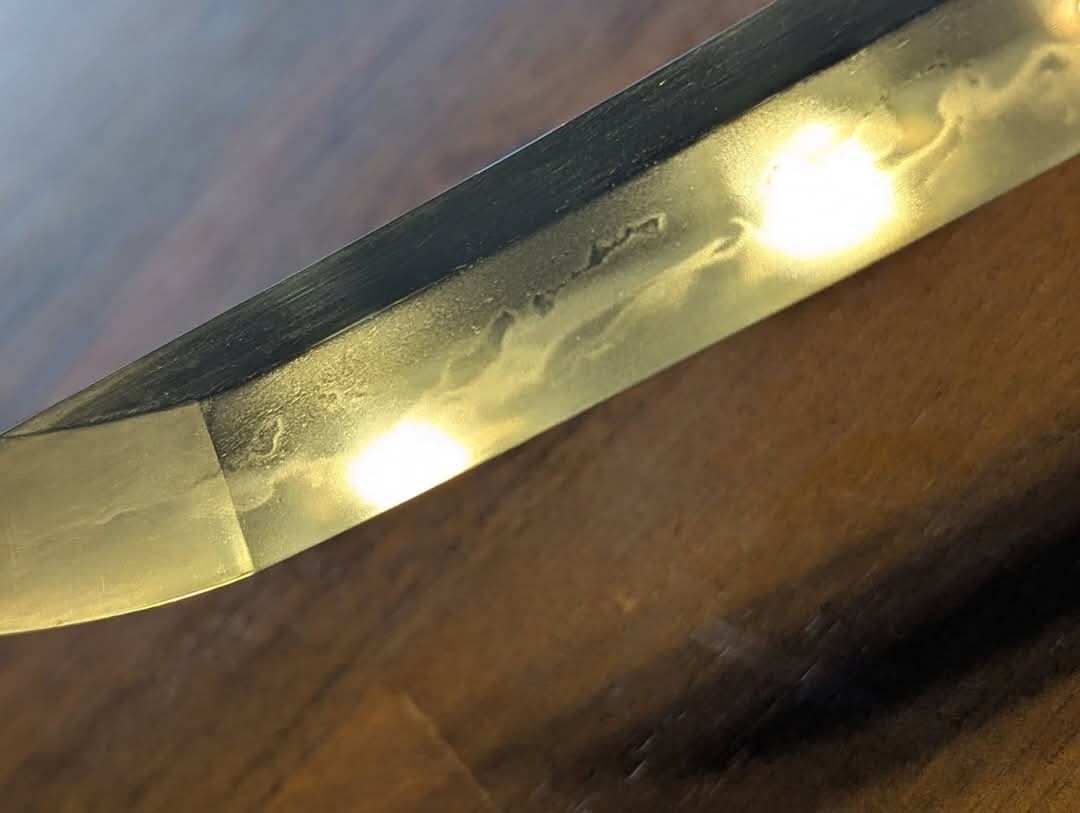
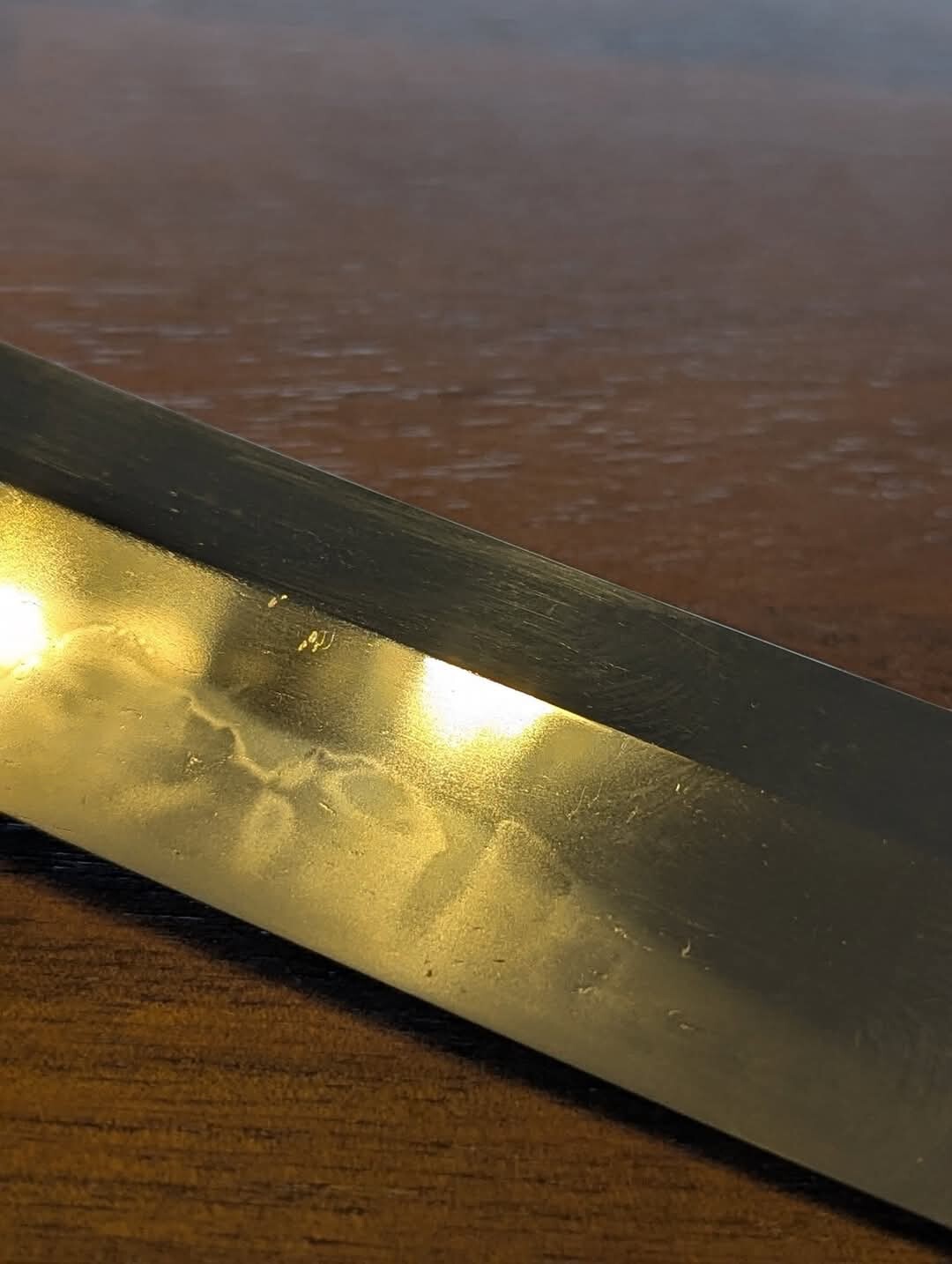
I use the term "umegane" here loosely. It really should only refer to metal inlaid into the blade as part of the repair process. In this case it appears that welding has been used to fill a void or flaw in the ji. The last place that I recall seeing this was an Enju daito, with a repair having the same appearance.
-
Unfortunately this looks very much like a welded "umegane" (a modern repair to fill a flaw in the blade). We've discussed the same type of feature here previously in another sword that was sold online.
-
There are no individuals I know of who legitimately signed kikuichi during the Muromachi period. The fact as well that it is inscribed tachi-mei leans in that direction of a gimei kikusaku.
-
Hi Jean, unfortunately I would not take this one too seriously. Looks like something intended to be passed off as a kikusaku (Gotoba collaboration work of the earliest Kamakura period). Best regards, Ray
-

So-den Bizen Nanbokucho utushi-mono by Takano Masataka
Ray Singer replied to Ray Singer's topic in Swords and Edged Weapons
Nathaniel, please see below. Nagasa: 75.7cm Moto-haba: 35mm Kasane: 8mm Best regards, Ray -
Apologies for the mistranslation. This does look like Nobumitsu as said above
-
This appears to be Hiromitsu. Please see below.
-
Hiromitsu
-
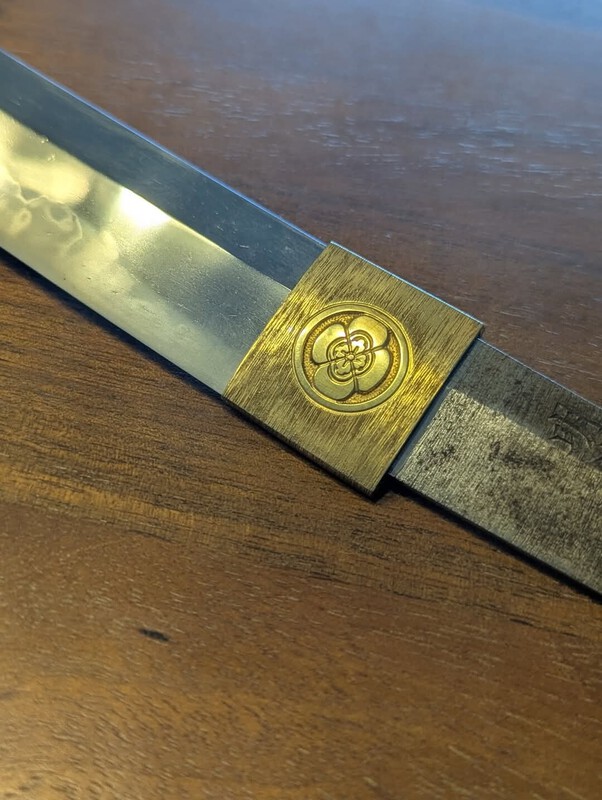
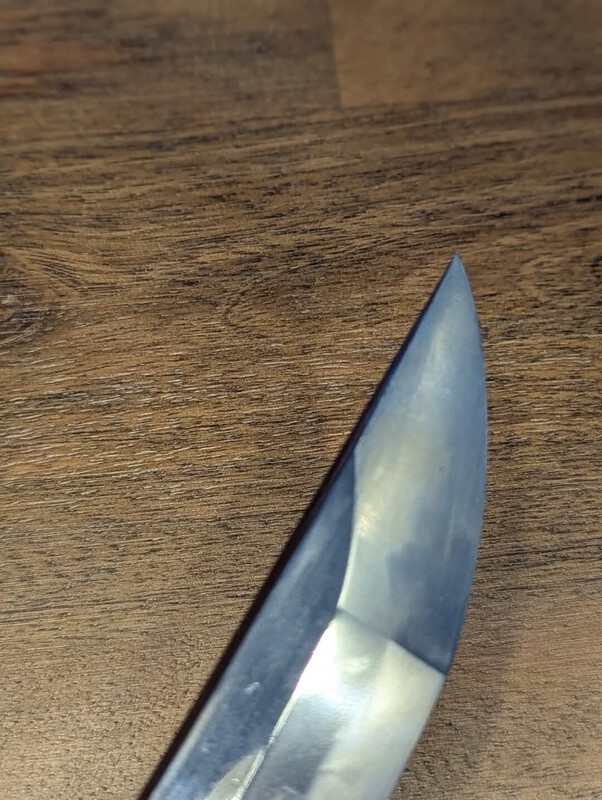
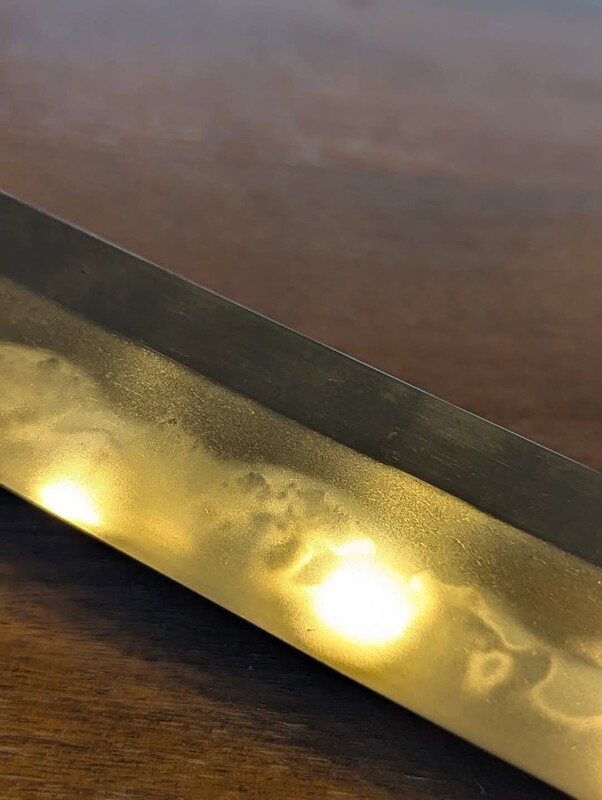
This powerfully formed katana is the work of Takano Masataka (real name: Takano Ken'ichi), forged to commemorate the 100th anniversary of the Meiji Restoration. Masataka, active during the Shōwa period, was born in 1891 in Ōme, Tokyo Prefecture. He was a disciple of Sakai Ikkansai Shigemasa. MASATAKA (政賢), Shōwa (昭和, 1926-1989), Tōkyō – “Bushū Mitake-sanroku-jū Masataka” (武州御岳山麓住政賢), real name Takano Ken´ichi (高野賢一), he was born November 5th 1891 and studied under Sakai Ikkansai Shigemasa (酒井一貫斎繁政), he lived in the city of Ōmi (青梅) in Tōkyō Prefecture This blade is a powerful piece in the Sō-den Bizen tradition, evoking the dynamic style of Chōgi. The blade is in polish with a high quality shirasaya and fitted with a beautifully executed gold-wash habaki bearing a kamon. $7,250 + shipping & PP





-
Rai kuniyuki sold on ebay
Ray Singer replied to Marcin's topic in Auctions and Online Sales or Sellers
Yes, the ninteisho attribution is to the Bungo smith Taira Nagamori. https://nihontoclub.com/view/smiths/meisearch?order=field_smith_start_era_value&sort=asc&type=All&mei_op=contains&mei=平長盛 -
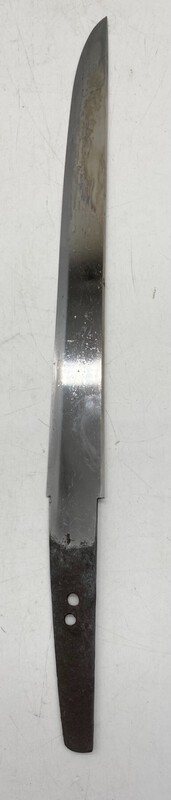
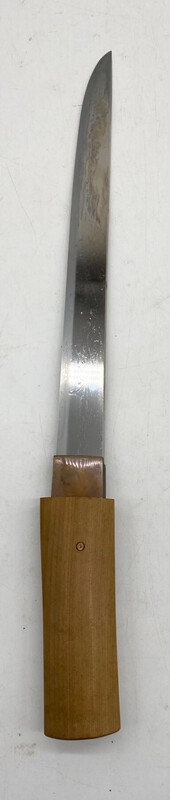
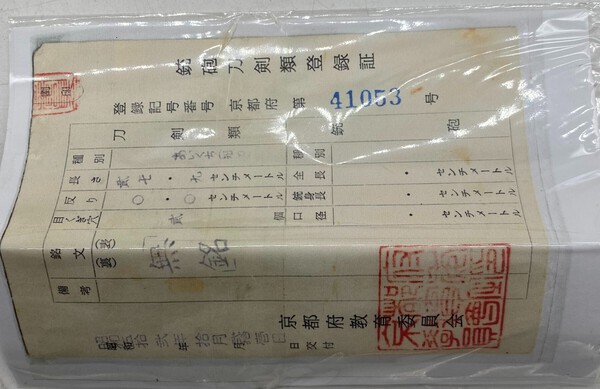
Jonathan, almost no detail can be seen in your screenshot. Hopefully this helps.






-
Unfortunately tachi-mei of Munechika are, like the many mei we see of Masamune, often gimei of 'the big guy'. It may not be possible to place this with another swordsmith who legitimately used the name, and the fact that it is tachi-mei also points towards the idea that it was intended to be passed off as Sanjo Munechika.
-
Agreed. Munechika.
-
Hello all, I am in the process of listing a number of newly received swords to my website, including several juyo katana in koshirae, and wanted to share a few recent highlights from my current consignment offerings, now live across both of my platforms: Swords of Japan and Nihon Art. A few standouts now available: Ashū Yokoyama Sukeyoshi kinnōtō An impressive example of later Yokoyama work in kinnōtō form with long nagasa, wide mibaba and shallow sori with kanteisho and sayagaki. 🔗 https://nihonart.com/portfolio/ashu-sukeyoshi-kinnoto/ Bizen Osafune Yukikage Wakizashi – Tokubetsu Hozon Beautiful ubu signed and dated early Muromachi wakizashi, with Tokubetsu Hozon, published in Fujishiro. 🔗 https://swordsofjapan.com/product/tokubetsu-hozon-bizen-osafune-yukikage-wakizashi/ Zaimei Kodai Kaneuji Wakizashi - Tokubetsu Hozon Ubu signed ko-wakizashi by a later generation from the Mino Kaneuji lineage. 🔗 https://swordsofjapan.com/product/kodai-kaneuji-wakizashi/ Gakumei Oei Nobukuni Wakizashi – NBTHK Kanteisho & Tanobe Sayagaki A masterful Yamashiro-den wakizashi with gakumei (inlaid signature) by Joshu (Oei) Nobukuni, featuring both NBTHK papers and Tanobe-sensei’s sayagaki. 🔗 https://swordsofjapan.com/product/joshu-nobukuni-wakizashi/ Additional pieces, including a Hosho Sadaoki, several Kasama Ikkansai + Horii school blades, and others are being added in the coming days. I’m always available to provide detailed photos, remote viewings, or further discussion on request. Feel free to reach out directly if you'd like to discuss any of these blades. Warm regards, Ray Singer swordsofjapan.com | nihonart.com
-
- 4
-

-
I believe it is Noshu Seki ju Toshimasa saku Research the WWII era smith who studied under Watanabe Kanenaga.
-
The mei is indeed Bizen (no) kuni Kanemitsu and does appear to be gimei. A missing boshi is not indicative of suriage, it points towards a kissaki that has been damaged and reshaped over time.
-
The mei is Bishu Osafune Morimitsu.
-
Emura saku https://www.japaneseswordindex.com/emura.htm
- 1 reply
-
- 4
-
-

-
The nakago purports to be from a blade made in 1399. It looks generally legitimate for Oei Bizen. A reference for tsugi-nakago can be see in the list of flaws below. https://www.sakuramatsuriantiquariato.com/en/valutare-una-spada-giapponese/difetti-nella-katana-giapponese/ An example of why someone would do this: someone in the past might have had a blade with a legitimate and important mei/nengo, on a blade that had a hagire or other significant issue. The nakago is welded to a healthier blade that may be close to the expected workmanship from the mei. So, as a form of deception the two are married together for resale.
-
Unfortunately, a welded nakago (a form of deception). A nakago from an unrelated sword is merged to a blade in order to pass off as a legitimate example of the artist who signed the nakago.
-
Mei: Bishu Osafune Morihisa Date: Oei roku nen hachi gatsu hi (a day in the 8th month of 1399)
-
Tsunagi Maker Sought in North America
Ray Singer replied to hddennis's topic in General Nihonto Related Discussion
Contact Josiah Boomershine. Boomershinejosiah@gmail.com -
A shortened sword signed Bishu __ ( made in Bizen Provence).
-
Unfortunately this is not authentic. Please see below. https://www.jssus.org/nkp/fake_japanese_swords.html