Ray Singer
-
Posts
5,380 -
Joined
-
Last visited
-
Days Won
148
Content Type
Profiles
Forums
Events
Store
Downloads
Gallery
Everything posted by Ray Singer
-
As I replied above it appears to be a name for the sword. Kinzogan-mei are gold inlaid inscriptions. At some point the sword was given a name, and that name was inscribed in inlaid in gold.
-
Indeed it does seem to be a kinzogan-mei of 烈龍 (Retsuryū), which I take to be a name for the sword of something along the lines of Fierce Dragon.
-
 Kawachi (no) kami Fujiwara Kunisuke. A well-known lineage of swordsmiths working in the early Edo period. There are also many fakes of their work, I would suggest researching online against authenticated examples.
 -
Chas, it is best not to do anything at all to try to clean the blade or remove rust on your own. If you would like to improve the condition, I would recommend speaking with a professional polisher to do so. Message me if you need any recommendations. Best regards, Ray
-
My impression is that the inscription is not very credible.
-
Izumi no Kami Kanesada, and I believe it is indicating a suriage by Koyama Masatoshi.
-
From the standpoint of antique Japanese swords, this is actually not very old. It is a shinto blade (Shinto meaning 'new sword').
-
Hiromitsu dated 1943. A showato Seki arsenal blade, not traditionally made.
-
I don't see such an individual in the 1800s. Per Sesko, he worked circa Kanbun (1661).
-
Takasaki Saburo Kaneshige
-
Looks like: Yasutsugu oite Echizen kore o saku
-
Looks like 上野守菅原包宗 - (Kozuke no kami Sugawara Kanemune)
-
I am guessing you know, but the mei side is: Bishu Osafune Sukesada.
-
Eisho gannen hachi gatsu hi A day in the 8th month of the year 1504
-
It is very common for signatures to change over the course of a swordsmith's career. However the immediate flag there is that the inscriptions of many famous modern swordsmiths are being faked. You see this all the time from certain sellers on eBay who put inexpensive fake shinsakuto up for sale which often have the mei of mukansa and other well known gendai artists. This is really the case of a picture being worth a thousand words. I would suggest that you post photos of the sword that you're evaluating for feedback from the group.
-
The blade is signed Naminohira Yasutsune. The tsuba looks like a modern, decorative replica.
-
A day in the 8th month of the year 1522. Daiei ni nen hachi gatsu hi
-
Noshu Seki ju Kanetoshi saku. Showa era (20th century)
-
There isn't a kanji which reads Tuji. Is it perhaps Kaneuji or Kanetsuji? Maybe Shizu Kaneuji, who is one of the most famous swordsmiths of all, and worked as a student of Masamune. A later generation worked around the same time period you asked about. KANEUJI (兼氏), Kanbun (寛文,1661-1673), Mino - "Shizu Saburō Minamoto Kaneuji”(志津三郎源兼氏), real name Töyama Jinjūrō (遠山甚十郎), he lived in Ogaki (大垣) in Mino province, by the shinto-era, the lineage of Kaneuji had split into the Ogaki, Gifu (岐阜), and Seki branches that were locally active until the Meiji era, the Ögaki line smiths bore the family name Toyama and the Seki line smiths the family name Fukuchi (福地)
-
https://sanmei.com/c...nts/en-us/p1925.html Edit: Peter beat me to it. Kanetoki.
-
Web search: https://www.google.com/search?q="bitchu"+"Yasuhiro"&oq="bitchu"+"Yasuhiro"&gs_lcrp=EgZjaHJvbWUyBggAEEUYOdIBCDkyMjdqMGo3qAIAsAIA&sourceid=chrome&ie=UTF-8 Nihonto Message Board search: https://www.google.com/search?q="bitchu"+"Yasuhiro"+site%3Awww.militaria.co.za&sca_esv=0baf5c9e671f57b4&sxsrf=ADLYWIKD7YNYORJfISz3zx0_ksm18pWQMw%3A1733787278942&ei=jn5XZ-GaOeSQwbkPzb6XMA&ved=0ahUKEwjhmYL37JuKAxVkSDABHU3fBQYQ4dUDCA8&uact=5&oq="bitchu"+"Yasuhiro"+site%3Awww.militaria.co.za&gs_lp=Egxnd3Mtd2l6LXNlcnAiLCJiaXRjaHUiICJZYXN1aGlybyIgc2l0ZTp3d3cubWlsaXRhcmlhLmNvLnphSNBtUOIBWN1mcAF4AJABAJgBngGgAesHqgEDOC40uAEDyAEA-AEB-AECmAIBoAIGwgIOEAAYgAQYsAMYhgMYigWYAwCIBgGQBgKSBwExoAfJCA&sclient=gws-wiz-serp
-
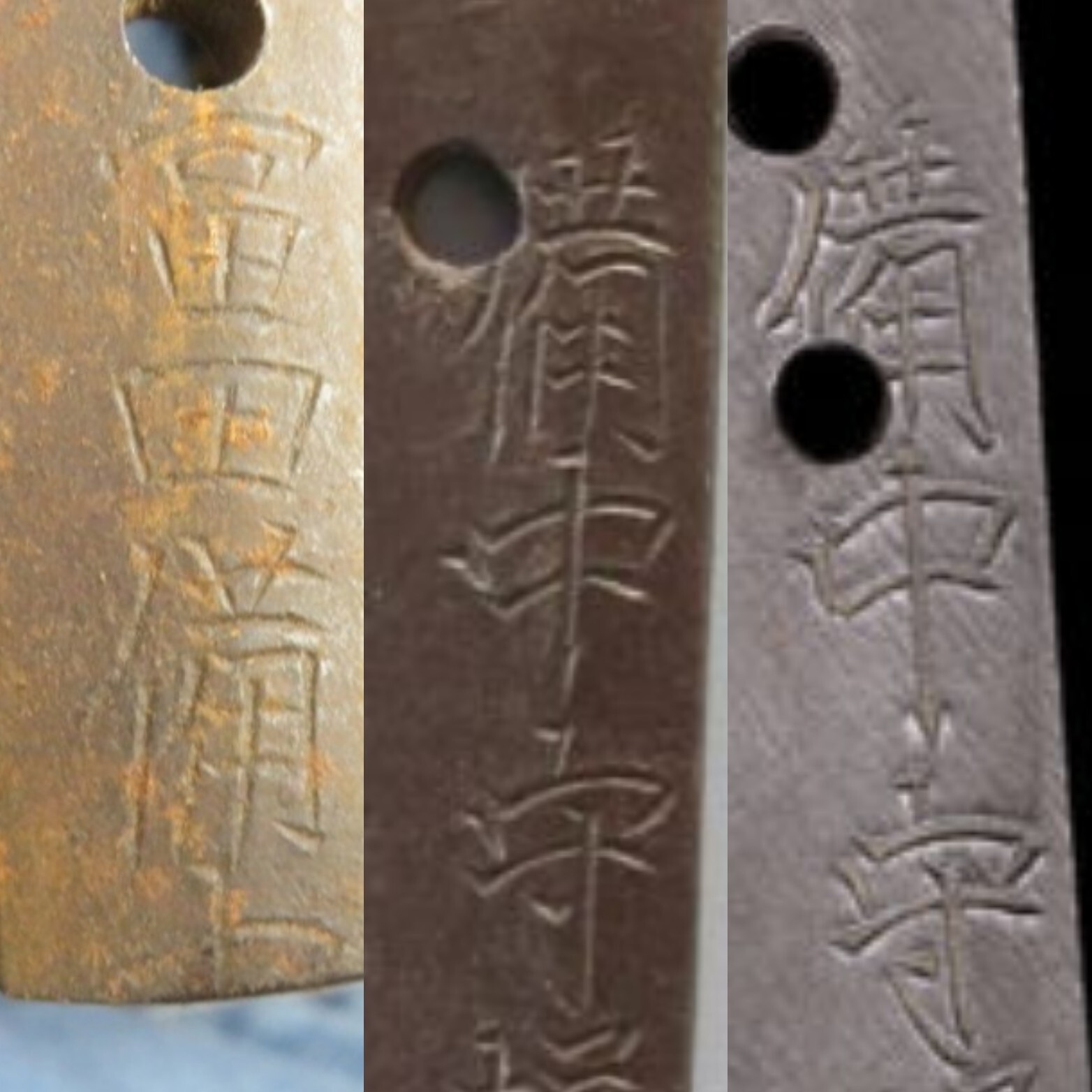
Very likely the smith Bitchu (no) kami Yasuhiro (who did use a kikumon). https://nihontoclub.com/smiths/YAS804

-
Jumyo Unfortunately the nakago (tang) has been partially cleaned.
-
Dr. Compton + Yasukuni Yasutake gassaku tanto in box
Ray Singer replied to Ray Singer's topic in Sold Archive
@Brian, please move to the archives. Thank you, Ray -
The date is unclear, but may be Enpo 7 (a lucky day in the eight month of 1679).