Ray Singer
-
Posts
5,329 -
Joined
-
Last visited
-
Days Won
147
Content Type
Profiles
Forums
Events
Store
Downloads
Gallery
Everything posted by Ray Singer
-
Echizen Harima Daijo Shigetaka Best regards, Ray
-
I've always wondered if the owner did that to the Kunitoshi to maximize market value due to a hagire or deep hakobore. Here is another example. http://www.ksky.ne.jp/~sumie99/Sueyuki1.html There was a Yokoyama Sukenaga nakago laying on a table in Tampa this weekend. I assumed it one of the many signed koto nakago that seem to be converted to nakago nuki these days. When I asked the dealer about this he replied that the nakago cracked very recently during martial arts training and the mei was going to be added as a gakumei in the now wakizashi length remainder to the blade. Best regards, Ray
-
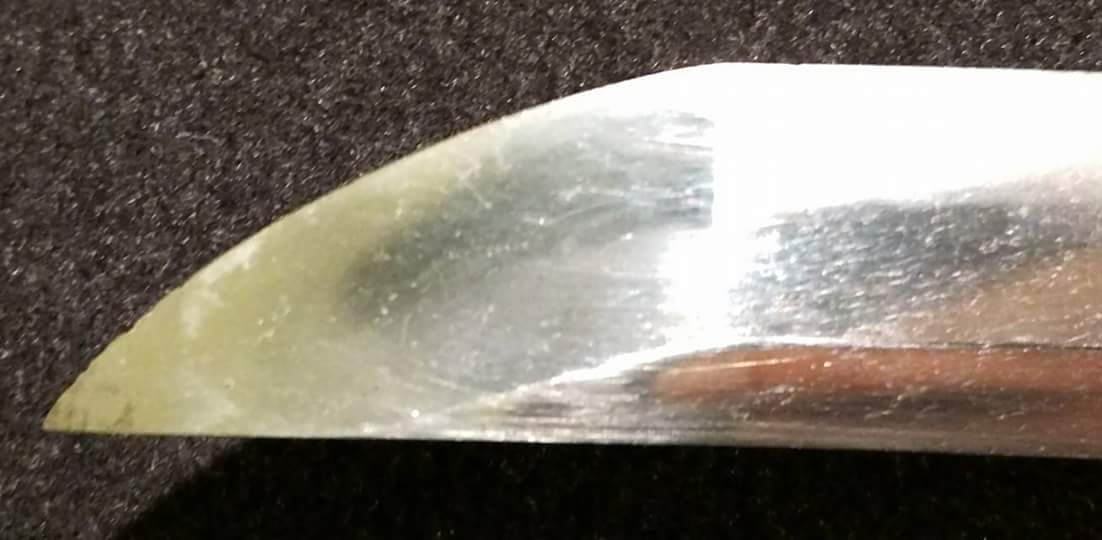
No worries, glad to share photos from the show. Pics of the Dotanuki attached. Best regards, Ray

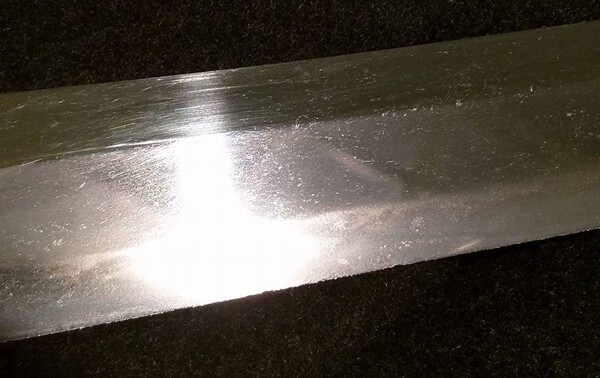
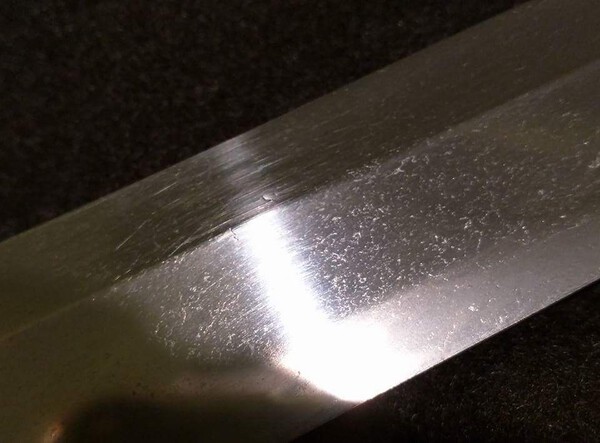

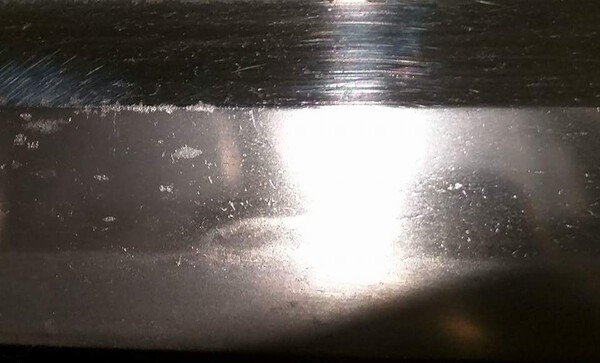


-
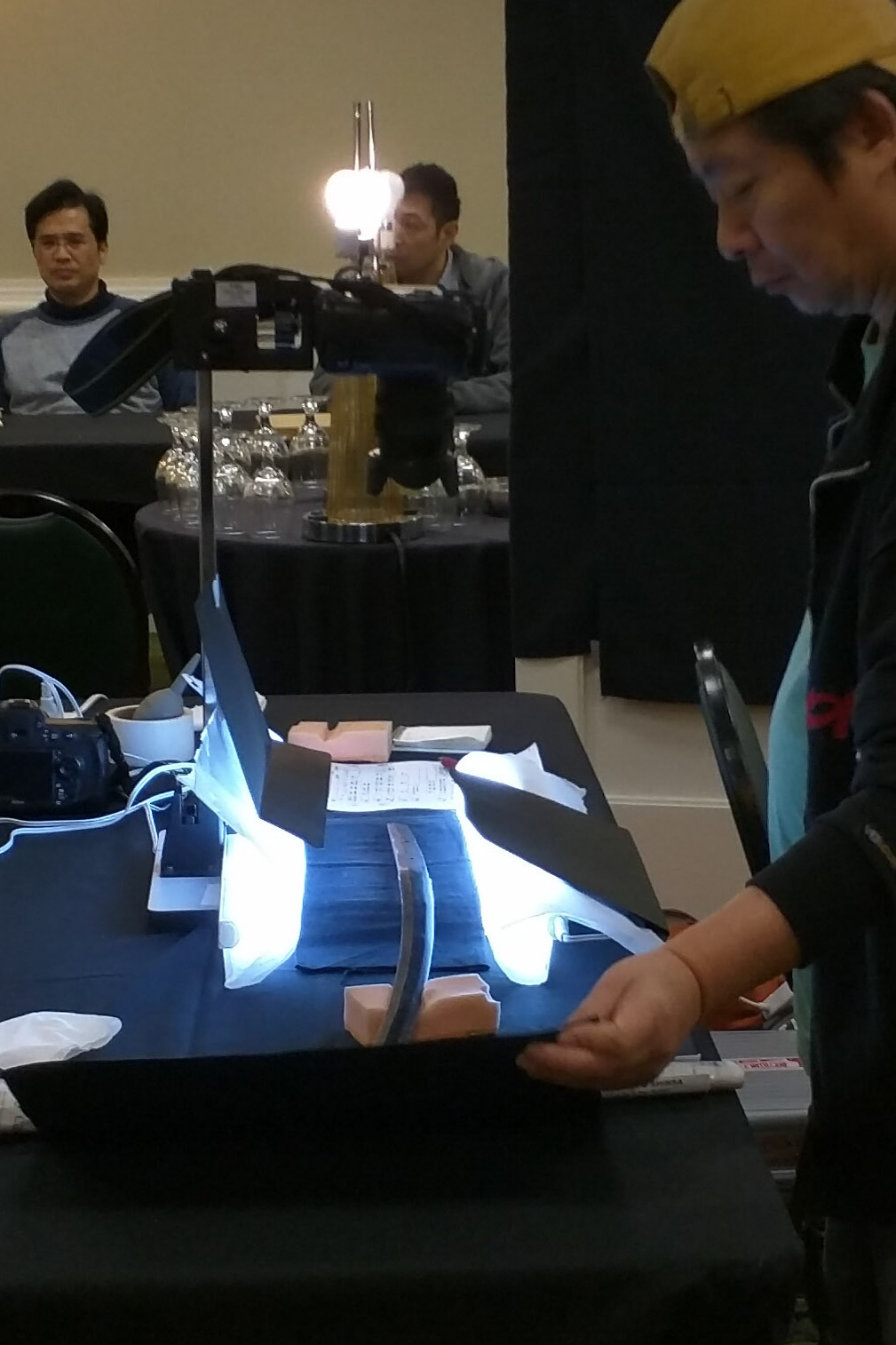
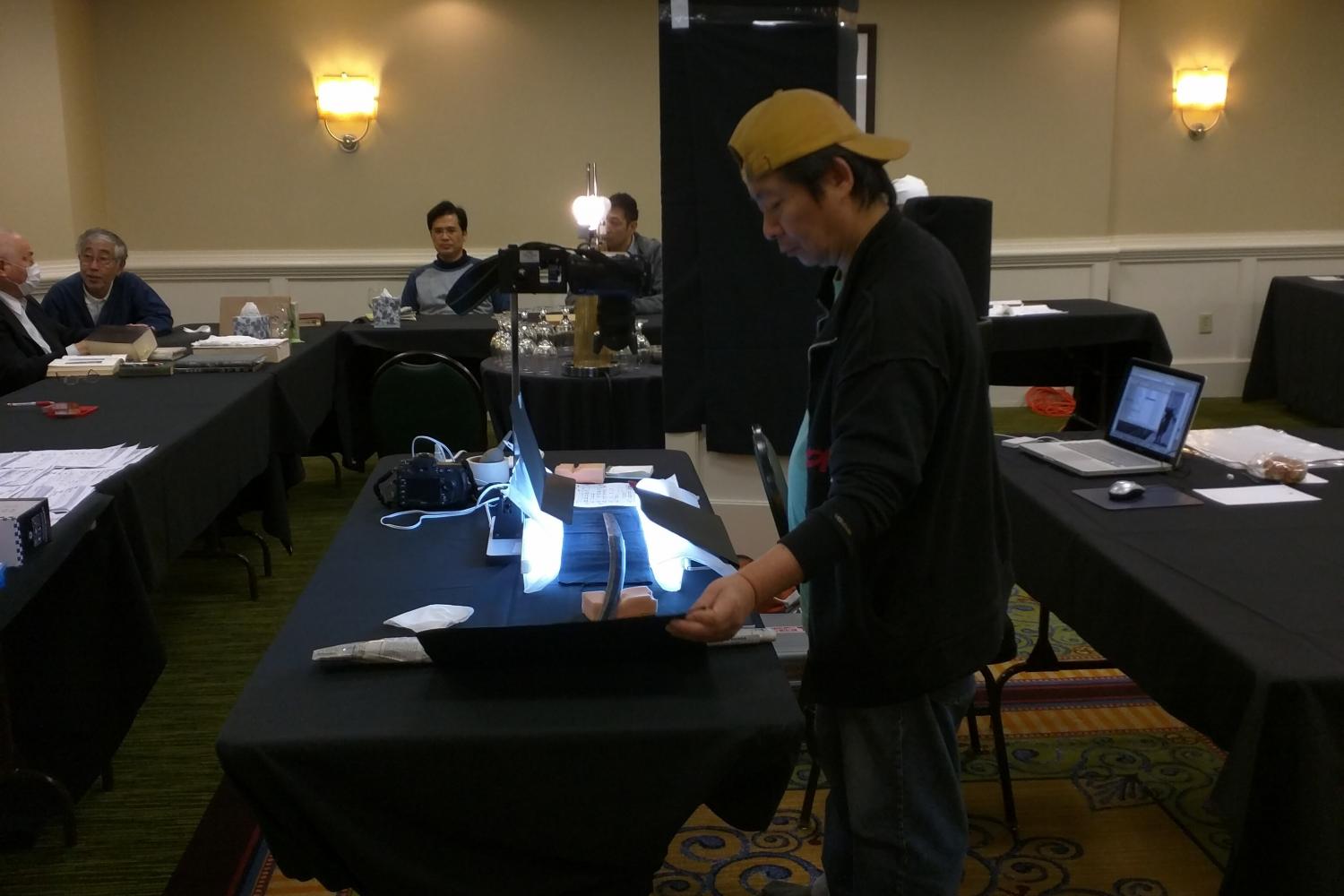
Yew, it does appear to have been a long fluorescent bulb.

-
Thanks Stephen, this is the only other photo I have of the photography setup. Best regards, Ray
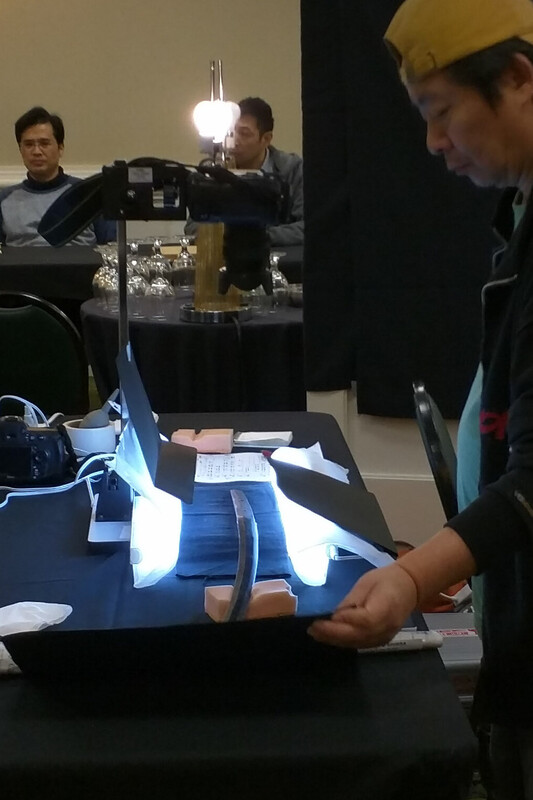
-
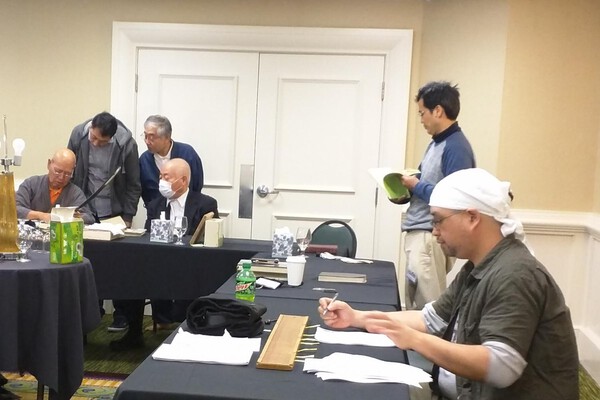
And a few photos of the shinsa team going through Fujishiro and comparing the mei of the three Dotanuki smiths published there, Kosuke no Suke, Masakuni and Genzaemon.


-
The Dotanuki was given an attribution to Genzaemon, c. Tensho. Best regards, Ray

-
Possible Kurihara Nobuhide, Opinions On Mei?
Ray Singer replied to Ryan's topic in Translation Assistance
I enjoyed hearing about this Nobuhide at the lecture Saturday night. Congratulations Ryan! Best regards, Ray -
Reads Hishu ju (not Sesshu ju). Not remotely a borderline case, the mei is clear. - Ray
-
I will let this listing go for a couple of days and then will be returning these pieces to the owner. If anyone has an interest, please email raymondsinger@gmail.com. Best regards, Ray
-
It looks like the original nakago which has been ground down to fit into a different tsuka. I recall a shodai Hizen Masahiro Cary Condell had, which was similarly damaged here in the states. His comment on that sword was that it would have been a strong Juyo candidate if ubu. A while back there was a Hasebe tanto on Aoi Art which has been fitted with an iron sleeve. It was difficult to tell but it also appeared that the nakago had been greatly reduced in width and that a sleeve was later added to reinforce the nakago and give it a more balanced shape. Best regards, Ray
-
To my eyes, $1,600 is not an unreasonable price. It would be helpful to see photos of the entire sword and koshirae, rather just the closeups you have provided. From what I can see it is a reasonably nice wakizashi in generally intact handachi koshirae. The tsuka looks to be in good condition and the tsukamaki does not need to be redone. The tsuba is done in katakiri-bori. The saya has some losses to the lacquer which will need to be addressed, however if there isn't damage to the saya towards the kojiri (the parts we cannot see in your photos) then it should be restorable. Looks like the blade is purporting to be a Bizen Sukesada, a group of smiths who generally signed with a nagamei (long signature). Some of the gunk we see on the blade in your photos may come off with pure alcohol. It would be good to start there and see if a new polish is even needed. Best regards, Ray
-
Thanks Steve. Here is a closeup of the nakago jiri where the mei fragment can be seen below Dotanuki. At this point after having taken the sword home and studied for several hours I am becoming very confident that it is Dotanuki work, and am overall extremely pleased with the find. The partial character may be the top of Fuji.

-
Outstanding, thank you Grey. Best regards, Ray
-
Would appreciate any thoughts on this mei. There is a trace of an additional kanji after 'Dotanuki'. I really should have learned by now to keep my Fujishiro with me when I travel, but here I am again having an unexpected encounter with an interesting sword and hope that someone can help to place this with a specific smith from the Dotanuki group. Kind regards, Ray

-
As often as I have visited the Sho-shin website over the years I did not realize it was the same sword from their journal. The idea of a sword donated to a temple did not occur to me. For such pieces, was it more common for them to be mounted in tachi koshirae, or did the koshirae simply match the time period? Best regards, Ray
-
It appears that the intended auction starting price is ¥280,000 rather than ¥1,400,000. http://www.sword-auction.jp/en/content/as15041-%E7%9F%AD%E5%88%80%EF%BC%9A%E7%A7%80%E6%98%8E%E4%BD%9C%EF%BC%88%E5%A0%80%E4%BA%95%E4%BF%8A%E7%A7%80%EF%BC%89%E4%B8%89%E7%AC%A0-tanto-hideaki-sakuhorii-tishihidemikasa Best regards, Ray
-
Sounds right, thanks Darcy. Best regards, Ray
-
Hi Barry, that does make sense as far as the gendai examples which came to mind (removal prior to surrender). My impression with the Tadatsuna was that inscription removal was quite a bit older, at least prior to the 20th century. Best, Ray
-
Over the years I have seen a number of swords with valid mei (and some dates) which have clearly had additional inscriptions removed. I recall seeing this on several Gassan Sadakatsu recently, along with the Awataguchi Tadatsuna below. Was it common for special order blades to have the additional inscription removed prior to their sale by the owner or family? Alternatively, were they removed more frequently by their new owners? Obviously today this is seen as a more desirable trait to collectors, but am curious to know how this was handled in the past. http://www.aoijapan.com/katana-awataguchi-ikkanshi-tadatsuna-hori-dosaku Best regards, Ray
-
Bump. The Masayuki and Masatsugu are still available. The Masatsugu is a beautiful, flawless sword. Anyone interested, please email raymondsinger@gmail.com. Best regards, Ray
-
That's great, thank you Ford. I will go from there... Take care, Ray
-
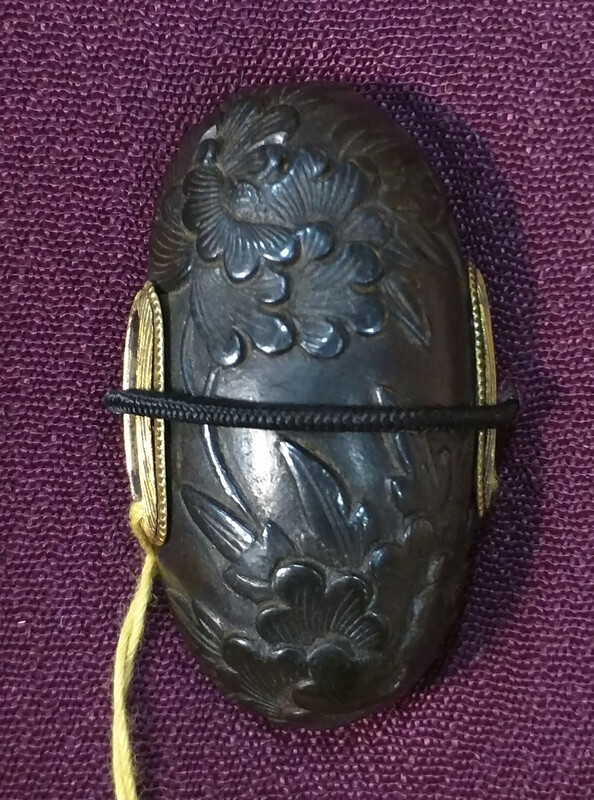
Any help with this signature, and thoughts on who the artist was, would be appreciated. This was found at a local antique show over the weekend and is under consideration for a koshirae project. Best regards, Ray


-
Interesting, I actually had the same thought when I saw the aforementioned Etchu Norishige with hakobore and was surprised I have never seen the approach taken. I would love to see this gold repair if you are able to provide photos at some point. Best regards, Ray
-
Appreciated, thanks Darcy. Best regards, Ray