Ray Singer
-
Posts
5,374 -
Joined
-
Last visited
-
Days Won
147
Content Type
Profiles
Forums
Events
Store
Downloads
Gallery
Everything posted by Ray Singer
-
Looks somewhat like Echizen-bori. If the horimono is not ato-bori, I would say it is an Echizen blade.
-
 In terms of current or very recent public sales, the Juyo Bijitsuhin Akihiro wakizashi had a price tag of JPY33,000,000 at the DTI. I heard it sold a bit below that.
 -
My understanding is that swords have changed hands privately in Japan for more than Sanchomo is being sold for. The Kiyomaro which sold at auction is often cited as being the highest sale price, but that is only highest auction sale.
-
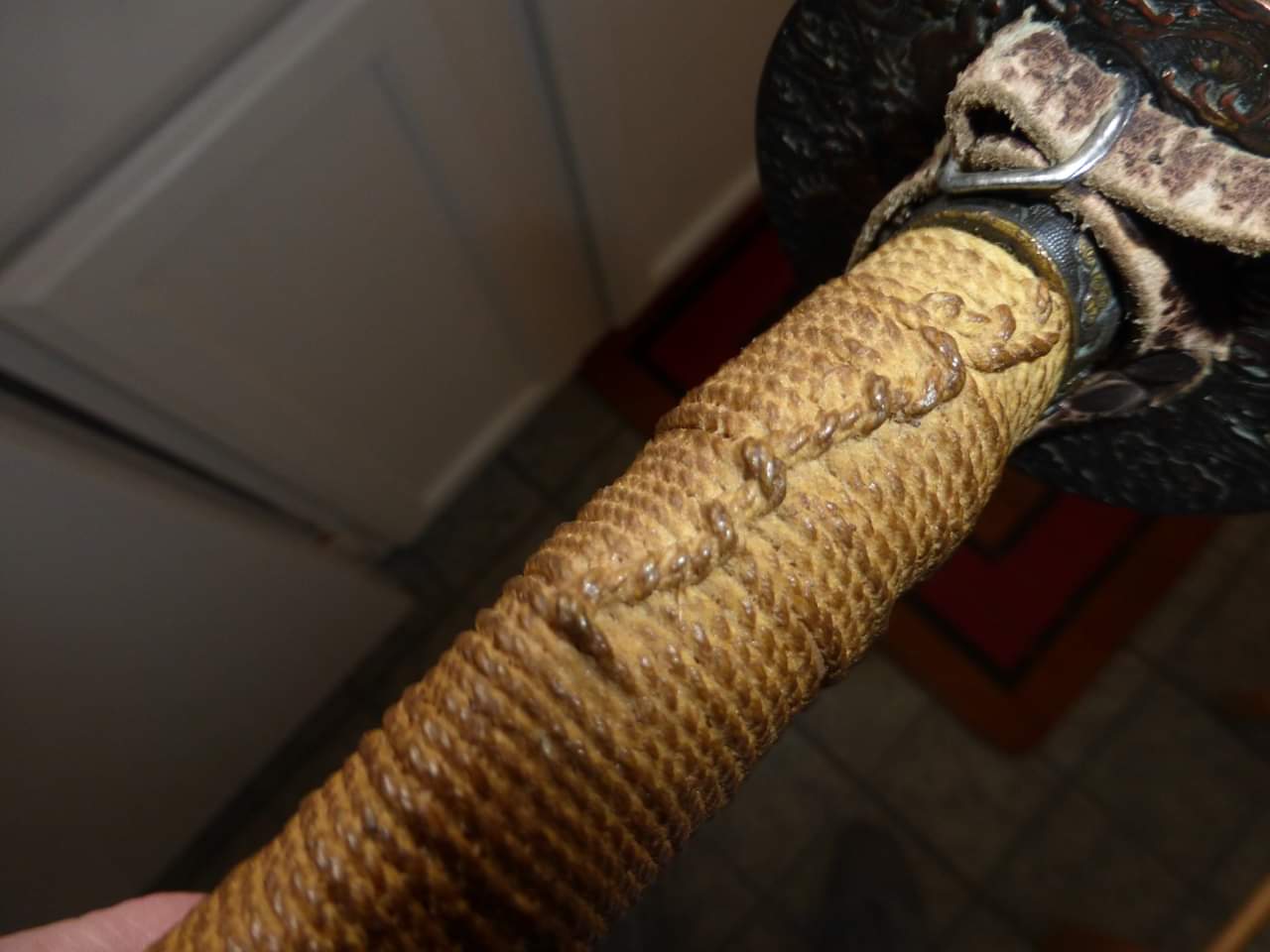
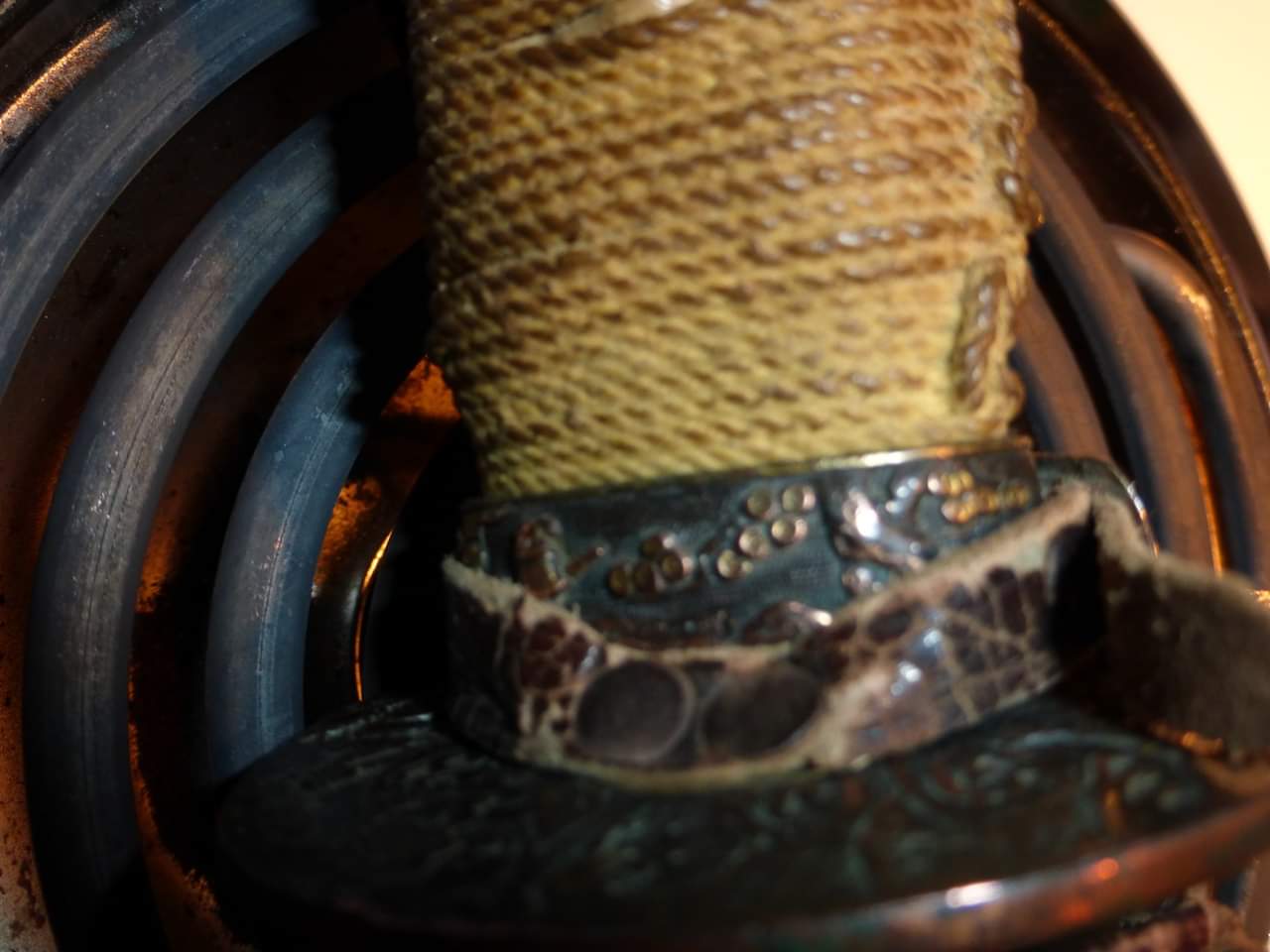
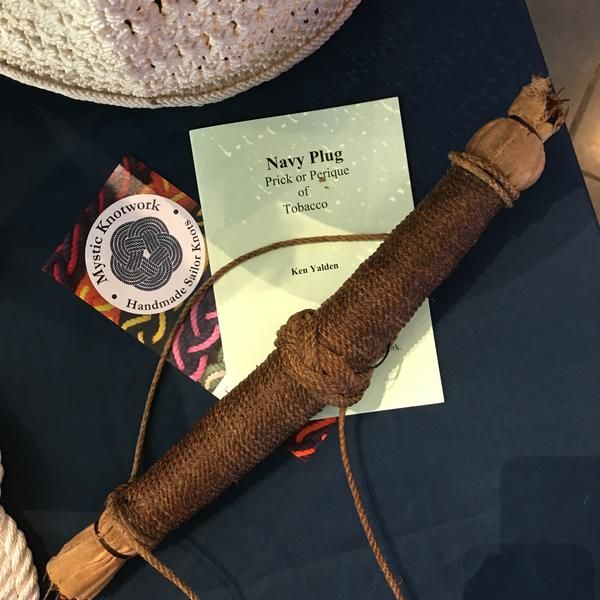
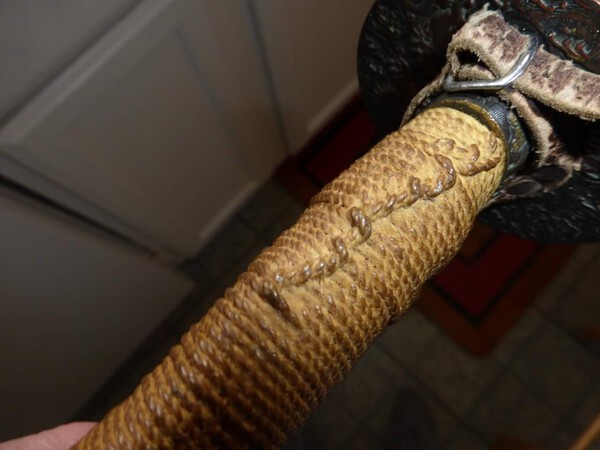
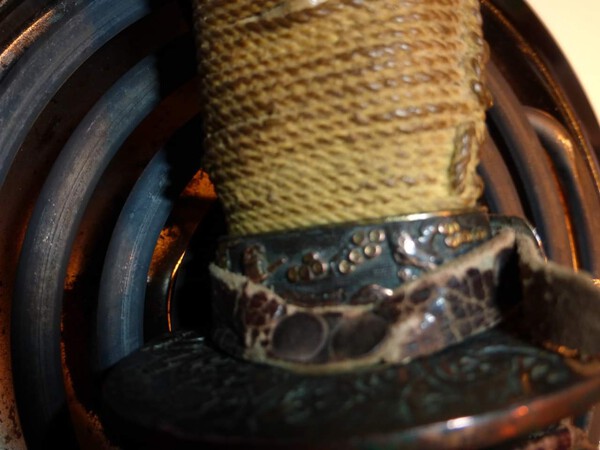
Thank you Peter and George, much appreciate these examples. This request came as a result of a question on one of the Facebook groups I manage. The attached photos were posted and, while it is possible that the owner is correct that this is a field repair, I suggested a naval sailor's cordwork as an alternate explanation.
-
Thank you Steve. Best regards Ray
-
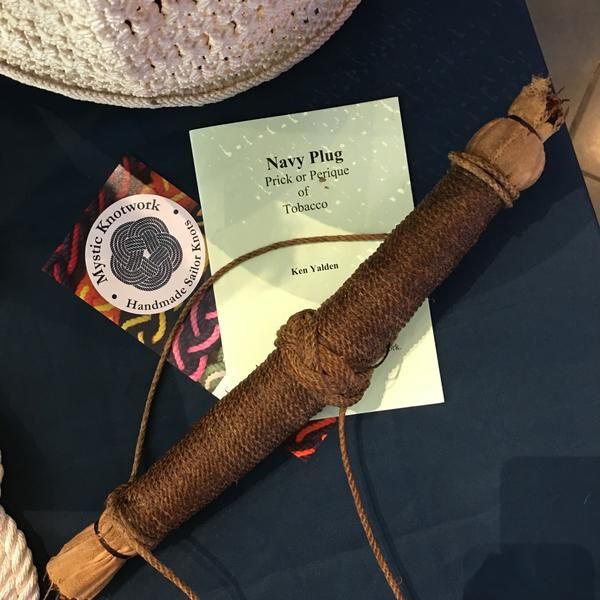
I am looking for examples of decorative knottery (cord work) added to Japanese swords by naval servicemen. I know it has been discussed on the board in the past, but have not been able to locate the photos and discussion thread after trying a few different keyword combinations. Kind regards, Ray
-
There was a very beautiful Emura I saw once which I thought was exceptionally good when viewed against his body of work. It had a long and more carefully executed mei than typically seen. I have also seen an Ichiruishi Nagamitsu in a friend's collection with a carefully executed mei and especially well finished Nakago. I would honestly say that those two swords were on par with average quality Yasukuni-to. In general though, I find those two smith's work to be well below the standard Yasukuni-to, and light years from the work of the best smiths (for example, Kajiyama Yasutoku and Kotani Yasunori).
-
Quote from Arnold Frenzel below. "Just looking through my Juyo Index (NBTHK, Heisei 11 (1999)), which I should have done sooner, shows on p.78 of the post-koto volume that Gassan Sadakazu had a wakizashi, 45.6 cm, dated Meiji 41 (1908), 3rd. month, a day, awarded Juyo Token status. That was two years after he and Suguwara Kanenori were designated Teisitsu Gigei-In status by Emperor Meiji. That is generally acknowledged as equivalent to the post-war so-called Living National Treasure status. The Sadakazu was designated Showa 46 (1971), 6,1."
-
I had a laugh at this, having had the same experience with Bob. I got a call from him during a visit to Japan where he was viewing one of my swords at a dealer's shop while it was waiting for export. He said "I saw your sword. It's a toothpick." When I offered "Well yes, but it is Heian?" he replied "Yes, it's a Heian toothpick." I've always appreciated his blunt honesty, which seems rare to encounter in this field.
-
Yes, having looked into this a bit further it appears they were marked both 錦光山 and 錦山.
-
I found these examples of Kutani Kinkozan.


-
Much appreciated, thank you.
-
That does look right to my eyes.
-
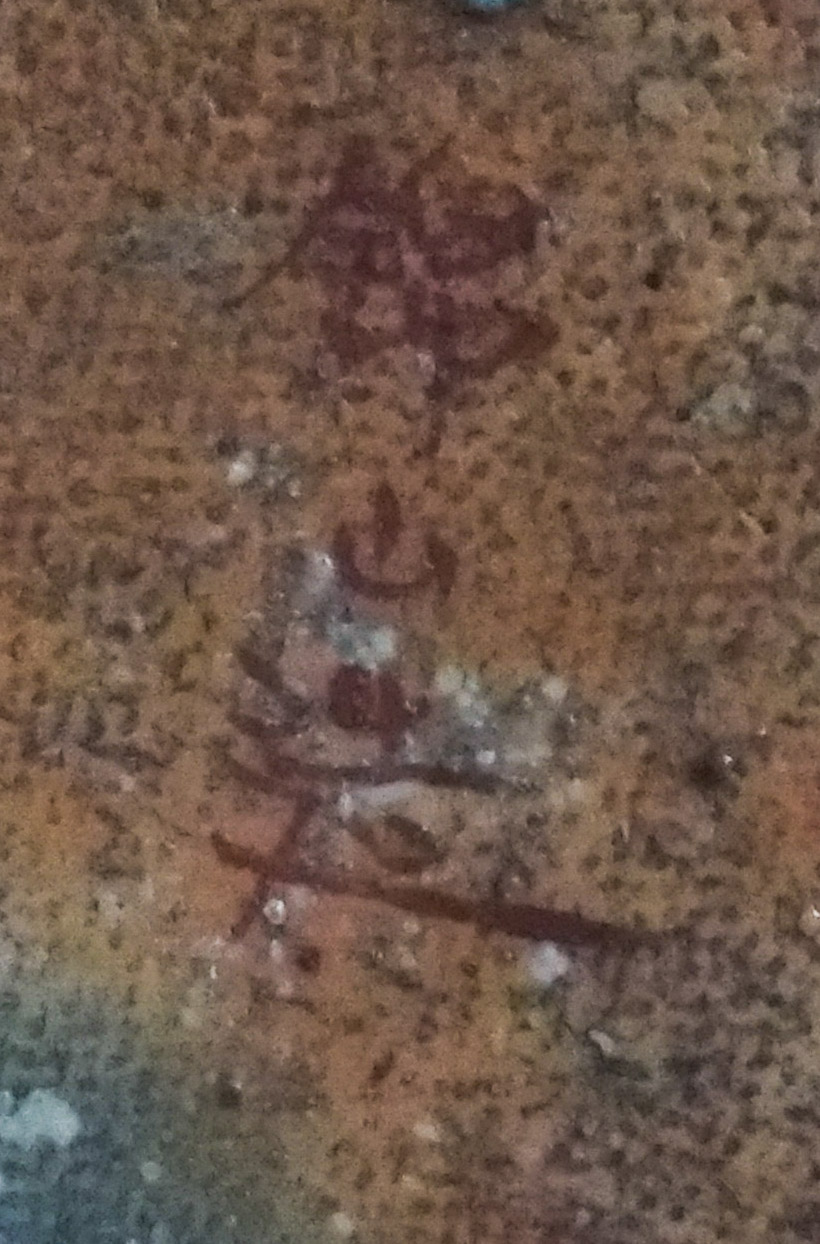
Would anyone be able to assist with the inscription on this porcelain Kannon? My guess was: 銘 山__

-
Shirasaya Sayagaki Translation Needed
Ray Singer replied to Ed Hicks's topic in Translation Assistance
Etchu no kuni Uda Kunitomo -
Minamoto Morinobu Gendaito In Gunto Koshirae
Ray Singer replied to Ray Singer's topic in Sold Archive
Please archive. Thank you. Best regards, Ray -
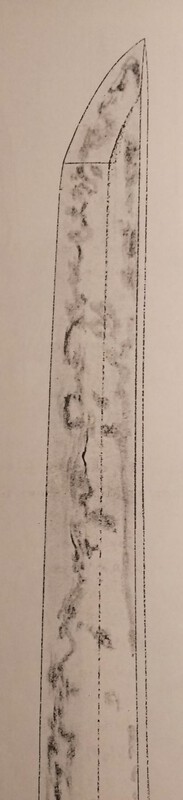
I do not see any evidence of saiba. Another oshigata I was looking at this even for Soshu Hiromasa in the Token Bijutsu.
-
I wrote to Greg directly with the same thoughts on the tsuba. Late Edo, intended to reflect Nobuie.
-
Definitely Hiromasa.
-
Agreed Jean.
-
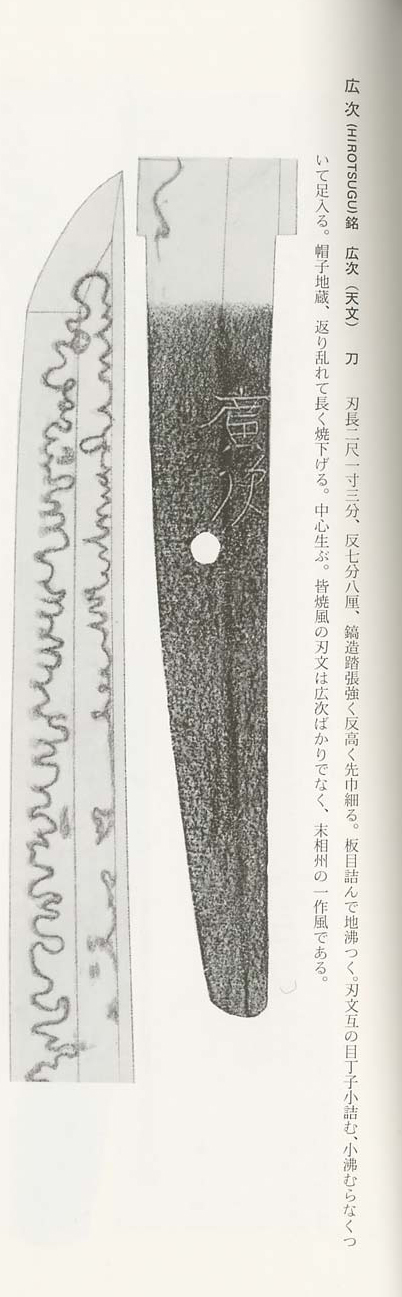
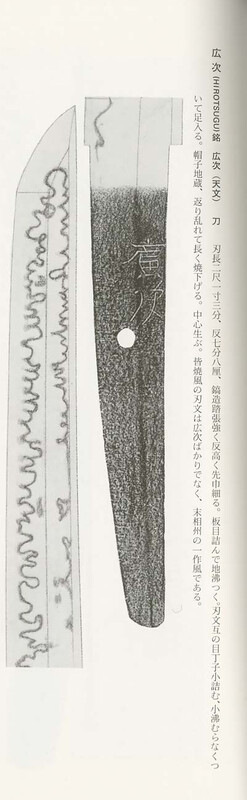
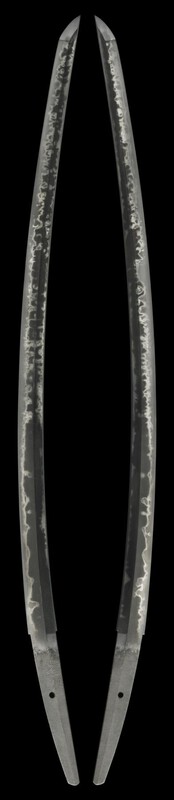
Thank you for sharing the photo Ray! Here is the sword I was looking at earlier which I believe is the actual Hirotsugu featured inFujishiro. http://taiseido.biz/cn11/pg291.html
-
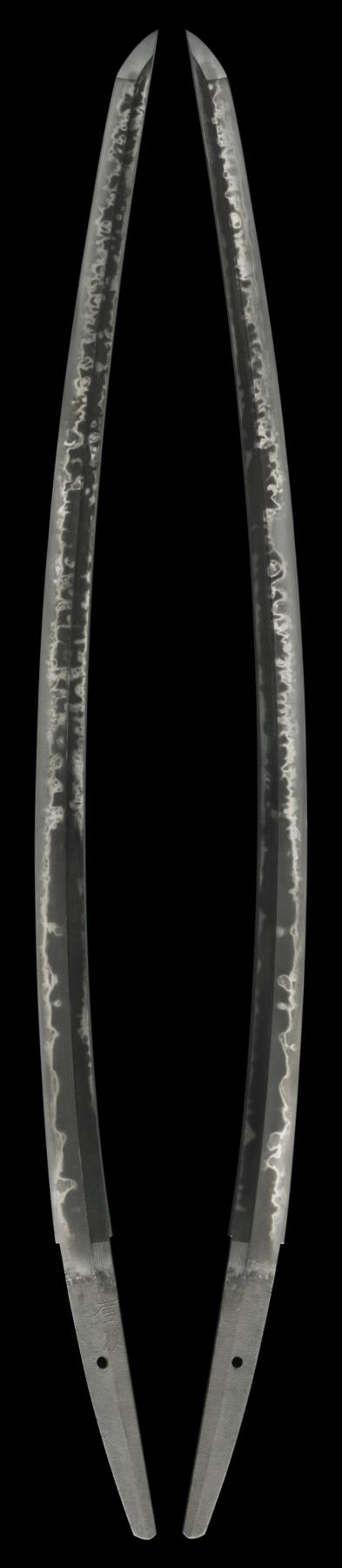
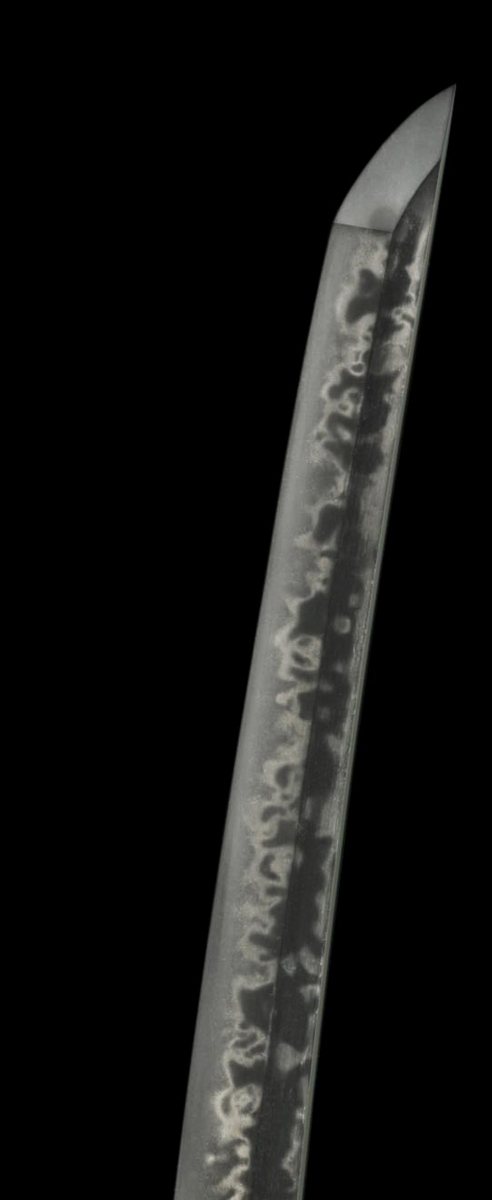
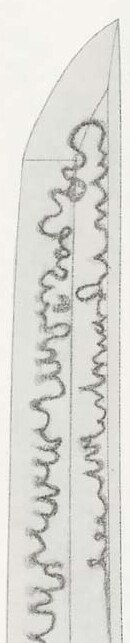
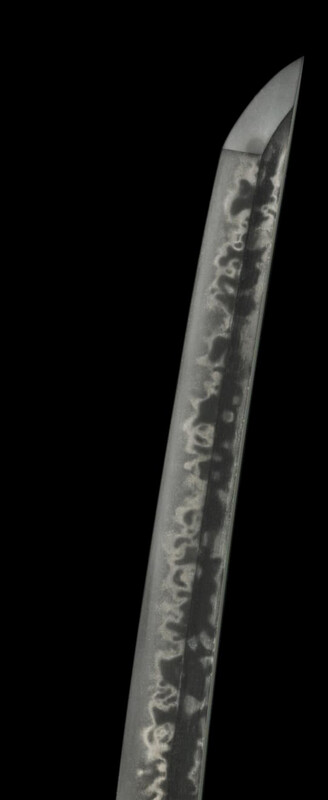
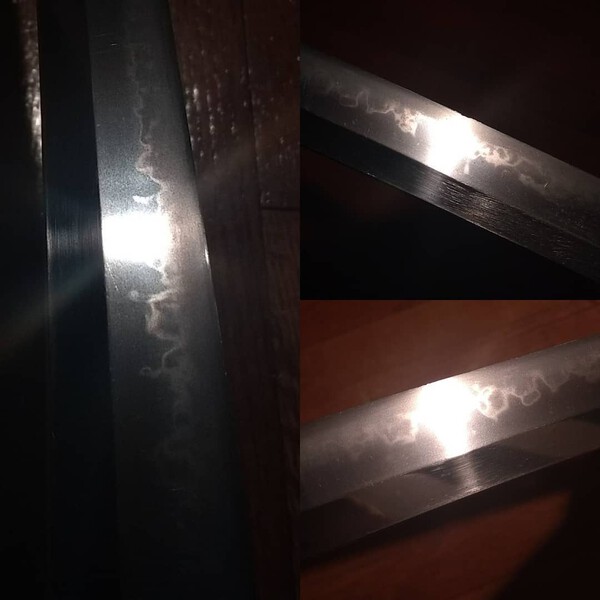
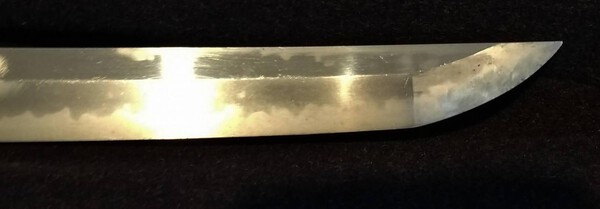
Sorry to revive this old thread, but I was struck by some similarities to Soshu Hirotsugu. Work in mine is much more calm, but the sword does have a Soshu atmosphere. Still researching (and enjoying) this one. Two reference examples, along with additional photos of my sword. Reference photo and oshigata Sword under study
-
Hi Joel, The number a polish a sword can sustain varies dramatically according to its construction (for example, how close the shingane is to the surface), whether it has sustained damage (removing deep rust or hakobore can greatly reduce a sword in a single polish), the presence of kizu (and their location) and other factors. Sometimes swords have been preserved with very few polishes over their lifetimes. Daimyo treasure swords for example may have been maintained in close to their original condition. As one example, you can see this in the sword collection of the Uesugi family where most have been kept ubu, in their original koshirae and in like-new condition. You can also sometimes find swords like this in the "wild" and it is easy to mistake them for much later swords. The Korekazu I sold here was incredible healthy and Andrew Ickeringill later commented that he felt it only had 1-2 polishes since it's original. I have a Nobukuni which is like this as well, with a 8.5mm kasane that is close to its original state. Kind regards, Ray
-
Bushū Shimohara Ju Yamamoto Naiki Yasushige Katana (Jo-Saku)
Ray Singer replied to Ray Singer's topic in Sold Archive
Thank you Chris! This Yasushige is still available. Any questions, please email raymondsinger@gmail.com. Best regards, Ray -
Shimazu Family Jûyô Bijûtsûhin Akihiro
Ray Singer replied to Ray Singer's topic in General Nihonto Related Discussion
This was the previous discussion about the Akihiro. http://www.militaria.co.za/nmb/topic/13632-tampa-2014-report/?fromsearch=1&fbclid=IwAR3gaUF-CS9Iwhxs1cPzJtfz0So-Vnh7y0Uy9xWqhNNkG-Yk_n6g2kKGfKs