Curran
-
Posts
4,653 -
Joined
-
Last visited
-
Days Won
23






.thumb.jpg.77d8b8ceaccc15be659eed179b42bff3.jpg)


About Curran

- Birthday June 14
Curran's Achievements






-
I find this VERY funny. The mon on my Goto Tokujo menuki are also suspiciously close to that of Toyotomi Hideyoshi. Talk about casting shade. If I can find it, I am going to link an article written by our esteemed Markus Sesko @Markus https://markussesko.com/2013/04/23/goto-chojo-the-secret-saver-of-the-goto-family/ It makes for great context. Kojo's two kids, older brother Tokujo vs younger brother Chojo = Toyotomi vs Tokugawa
-
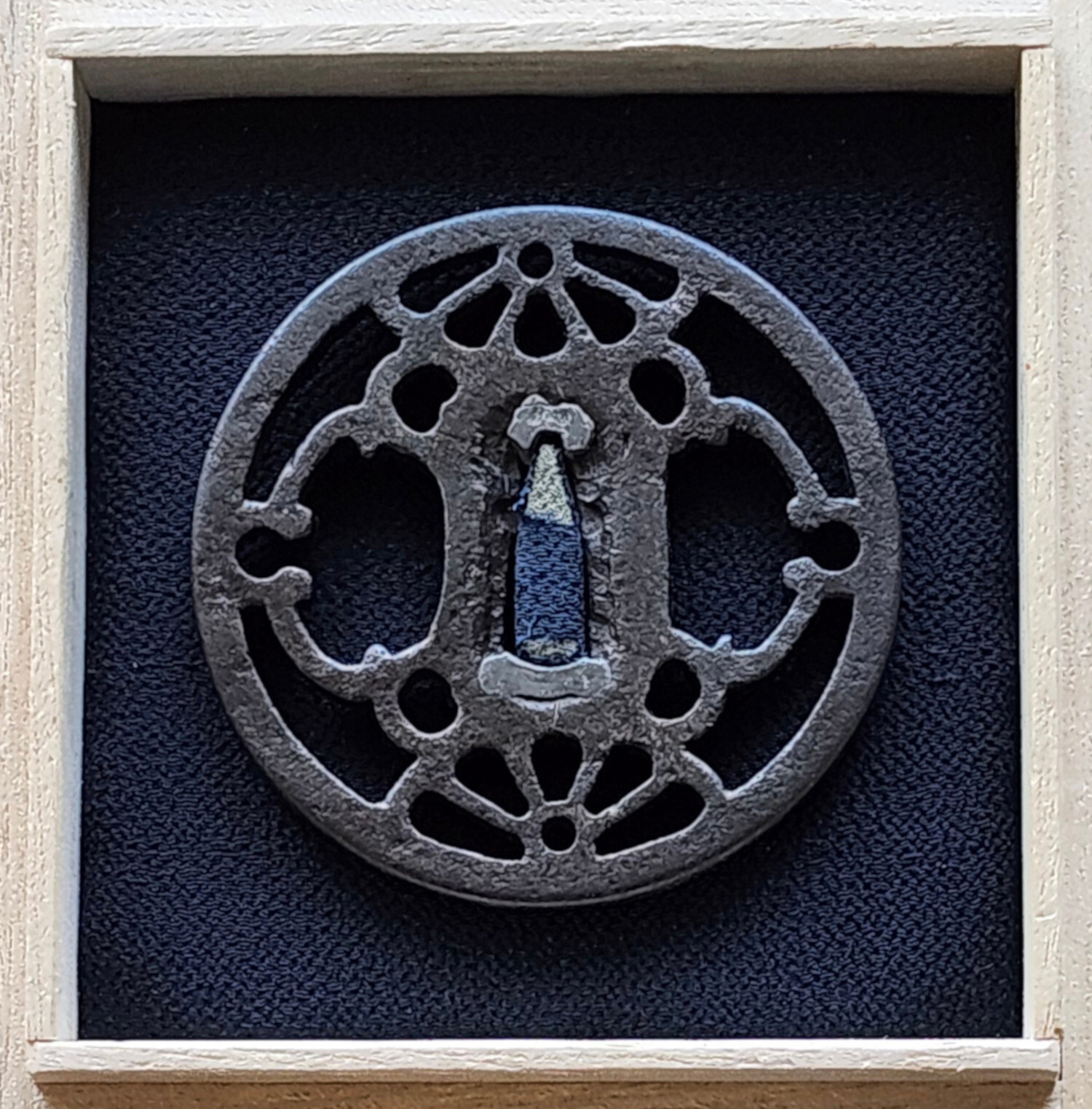
Some like this one are a lot less of the sandy variety. TH to Yagyu. Theme is the 4 Classes of Japanese (Edo) Society This one might have been a special commission. Very unusual theme, and not evident it is Yagyu at first glance. The mimi and other evidence points to Yagyu. Tsuba really need an angled view for kantei traits.

-
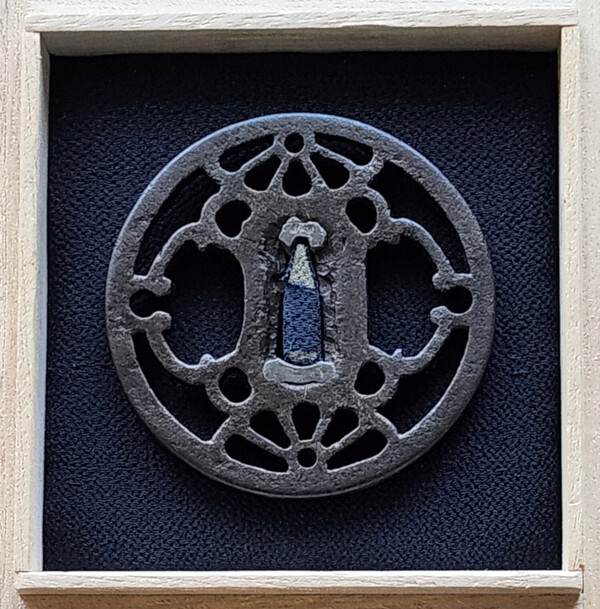
Generally they tend to be more sandy, like this one. This one passed Hozon to Yagyu last year. Chrysanthemums in a Bowl of Water, or something like that. Fluidity in life? Good mindset for fencers.
-
Okay, Steve said it first. This is what I was thinking. It reminds me of the early efforts of a contemporary artist I know.
-
My opinion is that it is None-of-the-Above . It doesn't fit the textbook definitions of any of those schools. Quite a challenging thing.
-
I agree with Victor. The Mito umbrella is huge, with a lot of spin off Mito influenced schools. This feels more in that direction. For me, the plant leaves on the Tiger side point that way. This is probably Mito+(School#2) work, so probably a Mito spinoff school. It looks like it will clean up nicely with a little TLC. Maybe some "in a museum drawer" neglect, since the rust is older and yet more prominent on one side.
-
As much as I'd love to see it- don't do it. I did it with my first love: the other o-tanto I own. It took maybe 8 years and is almost certainly a money sink. There are some in Japan that can do it much more economically than outside of Japan, but it is a difficult road.
-
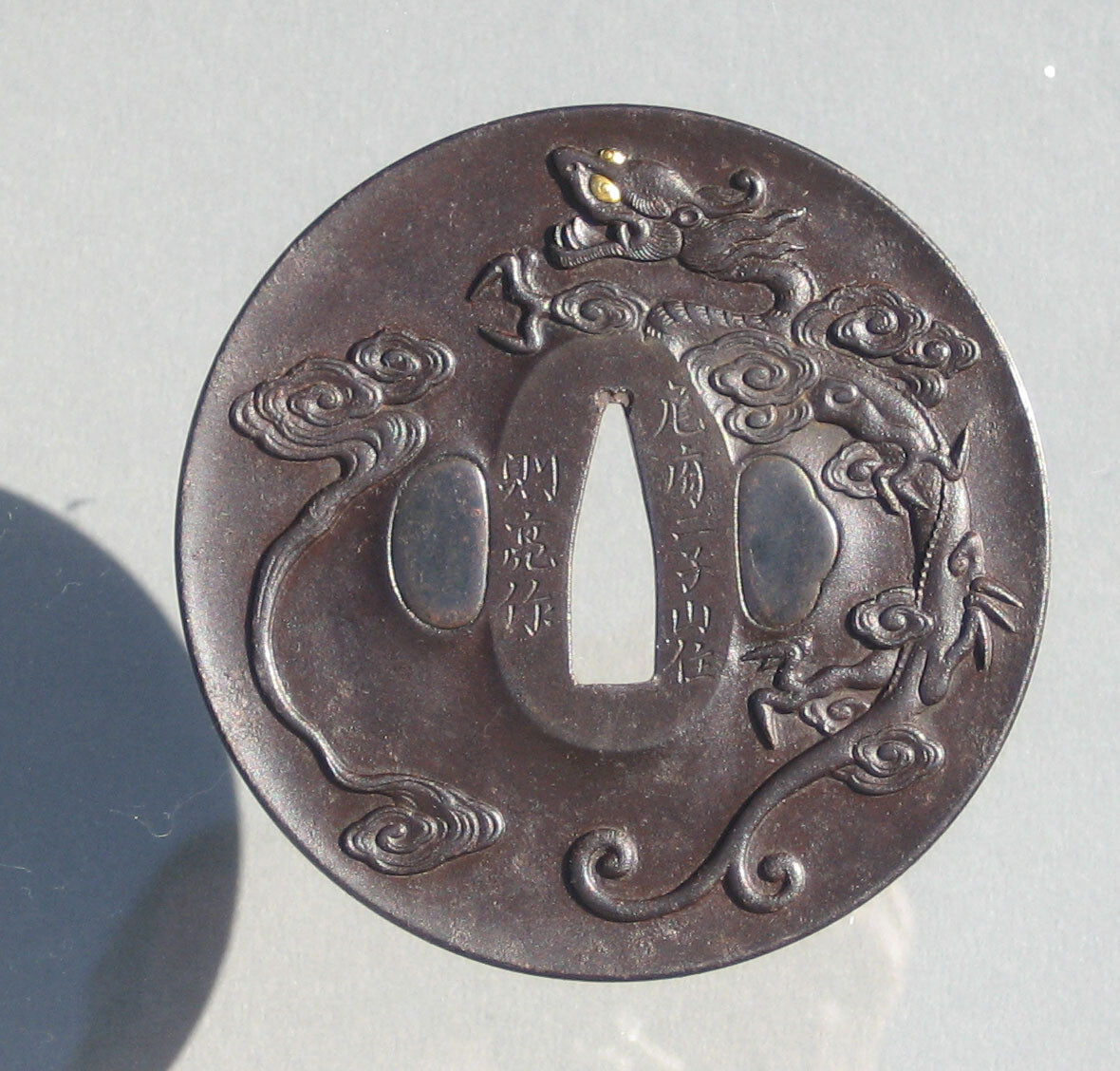
Goto Tokujo = my favorite mainline Goto dude. His son Kenjo is my #2 pick. Tokujo lead quite a life clashing with the Tokugawa, ending up ronin for a while, AND he did it with daughters En Tout. Elements of the Lone Wolf n Cub story from his life, and he was a top notch artist on top of it all. I saw this recently with someone who I thought was based in Japan. If you picked it up from him, well done. Scoring a complete set of Goto Tokujo work is.... very hard. I haven't been able to do it. I've been searching for one of his rare tsuba for several years and had one or two near misses.
-
Late 1500s is full of rabbit holes and some "Who was that guy" wonders. I only own 2 swords and 2 o-tanto. One of the o-tanto is a 2 character signature exceptional blade by a little known guy from around the same time as your blade. Exceptional Owari blade. Call it very early Owari-shinto? Tanobe-san wrote a nice long sayagaki for it. But who was that guy.... supposedly he was the son, or brother, or cousin of a famous smith??? Sometimes just enjoy the blade. edit ps. One look at your blade and I would have thought Shimada? Looks like that wasn't a bad guess https://www.sho-shin.com/soshu.html @Jussi Ekholm probably has the right of it. I'm more on the fittings side of collecting.
-
@ryanvango East or West PA? My family is from the Cranberry-New Castle- Slippery Rock triangle. If you are in Eastern PA, there are some knowledgeable people in NJ and there is the NY Metro Area Nihonto Club. Daytrip to NYC for one of their meetings, and you will get some insight. I miss Northern Jersey-NYC. Pizza down here just isn't the same.
-
Bingo. It might be sanmai (3 layer construction) sandwiched by the fukurin (outer layer). I'm (*) the laymans terms for Ryan. I'd have to see inside the openings (central and the one for the kozuka opening) to determine. Ko-kinko is > than a sanmai tsuba, but -either way- a better tsuba that most people find when they start collecting. Ko = (old) and Kinko = (soft metalwork). So it is an (old softmetal) tsuba of shakudo (type of special black pickled copper) with gold highlights. Condition looks decent. The other iron one is hard to tell without taking it off the koshirae. Most likely it is an Edo period katchushi (armor maker) piece. Larger but thin. @ryanvango is probably right that it is on the sword as part of the mix-n-match of WWII bringbacks. There are even stories of guys using tsuba as poker chips. After the game, different tsuba ended up on different swords. Winner had more tsuba ? and the losers had a sword with no tsuba where they'd find a replacement later. It is an old story, but it gives you a vibe of the mix n match we sometimes see. There is the old story of the guy who brought a sword into the Tampa show. Guy wanted to sell it. Benson told him he didn't want the sword (low grade, about $1000 then), but did want the tsuba. Guy didn't want to separate them, so Benson bought the sword for (1k?), took off the tsuba and sold it for $5k within the hour. It would resell for $7k+ within a month or two. Benson then gave away the sword rather than have to haul it back to Hawaii. While a special case, sometimes the mix-n-match of WWII bringback koshirae pops up a few interesting one. My own favorite ko-kinko tsuba came off a sword this way in the 2019 Tampa show. Not exactly worth $5k, but it was worth more than the Echizen shinto sword it was on.
-
Odd. The first tsuba is easy. I will let you guys handle it at your discretion. If anything needs Moderated later, PM me as necessary. I'd like to save Brian a bit of NMB workload.
-

What is this Hozon Certificate ?
Curran replied to klee's topic in Auctions and Online Sales or Sellers
If it needs clarified, I believe the papers are from 1986 or so. -
Thank you for sharing that.
-
Nidai, the 2nd generation. I'd guess from the 1860s Compare signature