Bugyotsuji
-
Posts
14,349 -
Joined
-
Last visited
-
Days Won
278
Content Type
Profiles
Forums
Events
Store
Downloads
Gallery
Everything posted by Bugyotsuji
-
This Week's Edo Period Corner
Bugyotsuji replied to Bugyotsuji's topic in General Nihonto Related Discussion
Thank you Koichi san. Perhaps you are right. We need to wait until all references are collated. Certainly in speech humans tend to shorten words, and the Japanese are no exception. If we agree that Mabishaku and Babishaku were shortened to Mashaku and Bashaku, then we have come full circle. I am a bit surprised by the 1891 writing in which the English word 'speed' is used in Katakana. It makes me wonder whether the writing has been subsequently altered or retold... Ian, that is such a good picture you have found there. Anyone who doubts the use of Tanegashima matchlock pistols on horseback should see your illustration. I am going to print it out for my collection. -
This Week's Edo Period Corner
Bugyotsuji replied to Bugyotsuji's topic in General Nihonto Related Discussion
To summarize, I am sensing that the term 'Bashaku' used by many Japanese and Western dealers of Japanese antiques is wrong. I cannot find any examples of this word with these Kanji and this meaning in any Japanese dictionary. The correct usage must be either what Sasama Sensei says above, Ba-bishiyaku, Ba-bishaku, Ba-bishyaku, Ba-bisaku or the same with Ma- or Uma- instead of Ba, or something very close. Remember that these are mostly semi-incorrect attempts to reproduce the Japanese sounds, so the Romanization will never be perfect. The word for horse comes from an ancient sound that comes from North Korea and the Mongolian steppes, and is formed with the lips like mma or umba. Put that sound before Hishaku and, following Japanese language conventions, the H changes to B. Thus we end up with Ma-bishaku, Ba-bishaku or Uma-bishaku. In the various Japanese dictionaries that I have consulted, both printed and on the internet, the usage Ma-bishaku is by far the most prevalent. I would be happy if the world could standardize this now to Mabishaku ( or Babishaku). = Horse-handle-cup. NB The expression of the sound in English of 柄杓 hishaku/bishaku can be bishyaku or bishiyaku because they are differing attempts to reach the same Japanese sound. *We must be careful with Sasama sensei's bishiyaku, however, as that can sound like four syllables to an English speaker, whereas in Japanese there are only three, hi/bi + sha + ku. -
Admirable sentiments from all above, especially Brian's last comment. A Fascinating 2011
-
This Week's Edo Period Corner
Bugyotsuji replied to Bugyotsuji's topic in General Nihonto Related Discussion
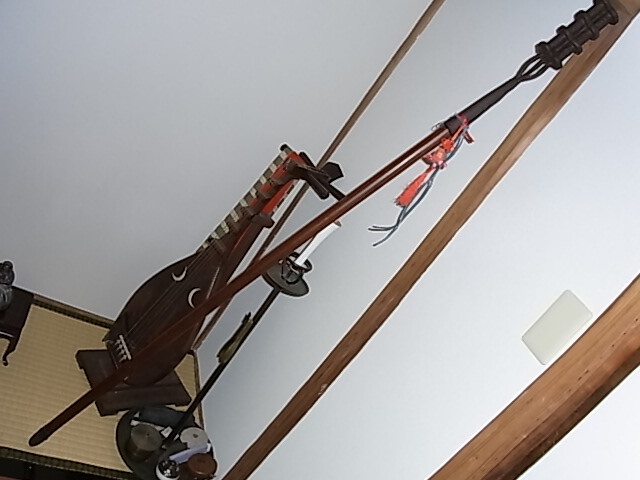
Apologies, Eric. The museum description says: From Left, Kutsuwa (Bridle bits), Shiode (saddle tie handles), Muchi (bullwhips), Mabishaku (horse dippers), and Aori (horse cover/splashguard). And yes, what an excellent picture, Ian. Even the Kutsuwa seem to be part of his dress. Many thanks. Happy New Year everyone. -
This Week's Edo Period Corner
Bugyotsuji replied to Bugyotsuji's topic in General Nihonto Related Discussion
"Mabishaku" in Hikone Castle 「左から、轡(くつわ)・しおで・鞭・馬柄杓(まびしゃく)・障泥(あおり)」 http://4travel.jp/traveler/minikuma/pict/17081034/ -
This Week's Edo Period Corner
Bugyotsuji replied to Bugyotsuji's topic in General Nihonto Related Discussion
Lots of interesting reading in that link, Eric. Many thanks. Your long ladle/dipper may be just that. If they were plain originally, Ian's idea that the decorated ones were symbolic makes good sense. The different competing terms and lack of definitive text anywhere also suggests to me regional differences in language. I still have not found this term 'Bashaku' that antique dealers use to mean a horse dipper for either rider, groom or horse in any formal or trusted dictionary, including my fallback dictionary of old Japanese words, Iwanami's Kogo Jiten 古語辞典 Mabishaku is the only word listed here, and the definition is 馬に水を飲ませるのに用いる柄杓。 = A (type of) hishaku (hisyaku) which is used for giving drinking water to a horse. (But then for a thirsty horse you would imagine it to be a large version like yours, Eric.) -
This Week's Edo Period Corner
Bugyotsuji replied to Bugyotsuji's topic in General Nihonto Related Discussion
Eric, Shaku means a cup. Hi+shaku means literally a cup, with a handle/pole. (Dipper or ladle) Hi is the same word 柄 used for the sword hilt Tsuka in Tsuka-maki, the -zuka in Kozuka and the 'e' meaning the haft of a spear. 'Hi' is how it is traditionally pronounced when it is with a Shaku and it changes to 'bi' when it is the second syllable after something else like 馬 horse. Thus you get Hishaku, or Horse-bishaku. Horse as you know can be Uma, ma, or ba, depending on various things, not least of which is ease of pronunciation in a context. Common usage might not have been 'common' throughout Japan prior to Edo. 'Mabishaku' is given in the Kojien 広辞林 but I am sure that people used the term Bashaku as you suggest. This is short, and would generally avoid all the other longer possibilities. The only problem with the word Bashaku is that in common parlance it had a different meaning, 馬借 bashaku, to rent out a horse for money, or the person who makes a livelihood by such means. PS Be careful with Daimyo. He operates just down the road from here. You need to pick and choose with caution as he sells anything that comes along, and he is not very strict with his definitions. -
This Week's Edo Period Corner
Bugyotsuji replied to Bugyotsuji's topic in General Nihonto Related Discussion
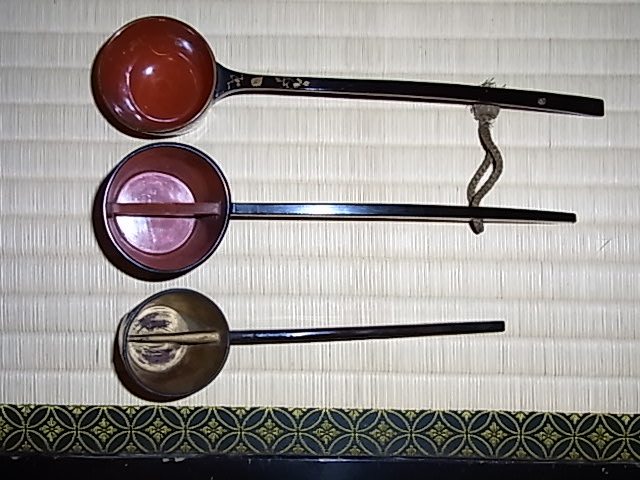
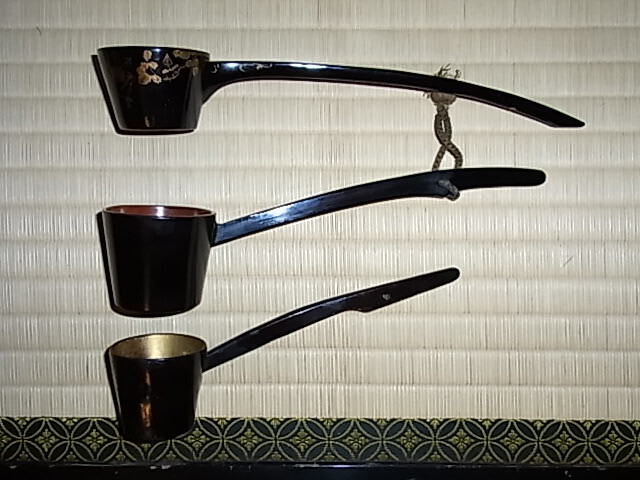
Very interesting, Ian. Yes, such decoration would be wasted on an undiscerning horse. I have seen pictures of them stuck into belts, but as a badge of rank! That fits in with what I was reading on various J sites this afternoon. Sasama's "Ba-bishyaku" is very close to Ma-bishaku and Uma-bishaku, all three different ways of reading the same Kanji 馬柄杓。The term must be correct, but the reading different according to time and place and maybe dialect. Eric, do you know how much that one sold for? Here are mine.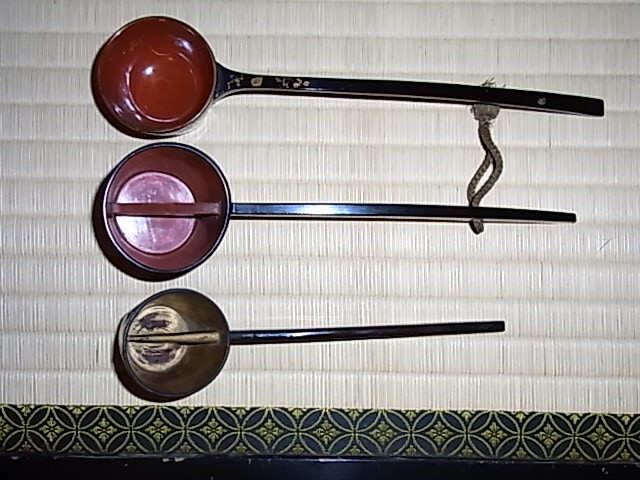
-
This Week's Edo Period Corner
Bugyotsuji replied to Bugyotsuji's topic in General Nihonto Related Discussion
Very nice examples, Eric. I see what you mean about size. Thanks. -
This Week's Edo Period Corner
Bugyotsuji replied to Bugyotsuji's topic in General Nihonto Related Discussion
Haha Eric. Many thanks. I was thinking more along the lines of a mini nodowa. I have been trying to pin down the wording since you asked but have not managed to narrow it down or find the correct answer yet. Bajo-hai seems to be a goblet, and not at all what I was thinking. Bajo-no-hai 馬上の杯 is the stirrup cup or farewell drink. They are a type of Hishaku 柄杓 but were they really designed for use on horseback? Hishaku are used for tea ceremony, although in bamboo and not lacquer. The word covers those ladles/dippers that people use to wash/clean their hands at the entrance to shrines and temples. I cannot find any examples or photos of the word you used, Bashaku, although it makes eminent sense. They were also used as Mae-date for helmets. Will post a pic of the ones I have when I get some time this evening. You can see one on the previous page... before I 'restored' it!!! Can anyone help? PS I am starting to find hits with the words Mabishaku and Umabishaku... some sources say they are for the rider to give water to the horse with, (although the rider might have fallen off the horse doing so), others that the riders leaned off the horse to scoop spring water and drank from them. (We must remember that J horses were smaller back then.) -
This Week's Edo Period Corner
Bugyotsuji replied to Bugyotsuji's topic in General Nihonto Related Discussion
Ron, when I fit this on, my headache seems to pale in comparison. No Eric, I have heard that there are two terms, Bashaku and Bajo-hai. I am never sure which one is correct for which situation, or whether one is better than the other, and I always hesitate in conversation as I try to remember at least one of these two terms I have heard. -
This Week's Edo Period Corner
Bugyotsuji replied to Bugyotsuji's topic in General Nihonto Related Discussion
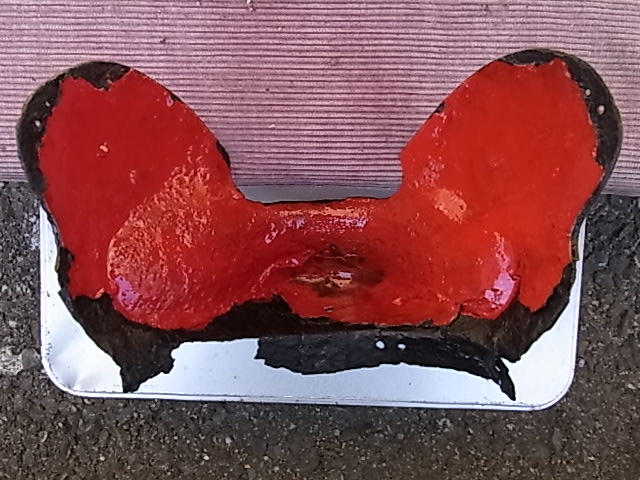
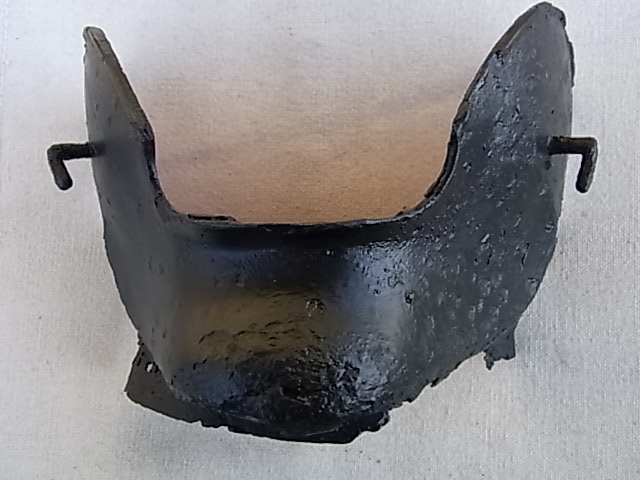
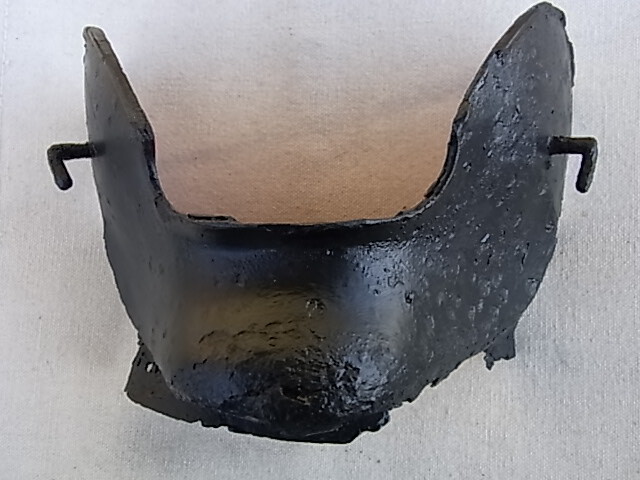
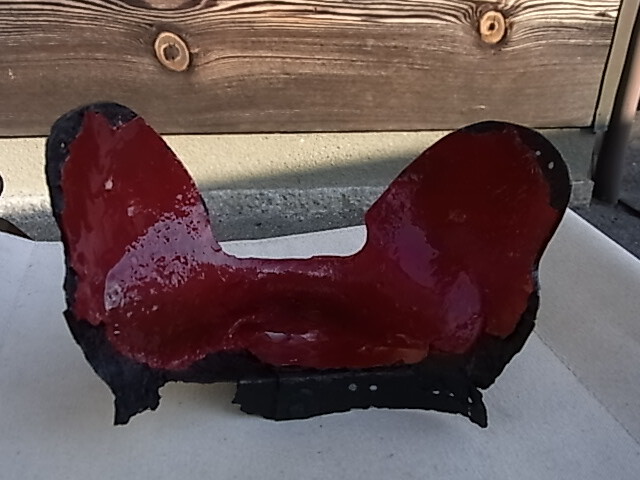
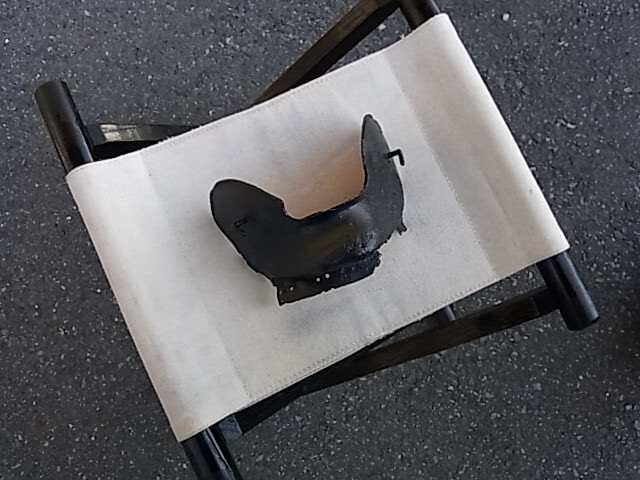
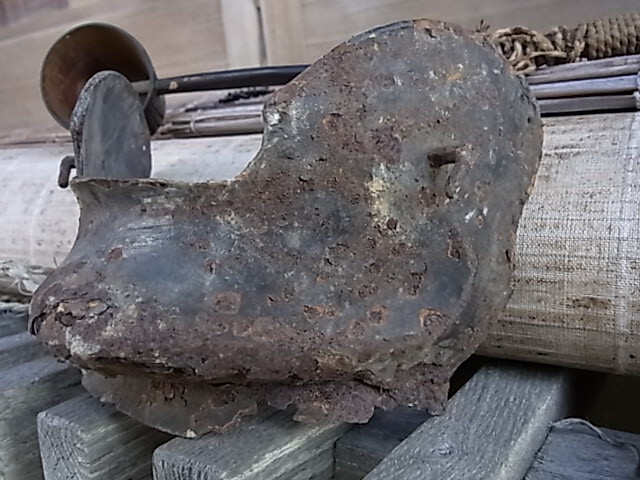
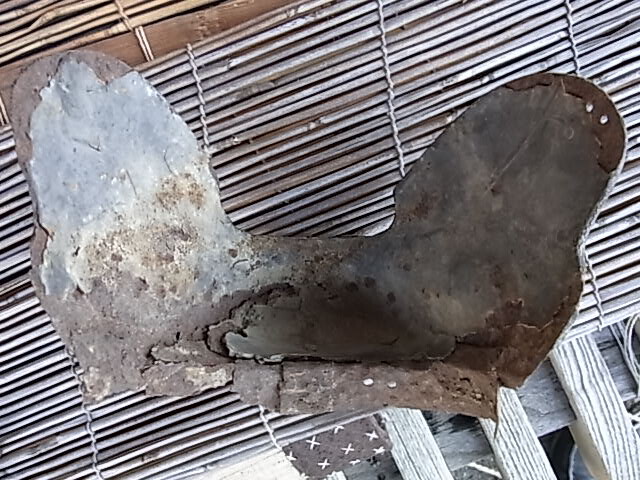
So what? I hear you say? Well, it can go on the armour stand and complete the set. Decorative effect: Batsugun! On Saturday I had just visited a Menpo collector and he must have had 100 hanging on one wall alone. At a low average of 3,000 USD each, you can work out what he paid for them, and a couple were considered the best examples anywhere in the world. So my brain was full of unattainable Menpo and the very next morning there is was, in all its tempting ghastliness. For 12 dollars US... a real one, with real age to it, and genuine holes that still work for the string, and the cheek hooks solid, and a viable sweat hole in the chin plugged with a little wooden bung, and I learned so much without being afraid! Yippppeeee........... -
This Week's Edo Period Corner
Bugyotsuji replied to Bugyotsuji's topic in General Nihonto Related Discussion
Step 2, step 3, and then apply cord.
-
This Week's Edo Period Corner
Bugyotsuji replied to Bugyotsuji's topic in General Nihonto Related Discussion
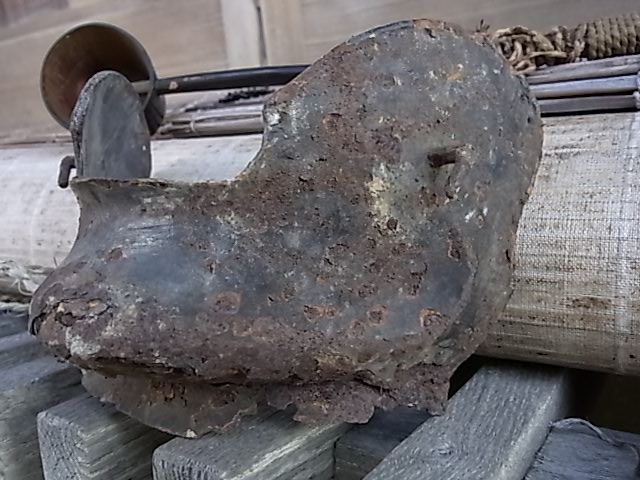
Brian, it's hard to shake you off the scent! It cost me 1,000 JPY and so I felt free to do whatever I wanted with it. A brush down with various brushes and a few taps and knocks cleared out much of the rough loose stuff. I covered all the rusty iron spots with a matt black quick-drying non-oil paint, and then went over the whole thing again with it. As I was wiping the inside I noticed faint traces of the original red interior inside the chin. With a first coating of 'adzuki' 小豆 coloured 'Cashew' it started to look a lot better, so I mixed that with こげ茶 Kogecha, another traditional colour of Japanese lacquer-type cashew paint. This went on the remainder of the interior lacquer, and some areas that looked like they would benefit from extra protection. A few hours drying outside in the shade with plenty of wind, and it was hard as a nut.

-
This Week's Edo Period Corner
Bugyotsuji replied to Bugyotsuji's topic in General Nihonto Related Discussion
Well, put another way, would anyone have bought this Menpo? :D -
Ian, was the auction not in 2008? A lovely-looking book.
-
This Week's Edo Period Corner
Bugyotsuji replied to Bugyotsuji's topic in General Nihonto Related Discussion
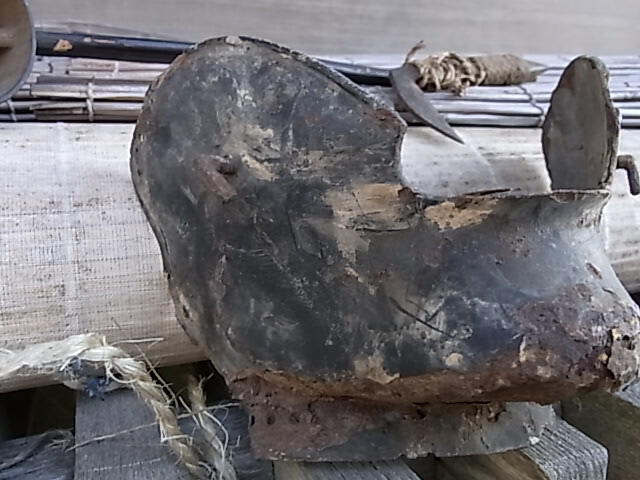
Well, I sure hope so, Eric. It's lost all that crumbly flakiness and looks much better in this dark almost black guise. On Sunday I got up v early and drove about 50 miles to see some antiques stalls which appear once a month. Among the treasures I picked up were a lacquered armrest for when sitting on tatami, a small Kama scythe/sickle for flower ceremony (?) and a badly battered Bajo-hai or stirrup cup. There was also a Menpo in really terrible condition which after some debate I decided to purchase. Please have a look at it and then guess a) how much it was and b) what eventually happened to it!

-
I once had a Kusarigama with chain and ball, signed, and dated in the reign of Sakuramachi Tenno. I never polished it or looked closely at the blade. Kusarigama are exempt from the Toroku requirement in Japan, for some strange reason. Perhaps if you polished one it would then need paperwork! I too would love to hear the answer to this question.
-
This Week's Edo Period Corner
Bugyotsuji replied to Bugyotsuji's topic in General Nihonto Related Discussion
Eric, you don't want to look too closely as it has some serious holes in it!!! One of the touch-holes is badly corroded too. Let's see what I've got for you...


-
I can't see facebook without logging in... Those seem to be quite expensive to start with, even if you are able to negotiate with them.
-
A great description of samurai swords from 1870
Bugyotsuji replied to estcrh's topic in General Nihonto Related Discussion
LOL, an excellent find, Eric. -
A Merry XXXX and a Happy New Year in 2011. PS Did we have this one last year? "Christmas in Japan..."
-
Many thanks for the education above. Wishing you all plenty of whatever floats your boat and takes you nearer to where you want to go.
-
Have to agree with Steve. Nice decoration in the right place though.
-
This Week's Edo Period Corner
Bugyotsuji replied to Bugyotsuji's topic in General Nihonto Related Discussion
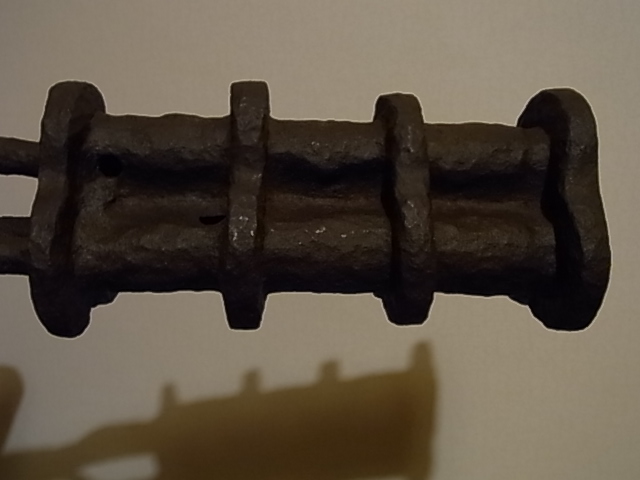
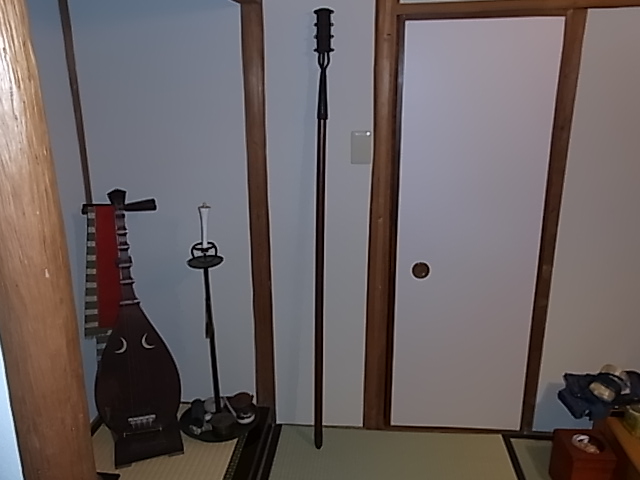
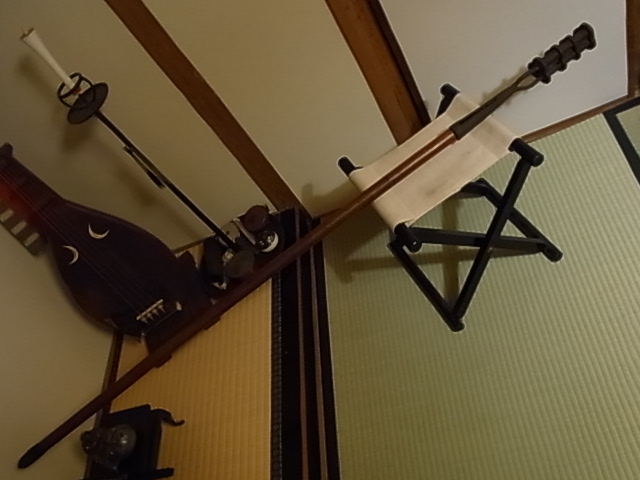
Well, I am 99% satisfied with the way this project has turned out. The rust is black and settled. I had a terrible job trying to whittle Kashi oak. Spent hours and hours as I am not using power tools. Thought long and hard over how to fix the haft to the sheath, and eventually came up with a decent temporary fix solution. The sheath has a long oval slit in it. The answer needed to be something strong, which could also be easily undone as necessary, so I went for a kind of bamboo pin in Mekugi style, hard into the near end of the slit. The 'gun' cannot slip off. The pin has a groove across the top to allow one or two turns of the binding over it to hold it in. As I was playing with decorations I decided to use a Chinese good luck charm out of respect for the spirit of the object and the people who created it. Just hope it isn't Korean! :lol: