Bugyotsuji
-
Posts
14,370 -
Joined
-
Last visited
-
Days Won
279
Content Type
Profiles
Forums
Events
Store
Downloads
Gallery
Everything posted by Bugyotsuji
-
Matchlock barrel and stock translation please
Bugyotsuji replied to mercierarmory's topic in Tanegashima / Teppo / Hinawajū
As Ron says, Tazuke School tended to have round-headed breech screws, but there were exceptions, especially as times changed and more variety became accepted. The larger guns on the other hand tended to preserve conventional features more, apparently. George, a sobering story of carelessness. One of the tubes of my Ch/K three-barelled Sanganju was blocked and some gentle twizzling removed what looked like fine black powder. This I kept in a container, hoping one day to have it analysed. It fizzes and pops when a flame is introduced to a little pile. Unblocking the Lantaka yesterday I scratched out a very little and found it was hard packed sand, so no problem there. One of our troop members bought a blocked cavalry matchlock early this year and they had great fun when they heated it with a blowtorch, they were saying. There must be so many blocked barrels out there, possibly in battle ... but no, I do not want to go there. -
Matchlock barrel and stock translation please
Bugyotsuji replied to mercierarmory's topic in Tanegashima / Teppo / Hinawajū
Thanks Mike. Well, there are still signs that it might be Tazuke Ryu school of gunnery, despite the 'reconstruction' that has taken place with the pan and lid. One quick question. When you removed the barrel looking for the signature, did you notice if the head of the large Bisen breech screw is round or square in shape? Just curious. -
Matchlock barrel and stock translation please
Bugyotsuji replied to mercierarmory's topic in Tanegashima / Teppo / Hinawajū
Not much to add to Ron's detailed post above, but I would second his request for additional photos, especially of the pan area with the lid open. The barrel may have been very rusty and cleaned with something quite abrasive. One thing about flat butts. Agreed that there were many that do not seem to come with any further attributes of any particular school, but a perfectly flat butt in combination with some other factors would immediately point towards the Tazuke Ryu school. Apart from the diagonal butt cut, they were often internal spring locks as Ron says, and had a distinctive sealed pan cover, for example, not the usual open-sided type. Tazuke were favoured by the Tokugawas and many were made in Kunitomo. The elaborate mekugi hole surrounds on your gun are reminiscent of Kunitomo or Hino in Nagahama, east of Lake Biwa but the gun is more a generic example of a Tanegashima matchlock without any real strong association with either geopgraphic area or school of gunnery. It looks as though it has had quite a lot of use. The pan will tell more. -
Edo Period Corner Part II
Bugyotsuji replied to estcrh's topic in General Nihonto Related Discussion
Ron, many thanks for the background information. I bow before your superior knowledge as usual. Yes, I had read about the gift aspect of these guns, and that there are many fakes around. Luckily I did not pay an extortionate amount for this example. I have examined it all over, incidentally clearing the blocked barrel, and it still gives a feeling of genuine, not faked, age. The diameter of the touch hole is almost equal to the bore of the barrel, so it would not propel a ball with any great pressure. The lack of elaborate decoration somehow adds to my initial inclination, so I am still generally pleased with this acquisition. Although my interest lies primarily with Japanese Tanegashima guns, I have one 16th c three-barrelled iron pole gun from China (Korea?), and now this bronze baby Lantaka, meaning that both can represent for me the conscious or unconscious nearby horizons of that time and place in the world.
-
Edo Period Corner Part II
Bugyotsuji replied to estcrh's topic in General Nihonto Related Discussion
Yes, I noticed those blurred wheels too, Malcolm, and it set off a train of thoughts about how fast a bullock cart could be made to go, etc., and whether they had races. As to their portrayal in early art I have no idea. I wonder if Roman wall paintings ever showed wheels whizzing round like that? In the eclectic nature of this thread here is a little cannon I picked up recently, 1.1 cm bore, 7 inches (18 cm) overall, from out of a well-known Japanese collection. Presumably Japanese traders picked these up on their merchant voyages to SE Asia? Maybe even the Wako pirates used them on their ships? This one is quite a small example. The enlarged touch-hole suggests some use. The Japanese name ランタカ砲 seems to be a direct import of the Tagalog Lantaka, with 'ho' added to mean cannon. An early Christmas present to myself, methinks. http://bunka.nii.ac.jp/SearchDetail.do? ... eId=136811
-
A Mori tends to be a single pronged harpoon whereas a Yasu tends to be smaller, perhaps hand-held, having two or three barbed prongs, according to the first paragraph here, although the distinction is not always clear they say: http://ja.wikipedia.org/wiki/%E9%8A%9B Definition from Wiktionary, the free dictionary .... arpione (it); Japanese: (short type for a small fish) 簎 (ja) (yasu), (large type for a large fish) 銛 (ja) (mori).
-
Not a yari but a yasu, or mori, Ken!
-
Look at the first word in No 5 and your hiragana. 極帳 きわめちょう Feed the kanji into the URL window, Junichi, and see what comes up. Also, just as a general observation, you need to decide whether to run the hiragana all together or break them up with spaces as in English. Above you seem to have started with one and then switched to the other. Why are you adding the hiragana readings? For Westerners? If so, then splitting the words, as you started doing, makes for much easier reading than long lines of hiragana, IMHO.
-
Looking good. (Some of the hiragana needs extra proof-reading!)
-
Edo Period Corner Part II
Bugyotsuji replied to estcrh's topic in General Nihonto Related Discussion
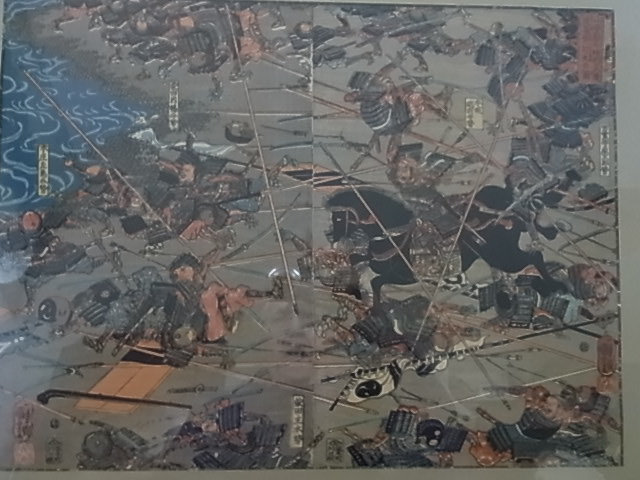
Of course Yamamoto Kansuke is said to have died along with his two main retainers. Is there a third horse on the missing sheet? Just had hours of fun with that scroll, Malcolm. Thanks for the link. So much to learn, and so little time to do it... -
Edo Period Corner Part II
Bugyotsuji replied to estcrh's topic in General Nihonto Related Discussion
Wow! That was clever, Brian! Now I am a little confused. According to this article, http://wiki.samurai-archives.com/index. ... to_Kansuke ...he is reputed to have taken a spear and made his charge, so I had assumed he was the man on the black horse... yet the one on the white horse appears to be the central figure in the overall picture there, and is he carrying a spear too? Is this why Kuniyoshi returned to this theme later on? I.e. No-one could figure out who was supposed to be Kansuke? :lol: -
Edo Period Corner Part II
Bugyotsuji replied to estcrh's topic in General Nihonto Related Discussion
Brian, try the Kuniyoshi Project link in my post above Malcolm's. -
Edo Period Corner Part II
Bugyotsuji replied to estcrh's topic in General Nihonto Related Discussion
Update. At Malcolm's suggestion I have written to the Kuniyoshi Project to alert them to the left of my two prints above, a hitherto missing part of Kuniyoshi's work? As Malcolm says, this may prove to be the trigger for someone to come forward with a third sheet to complete the puzzle. -
Edo Period Corner Part II
Bugyotsuji replied to estcrh's topic in General Nihonto Related Discussion
The 1840s was a period when the central government in Edo was alarmed at the encroachments of barbarians in China and worried that Japan would be next. Artists were advised to abandon using beauties and the pleasure quarters for subject matter and to help foster a renewed national interest in things martial. One of the things that interests me is to see how an artist in 1845 understood Japanese history at the end of Muromachi, (however accurate or inaccurate) and how that understanding was manifested in a popular woodblock print. -
Edo Period Corner Part II
Bugyotsuji replied to estcrh's topic in General Nihonto Related Discussion
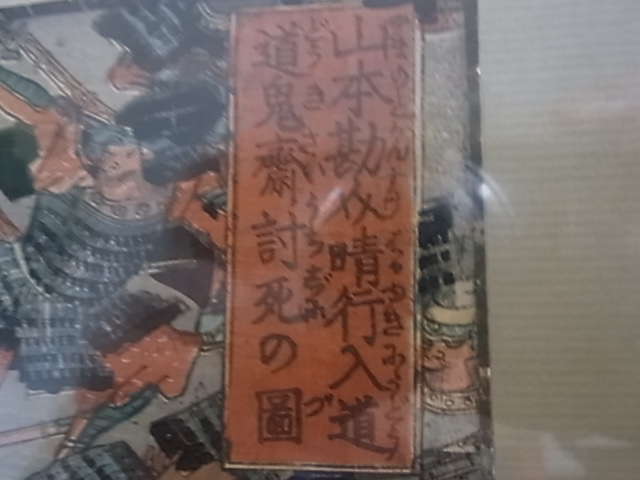
That was quick Malcolm. Many thanks as always. If I am not mistaken, the last line you mention (Yamamoto Kansuke Haruyuki Nyûdô Dôkisai uchijini no zu) is what is written in the top right corner of the right sheet, making the rider of the black horse Yamamoto Kansuke, right-hand man to Takeda Shingen, charging to his death in a hail of bullets at Kawanaka-Jima in 1561. If this is so, the gun would be one of the first guns used in battle, less than 20 years after guns first arrived in Japan. It looks suspiciously like the gun that is alleged even today to have killed Takeda Shingen, having no extant trigger mechanism. I like the fact that the gun is covered in black lacquer, (like one of mine) and the print shows use of shields. So the one on its own that I saw here is meant to go with the triptych right above it! なるほど http://www.kuniyoshiproject.com/Warrior%20triptychs%201845,%20Part%20II%20(T159-T172).htm -
Edo Period Corner Part II
Bugyotsuji replied to estcrh's topic in General Nihonto Related Discussion
John, I can say no because I have had the benefit of reading some of the writing. When I bought the thing, I knew nothing about it. Thank you for having an honest go at it despite the fog of war!


-
Edo Period Corner Part II
Bugyotsuji replied to estcrh's topic in General Nihonto Related Discussion
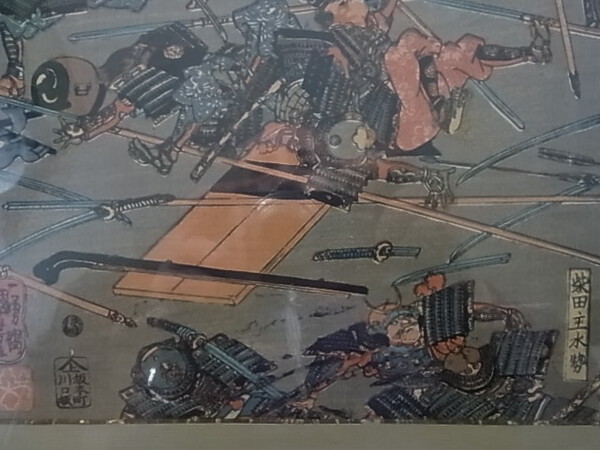
Ron, you are on the right track. Apologies for the poor quality shot. Reflections on the glass make it worse. If you need any hints or closer shots, just say. Just hitting the sack, but I will check this thread in the morning. -
Edo Period Corner Part II
Bugyotsuji replied to estcrh's topic in General Nihonto Related Discussion
Bought this in London recently. Properly framed conjoining woodblock ukiyo-e prints, either a diptych or 2 parts of a triptych (?) but apart from the single right screen of which I found one example, I cannot find another example of this work online. Created and printed in the mid 1800s, it depicts a scene from the mid 1500s. The important figure is on the horse with a yari in his right hand. A famous battle. Does anyone recognize a) The battle scene and figure, b) the artist and/or c) why I wanted this print? :| Close-ups also available upon request.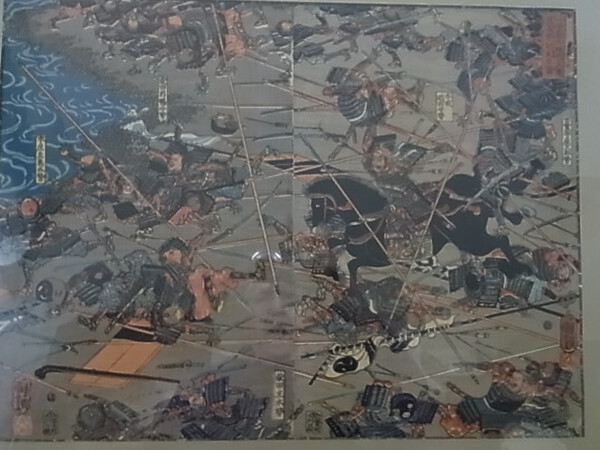
-
Matchlock mei and Goshu smiths
Bugyotsuji replied to David McDonald's topic in Tanegashima / Teppo / Hinawajū
David, as Ron said above, the title is in Japanese, as is the book. It is published privately in Japan. Are you still interested? The Hino gunsmiths section is pp 48-50... 日本の鉄砲鍛冶 - 主として鍛冶銘 - 占部日出明 -
Matchlock mei and Goshu smiths
Bugyotsuji replied to David McDonald's topic in Tanegashima / Teppo / Hinawajū
Just happen to have brought one of the books with me, David, but unfortunately none of the Hino gunsmiths listed on 3 pages of signatures fits exactly with all the kanji on your gun... There is a simple Sukemitsu (if Koichi San is correct) listed but with no other information, ie Goshu Hino Ju Sukemitsu 江州日野住助光 To tell the truth, it is hard to make out the scratchings on the left facet. 木村吉本 平 ? Kimura Yoshimoto ... Hira/Hei possibly? Two Kimura gunsmiths are listed but the endings of their names do not correspond. -
Good stuff. BTW the fitting on the left in the bottom pic actually has 'Shibuichi' written on it.
-
Next Saturday, 14 Sept at the Tower of London. Is anyone else planning to go and support Ian there? :D http://www.royalarmouriesshop.org/tickets/lectures.html
-
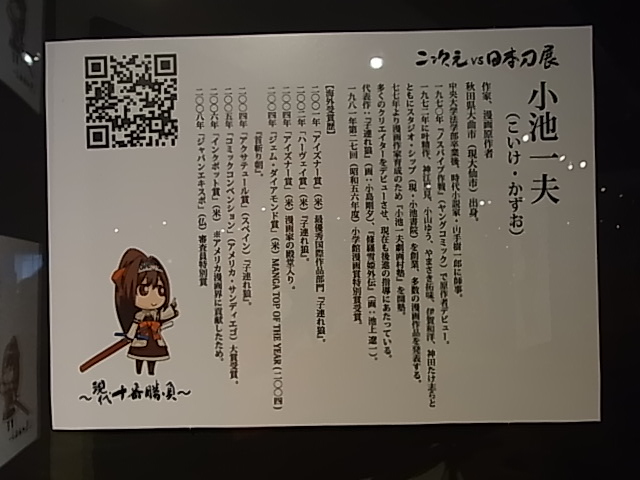
My pleasure, Lance. Here he is giving his speech on Wednesday, and Tosho Mikami is behind the desk on the right. http://www.sanyo.oni.co.jp/news_s/news/ ... 0721420364
-
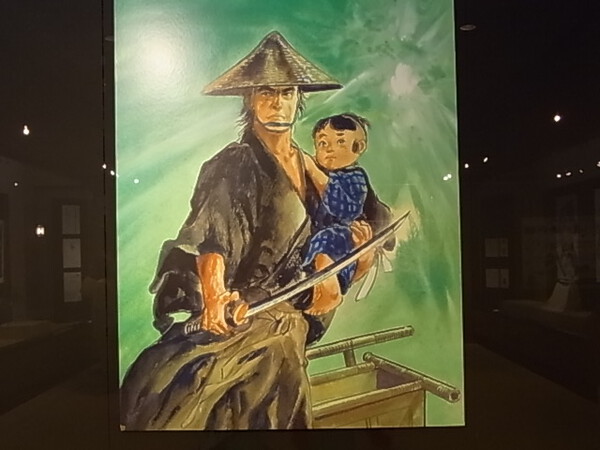
And then some smaller shots... :|
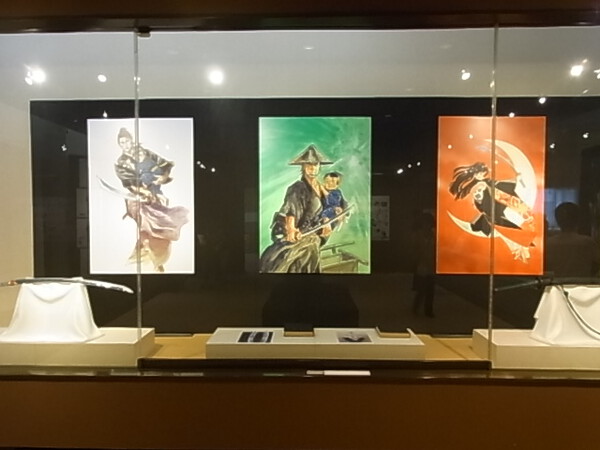
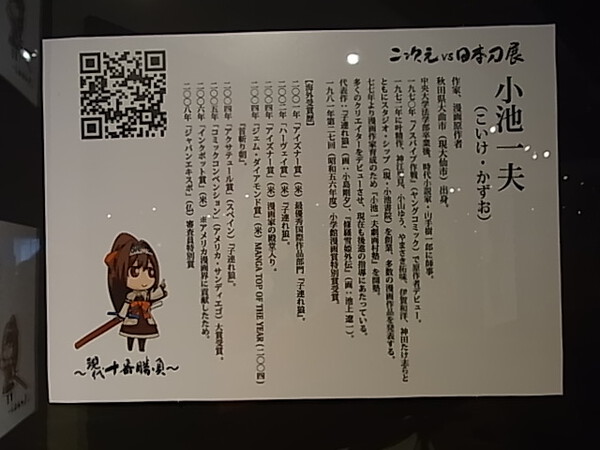
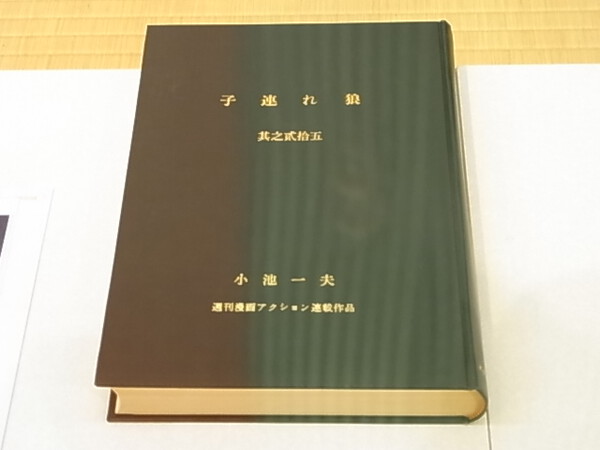
-
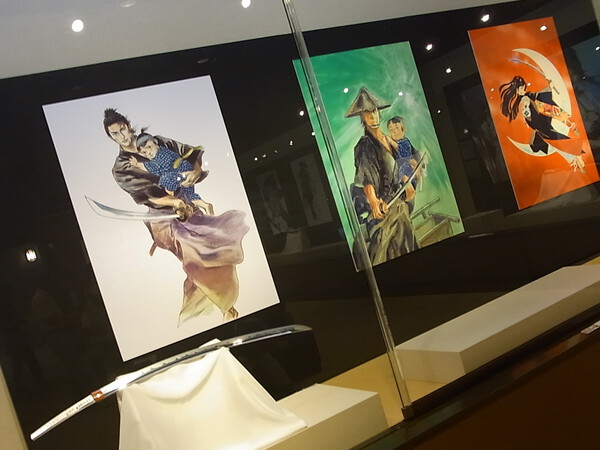
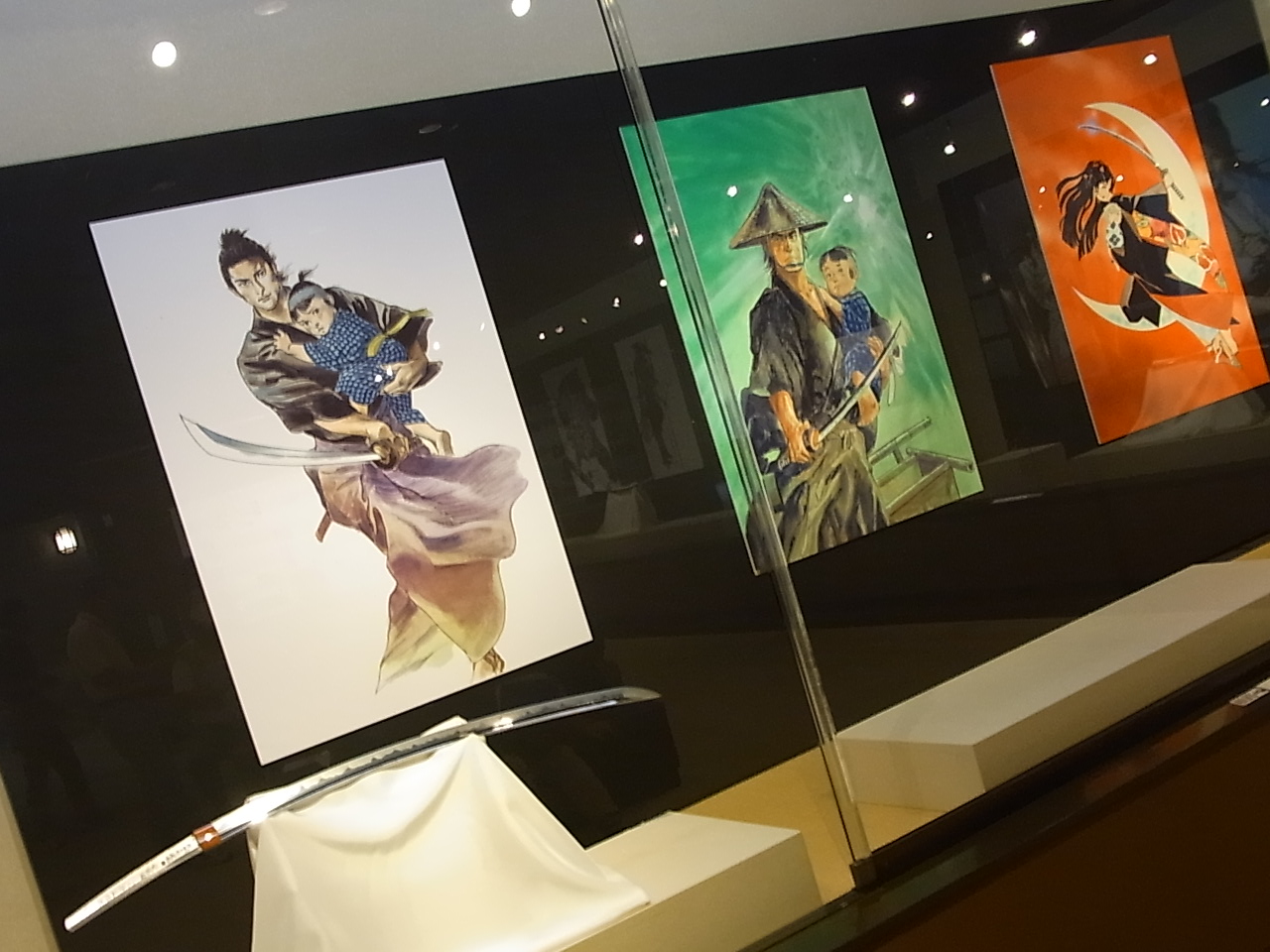
Three artists, one sword. In the camera I can find one bigger shot, Lance, taken before his book was placed in there... He used to write and have the illustrations done for him, so his series was always a cooperative work.