Bugyotsuji
-
Posts
14,687 -
Joined
-
Last visited
-
Days Won
298
Content Type
Profiles
Forums
Events
Store
Downloads
Gallery
Everything posted by Bugyotsuji
-
Edo Period Corner Part II
Bugyotsuji replied to estcrh's topic in General Nihonto Related Discussion
Good old feel to it. Interesting to see the two materials working together, ie brass dish on an iron stand. Someone recently handed me an old booklet written in pre-war Kanji and katakana, telling the known story of how he fought for Amako/Amago against Mohri, and witness accounts of how he died at the river crossing in Takahashi.. -
If it's translation you need help with, it mentions only rough physical characteristics, ie Wakizashi, length, sori, number of mekugi holes, Mumei and gives a date the paper was issued by the local regional Ministry of Education offices. On these registration papers you will not get mention of any era or anything artistic or historical.
-
Edo Period Corner Part II
Bugyotsuji replied to estcrh's topic in General Nihonto Related Discussion
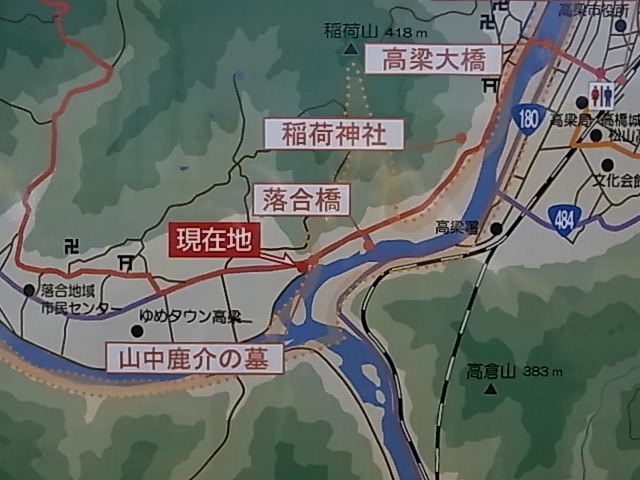
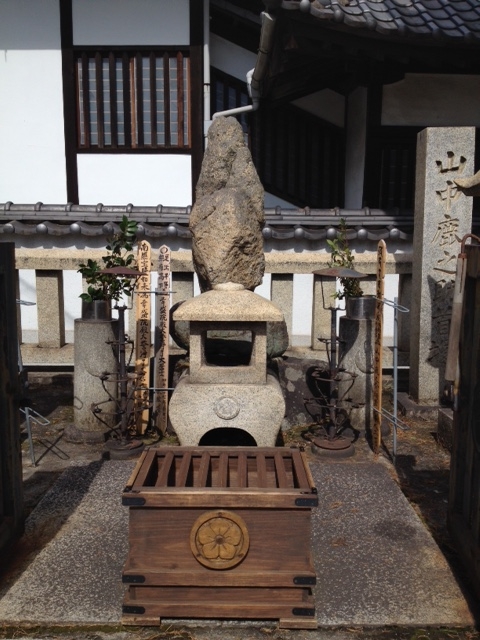
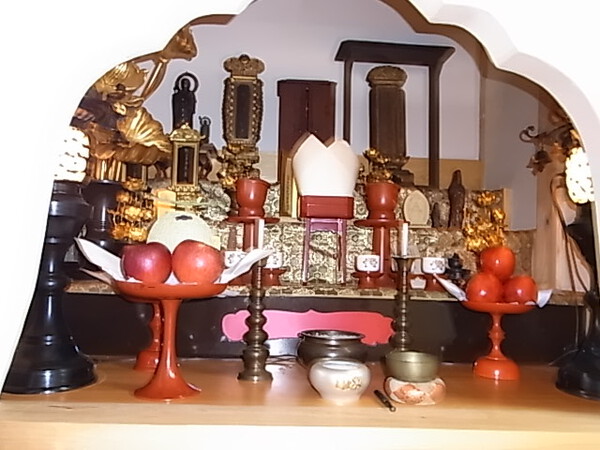
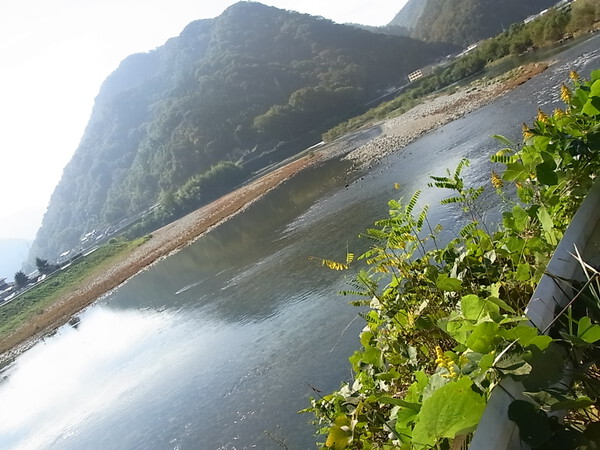
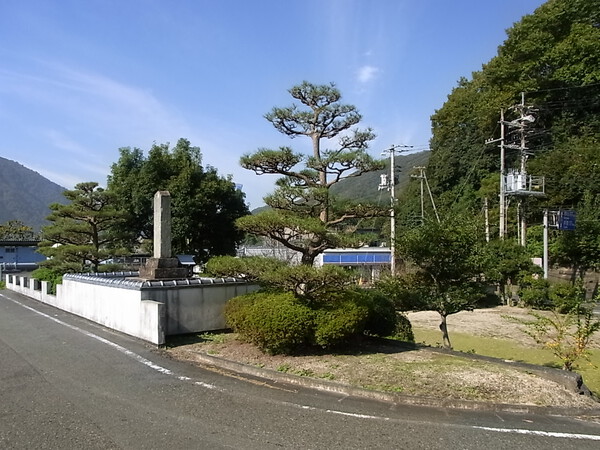
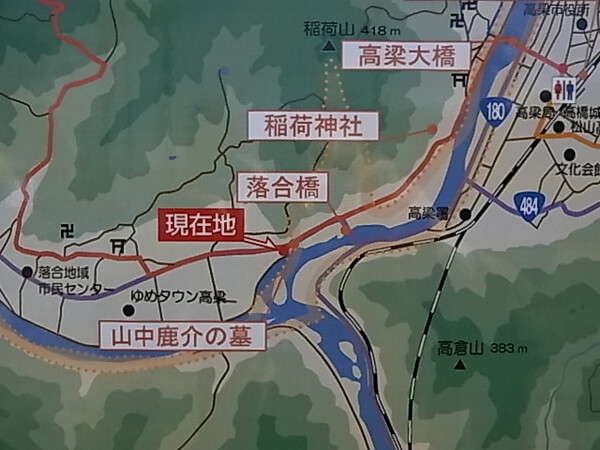
This place, photo 1, is where his physical body is interred. His body's grave (Haka 墓). Photo 2. The little alcove behind the altar in the temple contains a standing gold-topped name plaque top left. Here (in the two middle links between photos 2 & 5) are the river crossing, and the standing stone on the built-up modern floodbank, to mark where the sandbank once was in the middle of the river where his head was cut off and body left. In the garden here, the people of Takahashi hold their Bon-odori in the summer, somehow linked to the old event. Oh, and photo 5, a map of the spot where he died, marked in red box, white arrow. (The bottom white box with pink arrow says Yamanaka Shikanosuke no Haka 墓 (grave) is here, but this is incorrect. At that spot in the public garden is only a memorial 碑 'Hi' to mark the spot, (linked pic 2) not his grave/tomb which is further along and up the hill a bit, ie photo 1.)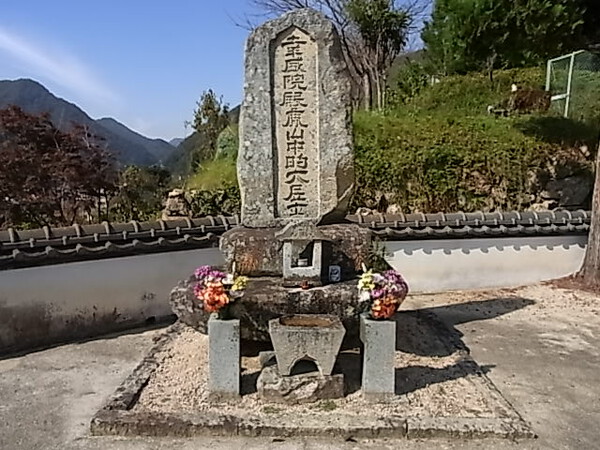
-
Edo Period Corner Part II
Bugyotsuji replied to estcrh's topic in General Nihonto Related Discussion
Where are the new pics? Henk-Jan: "When you go up to the place his body apparently rests please take photos !" Finally managed to visit Bitchu Matsuyama Castle town, (Takahashi Shi) today with no other agenda this time, and allowed an old local gentleman to show me around. (Well, he's in his 70's but nimble as a spring chicken.) For the story of the head see earlier posts. With my guide's instructions and finger pointing I was able to get the layout of the river and land and to see in what manner and where Yamanaka Shika-no-suke was betrayed and murdered. Anyone planning to visit needs to see: 1. the standing stone marking the spot where his head was severed, then 2. the standing stone grave where his body was wrapped in a cloth and placed in a stoneware jar and buried. Not for the general public is 3. where a wooden tablet is placed in a mausoleum behind the altar in a nearby temple for offerings of conciliatory prayers by the priest. The river follows a slightly different path today and the banks have been built out and filled in, so it is worth hearing how it originally looked and why his party had to cross there, seemingly in the wrong direction away from their first destination where Mohri Terumoto was waiting in his HQ at Bitchu Matsuyama Castle. There was no road on 'this' side ie the present-day city side of the river, so it meant crossing the river once, travelling up the other bank, and then crossing back over below the castle. The only way they could break up his party was to get them into boats, leaving him behind waiting on the bank. He was sitting on a rock by what was then the Ban-sho. -
As a gentle aside, anyone in Japan for the DTI travelling around can see a selection of swords & koshirae, (10 Kokuho, 12 Jubun and 1 Jubi) in the Fukuyama Castle Museum next to the Shinkansen Station until Dec 7th, including the Meibutsu Hyuga Masamune Tanto and the Meibutsu Bungo Masamune Tanto. (On loan from the Mitsui Kinen Bijutsukan and the Komatsu Collection)
-
Second Mekugi Ana too close to Habaki
Bugyotsuji replied to Moley's topic in General Nihonto Related Discussion
Forgive me for being obtuse, but what is the difference between photo 01 and 02? -
Honjo Masamune found!! (well almost... maybe)
Bugyotsuji replied to Adrian S's topic in General Nihonto Related Discussion
The sheets of that letter seem to be in the wrong order. (E.g. Sheet one makes more sense continuing onto sheet three, etc.) -
Edo Period Corner Part II
Bugyotsuji replied to estcrh's topic in General Nihonto Related Discussion
PS You said, "Now I need some candles." Do you have a source of 'Wa-rosoku'? Even in Japan they tend to be rare and expensive nowadays. (I suppose they could be ordered over the internet.) -
Edo Period Corner Part II
Bugyotsuji replied to estcrh's topic in General Nihonto Related Discussion
Nothing like a good book! Koban are great. Never been able to afford one of the big ones, but I do have two of the smaller Hime-koban (Princess Koban). The trouble again is that they were sold to me as genuine, but without substantiating paperwork, no-one really knows, and it costs something like 100 USD to send them to Tokyo for the pleasure of authentification. Dealers say that with paperwork they are worth around 1,000 dollars, but maybe 4-500 without. Everyone tells me not to bother. At least if yours is a repro you can rest easy. Here is a blog in Japanese with lots of photographs of the various altars, stones etc., marking where his body is buried and cared for. http://blogs.yahoo.co.jp/ikatsu2002/30112695.html Is it my imagination, or is there much more local sympathy for him where his body fell? Where his head is it, it seems they have done the decent thing, ie pray for his soul, but not a lot more. -
Edo Period Corner Part II
Bugyotsuji replied to estcrh's topic in General Nihonto Related Discussion
After he was offered the fiefdom of Suwo, he accepted and travelled West from Kozuki Castle presumably under some kind of guard. When they reached Bitchu Takahashi in present-day Okayama, they had to cross the river in a boat or in boats just south of the town at a place called Ai no Watashi 阿井の渡. At this point he was set upon under Kikkawa Motoharu's orders and his head was struck from his body. The body was left lying there on a sand spit, and the head was carried off. The priest of the local temple set up a grave for his body and the gravestone can still be seen there today, apparently. (Next on my list, this weekend if possible, as we are up there displaying various armour, guns, swords and bits in one of the main Buke-yashiki.) The death had to be confirmed by Kubi-jikken, so his head was carried to *Tomo by the sea, 鞆の浦 Tomo-no-Ura just south of Fukuyama. Beautiful fishing village, in a strategic spot where currents in the Seto Inland Sea cross. Presumably that is where Mohri Terumoto and Ashikaga Yoshiaki were waiting to confirm it. And this is where his head is buried, maybe 100 miles from his body in Takahashi. For years I have heard this story but never until recently managed to find the time while in Tomo to go and look for the marker stone, which you can see in the photograph above. In the back right on the vertical stone that Henk-Jan was reading it says: "Yamanaka Shikanosuke Kubidzuka". (*Tomo is where Miyazaki Hayao stayed when he was composing "Ponyo".) -
Edo Period Corner Part II
Bugyotsuji replied to estcrh's topic in General Nihonto Related Discussion
Yamanaka Shika-no-suke (Yukimura) wore deer antlers at the famous single-combat battle outside Gassan Toda Castle in Amako. His name Shikanosuke contains 'shika' or deer. His Mohri army challenger in single combat Shinagawa Daisen became a wolf, (changing his name to Taraki Okami-no-suke to poke fun at Yukimura) and it was said afterwards that the deer beat the wolf. The question here is what Kikkawa Motoharu did, and how Shikanosuke eventually died. What is behind this quote from your link above? Vastly outnumbered and forsaken by their allies, the Amako gave in. Katsuhisa committed suicide but Yamanaka was taken alive and was offered the grant of a small fief in the far-western provinces. Yamanaka actually accepted the fief but his old enemy Kikkawa Motoharu was taking no chances and arranged for his murder at Takahashi in Bitchu Province. A brave warrior reknowned for his skill in arms, Yamanaka is sometimes seen as a 16th Century Kusunoki Masashige in terms of his qualities of loyalty and devotion. His surrender at Kozuki tarnished his legacy slightly, but takes little away from the story of the 'samurai of the crescent moon'. See some antlers here! https://www.google.com/search?q=Yamanak ... CAcQ_AUoAg -
Edo Period Corner Part II
Bugyotsuji replied to estcrh's topic in General Nihonto Related Discussion
Henk-Jan, Yamanaka is good! Now I must apologize. I was 100 years out. 1578. -
Edo Period Corner Part II
Bugyotsuji replied to estcrh's topic in General Nihonto Related Discussion
Er.... no. :lol: Although I grant his more famous stag antlers. (Don't you sleep at night?) -
Edo Period Corner Part II
Bugyotsuji replied to estcrh's topic in General Nihonto Related Discussion
'Tis a place of pilgrimage for those in the know. The answer is there in the photograph. (Who wore deer antlers on his kabuto?) -
Edo Period Corner Part II
Bugyotsuji replied to estcrh's topic in General Nihonto Related Discussion
H-J, it is in a certain location. It started empty, perhaps, but not now. It's been full for 536 years. :| -
Edo Period Corner Part II
Bugyotsuji replied to estcrh's topic in General Nihonto Related Discussion
Each one so fine in execution and so redolent of the time and culture. Love them. Here is something quite different, and there should be enough hints buried here for clever sleuths. Something I had heard about for many years, but just last week finally saw with mine own two eyes. The story that goes with this is great.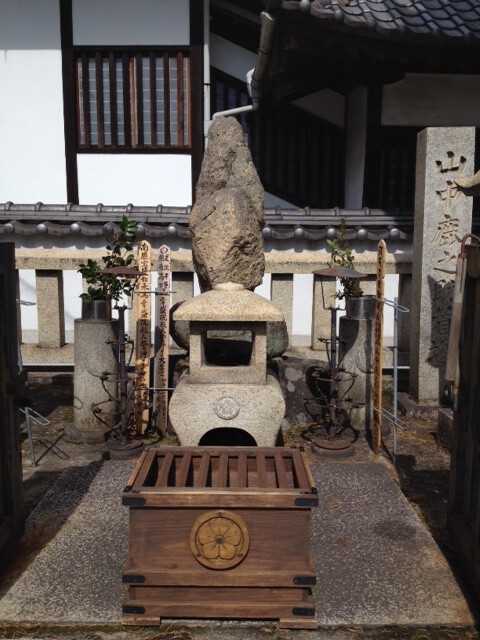
-
Kanji and Mon on Jingasa - translation help
Bugyotsuji replied to Jorgensen's topic in Translation Assistance
I found Masu-ni-Tsuki, (moon in square frame) in my Kamon books, but as yours is red, perhaps, borrowing a hint from Malcolm, it should be described as Kumiawase-masu ni Hi-no-Maru (or Nichirin?) (red sun in intertwined frame). -
TANEGASHIMA TRIGGER GUARDS
Bugyotsuji replied to watsonmil's topic in Tanegashima / Teppo / Hinawajū
May I echo Ron. (It's easier!) Hot damn! -
Not wanting to offer an opinion on that one shot, but the red rust really needs attention.
-
The registration document was originally issued in Tokyo. The bill of sale is dated Showa 46, ie 1971. 62,800 yen is more than I was getting per month (50,000) as a part-time teacher at a university in Kyoto in 1971.
-
一千 issen, well spotted John!
-
MAKING a TANEGASHIMA DOUGANE ( STOCK RING )
Bugyotsuji replied to watsonmil's topic in Tanegashima / Teppo / Hinawajū
Most envious that you are able to do this work, Ron, and thanks for your explanation as to how you did it. It shames me to admit that in the past I have had to ask someone else to do such work for me on a gun with no Mekugi or Mekugi-ana. The finished article there really looks good. -
To answer your first question, no, some of those kanji are not easy to find, or to understand. Not a beginner's piece at all.
-
Edo Period Corner Part II
Bugyotsuji replied to estcrh's topic in General Nihonto Related Discussion
Agreed. Congratulations. I love these old-style Shokudai candle-holders and Andon lamps. Note of caution for would-be buyers. There are people making these today; certainly I have seen iron ones on the market. The hotel where we stayed in Amako on the Japan Sea coast had a large selection made by local artisans, so I was able to spend some time examining them. -
Hello Sergio, Your little sticker seems to say 七〇番 ie "No.70"...