Bugyotsuji
-
Posts
14,632 -
Joined
-
Last visited
-
Days Won
292
Content Type
Profiles
Forums
Events
Store
Downloads
Gallery
Everything posted by Bugyotsuji
-
Edo Period Corner Part II
Bugyotsuji replied to estcrh's topic in General Nihonto Related Discussion
Er.... no. :lol: Although I grant his more famous stag antlers. (Don't you sleep at night?) -
Edo Period Corner Part II
Bugyotsuji replied to estcrh's topic in General Nihonto Related Discussion
'Tis a place of pilgrimage for those in the know. The answer is there in the photograph. (Who wore deer antlers on his kabuto?) -
Edo Period Corner Part II
Bugyotsuji replied to estcrh's topic in General Nihonto Related Discussion
H-J, it is in a certain location. It started empty, perhaps, but not now. It's been full for 536 years. :| -
Edo Period Corner Part II
Bugyotsuji replied to estcrh's topic in General Nihonto Related Discussion
Each one so fine in execution and so redolent of the time and culture. Love them. Here is something quite different, and there should be enough hints buried here for clever sleuths. Something I had heard about for many years, but just last week finally saw with mine own two eyes. The story that goes with this is great.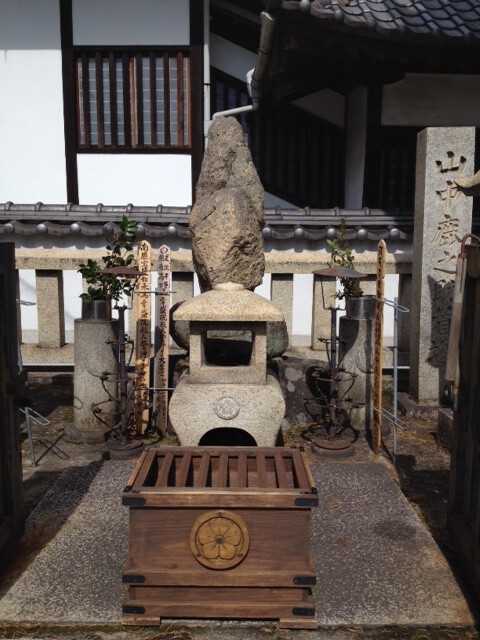
-
Kanji and Mon on Jingasa - translation help
Bugyotsuji replied to Jorgensen's topic in Translation Assistance
I found Masu-ni-Tsuki, (moon in square frame) in my Kamon books, but as yours is red, perhaps, borrowing a hint from Malcolm, it should be described as Kumiawase-masu ni Hi-no-Maru (or Nichirin?) (red sun in intertwined frame). -
TANEGASHIMA TRIGGER GUARDS
Bugyotsuji replied to watsonmil's topic in Tanegashima / Teppo / Hinawajū
May I echo Ron. (It's easier!) Hot damn! -
Not wanting to offer an opinion on that one shot, but the red rust really needs attention.
-
The registration document was originally issued in Tokyo. The bill of sale is dated Showa 46, ie 1971. 62,800 yen is more than I was getting per month (50,000) as a part-time teacher at a university in Kyoto in 1971.
-
一千 issen, well spotted John!
-
MAKING a TANEGASHIMA DOUGANE ( STOCK RING )
Bugyotsuji replied to watsonmil's topic in Tanegashima / Teppo / Hinawajū
Most envious that you are able to do this work, Ron, and thanks for your explanation as to how you did it. It shames me to admit that in the past I have had to ask someone else to do such work for me on a gun with no Mekugi or Mekugi-ana. The finished article there really looks good. -
To answer your first question, no, some of those kanji are not easy to find, or to understand. Not a beginner's piece at all.
-
Edo Period Corner Part II
Bugyotsuji replied to estcrh's topic in General Nihonto Related Discussion
Agreed. Congratulations. I love these old-style Shokudai candle-holders and Andon lamps. Note of caution for would-be buyers. There are people making these today; certainly I have seen iron ones on the market. The hotel where we stayed in Amako on the Japan Sea coast had a large selection made by local artisans, so I was able to spend some time examining them. -
Hello Sergio, Your little sticker seems to say 七〇番 ie "No.70"...
-
"Bizen (no) Kuni Masamitsu". (No 'ju') PS Masa can be written 雅 昌 正 政 etc.
-
Johnny, the chain on one that I had ran from the base of the haft. I cannot see exactly how yours would work. (?) Can you take a close-up of the lettering on the weight? From here the character looks like the unit of weight, ie Monme 匁 so perhaps there is a number above that?
-
Yes, excellent. Congratulations. Really wishing I could have made this. Many thanks for the photographs.
-
The other worry is that they will confiscate the bayonet. If you don't need it for shinsa and photos will suffice, I would suggest not bringing it to Japan. Please post clear shots of the J markings when you get the opportunity. Being a Japanese version will help the shinsa along. Well, it might make all the difference. Better to be sure in advance.
-
James, this is an explanation of the three positions that the Koshinata (branch lopper which hangs from your belt) is available in, depending on the area in Japan where it is used. In Hokkaido people want to reach up and chop off branches, so the blade opens to a wide angle, whereas in the west of Japan, particularly Shikoku, people are accustomed to chopping off branches and shrubbery below the waist, so a less open angle makes for easier chopping. There is an intermediate option too. I guess that you order the blade depending on which part of Japan you are planning to use it in. (?)
-
Apologies for the delay in replying and thanks for Brian's nudge. Heavily jet-lagged, and still recovering after helping set a new Guinness World Record on Sunday in Kyushu for the greatest number of matchlock/Hackbut/Arquebus being fired in a single broadside. As Koichi Moriyama San (aka Nobody) said about the name of this smith in the Kunitomo Kyubei line: "The last part of the mei is 恭峯. But I do not know its correct reading. Kyoho, Takamine, Tadamine, or ….??? Regardless of how the smith wanted people to read his name, we can recognize/transcribe it, and there is a smith with this name in the family line of Kyubei, one of the big smith lines at Kunitomo. They branched away at some early stage from the 国友藤太郎Kunitomo Totaro/Fujitaro smith family. The first/founding smith of the new line was simply Kunitomo Kyubei and there is a record of a dated gun of Genna 8 (1623). His successors took a further personal name, and seventh in the line is your (You and Ron's) smith. A 巻張 二匁筒 'Makibari Ni Monme zutsu' gun made by him is inscribed 九兵衛 子孫 'Kyubei Shison', and dated simply 天保 'Tempo' (1830-1844). Many of the Kyubei smiths inscribed their barrels with Kyubei Shison, ie descendant of Kyubei. The last recorded name in the line made a gun dated Ansei 2 (1856).
-
TANEGASHIMA TRIGGER GUARDS
Bugyotsuji replied to watsonmil's topic in Tanegashima / Teppo / Hinawajū
If it is as John says above: "The text says brass and that it is 20% zinc and copper. High workability, but, expensive to have refined to the purity wanted." ...then that might explain why I have been assured many a time here among collectors that the brass (shinchu) used for Tanegashima type fittings was considered in the Edo Period to be of a similar value to gold. -
Niju Makibari is double-layer (two twists), Brian. Kunitomo is the province and Kyubei is the gunsmith family name. Below that is the individual. Congratulations on the new addition. Looking forward to pictures! : (will check my books for any possible date when I get back to Japan next week)
-
Ron has found a beautifully illustrative example there of a bronze, (gunmetal ie 砲金 Hokin, for the purists) pistol barrel with iron breech screw. Tanegashima pistols were rather rare in the scheme of things, perhaps one pistol to 100 long guns, but Hokin pistols were rare among iron-barrelled pistols. If I have seen and handled fifty matchlock pistols, only three or four of those had gunmetal/bronze barrels. In the meantime I will be asking some contacts in Japan to see if anyone professes to know whether such barrels were generally forged or cast.
-
Ideas? Have you tried...
-
Koraku-en Garden in Okayama was created as an outer defence for the castle, but to the prying eyes of the authorities from Edo it looked like a simple beautiful garden. Behind many of the features in the garden, however, were hidden military purposes. One of these is a zigzag ornamental stone bridge across a shallow section of water, said to be of a stone ideal for sharpening swords. To my eye the surface looks pretty rough and bumpy, and I certainly would not contemplate sharpening any of my blades on it. There is no evidence it was ever used, but the concept, the intent, the contingency was allegedly there.
-
Gosh, that design is unusual on a tsuba.