


Bruce Pennington
-
Posts
14,364 -
Joined
-
Last visited
-
Days Won
171
Content Type
Profiles
Forums
Events
Store
Downloads
Gallery
Everything posted by Bruce Pennington
-

Translation advice - commercial
Bruce Pennington replied to Den1884's topic in Translation Assistance
Production/assembly numbers "687". Some Kanefusa blades have a small stamp above the mei. You would have to remove the tsuba/seppa set. Anything there? -
UNUSUAL DAGGER - MADE IN Japan FOR CHINA?
Bruce Pennington replied to Bazza's topic in Military Swords of Japan
@SteveM @BANGBANGSAN @Kiipu Any translation on the dagger above, or just gibberish? @John C Just to stir the pot a little, I was chatting with John about the fact that part of the 8th Army PX order for over 8,000 souvenir swords included 1,200 "daggers." No one has ever proposed what these "daggers" might have been. (I wasn't even aware of their inclusion in the order until last week). John reminded me of these things and I've started wondering. Pro: 1. Like the souvenir sword, these daggers mix army and navy; and 2. The ito wrap folds alternate correctly for a Japanese item (as opposed to the very common same-direction wrap we see on Chinese fakes); 3. I initially assumed the "daggers" referred to would be Navy dirks, BUT the whole reason for the souvenir design was to get around the 1946 order banning the shipping of "war trophies". The mix of army/navy fittings clearly took the swords out of the mil-spec military weapon category. If the PX intended to sell standard Navy Dirks they would be considered military weapons and be illegal for shipping. The daggers in this thread with mixed fittings, however could not be called War Trophies and would be legal to ship. I'm not saying I'm convinced of all this, but ..... Thoughts? -
Attention Mantetsu Owners: A Survey
Bruce Pennington replied to Bruce Pennington's topic in Military Swords of Japan
Good examples, Bryce! They both have the rounded corners in the blade hole like yours. -
Need help authenticating whether this blade is of value.
Bruce Pennington replied to VoidedAbyss's topic in Nihonto
Austin, For those of us who collect WWII gunto, they ALL hold historical value. I do not follow the smiths, but the price of a WWII gunto can be higher if the blade was made by a popular smith, like Emura or Mantetsu (ok not a "smith"), I don't know where Sukenobu falls in that category, @mecox might have a feel for that. Average WWII gunto pricing is a bit wobbly in the market right now, but they are traditionally in the $900-1,400 range. Variation mostly depends upon the condition of the gunto. You don't show the fittings, and that can affect price. To my novice - grasshoppa' eyes, I'd say this is showato (non-traditionally made) and the stamp is the Showa stamp. The blade is a nice one with a good looking hamon and the bohi is popular with some collectors. Assuming the fittings are nice, it would easily sell above the 1,000 mark. Showa comparison: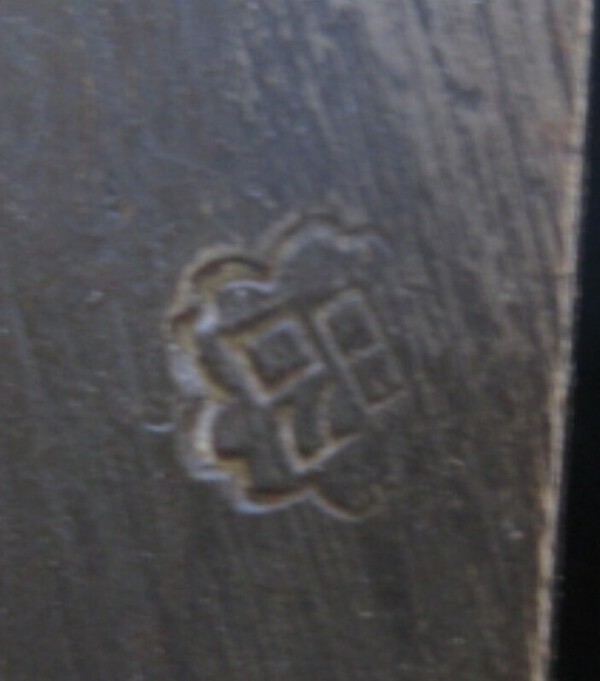
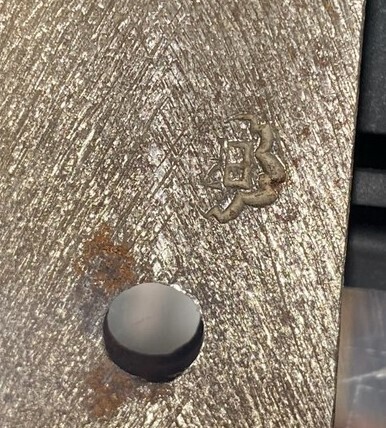
-
Attention Mantetsu Owners: A Survey
Bruce Pennington replied to Bruce Pennington's topic in Military Swords of Japan
Interesting idea, Bryce. I only have 1 and the tsuba/seppa set was missing on it when I got it. Maybe some of the guys with more than 1 like @BANGBANGSAN can check theirs to see. To your question, I've only had 2 in-hand in the past, but did compare them. A '39 and a '41, and the blades identical in shape and size. -
Nlf Gunto Discussion
Bruce Pennington replied to Bruce Pennington's topic in Military Swords of Japan
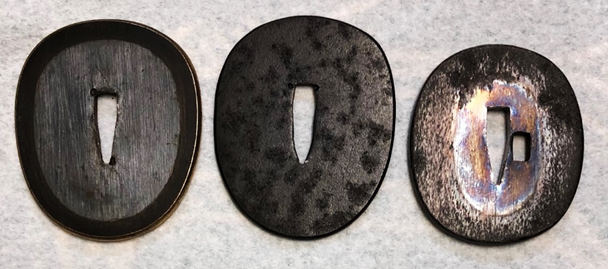
Well, You'll see in my article on these a comparison with the Naval, Army NCO, and souvenir, that the souvenir tsuba is actually different than the other two. It is larger in diameter, and thinner. Navy Souvenir Army
-
Let’s see your high end Dirks!
Bruce Pennington replied to gun addict's topic in Military Swords of Japan
I think that would depend upon how extensive Bank's collection was. @Ontario_Archaeology would be the guy to ask. He's got the book. -
Nlf Gunto Discussion
Bruce Pennington replied to Bruce Pennington's topic in Military Swords of Japan
Just saw this post, John. I've seen 2 or 3 like this with no gold gilding. Everything else is souvenir standard - army metal fittings on navy black saya, black fabric same' under icky greenish ito. I don't know how they wound up without gilding, but it's clearly a souvenir. -
Ed, That's an aluminum saya, and while not rare, they aren't that common either. Quite normal to see the paint coming off. I don't personally know of someone who restores saya. You see them coming out of Japan fully restored, but I don't know who would do that in the States. I tried my hand at it on an NCO saya, and I'm not happy with how it looks. Tough to get a legit color for WWII Japan, and it looks too new. I'd personally leave it as it is, as it's all original, showing the life of the gunto.
-
Hope you haven't bought it yet, Mihai. Check Ohmura's site for lots of pictures of real ones: About a military swords (Guntō) (ohmura-study.net) I don't know the European market, but in the US, officer swords range from $900 - 1,400 USD. Swords with to can go quality nihonto can go much higher.
-
Interesting design, thanks Neil! Solves the problem by keeping the flap open & closed.
-
Neil, or anyone who owns one of these - Are these latches on a spring? Hard to tell from the photos. They appear to stay open when raised, but they must have a spring to hold them closed or they'd flap about with the blade out. If on a spring, how do you avoid the flap from rubbing against the blade as it is withdrawn?
-
Mickie, Welcome to NMB! We have a growing group of Colorado collectors! A couple in C-Springs and a couple in Denver. When the pics come in, I'd enjoy seeing the rest of the fittings as well. Nice looking sword. Old, family swords were usually refitted, like yours, with a military handle (tsuka) and handguard (tsuba), then leather cover over either the original wooden scabbard (saya) or a new one. The style is referred to as a Type 98 officer sword (gunto).
-
Trapdoor Gunto info please?
Bruce Pennington replied to Jason the Danish Greek's topic in Military Swords of Japan
I still own the bad fake I bought in the beginning! At least yours is made of some legit Japanese sword parts. -
Nlf Gunto Discussion
Bruce Pennington replied to Bruce Pennington's topic in Military Swords of Japan
Well, the document said "daggers", so we don't know if they were tanto or dirks. Until this week, I personally wasn't even aware of the fact. I'd brushed right past the point when researching the souvenir sword. So, short answer is - no. Well, I hope we gave you the answers you were searching for. Like we said earlier, I think there was a good chance these were being sold at that Korean PX you found. -
I can't read the tag, nor Trystan's post. Here's a google translation: : Shigezaburo Akamatsu
-
Samurai Fight with Gunto Type94
Bruce Pennington replied to vajo's topic in Military Swords of Japan
Ha! Maybe he had been watching the same video! -
Nlf Gunto Discussion
Bruce Pennington replied to Bruce Pennington's topic in Military Swords of Japan
Thanks to Doug - @jeep44 - for the Leatherneck Magazine article. I'm posting the pages below. It did not help us with the souvenir question. It does say they were making "fine steel blades." Like Doug said, the forge got started up as "Marines...brought in their souvenir blades for repair jobs." The rest of the article discusses the story of NCOs getting custom uniform swords made for half the price of one bought back home, but these were US military NCO swords. Now, who knows how technically savvy the author was in using the term "souvenir." Was he lumping all war trophies under that label, like most civilians would? Or did he actually know the difference and was referring to the souvenirs in question? I would find it hard to believe that guys were bringing in brand new souvenir blades, unless they were playing with them, whacking things with them and causing damage, which is certainly possible. Even so, it doesn't tell us who made the souvenir in the first place. Still a good read:
.thumb.jpg.7362cefa17ca03f83c1f97b9310f504f.jpg)
.thumb.jpg.4d9b981e5114b89e38d523e86955793d.jpg)
.thumb.jpg.cbcbe2492c98841995f5273ef4161459.jpg)
.thumb.jpg.348b609c87f82a54d005f11e2ca63aa6.jpg)
.thumb.jpg.1dd7a96225fedfaad5c2798f32b069e8.jpg)
-
Nlf Gunto Discussion
Bruce Pennington replied to Bruce Pennington's topic in Military Swords of Japan
Yes thanks: bwp1977ATgmailDOTcom -
Nlf Gunto Discussion
Bruce Pennington replied to Bruce Pennington's topic in Military Swords of Japan
Thanks! Yeah, from the snippet of article in the previous post, it sounded like they were making current US military swords for the G.I.s. Still, we know they were selling the souvenir, so it would help if we found some sort of mention of it. -
Nlf Gunto Discussion
Bruce Pennington replied to Bruce Pennington's topic in Military Swords of Japan
Good catch John! I've added a correction on my post above. -
Let’s see your high end Dirks!
Bruce Pennington replied to gun addict's topic in Military Swords of Japan
I'm curious if anyone knows who was making dirks during WWII. @Ontario_Archaeology - Is this discussed in the Banks dirk book? Anyone else have info on the question? Update: From Nick Komiya's article, we know Suyo Shoten did: Still like to know if we know of others. -
Nlf Gunto Discussion
Bruce Pennington replied to Bruce Pennington's topic in Military Swords of Japan
Further thoughts: After re-reading the Army documents, Tenshozan made 8, 747 souvenir swords and 1,200 "daggers" (dirks?). 1946-'55 is 10 years, that means they made 875 swords per year. That's pretty much the max capacity for a sword factory during the war. I wonder if they contracted some of that work out to other shops, like the Japanese Sword Shop. If not, and the 2 were both making them, that's a heck of a lot of souvenirs made and sold. I had not previously paid much attention to the "daggers" fact. Not following naval dirks, I have no knowledge of who had been making them during the war. Like swords, I suppose there were multiple makers? We have a photo of the Japanese Sword Shop making them in 1965 (might have been Suya Shoten), so I assumed they were making them during the war. But I wonder, now, if Tenshozan was making dirks during the war too. Edit: I had my head on backwards, there. The wartime production was easily 500-800 per MONTH per shop. For example, the Type 95 production was around 15,000 per month, total, and SMR was putting out 6,000 per year. Don't have the figures on memory for officer production. -
Nlf Gunto Discussion
Bruce Pennington replied to Bruce Pennington's topic in Military Swords of Japan
We need to work on this some more. The article you might be referencing is on page 2 of this thread : Posted by @jeep44, but it's dated 1955. Japan was allowed to start making real sword after, what, 1950? Doug Price - if you are reading this, can we get the full article? I'd like to know if they are referring to the souvenir or are they talking about the shop making real swords again. We know from a couple sources that soldiers were, in fact, buying the souvenir from the Japanese Sword Shop, in addition to the Army PX. If the shop were making them, along with Tenshozan, it might explain the blades we see without the Toyokawa anchor stamp. When Doug posted that originally, I missed the discussion that the shop was again making swords. I had assumed they were getting the souvenirs wholesale from Tenshozan and selling them retail to G.I.s. But after Malcolm's post, I now see what you are saying - the shop may have been making them, too. There is no significant variation in the fittings, so if both shops were making the souvenir, they must have, both, been getting the fittings from the same source (which could have been Japanese Sword shop?). Need more info. Like to see if the '55 article specifies. -
Nlf Gunto Discussion
Bruce Pennington replied to Bruce Pennington's topic in Military Swords of Japan
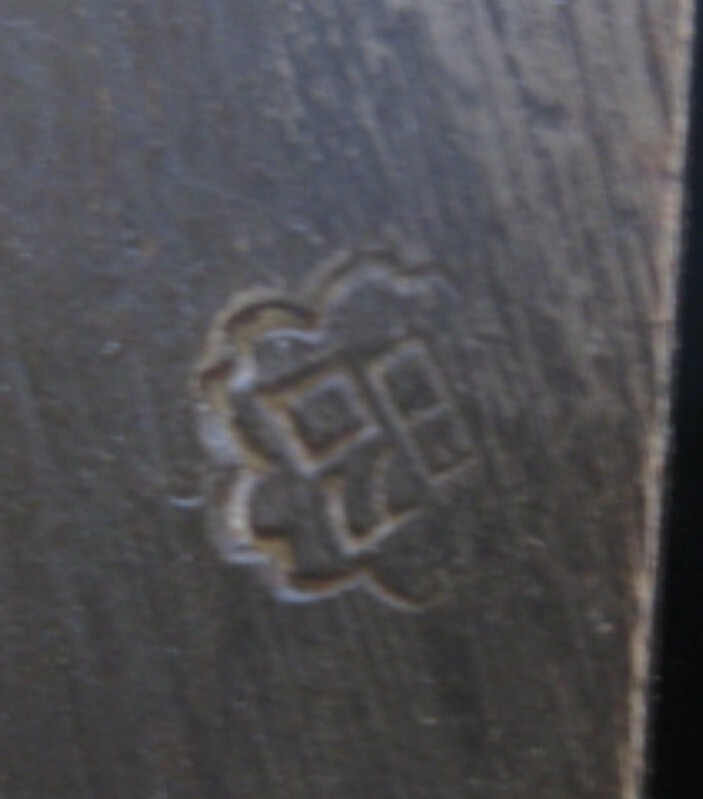
Interesting observation, John! Keep up the good work.





.jpg.8e9ca467851db0dc5d2636c84dc78406.jpg)
.jpg.1fa327ece57e5438cfd27c637c56ec1f.jpg)
.jpg.5fd9861fbf12ad564c1f07af9d14bd85.jpg)
.jpg.c4d662a267a1a81f9f5ddf599625c631.jpg)
.jpg.ab59f40fefa48f6b2521a7698f70e845.jpg)