zanilu
-
Posts
541 -
Joined
-
Last visited
-
Days Won
5
Content Type
Profiles
Forums
Events
Store
Downloads
Gallery
Everything posted by zanilu
-
Ben fatto Manuel! Complimenti.
-
Fools are easily parted from their money...
-
Described as geese (karigane). Regards Luca

-
I will be wrong for sure, not my field of study, but since I am not scared to play the fool : #1 Nishigaki #2 Akasaka #3 Owari Ready to be corrected. Luca
-

How many "double" Ategane (当金) or Ume (埋め, sometimes umegane) have you seen?
zanilu replied to Spartancrest's topic in Tosogu
This is in my collection. Papered Umetada (埋忠) by NBTHK. Dimensions 77.3 mm x 72.5 mm, thickness 2.8 mm at the seppa-dai, 7.5 mm at the mimi. All the best. Luca
-
I usually collect all the information on a school that I am interested in and at a certain point I feel the the need to put all toghter in a coherent form. From that to sharing it is a just a small step. Regards Luca
-
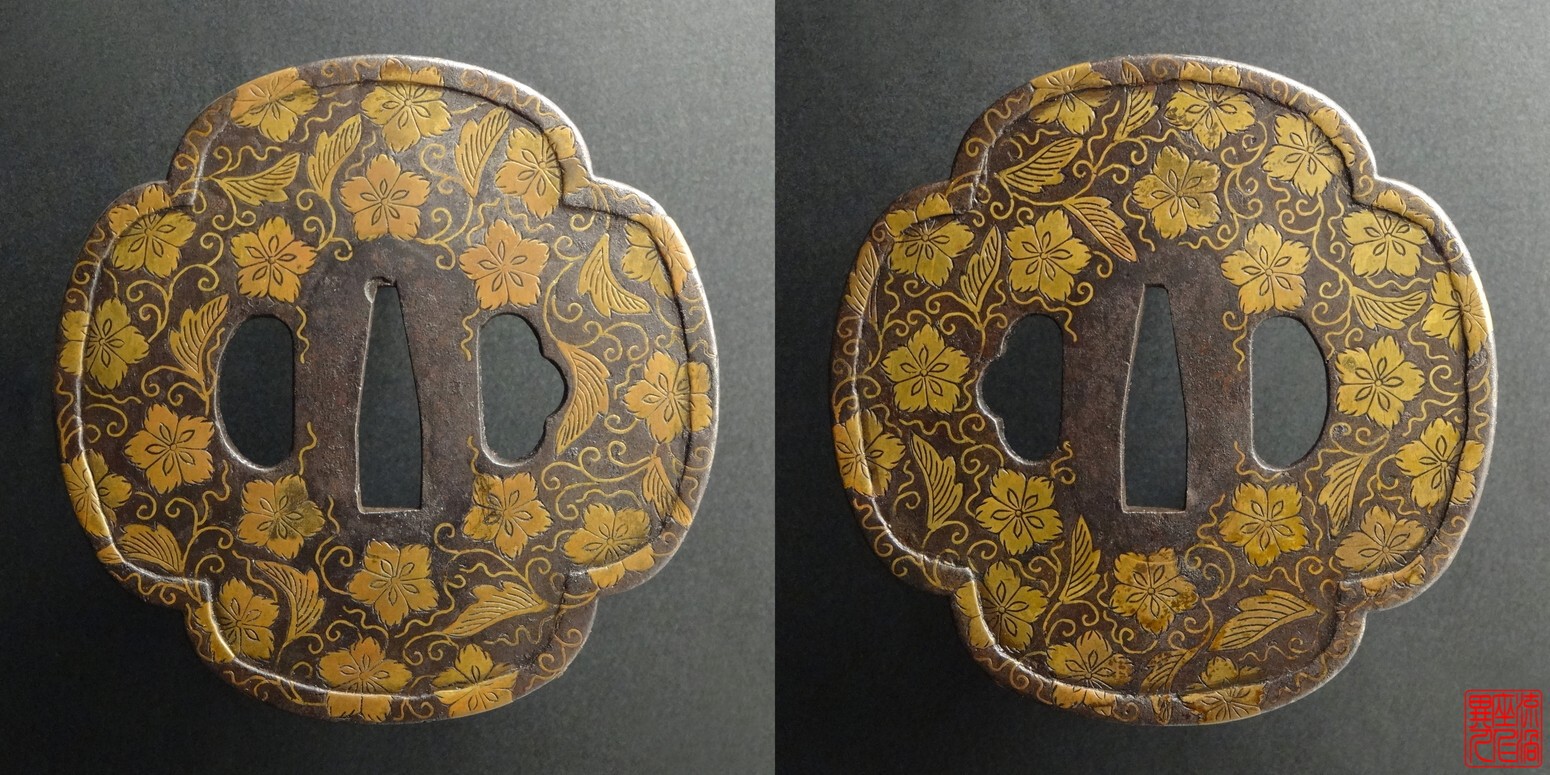
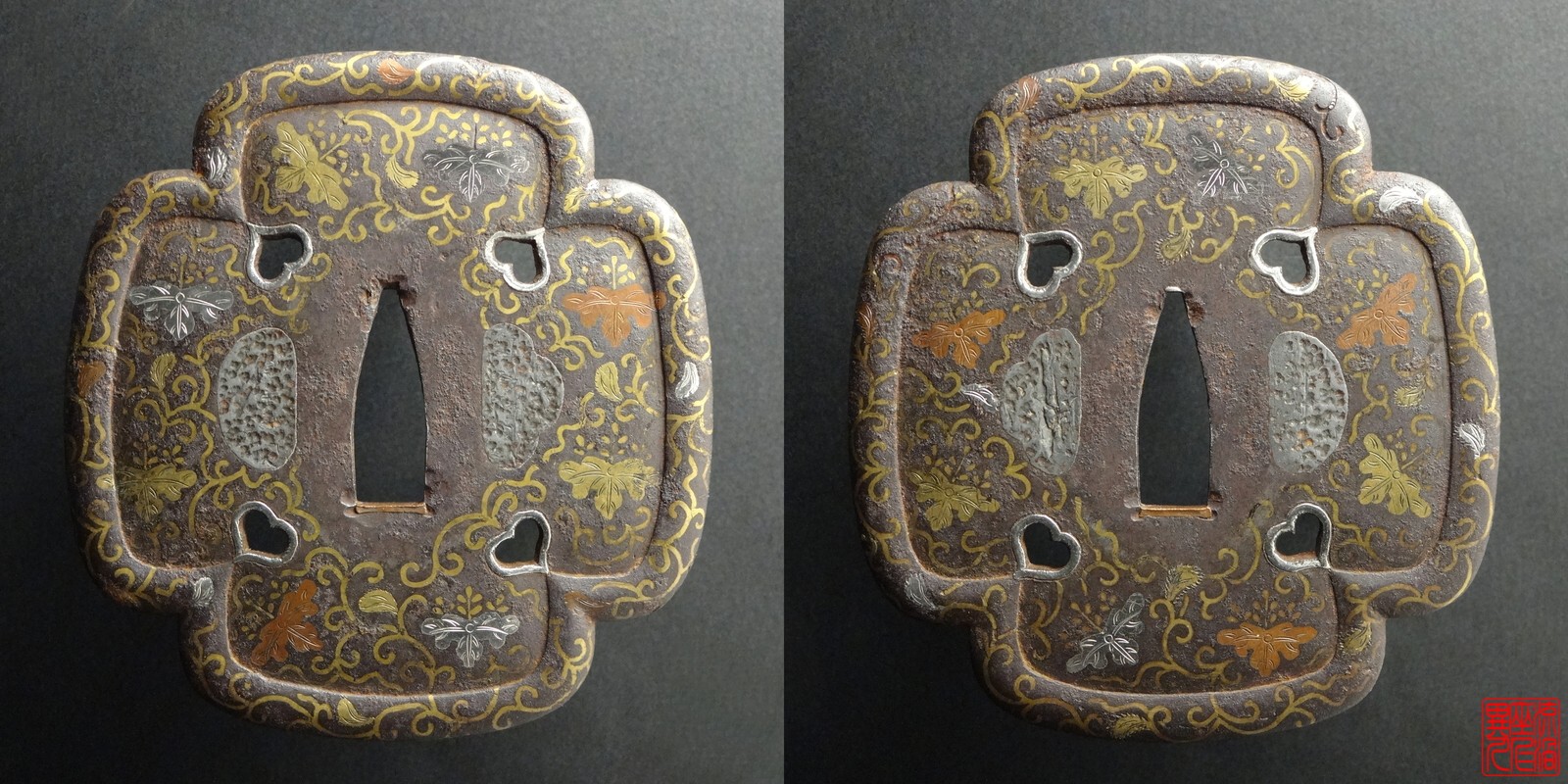
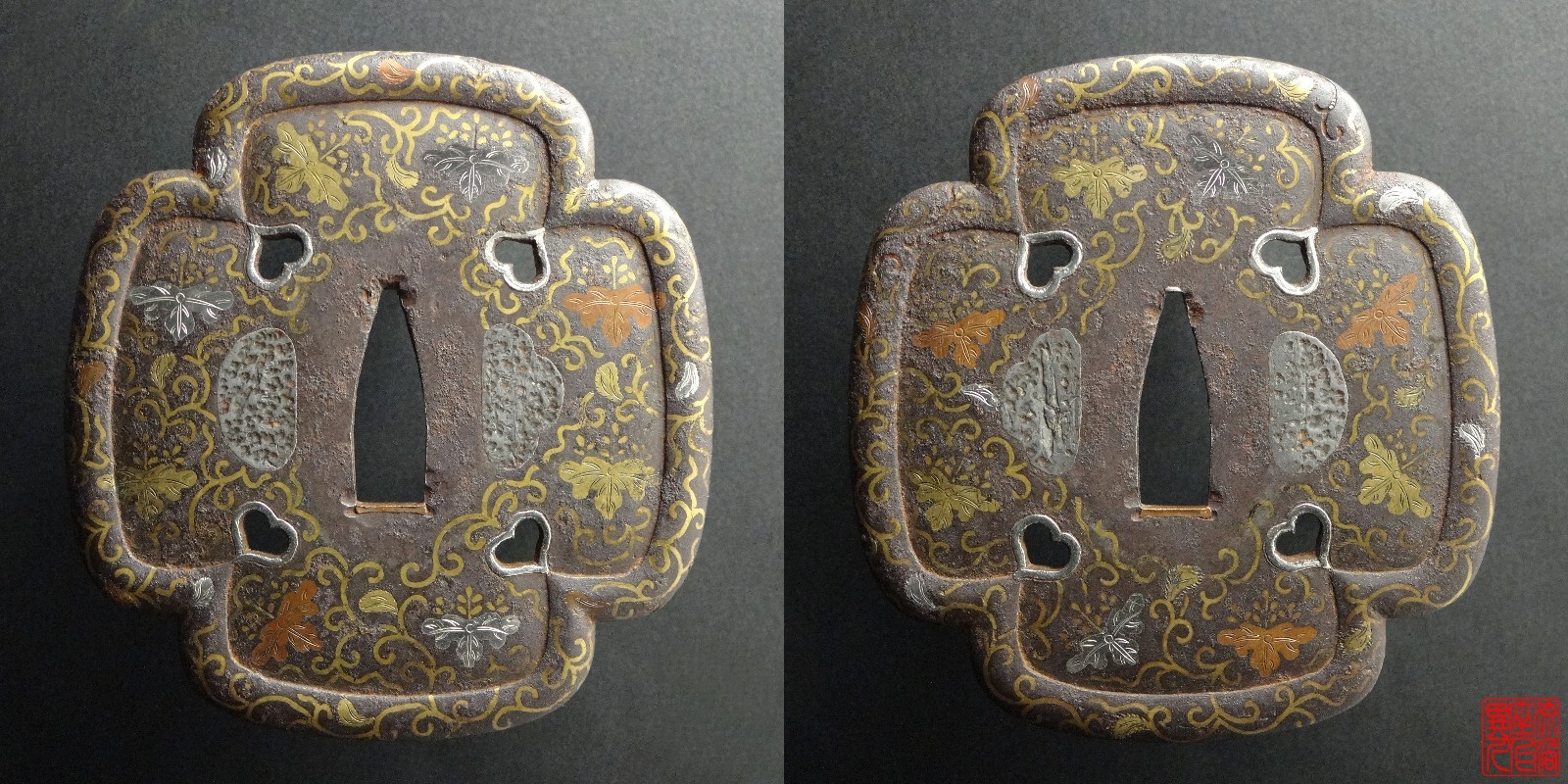
Having a particular fondness for brass-inlaid tsuba, I eventually added several pieces from the Washida school of fittings makers to my collection. This sparked my interest in learning more about the school and its production. Over time I gathered a fair amount of information and eventually decided to compile it into a single document, which you can find in the download section of the board: https://www.militaria.co.za/nmb/files/file/210-the-shōnai-washida-school/ I hope you enjoy reading it as much as I enjoyed putting it together. As I mentioned, given my particular weakness for brass inlay, the document is somewhat biased toward the work of Washida Mitsunaka! Just as an example of the Washida production here are the pieces from this school (or supposed to be from this school) in my collection: NBTHK Hozon to Washida. Dimensions 85.4 mm x 85.3 mm, thickness 3.9 at seppa dai, 4.2 at mimi. NBTHK Hozon to Washida. Dimensions 85.3mm x 79.2 mm, thickness 3.6 at seppa dai, 4.0 at mimi. Identical to tsuba attributed by NBTHK to Washida. Dimensions 87.2 mm x 82.2 mm, thickness 3.7 at seppa dai, 4.0 at mimi. Signed in kinzogan mei Kyozan Mitsunaka with Kao. Dimensions 87.2 mm x 77.6 mm, thickness 2.6 at seppa dai, 4.2 at mimi. Dimensions 83.5 mm x 78.6 mm, thickness 3.0 at seppa dai, 4.1 at mimi. Dimensions: 96.9 mm x 13.9 mm, thickness 4.7 mm. REgards Luca

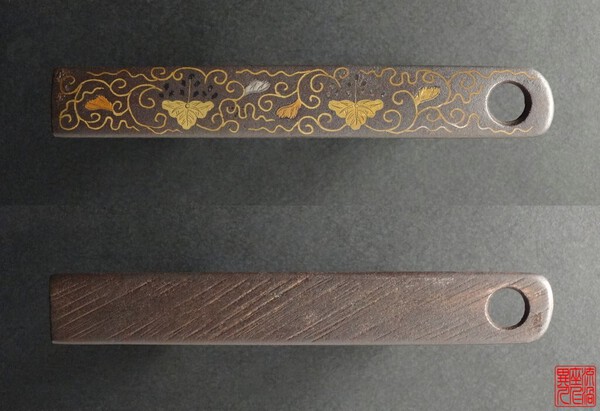

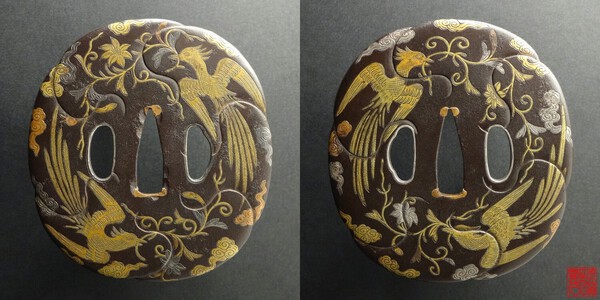

- 8 replies
-
- 19
-

-

-

-
WONDERFUL
-
Hi. I will not say. It was several years ago and highly dependent on the sword conditions so it is better if you contact Massimo directly. Regards Luca
-
Massimo Rossi polished my Yoshindo Yoshihara katana and he did an astonishing work! Regards Luca
-
To avoid problems with humidity I keep inside the box a small bag of silica gel that is changed periodically. Also in some cases I add the lip you mention but mainly to avoid loose inlay to snag into the fabric. But put in the perspective of providing ventilation it make sense, I have always thought them to be there to avoid friction between the tsuba and the fabric... I will add them routinely now. It is relatively easy to make them and since I am already removing the central support that goes in the nakago-ana to replace the usually present nails with wood pegs it will not be a great inconvenience. Regards Luca
-
No I am not. And that's my opinion.
-
Why you always use offense and slandering?
-
Tsuba are art objects and old artifact that deserve to be treated accordingly. Restoration shall be done properly with proper techniques and tools. Dealing with hundreds of years old artifacts put us in the position not of owner but of keeper. We have the responsibility of taking care of objects that will outlive us to pass them down to future generation. This sentence of yours, Dan, shows that you have completely misunderstood the heart of this hobby! I suggest you to read this thread: What it is said in this post for swords also applies to tosogu. You can call me a snob now, frankly speaking I do not care! Luca
-
-
"Tsuba: The R. E. Haynes Study Collection" Auction
zanilu replied to Promo's topic in Auctions and Online Sales or Sellers
According to Czerny website: Czerny's catalogues are available to everyone requests them free of charge (while stocks last). You pay only the shipping. Regards Luca -
"Tsuba: The R. E. Haynes Study Collection" Auction
zanilu replied to Promo's topic in Auctions and Online Sales or Sellers
Ordered a copy on the 22nd, arrived today. Regards Luca -
That was my first thought too when I saw the pictures on Buyee. But looking at the signature I have seen it was signed Kyozan Mistunaka [Kao] in kinzogan. Mitsunaka is one of my favorite artist. Washida Mistunaka tsuba are rarely seen on the market signed and with peonies and karakusa decoration. Usually Mitsunaka (signed or from his workshop) are usually characterized by very high quality iron and the kin zogan is usually also of high quality rarely missing some pieces. From the pictures, except for the rust that looked superficial, the iron looked in good shape and the kin zogan didn't show any missing pieces. Thus I decided to take the risk. In the end I was just lucky. As I was lucky to find Manuel that made such a wonderful restoration work. Regards Luca
-
Hi Thomas. It could definetly be Washida (probaly from the workshop of the 4th generation Mitsunaka) even though they usually come with a silver fukurin in the inome sukashi. Here is one from my collection It is identical to two NBTHK papered one that are attributed to Washida and Washida den. It could also be Kaga Yoshiro. The iron looks like typical Washida. If you could zoom on the the arabesque leaves there are some differences on how they are inlayed between Washida and Yoshiro. Take a look at Section A.6 of this pdf file: Here is another one from my collection of uncertain attribution for which I am leaning toward Yoshiro rather than Washida due to the inlay used in the leaves. I hope it helps Regards Luca


-
The same is true for me. My copy is signed and I bought both the book and the translation as a package. When I inquired, on the auction house website, about the book they wrote me back citing upfront the existence of the translation and provided a nice discount on the package. By the way I am just now sitting on the sofa with the translation and the book on my lap. Luca
-
What I wanted to say is that the tecqniques where already there pre 1700, how the Masampri in question, acquired them is the mystery. A mystery that will probably remain unsolved. This is what I tried to say but my English is not up to the task and the result was quite convoluted... Regards Luca
-
Me too Curran. Looking at it I would have guessed mid to late Edo, but the style of the inaly reminds me of some Kaga Zogan works. The main lines of artist doing that kind of work in Kaga domain, i.e. the Tsuji and Katsuji lines, first generations where active just before 1700 (https://www.militaria.co.za/nmb/applications/core/interface/file/attachment.php?id=153423) so... Can I suggest to look for referenced signature of the artist for comparison? Just to dismiss the gimei hypothesis. Or look for referenced works from him to see if this tsuba has similarities with it? Very nice piece anyway. Regards Luca
-
It is indeed a lovely set! Congratulation! Regards Luca
-
Painted collection number comes in handy for provenance.
zanilu replied to Spartancrest's topic in Tosogu
Thank you for the info @Curranit is greatly appreciated! Luca