zanilu
-
Posts
542 -
Joined
-
Last visited
-
Days Won
5
Content Type
Profiles
Forums
Events
Store
Downloads
Gallery
Everything posted by zanilu
-
-
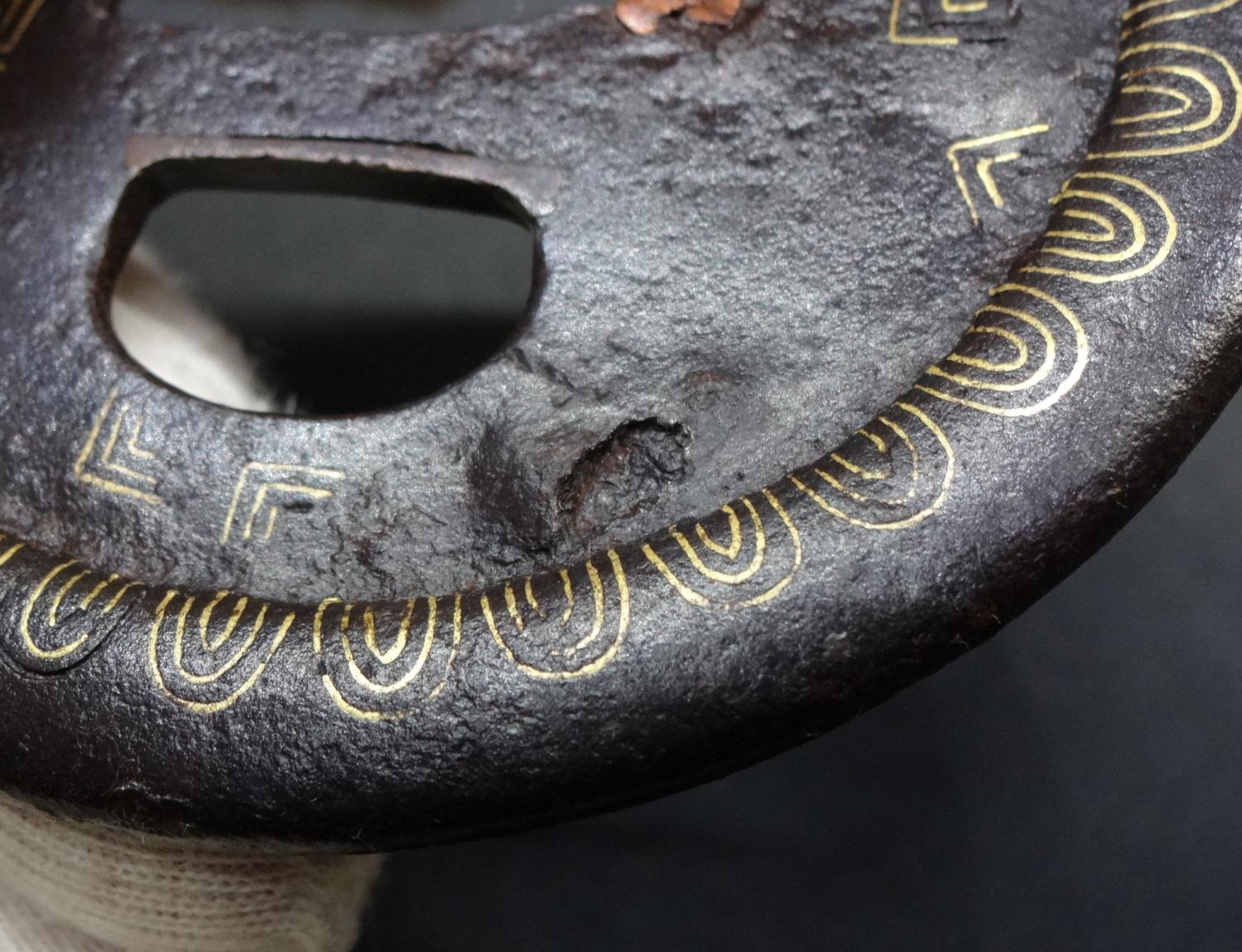
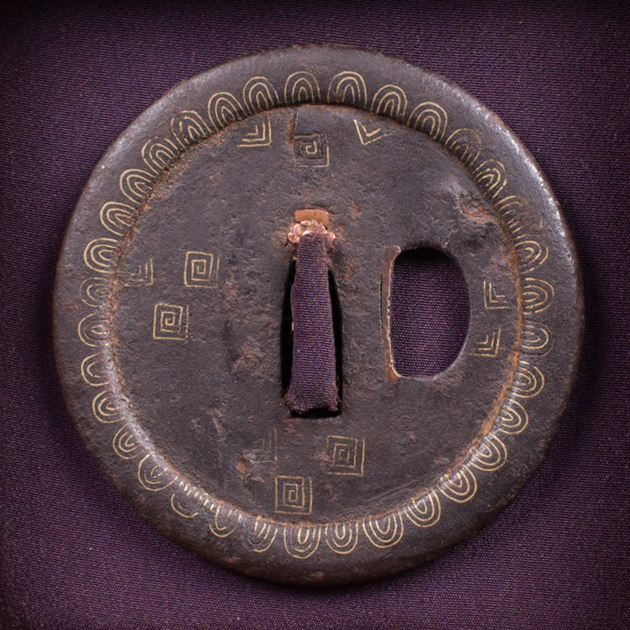
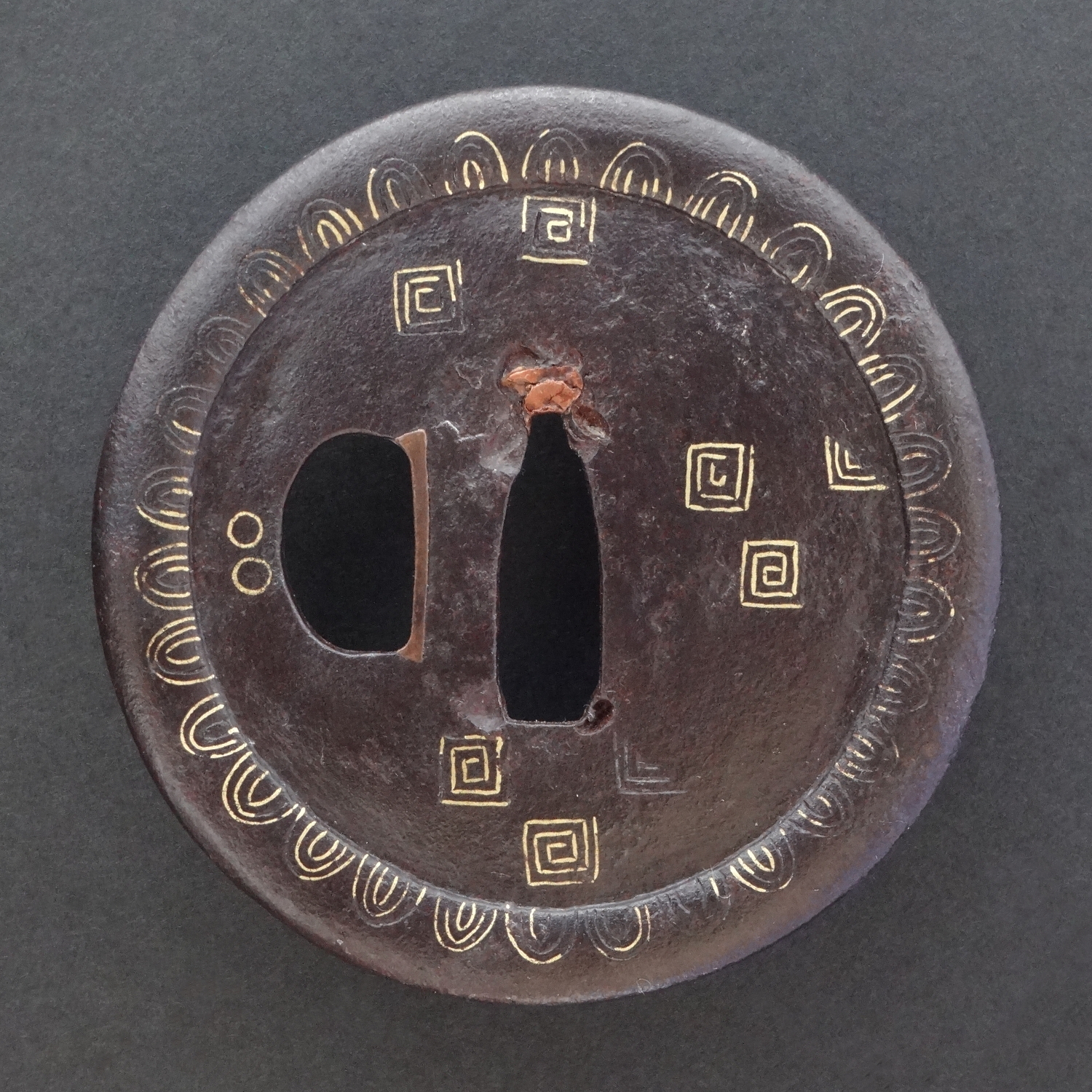
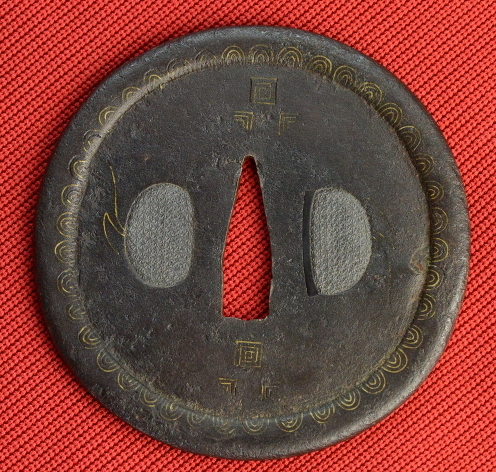
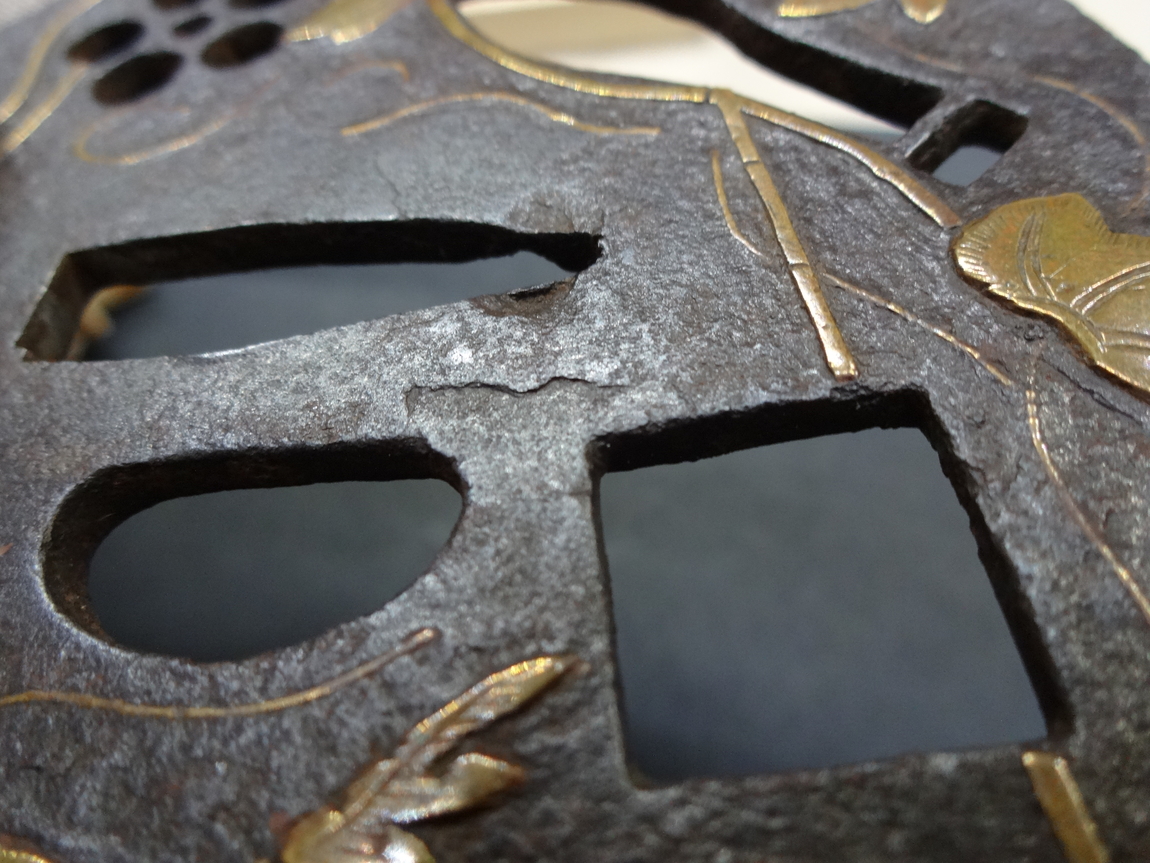
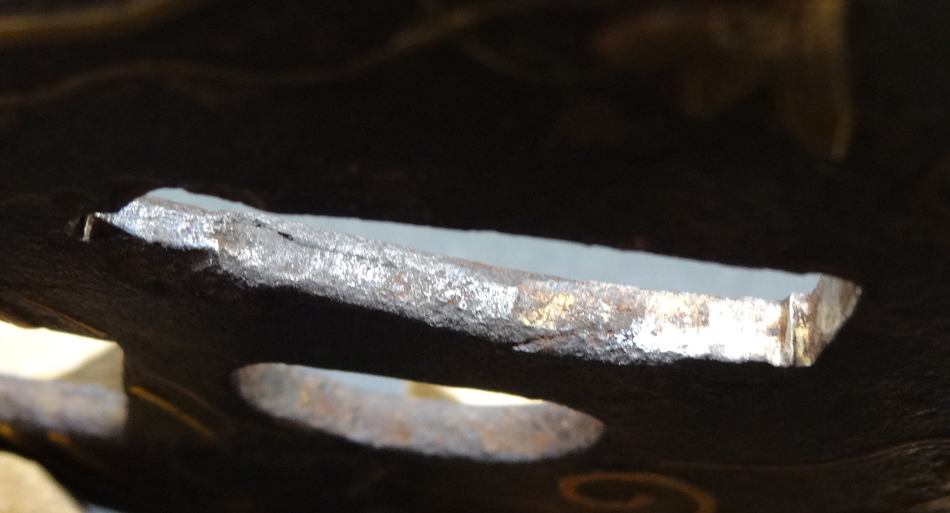
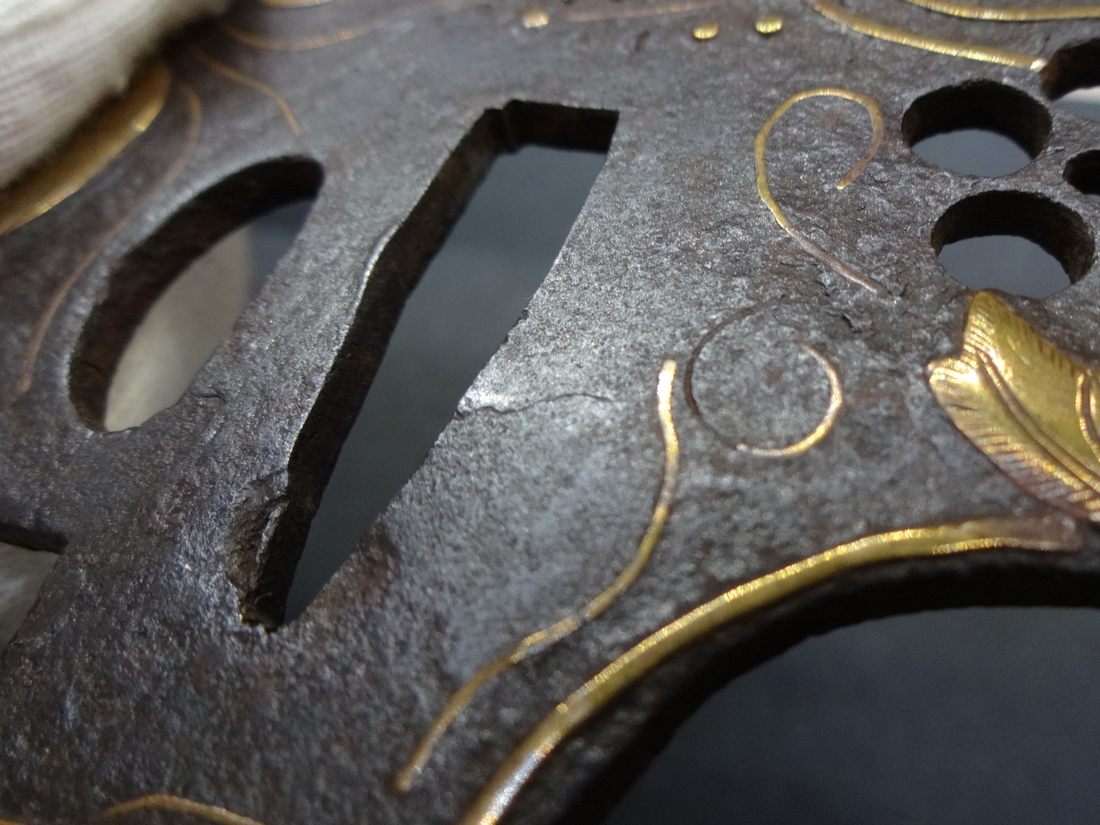
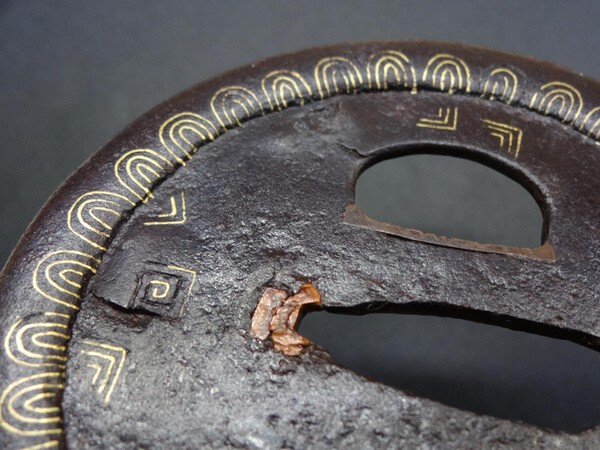
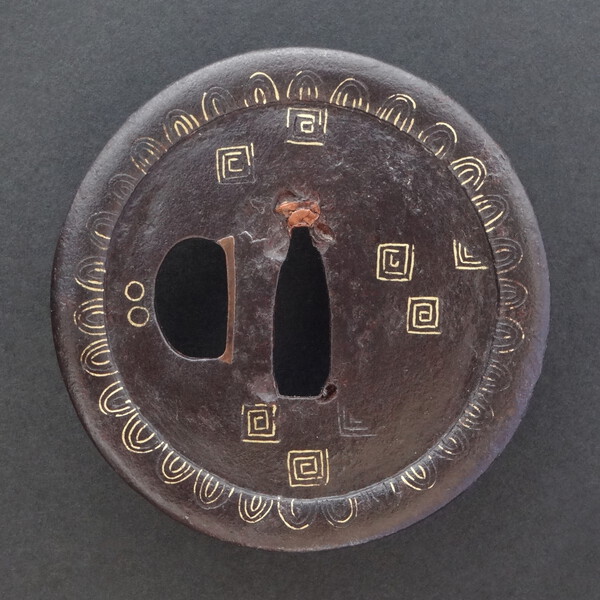
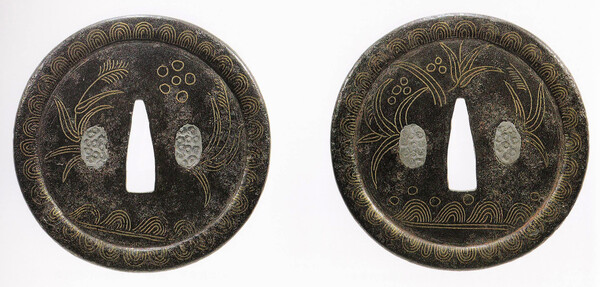
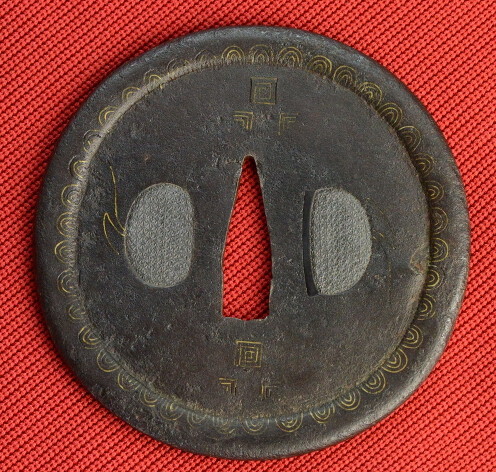
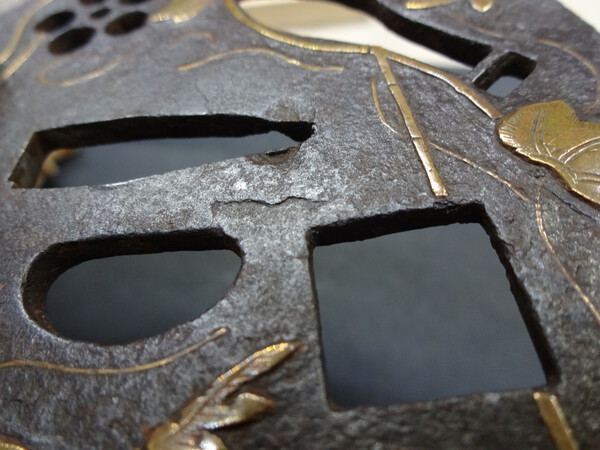
This tsuba shares with both references an almost identical design of chrysantemum petals on the mimi and with the second one the same stilyzed lightling design on the body (raimon). On the hira-ji of the omote side on the left of the kogai hitsu-ana there are two small inlayed circles On the reference of Otani the same kind of inaly is also present close to the wave thus it could be probaly interpreted as droplet. In analogy the two circles of FT-0082 could be inffered to be rain drops given the presence of the stylized lightnings of the raimon. As for the two references the hira-ji of this tsuba shows also a surface finish looks like ishime-ji to me (but I defer to your judgment on this). Close to the top part of the nakago-ana, on the omote, and on the edge of the kogai hitsu-ana, on the ura side, there seems to be traces of layering as consequence of folding and fire welding of the steel. The patina is uniform and in very good conditions except of a few spots on the mimi and on the hira-ji and have a dark brown/chocolate color with red undertones when seen under sun light. On the ura side hira-ji there are three damaged areas (or so they looked to me initially) that seems, at a first cursory analisys, to have been subject to de-layering of the iron as consequence of corrosion or damages due to blows. On this particular feature I would like to have the opinion of you NMB members, at first I mistook these regions as damages but on a deeper analysis I have start to wonder wether these can be an intentional part of the decoration. The extent of the "damage" expecially the one above of the nakago-ana tip and the one close to the kogai hitsu-ana is so great that the surface of the "burst" part protrude from the surface of the iron by an extend comparable to the thickness of the plate. Given the extent of the protrusion one would have expected to find a cavity under the protruding region that is not there. There is no cavity just iron with a patina that is identical in color and texture to the rest of the hira-ji. Damage from blows seems also unlikely in view of level of deformation of the metal on the ura and the absence of any trace of visible damage in corresponding spots on the omote side. Could it be that those "damages" are rather made on pourpose as part of the ishime-ji desing of the hira-ji? However if part of the desing why have them only to the ura side of the tsuba, visible only when the sword was drawn? I am open and grateful, to any comment from more experienced NMB member on this puzzling, to me at least, aspect.

-
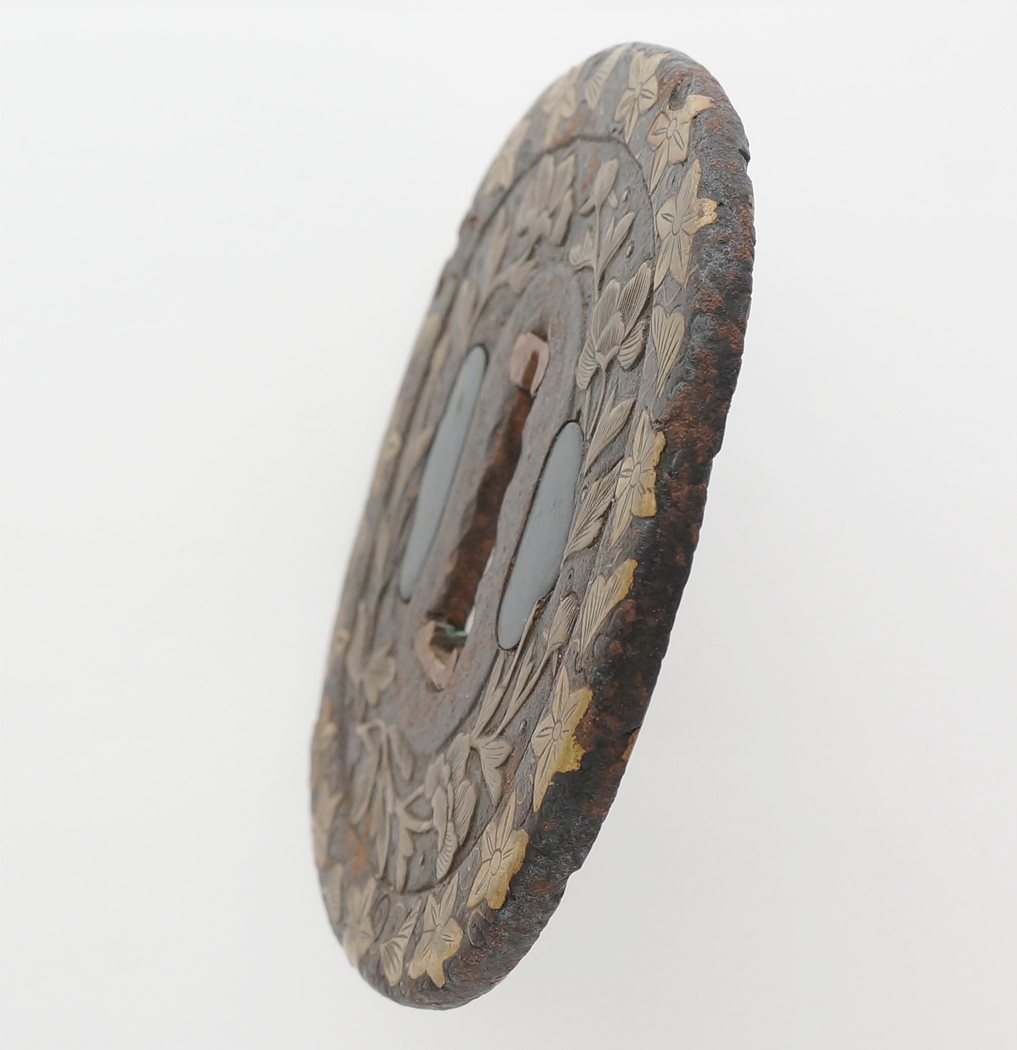
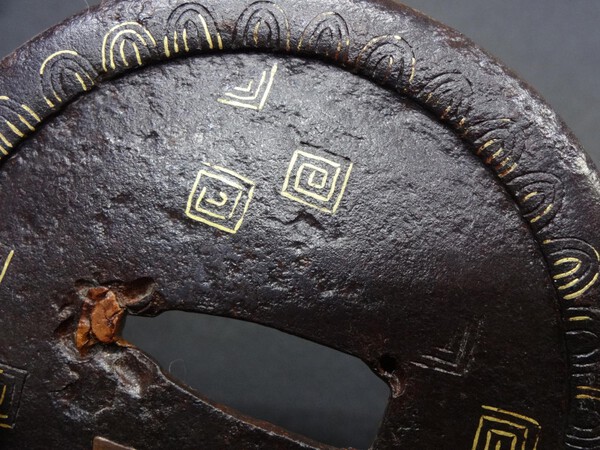
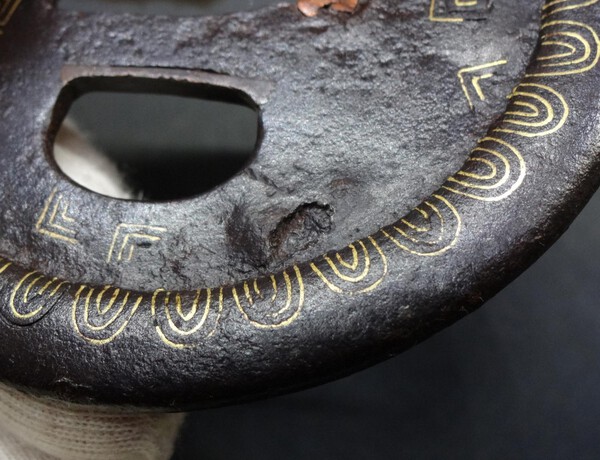
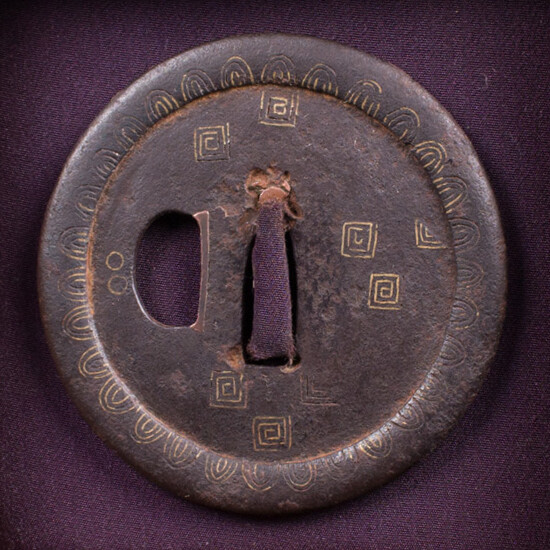
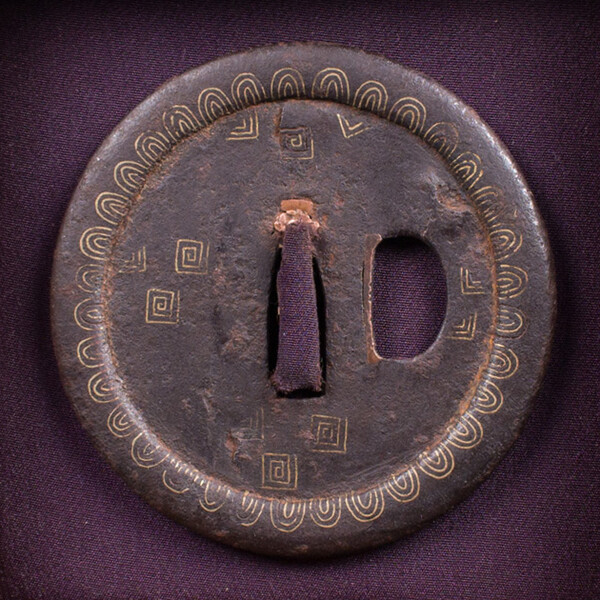
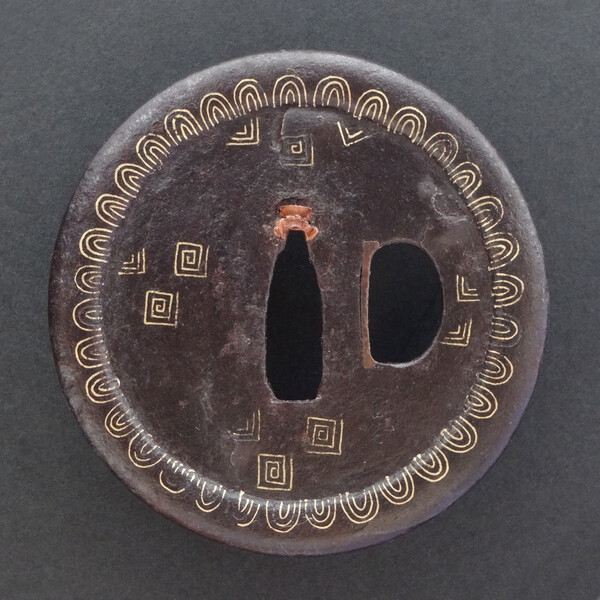
Hi to all and a Happy Christmas to all of you. This maru gata tsuba have a chrysanthemum petals design the inner surface of the dote mimi and of scattered stylized lightling on the body of the tsuba (hira-ji). Both motives are inlayed in brass flush with the surface (shinchu hirazogan). The dimensions are 75.8 mm x 75.0 mm and a thickness of 4.2 mm at mimi. I had it cheap on Yahoo Auctions because it was not in the best of conditions with a good deal of rust. Though it cleaned up nicely, what do you think? Based on one reference found in Otani and a NBTHK Tokubetsu Hozon papered tsuba I think that my tsuba can be classified as Heianjo Zogan.

-
IMO they can be classified as mid range Hikone bori, i.e. Soten inspired copies made in different places around Japan when there was a high demand for this kind of tsuba. One of such places was Kyoto where other tsuba school were hired by Soten to fulfill the orders received, or so the common wisdom goes. I like especially the one with the dragon. Even though not mainline nice tsuba nonetheless. Regards Luca
-
Done!
-
Thank you all for your input. I will look more deeply into this tsuba keeping all your comment in mind. Luca
-
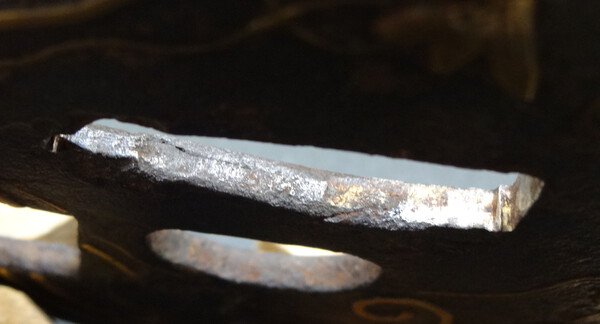
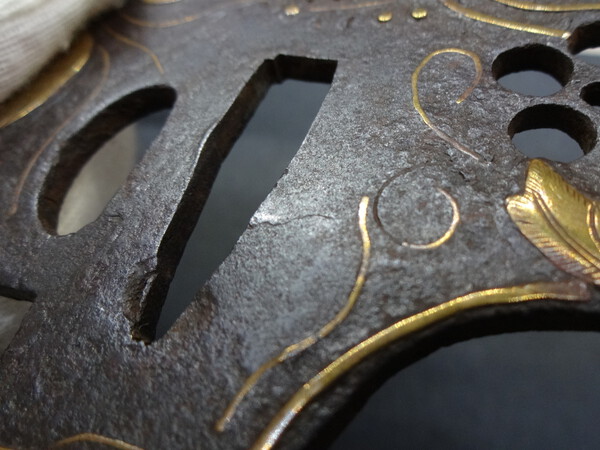
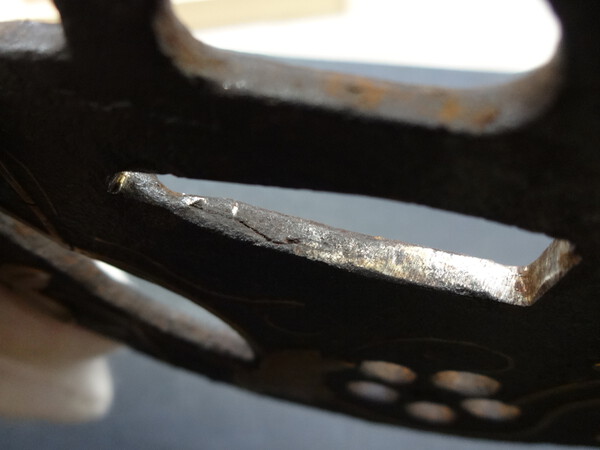
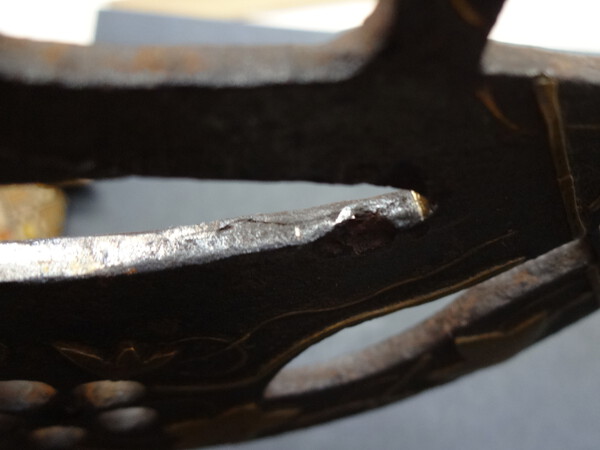
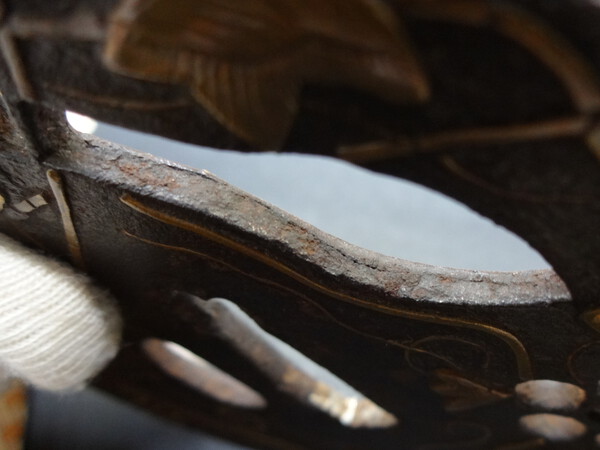
Another prominent feature is what seems to me the traces of folding of the plate. These are mainly visible on the region of the nakago-ana, in its thickness and of the walls of the puddle sukashi. This folding over reminds me of similar traces on another tsuba in my collection (Ex Haynes and Long collection) classified by Mr. Haynes as a late Muromachi Katchushi tsuba. Being a novice in this field I would like to have the opinion of NMB more experienced members on this tsuba and if it is possible to put a date on the plate at least. Thank you for your attention. Luca

-
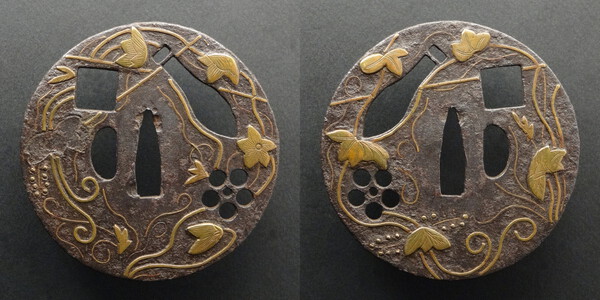
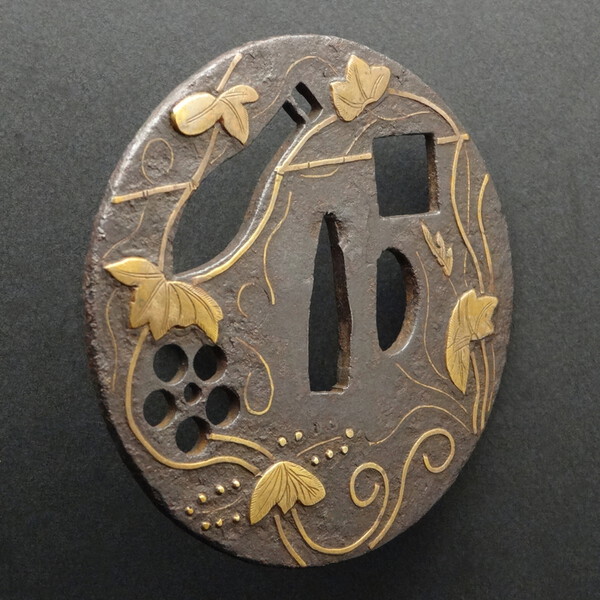
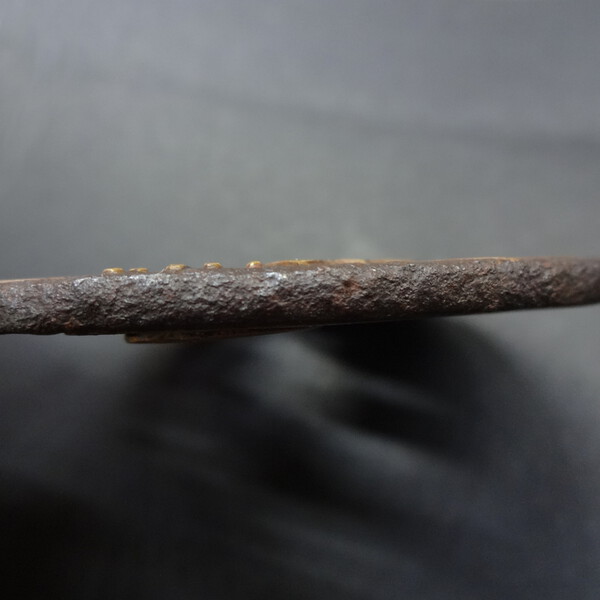
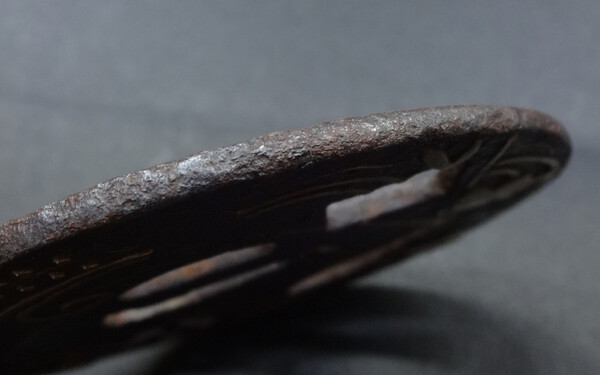
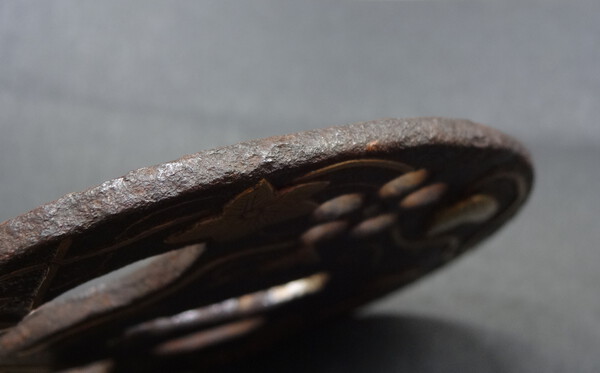
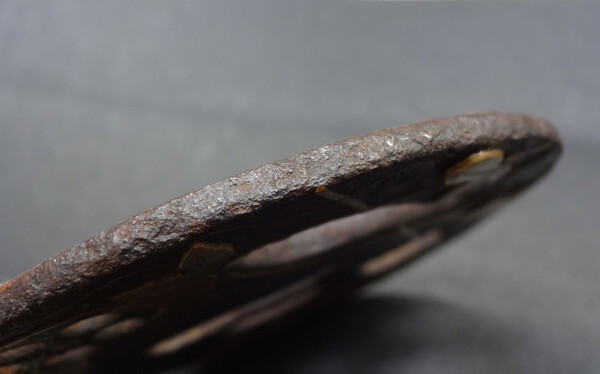
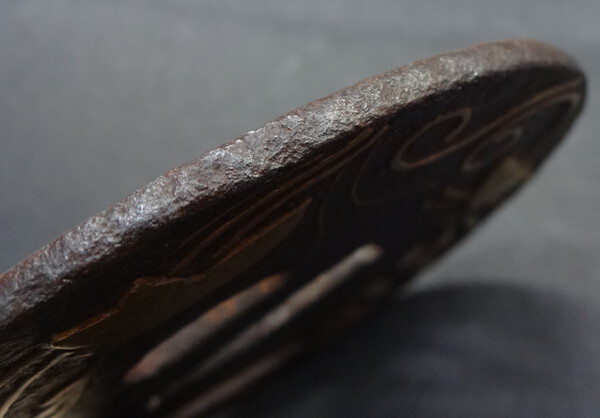
Hello to everybody I have just acquired a new heianjo tsuba (with recent NBTHK Hozon certificate). Dimensions 85.9 mm x 85.5 mm x 3.5 mm thickness. As per recent posts by Mr. Hallam is seems that shinghu zogan can not be dated before approximately 1620. Thus this settle my mind on the dating of this tsuba, at least for the zogan part. According to common wisdom the first Onin/Heianjo tsuba where updated Tosho or Katchushi with the addition of some brass to shine them up. This information made me look deeper in the iron of this tsuba. The sukashi design of this tsuba is perfectly in line with what usually found of Tosho or Katchushi, even though the number of them make me think to later specimens. The iron surface is rather rough in certain region suggesting corrosion. The same roughness can me seen on the mimi and on the internal surfaces of the sukashi. Looking at the rim I see mainly the effect of corrosion and no traces of tekkotsu, even though I may not able to distinguish it from rust or other forms or corrosion since I have no experience with it.

-
I have received the V2 pdf file from Grev about an hour ago. I skimmed through it and everything seems fine. I like it, it is a good reference for a lot of schools and contain not only outstanding pieces but also mid range stuff like the ones most of us can really afford to by. Thank you Grev. Luca
-

Help With Heianjo Tsuba Nbthk Paper Traslation
zanilu replied to zanilu's topic in Translation Assistance
John, Steven Thanks for the information. Just grouping the characters differently makes more sense! I had assumed that the 角 kake was for the square sukashi and the 文 for the umebachi. Always learing from NMB! Luca -
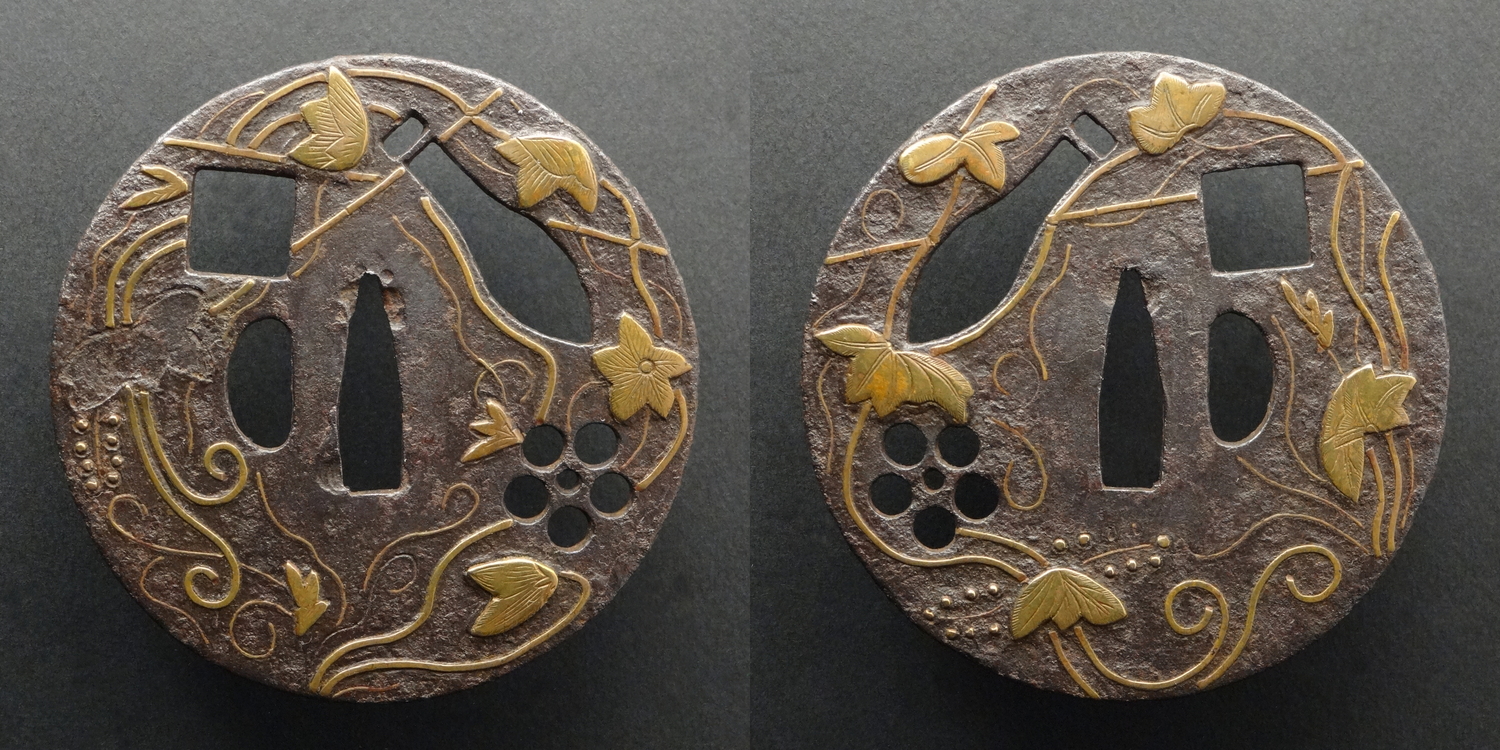
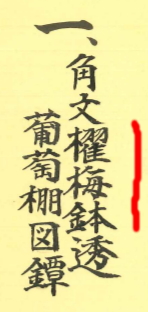
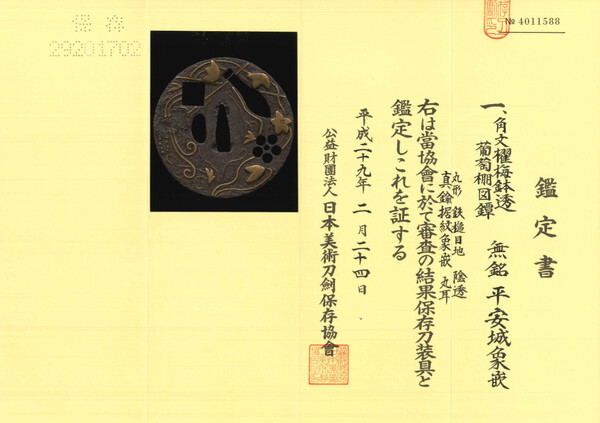
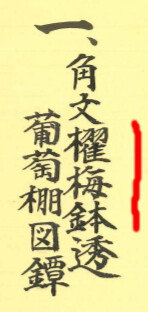
Hello guys I have a small problem translating the description from this NBTHK paper for a Heianjo tsuba that has just arrived from Japan. The part that baffles me the most is the part highlighted in red: The text in kanji should be: 一つ 角 文 櫂 桷鉢 透 葡萄 棚 図 鐔 That should sound like: Hitotsu Kaku Mon Kai 桷 Hachi Sukashi Budo Tana Zu I have more or less figured out the meanings of: 角 = Kaku = This should stand for the square sukashi. 文 = Mon = Flower like mon (5 large and 1 small circles) 櫂 = Kai = This should mean puddle or oar and this match the third sukashi cut out. 透 = Sukashi 葡萄 = Budo = This should stand for the suemon zogan grapes 棚 = Tana = This should stand for the bamboo rack supporting the grapes also rendered in suemon zogan 図 = Zu = Drawing 鐔 = Tsuba What is eluding me is the meaning of the two kanji 桷鉢 I have found that 桷 should mean something like bucket 鉢 should be bowl I have tried to find the meaning of this two kanji combined together or with the neighboring kanji but I have no luck. I have no knowledge of Japanese whatever. I can barely count the number or strokes and do some googling so I hope that someone more knowledgeable than me can help to solve this problem. Thank you in advance Best Regards Luca
-
Hi Grev. Just a question. I have bought the pdf version of you book. We will be able to download it from lulu or we have to PM you directly? Nice book by the way. A lot of reference tsuba, I like that! Luca
-
Thanks for the answer Grev Luca
-
Hi Grev I really enjoyed your book. I have bought a pdf version. For those who have bought the book in pdf the revised vertion will be available for free or at an additional price? Regards Luca
-
Ford the more you say on the subject the more I am eager to read your book! Luca
-
Ford what you are saying is really interesting . The results of your studies go against the "common wisdom" for Heianjo and Onin tsuba, especially for Onin. This also clash with all the attribution to Pre Edo eras and all the considerations made for such attributions! I mean all considerations about shape, thickness, quality of the iron, hardness of the iron, shape of the hitsu-ana and so on often used to give an era attribution not considering the age of the brass patina. Unless we embrace the notion that all the Onin and Iron tsuba with a pre-Edo attributed age are made in Edo period by inlaying pre-existing iron only tsuba. If we have to revise our dating of Onin and Heianjo tsuba according to your studies then we have, forcibly for the sake of the scientific method, to put under question also the aforementioned criteria. This would have a major impact on our small world of collector and amateurs of Japanese tososgu ! Regards Luca
-
Thank you for the explanation Ford. I have to deal with iron and steel corrosion in my job and I found the subject fascinating. Even more so, it seems to be, for non ferrous alloy. I can't wait to see the book. Regards Luca
-
Ford thank you for your comments I have to admit the more of your comments I read the more I am eager to put my hands on your upcoming book about alloys and patinas on tosogu. Any news about the release date? This means that the brass patina is more due to the zinc than the copper? If successive patination and cleaning deplete the surface of the inlay of zinc this means that the percentage of zinc oxide in the patina is higher compared to the percentage in the base alloy? Does this means that the formation of zinc oxide is faster than copper oxide and then the formation of the zinc oxide hinder the formation of the copper oxide? Otherwise if the patina has the same composition of the base alloys then the patina formation and removal will not change the surface composition. Just another question. By using XRF to get the composition of the inlay you are testing the patina on the surface of the inlay or the X-Ray are able to get deeper into the metal and give you the bulk composition? Regards Luca
-
Ford, however small my knowledge on the field, I do agree with you. The patina of brass is related to its composition and its history over time, that make a lot of sense to my engineering mind I have to admit. However I had a personal experience on another Heianjo tsuba where a small portion of the inlay was accidentally cleaned by an overzealous me (I can be rather stupid at times, but I do not make the same mistake twice ) using a rather abrasive pencil eraser. Just after cleaning the brass looked gold like, bright and shiny. However the cleaned region regained its original color in a matter of about 10 weeks to a point that the cleaned part was no longer discernible from the surrounding, untouched inlay. Basically the patina was recreated with time. I do not have the pictures of the tsuba, before the cleaning and after about 10 weeks, with me right now but I will try to post them in the weekend if it is interesting for the discussion. To my statement about the "general rule" that can be guessed from the Otani book I should have added the "feeble" adjective, i.e. "feeble general rule", but I do not wanted to sound too heretic since in the book and on other publications I have seen used the color of the brass used as a kantei point. I have often seen sentences like "strong and of old color", "rich color" and so on. If the brass was brightly polished in the beginning then the color we enjoy is just the result of the composition and the "history" of it. According to what you say Ford, the general rule should be "Do not trust brass color" Regards Luca
-
Richard, thank you for the clarification. I have a lot to learn, that is plain and clear! Luca
-
Hary, Steve, Richard. First of all thank you for taking the time to answer to my post. In my analysis I was going for an attribution to the azuchi momoyama but then I said to myself, being a total beginner in the field, that maybe I was too optimistic in my evaluations. According to your considerations maybe I was not too optimistic, and maybe I am starting to learn something... Richard the attribution to Edo came from Aoi Art What buffed me the most is the shape of the hits-ana. The short fat one seems to be a little bit too squared on the nakago-ana side. Equally puzzling is the slim long one, what kind of sword implement goes through it? Anyway Richard you got me I have got of old of that tsuba too... All the best Luca
-
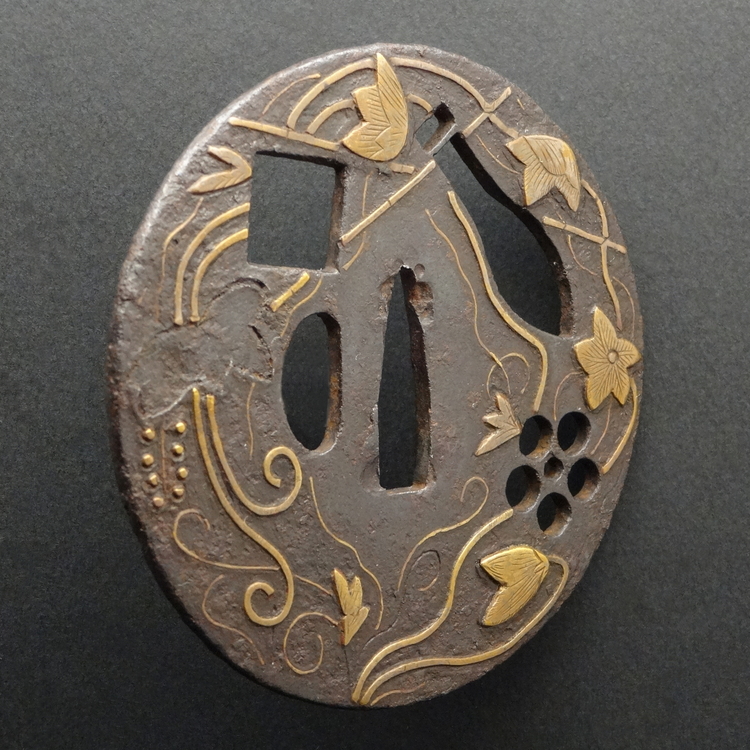
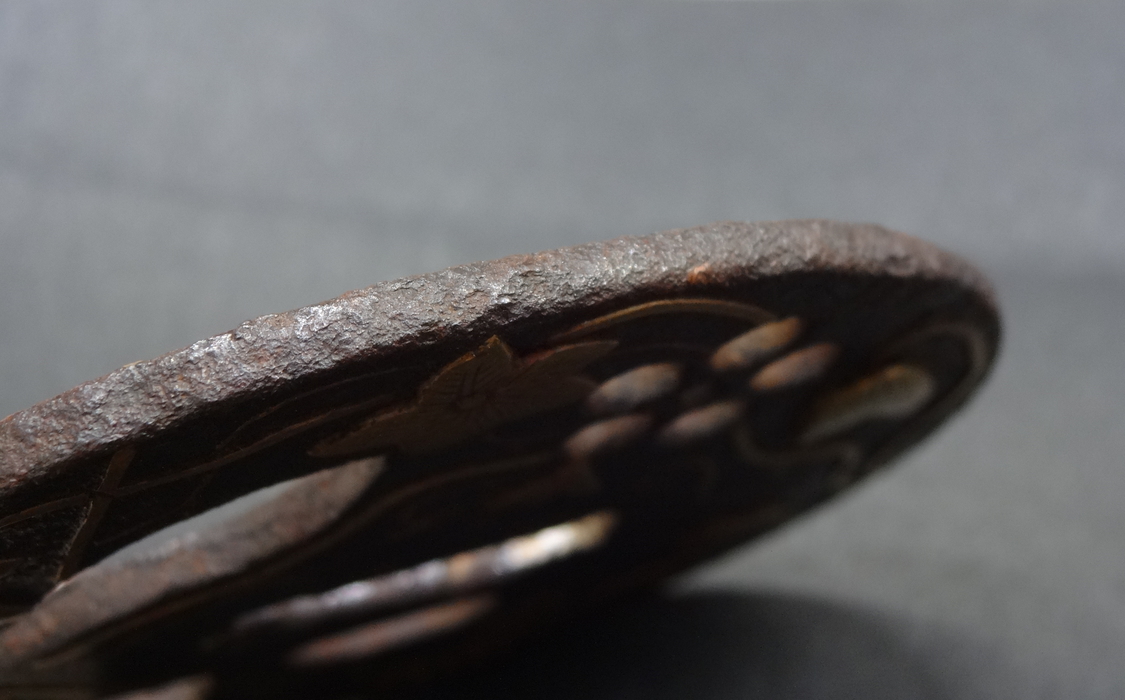
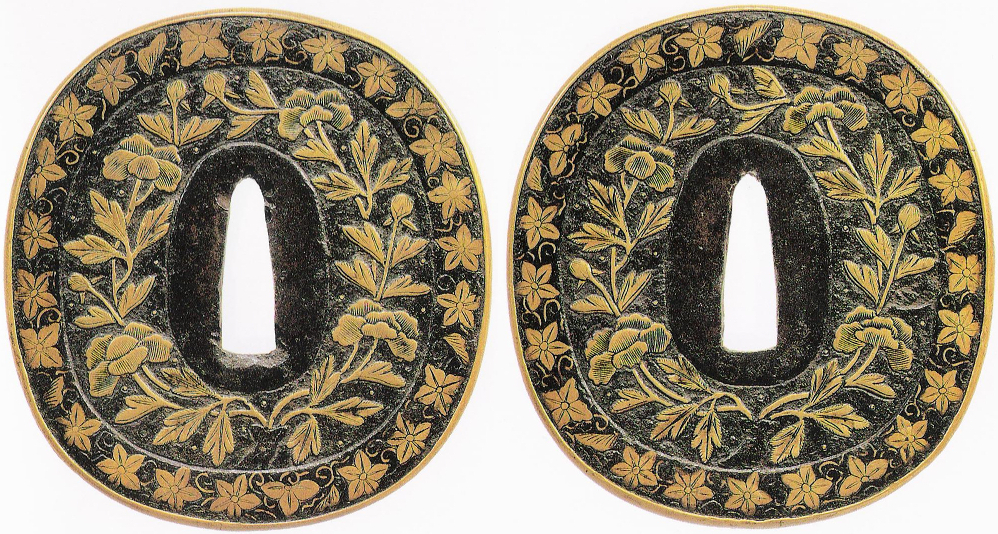
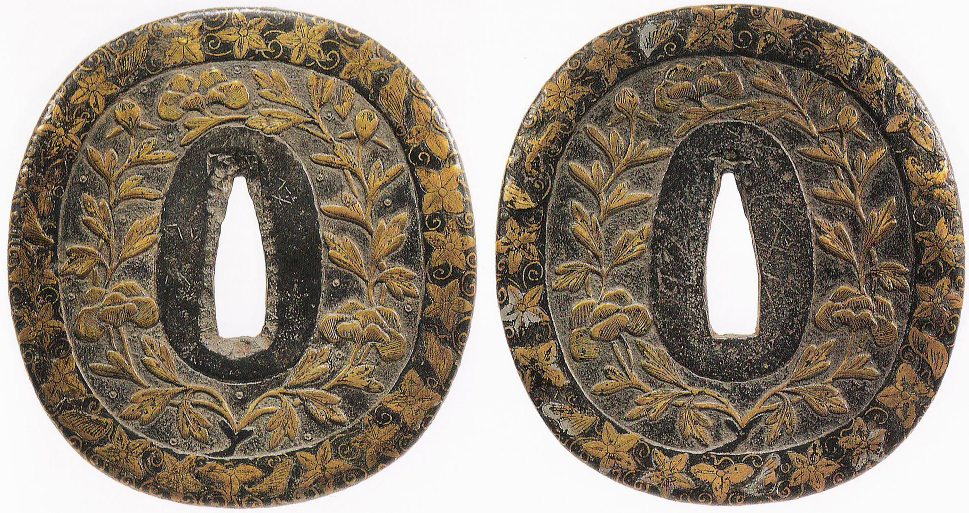
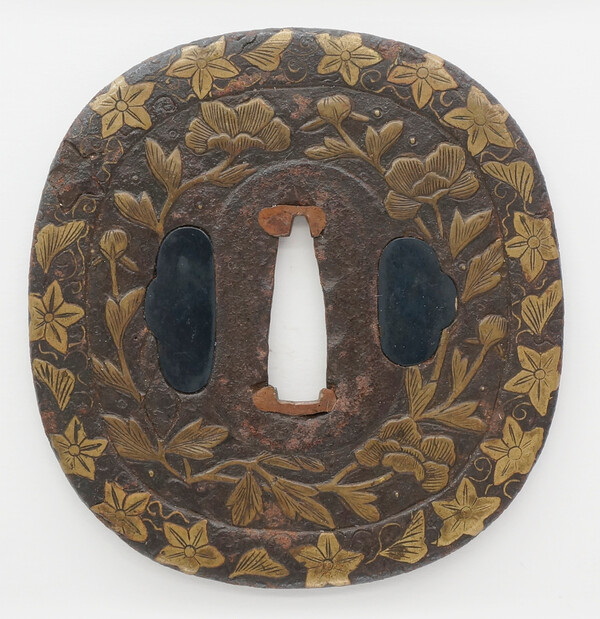
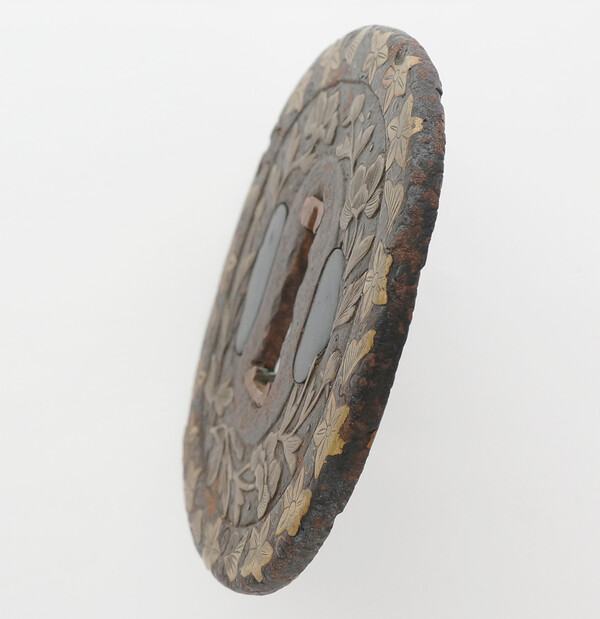
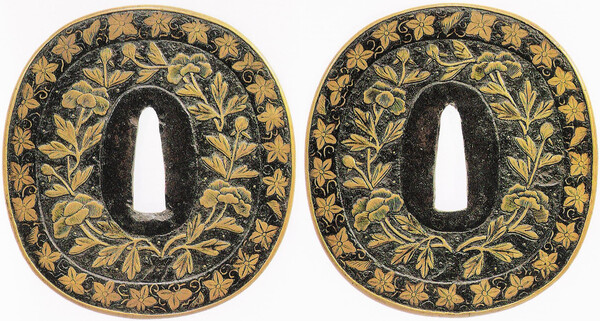
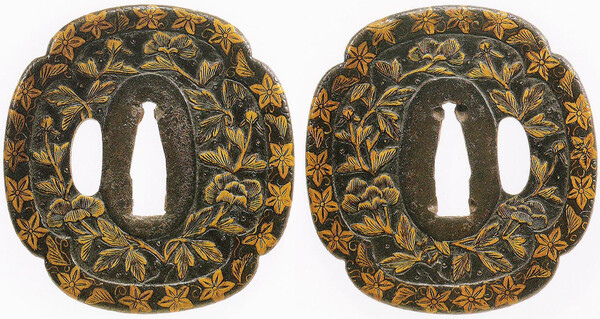
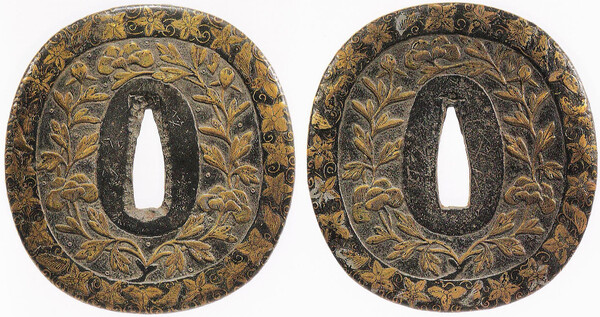
Hello to everybody. I have spent some time trying to figure out the age of this Heiajo tsuba. Dimensions: 79.0 mm x 75.1 mm, 4.5 mm thickness at mimi, weight 146.0 g. The seller dated it to the Edo period but I would like to be more specific if possible. Attribution to the Edo period seems to be the default when the piece is obviously old but difficult to place, I mean, the general rule seems to be "When in doubt, Edo Period". I have found three similar tsuba on the Otani book "Tanoshi Shinshu Zogan Tsuba" dated between Muromachi and Azuchi-Momyama ages. A rough translation of the accompanying text says (more or less): "The peony leaves in the lower part of the ground in combination with the thick trunk, the fine point inlay and the bell flowers on the mimi gives a feeling of the era (Muromachi/Momoyana). Both brass and the base iron are strong and of old color." It seems that the design, the presence of the dot inaly (sen zogan), the design of peonies and their trunk, the color of iron and brass are considered by Otani the essential kantei points. From what I can see from the pictures the way in wich the peonies, their trunk and the brass dots of the Otani tsuba are made in the same way of my tsuba. There are small differences, also among the Otani tsuba, on how the peonies leaves are rendered but the similarity is still strong. Comparing how the flowers and the leaves on the mimi (Chinese bellflower) are actually represented with similar designs from Otani my feeling is for Early Edo. I have found also other similar tsuba on the net but their age attribution seems to be more uncertain. For the iron I find it rather difficult to make comparison of color and texture between my tsuba and pictures considering how subtle is the effect of the lights set up on the final color in the picture not mentioning eventual "enhancements" to the picture itself. Thus I limited the comparison to tsuba I own and coming from trusted sources. The reference tusba where a Tosho from Early Edo period, an Umetada from Edo period (ex Thierry Bernard) and a Late Muromachi Katchushi (ex Robert Haynes and Elliot Long) among a few others. The iron patina of my tsuba seems to be like dark chocolate brown in most cases. Under direct sunlight it gets a more bluish hue. The color and texture of my tsuba are almost the same to those of the Tosho, slightly lighter than the Katchushi while the umetada has has a more reddish hue. For the brass color I have less "trusted" specimens but a general rule that seems to be more or less apparent from Otani is that the color is more toward the orange/ocher side (opposed to the shiny, gold like, brass inlay of late Edo tsuba) the older the brass is. This gradual change seems to happen passing through a pale yellow not shining color. Following this rule and using as a guide the Otani pictures again I would say Early Edo. Of the two hitsu-ana the short one has the fat round appearance of Edo period, while the long one is so stretched vertically that an attribution is rather difficult for lack of many comparisons (why there is the need for such a stretched ana is still a mystery to me!). The only hitsu-hana of exactly the same shape and aspect ratio that I was able to find in on a non Heianjo tsuba dated to Azuchi-Momoyama/Early Edo. Both hitsu-ana, cut through leaves and stalks suggesting that they can be a later addition. The cutting seems also to have caused the loss of part of the intersected inlay. So, all considered I would say Early Edo. Do you agree or do you disagree? I would appreciate some feedback from my fellow NMB members that surely have more experience than me on this kind of analysis. Best Regards Luca

-
Grey, Rich Thank you for the information. Regards Luca
-
Dear All I have seen in the past several copies of the book reported in the attached picture on sale on Yahoo Japan I was wondering if any of you has it in its library and if it is worth to have as a reference book on tsuba also considering that it has Japanese only text. Thank you in advance for sharing your knowledge about the book. Regards Luca