zanilu
-
Posts
545 -
Joined
-
Last visited
-
Days Won
5
Content Type
Profiles
Forums
Events
Store
Downloads
Gallery
Everything posted by zanilu
-
Edward you are making me curios. Have you some pictures of your tsuba to share with us? Luca
-
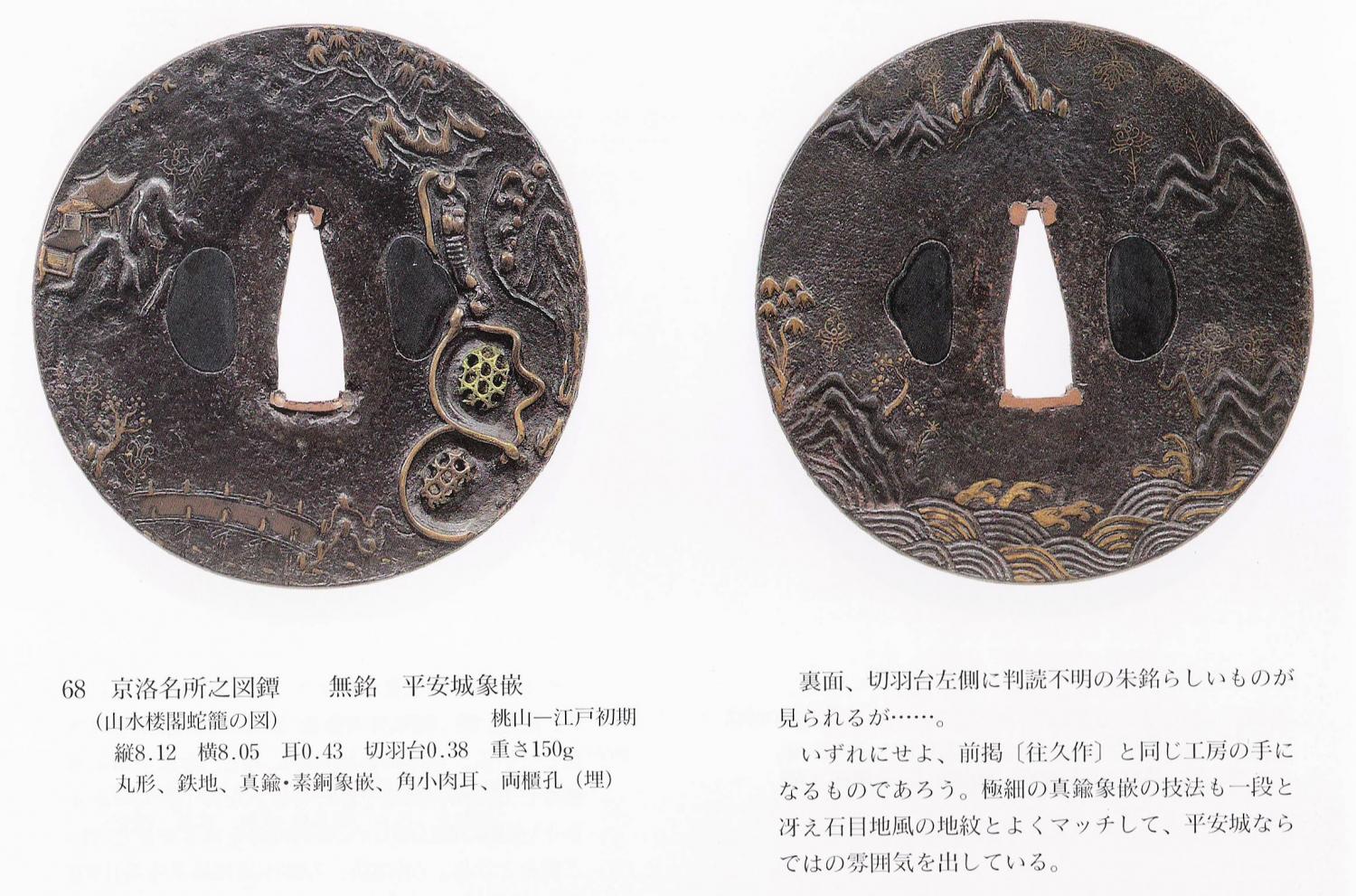
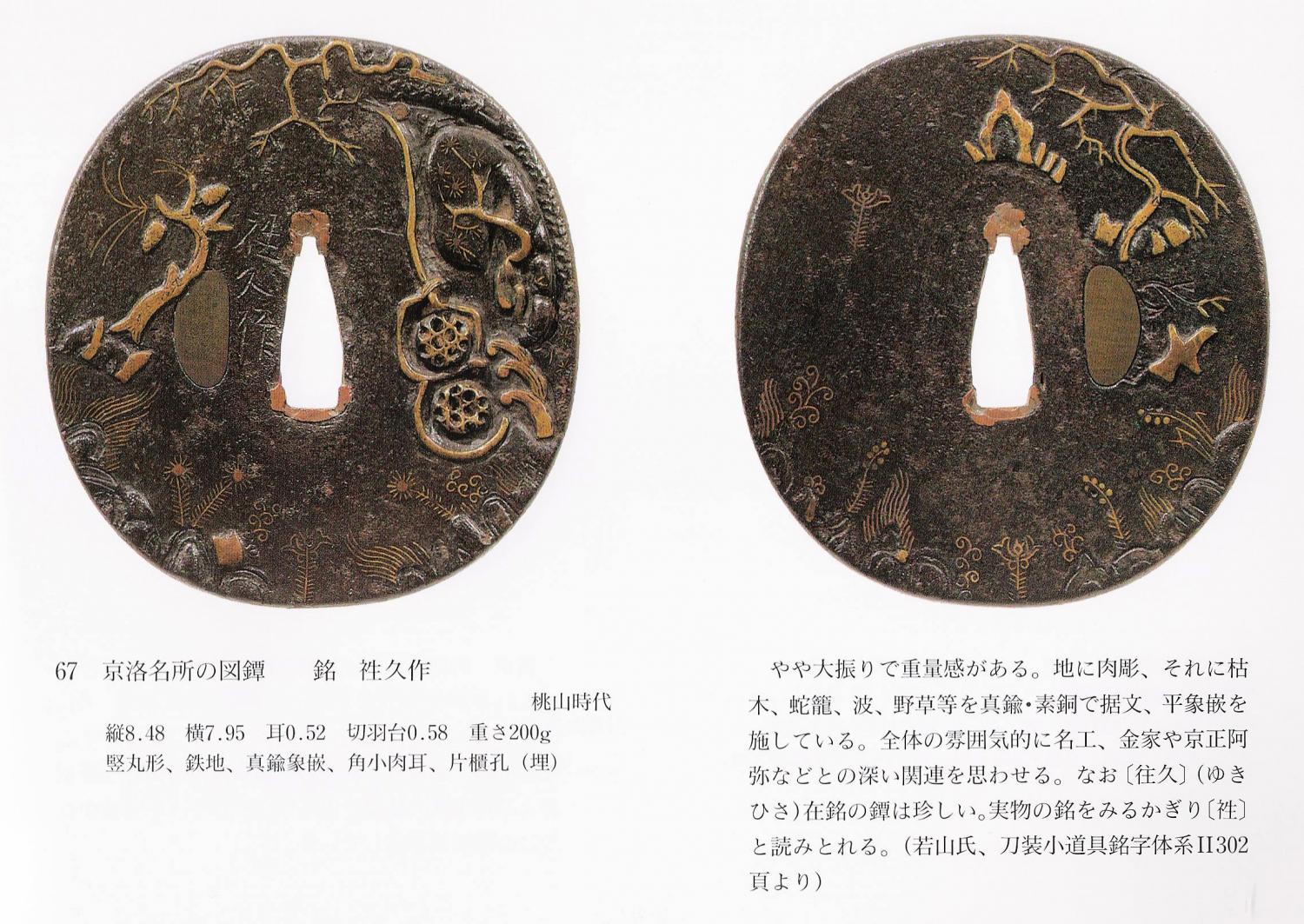
Hi Edward. I am still studying this piece. My tentative attribution right now is based on the similarity with another tsubaclassified by Bob Haynes as Heianjo. Luca
-
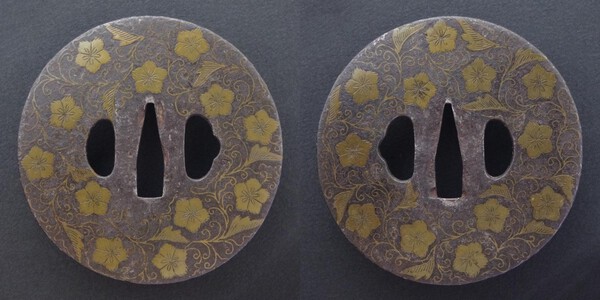
Same design with brass inlay: http://buyee.jp/item/yahoo/auction/f285347549 Regards Luca
-
Hi Guys Just my two cents tip... If Heianjo it is very late Edo. Inlay on Heianjo tsuba with metals other than brass appears only in the late Edo period or so I was lead to believe. Also all the inlay is highlighted with carving like in Yoshiro tsuba. Also silver inlay would be compatible with Yoshiro (http://www.militaria.co.za/nmb/topic/24844-kaga-yoshiro-wonderful-restoration-by-mr-hallam/). Of course I could be completely wrong, the topic is complex and I understand a little of it... Luca
-
I confirm that my copy has the same problems. Regards Luca
-
Markus I have noticed the same problem too. I didn't had the chance to read the book but I have seen some bad picture rifling through the it. I will check better this evening. My book was delivered to Switzerland so I think it is coming from Germany too. Regards Luca
-
No Chishiki. It is the book author name (see http://www.japaneseswordbooksandtsuba.com/store/books/b970-tanoshi-shinshu-zogan-tsuba). The school (in a very broad sense - I would rather say style) is Heianjo Zogan. Luca P.S. Please sign you post with your name as per board rules.
-
These are classified as Heianjo Zogan on Tanoshi Shinchu Zogan Tsuba by Otani. Regards Luca
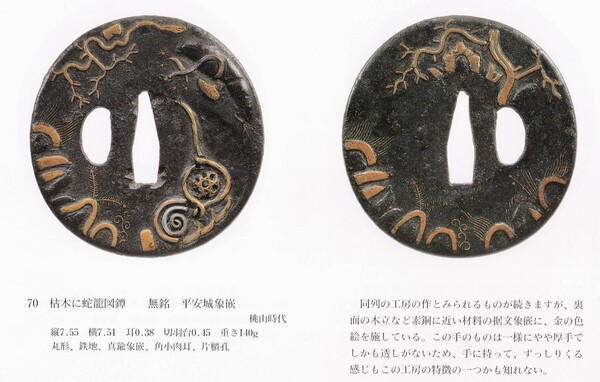
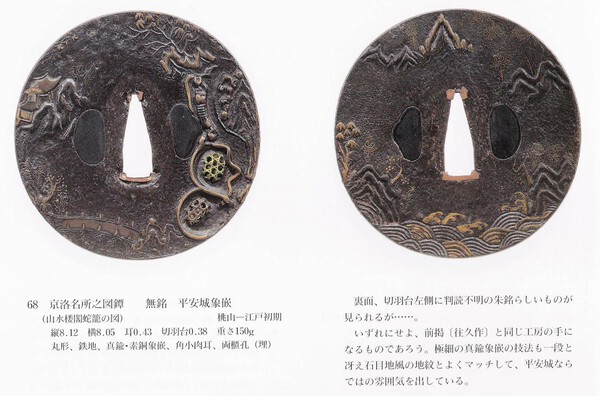
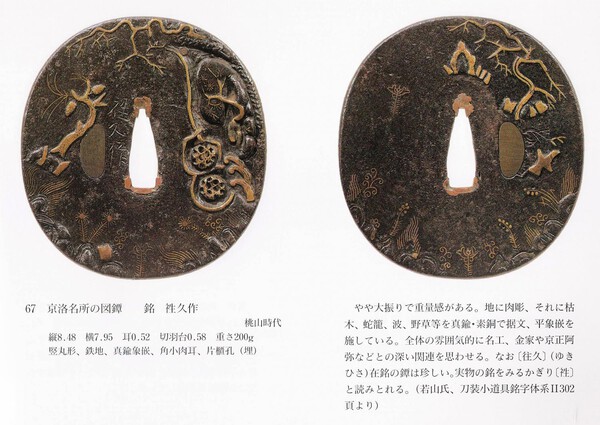
-
Maybe my is just stupid question. Does exist an on line database of the NBTHK papers for consultation? It would be of great help to spot the "problems" of above! Luca
-
Very nice piece and wonderful restoration! My feeling is that this is part of the "large characters Soten". There are very few information about this school. Probably unrelated to two Soten Masters like most of the Soten tsuba we find out there. This is just my two cents feeling and I could be utterly wrong of course. Luca
-
I usually replace all the nail in my tsuba boxes with small section of toothpicks enlarging the holes in both post and base. The holes are made a little smaller than the toothpick diameter so I have to force them in position and with a little bit of glue the assembly is quite stable. However I use boxes only for storage. For transportation I wrap the tsuba in soft cloth. I also stared to make custom fitted internals using felt and covering it with the same green cloth you find in most of the boxes. Regards
-
Stephen you fooled me! My first reaction was: "Did he loose is wit?" Nice one!
-
Thanks Bazza Luca
-
Bazza do you mean Ujishige written like 氏重? Jean you are right all the references I have found for kasumi-mon are horizontal bars. But if NBTHK say so who am I to disagree ? Regards Luca
-
Grazie Mauro. I would stick with the mist interpretation, it sounds more poetic to me Thanks to both of you for the mei I will try to look better into it.
-
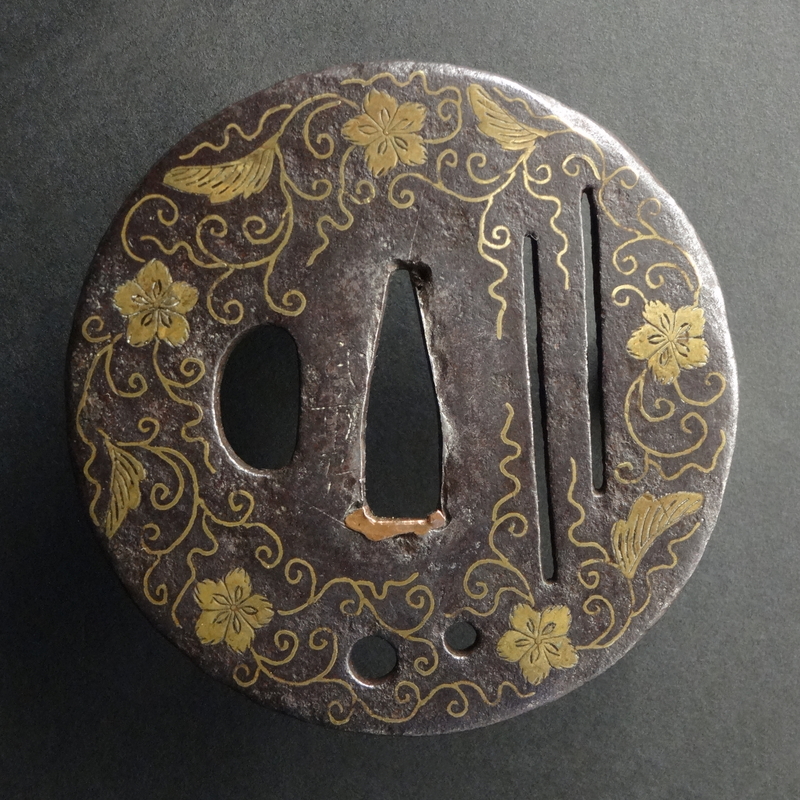
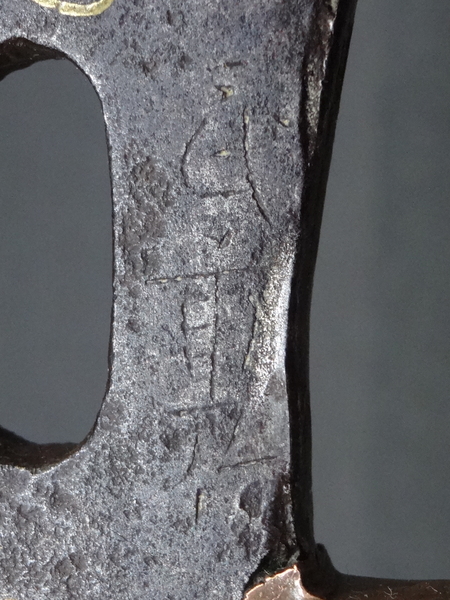
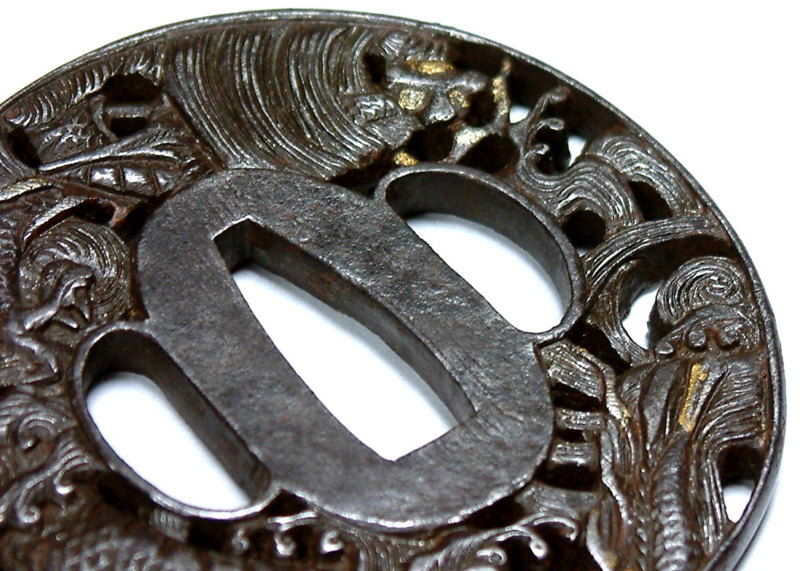
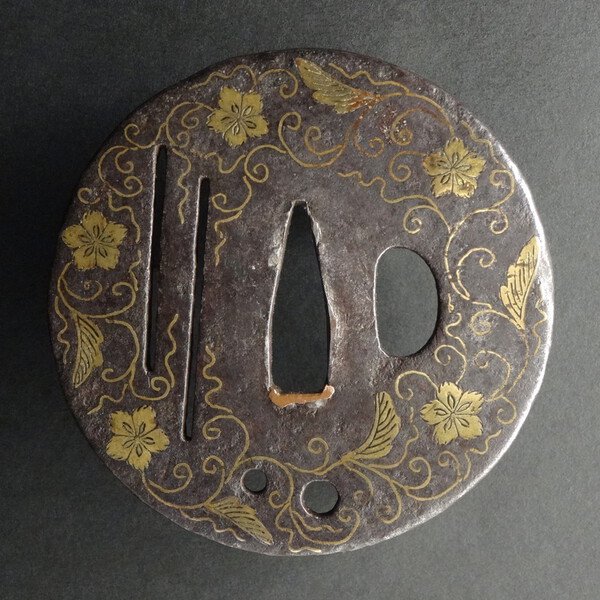
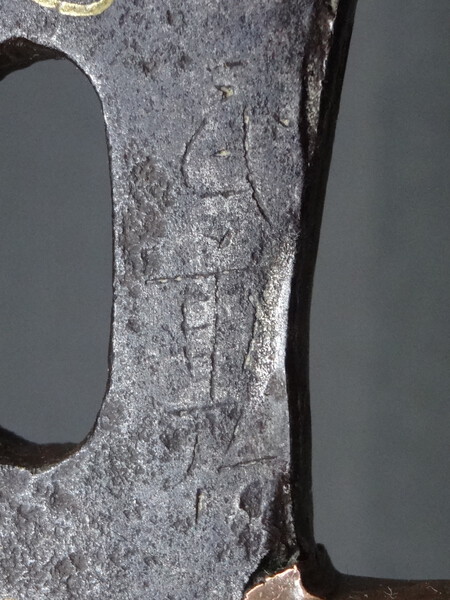
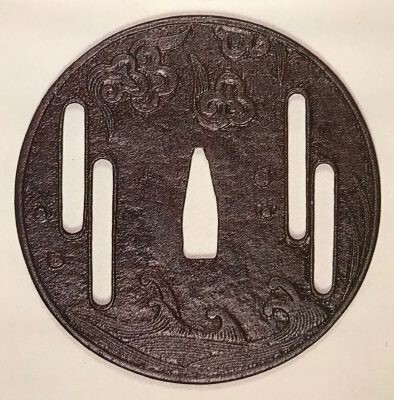
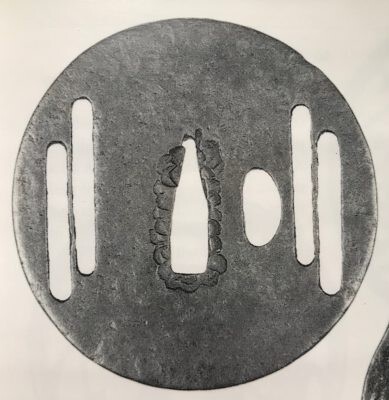
Dear NMB members Here is another tsuba I have recently acquired (dimension 75 mm x 75 mm, 4.2 mm thick). I have to yet to start studying it deeply, but my first guess is Early Edo Heianjo Zogan. At the moment what is puzzling me the most are the meaning of the two sukashi bars on the left of the nakago-ana and the mei. The only similar sukashi decoration I was able to find is referred to as nibiki i.e. rising mist bands. The references I found are in the A.Z. Freeman and the Phyllis Sharpe Memorial collections pieces number 11 and 33 ( The main difference is in the width of the sukashi. Thin in my case, wider with rounded ends in the references. The mei is difficult to read. The bottom strokes seems to me like the top part of saku (作) the rest I can not make out. Any help, from all of you, on both decoration motif and mei are the most welcome. Best Regards Luca
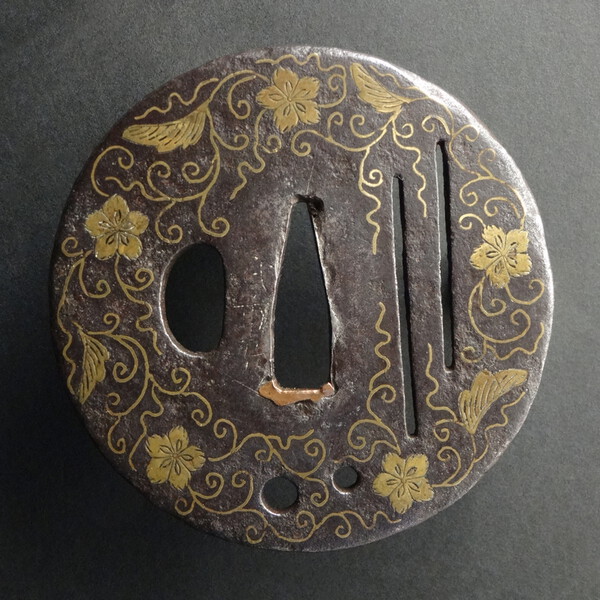
-
Yes Steven. It was in too sad conditions and so promising to let it languish in my junk box. Regards Luca
-
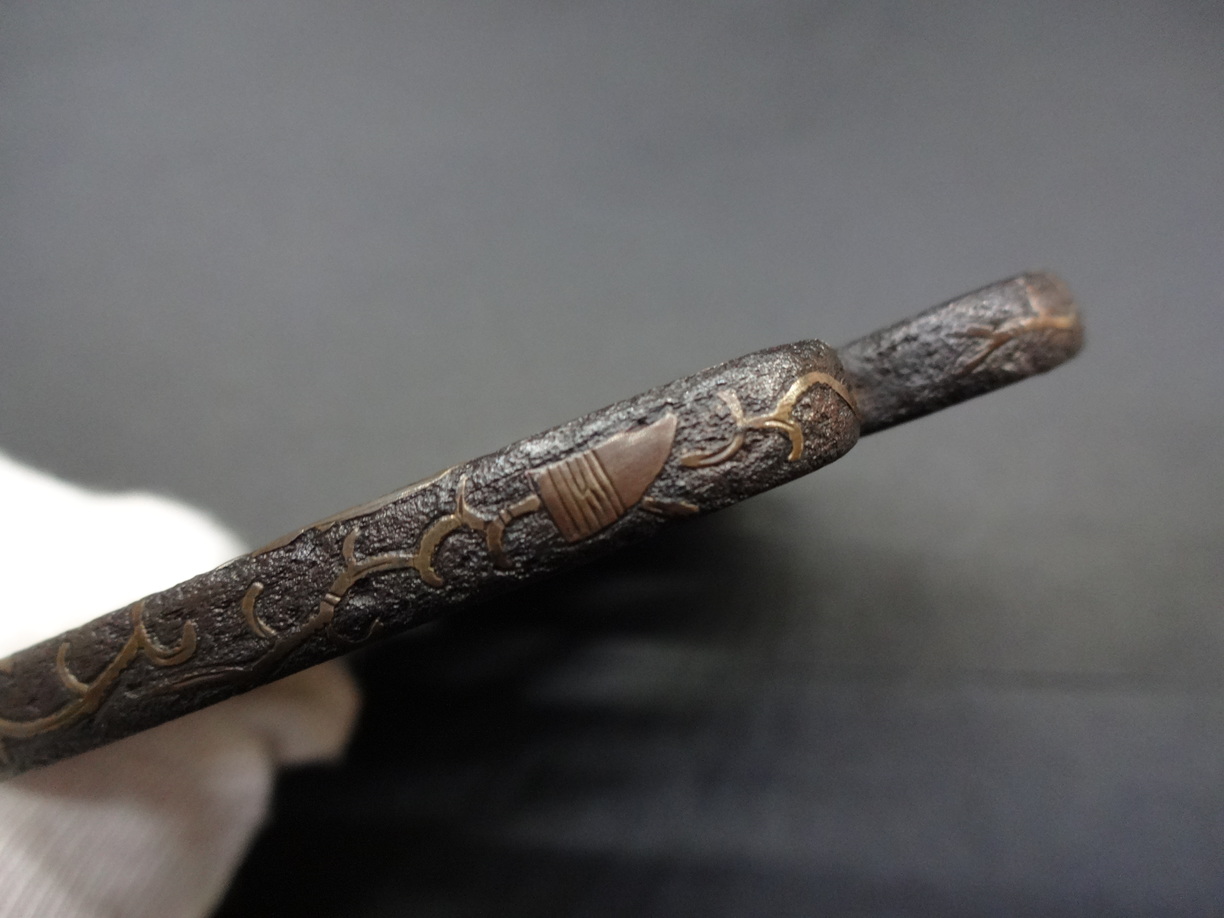
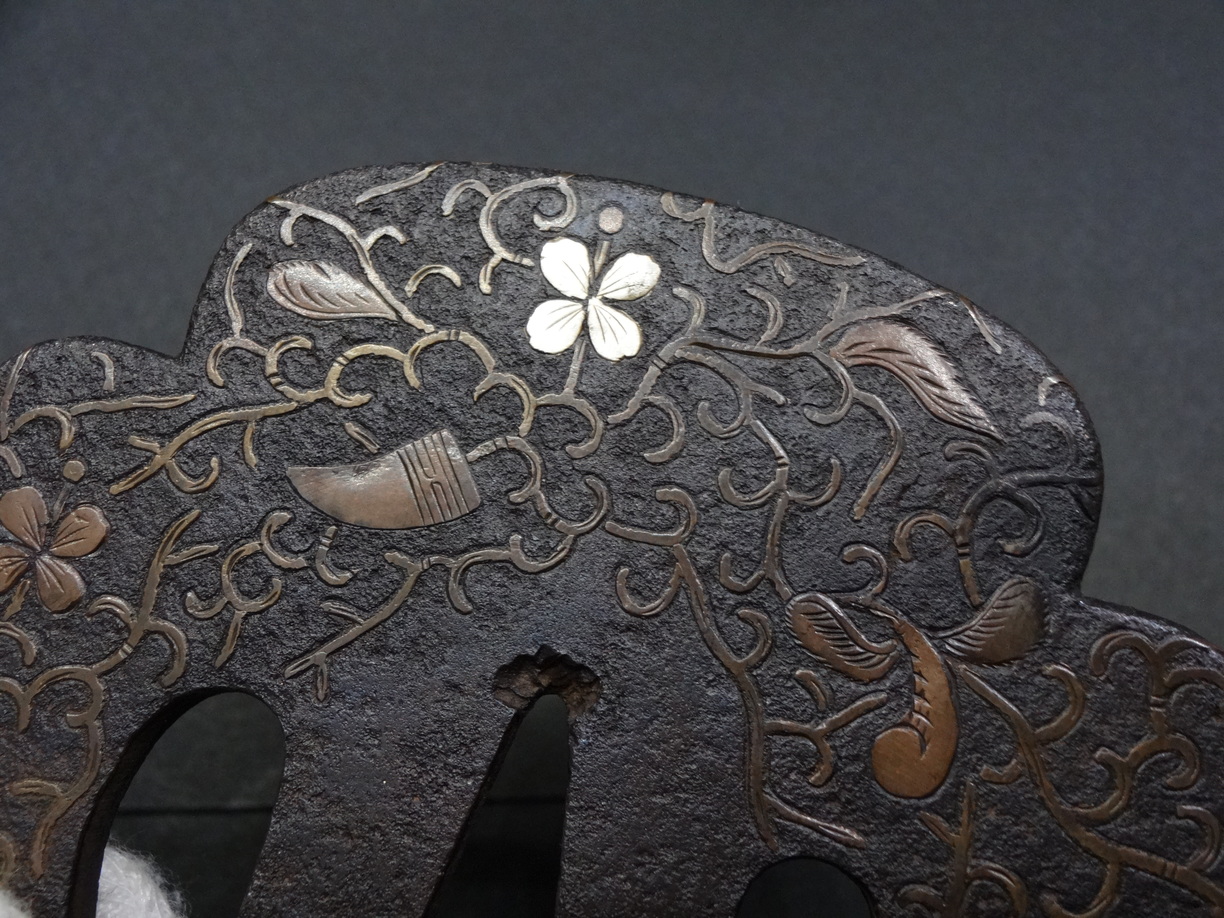
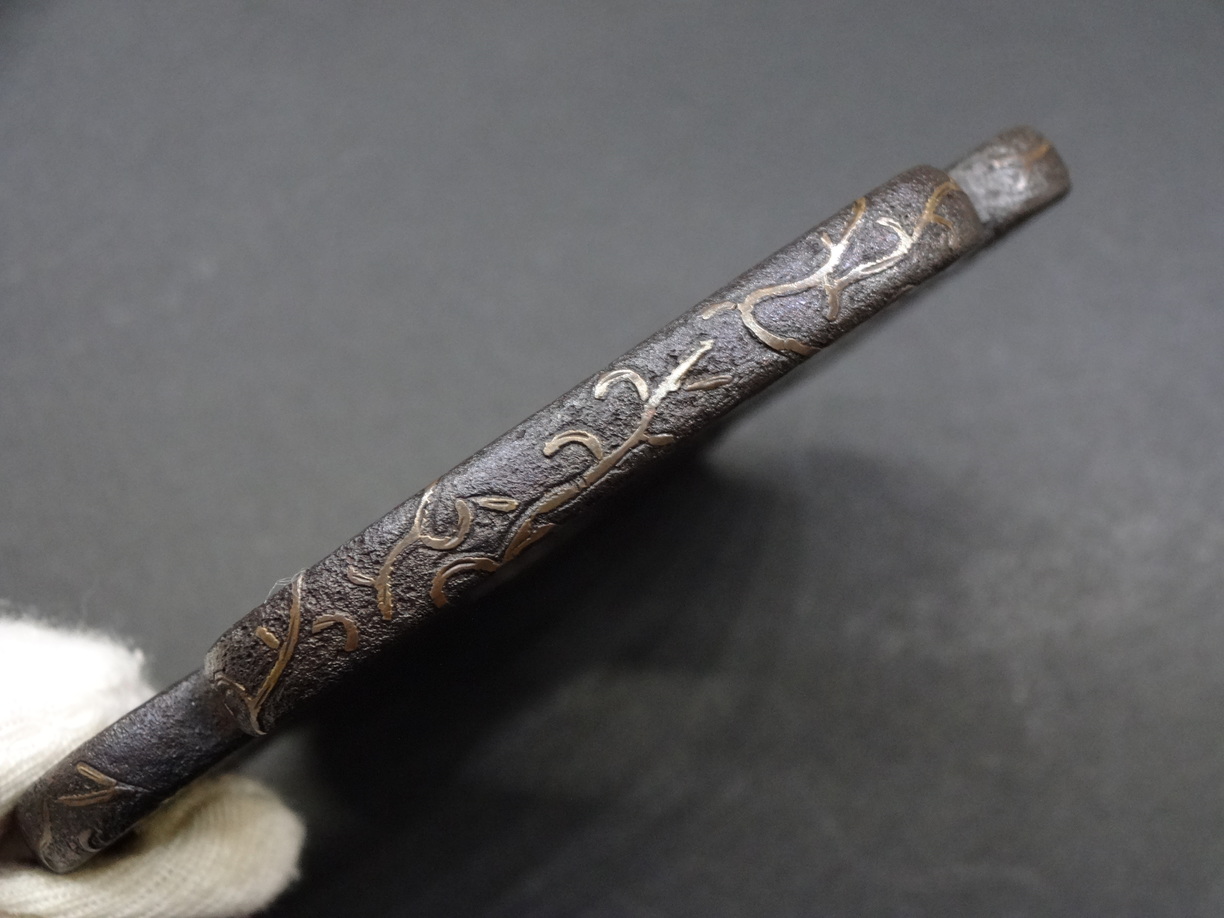
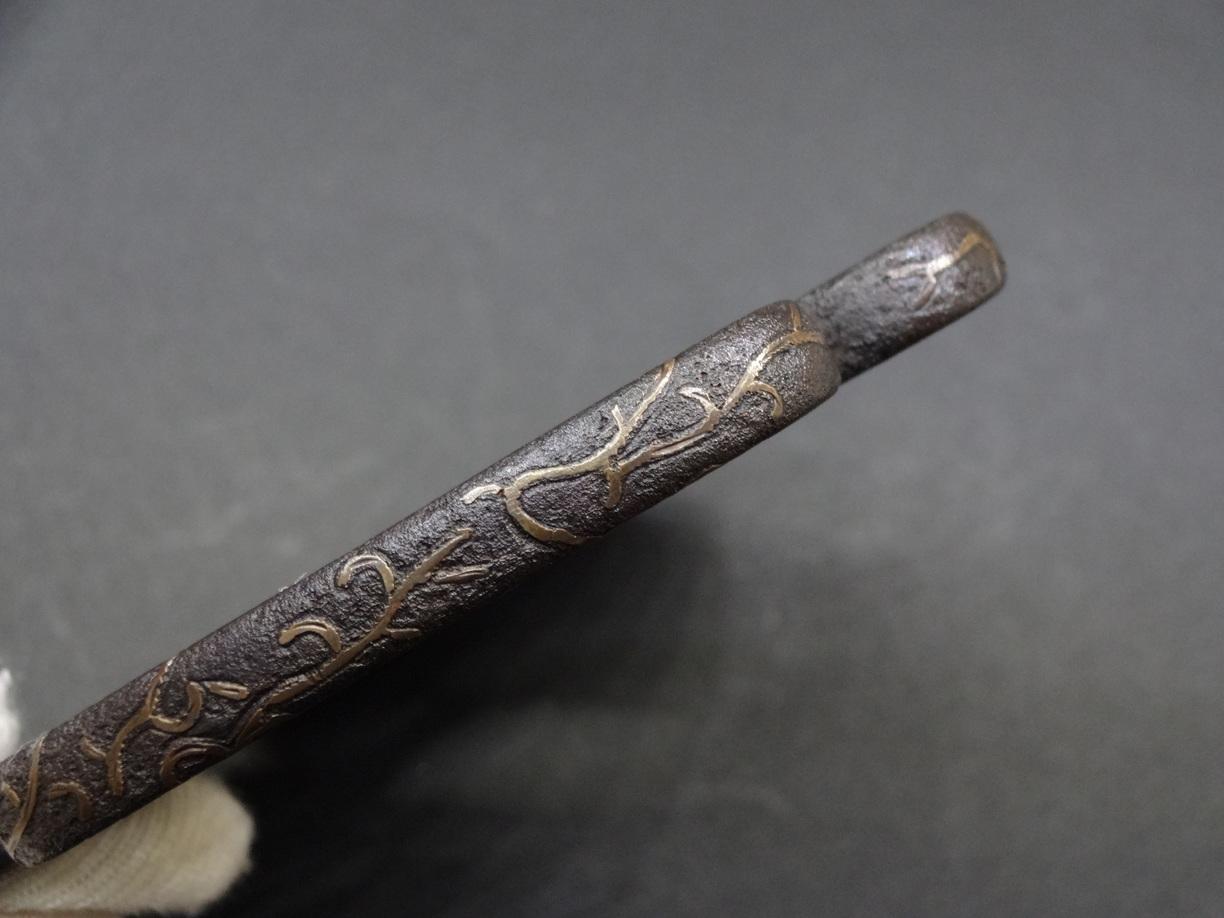
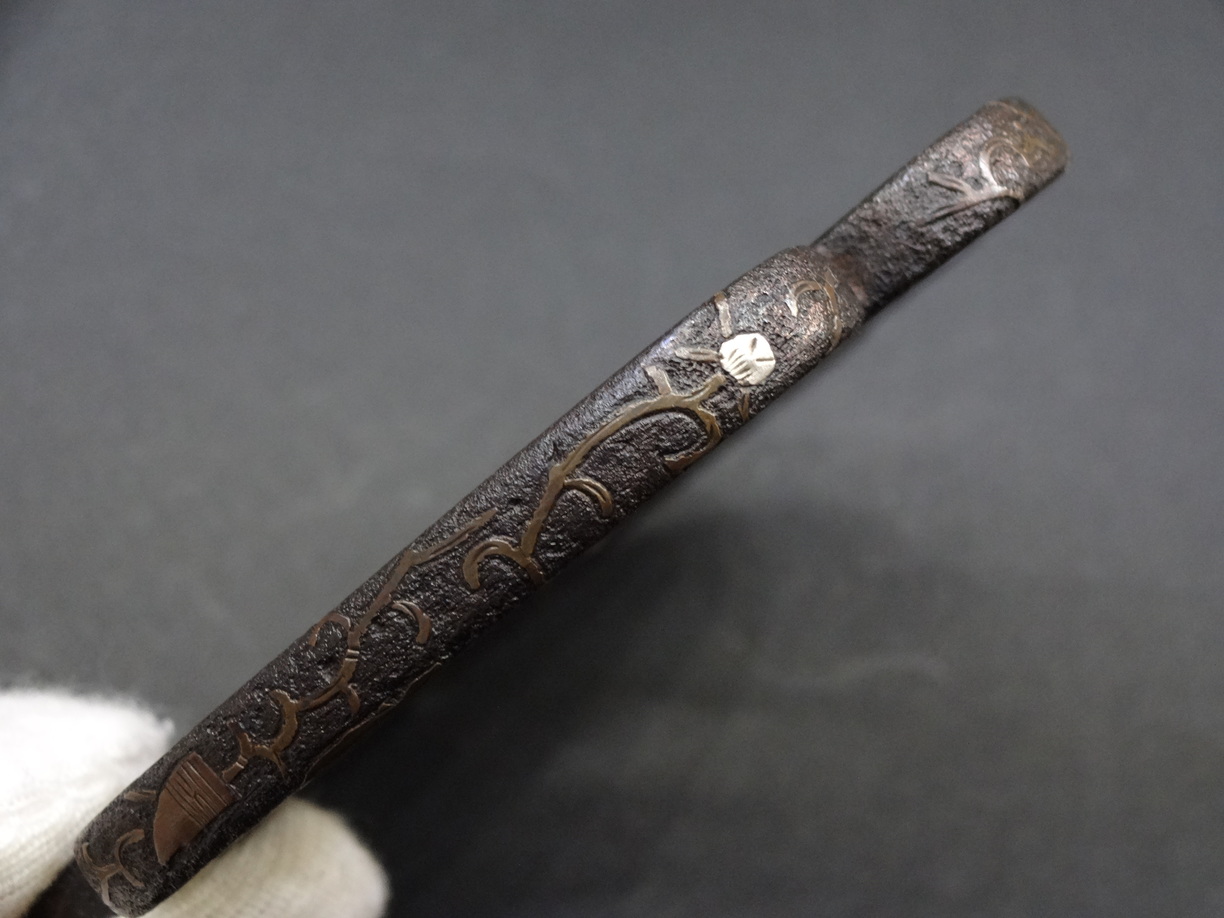
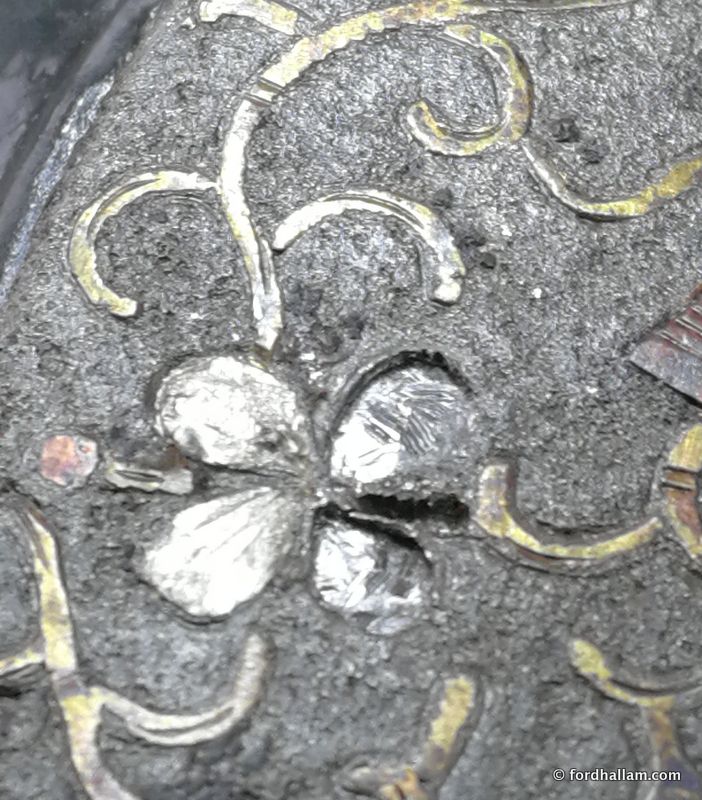
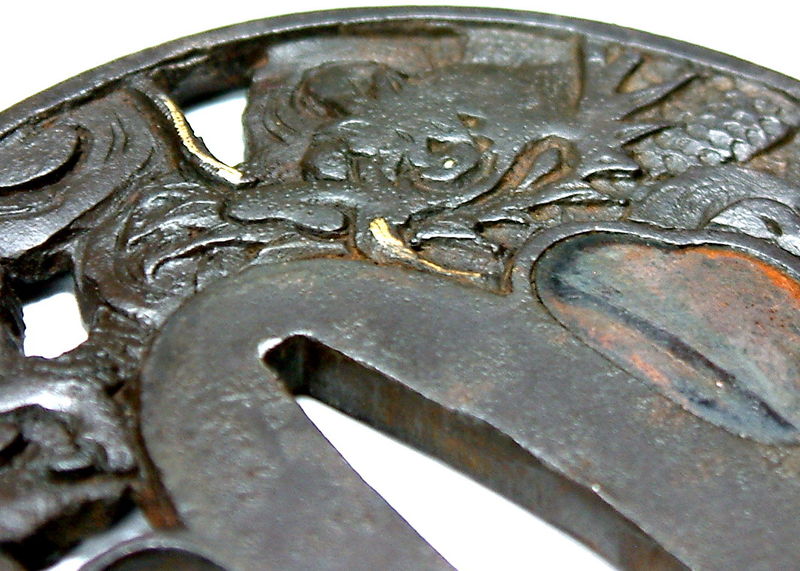
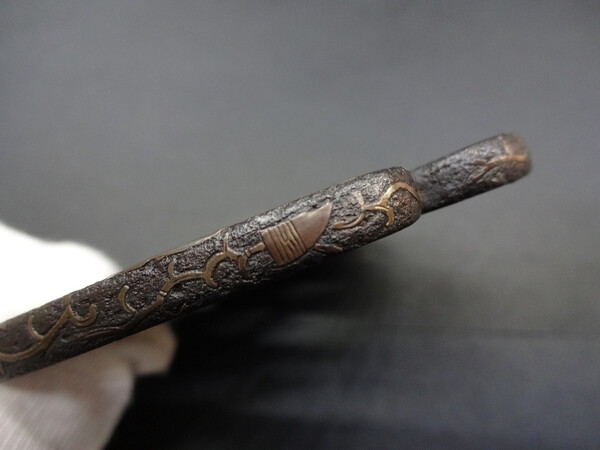
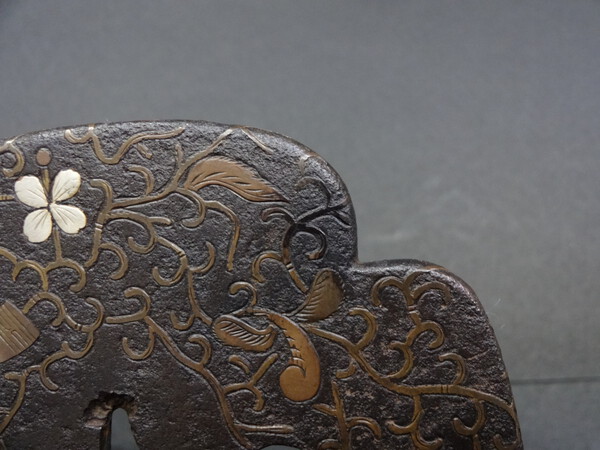
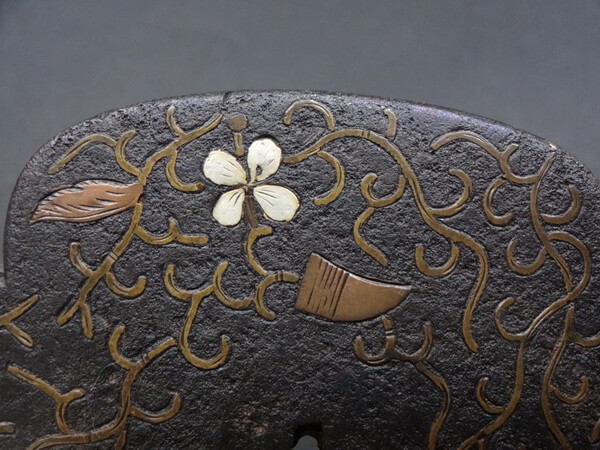
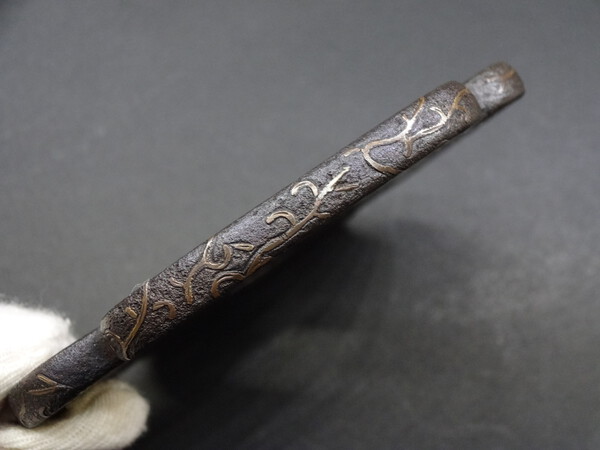
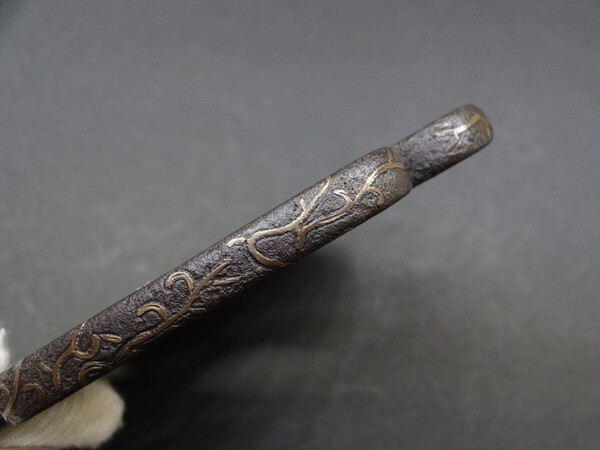
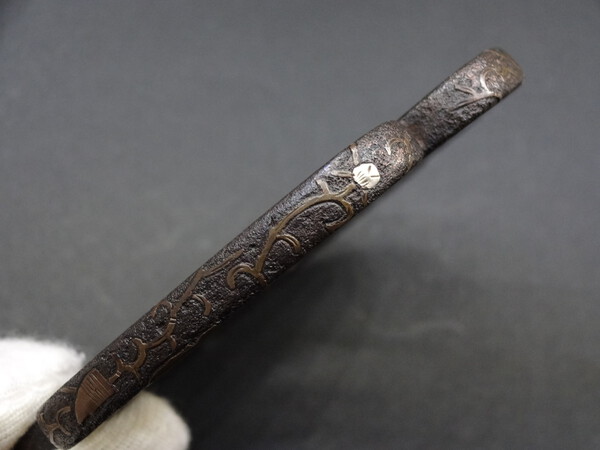
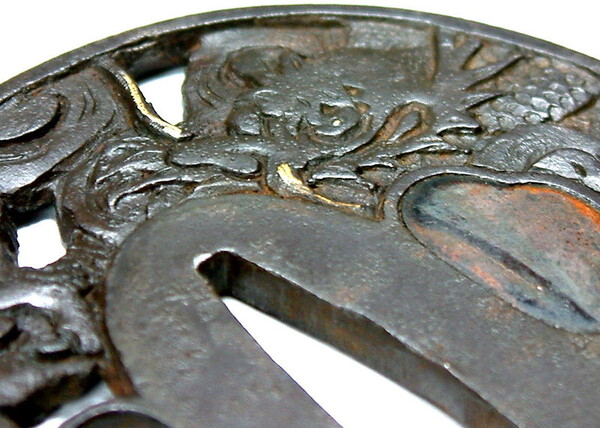
Some additional close-ups

-
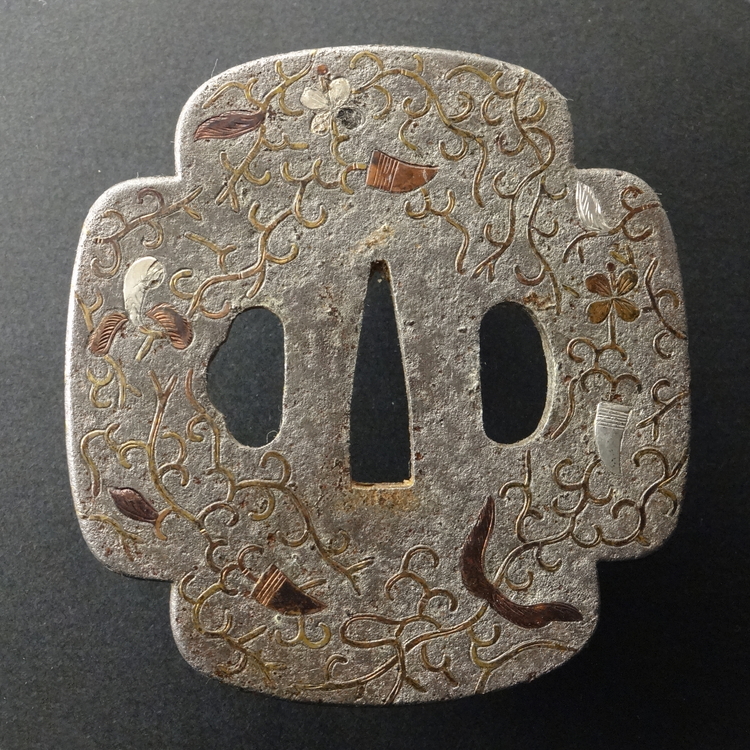
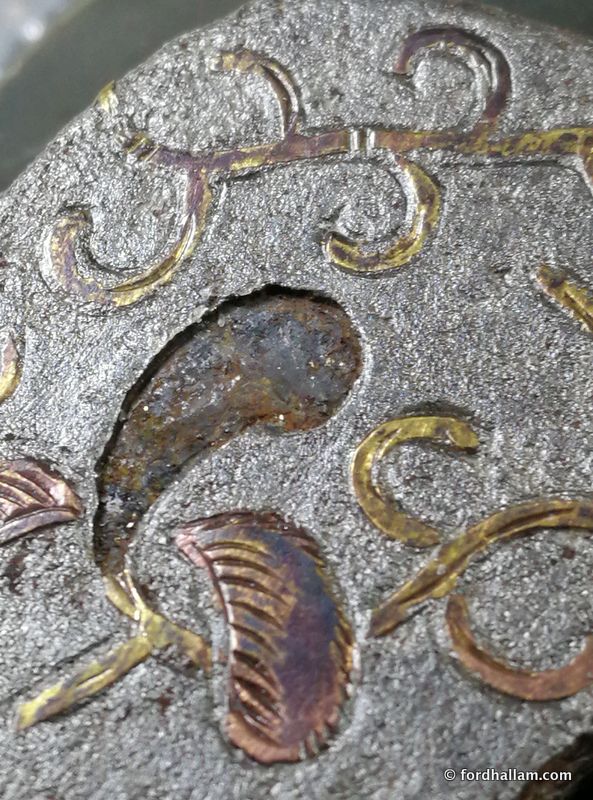
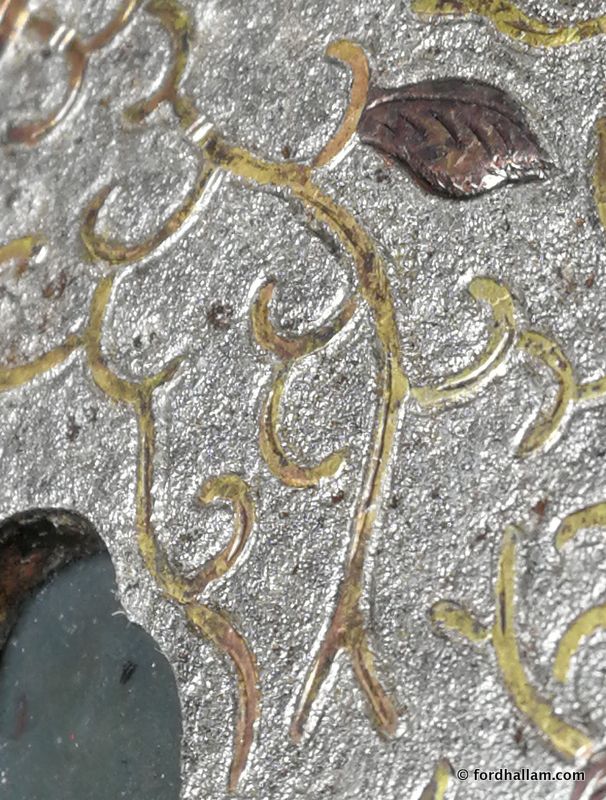
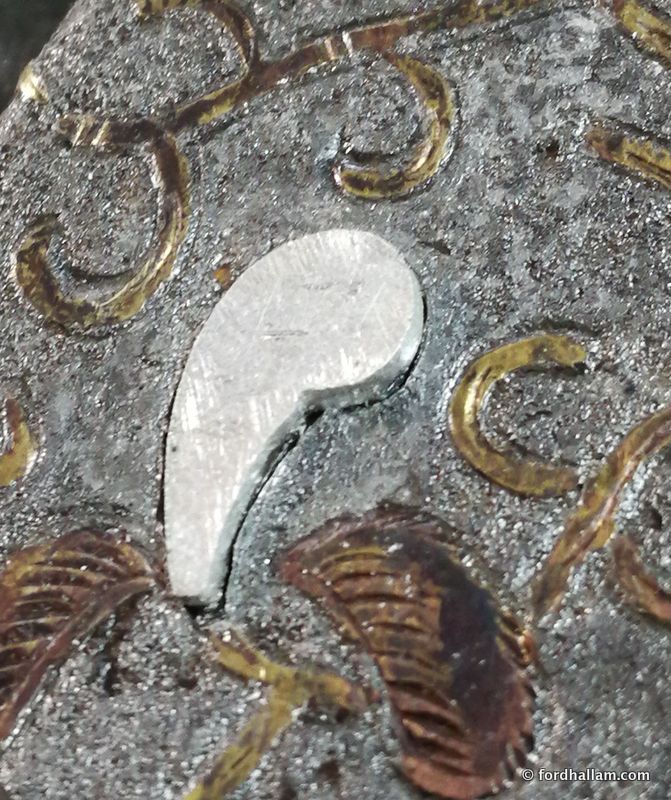
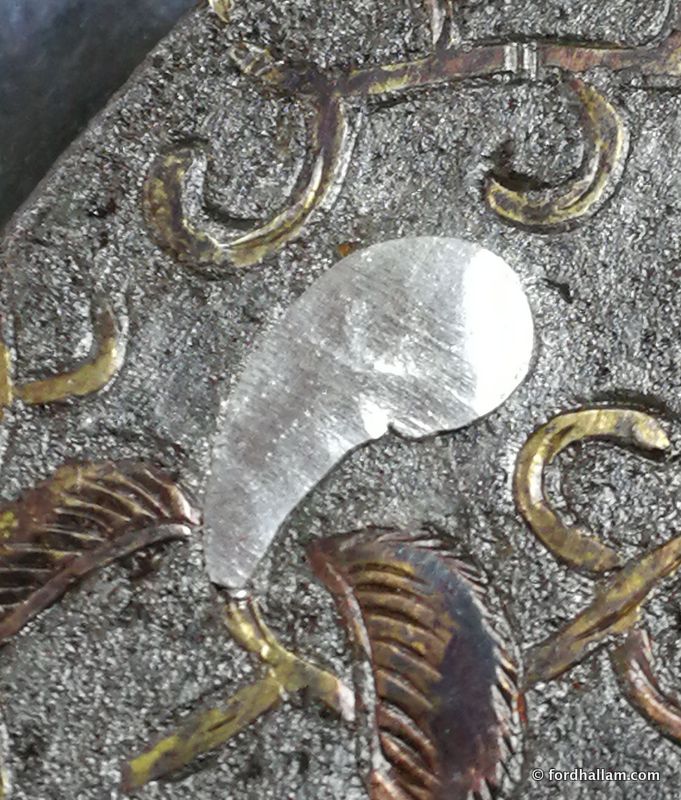
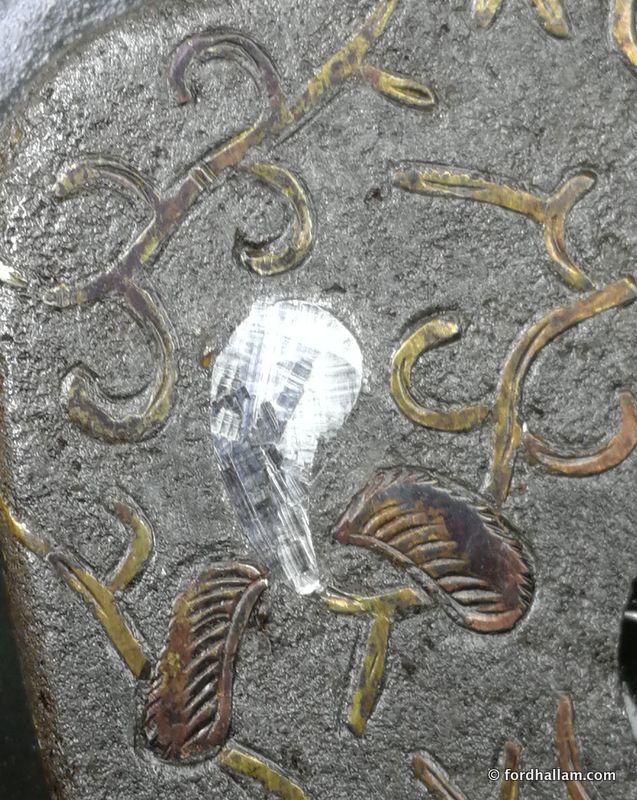
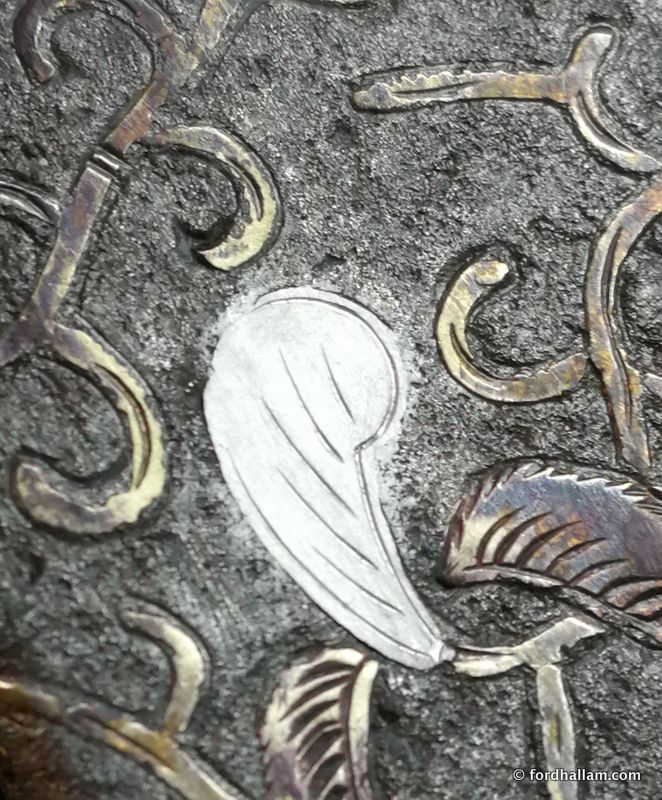
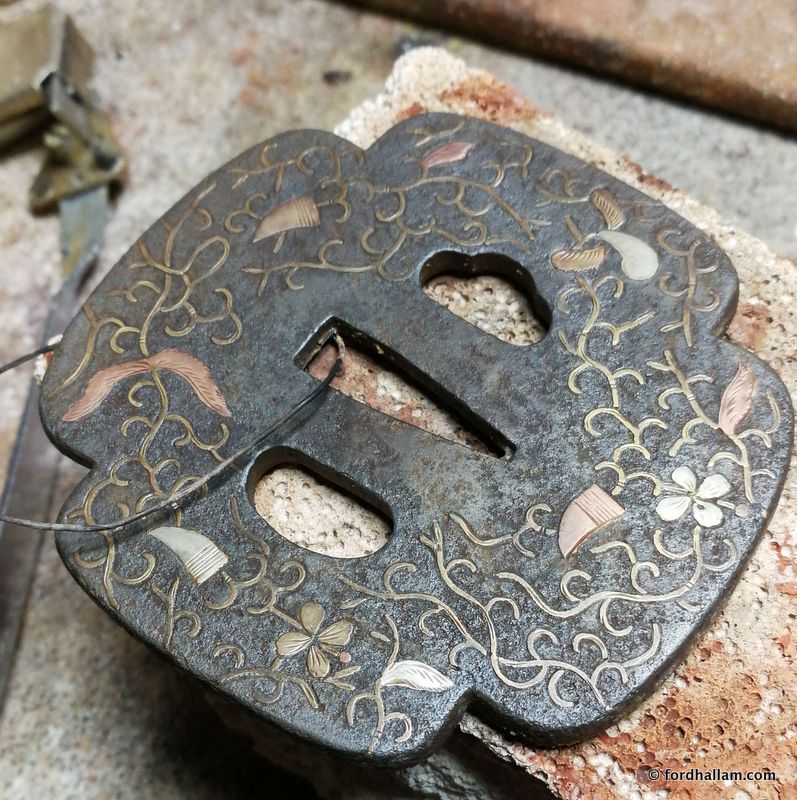
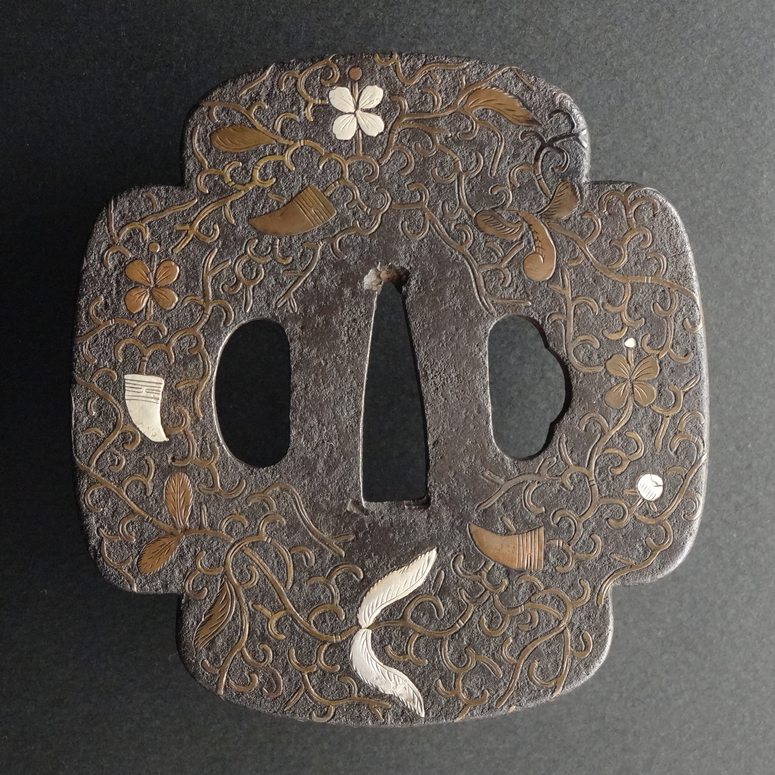
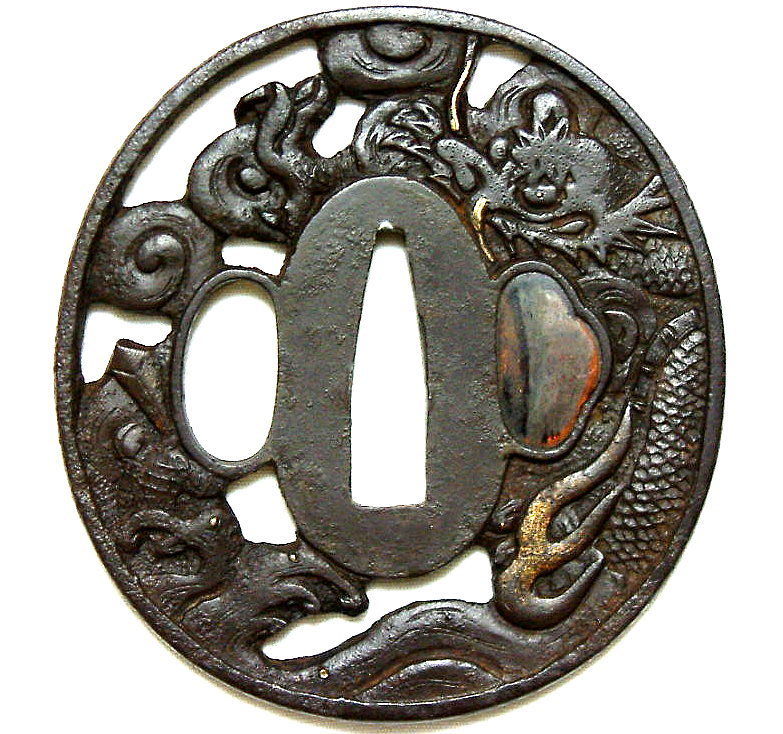
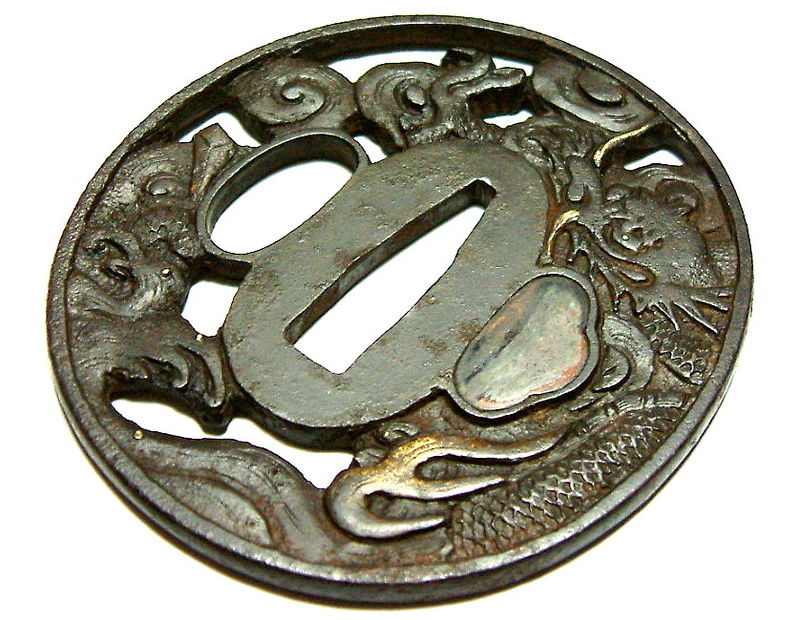
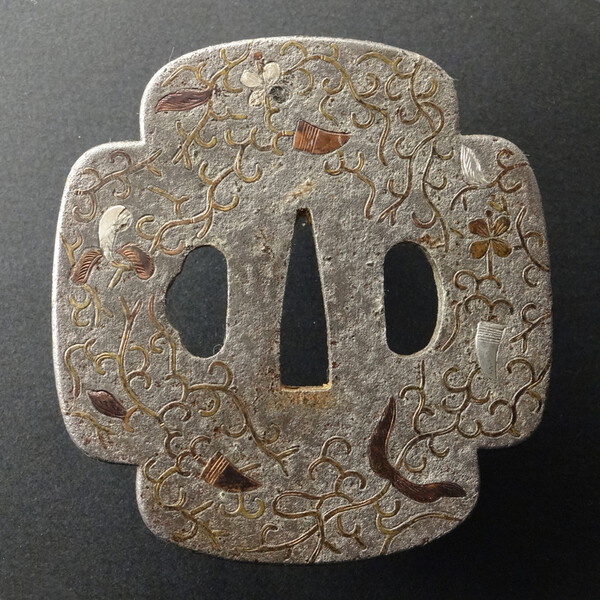
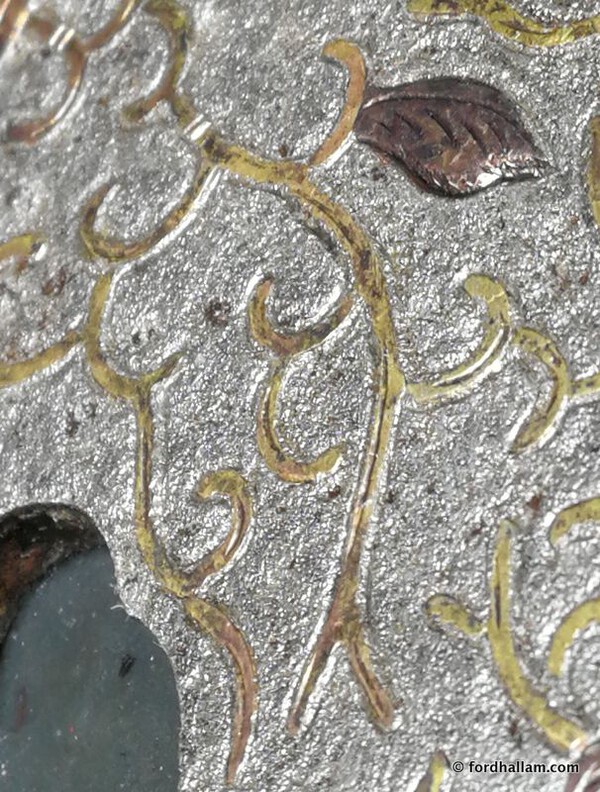
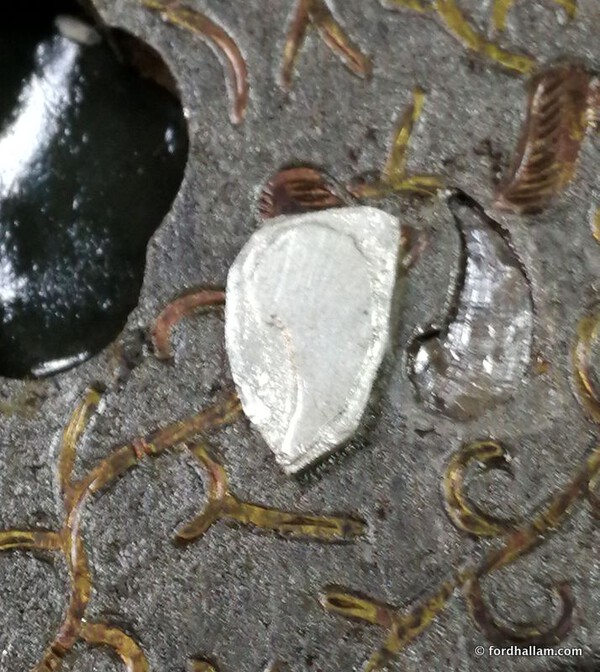
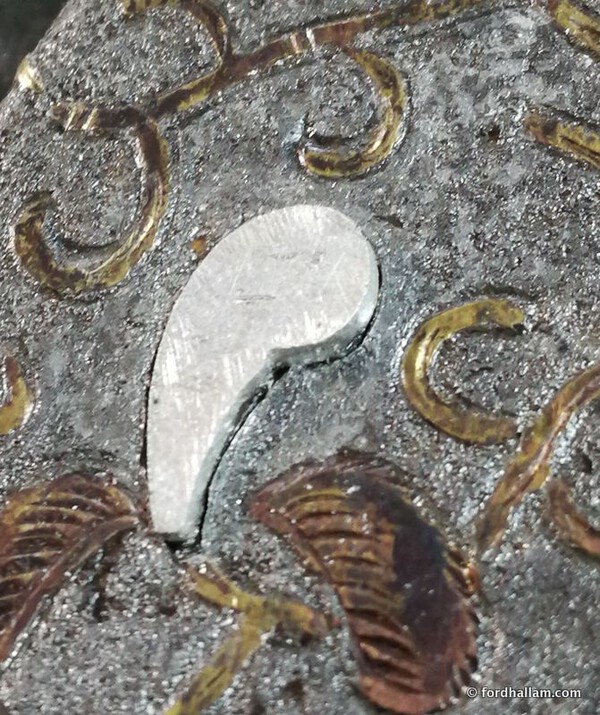
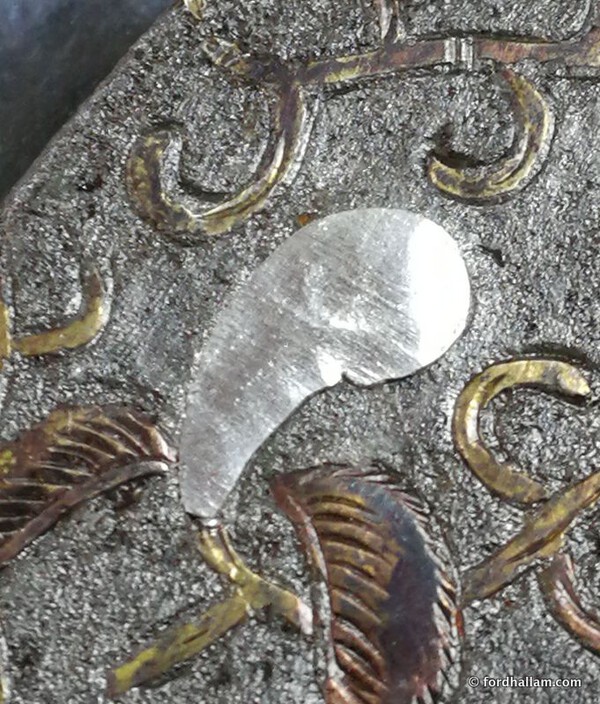
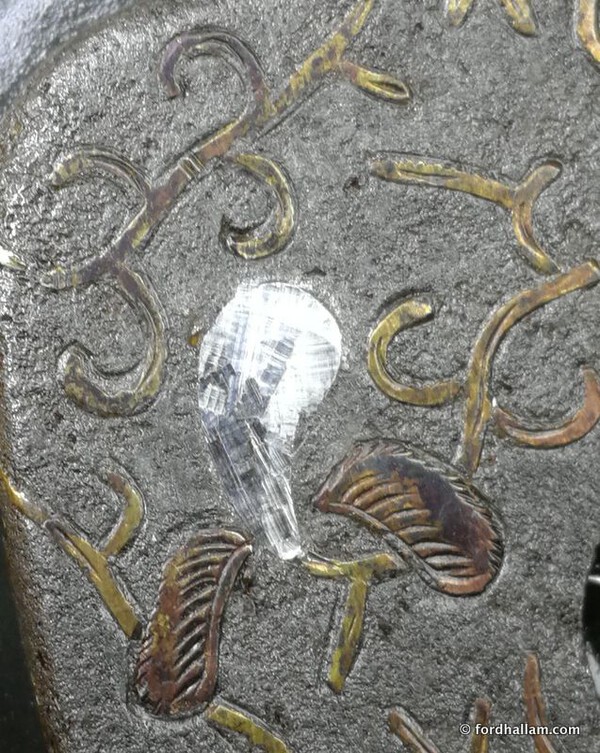
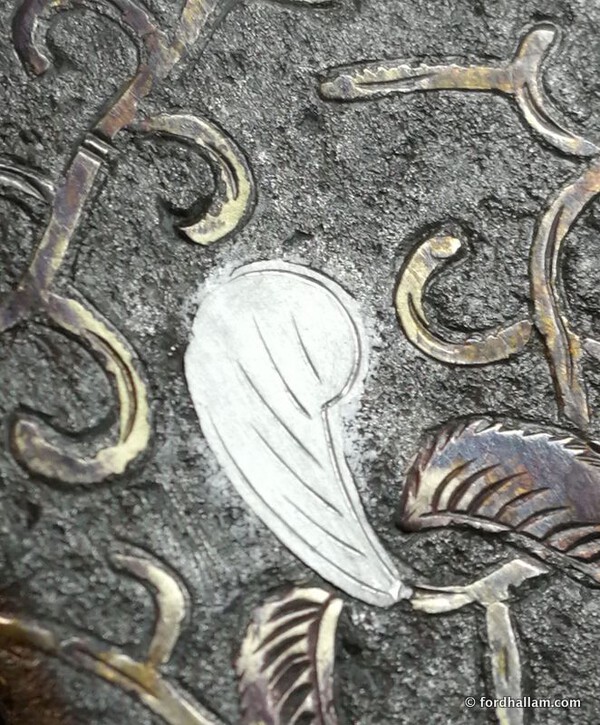
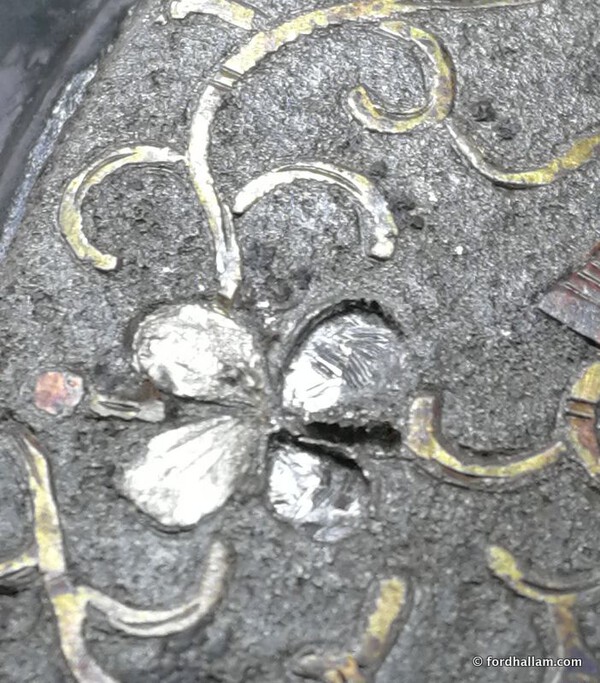
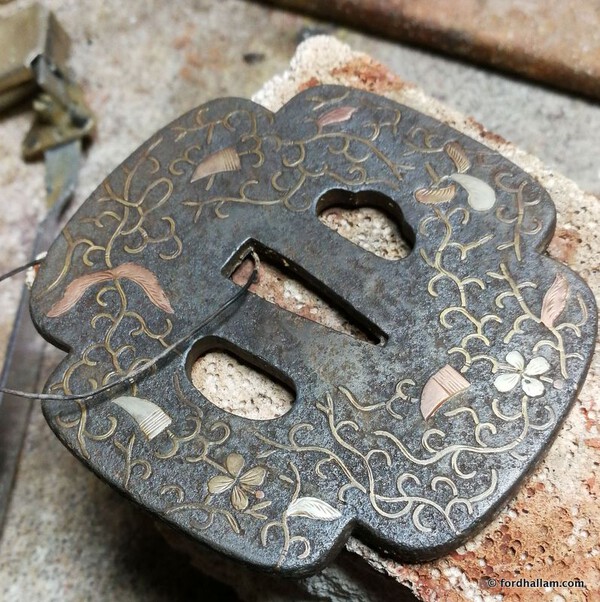
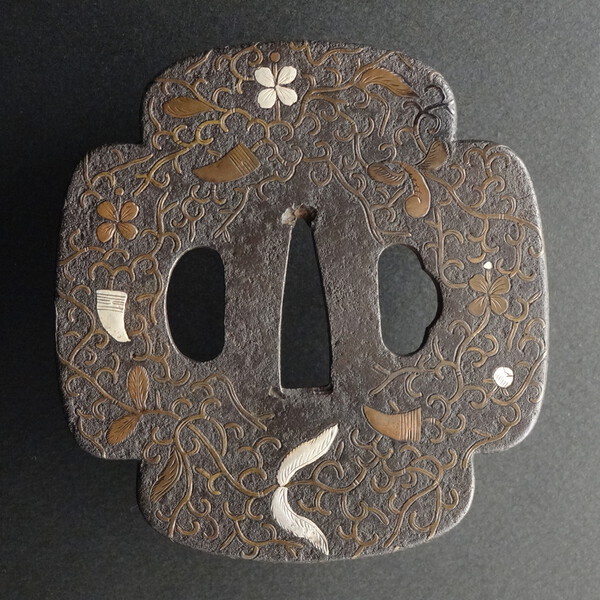
During Christmas vacation rummaging through my junk box I sumbled in this tsuba that was laying there since 2015. It has been completely stripped of any patina by a well meaning "restorer": I was in doubt between two attributions, late Edo Heianjo zogan (mainly due to the silver inlays) or a Kaga Yoshiro with a generic attribution to Edo period. Whatever the attribution it was clear that it did not deserve to be in those conditions. It was not a low quality piece, the inlay looked good and well executed, also there were but a few bits missing inlay on both hira and mimi. Thus I got in touch with Mr. Ford Hallam and here is the result. He seamlessly replaced the missing silver inaly on the ura side and re-patinated it. Replacement of missing/damaged steps inlay: Beginning of patination process: and the final result (the pictures are taken with the same light settings of the first pictures): I have to say that I am extremely pleased by the result of both, the replacement of the inaly and the new patina colors. According to Ford: So it seems to be an early Edo Kaga Yoshiro. Yours considerations and impressions on piece and on the restoration results are, as always, welcome. Best Regards Luca



-
Yes Greg that was my feeling too but I wanted to have more support to my feeling from other NMB members! Luca
-
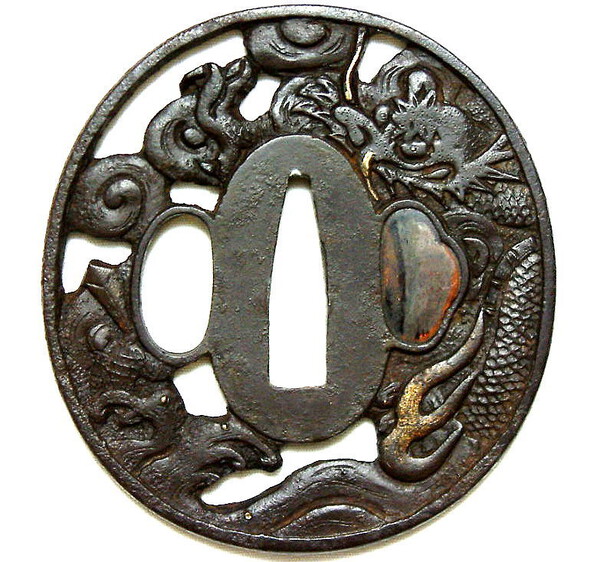
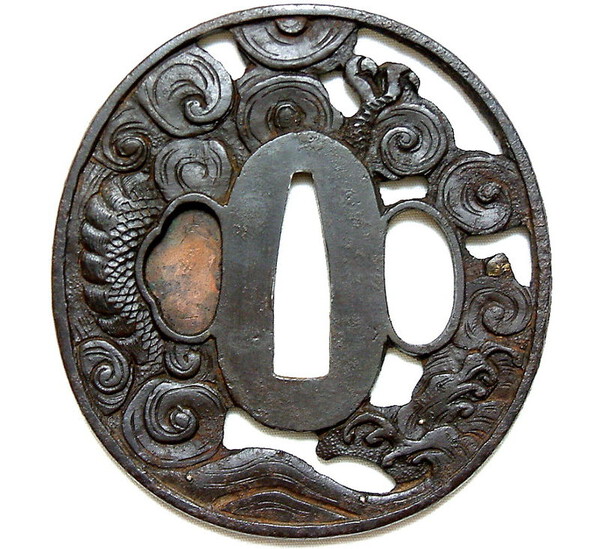
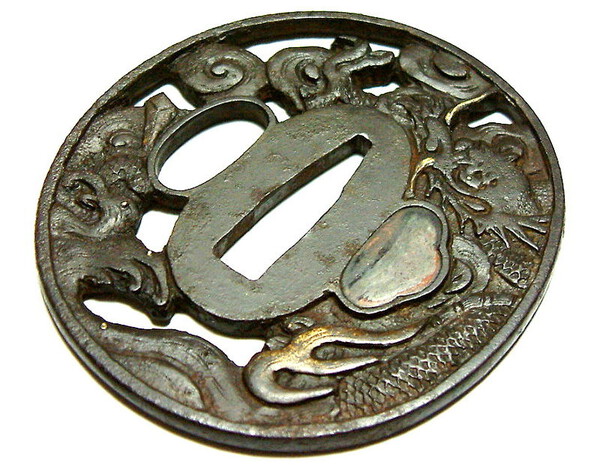
Dear all. This morning I went rummaging through my junk box and stumbled in this two tsuba. They managed to get in my possession several years ago from a friend that was not a tsuba collector. At the time I was able to find some pictures from the original sellers on ebay. They are not in my area of tsuba study so I would like to have your opinion on them before I take a decision whether to keep them or not. They are definitely low end tsuba that I know but any help on them from you is appreciated. Tsuba 1: It seems that it lost most of its patina. The nakago does not show any sign of having been mounted. Tsuba 2: Thank you in advance for your comments. Best Regards Luca





-
Thank you to both of you Marco and Steven! To avoid scratching as a intermediate and temporary solution I have replaced the nails holding in position the fake nakago with soft wood pegs kept in position by interference (i.e. they are a little bit larger than the hole and forced into them). Luca
-
Hello to all of you Just a little question since we are talking about the properties of wood related to tsuba storage. I was plannig to replace the lining of a tsuba box, I mean the part with the cloth lining and peg on which the tsuba is resting. Most of the boxes I have seen use wood that does not look like kiri at all. It generally looks like ply wood even in the most expensive boxes I have bought in Japan or from Namikawa Heibei online, the cheap boxes use even cardboard. Following you reasoning about qualities of kiri wood for tsuba storage also the wood to which the lining is attached should be kiri wood. Am I right? Or for this part plywood is ok? Regards Luca
-
Could not be that this tsuba was used as a keyhole cover plate as happened to some in the end of 19th century? Even though there are no nail/screw holes on the side of the "nakago ana"? Just an afterthought. Luca
-
Hi Cristian I was pointing toward a Early Edo dating do you concur? What is the opinion of the other NMB members? Also it seems that the general consensus is going toward delamination. Than you to all of who posted a comment here! Luca