Peter Bleed
-
Posts
1,866 -
Joined
-
Last visited
-
Days Won
8
Content Type
Profiles
Forums
Events
Store
Downloads
Gallery
Everything posted by Peter Bleed
-
Forrest, You can read this mei with only a bit of work. I do not know who this smith was, but based on the date, he seems to have been an optimist! Peter
-
This thread just keeps getting better. I think there must have been international trade in Chinese sword fittings and related metal objects. But I bet that the makers of those things didn't care if their produce ended up in Japan or Tibet. In Japan, the imports had to be adjusted with ryo-hitsu etc which made them "Nanban." David's Hozon guard is one of those imports. I respect John's assessment of the age of that guard, but I would still like some hard evidence. But what about the difference between David Hozon tsuba and Fred's Tokubetsu Hozon pieces. Fred's guards are nice and the VOC auriculate guard is a classic. I believe, however, that both of Fred tsubas were made in Japan in a style that Edo period Japanese saw as "foreign". And I just suspect that is why they were considered "Special". Making an imported piece TBH might be difficult for a Shinsa team. Tampa will be great fun! Peter
-
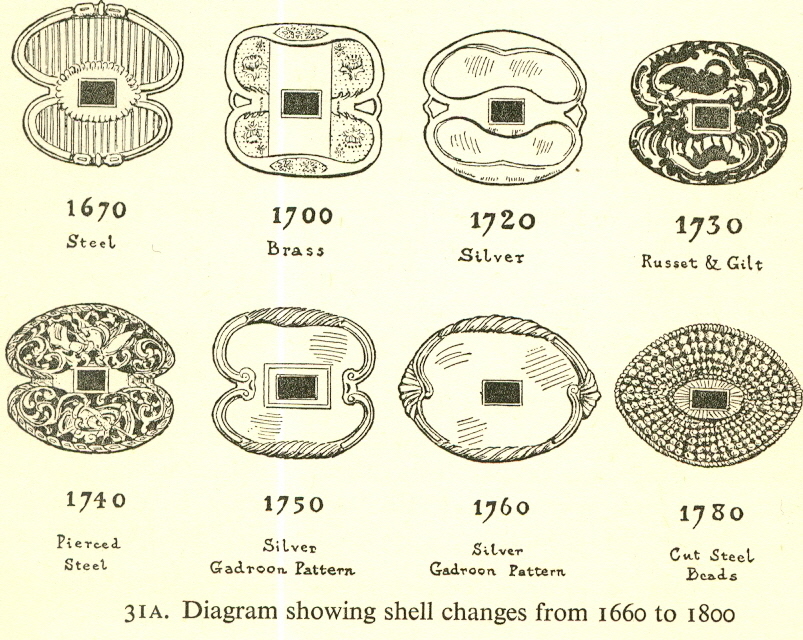
David, Thank you for this wonderful discussion of “early Chinese Namban tsuba .” As a recovering Namban collector I found it very interesting. I would like to add to the discussion of Namban tsuba chronology. It seems pretty clear that at least by the Muromachi period, samurai liked to embellish their swords with diverse, even unusual, tsuba. Active trade into and across the East China Sea provided ample opportunities for exotic sword fittings to enter Japan by the mid-16th century. That trade continued through the 19th century. As a result of this trade, there might be Chinese guards that were modified for use in pre-Edo Japan, but I don’t know how we could be sure of that since the evolution of Chinese sword fittings seems very poorly known. Judgments of your tsuba seem based on intuitive assessments that it “looks” old. I don’t necessarily disagree with that point of view, I’d just like some supporting information. There is a good literature on European swords that we can use to date sword fittings made in European style. European swords did not feature closed counterguards until well into the 17th century. Dished or flat guards became standard on European swords with development of the smallsword in - let’s say - the 18th century. The bilobed tsuba that John Lissenden taught us to call “auriculate” are certainly inspired by European smallsword shells. The placement of grotesque faces at 12:00 and 6:00 echos many smallsword hilts. J. D. Aylward offered the attached chronology of smallsword shells. It suggests that bilobed tsuba – even those classified as “Early Namban” date from no earlier than the mid-1700s. Peter

-
Tellll us, please Peter
-
Less than Preservable?
Peter Bleed replied to Peter Bleed's topic in General Nihonto Related Discussion
Dear Friends, Thank you for a number of insightful responses. I won't go into the complete back story of the sword that got me started on this topic, but I certainly do understand the shinsa process and that no higher rating than TBH could be expected at this pass. It did very well, but I sensed no encouragement for resubmission to a higher level. It seems this sword has topped out but at a very respectable level. Someday I would like to hear what the Board has to say about swords that "didn't make Juyo." It is pretty hard to feel real good about that. But let's continue thinkng about the lower end of the rating scale. The comments offered in this thread have opened this topic very well. Maybe there is a niche for antiquarian "artifact" collectors who will take care of the stuff that "serious" collectors reject. As an archeologist I might be too tolerant to distressed objects because I am comfortable looking a what objects "used to be." But, modern Japanese collectors' standards emphasize 1) good quality, and 2) GREAT condition. Collectors who can or wish to reject those standards, may find lots of interesting swords. The caution is, however, that those - good gimei, tired old, or mumei - swords may not be good investments. (But, please remember that chasing juyos may not be the best way of enhancing your retirement income!) Let me also predict that if the HOZON standard becomes widely applied, lots of "good" Japanese swords are going to fall into limbo. To illustrate, let me say that I collect Sendai Shinto and anybody who collects those has lots of what are politely called "ATO-MEI". These are school swords that were "signed" sometime after 1876. As gimei that can't get papers AND/BUT they won't do any better if they become mumei. The system encourages these swords to be ignored, although I can appreciate them as aesthetically worthy, historically interesting reflections of Sendai-han history. They are never going to get the attention and respect they deserve. There are many comparable categories of swords that can't get the respect they deserve. War damaged gunto, are another example. And then there are swords that don't get papers, but are described as "worthy of preservation." I submitted an obviously old sword in Yokohama Tachi mounts to a NTHK panel in Chicago where it was judged 1) Kamakura age, 2) retempered, and 3) worthy of preservation. What are we to think about such swords? Is the Shinsa saying that THEY don't care about this sword, although they want ME to take care of it? Peter -
Dear Friends, One of my swords recently was recently awarded tokubetsu hozon certification. That is not exactly what I was hoping for, although I certainly recognize that it is positive. Experts consider this sword especially worthy of preservation. I’ll try to take good care of it. The experience has got me thinking about swords that are NOT considered worthy of preservation. The NBTHK has laid out clear criteria that make a sword worthy of preservation. But, is there a policy about the appropriate treatment of swords that don’t make the cut? If the organization doesn’t have a policy, can anybody describe how they are treated by Japanese collectors? And what do Board members think is appropriate treatment for swords that don’t get or won’t be recognized as hozon? Peter
-
Tamahide Oshigata help...
Peter Bleed replied to cabowen's topic in General Nihonto Related Discussion
Chris, Thanks for an interesting thread. The Sendai Han Toshu Meikan has information about both generations of this line. The first master was a student of Musashi no Yasuhde and he also worked with Naotani. He had a bunch of deshi. The line is covered in pages 124-133 of the Meikan. It shows 11 swords, 9 by the first, one by the second and one that was a joint project. I'll be happy to send you xeroxes if that would help. My impression is that the jury is out on Tamahide, was he a sword smith or a carver? He seems to have made a lot of short swords, but he sure could trick'em out. A nice engraved Tamahide was offered at the Chicago show some years ago, but at a price that was - or at least seemed - atmospheric. Peter -
Katana and Tsuba Mei Translations needed
Peter Bleed replied to Ed Hicks's topic in Translation Assistance
Ed, you have my sympathy. This is a challenging signature. Let me add my thanks to John. Is there a Nelson's number with that "tomo"? The usually functional lists of swordsmiths' titles did not show me this "Awa-no-kam'". Like I said, this is a challenging signature! Chris, I'd appreciate advice and recommendations about kanji software. Peter -
Does Anyone Know Anything About Japanese Sword Surrender Tag
Peter Bleed replied to hddennis's topic in Nihonto
Thanks for the amplification. I have never had any contact with swords that were surrendered by civilians to police. There must have been lots of them, but they seem far less common that swords turned in by serving officers. Those seem always to have been tied on wooden tags or cloth attachment. Does this tag mean that Japanese police were rounding up swords for the Occupation authorities? Peter -
A group of healthy young Iowans. Thanks Steve. Peter
-
Does Anyone Know Anything About Japanese Sword Surrender Tag
Peter Bleed replied to hddennis's topic in Nihonto
I do NOT think this is a surrender tag. It looks like some other kind of musuem/collection/sale lab'e. The only think I can read says "Japanese sword". There could have been lots od reasons for a lable ti be put on a sword between 1868 and 1946. Peter -
Thanks to those who responded to my inquiry. I tend to look too tolerantly at odd stuff. There is no doubt that this blade is "dead". Whoever did that was outside polite Japanese sword culture up thru the the end of the Edo period. I have seen lots of Boshin era weaponry in and around Sendai. If we are to judge by Museum pieces, those guys carried buke-zukuri swords. But they were pressing stuff into to service - those wood barreled cannon and all. But I have never seen a working Edo era samurai sword without a tsuba. Could it be a merchant's sword? Maybe so, but judging by the vast supply of grubby sho-to that we see, crappy bukuzukuri wakizahis had to be available to merchants who needed to carry. I also don't think it is simply fair to say that these fitting "suck." Actually, the wood it is made of is that curly-grained stuff (the name of which escapes me) so that it might have been rather attractive - with kurikata and no tsuba. How odd. Maybe the take away is that we tend to collect the "normal" stuff, but that in Japanese swords as in so many other areas, there are always "odd things." Again, thanks. Peter
-
unique tanto with kogatana mei translation needed
Peter Bleed replied to mercierarmory's topic in Translation Assistance
Mike, Thanks for posting these menuki. I have expressed some opinions about these fittings, but I feel like I am still learning. I still think this is a flashy Bakumatsu sword. BUT the suggestions that it was rigged out for the Yokohama-based foreigner trade is pretty interesting. The motif of the menuki does bring to mind classic icons of the Meiji era (stand-mounted armor and a birds head tachi). Technologically, tho, they look very much like so-called EZO fittings that we all assume are much older. I think all that junk you found beneath these menuki is stuff the fitter mixed up in the mastic to attach the menuki. Where is the seam in the same? Peter -
Friends, I would like to beg the input of the NMB on a sword that just sold on eBay. http://www.ebay.com/itm/350953416417?ss ... 1423.l2648 I sniffed around this sword because I thought/hoped/wondered if it might be a sword rigged up for or by Ainu. It has a rustic look that seems outside samurai sensitivity. But it does not have any of the clear and classic embellishments of Ainu cutlery. So I did not wade very far into the bidding. I wish the winner all the best. But I would also like to know who might have carried a sword like this. Any insights? Peter
-
Interesting info on tameshigiri and foresic study of remains
Peter Bleed replied to drdata's topic in Nihonto
Harry, Thank you so much. I had not seen this paper. It is interesting from several regards. I have mailed it to some of my forensic friends. I'm sure it will get wide ciculation. Peter -
Photos of Amerinds with Nihonto
Peter Bleed replied to John A Stuart's topic in General Nihonto Related Discussion
Well, Darn. I have only found 2 of the 3 copies of the Nebraska History that I thought I had. Both of those are NOW GONE. If I find the missing copy, I'll make it available. Peter -
Mystery peice
Peter Bleed replied to Nihontocollector19's topic in Auctions and Online Sales or Sellers
Well, gee. Checking any of the easily available books shows that it is clearly and simply a Type 8/19 Court Style Army Sword, also called the 1873 Dress Sword. It also appears to be an active auction so I am not sure that we should be discussing it. Peter -
All the surfaces of this thing are slightly concave. This indicates that it was cast. As the metal (whatever it might be) cooled , it drew in. Look at all the surfaces. They are all slightly concave. Clear indication of casting Oh, I should also say that it looks like crap, too. Peter
-
Photos of Amerinds with Nihonto
Peter Bleed replied to John A Stuart's topic in General Nihonto Related Discussion
This whole issue seems something like an albatross. It should go away. Years ago, in my youth, i came across a photo of the the interior of Chief Red Clouds cabin and saw that it showed a handachi hanging on one wall. Then i had shown to me a photo in the NCMP archive of an identfied Blackfoot in Alberta holding a Japanese sword, Further research showed that the Red Cloud photo was made in late 1890 and that a group of Japanese Army officers passed thru his community in about 1877 as they returned overland from the Philadelphia Bicentennial Exposition and decided to visited western forts (given the Indian fighting going on at that time, Little Bighorn and all that). While they were in the West, one US officer said something of them like, "They were nice enough fellows but they couldn't speak English so we didn't know how they liked their eggs." Could they have given Red cloud his sword? I have no idea. But I did put some feelers out to the Pine Ridge Dakota community. AND I DID GET A CALL(!!) saying that Red Cloud's sword had been found on the reservation (!!!). I made immediate calls - many of them. And got a nakago rubbing - which revealed a . . . . Koa Ishin blade. Looks like Indian GI's like souvenirs. Red Cloud's sword is still out there in South Dakota. The Blackfoot sword photo was undated as i recall, but (again as i recall) somehow I did discover that the missionary to the Alberta Blackfeet had spent time in Japan. I also published a little piece in Man at Arm that showed some Japanese blades that has been bought from native folks in Alaska. Those things all dated from the very early 1900's. I could go on, but the bottom line is that Japanese swords seem to have been in play on Japan's northern frontier. I doubt that the folks who would have been sent to Canada or Alaska, or California in the 19th century would have carried swords. I think it is more likely that after 1876, the world was awash in old Japanese arms. Lev Bogoras did collect a Japanese Armor from the Siberian Chukchi. And do I recall that another was collected from Omdurman? OK, enough of that. I have a couple (three 3!) copies of the Nebraska History issue that has my my piece on Japanese swords. I will mail these post paid to the first 3 peope who PM me that they will send $10 to Brian for the NBM. Peter -
Seeking opinions on my recent find!
Peter Bleed replied to Nickupero's topic in General Nihonto Related Discussion
I agree with everybody. This is a nice find and a collectible sword. But I also think the work is - well - workmanlike. And stylistically, it is a show-off "carry piece" that had to impress people as the owner walked through town. If this guy had been a cowboy he would have had pearl handles on his Colt. Well, no, he probably would have carried a Smith or a Harrington-Richards Peter -
Need help with Spice Tansu and Translation
Peter Bleed replied to wdjensen123's topic in General Nihonto Related Discussion
Can anybody translate this? The answer is yes, but not me It says it is a funadansu (ships chest) and it looks like it is dated Meiji 8, which is what, 1875. Peter -
Wow! Gabriel, you are dazzling! Wow! Peter
-
Possible 3D Scanning/Printing Solution to sending blades.
Peter Bleed replied to Tcat's topic in Nihonto
I think we did discuss the idea of printing habaki here on the Board. I have also chatted with a tech-savey pal who felt it should be possible. We discussed having a manipulable CAD habaki form that could be adjusted as needed. But we never pushed it ahead. A challenge I saw was the consistent problem for habakis - getting it over the thick irregularity of the nakago and then fitting snuggly at the machi. This WILL happen. Peter -
unique tanto with kogatana mei translation needed
Peter Bleed replied to mercierarmory's topic in Translation Assistance
Friends, Having said too much of too little value already, I probably should keep quiet. But I find this sword interesting and I am truly and deeply enjoying the discussion. I had been seeing this sword as a late development of the Namban style. A very urbane sword that seems related to so-called toppei koshirae. They have that flashy, streamlined look. I still think that the menuki are an interesting design and not formulaic hack work, altho I have to agree that the treatment on the tachi is pretty light. I also could not imagine what kind of a pedestal the armor was on so Ian's observation was very interesting, indeed. Peter -
unique tanto with kogatana mei translation needed
Peter Bleed replied to mercierarmory's topic in Translation Assistance
Gabriel said "Speaking humbly, I am of the opposite opinion of Peter – it looks like it was ordered by someone with questionable taste and a very low budget.' Sorry, Gabriel, you misunderstood me. I did NOT say it was "good" or "of high quality." I said it was flashy and probably costly to the guy who bought it. I think this sword was BLING BLNG, not art. It was an ornament that would look good on a "man about town. I think it is rather well crafted, but it is an ornament. It would not fit with formal wear. It would be out of place in a tea house. But I bet it would fit right in in Yoshiwara. Note too that it is a short. I doubt that this could be described as a "samurai sword." I do not think this makes it a "bad sword." It is simply a reflection of what was going on with swords at the end of the Edo period. It is not to Gariel's taste, and I can't blame him. I do not see this as "Yokohama docks" stuff of the Meiji era. But I have no idea what to make of the little brass knife. Letter opener? An interesting challenge, Mike. Let us know if there is a signature. Peter