Jean
-
Posts
8,637 -
Joined
-
Last visited
-
Days Won
51
Content Type
Profiles
Forums
Events
Store
Downloads
Gallery
Everything posted by Jean
-
Hi Max, The Nakago form does not seem to fit with soshu tanto blades. Main schools have made hitatsura, Mino, Bizen .... The kantei points are Tobiyakis, in Soshu (late koto) they have a crescent pattern while roundish in the other schools. I hve an hitatsura katana attributed to Tsunahiro (late Koto) bought from big Mo.
-
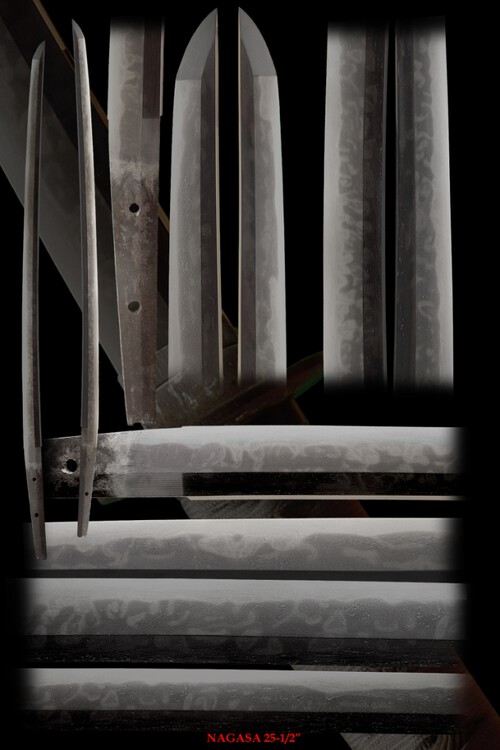
Hi Syd, Times to make up your mind. You have all the clues. I am going to give you a few hints. 1 - Yasurime files 2 - Nakago : is it really ubu? 3 - how is the hada, Mokume, Itame, Masame, mixed ... Just one thing : when examinating a blade everything must be taken into account.
-
Hi Syd, Now what is your kantei, 1st: Koto, Shinto, Shinshinto? 2nd : What Province? 3rd : What school? You have one the best Bible book, so Make up your mind and throw the dices That is the only way to learn ...
-
Hi Stephen, I is also my first choice
-
Hi Reinier, "why is it that it should look like there was never a mei to begin with?" Because, Nihonto is art and a wrong mei on an artifact is forgery, gimei is pollution "can the rest of the nakago really be trusted if it's gimei?" Generally yes, because it is a lot of work to reshape a nakago, yasurimei should be changed to match the smith work if not the right ones. But you can also find gimei on orikaeshi mei. Extract from AFU Glossary : Orikaeshi mei: 折り返し銘 Mei in which the original nakago is cut and folded back when a blade is shortened in order to save the original mei. Can also be used by clever counterfeiters. "if the blade was made to be gimei from the start the whole nakago will be made to mimic a certain style/smith. " Agreed "it's known that certain smiths made certain gimei." You have to reformulate your statement, you are mixing gimei and forging "A la manière de ..." e.g. "in Chogi, Nagamitsu, Kanenaga, Rai style", in Japanese : Utsushi One of the most reknown Smith in Utsushi is undoubtedly Yasutsugu who did it upon Shogun request, old blades being suriage or unsigned Mukansas swordsmiths are fantastic at Utsushi In fact Gimei is done by unscrupulous people or maybe also by untalented swordsmiths for commercial reasons. These people are generally very clumsy. Shinsa people are very good at detecting gimei. "now maybe i'm naieve but why not just invent a easily recognized symbole or some modification that is added to the nakago and can't be easily removed? " Too late, everything has been and is recorded on today's smiths, so gimei on new blades is very hard, put this on old blade is alteration to be banned. ex: I remember a NMB thread about an old sword rejected by Shinsa for Gimei, which has the gimei removed and once resubmitted kanteied to the smith subject of the gimei The good question is : Does perfect Gimei exists? The answer is : nobody knows because if it is perfect it has not been detected :lol: :lol: :lol:
-
Hi Jeremy, Very difficult to say, but I would like to make a reminder. If you want to get an advice, you first have to fill a form of this kind www:http://home.earthlink.net/%7Esteinrl/swrdinv.htm Then give 3 others pictures : - Nakago - Kissaki - Monouchi I'll try to enlarge your picture but no enough definition. The nakago has suffered but seems to be intact. It seems old enough to be koto. It has one mekugi ana but the nakago is quite long. Hataraki are interesting and makes me think of my Kamakura Enju (ko ashi) and by some aspects makes me think of Rai school. In short Koto rather than Shinto. Kissaki is rather long, but boshi does not seem to be jizo The hamon is a mixture of Gunome midare beginning with a bit of suguha The nioiguchi seems to be thick, Is it nie deki or nioi deki? Let's dive : Late Koto, beginning Shinto : Azuchi Momoyama - perhaps Mino or Bizen (because of the boshi) :D Have I forgotten any of the Gokkaden :lol:
-
Hi Stephan, The purpose of this form of tanto was : To cut throat on the battle field as it has 2 cutting edges, it is easier to use back and forth. And generally, they are very thik and were use as Yoroi doshi, piercing armour. Very much in use during the 16th century, look at this one : http://www.aoi-art.com/sword/tanto/07071.html
-
Hi Max, It is a nagamaki naoshi and not a naginata naoshi. You won't get any boshi like that on a reshaped naginata. Blades like this were common in Koto, I would say end of Nambokucho beginning of Muromachi. Suguha, be my guest, Yamato or again Kyushu school...
-
Hi Max, I was just having a glance, too much work. Nice sword in need of polish, from pictures, it seems that the blade is katakiriba . That is a start to make some research. I'll say end of Muromachi, this suguta uncommon if not rare was encountered mainly among Kyushu schools
-
Great Job Darcy, I have already mailed you this morning to reserve 2 books. Sorry NMB guys, but as French representing Europe, I am prioritary :D :D :D Take care
-
Milt, My heart is crying for your misfortunes BTW, splendid this tsuba
-
In all films, you can see this kind of errors, Heroes wearing their wrist watches in 17th action movies. My best one (I dig western movies) is from Sergio Leone's movie "The good, the Bad and the Ugly). The very Bad Lee van Cleef has a 44 Remington 1859 model cap-and-ball revolver and his belt is full of cartridges ... Not a surprise he gets killed at the end of the movie, he did not deserve to live as a bounty hunter .... :lol: :lol: :lol: too careless
-
Stever, I wish I could, in fact it's a very good idea. I am going to spare one $ a year and after 5000 years I'll have enough money to buy one :lol: :lol: :lol:
-
What shall I do in 5000 years, if I am remain alone on earth (if it is still there) without you my NMB friends
-
Dear Unknown, I would place this sword late Tegai sue Koto, some distinct features belonging to Yamato : High shinogi, Nie deki suguha. Nevertheless, We have no idea of the kitae which is a stong kantei point, we have no indication on the hamon, but the hamon should be hoso suguha or it is almost hirosuguha. Futhermore the hamon should be O midare with more nioi than nie and very tight. But as Nihonto as was saying late Jim Kurrash is full of exception, I'll stick to sue Tegai (based on the Nakago and the rust). The sword seems very healthy from the kissaki picture, but (probably too much drink) I see as a small hamon line 5 mm under the marked one.
-
Thanks a lot Pete (and good news for me
-
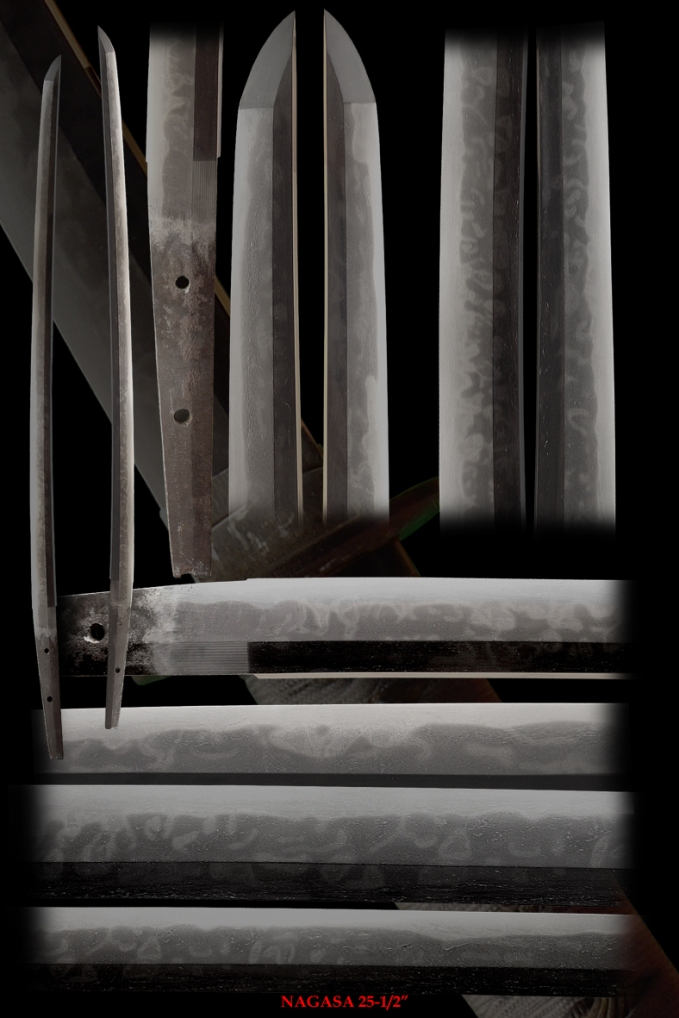
Hi Benkyoka, I have seen the Nagasa length on the torokusho but not the total blade length .... The best thing is to fill in the form at Dr Stein's website and give the distance between the 1st and Third Mekugi ana. http://home.earthlink.net/%7Esteinrl/swrdinv.htm I take this opportunity to ask all NMB members (hoping Brian does agree) when requesting an opinion (mine is unworthy), to attach this Inventory sheet which is quite exhaustive and attached 4 pictures of the blade, unless your picture are as good as Darcy's one : - Nakago close-up picture - kissaki close-up picture - whole blade picture - a close up picture of the monouchi
-
Hi Mr Benkyoka, We lack data about your sword (over all length, nakago length, distance between the 2 mekugi ana) it seems it is O suriage, from the picture it looks like there is a high shinogi but I can be misraken by my eyes. The Nakago colour seems to indicate a much older sword than WWII. The Kanji uses for Kane is the on from Yamato school. Kanenaga is a famous lineage of Tegai, one of the five Yamato schools Refer to the following link : http://www.nihonto.com/fwb8.html For more information have a look at Bob Cole site (outstanding) http://www.sho-shin.com/yam8.htm
-
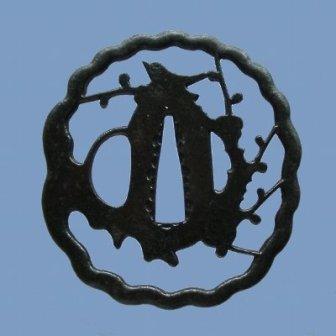
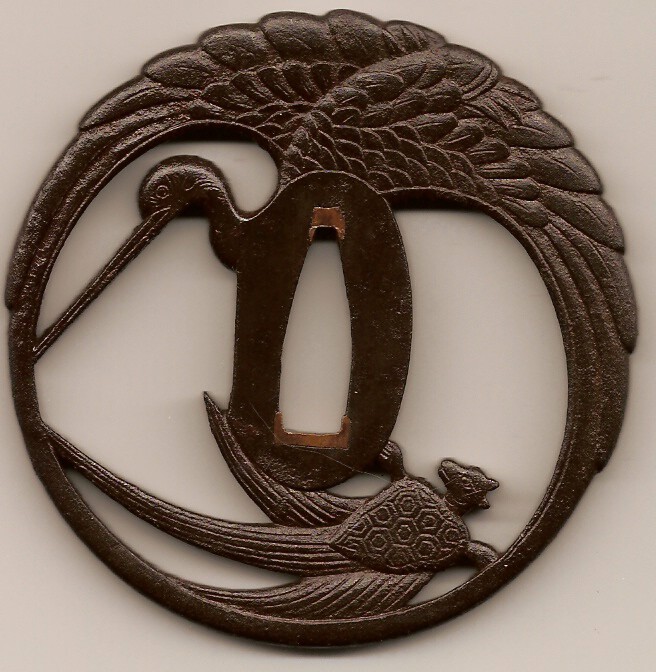
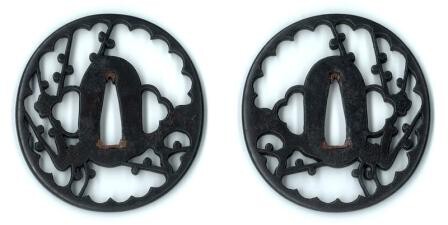
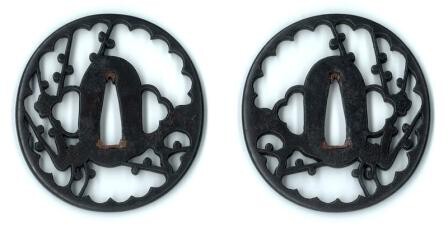
This one is Katana size 8X8 cm Tsuruta san told me : "many school tried to make this kind of design. Higo, Syoami, Akasaka and so on" Any idea?
-
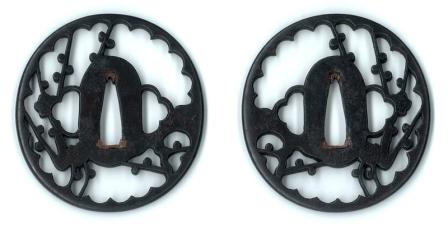
Thanks a lot to all, From your answer Rich, I could say it's a real lesson on line. They are both coming from Fine Sword. Next time, I shall try to make an overall view, then one of the Hitsu ana and one of the Rim. Sorry Rich, I was lazy and too tired to write "or" so I put a "/" between Higo, Akasaka.I know by name the different Tsuba schools but nothing of their subbranches. I know Higo as a school but I did not Know that Higo was just the name of the location (province) of different schools: Kamayoshi, Jingo ... Now I shall post another one, not a great one but it was my dream from years ago to have one (it comes from Aoi Art) Last question : What is a Higo Koshirae? I have noticed for years that the only time a koshirae as an attribution it is always a Higo one? and what are the characteristics? because it seems to cover very different style. Concerning the first tsuba I don't like the Kogai hitsu ana (sorry Milt) Concerning the second one, why two Kogai hitsu ana?
-
Hi Milt, I have not seen a lot of bizen swords with so much kinsuji/sunagashi. Bungo (wakimono) a mix of Bizen/Soshu .........
-
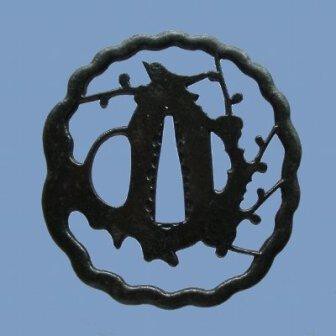
For Milt, Rich .... I have bought 2 tsubas. Are they both Higo or Higo/Akasaka? And as I am a learner on Line (LOL :lol: :lol: ) what is the diffrence of the 2 schools in this kind of tsuba. A friend of mine told me it was a question of rim ...
-
I would not say broken kissaki (boshi is visible on the pictures), probably a big accident (hagire, dent) slightly under the the Monouchi. It makes the sword either a very powerfull waki or a katana. That's All Folks (Merry Melodies'Music :lol: :lol: )