Grey Doffin
-
Posts
4,220 -
Joined
-
Last visited
-
Days Won
31
Content Type
Profiles
Forums
Events
Store
Downloads
Gallery
Everything posted by Grey Doffin
-
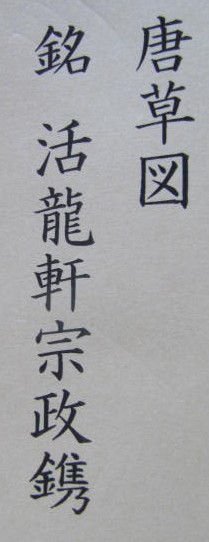
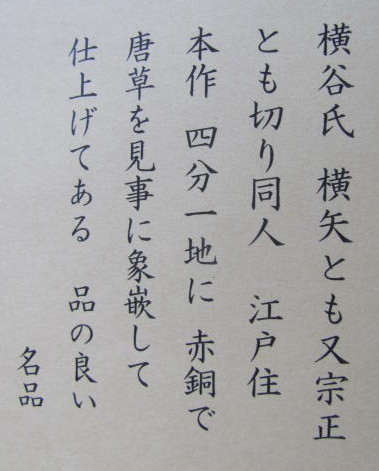
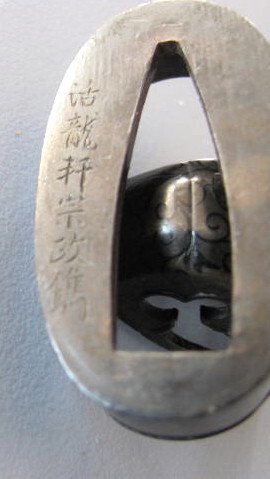
Hi guys, Can you help me with this mei and paper (I asked about the paper on the General Nihonto forum)? I think the smith is Munemasa but I'm having trouble making sense of the rest. Any and all will be greatly appreciated. Thanks, Grey


-

Katana Tang identification - Please help.
Grey Doffin replied to QuinnE's topic in Translation Assistance
Hi Quinn, Unless you're sure you know what you're doing, don't clean your sword. Improper cleaning can knock huge chunks of value off the sword. If it's covered in cosmoline you can wipe that off with a bit of alcohol on a cloth. Otherwise, best to leave it alone. Grey -
Sorry about that, Brian. I won't do it again. Grey
-
Actually, this isn't crude; pretty standard mei carving on Nihonto. Here I go again trumpeting my own horn, but I honestly believe that a set of my Kanji Flashcards is the answer to learning how to read sword signatures if you aren't going to learn how to read Japanese. The Kanji were chosen to be relevant to sword signatures (you don't have to learn the Kanji for watermelon) and they are written Kanji, not print, so they look like what you see on swords. There are a few stroke mistakes in the set but guess what, there are a few stroke mistakes in sword signatures. When I got my set 20 years ago, I went through the 270 cards once a day for a month, and at the end of the month I could regularly get all but 4 or 5 correct. With that knowledge and a copy of Hawley's book to fill in the parts of the mei I didn't know, I could read the great majority of signatures with little trouble. $25 plus postage; a bargain I think. Grey
-
Hi Peter, Even if you're wearing gloves, you still don't touch the polished portion of the blade. You can rest it on a folded soft cloth in your hand but there isn't enough thickness in glove material to prevent moisture from passing through to the blade. Grey
-
Hi Kyle, A tip, you ask? Do not try to clean/fix/improve/whatever these tsuba. I know this should be obvious, but museums have a well earned reputation for improper care of Nihonto and their fittings; they wouldn't dream of touching an oil painting but gleefully attack tsuba with Brillo pads. Grey
-
Hi Alaen, In my opinion: at best made from western steel (not from tamahagane and not folded) and water quenched. At worst the same steel and oil quenched. Some hand work went into the blade but it is far from true Nihonto. Grey
-
Seeking Opinion of Sword at auction.
Grey Doffin replied to Crescent Moon's topic in Translation Assistance
I also was interested to learn who polished the sword. Will you tell us, please. Thanks, Grey -
The new pictures spark interest; maybe there's hope. If this is a Shinto or later sword the answer is still no. Still no at late Koto I think. If earlier and the price was really attractive, then maybe. Lots of old blades have skinny boshi, and I think this boshi would survive a polish (not that I'd have this sword polished). I'd want to see all of the sword to learn about other compromised areas, and the price would have to be very sweet; possibly? Grey
-
That is a very tired sword, with a serious kizu in the hamon. I would stay away from it unless you just want a wall hanger. Grey
-
help with identifying this blade and its markings
Grey Doffin replied to mrniceguy2282's topic in Translation Assistance
Hello, whoever, Never touch the polished portion of the blade (everything other than the tang) with your hands. Acid in your sweat will leave etched marks. Here is a link to a sword care and etiquette brochure that you need to read. http://www.nbthk-ab.org/Etiquette.htm Grey -
Militaria show - Hands on experience
Grey Doffin replied to shingen's topic in General Nihonto Related Discussion
Hi Rick, Ask questions; you'll get experience and learning. Spend a bit of money; you'll still get experience and learning. Spend a lot of money; you may get too much of the wrong kind of experience and a painful learning. Grey -
Translation Kanjis on Shin-Gunto WW2 blade, help me please!
Grey Doffin replied to Oliver J's topic in Translation Assistance
In the month of May. Showa Ni Ju Nen Go Gatsu. Grey -
From Art and the Sword, Volume 3, article by Wakayama Homatsu. ONO TSUBA One group of craftsmen are said to have resided in the village of Ono, Chita-gun, Owari Province, during the early part of the Edo period. The name of the area is used for their name, and thus their work is known as Ono tsuba. It is said that they began as a group of eight smiths who came to Ise Province from Tsuji-mura in Omi Province during the first year of Oho (1116), and that from among this group six smiths continued on their way to Ono where they settled. This group is said to have been the origin of the Ono smiths. On the other hand, it is also thought that this one group was actually engaged in blacksmithing farm implements, and in their free time they produced tsuba. Most of that work is in the Owari style similar to Kanayama tsuba, and there is also mixing of ita tsuba (blank sheet) type work. Those works with this type of quality are called Ono tsuba. The craftsmen of this school used signatures like "Bishu Ono Ju Fujishige", "Bishu Ono Ju Fukunari", "Bishu Ono Ju Fukutoshi", and others include Fukumune and Fukumori. Grey
-
Hi Tim, From Shinshinto Taikan, volume 1, page 329. Grey


-
Hi Mariusz, Checking the Index I come up with the 1st Compton auction, page 38, and Art and the Sword (JSS/US Bulletin) volume 3, page 4. This last is part of an article on Owari tsuba by Wakayama Homatsu. If you don't have this issue of Art and the Sword get back to me and I'll type it into a post here on NMB. Grey
-
Hi Mariusz, Yumei Koto Taikan in good condition, would sell around $400 in the States, possibly $500. Osafune no Choshi I would price around $250. Both of these books, and none of the others you posted (which I'm not familiar with so I can't comment on value), are included in my index. Grey
-
Josh, Pix below. Grey

-
Took a flyer on this sword - what did I get ?
Grey Doffin replied to grapppa's topic in Military Swords of Japan
Hi Paul, Looks like a late war, up against the wall, last ditch type of Japanese military sword. The nakago is poorly shaped and the habaki looks to be borrowed from a different blade and fitted with a spacer to fit this one. Spose there's also the possibility that this is some type of Chinese fake. Grey -
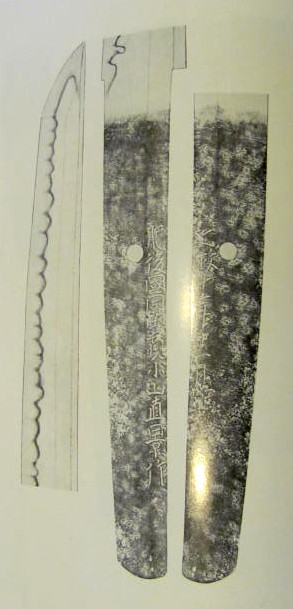
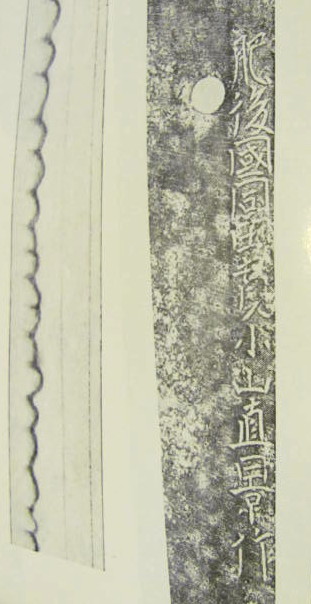
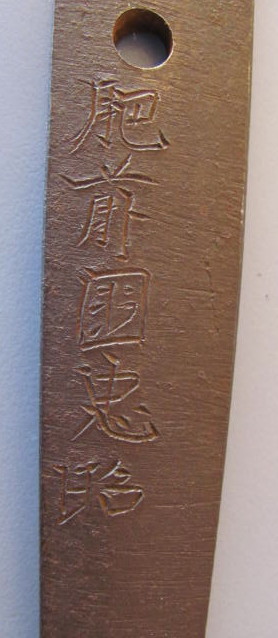
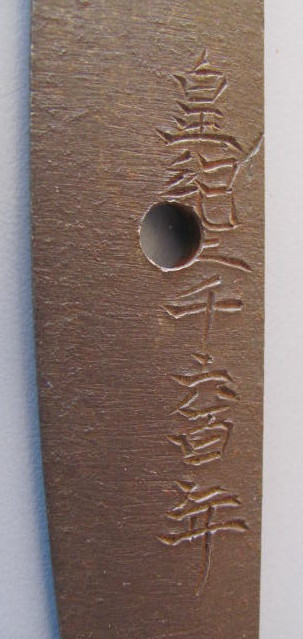
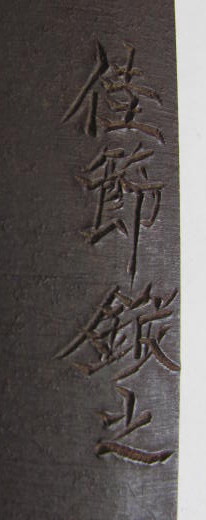
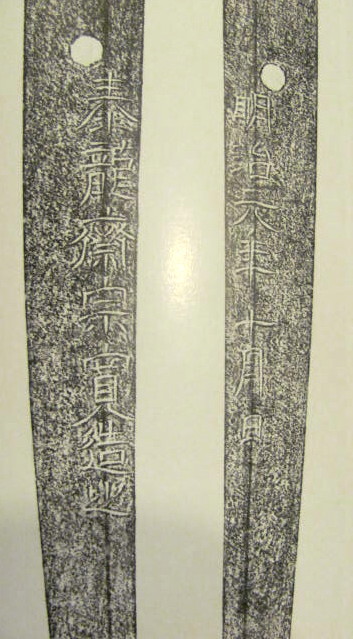
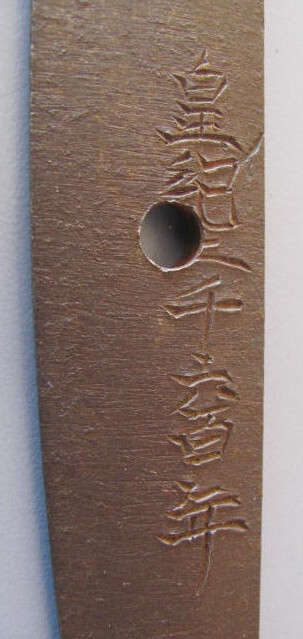
Hi guys, A little help, please, with this sword (which will be for sale). I read the mei as, "Hizen no Kuni Tadaaki", the date as the 2,600th year from the founding, and the last bit appears to be about making this sword but the actual reading has me stumped. Could one of you fill in the blanks and or correct me? Does anyone know anything about this smith? I've been unable to find anything online or in my books. This is a gendai, not just a Showato: very active hamon, tons of stuff happening, quite interesting. Thanks a bunch. Grey


-
Hi Roy, The 3rd one is Yamato Daijo Fujiwara Masanori. Never mind; Mark got here 1st. Grey
-
Is this a safe way to display a nihonto?
Grey Doffin replied to Soten_Fan's topic in General Nihonto Related Discussion
Hi Dimitri, If you have to display a sword with the blade exposed, your latest solution should be fine. It would be best if the case was very heavy, unlikely to move if bumped. Locked is a good idea. As long as the climate inside the case is not overly damp it doesn't seem likely that rust will form on the blade. Inside mounts and sword bag is still a better idea, though. Grey -
Is this a safe way to display a nihonto?
Grey Doffin replied to Soten_Fan's topic in General Nihonto Related Discussion
Stuff hanging on a wall gets bumped into. The swords can get knocked loose and damaged. Nihonto are properly stored either in shira-saya or koshirae, and inside a sword bag. Any other method is inviting calamity. If you need to display a sword on the wall, buy a stainless knockoff. Keep the good swords well protected. Grey -
Yoshimichi. Showa Ju Kyu Nen Ju Ni Gatsu (December of 1944). Grey
-
Translation and opinion please
Grey Doffin replied to Richard Butters's topic in Military Swords of Japan
Hi Richard, Hawley's has smiths who signed like this up to mid 16th century. If your sword's signature is correct it is likely from that time: late Koto. Grey