Ford Hallam
-
Posts
3,091 -
Joined
-
Days Won
78
Content Type
Profiles
Forums
Events
Store
Downloads
Gallery
Everything posted by Ford Hallam
-
Mike Y. yes, that's right, Tokitsu's book makes no mention of any form of metalwork at all. The wood sculpture and paintings are referenced though. And if memory serves Tokitsu is referring to an earlier, mid Edo, account. I can scan the relevant pages for you if you like.
-
Hi Fred I glad I was able to add something to the pot, so to speak And I think that it's important to keep in mind that while condition is important it's also possible to appreciate and enjoy pieces that are perhaps a bit 'tired'. The corrosion is part of this tsuba's story and recognising it for what it actually is is quite critical in terms of evaluation other pieces in the future. It also allows us to perhaps become more comfortable with the notion of impermanence, a major theme in Japanese Art but one we, in the West, are often at odds with.
-
Robert yes, it's a kanmuri. And not even abstracted
-
The problem I see with butterfly suggestion is that it implies the original designer was really rather bad. If I was to come up with an abstracted butterfly design along these lines it would certainly have more about it. In this arrangement the butterflies are simply arranged around the seppadai with no real sense of movement or design aesthetic. Also, as we don't actually know what the maker called it we're trusting to the interpretation of one unknown 'Sensei' some time ago...one who almost certainly wasn't an artist. And now it's simply taken as gospel and without question. A bit like the idea Musashi made tsuba and even made a few dozen depicting sea cucumbers The 'kage-cho' tsuba, on the Kasen koshirae, (which I think is the design Curran alluded to) while quite subtle and abstract does, on the other hand, suggest butterflies. And to make my point that just because it's a Japanese description doesn't mean its right here one called a ship design. Apologies to the OP for going off on a tangent but I hope this has all been informative and eductional if not entertaining.

-
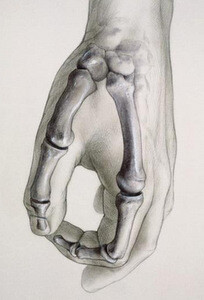
Thanks for the vote of confidence, Curran :D and for those who haven't seen how I interpreted the design this might help. Worth bearing in mind that the longer bones at the top would, when holding a tsuka, be foreshortened when viewed from directly in front. What I found really interesting is how the bones are only recognised as such when the sword is drawn and viewed from the opponents side. Frankly I find the butterfly idea a bit weird, if anything it looks more like intestines that butterflies One of my students, Remo Nogueira, from Brasil, actually made a very fine utsushi of one of the original tsuba by Shimizu Jingu the fifth when he studied with me a couple of years ago. He used steel that he made himself and the result was pretty good. The patina was especially satisfying. If anyone's interested they can see some images, here, of some of the stages involved in the making of this tsuba. I'd imagine the originals were made in pretty much the same way.

-
Junichi first off, very nice kozuka. A fine example, I think. It'll go nicely, shortly, with one of Mt Fuji in the mist. I think it would be almost impossible to state with absolute certainty that any piece is a specific school based solely on the technique used. Bear in mind that these were studios full of highly competent and thoroughly trained artisans so that should, say, a Kaga artist be asked to create a piece in Rinsendo style, based possibly on an original, it'd be hard for us today to spot the difference. And this of course points up the uncertainty inherent in Kantei of tosogu that relies on specific markers. It makes sense with blades but not always so, imo, with Edo period tosogu. Having said that I think it perfectly reasonable to label your kozuka Rinsendo. regards, Ford
-
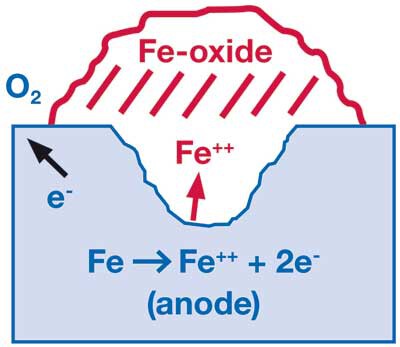
You're welcome Mariusz Always happy to help explain technical aspects to those who care to learn. And here's a helpful diagram
-
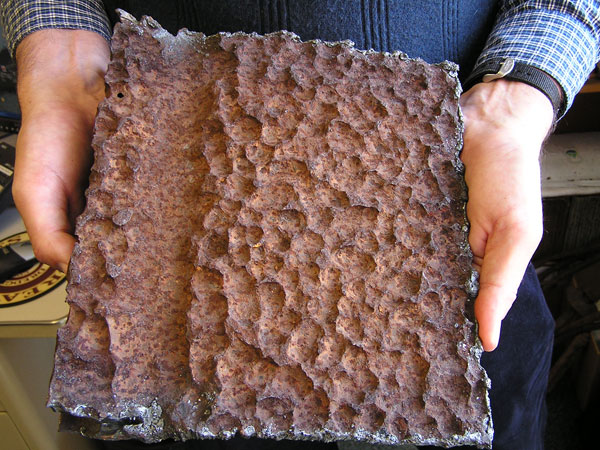
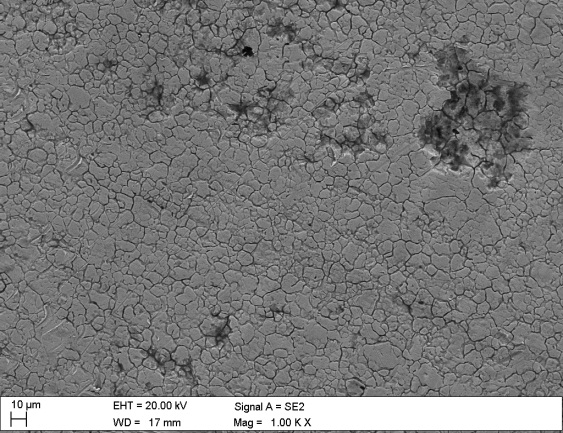
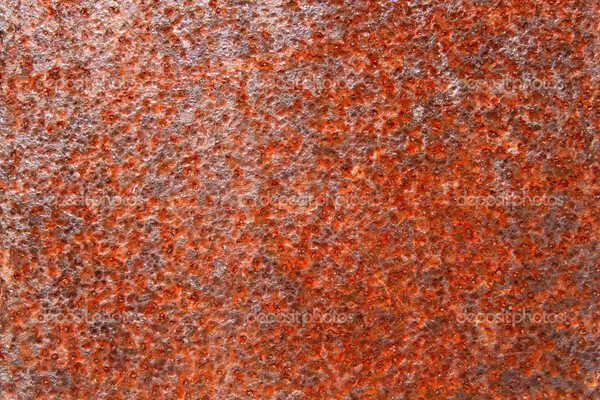
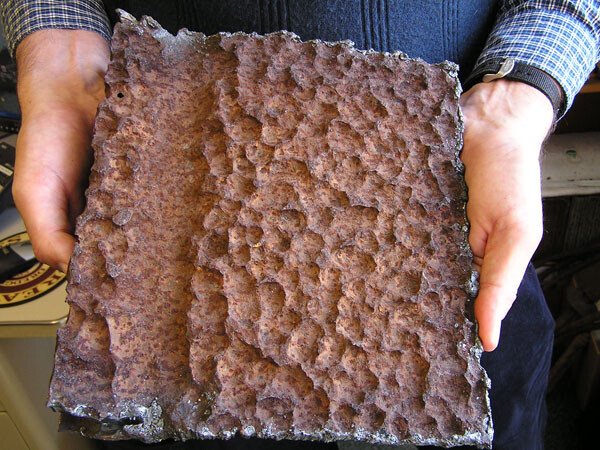
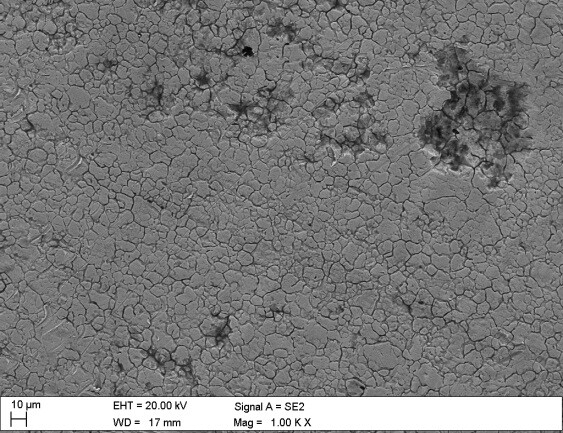
Actually David, it's not at all regular. Examine the ura, top left quadrant, and you'll notice it's significantly less coarse than the rest of the surface. But why would you expect natural corrosion to be irregular anyway? This is merely a consequence of specific situations and conditions. If you leave steel to rust long enough, and it can take as little as a couple of months, it results in a perfectly even and convincing 'ishime-ji' ground. Now imagine scrubbing the loose surface rust off the example posted below and developing a nice dark magnetite based patina. In my opinion a great number of early Tosho and Katchushi guards exhibit exactly this finish. I think there is far too much talk of hammer/punch marks and effects of forging etc. that's based on what people imagine and not on actual empirical evidence. Just as an example here's an image of exactly that, an evenly textured steel plate' Note the very clear indents, which might understandably be mistaken for punch marks under different conditions. This is a feature of steel corrosion. Obviously this example has advanced to a stage where the surface has been completely covered but it's a gradual process that starts out as isolated points being attacked and gradually develops like a rash. here's an example of an extreme degree of corrosion. It shows well the sort of textural development that severe corrosion results in. This is a micropictograph that shows how pitting starts. What you can see, the overall 'stonewall' appearance of the surface, is the grain boundaries of the crystals of the steel. Corrosion begins at these boundaries, typically where three or more 'islands' intersect, resulting in tiny voids. The patterns and character of this sort of corrosion can tell us a lot about the structure and nature of the steel. Some of which would probably be counter-intuitive to those who have no background in metallurgy or practical metalwork.
-
I'm afraid I have to disagree with regard to the surface of the Tosho style tsuba. To my eye this does in fact look exactly like the result of neglect and rust pitting. The rust has been removed and the piece repatinated but the evidence remains. The easiest clue is in the pierced plum blossoms. Those thin strips exhibit classic corrosion damage and thinning. Have a close look and ask yourself if a smith would put 'tsuchi-mei' in such delicate details. The supposed 'tsuchi-mei' also extends over the edge of the kuchi-beni. This suggests the pitting occurred after the nakago was adjusted to fit a particular blade. And yes, I know I haven't examined the piece in hand but I do know a thing or two about steel, corrosion and texturing the stuff regards, Ford
-
ah, wakatta, Chris :D I'll stop inventing my new theory then Funny how I seemed to have completely blanked on this zodiac thing...probably my general anti-woo nature and horoscopes in general.
-

Q: Any info on the Kinko smith shoryuken or syoryuken?
Ford Hallam replied to kaigunair's topic in Tosogu
Hi Junichi the kao reminds me of that of Haruaki Hogen, albeit with a minor difference and being somewhat stylised. That along with the Go which also shares some familial traits with Kono school suggest an avenue to explore. -
Thanks Chris, didn't occur to me. Don't think I've seen Munetsugu use Zodiac signs before, you learn something everyday Just been looking at this page on the Zodiac signs. So x x is snake sheep, an odd pairing but apparently associated with the Cult of the Big Dipper constellation: " worship of the seven stars of the Big Dipper, which were said to control one’s human destiny. In the Sutra of the Big Dipper for Prolonging Life (Hokuto Shichisei Enmei-Kyō 北斗七星延命経), each of the seven stars was combined with the zodiac signs, thereby yielding one’s personal star based on one’s birth star (Honmyōshō 本命星): " There was a very serious outbreak of Cholera in Edo in around that time, 100 ~200 000 deaths, perhaps Munetsugu or the person who ordered the sword hoped for some additional protection.
-
The date appears to read ' Ansei roku X X nen hachi gatsu nichi ' or 1859 , not sure what the next 2 kanji refer to, (year) ,eighth month, 'a lucky' day.
-
The following was previously on my blog and forum but following a question regarding the repeat production of designs I thought it might be of interest. It comes from volume 7 of Cpt F Brinkley’s “Japan- Its History arts and Literature. Vol.7 . pictorial and applied art. London 1904” The writing style may be a little old fashioned and some of the ideas he expresses are perhaps considered outdated today but I still think there is a lot to consider here. I’ve taken the liberty of inserting the odd explanation of some of the less common words, mainly for the benefit of some of you for whom English is a second language.
-
Did they normally make more than 1 set of same design tsuba
Ford Hallam replied to darbianco's topic in Tosogu
I'd say this is more the rule than the exception. The important thing to remember is that most tsuba-shi weren't artists in the sense we understand the term today and especially in the West. Originality wasn't necessarily of huge concern, what was of greater importance was the expressiveness of the workmanship. The greater number of Edo period studios produced their works based on designs provided by workshop design books that were produced specifically for this purpose. Many of these design books still exist and are still reprinted today. And even where an artist was producing their own designs they would frequently reproduce the successful or popular ones. Kano Natsuo produced at least half and dozen of his famous peony and butterfly tsuba, his koi tsuba as well as his plumb blossom kozuka. Curran, I've never heard this story, do you have a source for it? -
And silvery 'shibuichi' isn't typical for this sort of work...could it be Ezo? :lol:
-
Clive, I would have to suggest that this is a cast copy of an original. Following on from Jean's observations I would add that it appears the copper seki-gane of the original have be reproduced as part of the tsuba base metal. fh
-
After a bit of digging I can add: Cho Densu or Myo-Cho was a famous 14th Century Zen priest (an Abbot) and painter. (1352-1431) I also want to point out that the intrusion of a design on to the seppa dai area does not automatically imply the piece is late and/or intended for export. In fact this is a feature of a number of early to mid Edo works by notable artists. As long as the design is cut into (intaglio or shishiai-bori) the ground and does not upset the seating of seppa this sort of artistic 'bending of the rules' seems to have been acceptable. In this case though the piece was clearly a commission and most likely for a native Japanese collector, if not an actual member of the warrior class.
-
Tanabe Tomomasa was a student of Yanagawa Naoharu. There were two generations of this name, and they were also closely associated with Haruaki Hogen who was also a student of Naoharu. According to the entry in Marcus Sesko's 'The Japanese Toso-Kinko Schools' even Kano Natsuo held them in high regard. I've seen a signed and dated tsuba by Tanabe Tomomasa, 1861. I don't think the crack is a serious issue and shouldn't affect the value. The dent on the rim is also not a terrible distraction but could be repaired if absolutely necessary. The carving of Fudo could probably do with a little bit of gentle cleaning though. Hard to put a price on but I'd expect it to fetch in excess of £1200 at auction. It's a good piece of work by a notable artist. The smaller tsuba appear to be an Hamano work.
-
I think the appeal of 'Namban' design sensibilities really came to a head in the Momoyama Period; Any number of art histories attest to this but the easiest on-line reference is on Wikipedia; British Museum reference Metropolitan Museum NY reference
-
Bernard, I think the rendering of those horses is pretty decent. The overall feel is charming and well executed. Jean, thank you. If you get something from my input then I can only be pleased
-
You're more than welcome, Florian. And thank you for taking it all so well. Onwards and upwards We all have to start somewhere and if you need advice on future purchases don't hesitate to ask. I'm always happy to offer what help I can to newcomers to this complicated field. best, Ford
-
I found this example on the MFA site. I can't say for sure if it's genuine but this is at least the level of workmanship and artistry we'd expect to see in a work by this artist.
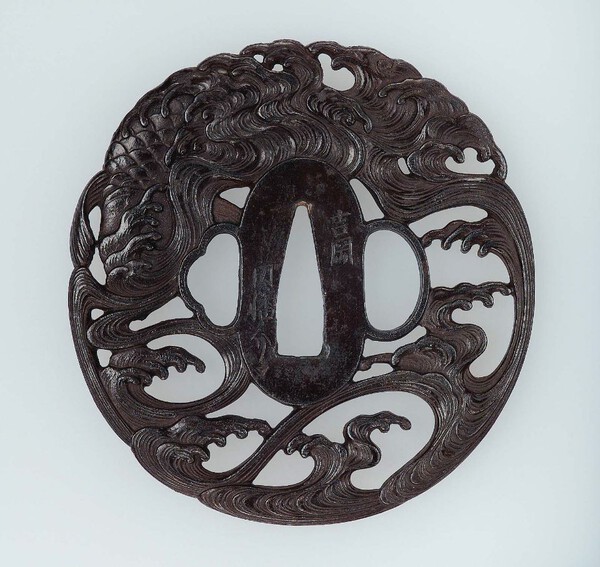
-
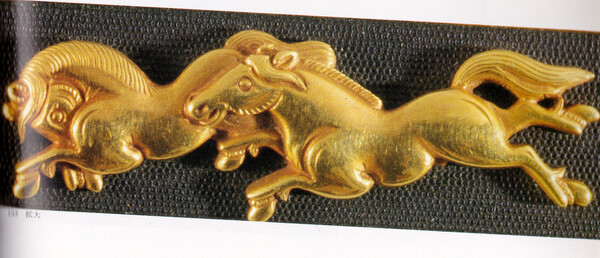
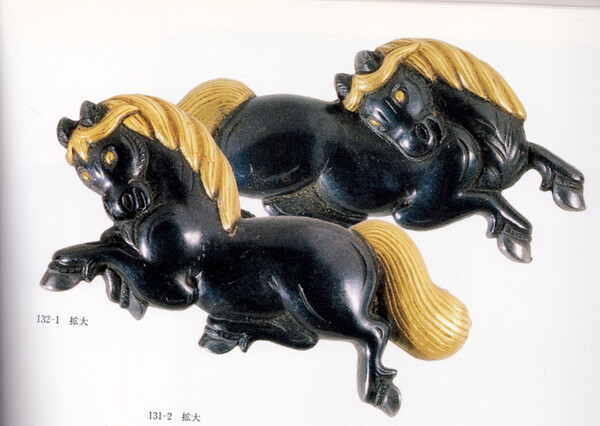
And a couple of Goto examples. Goto doesn't always mean the best btw In general the Machibori were far better carvers and sculptors of natural world subjects because they learned to see things afresh while the Goto were completely inward looking on their own tradition. In circumstances like that things tend to lose vitality and originality. Ok, that's my Sunday morning sermon over :lol: hope some of what I've posted helps to form a better idea of various levels of workmanship and artistry. Goto Keijo - kozuka Goto Yujo - menuki
-
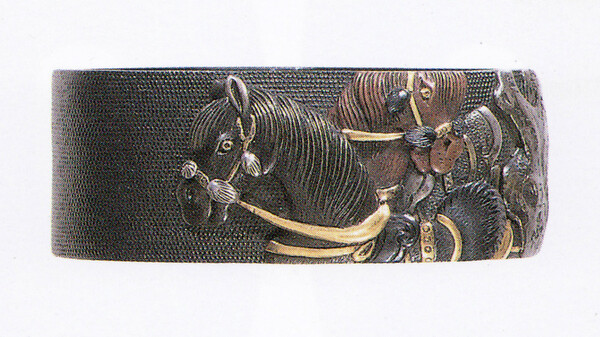
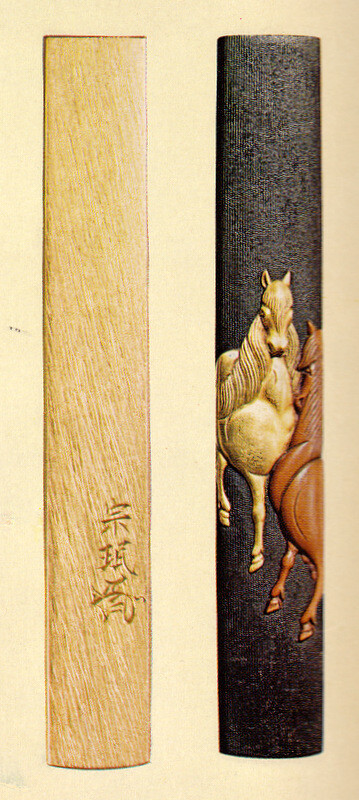
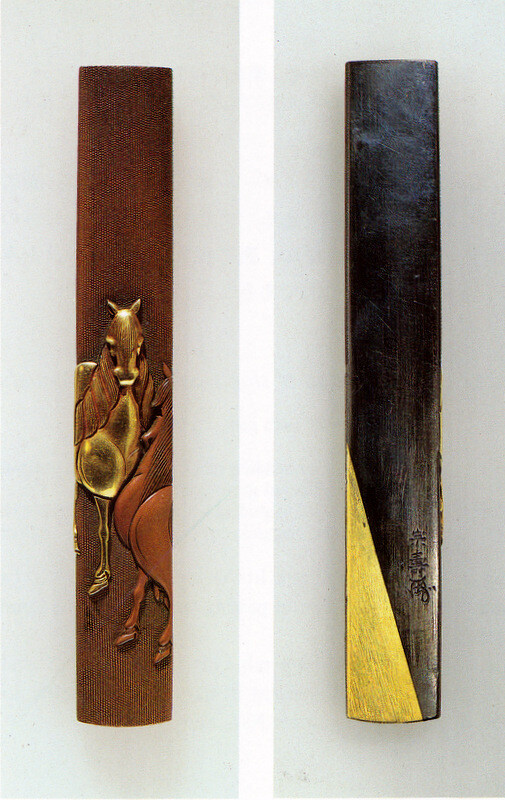
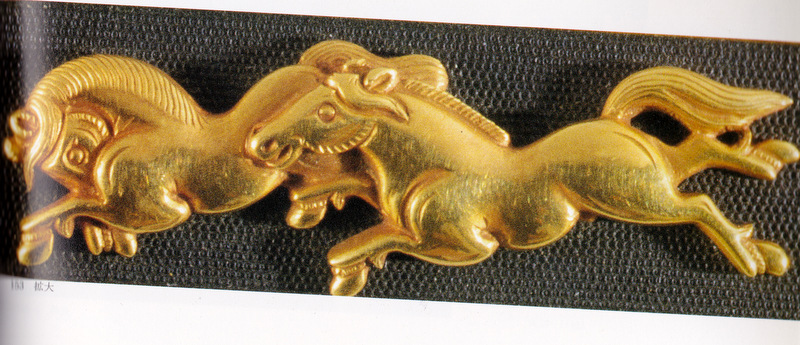
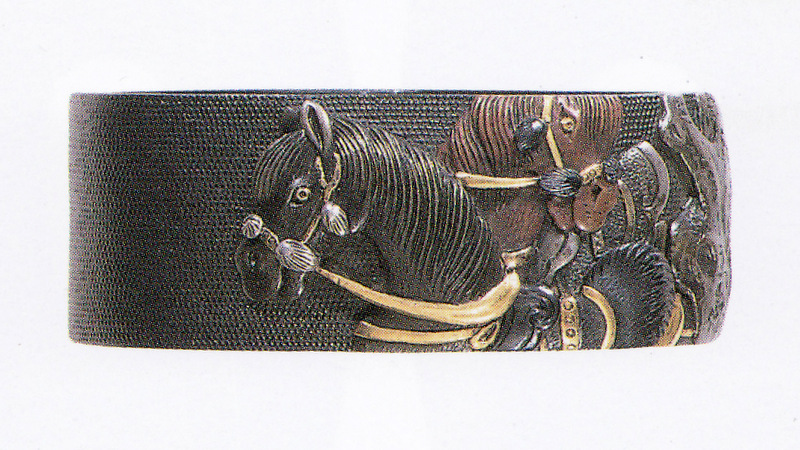
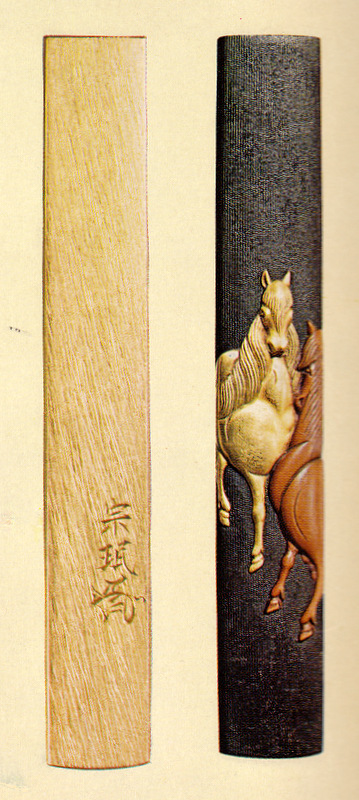
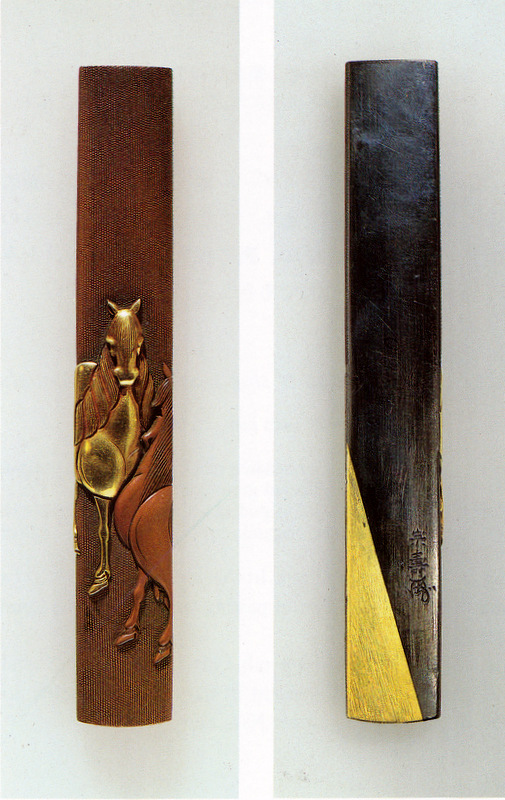
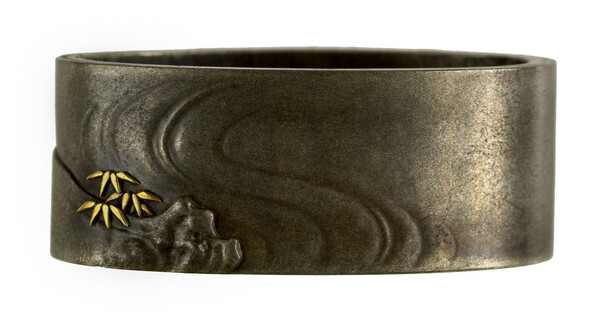
Hi Florian The first set is not yamagane, it's plain copper. Yamagane is a much darker chocolate brown to grey black. The 'Yoshioka' set are gimei I'm afraid. The quality is actually very poor. The carving of the horse on the kashira is so bad as to suggest it may actually be the work of an amature. The pose is fairly common, it originates with the Yokoya, but it's very weakly rendered. The copper horse is a little less awkward although the inlaid patches strike me as being a bit random. And if we examine the stream we can see the surface is a bit 'lumpy' due to poor foundation carving. The engraved lines in the stream are also somewhat confused and don't flow evenly. Sorry to be so blunt in my critique but if you are going to spend your hard earned money of tosogu it's important to learn quickly what constitutes good quality. Here are some examples to consider and compare so that you might begin to recognise different levels of quality. Hamano Kenzui Tanaka Kiyotoshi - menuki Yokoya Soyo - note the rounded and lyrical modelling of the horses that expresses a sense of playfulness. Yokoya Somin - note the horse's pose Yokoya Souju - elder brother of Soyo and pupil of Somin