raiden
-
Posts
486 -
Joined
-
Last visited
-
Days Won
1
Content Type
Profiles
Forums
Events
Store
Downloads
Gallery
Everything posted by raiden
-
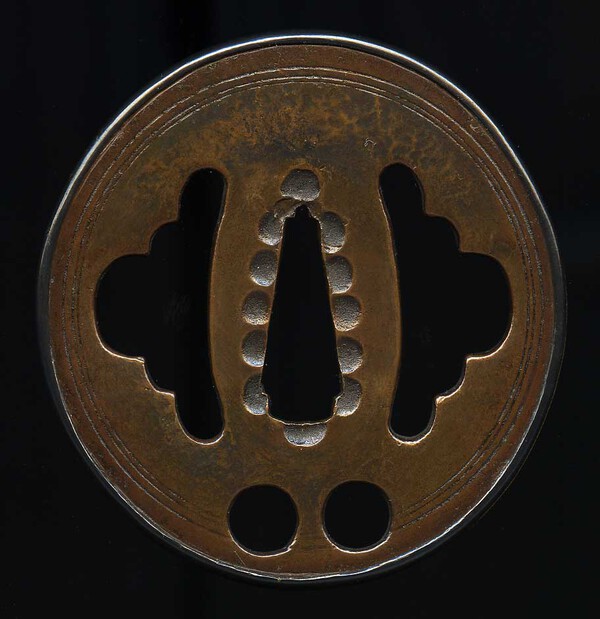
As a dealer and collector, I have seen many "hirata" pieces. I even had a Donin kozuka go juyo a few years ago. This type of tsuba in my opinion, and compared to what I have seen is a iron tsuba with the shippo added at a later date. This does not make the tsuba less detracting, it is what it is, and I have seen many tsuba in which this was done. Who knows why they did this, personal taste, want to have a hirata tsuba, but couldn't get one from the Tokugawa..... Note that I have seen a Myochin tsuba signed with the added mei that a later Hirata did the shippo work, now that is the proper way on a quality piece.
-
I just happened to look at your koshirae pics, and not sure as they are under the wrap - the menuki are very similiar to the 2 sets we had at the SF show that are attributed to Kanshiro (Nidai), other examples can be found in the Higo Kinko Taikan in the koshirae section. Here is a set that is papered to Kanshiro by the NBTHK for reference. Nice mount!

-
-
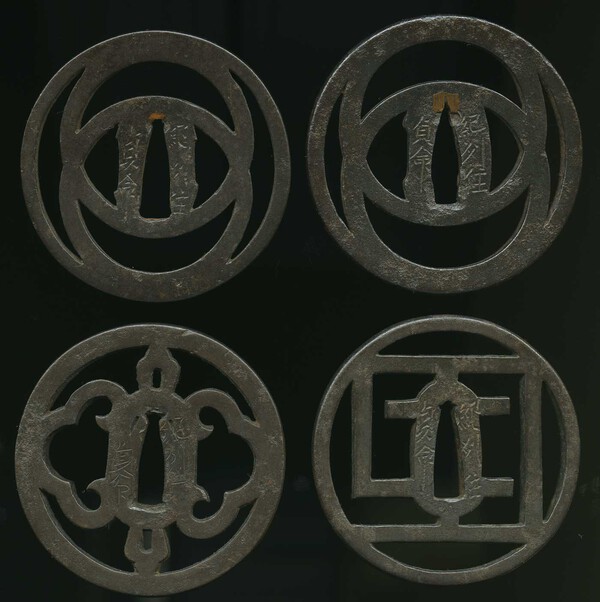
I guess if you look and compare, the rims are very similiar to Edo period Owari tsuba.
-
Teimei tsuba have a very strong kaku mimi, fine granular surface (probably remnant of the Nobuiye influence) and a slight "flattish" shape for the faces. They are very consistant in these points. The NBTHK article states how they are under appreciated, even though they were working for the Kii Tokugawa directly, and from the Nobuiye School.
-
In Japan, collectors seem to like Teimei because of their association with the Kishu Tokugawa branch. It is one of the 3 main family branches. Teimei tsuba are very nice when mounted, often it seems they appeal to the Bushi taste. I have a few in my collection as well, and they are well made and fit Edo mounts to a tee!
-
Nisei week is here, and we will do our display for the public to introduce the beauty of Japanese swords. This is a NON sales event geared for cultural information only. This weekend at the JACCC in Little Tokyo.
-
Well if the sushi is good, and the swords are great...win win situation! My sons Kunimasa sword can be seen on our FB page, Chogi utsushi!
-
we have posted a few pics of the show, as well as the lecture on our Facebook site (You don't have to be a member. I would have posted here, but didn't want any "flack" in case a sales items was in the pic.......
-
Matsuba Kunimasa comes to Los Angeles for a lecture and Embu. He is a famous tosho in Japan, and it is a rare event. Please come if you are in the area. Forgive me if this has been posted already. Mike

-
we haven't decided yet if there will be one or not. If so, NBTHK members may get one at a later date.
-
Also, at shows such as the SF show, we encourage people to study the select items that are good examples rarely seen for study, they are not expected to buy them. As a member of the NBTHK, I like to help collectors learn, and with some of the great examples that we have in inventory at times, they are also great examples to learn and study from. Yes sometimes they are for sale, but sometimes they are not. But a good example is a good example and any chance that someone has to see , study and learn shouldn't care if the item is for sale or not. I study items all the time in shops in Japan, it is a great opportunity. But like I stated earlier, this is not my forum, and I will listen to any decision and rules. No problem! If we have the time,and any members of the NMB would like some info for study on any item on our table, they are welcome. I will be posting more items and news on our Facebook page for people to enjoy.
-
I understand your point chris, thats why it was worded accordingly Ichijo Daisho set, shakudo does not take well to pics, please see this set at the sf show to study. no price, no mention of any sale oriented info at all, is that wrong? If so then yes I can change the posting option, like I said, not a big deal, it was just for education and sharing.
-
OK, just like I said, not a big deal either way for me. Not my forum, I'm only a guest OK, so a little info - yes snowflakes, finely finshed shakudo not well taken in the pic, so i said that anyone who comes to the show can see them in person if they are out at he time to see the rich shakudo color. a tidbit of note : Not sure howmanmy here know this, but here we go - Ichijo signed with the Ichijo name when working in the traditional Goto style of soft metals, but used Hakuo when signing on iron pieces that are not part of the Goto tradition. see you all at the show! Mike
-
well, I guess this is a dual item, so I'll ask Brian, what should I do? I just posted it for people to study, not as an advertisment for sale, but they might be for sale at the show - I haven't decided yet, I just got them last night. I'll refrain forom further post until I can hear from Brian what to do it doesn't matter to me where to post, so it is ok to cancel this one.
-
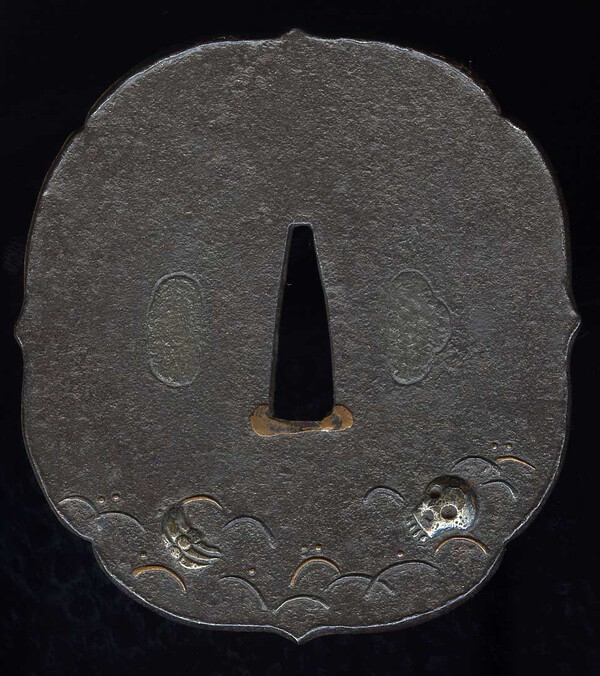
The NBTHKAN lecture will be a very good one of Higo. Many examples never seen before will be there such as this piece. Hirata Hikozo. Mike
-
-
Thanks for the encouraging words! I hope that the show will help people respect and appreciate Japanese swords in a better way. I do things such as appraisal and research for ricecracker, but my website is tetsugendo.com. See you all at the show! Mike
-
As a Dealer and a Collector, I can speak only from my experience. Buy good, and buy well, quality always finds a home. Kodogu has become very strong along with high end swords. I like the fact that I can enjoy them until I decide to sell. Stock market too volatile and unknown to me and less enjoyable...... Kodogu has now become a world wide collectable in quality - Russia, Europe, The US/Canada/ Australia / New Zealand ...dare I say even the folks in South Africa! If you come to the show, please visit our table and we will show you some Juyo tosogu... Mike
-
I am getting ready for the show, so I'll keep it short and simple (I hope). This is for the backs: usually what I was taught was to look for style of manufacture, file marks on the finished edges The pin, but not always - just as a reinforcement as they are often replaced. tagane marks - easy example is misumi for their triangular marks from the backs we can see if something is foiled or solid and of course if it is signed.... in the case of Goto - when under the wrap, we cannot always see the tagane kiwame marks that is sometimes on the edges of the menuki. See you all at the show! Mike
-
both from old kinko meikan.