


paulb
-
Posts
3,046 -
Joined
-
Last visited
-
Days Won
73
Content Type
Profiles
Forums
Events
Store
Downloads
Gallery
Everything posted by paulb
-
Thank you Ken It is one of those questions that appears straight forward but then makes you think a bit more about your own reasons for the opinions you hold. So without wishing to become too complicated I would suggest the following. 1. As both Arnold and Franco have suggested ( I think) all papers are subjective and there are examples from all sources that differ from others or are just wrong. They are, after all, produced by people. 2. Older papers may be considered less accurate in light of ongoing research which sheds new light on factors not previously known. Therefore older papers may be wrong,not through deception but comparative lack of knowledge. 3. Where there have been problems with accurracy and possible deception it has mainly been in branch locations rather than head office and for lesser papers (which were the only ones done in branches). So ones confidence has to consider where the paper was raised, the level of paper and when it was written. Basedon the above and the situation today I would personally have greatest confidence the following: 1. Tanobe Sensei sayagaki 2. NBTHK paper 3. NTHK paper (from appraisal in Japan) The others are all produced by people who have far greater knowledge than me so must be taken in to account. However for a high ticket item I would think a seller would want the potential benefit of an up to date paper to support their sale and give confidence to the potential buyer. so unless there was a well understood reason as to why this wasnt available I think it would raise a concern (at least to me)
-
At risk of opening a can of worms. Based on personal experience (and possibly prejudice) together with feedback from more expeienced collectors: in order of preference and with some notes of caution: 1 NBTHK (current papers and earlier high level i.e. pre 1979 high level papers. There is a belief in some quarters that in the early days of papering the standard for Juyo papers was more strict therefore earlier papers carry greater worth. I am not sure how valid this view is in reality) 2. Earlier NTHK papers, those written before the split in to the two factions 3. Kanzan sayagaki but there are a lot of fake sayagaki around. If it is authentic it is likely to be accurate and add value if it is wrong then it is likely to be a fake. 4. No real expereince and there are many generations and stories. Those few I have seen have been supported by NBTHK later papers and certainly added value to the overall package. 5. Hakasui was incredibly helpful in educating the occupation forces in the subject of swords. As a result he was not popular with the sword dealing fraternity. His reputaion suffered and as a result his papers were reported as unreliable. The one or two I have seen look to be ok but certainly unless supported by addtional papers they would not add a great deal to the commercial value. As said the above is purely personal opinion and based on examples I have seen and comments heard over the years. I think all of them (provided they are authentic) can add something to both confidence and commercial value it is a matter of personal preference and timing.
-
Darius two key features in indentifying shikkake are the hada becoming masame as it runs into the hamon creating layered sunagashi and the frayed "old mans beard" look of the kissaki. Actually these pointers are mentioned for a lot of Yamato work but they seem to be thought more prevelent in Shikkake swords. Your sword certainly shows the masame in the hamon and I think although the image is a little unclear the lines in the kissaki are also what you would expect to see. So Ithink it is fairly understandable why the shinsa panel reached that conclusion. The other thing is your sword has a great deal of nie in the hamon. This is most often seen in the work of the earlier generations. As with most schools the quality deteriorated somewhat in later generations. Based on what can be seen I think it not unreasonable to conclude your sword is from one of the earlier (better) smiths of the Shikkake school The fact it received tokubetsu hozon papers suggests the NBTHK think the same Congratulations most of us have gone through many more years and very many more swords before reaching this level. I look forward to seeing your future additions!
-
Zack there are as many answers to your question as there are collectors. But to make a start can you post some images of the sword you mention. then you can obtain opinions from all parts of the collecting family (all are valid BTW)
-
The papering system is long established. While far from perfect it offers some benefit. Most notably those who benefit the most are dealers and people buying at distance. They have taken on greater significance as the way we buy swords has developed with the use of modern technology. They offer reassurance when buying at distance and unseen. The worrying trend as has often been mentioned here is that people are focussing on the paper rather than the sword. With respect you are sounding as though you are doing the same. Did you buy the sword because it appealed to you and you liked what you saw?or because you hoped it was a low cost route to obtain a juyo certificate? At the moment you have asked a question and because the answer isn't what you hoped for you are now questioning the validity of the papering system. I promise this is not a unique reaction and many have fallen in to that trap. However I think Jussi got it right, you bought a sword that you liked. Whether it obtains higher level papers or not will not change the sword a fraction. To quote from the Juyo definition published by the NBTHK: 1) Blades made in a period from Heian to Edo, having Tokubetsu Kicho, Koshu Tokubetsu Kicho, Hozon or Tokubetsu Hozon papers, of extremely high quality workmanship and state of preservation, and judged as close to Juyo Bijutsuhin, may receive Juyo Token paper. 2) Blades that meet the criteria given above and made in or before Nambokucho may receive Juyo Token paper even if they are mumei. Blades made in Muromachi and Edo periods, as a rule, have to be ubu and zaimei to receive Juyo Token paper.” This has recently been modified as Tokubetsu kicho are no longer recognised and a sword must have Tokubetau Hozon before being considered. I think this was because the NBTHK were recieving rather too many speculative submissions of swords with Hozon papers only. All of the other factors are secondary considerations but do undoubtedly play a part. A sword that has seen 800 years and is one of 5 or 6 known to exist will be viewed differently to one that is 100 years old and one of many. Enjoy your sword learn all you can about it and then if you feel it the right thing to do submit it and see what happens. You can spend for ever speculating and questioning but the only way to find out is to submit it.
-
I think if you do a search on the board you will find numerous discussions about what may or may not pass shinsa. Trying to pre-guess it or apply what seems logic doesnt always help that much. The overiding factors are quality, condition and rarity. Mark's site lists the NBTHK definitions and criteria for achieving passes at the different levels. If the panel is more forgiving of condition on koto blades the opposite is true on Shin-shinto. To pass it would have to be in extremely good condition and without fault. That is perhaps why so few juyo shin-shinto blades are seen If you are buying it from Tsuruta san why not ask his opinion, he knows the process as well or better than anyone here.
-
If the sword is in Japan, it has a sayagaki from Tanobe sensei and TH papers it would seem to make sense for a vendor to submit for Juyo as it would add considerably to the potential sales value, or at the very least make a sale easier. However there are a number of factors to consider: 1. If you submit a sword and it passes you will lose it for anything between 6 months and a year. If you need to sell it that delay may cost you more than the potential added value of obtaining the paper. 2. If the sword has never been submitted there are those who might be tempted to pay a little more than for a blade that has been submitted and failed more just because it might go higher. The key when considering this is to know the history of submission. There is a considerable difference between a TH sword that has never been submitted and one that has and failed.
-
 James You make me feel very humble. To be so positive and produce such enthusiatic material at your stage of life and with your recent health issues is an example to us all. The next time I am feeling sorry for myself and my lost youth I will look at your site for inspiration. well done it looks great Best Regards Paul
 -
looks very subtle and beautiful Stephen You should be very pleased Regards Paul
-
What's The Worst Abused Blade You Seen?
paulb replied to BenVK's topic in General Nihonto Related Discussion
while we are rubber necking heres another one from my nightmare folder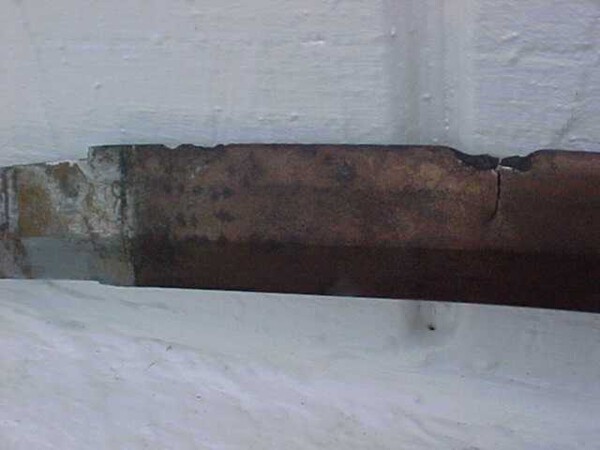
-
What's The Worst Abused Blade You Seen?
paulb replied to BenVK's topic in General Nihonto Related Discussion
this takes some beating tadakuni.bmp -
at €150 I have to agree with you Ben. At that price I would have bought it just to play with and fantasise in the cold dark Northumberland nights!!
-
nah save your money for something decent
-
Wouter I think you have to decide why you are collecting at the moment (your motives are likely to change with time). what you have has two virures: 1. it was cheap 2. It is Japanese. If you are looking for it to teach you anything about traditional mannufacturing techniques or the art in a sword then you will be dissappointed. If you are looking for something to practice martial arts with then it is a better choice than an antique blade with some historical merit. If you want to collect and study good swords try and break the habit (which we have all suffered from) of buying something because it is cheap. it is cheap because no one wants it, so when you come to sell it you will struggle. In the meantime the money you have spent on lots of cheap things could have been put towards something better. Sorry I am not trying to lecture you I am just sharing my own experiences and things it took me far too long to learn. hopefully you can realise this much faster. Regarding this sword: like Hamish I am guessing it is Showa, not traditionally made possibly oil quenched. The nakago looks to have been repatinated to add age. Fittings 20th century mass produced.
-
As Shinto smiths go Shinkai is about as good as it gets. Certainly among the top 4 or 5. I have only had chance to see one of his blades close to and I was blown away by it his work is incredibly beautiful thanks for sharing
-
How To Understand Hard And Soft Jijane
paulb replied to lonely panet's topic in General Nihonto Related Discussion
Jean I absolutely agree with you that we should not stand still and always try and improve. However just saying something is "not at all helpful" and wanting to revert to measurement doesnt move anything forward. As you rightly point out the problem is not specific to Nihonto but other forms of art. Whether we like it or not much that is appreciated in art is subjective. We attempt to rationalise what is in many ways an emotional response to what we are seeing. Hence we fall over. Also in translation you start to see patterns emerge and this is one reason doing regular shijo kantei help. You see terms such as "the hamon is worn down" which actually means difused or subtle, "coarse" may mean clearly visible or just "coarse", "weak hada" indistinct. In all cases these are quantifiable terms used to describe subjective comparison. BTW the author of the text mentioned has never used "empurpled text" whatever that is and certainly makes no claim to be an expert. Equally he may get a little sensitive if 7 years after something is written it is described as "not at all helpful" . (its been a challenging week) -
How To Understand Hard And Soft Jijane
paulb replied to lonely panet's topic in General Nihonto Related Discussion
you may not regard it as helpful but it has been used for a very long time and accepted by many before you. to be honest much that we describe about swords has more to do with impression than fact and after a time you can begin to undestand and see what the writer is getting at.Part of the problem is that when learning we tend to regard impression as fact and then seek to justify them in concrete terms. Sometimes you cant you can only say how it looks or feels. -
How To Understand Hard And Soft Jijane
paulb replied to lonely panet's topic in General Nihonto Related Discussion
I think (opinion) That it is actually softer. I had not heard the nie/softer steel argument before and I am not sure why that should be. Bizen steel is described in some references as soft but their hamon almost exclusively nioi. late Edo Satsuma blades have bright and clear ara nie but I have never heard their steel desctribed as soft. The ability to form nie has to do with heating the steel to a certain temperature, holding it there and then cooling it quickly. It may be that the higher carbon content in harder jigane lends itself more easily to the formation of nie in which case you would be more likely to see nie in blades with harder jigane (higher carbon) than soft. -
How To Understand Hard And Soft Jijane
paulb replied to lonely panet's topic in General Nihonto Related Discussion
Hi Hamish I dont think it is possible to see such a subtle difference in photgraphs. If you look at kamakura period swords especially Yamashiro and Bizen work the steel looks softer, I know it sounds daft. I think the surface is slightly less reflective, someone once described it as looking at grey velvet. If you put a kamakura blade alongside a shinto piece the shinto blade looks brighter, possibly more glassy in appearance and the hada boundaries are less subtle. This combintion gives the appearance of hardness. I am speaking in very broad generalities there are shinto smiths who come very close to the koto exmples mentioned but they dont quite get there. Sorry I know this sounds very vague but when you go to the DTI (I think you dsaid you planned to) try and look at some perfectly polished Rai or Bizen swords and then compare to top quality Osaka or Hizen work. I think you will see a difference. -
pm sent
-
Jason A shinsa is not a definitive answer, it is an opinion, allbeit a very educated one. The other trap you are falling in to is creating scenarios to fit what you are seeing, i.e. is it possible that later in his career etc The more explanations you have to apply to cover the discrepancies from the norm, the more likely it is to be wrong. Shinsa panels look for swords to comply with the standard they expect from a given school or smith, if it doesnt they begin to doubt. I am not saying your sword is wrong and as Jean says anything is possible but wanting something to be right can sometimes cloud objectivty and logical appraisal.
-
Robert I think you have a problem with terminology or just looking at a poor translation. I can stand to be corrected but giving "tips" in the way you outrline it is wrong. With most papering systems there are two levels of payment, an inital charge when you submit and an additional one if it passes. This was true of both NBTHK and the original NTHK, I assume, but dont know, that the NPO offer something similar. The "pass" charge if a blade achieves Juyo or Tokubetsu Juyo is described as a donation to the Museum. It is a fixed fee just as the second charge is for a hozon pass or a TH pass. The suggestion that if you tip more you stand a better chance of passing has no basis in reality and suggests fraud and or bribery which I assure was not your intent Please lets not start yet another witch hunt based on missunderstanding
-
You can never say never. The weakness in the older system (again this opinion after the event) was that papers were issued by branch offices rather than just the HQ. There may well have been bad papers from Tokyo as well but the original and majority of false ones came from other areas. Regarding re-papering it depends on the reasons. It has been suggested in the past that for fittings in particular that the ongoing research introduced new information which might affect the attribution. therefore items should be re-submitted every 5 years or so (not sure how popular this idea was and certainly have seen any evidence of it happening) If there was another scandal like the first one would have to seriously question the benefit of doing it again, assumingthe organisation survived the scandal a second time. I can understand skepticsm and concern but as I said problems and dishonesty are facts of life. It is how those problems are resolved that matters and in this case I think the NBTHK did all they could to recover the situation. I dont think their actions deserve some of the cynical suggestions that have been levelled at them, usually by those with no knowledge of the situation (I admit mine is limited) or their own axe to grind that re-papering is a cynical attempt to make money. As Jean says if you have questions or doubts ask them. If you dont have their contact details let me know and I can forward them to you.
-
I dont know the exact time period but it was a number of years through the 80s and 90s. Certainly anyone in Japan with something above average had plenty of warning, notification and time. I am a little sketchy because it was before my time but I know older time collectors in the UK were aware of the offer in the 90s and people were still sending swords in for re-appraisal. The problem the NBTHK experienced was very unfortunate to say the least. I think their response to it was honest and honourable and they went the extra mile to try and rectify the problem. The issue now that Darcy refers to (soory I am making assumptions) isn't that the NBTHK have stopped recognising old papers as a step towards new papers (we are now 20 odd years on) its that some dealers are atill trying to sell dubious high end work with older papers.
-
they did

