paulb
-
Posts
3,046 -
Joined
-
Last visited
-
Days Won
73
Content Type
Profiles
Forums
Events
Store
Downloads
Gallery
Everything posted by paulb
-
Facts and fundementals contains some very interesting material and useful information. However despite the title some of it's content is not fact but opinion. The authors stance on mumei blades is not supported by the market or the academic bodies associated with swords. I dont have the exact data but just looking at the Juyo zufu volumes you can see the huge number of highly ranked mumei blades (including most of those attributed to Masamune, Sadamune etc). Yes it makes perfect sense to say that ubu signed blades are easier to authenticate, although many shinto signed works have been proven to be gimei over time. To suggest mumei work lack value is not supported by the current market, the historical market or I doubt the future.
-
Many thanks Steve that about coversit all much appreciate it
-
thank you John
-
thank you Sebastien I will take a look in the meantime I have jst recieved some further images (I think the last)



-
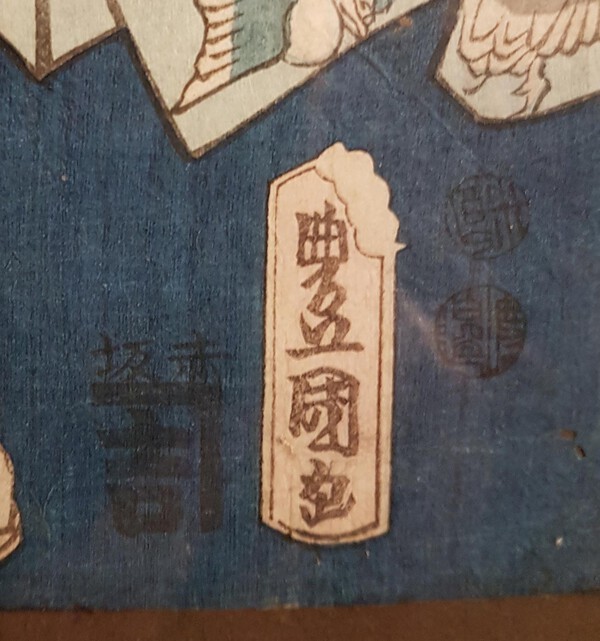
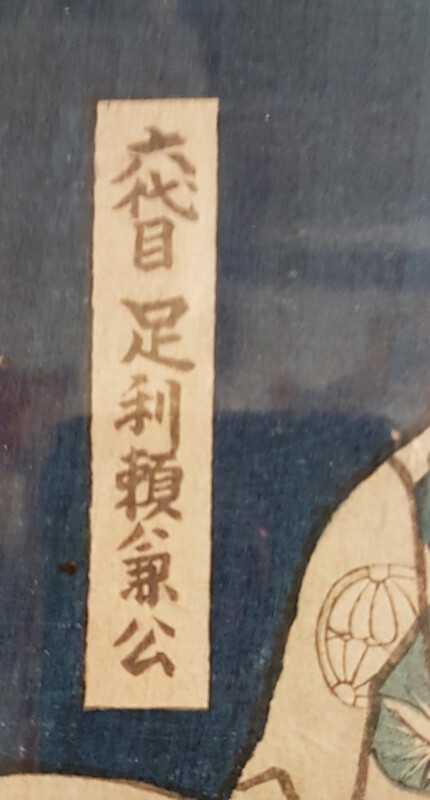
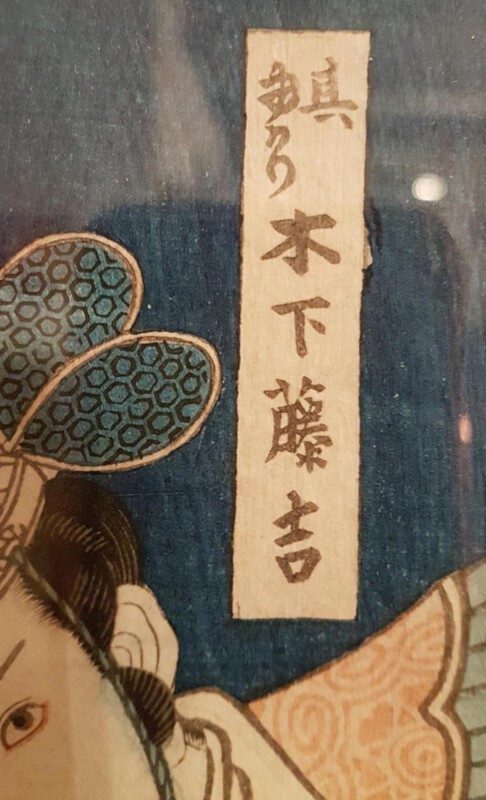
Dear All I visited a friend ahd local antique dealer today. He has a woodblock print tryptic for sale. It is labelled as dating from 1860 and to illustrate 7 Gods of fortune. My knowledge of this field is sadly lacking although I am starting to enjoy prints more and more. Although I think the gods of fortune thing sounds wrong this has something about it. I realise this is a big ask but I have attached images of the various labels (I am assume names of the characters) and the panel with the artists name. These are well beyond my abilities to translate and I wonder if someone could throw some light on these? I am sorry I dont have a full image to share the whole thing.





-
Hi Jason Do you a picture of the complete nakago? I cant read the script which appears to be the chippy WWII type mei/date seen on late non traditinally made blades. My concern is it may not even be that. If it is authentic it does not predate the war and is likely a mass produced emergency issue blade. More images would help and someone better at it than I am may be able to translate the kanji. good luck
-
I think you are right Ray the dark line under the very white hamon suggests acid to me too.
-
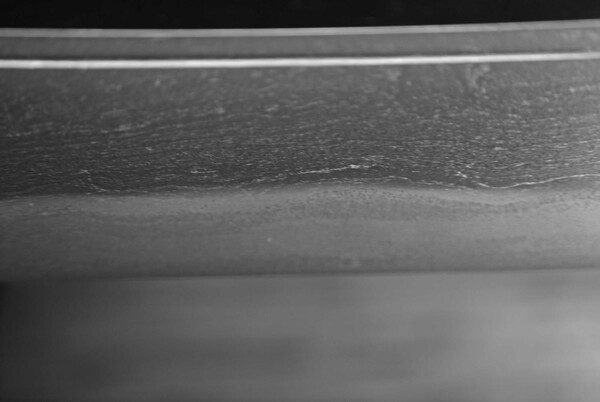
[ohn Unless iam missing something I am not seeing nie in these blades. The dark patches you identify look more indicative of oil quenching than the steel composition. You say you are happy identifying features in other blades but are struggling with these, I think that is because what you are seeing is something totally different. Without wishing to tell you things you already know I have attached three images of a koto blade that clearly show nie within the hamon and sunagashi. This is very different to the things you are pointing to on the showa blades.


-
Don't Lecture Me!
paulb replied to Guido's topic in Sword Shows, Events, Community News and Legislation Issues
Thank you Guido The images reminded me of a presentation givwn by Gordon at the end of the first day of the last UK shinsa the NTHK did in the UK. It was a fascinating subject and beautifully illustrated by the examples from Gordon's collection. I do envy those of our colleagues living in or close to Japan having access to meetings and such a wealth of material to study and enjoy. -
Gentlemen, As one of the main protagansists in this can I suggest it is time to draw a line under the subject? The advice given has been very clear, the crirticsm equally clear without being over the top. I think Julian has taken what has been said on board, if not then I doubt further comment will change his mind. However continued criticism might start to appear like bullying and reflect negatively on participants for anyone coming to the board for the first time. The points have been clearly made should we now leave it at that?
-
There wre a lot of Bizen smiths signing Kunimune. Look at the Kuni character it is unusual and looks more like the style used by Enju and Rai smiths than the famous Bizen Kunimune (I don't have access to references at present so I doing this from memory. I don't think it I identical but it has some common features) Not sure if the 1250-1300 is the suspected date, if so I think it is being a little optimistic. It has the look of something a little later i.e. 1400-1500. Having said that it looks to be a good blade. Whether it is worth buying depends on the price Style of photography does look familliar so it may well have appeared before but I dont remember when
-
Julian I am sorry you can attempt to explain and justify your actions as much as you like. being a beer drinking dirt bike riding Aussie has nothing to do with the concerns expressed and suggesting it does is both wrong and an extremely weak defence. Basic line is you shouldn't do it. From your response it appears you will chose not to listen and carry on because despite the years of experience behind the comments made by everyone who has posted you know best. I can only hope that for as long as you hold these ideas nothing worthwhile ever falls in to your hands.
-
Julian, I think you know or at least can imagine the type of response your actions may incur here. There are so so many posts about polishing, unqualified polishers etc that I dont believe you could be surprised at any critical comment. You posted a sword that had a sayagaki claiming it was by an important smith, although the overiding opinion was that it wasn't what it claimed to be everyone said it had potential to be something at least reasonable if not better than average. I do not believe there is any such thing as a harmless unqualified polish, nor is it possible to polish anything without removing metal, thats what polishing does. If this was an important blade in waiting you could have done untold damage to it. The fact you asked for opinions here proved you were not qualified to judge whether it was or wasn't important but you carried on anyway. It may be you have not done any harm to it but just in doing what you did you are flying against so many of the principles discussed here. At the end of the day neither I nor anyone else can tell you what to do. all I can do is ask you to refrain from attempting to polish koto (or any other) blade yourself.
-
To expand my original comments a little further One of the things that struck me about the Shinkai I looked at was the incredible clarity of the ji-nie. It looked 3 dimensional, as though you were looking through the surface. I decribed it at the time as looking down into a frozen pool, a description I don't doubt that has been used before. I dont see evidence of that effect on this sword. it may be the image or the polish or maybe it just isn't there. I think that is one of the things that distinguish the 2nd from the 1st generation. The jigane is very like the Shinkai I saw (less the bright nie) and Osaka jigane is very beautiful. Would I like the sword to study? Yes. Would I pay 5 million yen for it (assuming I had it)? No, there are many older works I would much rather have. I think at his best this smith is considered amongst the better Osaka smiths, if not top tier at least fairly close and this may be one of his better works. The fact it achieved Juyo suggests the shinsa panel regarded it as both representative of his work and of sufficient quality. I think it is one that would benefit from Hands on examination. Having said all that I think I could get a good Rai blade or Osafune work for that amount of money and I would probably enjoy them more
-
Hi Franco It goes with my other stock phrase of "Tart's boudoir" when describing a loud Edo Koshirae
-
I am with Michael, I think this is beautiful sword. 1st generation tends to be overshadowed by his son. I have seen work by the second generation which is staggeringly beautiful, this may not quite be to that standard but the very tight itame hada looks very much like shinkai and I think you can see the lineage. The hamon looks a bit "blousy" and overactive for my taste, but it looks well constructed and rich in nie, as you might expect from a good Osaka smith. Shape is again what you would expect not exceptional but not unpleasing to the eye. Although not my main line of interest I would be happy to include it in my collection.
-
Hi Julian, Thank you for the improved images. The sword looks a lot better than I thought from the originals, I think one of the key indicators to what you have is the masame hada running in to the hamon. I suggest you look at examples of Yamato Sue-Tegai and Shizu work and see if you can see anything similar. I think it has potential to be alittle earlier that I orignally thought,
-
Hi Barry Happy New Year Re going close to the edge what about Mino based smiths such as Daido? In his less regular hamon you see the hamon diving to the edge. I went for Mino based on the very pointed peaks in the gunome near the machi. Agree 100% about the full length shot all the best Paul
-
Hi Jean yes you are right. However I sometimes think that a well done suriage, where someone has taken time and trouble to finish it well, suggests the sword was held in reasonable regard. (Of course it could also follow habaki principal mentioned by Guido). By no means a rule, I have seen some beautiful blades where the suriage has just chopped off the end and left it like that. In the case of an O-suriage the only real help it can be is if it indicates what the original size and shape of the ubu blade may have been.
-
Hi Jean and Brian, I am somewhere between the two of you. Jean I agree with the points you make and viewed in isolation the nakago cannot tell you much, or at least can be used to decieve. However viewing the sugata as a whole can give you an indication of the original shape. Although you are right that the patination of the nakago can be and often has been manipulated to deceive I think the true colour of a really old nakago (even an O-suriage one) is identifiable, or at least can be an indicator. I am in danger of misqoting but the old advice I was given was: Shape indicates age Ji-hada-tradition Hamon-School Boshi- Smith. The nakago should confirm what everything else has told you. Having said all that I still think Julian's sword is late Muromachi or Momoyama and something based on Mino.
-
Hi Julian You said the most important thing which is you are happy with it. I dont think anyone thinks it is a poor or bad sword, just not up to the standard of Yoshifusa, but if you think about 90%+ swords that exist today aren't up to his standard so yours sits in very good company. Regarding age it is a real challenge from your images and the state of polish, also some dimensions would really help, we could then try and imagine the original size and shape which would help a ;lot. my guess and it really is that, would be around 1450-1550 and a Mino based school. Interested in other views
-
Hi Julian I agree with Fraqnco but would add a couple of other points: 1. The habaki is irrelevant and is very unlikely to be original. I have seen all ages and schools come with different habaki, they are more dependant on the taste of the user than the smith. 2. What little hamon that can be seen on your images (the one near the machi) shows a pointed Mino like hamon from the Momoyama period or later rather than anything like an Ichimonji. The polish also shows no evidence of other activity that you might expect from the school. 3. It just doesn't look old enough, despite being tired. As I think was said previously the sayagaki appears to be added either by a hopeful owner or imaginative dealer. it does not confirm authenticity. Remember the term Ichimonji was given to this school by the Emperor Go-Toba in recognition of their exceptional skill, it is often interpreted as meaning as "1st under heaven" and Yoshifusa was amongst the best of them. looking objectively at your sword does it have that potential? Also next to Masamune Ichimonji is probably the best known attribution there is. If while in Japan anyone seeing that attribution and thinking there was any hope of it being right would have had it polished and submitted for papers. Sorry I am sounding very negative but at present your belief in this being by Yoshifusa appears to be based on a questionable sayagaki, the fact the blade is sharp and the type of habaki. As Franco says look at the blade compare it to the illustrated known works by this smith and see if you can see any of his features. From the current images I cant but that doesn't mean they are not there.
-
Hi Julian Cant see much. I think it is an older blade but not as old as Yoshifusa who was working early 13th century. The nakago should be a lot blacker. As he is such a famous smith just do a search on him there are many images of his work for comparison. I cant see to much of the hamon or boshi but neither appear to be as flambouyant and active as you would expect for an Ichimonji smith and this one in particular. The sayagaki does not offer too much help. Interested in seeing better images when you have the blade in hand.
-
sorry James no. About a year ago I think they had got to 3 months but that is not based on any personal experience just hearsay
-
There are always different ways of looking at this. I think Tsuruta san is a very able judge of a mei,especially one as well known as shodai Tadayoshi. Therefore there are two possiblilities a) If he thought there was any possibility of it being right he would submit it for papers and aim to realise its full market potential. b ) If timing was against him with the increasing delay in swords waiting for shinsa, but he was confident it was right he would, as done with other blades guarantee it would paper. The fact that he did neither and said it was unreliable suggest he had little doubt. Of course he could be wrong, like all of us he's human. But I think based on what he said when selling it he believed it wasn't worth submitting or it had been resubmitted and failed.